820. ‘Flat Beat’, by Mr. Oizo

And now for something slightly different…

Flat Beat, by Mr. Oizo (his 1st and only #1)

2 weeks, from 28th March – 11th April 1999

…please don’t adjust your dial. I did earlier bill 1999 as the year of the random dance hit, and dance hits don’t come much more random than this.

Yes, it’s repetitive, but when the song is called ‘Flat Beat’ I think that’s largely the point. And yes, some of the myriad effects, pulses and throbs that make up this record are odd. But there’s something hypnotising in this track’s minimalism, and in that strange, vibrating bass riff that you can almost feel pressing against your eardrums (this is a chart-topper best appreciated through headphones).

Every thirty seconds or so, as you begin to tire of the simple beat, another little element is added, just in time. I’m imagining Mr. Oizo taking a walk through his local rainforest, and using some of the stranger sounding animal calls to decorate this tune. The intro features a woman claiming that Quentin (Mr. Oizo’s real name) is a ‘real jerkie’. The album version ends on what sounds a lot like someone taking a piss. I can’t say I truly love ‘Flat Beat’, but I do enjoy how bloody weird it is.

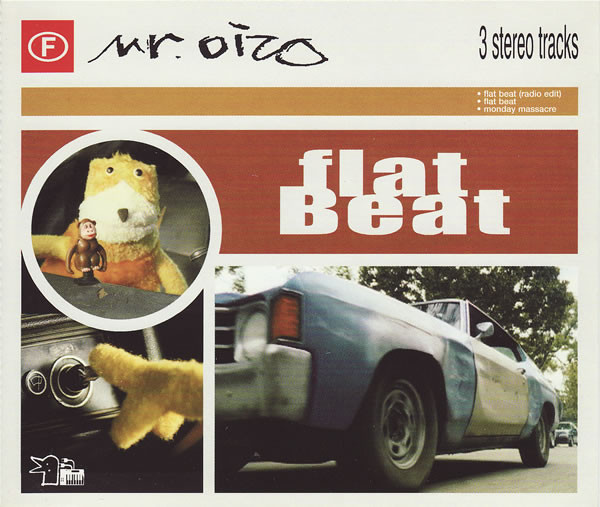
‘Flat Beat’ was helped to the top of the charts by Flat Eric, a yellow puppet made by Jim Henson’s Creature Shop. In the video he runs a business, answering phones and smoking frankfurters. But it was his appearance in a series of Levi’s adverts that made him famous, and that necessitated Mr. Oizo make a tune to go with them.

This is the latest – the seventh – and I believe final ‘Levi’s’ chart-topper. Since the mid-eighties we’ve had the jeans makers to thank for curios like ‘The Joker’, ‘Should I Stay Or Should I Go’, and Stiltskin’s ‘Inside’ making number one. Like its predecessors, ‘Flat Beat’ would have been nowhere near #1 without the ad campaign, but I will say that all of the Levi’s-resurrected chart-toppers have been worthwhile in their own way.

Mr. Oizo AKA Quentin Dupieux is a French DJ and filmmaker (‘oiseau’ being French for ‘bird’). ‘Flat Beat’ was a bonus track on his first album, and he’s had a few others which have been minor hits in his homeland. In the UK he has gold-star, purest one-hit wonder status, with nothing else even grazing the lower reaches of the charts.

It’s also worth noticing that, spoken intro aside, this is a purely instrumental track. Wikipedia lists it as the 25th instrumental number one, though they count ‘Hoots Mon’, and ‘Block Rockin’ Beats’ in that list, which seems generous. What’s indisputable is that there have been precious few since the genre’s heyday in the fifties and early-sixties – this is only the ‘90s second instrumental after ‘Doop’, while there were zero in the ‘80s – and that there are precious few more to come.

The album version:

816. ‘Fly Away’, by Lenny Kravitz

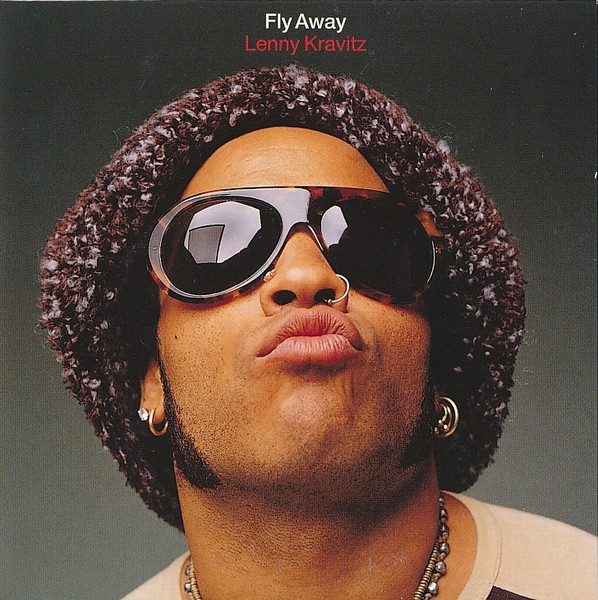
Lenny Kravitz then, bringing us three guitar-led number ones out of four…. Heady days!

Fly Away, by Lenny Kravitz (his 1st and only #1)

1 week, from 14th – 21st February 1999

The intro really rocks, a concrete-heavy riff that fills the room, so much that it sets us up for disappointment upon hearing the rest of the song. Not that it’s bad, not really. But the effect-laden guitars in the verses are interesting – I can’t help hearing someone struggling to swallow, in urgent need of a Heimlich manoeuvre – and Lenny Kravitz’s vocals somehow don’t do the tune any favours.

Plus, the lyrics are simplistic, verging on just plain bad. I wish that I could fly, Into the sky, So very high… Just like a dragonfly… Ignoring the fact that dragonflies usually hover at no more than tree-height, the insistence on dragging out rhymes across several lines, entire verses even, is annoying. I want to get away, I want to flyyyyy away… Kravitz pleads, so often that you begin to wish he’d just bloody well go. What’s stopping him?

I’ll admit that my opinion of this track is clouded by the fact I’ve never quite gotten Lenny Kravitz. He seems to me like a parody of an oversexed rock star, desperately wanting to be Prince, or Jimi Hendrix. But then again, Black rock musicians are hardly ten a-penny so I should give him credit for carving out an impressive career. Plus, ‘Are You Gonna Go My Way’ is a ten-out-of-ten classic, and would have made a much more worthy chart-topper.

Having claimed that ‘Fly Away’ isn’t bad, I realise I’ve just spent three paragraphs giving a pretty compelling argument as to why it is. Part of me relishes a brief period of rock dominance at the top of the charts, but at the same time I shouldn’t be uncritical of a song just because it’s got guitars, and isn’t by a boyband or a faceless DJ. This for me doesn’t come close to the gonzo pop-punk of the Offspring, or Blondie’s cool-as-fuck comeback.

It probably wouldn’t have made #1 either, if it hadn’t been used extensively in adverts for Peugeot (for some reason I misremembered it as Vodafone). Kravitz’s only previous visit to the UK Top 10 had been with the already-mentioned ‘Are You Gonna Go My Way’ six years earlier. Songs from Adverts has been a surprisingly successful chart-topping genre over the years, and this won’t be 1999’s last. ‘Fly Away’ does though finally bring to an end our run of ten consecutive one-weekers – by far the longest such run in chart history. It’s been an eclectic quickfire run through Xmas ballads, novelty funk, dance, and some good old fashioned rock and roll. And of course, the record that did finally manage to stay at the top for longer than seven days had to be something pretty special…

733. ‘Spaceman’, by Babylon Zoo

The second number one of 1996, and one of the year’s most interesting hits, is yet another Levi’s assisted chart-topper.

Spaceman, by Babylon Zoo (their 1st and only #1)

5 weeks, from 21st January – 24th February 1996

I had no idea before starting this blog the extent of the jeans brand’s grip on the British charts. I make this, I think, the seventh Levi’s-assisted #1 in under ten years, but I admit I’ve lost count. (If we treated Levi’s as an act in themselves, they’d be up there with the Stones and ABBA in the overall list.) And almost all of them have been good #1s – re-released oldies from the Clash and the Steve Miller Band, as well as quirky, newer hits from Stiltskin and Shaggy. And let’s remember that, kicking off this whole era of Levi’s domination, they helped ‘Stand By Me’ to a belated but very deserving number one position

‘Spaceman’ is not at that level, but it is a remarkable chart-topper. People harshly suggested that it made #1 solely because the advert featured just the opening fifteen seconds, which make the song sound like a high-speed techno number. Space man, I always wanted you to go, Into space, Man… trills a high-pitched alien vocal, as we prepare our glowsticks.

Except, most of the song is a much heavier, rockier beast. It lurches from Britpop verses to industrial grunge in the chorus, before ending on a trip-hop, dance beat once again. It’s ear-catching, attention grabbing… And I’m going to stick my neck out and say it’s good. Lyrically it also treads novel ground. The singer, to summarise, is sick of life on earth. The sickening taste, Homophobic jokes, Images of fascist votes, Beam me up because I can’t breathe… are not your average #1 single’s lyrics. I can’t get off the carousel, I can’t get off this world…

Of course, that bit didn’t feature in the commercial. But it’s unfair to suggest that people were duped into buying this record. And the fact that it remained on top for five weeks, with plenty of airplay one presumes, clearly shows the song’s popularity. It became the fastest-selling debut single ever, going on to sell well over a million copies. It may be OTT and hyperactive, lurching from one sound to another, but I like its gothic silliness. There’s also a case for it being the first glam rock number one in quite a few years…

It was also my 10th birthday number one, so I feel a personal connection to it too. Babylon Zoo were a band from Wolverhampton, who had never charted before ‘Spaceman’ went, well, intergalactic. They’re cast as one-hit wonders, even though two further songs from their debut went Top 40. They struggled to sell albums, though, and suffered some terrible reviews for their live shows. They disbanded in 1999.

707. ‘Inside’, by Stiltskin

In my previous post, I wrote that Tony Di Bart’s ‘The Real Thing’ must have been the most recent #1 that I’d never previously heard. Well, the very next chart-topper is probably just as forgotten…

Inside, by Stiltskin (their 1st and only #1)

1 week, from 8th – 15th May 1994

Luckily, though, my dad once owned a ‘Best Rock Album Ever…’ sort of compilation released sometime around 1994. In amongst all the Free, the Boston, and the Blue Oyster Cult, the compilers had clearly felt the need for something more contemporary. What better track to include, then, than that year’s big rock hit: Stiltskin’s ‘Inside’. Which means that this lumpy, grungy, one-hit wonder takes me right back to my childhood.

This should be a pretty cool moment for chart watchers. Grunge was the sound of the early-nineties, though it had never troubled the top of the charts until now. (By May ’94, the genre was on its last legs, Kurt Cobain having died just a month earlier…) Anyway, this is a very heavy, very sweaty, very hairy number one single, the hardest rocking since Iron Maiden brought our daughters to the slaughter. Listening to it now, for the first time in two decades, the chorus is a classic of the genre.

But it also feels a little like Grunge-by-AI. Listen and you can hear rip-offs of ‘Smells Like Teen Spirit’ in the quiet-loud chorus, and ‘Black Hole Sun’ in the two chiming notes during the verses. I swear to God there’s something by Pearl Jam buried in there, too, though I can’t quite root it out. People online have compared it to ‘Today’ by Smashing Pumpkins, but I don’t personally hear it. Basically, the songwriters have taken elements of the best grunge bands, smushed them up, and made a pretty decent song.

The lyrics are apparently based on Plato’s ‘allegory of the cave’, making this potentially the first UK #1 to reference the ancient Greek philosopher. To my ears, though, it sounds like the worst sort of Year 9 poetry: Strong words in a Ganges sky, I have to lie, Shadows move in pairs… culminating in the motivational slogan: If you believe it, Don’t keep it all inside… (To be fair, I was a fan of the fat man starts to fall line as a kid…)

‘Inside’ also loses a few more street-cred points from the fact that the song was written to order for a Levi’s jeans commercial (making this the fourth number one to come from a Levi’s ad, though the first that isn’t a re-release of an older track). A man called Peter Lawler wrote the song, and plays all the instruments on this recording. He needed a vocalist, and after some auditions found Ray Wilson, a Scottish singer/guitarist. This first incarnation of the band released only one album, and two more low-charting singles, but they reformed and have carried on to this day, in an ever-changing line-up with Wilson as the only constant. (He also spent four years as lead-singer for Genesis, replacing Phil Collins.)

‘Inside’ was probably fortunate to find itself on a compilation called ‘Best Rock Album Ever’ – right place, right time – and is similarly fortunate to hold the title of the UK’s sole grunge chart-topper. But variety is the spice of life, and I’m glad it sneaked its week at number one. Sadly, the fate that confirms once and for all if a record has been lost to the mists of time has indeed befallen ‘Inside’… It’s not on Spotify.

687. ‘Young at Heart’, by The Bluebells

If we thought ‘Oh Carolina’ was an unpolished step away from the usual sounds of the early nineties, then what to make of this folksy jig…?

Young at Heart, by The Bluebells (their 1st and only #1)

4 weeks, from 28th March – 25th April 1993

We need to sound the ‘random re-release’ klaxon, one that has been honked fairly often during these past few chart years, for the success of this record was not completely organic. ‘Young at Heart’ was originally a #8 hit, in 1984, for Scottish jangle-pop act The Bluebells. It was their biggest hit, from the only studio album they released before disbanding in 1985. Fast-forward nearly a decade, and the song is being featured in a commercial for Volkswagen (not Levi’s, for once!)… Hey presto. Number one.

And aren’t we glad that it was! It’s distinctive, bordering on strange, and yet oh so catchy. Banjos, harmonicas, and most of all violins – the solo has to be one of the most ‘out there’ moments in a #1 for many a year – come together at the barn dance for a tale of young love: They married young, For love at last, Was their only crime…

It’s always hit me as a sort of ‘Come On Eileen’ Part II, both in terms of the Celtic sounds and the subject matter. Plus at its heart, despite all the country dressing, it has a pure pop bridge and a soaring chorus, which hint at an interesting origin story. I’ll let you in on a secret, one that raised my eyebrows when I found it out barely five minutes ago… The reason this song has such strong pop credentials is because it was written, and originally recorded by, Bananarama! I know, right…!

They recorded it for their debut album in 1983 – it was actually co-written by Siobhan Fahey (sort of giving her a second non-Bananarama number one) and the band’s guitarist Bobby Bluebell (not his real name) – and, if we’re honest, their version is fairly bland. In fact, The Bluebells’ take is a lesson in how to do a cover version right: changing the tone, the tempo, the genre, to the point where you’d have to be listening pretty closely to notice that they were the same song.

The Bluebells reformed especially for the TOTP performance brought about by the record’s unexpected success, and have continued to come back together on and off over the years. One of their former members is a lecturer in music business, while another is a golf correspondent for The Guardian.

Sadly, I make this the final ‘random re-release’ we’ll see, for a while at least. There are plenty more to come, especially in the 21st century, but this is the end of that golden spell in the late-eighties and early-nineties, when Ben E King, Jackie Wilson, The Clash, The Righteous Brothers, The Hollies and The Steve Miller Band all scored belated, sometimes posthumous, chart-toppers thanks to films, TV shows and, more often than not, adverts for Levi’s jeans. Let’s salute them, then, these random re-releases, for spicing up the charts, and breaking up all the SAW, the dance, and the movie soundtrack power ballads.

661. ‘Should I Stay or Should I Go’, by The Clash

Last week, in a recap of the past thirty chart toppers, I made a lot of just how eccentrically the charts have been behaving over the past year or two. And happily, they show no signs of becoming predictable quite yet…

Should I Stay or Should I Go, by The Clash (their 1st and only #1)

2 weeks, from 3rd – 17th March 1991

For yes, we must sound the ‘random re-release’ klaxon one more time: The Clash score their sole UK #1. And once again, as with ‘The Joker’, it’s Levi’s Jeans we have to thank for giving this classic tune a new lease of life (the ad team knew how to pick them!)

We open with a nonchalantly cool intro. Two guitars have a little call-and-response, before a bass guitar so jagged it almost rips your speakers in two. It’s a simple riff, so easy and familiar that my immediate response is to dredge the memory banks to recall if it’s a cover version. It isn’t, but Mick Jones based it, knowingly or otherwise, on ‘Little Latin Lupe Lu’, a sixties garage-band classic.

The whole thing is loveably ramshackle, and a world away from the polished dance hits that have been the sound of the early 1990s. The guitars crackle, Joe Strummer sneers, and the band holler and screech the backing vocals in Spanish. The main lyrics meanwhile, tell the story of a toxic relationship: It’s always tease, tease, tease, You’re happy when I’m on my knees… and the chaotic ‘chorus’, such as it is, does its best to portray the frenzy of a conflicted mind.

The singer’s happy to remain, no matter the torture doled out, but by the end of the song we’re left none the wiser over whether he stays or goes. (I struggle to see how this helped to advertise jeans, but who am I to question…?) I’d call this record pretty poppy for The Clash, as well as assuming it was one of their early singles. But it was the 3rd release from their 1982 album ‘Combat Rock’, making #17 at the time. And despite coming five years after the band’s sixth and final studio album, this re-release was their first Top 10 hit, let alone their first number one.

Over the past few months, rock music has started to creep back in to the upper reaches of the charts (hurray!) If we start with ‘The Joker’s classic rock, then five of the past twelve #1s have been rock of one kind or another: indie rock (The Beautiful South), heavy metal (Iron Maiden), progressive rock (Queen) and now this. Is ‘Should I Stay or Should I Go’ more classic rock? Or is it garage? Or is it our first real punk rock #1, a decade and a half too late…? Or should we simply not care, and just revel in proper rock ‘n’ roll enjoying its new-found moment in the sun?

650. ‘The Joker’, by The Steve Miller Band

If the most important chart trend of the late-eighties/early-nineties was the emergence and dominance of dance, then the second was surely the random re-releases…

The Joker, by The Steve Miller Band (their 1st and only #1)

2 weeks, from 9th – 23rd September 1990

Such as this! There are usually two reasons for a golden oldie like ‘The Joker’ making number one years after its original release: use in a movie, or use in an advert. Place your bets… Yes, it was an advert this time, for Levi’s, that gave the Steve Miller Band their biggest hit, a mere twenty-five years into their career.

There’s little point in analysing this record from a musical point of view. It’s a strange little country, bluesy, slightly psychedelic number, recorded in 1973; and so in terms of its style and its production values it sounds a world away from ‘The Power’ (I will leave you to decide whether or not that is a good thing). It’s also very silly, with one of rock and roll’s great opening lines: Some people call me the space cowboy, Some call me the gangster of love…

Who is Maurice (wheep whoop)? What is a pompatus? They are references to earlier songs by Steve Miller but also, perhaps, the real answer lies in the Eaglesy chorus: I’m a joker, I’m a smoker, I’m a midnight toker… Yes, it’s an ode to ganja, and the joys of the doobie. It’s ironic that in 1990, as Britain’s youth raved their nights away, it took a seventeen year old AM radio staple to bring the drug references to the top of the charts…

It’s a fairly random, but very welcome, chilled-out, interlude in our countdown. There’s a great solo, played through some cool vocal effects, as well as the ridiculous cat-call effect in the verse. And a wonderfully filthy line towards the end: I really love your peaches, Wanna shake your tree… It didn’t make the UK charts in 1973, but it did make #1 on Billboard, meaning that Steve Miller Band now holds the record for longest gap between transatlantic chart-toppers. (The ‘band’ is basically Steve Miller, and a revolving door of supporting musicians. He’s still going, and was inducted into the Rock and Roll Hall of Fame in the mid-2010s).

They had already come close a decade earlier, when the equally fun ‘Abracadabra’ had peaked at #2. Except, in finally making #1, ‘The Joker’ caused some controversy. It sold what appeared to be exactly the same number of copies as that week’s number two single, Deee-Lite’s fabulous ‘Groove Is in the Heart’. But, rather than have two songs share the top position – as had happened often enough in the 1950s – Steve Miller won out thanks to having seen the largest sales increase over the previous week. You could bemoan the fact that a crusty old re-release beat a fresh and innovative dance number on a technicality – aren’t the charts supposed to be for what’s current and all that? – but ‘The Joker’ is fun and lively enough to get a pass from me. Plus, the chart compilers eventually confirmed, presumably after several recounts, that it had in fact sold a whopping eight copies more than Deee-Lite, and was there on merit. Just…

615. ‘He Ain’t Heavy, He’s My Brother’, by The Hollies

A big feature of the late eighties and early nineties, aside from all the dancing, the sampling and the acid house, was classic re-releases…

He Ain’t Heavy, He’s My Brother, by The Hollies (their 2nd and final #1)

2 weeks, from 18th September – 2nd October 1988

One such re-release means that The Hollies score their second #1 single, a full twenty-three years after their first. And like the two most recent belated chart-toppers – ‘Stand By Me’ and ‘Reet Petite’ – this is a classic in every sense. It’s pop as classical music: stately, grandiose, full of portent and power… The road is long, With many a winding turn…

In fact, I’d file this up there with ‘Hey Jude’, and ‘Bridge Over Troubled Water’, as pop music working as a hymn for the secular. And not just because the band do their best impression of a gospel choir towards the end, but also because the title line is from a Christian tale about a sister carrying her brother on her back, uncomplaining. Interestingly, ‘Stand by Me’ also features lines from the bible (while ‘Reet Petite’ does not, unless I missed that particular week of Sunday School…)

The climax is the middle eight, the If I’m laden… At all… part, that positively soars. In fact, it perhaps soars too much, for my tastes. For a band that spent most of the sixties releasing perfectly crafted, snappy pop tunes – from ‘Just One Look’, to their previous #1 ‘I’m Alive’, to ‘Bus Stop’ and on – this is quite the departure. I have to admit that I prefer their pop stuff to this, as impressive as it is, in the same way that ‘Hey Jude’ and ‘Bridge Over Troubled Water’ are not my all-time favourites either.

This song originally came not long after Graham Nash had left the band, to form Crosby, Stills & Nash, leaving the band more reliant on outside songwriters. ‘He Ain’t Heavy…’ had been written for US singer Kelly Gordon, a few months before The Hollies made #3 with it in 1969. (Fun fact: not only is it a belated 2nd #1 for The Hollies, it’s a 2nd #1 for Elton John, who played piano on the track as a pre-fame session musician!) And, for a song with such religious connotations and gospel leanings, it took a much more prosaic reason to finally get it to #1: an advert for Miller-Lite.

In 1969, this hit set the band up to keep going well into the 1970s, something that very few of the big ‘60s acts managed. Their ‘final’ big hit was ‘The Air that I Breathe’ in 1974 (a song I do kind of wish had had the big re-release treatment, instead of this…) And unless I’m missing something obvious, this song’s second round of success meant that The Hollies achieved the longest gap between chart-topping singles, a record they kept for quite a while. On a personal note, and quite fittingly, this was #1 on the day that my own brother was born (but I will refrain from commenting on his heaviness…)