106. ‘Apache’, by The Shadows

The Shadows are back. But sans-Cliff. Who’s doing the singing then? Nobody! That’s who. Yep, it’s time for another instrumental interlude…

p01bqktf

Apache, by The Shadows (their 4th of twelve #1s)

5 weeks, from 25th August – 29th September 1960

I’ve struggled to place my feelings on the instrumentals featured in this countdown. We’ve veered from the decidedly pleasant Song from ‘The Moulin Rouge’, to the undeniably perky Winifred Atwell, to the Oh-God-Make-It-Stop! of Russ Conway and Eddie Calvert. And then I went and named Perez Prado’s ‘Cherry Pink and Apple Blossom White’ as one of the very best records we’ve heard thus far… I know that ‘Instrumental’ itself isn’t a genre – you can’t pigeon hole them all together. But still… Where does this latest one fit in the grand scheme of vocals-less chart-toppers?

It’s different, for a start, in that it’s a guitar-led track. I make this the 9th instrumental chart-topper (10th if you count ‘Hoots Mon’ with its sporadic shouting) and the first to use guitars as the lead instrument. Lots of pianos, trumpets and violins thus far; not many guitars. It starts, though, with drums. What might be described as ‘Injun Drums’, which would make sense in a song called ‘Apache’. Which means that this track, alongside Johnny Preston’s ‘Running Bear’, ensures that 1960 will go down as the year of the Native American in Popular Music.

It’s a song with a long and varied history – The Shadows’ version being neither the first nor the last – but it was originally inspired by a 1954 western movie, starring Burt Lancaster and entitled, funnily enough, ‘Apache.’ (A 1973 version of the song, by the Incredible Bongo Band, has become one of the most sampled tracks of all time, earning it the title of ‘hip-hop’s national anthem’, but that’s a story for another day…)

Perhaps one of the reasons that I struggle with instrumentals is that I find them so hard to write about. What are they about, for a start? ‘The Poor People of Paris’ didn’t sound like it was about poor people. ‘Moulin Rouge’ had precious little to do with the can-can. Russ Conway’s efforts were ice-cream van jingles in search of an actual melody. But ‘Apache’  -and this is a big point in its favour – does actually sound as if it’s about a Native American soldier, riding out into the sunset for one final showdown… Close your eyes as you listen and you’ll see him. Plus the bit where the guitars sound like a galloping horse is really cool.

It makes sense as a song, too. There’s a verse, a bridge, and then a chorus. You can kind of sing along to it. Plus, there’s a riff! Make that three from three! Dun-dun-Dun-dan-dun-dun-dan-dun… The guitars sound great, and just as twangy as those used in ‘Shakin’ All Over’. This is a great piece of music, actually. But subtle; its greatness taking time to become apparent.

R-562860-1476192301-4079.jpeg

I mentioned during my post on ‘Travellin’ Light’ that for their first two #1s The Shadows, or The Drifters as they were for ‘Living Doll’, had little more to do than just turn up and tickle their instruments (so to speak). They did a bit more on ‘Please Don’t Tease’, riffing and soloing and the like, but I half suspect that they went solo just so that they could let loose a little. Hank Marvin and Bruce Welch were too talented to stay as Cliff’s backing band forever. ‘Apache’ was their first ‘solo’ release to chart, and it charted in style: five weeks at the top making it, for now, the second biggest hit of 1960 behind ‘Cathy’s Clown’. And this is only the beginning – for the next three years The Shadows will utterly dominate the UK charts. I make it 33 (thirty-three!) Top 10 hits, both with and without Cliff, before the glory days draw to an end.

Even with this early hit, The Shadows already manage two very impressive feats. Firstly, they become the first ever act in UK chart history to replace themselves at #1. And they draw level with giants such as Elvis, Frankie Laine and Guy Mitchell as the artists with the most UK chart-toppers. All of this with a record that doesn’t have any lyrics! How about that! Maybe from now on I should try harder to appreciate instrumentals… Maybe instrumentals are the way forward… Down with lyrics! Yeah! Put that on a T-shirt…

105. ‘Shakin’ All Over’, by Johnny Kidd & The Pirates

Did someone order a riff? Cause we got a riff goin’ on right here!

6c51f05ee4a8d596efbd4446963c4b10

Shakin’ All Over, by Johnny Kidd & The Pirates (their 1st and only #1)

1 week, from 4th – 11th August 1960

I mentioned – without realising this song was coming up next – that our previous #1, Cliff & The Shadows ‘Please Don’t Tease’, had given us the merest hint of a riff; riffs having been fairly absent from our rundown thus far. However, this record isn’t just giving us a whiff of riff – it’s giving us full-on riffage and then whacking us over the head with it. Repeatedly.

It’s basically impossible to transcribe a riff – to turn notes from a guitar into phonemes on a page – but I will, without fail, try to do so every time one comes along at the top of the charts. Diddle-iddle-iddle-iddle-din… Diddle-iddle-iddle-iddle-din… Trust me – it sounds much cooler than it looks written down…

When you move in right up close to me… That’s when I get the shakes all over me… Johnny Kidd has a girl who is bringing on some pretty drastic symptoms. Then the best bit of the song, one of the best bits from any of the one hundred and five chart-toppers so far: the pause… and TWANG! Quivers down the backbone, I got the shakes in the knee-bone, Ye-eah the tremors in the thigh-bone… Shakin’ all over!

There are plenty of other great things about this record: the little drum fill before the solo, the gritty solo itself, and a fade-out loaded with sexual suggestion – we-ell you make me shake and I like it baby… But nothing can top that pause… and TWANG!

This is rock ‘n’ roll, and I’m feeling so invigorated by listening to this song on repeat that I might go further than that and drop the ‘n roll’. This is rock, plain and simple. Killer riff? Check. Lyrics about sex? Check. Slightly rough-round-the-edges recording? Check. Johnny Kidd & The Pirates also wore outlandish pirate costumes on stage (eye-patches, cutlasses and the like), bringing us glam a good ten years ahead of schedule. And they parted acrimoniously – as any rock ‘n’ roll band worth their salt has done at least once – The Pirates abandoning Kidd when the hits dried up.

But the most momentous thing about ‘Shakin’ All Over’? More momentous than the eye-patches and the TWANG. This is a British rock record (gasp!) – Kidd and The Pirates having formed in London. The elusive coming of age of British rock ‘n’ roll, hinted at by Tommy Steele, promised but not delivered by Cliff… It finally arrives at the top of the charts!

johnny-kidd-the-pirates-shakin-all-over.jpg

I knew the importance of this record before embarking on this post – anyone who has a passing interest in the history of rock music will surely know this song. But actually hearing it in context – listening to it arrive amongst all the Cliff hits, next to ‘Three Steps to Heaven’ and ‘My Old Man’s a Dustman’ – really hammers home how important this track is. It also consigns my claims about the castration of rock ‘n’ roll to the dust. Rock ‘n’ roll is alive and well; it just isn’t always to be found at the top of the pop charts.

Johnny Kidd even managed to die in a suitably rock ‘n’ roll fashion – in a car crash in 1966, aged just thirty. In truth, he had been struggling for hits long before that. But this one song is more of a legacy than most can hope to leave. The cover versions speak for themselves: check out those by The Who, Wanda Jackson and Rose Hill Drive – who contributed their version to the soundtrack of a mid-00s video game which I picked up second-hand on a whim years ago. Isn’t it weird how some songs find you? In truth, any aspiring rock ‘n’ roll band should be required by law to include ‘Shakin’ All Over’ in their first set-lists. It’s a song that would sound just as great being thrashed out in a garage as it would on an arena tour. And that, folks, is as sure a sign as any that we have a rock and/or roll classic on our hands. Enjoy…

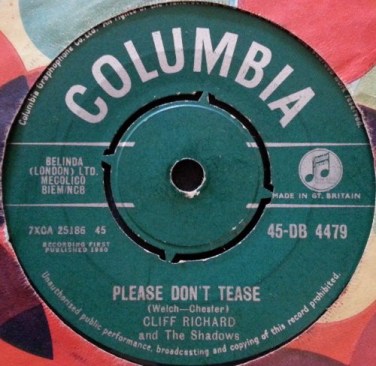
104. ‘Please Don’t Tease’, by Cliff Richard & The Shadows

Our third meeting with Sir Clifford. Just the eleven (11!) more to go…

cr1

Please Don’t Tease, by Cliff Richard (his 3rd of fourteen #1s) & The Shadows (their 3rd of twelve #1s)

1 week, from 28th July – 4th August / 2 weeks, from 11th – 25th August 1960 (3 weeks total)

I mentioned during my last post that the opening months of 1960 have seen rock ‘n’ roll undergoing a castration at the top of the charts – all the sounds and stylings of this musical revolution diluted down to a poppy mulch (see Johnny Preston, ‘Three Steps to Heaven’ and all that.) And if this latest #1 isn’t just the blandest, most castrated version of rock ‘n’ roll going. But Goddam don’t I just love it…

You tell me that you love me, baby, Then you say you don’t, You tell me that you’ll come over, Then you say you won’t… Cliff loves a girl, but she’s leading him a merry dance. That’s all you need to know lyric-wise. It’s all something something come on and squeeze me something something your tender touch. Nobody’s coming here to have their thoughts provoked. (The use of ‘doggone’ in the second verse is worthy of note, however, as the one and only time in recorded history that a British person has ever used the term.)

No, this is a record best described as ‘breezy’, bouncing along like a light-hearted summer’s picnic, carried on a chord progression that satisfies our most basic urges and by the fact that – praise be! – The Shadows finally get something to do. Having sat through Cliff’s first two chart-toppers with barely a sniff of the action, they get a rocking little solo here and lend a cool revving sound under the Oh please don’t tease… lines in the bridge.

And, lo! Is that the sound – the merest whiff – of a riff at the beginning and the end of this record? Da-dun-dun-dun-da-da-dun-dun-da-da-da…? We aren’t in the ‘riff era’ yet – the rock songs that have topped the charts thus far have been all about the solos and the rhythm rather than any memorable, 100% guitar-led riffs. But here… It’s no ‘Smoke on the Water’ that’s for sure, but it stands out as something that you could perhaps play air guitar to. I also – and this might be a bit crazy – get a sort of Merseybeat-vibe from said riff, at least three years ahead of The Searchers and Gerry & The Pacemakers, and The Beatles obv., turning it into the dominant musical movement of the mid-sixties. Or maybe that’s just me.

R-571404-1403429827-8961.jpeg

And… that’s about it for this one: with an artist as successful as Cliff you can take each of his many, many #1s as songs in their own right without needing to go into so much backstory and detail. They are all signposts on our journey through British popular music history, with Cliff at the wheel. ‘Please Don’t Tease’ is definitely one of his more forgotten hits; but one that’s worth rediscovering. And notable in its way, as Cliff and his backing group will soon be going their separate ways. The next time we hear from The Shadows – very shortly, in fact – they will be quite Cliff-less.

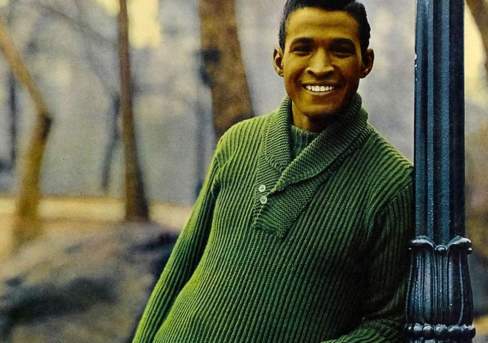
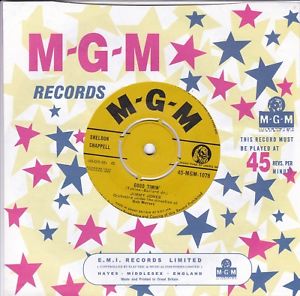
103. ‘Good Timin”, by Jimmy Jones

For the first time in our countdown, we have consecutive number ones that directly contradict one another! Scenes!

42-jimmyjones

Good Timin’, by Jimmy Jones (his 1st and only #1)

3 weeks, from 7th – 28th July 1960

The question in question, as it were, is ‘How do you find love?’ In the blue corner: Eddie Cochran, who would have you think that there are three steps, a simple guide to follow. In the red: Jimmy Jones, who believes it’s all just a matter of timing…

Oh you need timin’, A tic-a-tic-a-tic-a good, Timin’… And that’s all it. Timin’ is the thing, It’s true, Good timin’ brought me to you… Not convinced? Well, Jimmy’s been nose-deep in the history books. And he has citations!

If lil, lil David hadn’t grabbed that stone, Lyin’ there on the ground, Big Goliath mighta stomped on him, Instead of the other way ‘round… Good timing! Who in the world would ever have known, What Columbus could do, If Queen Isabella hadn’t hawked her jewels, In 1492… Good timing!

Jones then narrows his focus down on a much more recent example: him and his beau, and their very own ‘sliding doors’ moment. What woulda happened if you and I, Hadn’t just happened to meet? We’d mighta spent the rest of our lives, Walkin down misery street…

And that’s pretty much it. Another two-minute wonder that we don’t have to take particularly seriously. This should perhaps be going down as a ‘novelty’ number one, but I’m feeling generous and will file it under plain old ‘pop’. If we had to choose between our competing #1s – this and ‘Three Steps to Heaven’ – and their conflicting ideas on love, I’d have to plump for the ‘Timing’ theory’ as it’s simply set to a better soundtrack. The song skips along nicely, accompanied by perky guitars and a couple of violins, and Jones sounds like he’s having fun while singing it.

s-l300

It’s nice, and cute. But that’s the becoming the problem. We’ve had a lot of nice, cute number ones over past few months – from Anthony Newley’s smarmy ‘Why’ to Johnny Preston’s goofy ‘Running Bear’. The top end of the chart seems to have lost its bite. When, for example, was the last time a sit-up-and-listen record like ‘Great Balls of Fire’ or ‘Jailhouse Rock’ made an appearance? Lonnie Donegan was a snarling, growling presence when he took tracks like ‘Cumberland Gap’ to the top. Now he’s singing ‘My Old Man’s a Dustman’, and gurning at the audience as he goes. No, I think we have to admit that the opening months of the 1960s has witnessed a castration of rock ‘n’ roll. Rock’s still there, in the guitar licks and in the song structures, but it’s definitely lost its bite.

Despite their differences in opinion regarding the course of true love; Jimmy Jones and Eddie Cochran do have one thing in common. Their sole chart toppers are far from being their best songs. Admittedly Jones doesn’t have the back-catalogue that Cochran does; in fact he has just one other UK hit – the far superior ‘Handy Man’ which had made #3 back in April. Listen to that and you can hear that he was quite the singer – a sort of Sam Cooke, or Jackie Wilson, with the falsetto that you hear in ‘Good Timin’’ used to much more soulful effect.

But Jones isn’t the first and he won’t be the last star mis-represented at the top of the pop charts. He died not long ago, back in 2012, aged eighty-two. He had his three weeks of fame before his star swiftly faded. Later, he would go on to enjoy a revival in the Northern Soul clubs of the 70s and 80s. In those circles, Jones’s obscurity lent a certain cache to his records, and so his lack of hits proved to be something of a positive in the end. Good timing, you might say.

102. ‘Three Steps to Heaven’, by Eddie Cochran

And we’re back down to earth with a bump, after the era/career/life defining ‘Cathy’s Clown’. Which is ironic, given the title of this next number one…

eddie-cochran-1445077805-view-0

Three Steps to Heaven, by Eddie Cochran (his 1st and only #1)

2 weeks, from 23rd June – 7th July 1960

Now there, Are three, Steps to heaven… Just listen, And you will, Plainly see… The guitars click and twirl and sound for all the world like a Buddy Holly B-side – the sickly little brother of ‘Heartbeat’, perhaps. And as life, Travels on, And things do go wrong… Eddie Cochran is crooning away here in a manner that would make Perry Como proud. Just follow, Steps one, two, and three…

Now, I might not be as familiar with Eddie Cochran as I am with certain other rock ‘n’ rollers; but I do know that he was a rock ‘n’ roller. He was one hell of a rock ‘n’ roller. But if you were to base your impressions of him on his sole UK #1, you might think Eddie C. was a mere pap-peddler, a run-of-the-mill teen idol singing a cutesy ‘How To Guide’ for love. There’s nothing wrong with this song, as such, but there ain’t much that’s great about it either.

What are those three steps to heaven, then? You’re dying to know, aren’t you? Step one, You find a girl you love… Uh-huh… Step two, she falls in love with you… OK… Step three, you kiss and hold her tightly… And that’s it? Yeah that sure, Seems like heaven, To me… Oh Eddie, if only it were that simple.

EDDIE_COCHRAN_THREE+STEPS+TO+HEAVEN-548776

I’ve already mentioned that the rolling, clockwork guitars sound very Buddy Holly-lite – and this might have a lot to do with The Crickets acting as Cochran’s backing group here (and scoring their 2nd, albeit uncredited, chart-topper in the process) – but that’s not this record’s only link to ‘The Father of Modern Pop Music’. Eddie Cochran, like Buddy when he scored his only solo #1, was dead by the time this topped the charts. Two months earlier, during a UK tour, the taxi in which he had been travelling blew a tire and smashed into a lamppost. He was thrown from the car, after valiantly covering and saving his fiancé, and died in hospital the following day. He was just twenty-one. Considering that his two previous singles had stalled at #22, I think it’s safe to assume that this record was being bought as a memorial as much as it was for the actual music.

I’m torn… It’s great that a star as influential at the birth of rock and pop as Eddie Cochran got his moment in the record books. But there are so many better ways to remember him than this twee little ditty. There’s the teenage angst of his breakthrough hit ‘Summertime Blues’, the classic riff from ‘C’Mon Everybody’, or the steaming proto-punk of ‘Somethin’ Else’ (which would be turned into a proper-punk hit by Sid Vicious some twenty years later).

It’s comparable, in a way, to the fact that Chuck Berry scored his one and only UK #1 with ‘My Ding-A-Ling’. Which really winds some people up. But – and I’m sticking my neck out here – I think that ‘Three Steps to Heaven’ being Eddie Cochran’s biggest hit is the real travesty. At least my ‘My Ding-A-Ling’ was bawdy, smutty, silly, funny… It is rock ‘n’ roll, for all that it is also a dumb nursery-rhyme. This? Well this song commits a far worse crime in my book. The crime of being bland! And I, donning my judge’s cap for a moment here, order this record to be removed from my sight. Forever. Next!

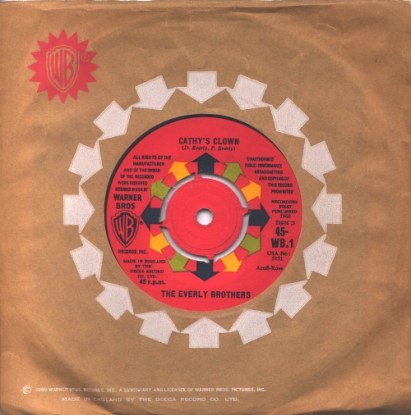
101. ‘Cathy’s Clown’, by The Everly Brothers

I could write this next post without even listening to the record in question. So well do I know this song, I can play it from start to finish in my head. And yet I will listen to it – not just for completeness’ sake; but because it’s a work of art that I haven’t had the pleasure of hearing for a while.

343417nf

Cathy’s Clown, by The Everly Brothers (their 2nd of four #1s)

7 weeks, from 5th May – 23rd June 1960

It’s a song in two, intertwining parts. Two parts that contrast, and yet complement. That link perfectly yet offer the listener something completely different. But before all this, though, there’s the intro. That intro. There are songs without intros, there are songs whose intros pass you by, and there are songs with memorable intros. Like this one. An intro that swaggers in, with a beefy bass and drums straight from a military parade – an intro that makes sure you’re ready and listening for the main event.

And what an event. Don’t want your lo-o-o-o-o-ove anymore, Don’t want your ki-i-i-i-i-ses that’s for sure… I’m sure that entire theses have been written on ‘The Harmonies and Vocal Stylings of The Everly Brothers’ and that I have nothing new to offer. But still. Wow. This is where to look if you’re wondering just what all the fuss is about. Phil holds the note and Don does his thing.

I die each time, I hear this sound… Here he co-o-o-o-o-mes, That’s Cathy’s clown… Those dum-ding-ding-dings (that tinny, oh-so-early sixties guitar again) between the first two lines here always gets me. And then…

I gotta stand tall, You know a man can’t crawl… The harmonies are gone. Now it’s a pure rock ‘n’ roll track. The voice growls and spits, like a boxer psyching himself up. And the piano, straight outta honky-tonk, whips us along. For when he knows you’re tellin’ lies, An’ he hears em’ passin’ by, He’s not a man at all…

Then the drums snap back in and we’re harmonising again. Don’t want your love… End chorus. Then pause. Just the voice: When you see me shed a tear… Add piano. Get swinging. Don’t you think it’s kinda sad, That you’re treatin’ me so bad, Or don’t you even care…? Where the first verse is aggressive, the second is rueful. Maybe she really doesn’t care. Maybe the singer really is Cathy’s clown?

THE_EVERLY_BROTHERS_CATHYS+CLOWN+-+1ST-555626

It’s been two years since we first met the Everlys, with the wistful, boyish, country-tinged ‘All I Have to Do Is Dream’. This record is clearly by the same two brothers, with the same honeyed voices – but now they’re all grown up. ‘Cathy’s Clown’ was their first disc with Warner Brothers, and I’d assume that the label would have asked their new act for a big first single. A statement of intent. Boy, did they get one. This, in case the preceding paragraphs haven’t made it clear, is perfection. Time-capsule pop.

Actually, that’s an idea. ‘Time-capsule pop’. Records worthy of being preserved in a titanium container and buried under Big Ben ahead of civilisation’s collapse. Songs that transcend the genre of ‘pop’ – that are catchy without being cheesy, that are cool without trying too hard, clever without going all airy-fairy, sexy without being vulgar… songs that are basically impossible for human beings to dislike. We’ll meet a few more, every so often, but – gazing quickly back down my list – I think ‘Cathy’s Clown’ is the first. (I might make a belated case for ‘Such a Night’, or maybe ‘That’ll Be the Day’, let’s see.)

I’m glad that this is neither the first nor the last time that we hear from The Everly Brothers in this countdown. I’m glad I can just leave it at that, without wandering off into biography or background. Just click the link below and enjoy one of the best songs ever written.

98. ‘Running Bear’, by Johnny Preston

The opening handful of sixties #1s have been pretty new to me, in contrast to the Cliffs, Buddies and Bobbies that closed out the fifties. But this latest record is a new level of new: a completely unknown entity. ‘Running Bear’? Nope. By Johnny Preston? Nope…

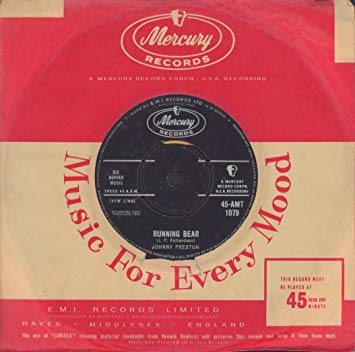
johnny-preston-running-bear-1960-3.jpg

Running Bear, by Johnny Preston (his 1st and only #1)

2 weeks, from 17th – 31st March 1960

It is, though, a record that catches you from the get-go – perhaps desperate to ensure that, while you may not have heard it before, you won’t go forgetting it in a hurry. It opens with a drumbeat, a deep-voiced oom-ba-doom-ba, some grunts, a whoop and a holler and a, wait… a Native American war-cry?

Oh dear… Is this going to be one of those records best described as being ‘of their time’? A record to make your grandad chuckle ruefully and mutter something about ‘not being able to get away with it nowadays.’ Remember Guy Mitchell’s ‘She Wears Red Feathers’? The story of the love between an Englishman and an oriental beauty (in a fetching huly-huly skirt)? Well, this is the same kinda deal. But with Red Injuns!

On the banks, Of the river, Stood Runnin’ Bear, Young Indian brave, On the other, Side of the river, Stood his lovely, Indian maid… Runnin’ Bear pines for lil’ White Dove, who waits oh-so patiently for him across the water. But their tribes are at war, and so their love cannot be…

It’s a romance in three verses. The first sets the scene (above), the second puts Running Bear’s tortured position into clear focus. They can’t cross the raging river, and so: In the moonlight, He could see her, Throwing kisses, Cross the waves, Her little heart, Was beating faster, Waiting there, For her brave…

The third and final verse brings resolution. Bear throws caution to the wind, dives in the river and White Dove follows suit. And they swam, Out to each other, Through the swirling, Stream they came… Their hands touch, their lips meet… they’re both pulled to the bottom and drown. Yup. Didn’t say it was a happy resolution, did I?

That’s by far the best bit of the song – the brutal killing off of the main characters in a way that would shock even George R.R. Martin. I mean, if they’d made it to the other side and lived happily ever after then so what? Who’d care? This is more memorable. It’s a novelty record, for sure, but with an ending that suggests an irreverence, a knowing wink, that I don’t think we were getting a few years ago in, say, ‘How Much is That Doggie (In the Window)?’

91tVS5JbQ5L._SX355_

Musically this song is pretty interesting too. It alternates between the tribal rhythms – the pow-wow-by-the-wigwam vibe – of the verses and the raucous sax-led choruses. It’s silly; it’s fun. And, to be fair, while the lyrics may sound a little dubious to modern ears (hey, at least Preston doesn’t put on any ‘me very wise man’ voices) there’s nothing explicitly racist here. It’s a simple little love song, with a darkly comic twist at the end.

Why it caught the British public’s imagination in the spring of 1960 isn’t so clear, however. It drags us completely away from the run of jingly-jangly, winsomely innocent chart toppers we’ve been having and back a good few years (it was written and recorded in 1958). Johnny Preston seems to have been a fairly run-of-the-mill American rock ‘n’ roller who scored a few hits in the late fifties / early sixties; and who became known as Johnny ‘Running Bear’ Preston for the releases that followed his biggest hit. But it makes complete sense to discover that ‘Running Bear’ was originally written and recorded by The Big Bopper – last seen dying in the same plane crash that claimed the life of Buddy Holly. He even contributed the oomba-doombas and the war cries to this version, meaning that this giant (and I mean that fairly literally) of rock ‘n’ roll can claim part-ownership of a UK #1 single.

A pleasant enough diversion, then, with an ending that I’ll remember – and will possibly be emotionally scarred by – for some time. And for a song that I had had no experience of whatsoever until coming to write this post, I’d say that’s a job well done!

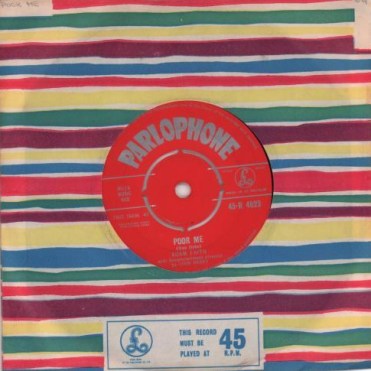
97. ‘Poor Me’, by Adam Faith

Time for another quickie with Adam Faith? Oo-er, that came out wrong. What I mean to say is that, for the second time in three months, Adam Faith has come and gone in less than two minutes. (That didn’t sound much better…)

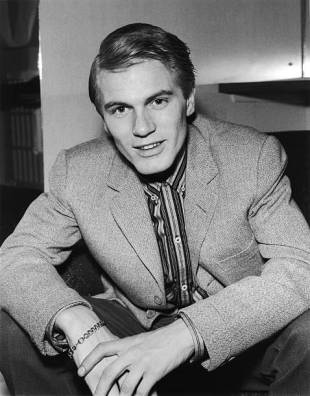
gettyimages-112058576-612x612

Poor Me, by Adam Faith (his 2nd of two #1s)

2 weeks, from 4th – 17th March 1960

His first chart-topper – ‘What Do You Want’ – clocked in at one minute thirty eight seconds; this one goes on for a much more leisurely one forty-six. Two #1s that take less time combined than many songs do on their own. And the similarities between the two don’t end there – ‘Poor Me’ rollicks along at the same tempo, and borrows the exact same lightly plucked strings (which were, lest we forget, nicked from Buddy Holly), as Faith’s first number one.

And yet… This is a different beast altogether. ‘What Do You Want’ was a standard pop song: a perky verse-verse-bridge kind of number. ‘Poor Me’ has a much darker edge to it. For a start there are the ghostly backing singers: AaaahAaaahAAAAAAhAaaaaah, their voices rising and falling like the soundtrack to a fairground’s haunted house. Then there are Faith’s vocals. He sounds grumpy, angry even, and he mumbles his way unwillingly through the opening lines. It’s a song about a lover cursing both his luck and his ex, a man wallowing in his misery. Sorry thoughts leaping around my head, It’s been heard and it’s been said that, You tried, To date another guy, Didn’t hide, Didn’t even try, Cheating me with lies again, Making me remember when… Brutal stuff, eh? No sugar-coating here! Poor me, indeed.

In fact, Faith is so pissed off that he may have been hitting the sauce in an effort to forget. I mentioned in my post on his previous #1 that his pronunciation was unique at the best of times; but here he’s also slurring his words like a man on day five of a three-day-bender. I had to check online to make sure I had the lyrics quoted above correctly (I did) and had to give in completely when it came to the bridge: I used to hold you baby, So tight, Each night, That’s right… Because that’s not what it sounds like on record (Try ‘I used to hold you by the, Soft hands…)

Come the end, Mr Faith has really given himself over to despair and is possibly reaching for the shotgun under the bed: Why oh why, Do voices say to me, Sit and cry, That this was meant to be, Love’s unkind and love’s untrue, Oh why did love pick out you, For me, For me, Wa-ha, Poor me, Poor me… Jeez. This is by far the mopiest, whiniest, most depressing record we have met on our countdown. We’ve had some heartbreak up to now; but nobody has wallowed quite as long or as deeply as Adam Faith here. The first Emo chart-topper, decades ahead of its time? Maybe I wouldn’t go that far; but it is a fascinating record. On first listen it sounds like a hastily knocked-together and derivative follow-up to a debut #1; but repeated listens reveal it to be a much more complex and, dare I say, challenging song than ‘What Do You Want’.

ADAM_FAITH_POOR+ME-407259

And that’s that as far as Adam Faith’s chart-topping career goes. By the mid-60s he had moved into television work and made a good career out of it – acting steadily until his death in 2003. According to Wiki – and God I really hope this is true – his final words, uttered on his deathbed following a heart-attack, were: “Channel 5 is shit, isn’t it? Christ, the crap they put on there. It’s a waste of space.” As final words go they are up there with the very best, alongside “Kiss me, Hardy” and Oscar Wilde’s quip about the wallpaper, and anyone who has spent any time watching British television will surely agree with the sentiment.

The very eagle-eyed among you will perhaps also have noticed that, while ‘Poor Me’ had a fortnight in the top-spot, if you add up the days between the 4th and the 17th March you get…thirteen. Unlucky for some. There’s a simple enough explanation: on 10th March the ‘official’ chart switched from the NME to Record Retailer, which was published one day earlier, and so Adam Faith lost twenty-four hours at the top. Poor him.

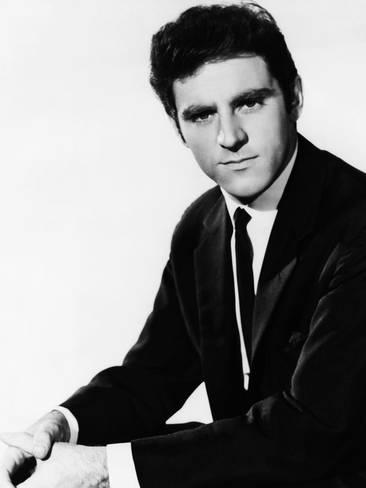
96. ‘Why’, by Anthony Newley

We’ve only just started with 1960, yet suddenly it’s March! Time flies! And it seems that if the early sixties is going to have an on-running theme at the top of the charts, then said theme will be ‘Whimsical’.

ANTHONY_NEWLEY_WHY-558515

Why, by Anthony Newley (his 1st of two #1s)

4 weeks, from 5th February – 4th March 1960

Because this is another gossamer light record, as ethereal and floaty as its predecessor: ‘Starry Eyed’. Here the chimes come from a xylophone, or maybe a glockenspiel, or any other instrument with bars that you might strike with a little furry ball on a stick. I’ll never let you go, Why? Because I love you… I’ll always love you so, Why? Because you love me… There are a lot of questions in this record, lots of ‘Why?’s, and the answer to every single one is that Newley loves his girl, or that she loves him. It’s a lovey-dovey song; a song to make you gag.

The lyrics to this #1 are, quite frankly, a cheesefest. And super simple. I think you’re awfully sweet, Why? Because I love you… You say I’m your special treat, Why? Because you love me… Anthony Newley’s voice is reedy, and clipped. Slightly camp. I’m picturing him as a bit of a dandy, nice mustard chinos and a tartan jacket, something eye-catching in the buttonhole, serenading his objet au desire from the lamppost outside her bedroom window. Yet somehow he just manages to keep the song from tipping over into silly territory. He is very earnest, with buckets of boyish innocence to spare, and this just about carries the day.

let-s-get-married-anthony-newley-1960_a-G-9917305-4985769

A couple of moments do threaten to ruin things completely. When the backing singers launch into their couple of lines like a tipsy Broadway chorus you can really picture, and are almost blinded by, the shine coming off their manic grins. And Newley’s final lines are particularly cloying: I love you, And you love me, We’ll love each other dear, Forever… You can imagine twelve-year-olds up and down the land theatrically retching, fingers in mouths, when their older sisters dropped this 7” on the gramophone. It’s amazing to think that three months back – just five chart-toppers ago – Bobby Darin was singing about a mass-murderer. And now this. Who says there’s no variety at the top of the pop charts, eh?

At best this #1 could be described as ‘cute’; and at worst as ‘positively vomit-inducing’. But I’m willing to give Newley the benefit of the doubt as he is so very earnest, so utterly proper throughout, that he simply must mean what he says. The pictures thrown up by a quick image search don’t really show him as a foppish man-about-town, more as a bank clerk with hair slightly longer than his manager might think appropriate. He did, though, manage four marriages, one of them to no less a glamazonian as Joan Collins, and so who knows? Maybe this simple little love-ditty helped in that regard. He’ll be back at the top before long, so we’ll save any further bio for then.

One final thing of note… I just noticed that we are in the middle of another long run of male-led number one hits. Shirley Bassey was the last woman to top the charts, a year ago now (though there was a female member of The Platters after that), and we’re going to have to wait another year to hear the next female voice on this countdown! 1960 will join 1957 as a lady-less year at the top of the UK Singles charts. An interesting quirk? Or a sign of a crushing patriarchy? If today’s ‘Guardian’ had been around in 1960 there would have been opinion pieces, that’s for sure…

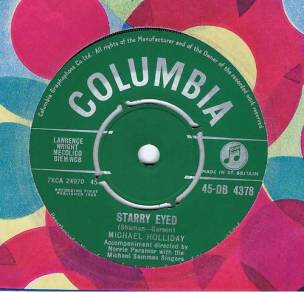
95. ‘Starry Eyed’, by Michael Holliday

Here we go then. One tentative foot in front of the other. A hop and a skip and… We’re into the 1960s! Hurrah! It’s one small step for man… as someone will quite famously say before this decade is through.

BtTnVMQBmkKGrHqEH-D8EvE9BvcOBL7ZdIM5g_12

Starry Eyed, by Michael Holliday (his 2nd of two #1s)

1 week, from 29th January – 5th February 1960

On first listen, however, the 1960s sounds suspiciously like the 1950s. Backing singers? Check. Basic rock ‘n’ roll guitar? Check. Croony male lead singer? Check. Where’s the innovation? Where are the groovy new sounds? Where are all the drugs and free love?

Bum-bam-bum-bam-bum… Why am I so starry-eyed, Starry-eyed and mystified, Every time I look at you, Fallin’ stars come into view… So far so standard. A song about being in love, and about seeing stars because you’re so in love, and to be honest it’s been done a million times before. When we touch I hear angels sing, When we kiss I hear wedding bells ring… Yeah yeah, blah blah blah.

But actually, to dismiss this song because of its unremarkable lyrics would be to do it a huge disservice. Because, on a second, third and fourth listen, this record has got a lot going for it. Firstly there are the backing singers and their Bum-bam-bums. They’re not just any old Bum-bam-bums – they sound echo-y and ethereal, like woozy church bells or a trippy version of the intro to ‘Mr. Sandman.’ It’s really cool.

Adding to this effect is the guitar, which is restricted to a few strums during the verses and chorus but which comes in nice and layered, fed through the same robotic distortions as the backing singers, during the solo. It gives the record a real dreamy quality, like the singer’s dazed after a blow to the… Wait, I get it! He’s starry-eyed. He has been whacked over the head. With love!

78964385

I could complain about Michael Holliday’s sonorous voice being a little too sombre, a little too straight-laced for this song but, after a few listens, it kind of works. His voice has an innocence to it, as he gazes into his lovers mystical eyes and his pupils morph into cartoon love-hearts. Underpinning it all there’s a groovy little rhythm – a bossanova? – that actually makes it quite a sexy record. A record to which there’s more than meets the ear and which improves with every listen. We’re not in the swinging sixties just yet; but this is a sniff of what’s to come…

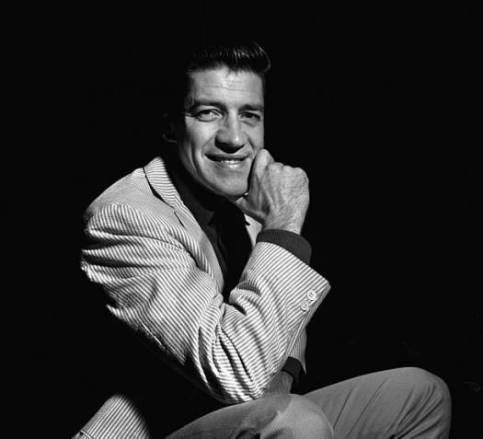
‘Starry Eyed’ is certainly a lot better than the song which first brought Mr. Holliday to our attention a couple of years back – the fairly bland and saccharine ‘The Story of My Life’. I mentioned then that he only ever scored a handful of hits in his career – in fact he managed to squeeze two #1s from just three top ten hits. The story of his life – see what I did there! – is in truth quite a tragic one. Holliday suffered from crippling stage fright and, shortly after ‘Starry Eyed’ hit the top spot, he suffered a nervous breakdown. He took drugs to keep going and sadly died of an overdose in 1963, aged just thirty-eight. He joins the ‘Died Far Too Early’ club along with the likes of Dickie Valentine and Buddy Holly, perhaps proving that pop stars have always died young and in dubious circumstances, and that it didn’t just start with Jimi Hendrix. Remember him this way: by discovering – as I’ve just done – this forgotten gem of a UK Number One.