It’s been a while since I did a ‘Remembering’ post, so here’s two for the price of one. Two big stars of the pre-Beatles age, both of whom died within a couple of weeks in February 1990.
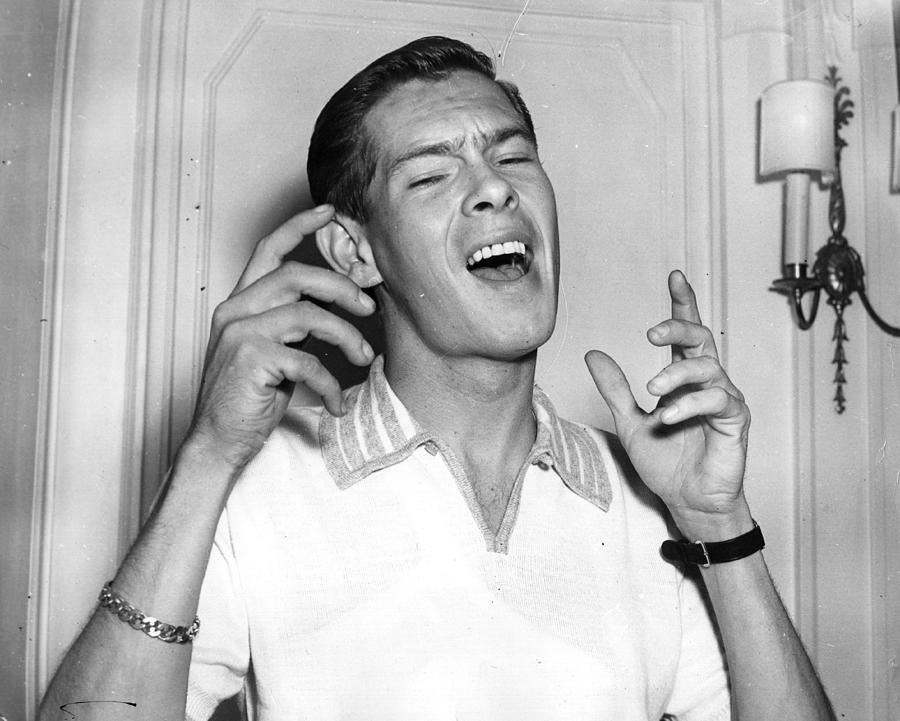

Before starting this blog, I knew Johnnie Ray by name and not much else. He after all is referenced in the opening line of ‘Come On Eileen’ (Poor old Johnnie Ray…) But I will now be forever grateful to him, for making the earliest years of the charts bearable, when it sometimes felt like one po-faced ballad after another, after another. His first #1 was the incredibly steamy (by 1954 standards) ‘Such a Night’, and he had a seven-week run with the whistle-tastic ‘Just Walkin’ in the Rain’ before ending things with the zippy ‘Yes Tonight, Josephine’. All three are well worth a listen if you’ve not heard them before, and proof that pop music could be fun in the prehistoric era. Below I’ll highlight a few of my other favourites of his.
Released in 1951, before Britain even had a singles chart, we can assume that ‘Cry’ would have been a multi-week number one. The missing link between Sinatra and Elvis, Ray’s wonderfully histrionic performance shows why he was known as the ‘Nabob of Sob’ and the ‘Prince of Wails’, surely two of pop music’s best nicknames. His exaggerated, stagey way of singing may have been linked to the fact that he was partially deaf.
‘Ain’t Misbehavin’ is a standard, recorded by everyone from Louis Armstrong and Ella Fitzgerald, to Robson & Jerome. And while I’ll admit to not having heard every version, I’d suggest that you’d struggle to find a performance more committed than Johnnie Ray’s. The man was the epitome of the phrase ‘sing it for the back row’.
Fond of a whistle, Ray made #10 with ‘You Don’t Owe Me A Thing’ in early 1958, a perfect example of how rock ‘n’ roll was making its presence felt in records that weren’t actually rock songs.
By the early 1960s, like so many fifties stars, Ray’s career had tailed off. It’s surprising that he managed to have a career in the first place, after he was arrested for soliciting an undercover policeman in a public toilet in 1951. Rumours about Ray’s sexuality continued, but didn’t seem to harm his sales until another arrest in 1959. He was openly bisexual to many in the music industry, and married a woman named Marilyn Morrison in 1952, who claimed she would ‘straighten him out’. They separated after a year.
Ray also had problems with alcohol, which worsened in the sixties. He would sporadically tour small venues and appear on television in the States, while commanding much larger audiences in the UK and Australia (where he remained most popular) right up until his death from liver failure on February 24th 1990. He was sixty-three.
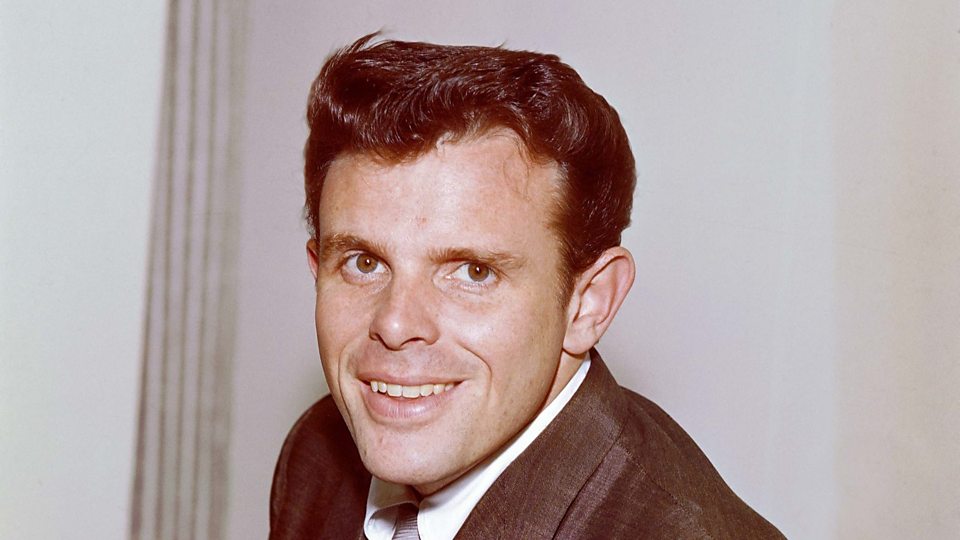
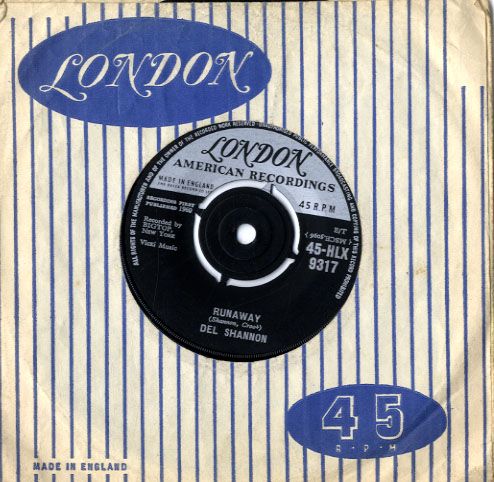
Del Shannon scored his sole chart-topper a few years after Ray’s time at the top. And what a chart-topper it was. ‘Runaway’ is possibly the most inventive, most exciting, most propulsive #1 of that supposedly fallow period between Elvis and The Beatles. It made top spot in the summer of 1961, and features an innovative Musitron solo, making it arguably the first electronic hit. But even if that solo was played on a clapped out old piano it would take nothing from the record’s innate quality. Anyway, I discussed all this in more detail in my post on ‘Runaway’ here.
‘Runaway’ is so good that it tends to completely overshadow anything Del Shannon released afterwards. But ‘Little Town Flirt’ is another great slice of malt shop pop, making #4 in early 1963. He had a good line in heartbreak, and woman shaming, usually singing about runaways and flirts, and in ‘Hats Off to Larry’ he indulges in a bit of schadenfreude as his ex is dumped and left as heartbroken as he had been.
Shannon had a style, and came pretty close to shamelessly ripping himself off on some records (check out how close ‘Two Kinds of Teardrops’ is to ‘Little Town Flirt!) But on ‘So Long Baby’ he managed to recycle the energy of ‘Runaway’ into a deranged oompah beat and create a #10 hit that sounds both frivolous and terrifying.
Like Johnnie Ray, Del Shannon’s career slowed down towards the end of the sixties and into the seventies as he battled alcoholism. He worked with Tom Petty and Dave Edmunds, and by the ’80s he had sobered up and started something of a comeback. He worked with Jeff Lynne, and was touted as a replacement for Roy Orbison in The Travelling Wilburys. Sadly, though, he shot himself on February 8th 1990, apparently after having a negative reaction to the Prozac he was taking for depression. He was just fifty-five.
 The UK Number Ones Blog