215. ‘Paint It, Black’, by The Rolling Stones

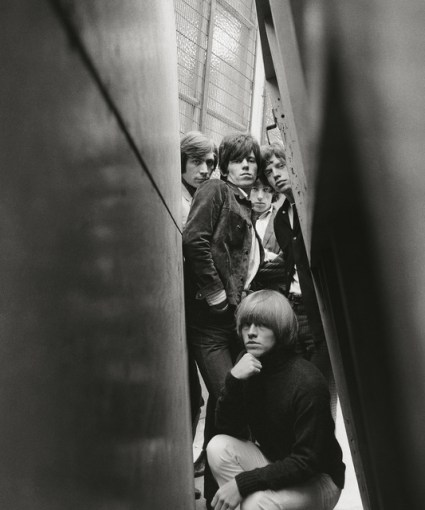
Picture a mid-summer’s evening: a soft, dusty light, some people gathered around an ancient stone circle, having a sing-song. Long hair and baggy clothes. Pagans? Hippies? Look a little closer, though. They look familiar… Why, it’s The Rolling Stones! Conducting a full-blown Satanic ritual!

mainSTONESBLC2

Paint It, Black, by The Rolling Stones (their 6th of eight #1s)

1 week, from 26th May – 2nd June 1966

I’ve used many words to describe the chart-toppers we’ve covered so far. Catchy, dull, quirky, God-awful… ‘Paint It, Black’, though, is the first I’ve had to consider calling ‘evil’… It’s a hulking, threatening, malignant brute of a #1 single. From the opening riff, it’s as if an evil spirit is taking up residence in your ears. Brain Jones is playing a sitar, and sitars, to me, usually sound blissed-out, and spiritual – the background soundtrack to massages and yoga sessions. Not when The Stones get their hands on one…

Then there’s the lyrics. I see a red door, And I want it painted black, No colours any more, I want them to turn black… Jagger’s voice melts into the insistent, pounding rhythm – sometimes soft and coaxing, sometimes aggressive and half-crazed. What is it about? Depression? Drug-induced psychosis? A funeral (as the line about a line of black cars suggests)? Whatever it is, it’s a bleak, bleak record. I see people turn their heads and quickly look away… or I look inside myself and see my heart is black… And then there’s the serial killer line: I see the girls walk by dressed in their summer clothes, I have to turn my head until my darkness goes…

It’s an amazing song. A song I respect a lot. I love that it was a #1 hit. But I can’t bring myself to love it. It’s not a song to put on in the background. It’s a song that you have to be in the right mood to deal with. In many ways it’s a weird song – not helped by the fact that, for years, I thought one of its lines went: No more will my green seagull turn a deeper blue… (It is, of course, ‘my green sea go’. Which makes even less sense…)
ROLLING_STONES_PAINT+IT,+BLACK+-+BOXED-88953

By the end, our hilltop ceremony is reaching its climax. The bass grinds, the sitar dances, the band are humming with intent, and Jagger is crowing: I wanna see it painted, Painted black, Black as night, Black as coal…! He wants to see the sun blotted out… He wants to end it all… The record slowly fades to a frenzied close. This was only top of the charts for a week. That’s probably all the country could deal with from such a relentlessly nasty disc.

Back when I first got into The Stones, with their Greatest Hits etc, ‘Paint It, Black’ (apparently the comma was just a record-company typo, though it does lend a nicely pretentious air) blended in amongst the hits. Its edge was dulled. Not here, though, doing this countdown in real-time. It really makes you stop and think… This was a best-selling single. It’s a superb piece of music; but only one act could have pulled it off and still kept it commercially viable.

I’ll say it again… The Stones’ hits might never quite have matched the Beatles in ‘musical’ terms. But they were pushing the boundaries of what could be considered ‘pop music’. The Fab Four used sitars, yes, to write cute acoustic numbers like ‘Norwegian Wood’; while Jagger, Richards and Jones were using one to summon the Devil.

This is something of an end of an era moment for the Stones, too. They’ve crammed four number one hits into just over a year – all of them towering slices of swagger, anger and petulance. But we won’t hear from them now for over two years. By which point they will have tried their hand at flower-power, gone hard on the drugs, driven Brian Jones out of the band… This is a moment. And not just for The Stones. For the singles charts. For British music. For popular music as a whole. Go on… Paint it,… Black!

Catch up with all the #1s so far – including five other Stones’ hits:
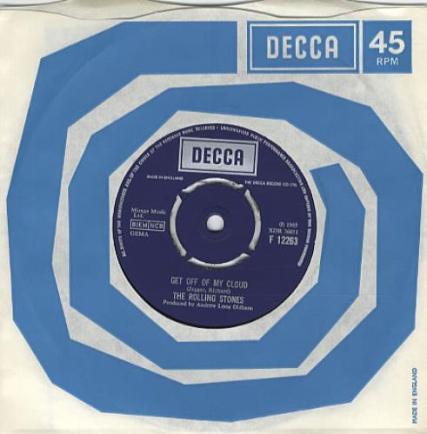
205. ‘Get Off Of My Cloud’, by The Rolling Stones

Barging Ken Dodd out of the way, snapping one of his tickling sticks and giving him the finger… It’s The Rolling Stones!

large

Get Off Of My Cloud, by The Rolling Stones (their 5th of eight #1s)

3 weeks, from 4th – 25th November 1965

They’re still angry, still dissatisfied with modern life, with complaining neighbours and, once again, detergent. What did Mick and Keith have against detergent…? Like ‘Satisfaction’, which was at #1 just six weeks before this, ‘Get Off of My Cloud’ tells an anti-hero’s story in three verses, against a frantic drumbeat and another scuzzily insistent riff.

It’s clearly another response to their new-found fame, their new-found position as The Beatles’ one true rivals to the throne. But all they want to do is be left alone. In each verse, Mick tries to escape the world around him: I sit at home looking out the window, Imagining the world has stopped… and I was sick and tired of this, Decided to take a drive downtown… It’s a response to, and another symptom of, their fame. This was a #1 in both the UK and the US, as well as Canada and Germany, and no other band could have taken a record as raw and aggressive as this to the top of the charts around the world.

It’s also a very hard song to sing. There are several points where I have no idea what is being sung, Charlie Watt’s drums and the guitars being so prominent in the mix, with Jagger’s vocals submerged under them. My favourite bit is when he almost starts rapping the phone-call from his neighbour, asking him and his friends to shut up because it’s 3 a.m. The telephone is ringing I say ‘Hi, it’s me, who’s there on the line? A voice says ‘Hi, hello, how are you?’ Well I guess I’m doin’ fine…

In the end, though, he finds some solace. He takes a drive downtown, where it’s nice and peaceful, and falls asleep. Whether or not he’s under the influence of something isn’t established… He wakes up to parking tickets, but I don’t think he cares – he’s Mick Jagger and he’s rich as piss. How the tickets look like flags, I don’t know. And I have no idea who the guy dressed up like a Union Jack is meant to be.

Rolling+Stones+Get+Off+Of+My+Cloud+-+Boxed+Lo-106573

It’s a weird song. A scrappy, messy, glorious song. Apparently Keith Richards doesn’t look back on it too fondly, what with it being rushed out in order to capitalise on ‘Satisfaction’s success. And yes, the sound is a bit off, and the mix a bit bass heavy, and the lyrics pretty much cover the same ground as ‘Satisfaction’, but that’s part of this record’s charm. It really does sound like it was recorded in a garage, in one take, and while the sound is far removed from their bluesy roots, this is in keeping with The Stones as a rough and ready rock ‘n’ roll band.

But if that doesn’t convince you, at least you can’t deny the hook. Hey! – hey – You! – you – Get off of my cloud! Who hasn’t wanted to yell that at someone who’s been bringing them down, when you just want a bit of peace and quiet. Don’t hang around cos two’s a crowd…

Looking back at The Stones three #1s from this year, we have three masterpieces of attitude and anger. Gone are the blues covers, in comes ‘The Last Time’ with its disparaging swagger, ‘Satisfaction’ with that riff and it’s dissatisfaction with fame and modern living, and now this… more dissatisfaction with fame, modern living and the whole bloody world. And, taking these three discs and standing them side by side next to The Beatles three 1965 chart-toppers – ‘Ticket to Ride’, ‘Help!’ and ‘Day Tripper’, which is coming up in a couple of posts time… I’m going to go out on a limb and say The Stones’ output – solely talking about the chart-toppers, here – was, for the moment, trumping the Fab Four’s.

Not that it would last… But that’s a story for another day.

Follow along with my Spotify playlist:

202. ‘(I Can’t Get No) Satisfaction’, by The Rolling Stones

You know how, nowadays, when seen through jaded 2019 eyes, ‘The Exorcist’ isn’t that scary, and ‘Lady Chatterley’s Lover’ isn’t that shocking, and ‘Rock Around the Clock’ sounds a bit lightweight? Well, I wondered if the same might happen here. If ‘(I Can’t Get No) Satisfaction’, one of the angriest, most provocative singles of the sixties, might have lost its edge.

the-rolling-stones

(I Can’t Get No) Satisfaction, by The Rolling Stones (their 4th of eight #1s)

2 weeks, from 9th – 23rd September 1965

Press play, though, and let that jackhammer of a riff run through you. That scuzzy, incessant guitar which sounds as if it’s ripping your speakers open, that doesn’t let up right through this near four-minute song. You soon realise that this fifty-five year old song is still full of spite and aggro.

Jagger’s vocals, when they come in, are – in contrast – soft, almost whispered. I can’t get no, Satisfaction… Cos I try, And I try, And I try… But he quickly build ups to the famous shout: I Can’t Get No! It’s a statement of intent. A rallying cry. I love the fact that it knocked ‘I’ve Got You Babe’ off the top spot.

Then we get to the verses. And, again, we’re treading new ground here. This is a #1 single with an attitude, and a conscience. When I’m drivin’ in my car, And a man comes on the radio, An’ he’s tellin’ me more and more, About some useless information… It’s a critique on commercialism, and capitalism, in a pop song! Later on, Mick is watching TV, and is getting fed up with all the adverts for clothes detergent and cigarettes. It’s leaving him unsatisfied, empty. We’re a long way from ‘I’m Into Something Good’ here. Now, The Stones were no hippies. That’s for certain. They’ll try their hand at psychedelica, for a while, but their hearts won’t be in it. Yet this is definitely one of the first counter-culture, ‘stick it to the man’ hit records. Hippyish in spirit; certainly not in sound.

sat3c

However, it’s the final verse that, at the time, caused most of the controversy. ‘Satisfaction’ was either edited down, had its lyrics changed, or was simply not played at all on British radio and TV. Because suddenly Jagger’s not singing about existentialist ‘satisfaction’ – about being bombarded with advertising bullshit. He’s talking about the other kind of ‘satisfaction’. The girl reaction kind. This is The Stones, after all. And I had no idea, until it came to writing this post, that the line in which the girl turns him down due to her being on a losing streak was a reference to her having her period!

It ends, much like their previous #1, ‘The Last Time’, with a bit of a wig-out, with Jagger yelling the famous refrain out over the fade. Every time I write about a Stones chart-topper, I mention how ‘nasty’, or how ‘grown up’ they sound, in comparison to everyone else around at the time. And they are getting nastier by the record. Compare their jaunty, bluesy debut at the top – ‘It’s All Over Now’ – to this.

This might be their fourth number one, meaning that we are halfway through their chart-topping run, but you can argue that it wasn’t until ‘Satisfaction’ that The Stones truly arrived. Gone were the covers of old blues songs. Jagger and Richards were now the main song-writing duo, with Brian Jones ably assisting. This was their first US #1, and suddenly they were the (second) biggest band on the planet. And if you think that this is a nasty, cynical, rebellious piece of rock ‘n’ roll, just wait until you hear their next chart-topper, coming up very shortly indeed.

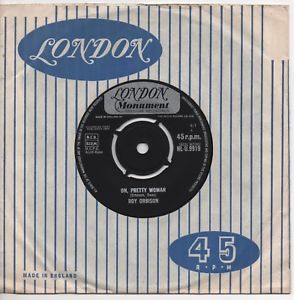
179. ‘Oh, Pretty Woman’ by Roy Orbison

In comes an intro that isn’t messing around… Sturdy, confident drums… Then Dun-dun-dun-dun-dun… An intro that builds – a layer added with every repetition – until it morphs into a chain-link of a riff.

0002611_oh-pretty-woman-roy-orbison-bill-dees-recorded-by-roy-orbison_550

Oh, Pretty Woman, by Roy Orbison (his 3rd and final #1)

2 weeks, from 8th – 22nd October / 1 week, from 12th – 19th November 1964 (3 weeks total)

And then in comes that voice. The Big O. Reigning it in a little compared to his last, full on operetta of a #1 single, ‘It’s Over’Pretty woman, Walkin’ down the street, Pretty woman, The kind I’d like to meet…  Now, let’s pause for just a second. That ‘I’d’ right there, twenty seconds in, makes or breaks this song. ‘I’d like to meet…’ suggests that he’s been a little unlucky in love. Make it ‘I like to meet…’ as some sources do claim, and the singer suddenly becomes a player, a predator, and the song a little icky. I’m going to trust that it’s an ‘I’d’…

Anyway. Roy’s just hanging out, chilling, watching the girls go by. Pretty woman… I don’t believe you, You’re not the truth, No-one could look as good as you… And then a spoken Mercy! that is truly sublime. Pretty woman, Won’t you pardon me, Pretty woman, I couldn’t help but see… That you look lovely as can be, Are you lonely, Just like me…? He may be ogling and approaching passers-by, but he’s a perfect gentleman about it. Plus, he’s lonely. There’s a tenderness to this song that lifts it above other stalker-anthems like ‘I’m Walking Behind You’ and ‘Every Breath You Take.’

Then, though, Roy does something that even he probably can’t get away with. The grrrrrooooowwwwllllll. Let’s pretend the growl never happens, OK? We get to the bridge – a real fifties rock ‘n’ roll throwback – that seals this record’s place among the greats. Pretty woman, Stop a while, Pretty woman, Talk a while… while the drums roll, and a piano tinkles.

As with ‘It’s Over’, ‘Oh, Pretty Woman’ stands out against the musical landscape of 1964. It could have been a hit five years earlier, or ten years later. I’m not sure you could say the same of ‘Do Wah Diddy Diddy’. The Roy Orbison renaissance (the Roynaissance, if I may) of ’64 is probably the most pleasant surprise in a spectacular year of pop music. Though to be honest, he hadn’t been anywhere, and had been scoring big hits throughout the early sixties. It’s just that none of them had made it to the top of the charts.

s-l300 (3)

We get to the climax of the song, and an already brilliant song is elevated even further. The rules of pop music never applied to Roy Orbison, and he bends them to great effect here. He serves us a cliff-hanger, similar to the one he dishes up at the end of ‘Running Scared’. The woman doesn’t stop, and he’s left disappointed. He slows it down, in his trademark talking-singing-freestyling style: Don’t walk away, Hey…. OK… If that’s the way it must be, OK… Then another moment of perfection – But, wait… Cut to the same drumbeat that opened the song. What’s that I see…? She’s turned around. She’s coming back! Of course she’s coming back. Was there a woman alive who could resist the Orbison charm?

I, as I’m sure you’ve realised, love this record. It’s a Rolling Stone Top 500, Rock n Roll Hall of Fame kind of record. A song that nobody can say a bad word about. I love Roy Orbison too, and still remember getting his greatest hits as a Christmas present back as a kid. Perhaps with the exception of Elvis, no other star of the fifties and sixties had an identifiable image like Roy Orbison. Dark suit, dark glasses, guitar, quiff. It’s up there with Michael Jackson’s hat and glove, and Madonna’s pointy bra. You may think it’s superficial; but it’s a hallmark of the very best pop stars.

Following this, Orbison suffered some pretty lean years in terms of chart hits, and some unimaginable tragedies: he lost his wife and his two eldest sons in the space of two years. But, as with all the greats he came back – The Travelling Wilburys, ‘You Got It’ and all that. And then, just as his comeback was picking up speed, and in a twist befitting one of his greatest ballads, he had a heart-attack and died, in 1988, aged just fifty-two. He’s a legend – plain and simple. The songs that defied convention, the operatic voice, and the dark glasses. The Big O.

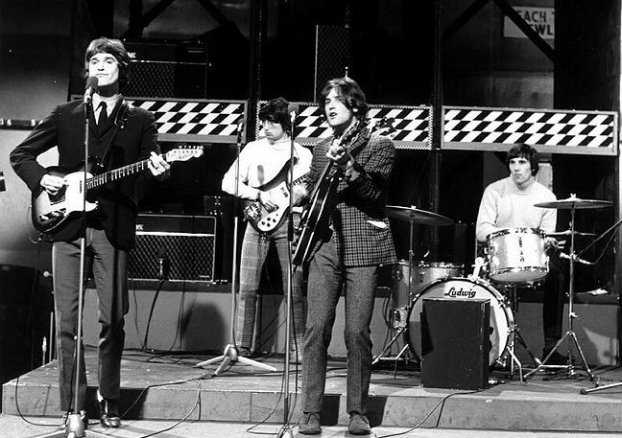
177. ‘You Really Got Me’, by The Kinks

Chart-topper No. 177, AKA The One Where Heavy Metal is invented. Or so the history books would have you believe…

DeZB8dhW4AAJjaL

You Really Got Me, by The Kinks (their 1st of three #1s)

2 weeks, from 10th – 24th September 1964

It’s easy to see why ‘You Really Got Me’ has gone down in the annals as the first metal/hard rock song (let alone #1 hit). There hasn’t been a chart-topper yet that has relied so heavily on its riff. Da-da-da-dun-da, Da-da-da-dun-da … Two sharp blasts from Dave Davies’ guitar kick us off, and it doesn’t let up until the very end. Da-da-da-dun-da, Da-da-da-dun-da…

Girl, You really got me goin’, You got me so I don’t know what I’m doin’ … Lyrics that rival the riff for brutal simplicity. You really got me now, You got me so I can’t sleep at night… The band called it a ‘love song for street kids’, and you can understand the sentiment. Poetry it ain’t; but the message comes across loud and clear. It’s a simple, yet intense, song. An intensely simple song. With that dense, monotonous riff dragging all along in its wake.

And the solo, when it arrives, is definitely the hardest rocking twenty seconds or so to feature at the top of the UK charts. And I don’t just mean up to now – I mean ever. Pure, unadulterated ROCK doesn’t often make it to the top of the charts and this solo, even listening to it fifty-five years on, still has the power to grab you by the balls. Ray Davies screams, and his brother goes wild.

My favourite bit, though, of this whole record, is how the choruses build into that oh yeeaahhh! moment, where the whole band join in and propel us into that unforgettable hook: You really got me, You really got me, You really got me…! It’s at this point that you realise you’re also listening to the first true power-pop record, too, with the vocals and the riff coming together to punch out the tune. Plus, you could argue that this is one of the first garage rock discs, too, in its simplicity and its rough-round-the-edges charm.

the-kinks-you-really-got-me-1964

Whatever genre this is – metal, garage rock, power-pop – it’s an undeniable classic. Few bands have announced themselves to the world like The Kinks did with this disc. And, like all great songs, a mythology has grown around ‘You Really Got Me’… Allegedly, the lead guitar was played by a then session-musician Jimmy Page (it wasn’t). Also allegedly, you can hear Ray Davies telling his brother to ‘fuck off’ in the drum fill just before the solo (I’ve really tried, but can’t). And then there’s the story of how the band achieved that gritty, crunchy guitar sound – by ripping the amplifier open.

I’ve listened to this song seven or eight times now in writing this, and I could listen to it seven or eight more. It’s perfect: short, sharp and sexy. It really feels as if every #1 we come across at the moment is raising the stakes – whether it’s The Honeycombs stamping on Joe Meek’s staircase, The Animals and The Stones bringing the blues, or The Beatles killing off Merseybeat in the outro to ‘A Hard Day’s Night’. Look back one year, to the days of Frank Ifield, Cliff, even Gerry & The Pacemakers, and it feels (and sounds) more like ten.

Weirdly, despite the fact that this may well be The Kinks’ biggest, best-known hit; it really doesn’t sound like them. The follow-up to this was ‘All Day and All of the Night’ (basically ‘You Really Got Me’ Pt. II), but after that they went in all kinds of different directions: Beat, music hall, folk, as well as pure pop. They have two more #1s to come, though, so let’s save all that for another day.

To end… I have a confession to make. This is such a classic, timeless, influential record that… and I think this just goes to show how irresistible this song truly is… I love even the Van Halen cover version…

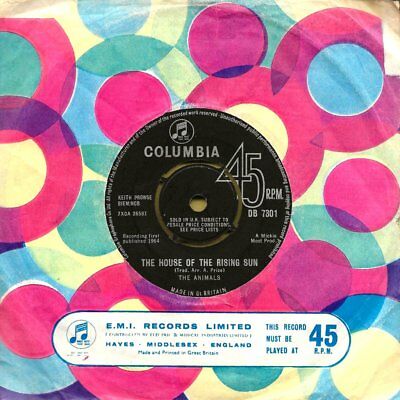
172. ‘The House of the Rising Sun’, by The Animals

What have we here, then? A riff kicks in – and keeps on kicking for the next four and a half minutes – beckoning us towards a song about a whorehouse-slash-gambling den. Is this the moment in which the ‘and roll’ is dropped, and ‘rock’ strikes out on his own, with a capital R, O, C and K?

via-abkco-records-b8dfd84a5f29dc9250e2a8cc1c62a10fe6b81eab-s800-c85

The House of the Rising Sun, by The Animals (their 1st and only #1)

1 week, from 9th – 16th July 1964

It’s an ominous, minor-key intro. Nothing good is going to come of it. And when the vocals start, the mood darkens further. There is, A house, In New Orleans… They call the Rising Sun… (I’ve always liked the flamboyant way that the singer pronounces ‘New Orlay-ons’ in his sonorous voice.) And it’s been the ruin, Of many a poor boy, And God, I know, I’m one…

A young man, son of a tailor-woman and a gambler, heads into the latter-day Sodom and Gomorrah that is The Big Easy, and comes unstuck. How exactly he comes unstuck isn’t elaborated on – it is still only 1964, after all – but you can imagine. Cards, booze, women… If this were a movie, then the frenzied organ solo at the midway point would be the soundtrack to his descent into depravity.

Then comes a word of warning: Oh mother, Tell your children, Not to do what I have done… Except, the singer can’t heed his own advice – can’t resist the temptation of New Orleans: I got one foot on the platform, The other foot on the train, I’m going back to New Orleans, To wear that ball and chain… The organ grows more and more intense, the vocals wracked and howling – a voice that could cause avalanches. It’s completely different to Roy Orbison’s approach in the preceding #1, but it’s every bit as impressive. And the final, drawn-out horror movie chord that the song ends on is, frankly, terrifying.

This is something different… Every so often we arrive at #1s which feel like a level-up – chart-topping discs that raise the stakes (gambling pun very much intended). ‘Rock Around the Clock’, ‘Great Balls of Fire’, ‘How Do You Do It?’… and now this. After ‘House of the Rising Sun’ has blasted your eardrums, The Beatles and their Merseybeat chums sound like school kids. The Animals were men. The name alone is raw, and untamed. It’s also the longest number one single so far by some distance. The Animals didn’t edit their singles for nobody!

The-Animals-The-House-Of-The

They were a five-piece from Newcastle, and the lead singer with the voice of a wolf was one Eric Burden, a man who started smoking aged 10, fell in love with an older woman aged 13, and who preferred drinking ale to going to school (they breed them tough in the north-east.) He is, allegedly, The Eggman of ‘I Am the Walrus’ fame, due to an incident involving amyl nitrate and a fried breakfast… I really want to read his autobiography. Besides this disc, The Animals gave us two more ‘Best of the 60s’ perennials – ‘Please Don’t Let Me Be Misunderstood’ and ‘We’ve Got to Get Out of This Place’. They weren’t ones for shortening their song titles either…

‘House of the Rising Sun’ has an equally interesting, and hard-edged history. Sources differ, but it seems certain that the song is as old as the 17th century. It originated either in England or France. The lyrics were originally about a woman led astray; The Animal’s version was the first to reverse the gender.

If this record hitting #1 is a game-changer – giving us pure, southern R&B at the top of the hit parade – then it has to be viewed as the first of a two-parter. While this is a seminal record; The Animals chart career didn’t last. Our next, bluesy chart-topper may not be as well-known, but the group that recorded it are perhaps the most famous rock ‘n’ roll band in history…

171. ‘It’s Over’, by Roy Orbison

Out of nowhere, the Big ‘O’ is back. Enough of this new-fangled ‘Beat’ nonsense, he says. It’s been a little too happy at the top of the charts recently; a little too much positivity going round. Roy is here to change all that.

roy-orbison---monument---color1-e23f5a1e868942826513ded7cdd783370ff3fda4-s800-c85

It’s Over, by Roy Orbison (his 2nd of three #1s)

2 weeks, from 25th June – 9th July 1964

This isn’t any kind of reinvention. Orbison hasn’t updated his sound to keep up with the kids. Last we heard from him, over three and a half years ago, it was with ‘Only the Lonely’. Now, ‘It’s Over’. And if you held any hopes that that might just be a misleading title, then the opening line crushes them. A guitar gently strums… Your baby doesn’t love you, Anymore…

And so we embark on a song absolutely drowning in melodramatic heartbreak. Roy O excelled at this kind of OTT emoting. Lines like: All the rainbows in the sky, Start to weep and say goodbye… and Setting suns before they fall, Echo to you ‘That’s all, that’s all’… are both ridiculous and perfect. While in the build-up to the chorus, when he sings She says to you, There’s someone new, Were throu-ou-ough… and then, just for good measure, another We’re through! Goosebumps.

I had never heard of a ‘bolero’ before researching this song, but it’s a term that’s been used to describe what Orbison was doing in ballads like these. A bolero being, in Latin music, a piece that ‘builds’; and in pop music a song that builds to a climax without the traditional verse, bridge, chorus structure. Not that ‘It’s Over’ is strictly a bolero. There is a latin flavour to the insistent guitars, and the occasional castanets, but there is a reset halfway through, after the first three It’s overs… For a true taste of Orbison-bolero, check out the equally sublime ‘Running Scared’.

By the end of the song, you’ve come to a startling realisation. The Big ‘O’ is bloody loving all this heartbreak. For a start, this song is written in the 2nd person – he’s singing about another person’s despair. He’s the angel of heartbreak swooping in through some poor guy’s bedroom window, as his wife slams the door behind her, singing And you’ll see lonely sunsets, After all… And then we get to the climax. It’s over, It’s over, It’s over! But it’s not. Oh no. Pause. One final breath. And Jeezo. That last It’s Over! No chart-topper, before or since – and bear in mind that we’re on around 1300 by now – has had as dramatic and emphatic an ending as chart-topper #171.

s-l300 (1)

As I wrote above, this was Roy Orbison’s 2nd number one after a near four year wait. Under normal circumstances, a four year gap between chart-toppers is nothing special. But for him to span these four years, which saw Elvis kill off what remained of rock ‘n’ roll and The Beatles et al launch a musical revolution, is pretty impressive. His contemporaries at the top when ‘Only The Lonely’ was there were Ricky Valance, Cliff and Johnny Tillotson. And he’s done it without compromise. This record is The Big ‘O’ doing what The Big ‘O’ does best, and for its two minutes and forty-seven seconds you could be forgiven for forgetting that anything has changed. Back when The Beatles and The Pacemakers landed on the charts, I compared them to a meteor, killing off all the musical dinosaurs. But I forgot about Roy Orbison. I now have a mental image of him coolly lifting the meteor up with one arm, stepping out from under it and dusting himself off. And re-adjusting his shades, of course.

Interestingly, he’s the first American-that-isn’t-Elvis-Presley to top the charts since Ray Charles in July 1962. The Beat revolution has been, up to now, a strictly British affair. But that’s going to start slowly changing. As for Roy, it’s certainly not over. Not yet. He’s got one final #1 left in the tank, and it might just be his signature song.

Follow along with my Spotify playlist:

Songs That Should Have Been #1… ‘Heartbreak Hotel’, by Elvis Presley

The Stargazers, Don Cornell, The Johnston Brothers, The Dream Weavers, Jerry Keller…? Nope, me neither. But they’ve all had the honour of topping the UK singles chart.

How well a single performs in the charts can be influenced by various things… promotion, star power, tastes and trends, time of year… pure luck. And that most fickle, unpredictable of  factors: the general public. Do enough of them like your song to make it a smash? Or will they ignore it, and let it fall by the wayside?

I’m taking a short break from the regular countdown to feature five discs that really should have topped the charts. Be it for their long-reaching influence, their enduring popularity or for the simple fact that, had they peaked a week earlier or later, they might have made it. (I’ll only be covering songs released before 1964, as that’s where I’m up to on the usual countdown.)

Next up…

Well since my baby left me…

mainELVISPRESL-800x445

Heartbreak Hotel, by Elvis Presley

 reached #2 in June 1956

OK, OK, I know. Elvis doesn’t need any more number one singles. He’s had plenty. Back on my regular countdown, of actual #1s, we’re in 1964 and The King of Rock ‘n’ Roll is on fourteen (14!)

But… His dominance of the charts in the early 1960s is why I wish that this disc could have made the top. He had some brilliant, classic #1s – don’t get me wrong – but he also dragged a lot of crap to the top just through the power of his name. If only we could swap ‘Good Luck Charm’, or ‘Rock-A-Hula Baby’, or ‘Wooden Heart’, for this burst of primal energy.

This was Elvis the hip-swiveller, Elvis as Moral Panic, Elvis the Pelvis edited from the waist down… And it’s a really clever song, too. A broken heart imagined as a real place – a hotel where broken-hearted lovers cry in the gloom, and the desk-clerks are all dressed in black. It was inspired by a real-life suicide, which is some heavy shit for a pop song in 1956 (for comparison, it was kept off the top-spot in Britain by the banal, saccharine stylings of Pat Boone, with ‘I’ll Be Home’.) And when that guitar solo kicks in… Oh boy. The King was most definitely in the building.

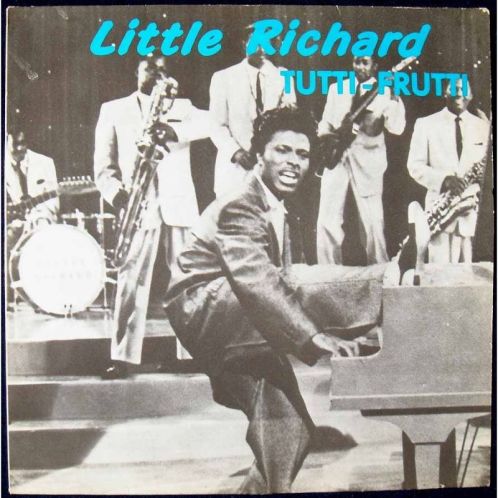
Songs That Should Have Been #1… “Tutti Frutti”, by Little Richard

The Stargazers, Don Cornell, The Johnston Brothers, The Dream Weavers, Jerry Keller…? Nope, me neither. But they’ve all had the honour of topping the UK singles chart.

How well a single performs in the charts can be influenced by various things… promotion, star power, tastes and trends, time of year… pure luck. And that most fickle, unpredictable of  factors: the general public. Do enough of them like your song to make it a smash? Or will they ignore it, and let it fall by the wayside?

I’m taking a short break from the regular countdown to feature five discs that really should have topped the charts. Be it for their long-reaching influence, their enduring popularity or for the simple fact that, had they peaked a week earlier or later, they might have made it. (I’ll only be covering songs released before 1964, as that’s where I’m up to on the usual countdown.)

And first up… A-wop-bop-a-loo-mop-a-lop-bom-bom!

little-richard

Tutti Frutti, by Little Richard

Recorded in September 1955, peaked at #29 in February 1957

‘Tutti Frutti’ came nowhere near the top of the charts. One week at #29, a year and a half after it was originally recorded. That’s all. But this is the sound of the rock ‘n’ roll starters whistle. This is rock ‘n’ roll: the tempo, the frenzied piano, the orgasmic ‘ooooh’s, the wonderful nonsense of the lyrics… Imagine, for a second, a parallel universe in which this was a chart-topping hit.

In real life, rock ‘n’ roll was announced at the top of the UK charts by ‘Rock Around the Clock’ – which is fine. A classic. A seminal record. We all know it. But if this had been the disc to kick it all off in the autumn of ’55… A flamboyant black pianist, pounding out a song (allegedly) originally written with references to gay sex (Tutti Frutti, Good booty, If it don’t fit, Don’t force it…) All that had been eliminated by the time it came to be recorded properly, but the sanitised version was still saucy enough: Got a girl, Named Sue, She knows just what to do… Imagine that knocking Jimmy Young’s plodding ‘The Man From Laramie’ unceremoniously off the top!

Of the big four rock ‘n’ rollers – Elvis, Chuck, Buddy, and Little Richard – the latter is the only one never to have topped the UK charts. He is the only one still alive so… who knows – there might still be time! The closest he came was with his cover of ‘Baby Face’, which reached #2 in early 1959.

161. ‘Glad All Over’, by The Dave Clark Five

And so we launch head-first into 1964. Suddenly we are in the mid-sixties! Doesn’t time fly! And kicking off the new year are some newbies at the top of the UK singles charts: The Dave Clark Five.

mezzanine_296

Glad All Over, by The Dave Clark Five (their 1st and only #1)

2 weeks, from 16th – 30th January 1964

Interestingly, none of the acts that topped the charts in 1963 were one-offs. Every single one of them had hit #1 previously, or would go on to hit #1 again. But the very first chart-topping act of 1964 are… drum roll… one #1 wonders!

Anyway, this a barnstorming way to start off. We get a thumping, grinding drum-beat designed to blow away any lingering new year hangovers, which is quickly joined by a bass and a stabbing saxophone. Then the singer (Mike Smith, not Dave Clark) jumps in: You say that you love me, All of the time, You say that you need me, You’ll always be mine…

The beat then morphs into an insistent, irresistible galloping-horse rhythm that will last for the whole song. And then comes a chorus that pretty much everyone knows: And I’m feelin’… Glad all over…Yes, I’m a-… Glad all over…!

It’s an non-stop sledgehammer of a song, with large swathes of call-and-response and a key-change that is pointless trying to resist. Other girls may try to take me away… (you can just pictures the girl’s eyes rolling at this point)… But you know, It’s by your side, I will stay… It’s a fun disc. File it under ‘unsophisticated’. This and The Tremeloes’ ‘Do You Love Me’ from a few posts ago would make a great drunken-1am-singalong double-header.

R-5972494-1481232145-4446.jpeg

Like ‘You’ll Never Walk Alone’, this is also a huge football, and rugby, crowd song – the call and response bits work perfectly – and is usually played after a home-team scores (Crystal Palace started it when ‘Glad All Over’ was still in the charts and lots of other teams followed suit). It was last seen in the UK charts a couple of years ago when Glasgow Rangers fans did a mass-download campaign. In fact, I’d have to say that this is just the latest in a run of chart-toppers that have entered the public consciousness like few previous #1s have. From ‘Sweets For My Sweet’ through ‘Do You Love Me’, plus the recent Beatles chart-toppers… I’ll bet most people on the streets could sing a line or two from all of these songs, even today. Just goes to show how much the music from this era lingers on.

Since we’ll never hear from them again on this countdown – just who were The Dave Clark Five? Well, you’ll be shocked to discover that there were five of them, and that they were ‘led’ by one Dave Clark, who also drummed on all their hits. They were from Tottenham, in North London, and were at the vanguard of the ‘Tottenham Sound’ -which I’m not sure sounded any different to the Mersey-sound, or any other variety of Beat-band sound, but hey – they were representing. As I mentioned, this was their one and only #1; but they scored Top 10s throughout the sixties before splitting up in 1970.

There you have it then. 1964 is off and running with a boisterous pop number. I don’t go in for previews very often in these posts, but I have to mention here that ’64 is going to be a stellar year for chart-topping singles. One of the very best… if not the best… years in terms of #1 quality. Over the course of the next twenty-two hits we’ll hear some classics, meet some legends, and have a generally pretty ‘groovy’ time (that’s how people talked back in the sixties…)