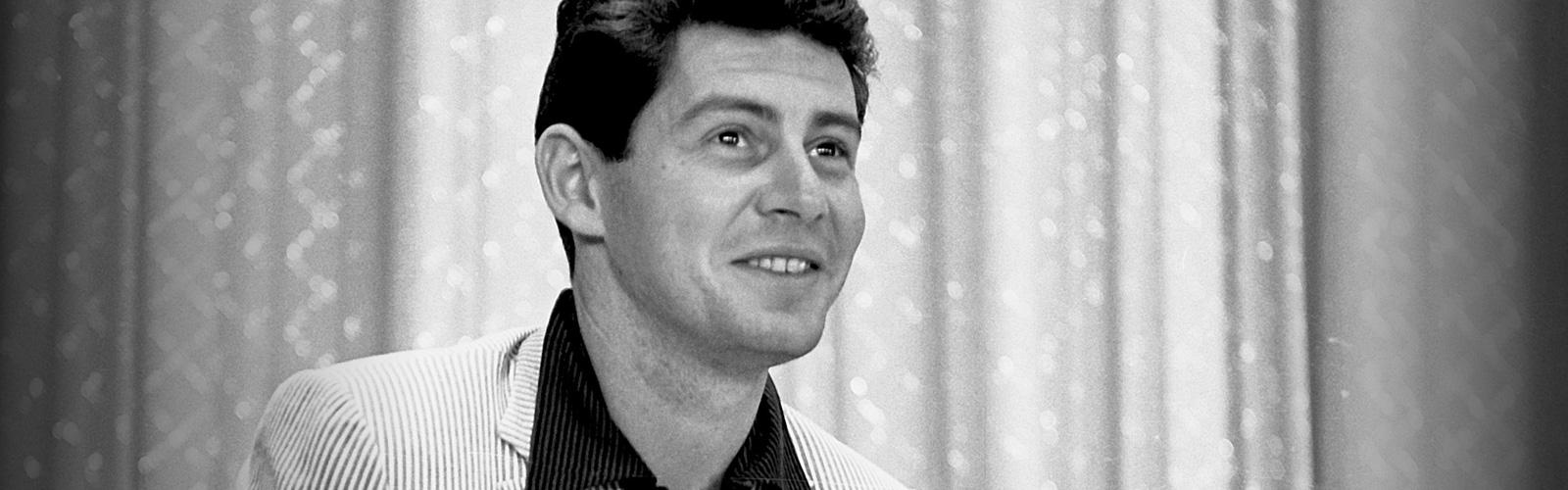
Remembering Connie Francis

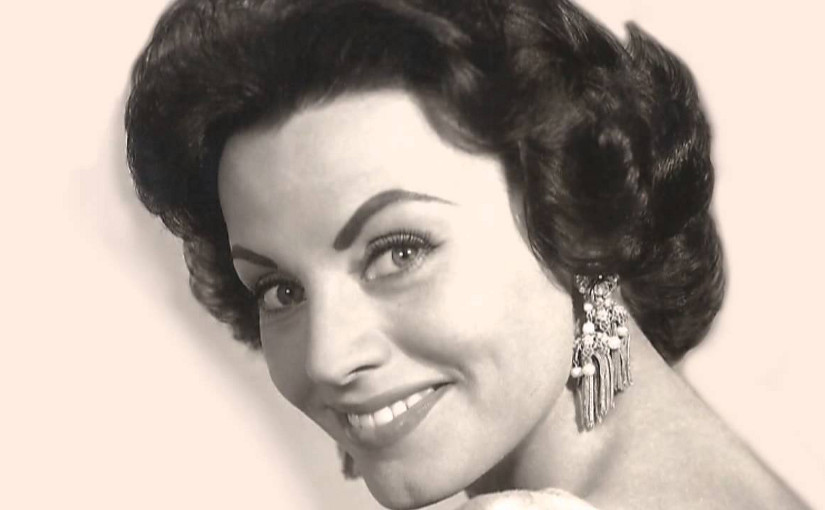
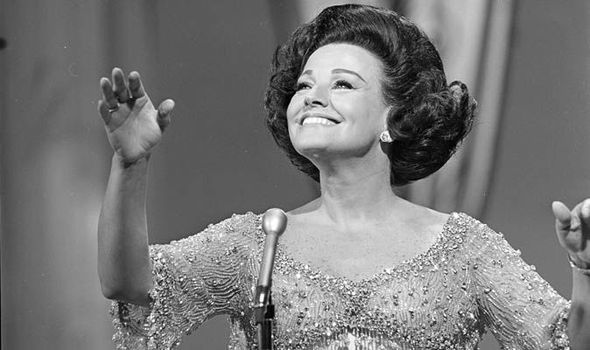
Earlier this week the sad news of Connie Francis’ death was announced, aged eighty-seven, closing the door on yet another chapter from the earliest chart years. There can’t be many, if any, older chart-toppers than Francis still around… And there were precious few women, either, who were scoring rock ‘n’ roll hits and competing with the big male stars of the late fifties.

Francis scored two huge, six-weeks-apiece #1s in 1958, the sassy ‘Who’s Sorry Now’ and the whipcracking ‘Stupid Cupid’ (twinned with ‘Carolina Moon’). I also covered her 1960 hits ‘Mama’ and ‘Robot Man’ as a Random Runner-Up. Follow those links to hear those tunes, and to read my original posts. But since writing those posts – and this has been one of the best things about doing this blog, discovering artists’ non-chart topping back catalogues – I’ve fallen in love with many of Connie’s other hits. So let’s share some here, in her memory.

‘Lipstick on Your Collar’ – #3 in 1959

I love the camp melodrama of this bop, about a cheating boy given away by lipstick smudges. How does Connie know the lipstick isn’t hers? Well, eagle-eyed, she notices his is red, while hers is baby pink. Coleen Rooney eat your heart out. Turns out that floozy Mary Jane had been smooching her man right outside the juke joint. But, as with so many of her early records, Connie does not wallow in heartbreak. In fact, she seems almost thrilled to have rumbled him…

‘Plenty Good Lovin” – #18 in 1959

A similarly uptempo, more swinging, hit from the same year. And this one is positively raunchy by 1959 standards. In fact, I’m not sure Connie isn’t simulating orgasm during the break in the middle… She sings the praises of a man who doesn’t have a nice car, can’t play guitar, is neither intelligent nor particularly good-looking, but who’s got somethin’ that’s better by far… I mean, gurrrrlllll… Plenty of things that he don’t know, But this boy shines when the lights are low…

‘Everybody’s Somebody’s Fool’ – #3 in 1960

Her first US #1, and in fact the first Billboard Hot 100 number one by a female singer (the chart having launched well over a year earlier). Which just goes to prove how impressive Francis’s hit making was, stacked against the likes of Elvis, Pat Boone, Ricky Nelson and co. I love the honky-tonk feel to this, with the rolling organ and the rickety, country beat, and her voice drenched in echo.

‘Where the Boys Are’ – #5 in 1961

Francis made her acting debut in 1961, in the movie ‘Where the Boys Are’. And the title track gave her another big hit, proving that she could sing something a little more traditional to go along with all the rock ‘n’ roll. In 1978, as she was attempting a career comeback, Connie recorded a disco version. If that doesn’t grab you, how about a Japanese version? Today’s female stars could only dream of such versatility.

‘Vacation’ – #10 in 1962

Despite not having an original bone in its body, and already sounding dated in 1962, I love this throwaway tune. ‘Vacation’ was Francis’s last Top 10 hit in both the US and the UK, as the Merseybeat acts prepared to render so many stars obsolete. But it’s hard not to get carried along with this record’s exuberance. Maybe because I’m an English teacher in my day job, I’m instinctively drawn to songs that spell words out in the lyrics. Similarly, it’s probably why I’m drawn to songs about the summer holidays. So this one works for me on many levels.

‘Pretty Little Baby’

It would be wrong to finish without mentioning her final ‘hit’. ‘Pretty Little Baby’ was a B-side back in 1962, but in recent months you’ll surely have heard it if you’ve spent any amount of time scrolling on Instagram or TikTok. In one of her final interviews, Francis claimed to have forgotten of the song’s existence, but that she was touched by its resurgence, and how even kindergartners now know her music. Back to teaching for a moment, I can attest to this as I have a student who has been singing this to himself for several months now… Musically this is cute, and I love whatever early electronic device the solo was recorded on.

From the mid-sixties onwards the hits dried up, and Connie Francis’s personal life took several dark turns. The Guardian published a good article on her many highs and lows yesterday, and she became an advocate for mental health following various traumatic experiences. Having read that, it feels impressive that she lived such a long life and fulfilled life. She returned to music, and only officially retired a few years ago.

Connie Francis, December 12th 1937 – July 16th 2025

Remembering Johnnie Ray and Del Shannon

It’s been a while since I did a ‘Remembering’ post, so here’s two for the price of one. Two big stars of the pre-Beatles age, both of whom died within a couple of weeks in February 1990.

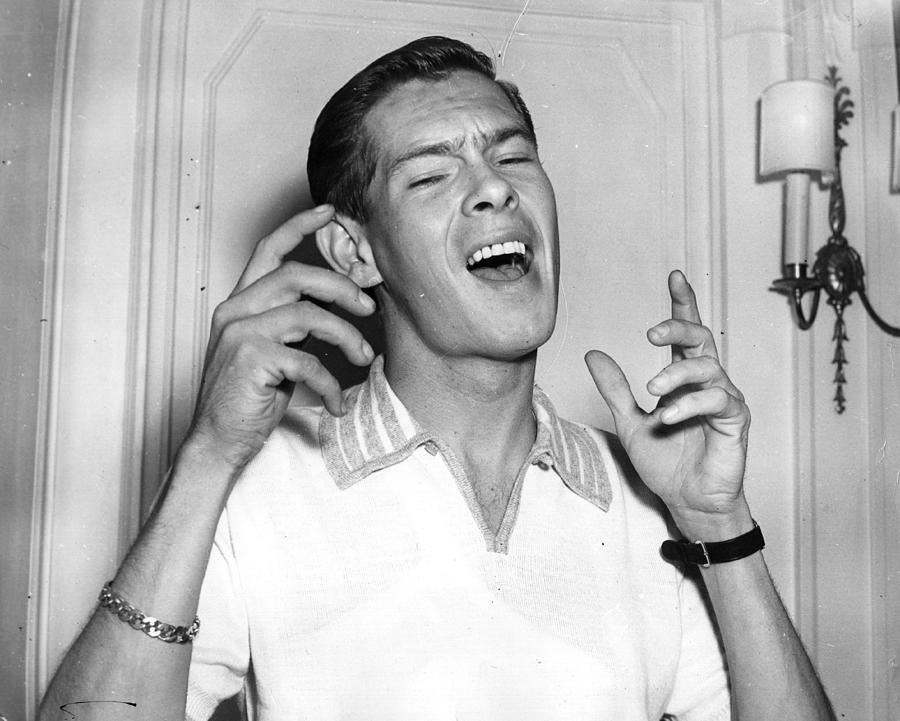
Before starting this blog, I knew Johnnie Ray by name and not much else. He after all is referenced in the opening line of ‘Come On Eileen’ (Poor old Johnnie Ray…) But I will now be forever grateful to him, for making the earliest years of the charts bearable, when it sometimes felt like one po-faced ballad after another, after another. His first #1 was the incredibly steamy (by 1954 standards) ‘Such a Night’, and he had a seven-week run with the whistle-tastic ‘Just Walkin’ in the Rain’ before ending things with the zippy ‘Yes Tonight, Josephine’. All three are well worth a listen if you’ve not heard them before, and proof that pop music could be fun in the prehistoric era. Below I’ll highlight a few of my other favourites of his.

Released in 1951, before Britain even had a singles chart, we can assume that ‘Cry’ would have been a multi-week number one. The missing link between Sinatra and Elvis, Ray’s wonderfully histrionic performance shows why he was known as the ‘Nabob of Sob’ and the ‘Prince of Wails’, surely two of pop music’s best nicknames. His exaggerated, stagey way of singing may have been linked to the fact that he was partially deaf.

‘Ain’t Misbehavin’ is a standard, recorded by everyone from Louis Armstrong and Ella Fitzgerald, to Robson & Jerome. And while I’ll admit to not having heard every version, I’d suggest that you’d struggle to find a performance more committed than Johnnie Ray’s. The man was the epitome of the phrase ‘sing it for the back row’.

Fond of a whistle, Ray made #10 with ‘You Don’t Owe Me A Thing’ in early 1958, a perfect example of how rock ‘n’ roll was making its presence felt in records that weren’t actually rock songs.

By the early 1960s, like so many fifties stars, Ray’s career had tailed off. It’s surprising that he managed to have a career in the first place, after he was arrested for soliciting an undercover policeman in a public toilet in 1951. Rumours about Ray’s sexuality continued, but didn’t seem to harm his sales until another arrest in 1959. He was openly bisexual to many in the music industry, and married a woman named Marilyn Morrison in 1952, who claimed she would ‘straighten him out’. They separated after a year.

Ray also had problems with alcohol, which worsened in the sixties. He would sporadically tour small venues and appear on television in the States, while commanding much larger audiences in the UK and Australia (where he remained most popular) right up until his death from liver failure on February 24th 1990. He was sixty-three.

Del Shannon scored his sole chart-topper a few years after Ray’s time at the top. And what a chart-topper it was. ‘Runaway’ is possibly the most inventive, most exciting, most propulsive #1 of that supposedly fallow period between Elvis and The Beatles. It made top spot in the summer of 1961, and features an innovative Musitron solo, making it arguably the first electronic hit. But even if that solo was played on a clapped out old piano it would take nothing from the record’s innate quality. Anyway, I discussed all this in more detail in my post on ‘Runaway’ here.

‘Runaway’ is so good that it tends to completely overshadow anything Del Shannon released afterwards. But ‘Little Town Flirt’ is another great slice of malt shop pop, making #4 in early 1963. He had a good line in heartbreak, and woman shaming, usually singing about runaways and flirts, and in ‘Hats Off to Larry’ he indulges in a bit of schadenfreude as his ex is dumped and left as heartbroken as he had been.

Shannon had a style, and came pretty close to shamelessly ripping himself off on some records (check out how close ‘Two Kinds of Teardrops’ is to ‘Little Town Flirt!) But on ‘So Long Baby’ he managed to recycle the energy of ‘Runaway’ into a deranged oompah beat and create a #10 hit that sounds both frivolous and terrifying.

Like Johnnie Ray, Del Shannon’s career slowed down towards the end of the sixties and into the seventies as he battled alcoholism. He worked with Tom Petty and Dave Edmunds, and by the ’80s he had sobered up and started something of a comeback. He worked with Jeff Lynne, and was touted as a replacement for Roy Orbison in The Travelling Wilburys. Sadly, though, he shot himself on February 8th 1990, apparently after having a negative reaction to the Prozac he was taking for depression. He was just fifty-five.

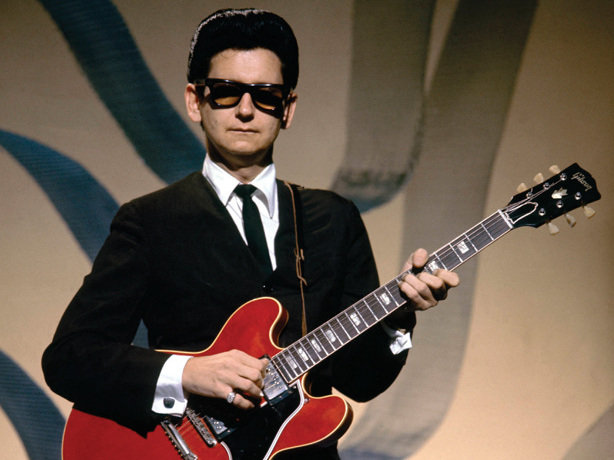
Roy Orbison: Best of the Rest

December 6th marks the 34th anniversary of Roy Orbison’s death, at the tragically young age of fifty-two. The ‘Big O’ stood apart from other early rock ‘n’ rollers, with his sombre stage persona, his vulnerable, melancholy songs, and his semi-operatic voice.

After his hit-making days ended in the mid-to-late sixties, a decade in the wilderness beckoned. Personal tragedies also unfolded – the deaths of his wife and his two eldest sons in a car crash and house fire respectively. The eighties saw a rediscovery of his work, with hit covers of his songs by Don McClean and Van Halen, and the formation of The Traveling Wilburys supergroup in 1988, alongside Bob Dylan, Jeff Lynne, George Harrison and Tom Petty. On the cusp of a triumphant comeback, Orbison died from a heart attack on December 6th 1988.

I’ve already written about his three chart-toppers (‘Only the Lonely’, ‘It’s Over’ and ‘Oh, Pretty Woman’) – classics the lot of them – and so to mark this day I’ll cover his five next-biggest UK hits…

‘In Dreams’ – #6 in 1963

A candy-coloured clown they call the Sandman, Tiptoes to my room every night… Only Roy Orbison could give a lyric so ridiculous-and-yet-terrifying the weight that it deserves. He dreams of his ex-lover then wakes, bathed in sweat, and alone. (Of course he’s alone – it’s a Roy Orbison song.) It’s got the same build-up as one of The Big ‘O’s very best songs, ‘Running Scared’, which barely scraped into the Top 10. ‘In Dreams’ is not quite as good, but builds to a fine crescendo. Roy, as was his way, hits a note that most humans are incapable of imagining, let along singing. ‘In Dreams’ was used to famous effect in David Lynch’s ‘Blue Velvet’, a move that initially shocked Orbison but one that he came to accept after seeing the film several times (and perhaps, if we’re being cynical, seeing the publicity it brought his music…)

‘Too Soon to Know’ – #3 in 1966

A country cover that, I must admit, I’d never heard before. And yet it’s one of his biggest UK hits. It must have sounded quite unfashionable in the swinging charts of 1966 and yet… When was Roy Orbison ever truly in fashion? Or out of fashion, for that matter? He ploughed his own, spectacular furrow. It’s sweet, but lacking the oomph of Roy’s biggest and best hits.

‘Blue Bayou’ – #3 in 1963

Another bit of country-pop, with a cool bassline. And with Orbison’s angelic tones in the chorus, this is no normal country tune. No matter what genre he turned his hand to – country, pop, rock ‘n’ roll – he couldn’t help doing it a bit different. As a kid, I had no idea what a bayou was, but always thought it sounded nice: where you sleep all day, and the catfish play… I’m still not one-hundred percent certain what a bayou is, but I’d definitely like to hang out there…

‘You Got It’ – #3 in 1989

The comeback hit that never was. Well, it was a hit – one of his biggest – but Roy wasn’t around to enjoy his return to the top end of the charts. And ‘You Got It’ is almost the perfect comeback – a slight updating of Orbison’s sound, with some help from Jeff Lynne, but still a record that could easily slip in amongst his classics from the early sixties. The video above was filmed just a few weeks before his untimely death. It feels churlish to wonder if it would have been such a big hit had he not died… Maybe it would, as it’s a great song.

‘Dream Baby (How Long Must I Dream)’ – #2 in 1962

Interesting that this rockabilly ditty is Roy Orbison’s biggest non-#1. It’s nice enough: a repetitive refrain that turns into a sort of mantra as the song progresses, and it builds to a crescendo as all the best Orbison songs do. But it’s not an all time classic. Not a ‘Crying’, a ‘Running Scared’ or a ‘Blue Angel’ (my personal favourite). The video above is worth a look if not for the song then for the spectacularly uninterested audience. What did he say just before launching into the song…?

Roy Orbison, then. One of the most original chart stars going, with one of the very best voices.

Roy Orbison, April 26th 1936 – December 6th 1988

Remembering Jerry Lee Lewis

Last time I did a ‘Remembering’ post, it was on the universally loved and cherished Olivia Newton-John, about whom nobody had a bad word to say. Jerry Lee Lewis, though…

We’ve met some wrong ‘uns in our journey through the chart-toppers of yore. Bad types with equally bad music (Rolf Harris), bad types with music that I couldn’t help but enjoy (Gary Glitter). Jerry Lee Lewis was possibly that baddest of them all. ‘The Killer’, so named because he had allegedly tried to strangle a teacher at his high school – or so he said – lived a life that would make your average, run-of-the-mill criminal blush. Drug arrests, assault arrests, two wives dead in suspicious circumstances and – the one that effectively ended his mainstream chart career before it had truly started – a marriage to his thirteen year-old cousin.

He was, in his own words, an unrepentant hillbilly. Unpleasant and aggressive towards his fans, his family, journalists, and other musicians. (When he met John Lennon, he did so after berating the Beatles and their peers as ‘shit’ from the stage. Lennon, legend has it, still kneeled down to kiss Lewis’s feet.) Why then, does he seem to have gotten away with it? Any current artist who did a quarter of the things Jerry Lee allegedly did would have been cancelled into the dust. Is it because it was all so long ago? Is it because people were more able to seperate art from artist? Or is it because he was just so good?

For, no matter how terrible a person he was, he is rock and roll royalty. One of the five deities: Chuck, Elvis, Buddy, Little Richard, and Jerry Lee. Elvis used his voice (and his body), Buddy Holly and Chuck Berry their guitars. Jerry Lee Lewis and Little Richard had their pianos, which put them at an immediate disadvantage, as pianos are not hugely conducive to rocking and rolling. Pianos are for classical music, for Beethoven and Mozart, for respectable ladies’ front rooms. You have to sit down to play them, and sitting down is the antithesis of rock ‘n’ roll.

So you have to do what Jerry Lee, and Little Richard did. Pound the keys, assault the keys, stamp on them, jump on them… Set the goddamn piano on fire if you have to. (Which Lewis allegedly did when angry at being lower down a bill than Chuck Berry. ‘Follow that, boy’, he said as he left the stage.) Which leads to Jerry Lee’s one and only British chart-topper: ‘Great Balls of Fire’.

Quite often, as with many genres, by the time rock ‘n’ roll made it to the top of the charts it had been diluted. Elvis’s first #1 was the smooth ‘All Shook Up’. Buddy Holly had one chart-topping rocker: ‘That’ll Be the Day’. Berry had to wait until the nonsense that is ‘My Ding-A-Ling’. Little Richard never had one. Which means that ‘Great Balls of Fire’ is probably the purest rock ‘n’ roll chart-topper. It’s unadulteratedly dangerous, and sexy. It has a title that is at once biblical, yet also sexual. Watch the live performance below, probably quite restrained by his standards, and listen to the shrieks form the audience every time he pauses, when he stands, and when he leers at them. The sweat on his brow, the glint in his eye. Anybody capable of that sort of performance was going to have a few skeletons in the closet. He was complicated, unpleasant, the ‘killer’, but he was rock and roll.

Jerry Lee Lewis

September 29th 1935 – October 28th 2022

Remembering Kay Starr

On this day three years ago, one of our earliest chart-toppers passed away: Kay Starr, smoky voiced pre-rock chanteuse.

kay-starr-cropped

Born in 1922, on a Native-American Reservation, Katherine Laverne Starks parents were a sprinkler fitter and a chicken raiser, and she was singing with bands in Texas from the age of ten, to earn a few extra dollars for her family. (Sounds like the sort of story you might invent, were you challenged to invent a story from Depression-era America…) She sang with big bands through the thirties and forties, before going solo and recording two of my favourite pre-rock n roll #1 singles.

Back when I was working my way through the first fifty or so UK chart-toppers, before Elvis, Buddy, Jerry Lee et al came along, I did find it a bit of a slog at times. Painfully earnest crooners (Eddie Fisher, David Whitfield), irritating novelties (‘That Doggie in the Window’, ‘I See the Moon’) and staid instrumentals (Eddie Calvert, Mantovani) plodded by, one after the other. It was the hidden gems, such as Kay Starr, that made the journey more bearable.

She popped up as early as chart-topper number three, in January 1953, with the sprightly, sassy ‘Comes A-Long A-Love’ – a record that was a whole lot of fun, and one that proved a lot of my preconceptions about the pre-rock era wrong.

And then we had to wait a while for her second, and final, #1. A record that Starr was, apparently not too keen on, but that gave her a hugely unexpected hit: ‘Rock and Roll Waltz’. The story of a teenager (though Starr was thirty-two when she recorded it) who comes home to find her parents trying to waltz to one of those new-fangled rock ‘n’ roll discs. It hit the top in the spring of 1956, just before Elvis went stratospheric with ‘Heartbreak Hotel’, and can perhaps be counted as one of the first rock ‘n’ roll chart-toppers, even if it is poking slight fun at the genre…

(I’ve linked to an 1980s TV performance, as it’s a lot of fun and shows Ms Starr still swinging in her sixties. Follow the link above to hear the original.)

And that was that for Kay Starr on the UK charts. She only ever charted five singles here, though she would have presumably had more had the charts begun before November 1952. In the US she was much more prolific, with fifteen Top 10 hits between 1949 and 1957. ‘Wheel of Fortune’ was the biggest, but she also had big duets with fellow UK chart-topper Tennessee Ernie Ford. In later years she toured with Pat Boone, and Tony Bennett.

I think the reason that Kay Starr stood out amongst the other pre-rock stars is that there is such a sparkle in her voice – it flirts, flitters and then suddenly goes all husky-sexy. Billie Holiday apparently claimed that Starr was the only ‘white woman who could sing the blues’. It’s a great voice, but not ‘proper’ like her cut-glass contemporaries. She could have succeeded as a rock ‘n’ roll singer like Connie Francis or Brenda Lee, had she been born a decade later.

Kay-starr-729243

Kay Starr, July 21st 1922 – November 3rd 2016

Remembering Eddie Fisher

I’m starting out a new feature today, remembering some of the biggest stars that we have met so far. The only requirements needed to feature here are that we have already covered your chart-topping careers on this countdown, and that you are dead…

On this day, then, nine years ago, Eddie Fisher – the King of pre-rock ‘n’ roll – passed away, aged 82. The first artist to score multiple #1 singles in the UK. An artist whose two chart-toppers came in the blink of an eye, in the first eight months of the singles chart’s existence. Numbers 4 and 10.

eddie-fisher-getty-hero-improvedcrop

First came the sombre ‘Outside of Heaven’, in which he stood outside the house of the girl he once loved. You can read my original post here. It’s sedate, proper… traditional.

Then came the equally sombre ‘I’m Walking Behind You’ – a duet with Sally Sweetland – in which he followed his ex to church on her wedding day. Again it’s sedate, proper, traditional… and pretty darn creepy when you listen carefully.

I struggled to really get his chart-topping singles when I originally wrote about them, and still do. He had a good voice, they were well-constructed songs… They were just so old-fashioned. Old-fashioned sounding even among their contemporaries, and incredibly old-fashioned when compared to where we are now in the countdown – slap bang in the middle of the swinging sixties (amazingly, given the way pop music has changed, we’re only actually thirteen years down the line in real time…)

What the songs do offer is an interesting glimpse into how music sounded before rock ‘n’ roll came along, and Fisher – along with Frankie Laine, Guy Mitchell, Johnnie Ray – was one of the biggest male stars of the late forties / early fifties. Only one of his singles failed to make the UK Top 10, while he enjoyed 25 (!) US Top 10s, including 4 #1s.

fa8866f2820f2b82a295d63679695579

He had quite the life outside of the recording studio, too. That is, yes, him with Elizabeth Taylor, his second wife (he was number four of eight for her). He left his first wife, Debbie Reynolds – Taylor’s best friend! – for her. It was quite the scandal, and proof that misbehaving pop stars weren’t a rock ‘n’ roll invention. He was married five times in total, and had four children over the course of them. The oldest of whom was the late, Star Wars great, Carrie Fisher.

So, if you can, take a moment out of your day, click on the links, and transport yourself back to 1953, when Eddie Fisher was crooning his way to the top of the charts and was, for a short time, the man with the most UK #1 singles in history.

Photo of Eddie Fisher

Eddie Fisher, August 10th 1928 – September 22nd 2010