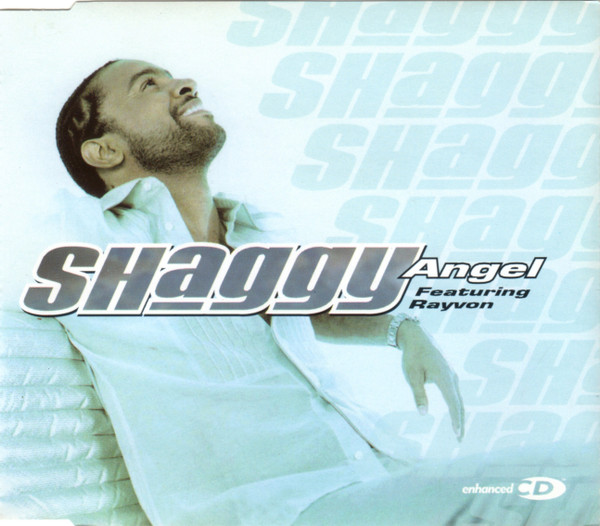
899. ‘Angel’, by Shaggy ft. Rayvon

Shaggy’s three chart-toppers so far have been largely upbeat, get your ass to the dancefloor type reggae-pop songs. Here then is his final UK chart-topper, and it’s much more of a slow jam…

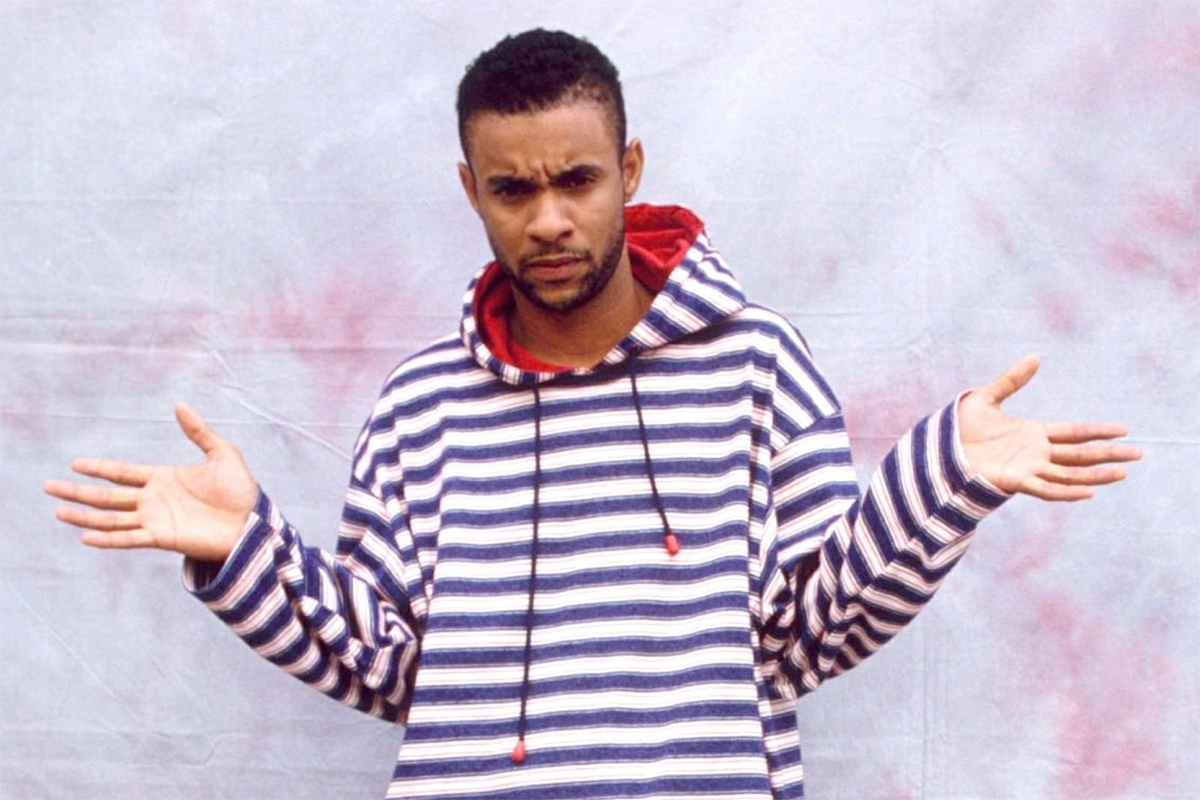
Angel, by Shaggy (his 4th and final #1) ft. Rayvon

3 weeks, from 3rd – 24th June 2001

‘Angel’ weaves the bass line from a seventies classic (and nineties #1) – ‘The Joker’ – together with the melody from a sixties original (and big eighties hit) – ‘Angel of the Morning’. And it would be a stretch to suggest that it improves on either. It’s cloying, it’s simplistic. It’s not quite a novelty, but it’s not far off.

Shorty you’re my angel, You’re my darling angel, Closer than my peeps you are to me… It sounds touching, if a little clumsy. Like a love letter written by a thirteen-year-old to his girlfriend. Which I’m assuming was also largely the market age for this ditty.

But listen closer, and this isn’t quite as sweet as the chorus suggests. Life is one big party when you’re still young, But who’s gonna have your back when it’s all done…? It’s all good when you’re little, You have pure fun, Can’t be a fool son, What about the long run? It turns out that Shaggy was dismissive and unfaithful towards his ‘angel’ for years, but as he got older and the fun times ended he realised he needed a steady girl… Now he wants to show the nation his appreciation.

Still, let’s hope that she had a bit of fun while she waited for her man to come to his senses. This is the flip-side of the same alpha bullshit we had on ‘It Wasn’t Me’, which I didn’t mind when it was played for laughs, but when it aims for sincerity it falls short. Plus it doesn’t help that Shaggy’s voice starts to grate the further he gets from his reggae roots. What was a playful patois on ‘Oh Carolina’ and ‘Boombastic’ now sounds a bit forced on a more straightforward pop song.

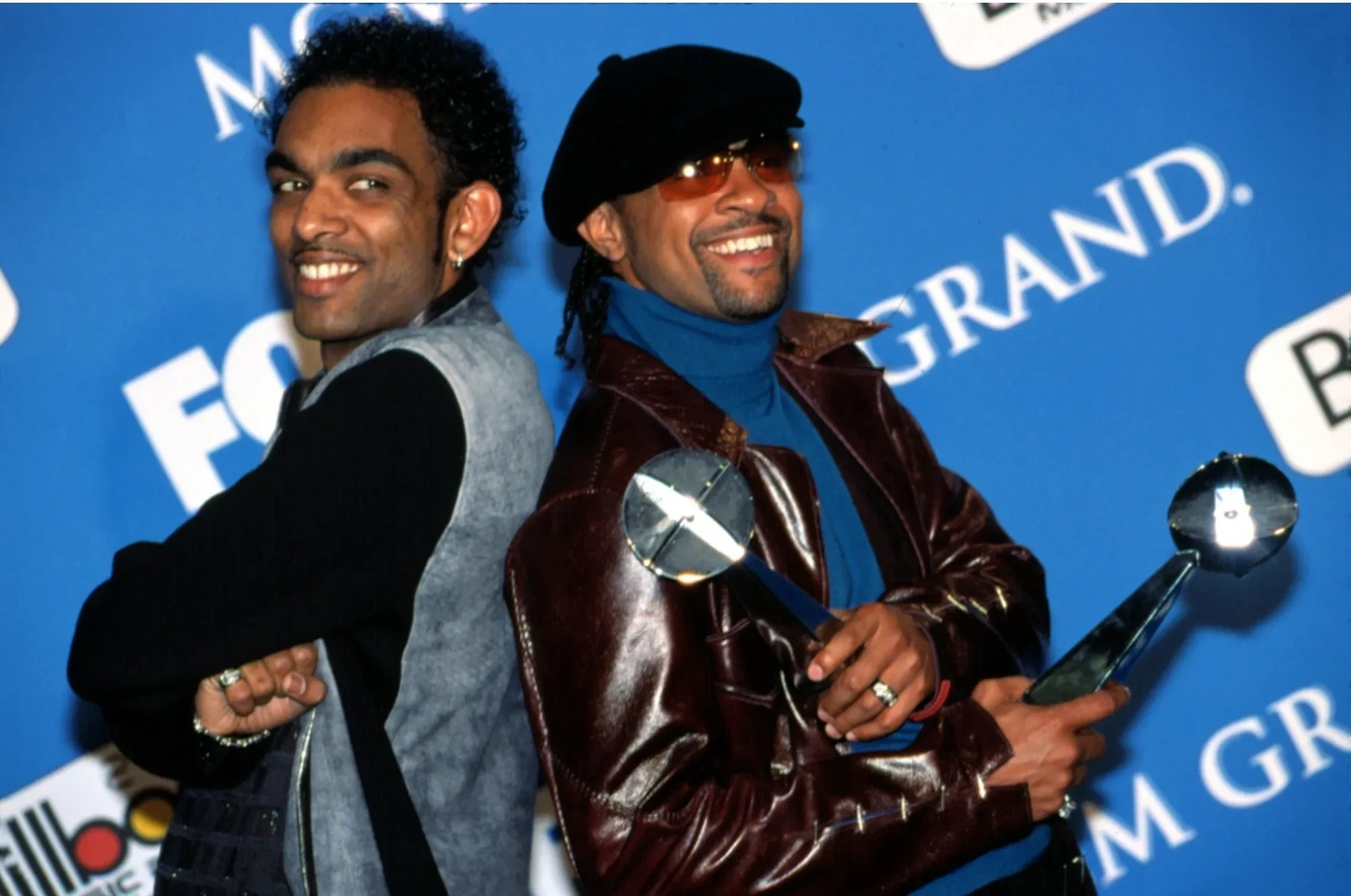
Luckily he has Rayvon on duty for the chorus, and he has a nice, slightly tender, voice for it. He had previously starred on Shaggy’s 1995 Top 10 cover of Mungo Jerry’s ‘In the Summertime’. And again, we should take a moment to appreciate the impressive spread of Shaggy’s chart-toppers. There were over eight years between ‘Oh Carolina’ and this, and there aren’t many other chart veterans from February 1993 who were still hitting it in the summer of 2001.

His hit making days were almost up, however. He managed three further Top 10s, including a comedy #2 alongside Ali G, ‘Me Julie’. He has released eleven albums since 2001, including one with none other than Sting in 2018. Shaggy continues to be very active then, as does Rayvon, who remains a dancehall/reggae voice for hire.

891. ‘It Wasn’t Me’, by Shaggy ft. RikRok

In today’s instalment of Ask Shaggy, we have a letter from RikRok, in Jamaica… “Dear Shaggy: I was recently caught red-handed by my wife, creeping with the girl next door. Picture this, we were both butt-naked, banging on the bathroom floor…

It Wasn’t Me, by Shaggy (his 3rd of four #1s) ft. RikRok

1 week, from 4th – 11th March 2001

Ricardo ‘RikRok’ Ducent is in a bit of a pickle alright. How could I forget that I had given her an extra key? he asks, hand to forehead. Shaggy is not in the mood for sympathy however, offering blunt advice: deny everything. To be a true player you have to know how to play, If she say a-night, Convince her say a-day…

Caught on camera? Heard the screams of passion? Marks on your shoulder? The evidence of her very own eyes…? It wasn’t me. It’s not hard, nearly a quarter of a century on, to read a sinister subtext to this well-remembered chart-topper. It’s pure gaslighting, and not something you’d be allowed to get away with in the year of our Lord twenty twenty five.

But. At the same time, this is such a silly song, the situation so preposterous, Shaggy at his most cartoonishly alpha (especially in the video), that you cannot take it seriously. The idea that his advice will work is never supposed to enter the listener’s head. And at the end of the day, morality wins out, with RikRok deciding to ignore the advice and apologise: Gonna tell her that I’m sorry for the pain that I’ve caused, I’ve been listening to your reason, It makes no sense at all…

Compared to his two earlier hits, this is a much more pop-infused reggae than in ‘Oh Carolina’ or ‘Boombastic’. And in comparison to those hits, Shaggy is not the main attraction. Most of the story is carried by RikRok, with Shaggy delivering his two verses as the devil on his shoulder (in his trademark deliciously thick patois). But the move into pop paid off, as this was Shaggy’s first big hit in over half a decade, and the year’s biggest seller. (As well as becoming the decade’s highest-selling song not connected to a TV talent show!)

It wasn’t even supposed to be released as a single, but Shaggy and his record label were convinced after a radio DJ obtained an illegal copy of the song from Napster – nice period detail, there – and it became his most requested song. The single had a full four-month build up period before being released, and smashed in at number one with sales well over a quarter of a million.

And you have to admire Shaggy’s limpet-like ability to weather changes in style, to go for years between hits, and to still re-appear at the top of the charts every so often. In fact, 2001 will go down as his most successful year by far, with one further massive number one hit to come soon. Maybe this just proves, once and for all, that reggae is the one genre which will never truly die.

727. ‘Boombastic’, by Shaggy

In our last post, Michael Jackson was putting his syrupy, slightly sticky moves on us with ‘You Are Not Alone’. It didn’t work for me, personally. What I wanted was, it turns out, a boombastic, romantic, fantastic lover…

Boombastic, by Shaggy (his 2nd of four #1s)

1 week, from 17th – 24th September 1995

And for that we need… Mr Lover-Lover himself. Like his first number one ‘Oh Carolina’, this is rough and ready dancehall, a simple, grinding beat over which Shaggy explains exactly why he is such a superb lover. I have no idea what makes that two-note, clanking metal riff which, alongside a plonking piano, makes the skeleton of this song, but I love it.

Thanks to that riff, this is a fabulously filthy and fun record. You can almost feel the sweat dripping down the walls of whatever basement club it’s being played in. And yet, compared to The Outhere Brothers moronically offensive output, ‘Boombastic’ is all perfectly PG. Some talk of tickling foot-bottoms and sexual physique is as steamy as it gets, while lines like You are the bun and me are the cheese… are actually quite sweet. Meanwhile, for years, I thought Shaggy was being self-deprecating in calling himself ‘semi-fantastic’. Though of course, he’s actually rapping in Jamaican patois: She call me Mr Boombastic, Say me fantastic…

That patois is one of the main attractions here. The way Shaggy rolls every line around in his throat, from gruff growls to choirboy high notes, like a cat toying with its prey, is wonderful. As with ‘Oh Carolina’, there are times when I genuinely have no clue what he’s on about, but it doesn’t matter. The grinding beat means you get the gist.

I’ll show my age and call this Shaggy’s signature song. Of course, he has a much bigger, globe-conquering, hit to come; but ‘Boombastic’ seemed to be everywhere at the time. It managed to appeal to nine-year-old me as well as a much more sophisticated audience, because it’s got just enough of a novelty element to it. Who wouldn’t, at any age, want to call themselves ‘Mr Boombastic’? I had no idea what ‘Boombastic’ meant – I still don’t and, if we’re being honest, does anyone? – but it matters not.

What I didn’t realise was that ‘Boombastic’ was yet another song boosted to #1 by a Levi’s Jeans commercial. I make that five Levi’s-adjacent chart-toppers, off the top of my head, making it a genre in its own right. Also helping was the fact that Shaggy had had a big hit earlier in the year with a cover of Mungo Jerry’s ‘In the Summertime’. It couldn’t be further from the supposedly era-defining Britpop sound, but I am always here for some Shaggy – one of the oddest, and yet fun-est, pop stars of the age.

712. ‘Baby Come Back’, by Pato Banton ft. Ali & Robin Campbell of UB40

I thought it was about time… Time for our semi-regular blast of nineties reggae!

Baby Come Back, by Pato Banton (his 1st and only #1) ft. Ali & Robin Campbell of UB40 (their only solo #1s)

4 weeks, from 23rd October – 20th November 1994

Bookending 1994 are two reggae number ones, both covers of sixties classics. Back in January, Chaka Demus & Pliers reinvented ‘Twist and Shout’ for the beach bars of Montego Bay, and now Pato Banton has updated The Equal’s 1968 #1 ‘Baby Come Back’, with a little help from British reggae royalty.

It’s probably more ska than reggae, given the higher tempo and the short, sharp horn blasts (and the prevalence of two-tone black and white in the video), but it barrels along happily enough. It’s lively and enjoyable, without doing anything spectacular to the source material. It certainly isn’t as drastic a reimagining as Chaka Demus & Pliers, though it is nice that it is based one of the very first chart-toppers to have had a reggae influence (it made number one just months before the first ‘official’ reggae #1: Desmond Dekker’s ‘Israelites’). My favourite part of this version is the surf guitar playing the distinctive riff from the original.

Like ‘Twist and Shout’, one of the main updates is the addition of a various raps and toasts from Pato Banton. Come back man! Don’ leave me! Bring back me CD collection! Banton was a British singer and toaster from Birmingham, who had been active since the early eighties. He had appeared on UB40’s 1985 album ‘Bagariddim’, which presumably led to the Campbell brothers repaying the favour here. They take chorus duty, and score their fourth #1 in total, though the only one they’d ever manage away from their band. After this, Banton scored a couple more minor hits before seeming to slip off the radar. He released his last album in 2008.

In the course of his toasting, Banton does manage to slip in a cheeky drug reference of the sort that might have seen this record whacked with a BBC ban, had they known what he was on about. Come back, Yes with me bagga sensi… ‘Sensi’ being short for ‘sinsemilla’ – a cannabis plant that is seedless, and therefore much stronger than normal ganja.

Other than that, there’s not an massive amount to write home about here. It’s a fun record that breezes by nicely. Quite why it became the 4th highest selling single of 1994, I’m not totally sure. Though if writing this blog has taught me anything, it’s to never be surprised by the enduring popularity of reggae.

700. ‘Twist and Shout’, by Chaka Demus & Pliers with Jack Radics & Taxi Gang

The 700th UK number one single. My word, haven’t we come far! Not only that, it’s the first #1 of 1994 – officially the mid-90s. Bring. It. On!

Twist and Shout, by Chaka Demus & Pliers with Jack Radics & Taxi Gang (their 1st and only #1s)

2 weeks, from 2nd – 16th January 1994

And it’s pretty fitting that this landmark chart-topper is a reggae song. For all the dance tunes, boyband pop, and the Britpop hits yet to come, I’ve already made the argument that reggae was the sound of 1993-5. And what I like about this, as with Shaggy’s ‘Oh Carolina’, is that it’s pretty uncompromising reggae. This isn’t dub, as heard recently from Ace of Base or UB40; it’s a proper sweaty dancehall track.

‘Twist and Shout’ is a fairly well known tune, mostly in the frantic version the Beatles’ released on their debut album, featuring a famous vocal performance from John Lennon. And so you could be forgiven for wondering if we really needed a reggae version. We definitely do, though. As with all the best cover versions, Chaka Demus and Pliers (a Jamaican DJ and singer) turn it into a completely different song.

The bare bones are still there: the chorus and, most importantly, the ascending aaahs that lead us to it. But beyond that there’s lots of toasting and rapping that neither Lennon, nor the Isley Brothers (who first had a hit with ‘Twist and Shout’ in 1962), could have imagined. Get up and move your body… One time… Pliers sings… Ooh man you drivin’ me crazy… The purists may have frowned, but I think it’s charming, and a lot of fun.

You couldn’t have picked a less likely time of year for this to be a hit, with it reaching the top the day after New Year’s. But we all need a bit of tropical escapism, don’t we, especially in a miserable British January? Plus, Chaka Demus & Pliers had already made the Top 5 twice in 1993 (tease me, tease me… till I lose control…) and this cemented them as Britain’s favourite reggae act.

For the recording, they roped in Jack Radics, who I believe is the gruffer voice you hear on the chorus, and Taxi Gang, a rhythm section associated with Jamaican music legends Sly & Robbie. This gives the song’s credits a very modern look, with four different artists attributed (I think this might have been a record at the time). It was Chaka Demus and Plier’s last big hit in the UK, though they would carry on until 1997, and still get together every now and again.

Every time we reach a century of #1s, it’s always good to take stock. Do they tell us anything about the styles of the time…? Well, in this case, yes. Reggae was enjoying a big resurgence in the charts. It’s certainly more relevant than the 500th #1 (Eurovision cheese from Nicole), or the 400th (Julie Covington’s ‘Don’t Cry for Me Argentina’). The most ‘of its time’, though, remains the 200th: the Beatles’ ‘Help’.

Random Runners-Up: ‘Don’t Worry, Be Happy’, by Bobby McFerrin

Our 3rd random runner-up for the week, and I have to admit I smiled when the date generator threw up this #2 single…

‘Don’t Worry, Be Happy’, by Bobby McFerrin

#2 for 1 week, from 16th – 22nd October 1988, behind ‘One Moment in Time’

I smiled, because I would be able to tell the world how much I detest this song. To say the date generator threw it up feels apt (as does calling it a ‘number two’ single….)

Childish name calling aside, I really do struggle to find anything likeable about this song. Which is strange, because there are few pop songs that have tried as hard to be likeable. The whistling, the finger clicks, the spoken asides… It’s all so folksy, so cute. An a cappella song for all ages – from five to ninety-five – to enjoy.

Except, no. It genuinely makes my skin crawl. And that’s before you get to the lyrics. One critic at the time described it as a ‘formula for for facing life’s trials’, but Bobby’s formula is to simply smile like a lunatic at whatever problems life brings… No money, no partner, rent’s due and the landlord is taking you to court…? Don’t worry, be happy! Why? ‘Cause when you worry your face will frown, And that will bring everybody down… So shut up and smile, you whiny prick!

Maybe I’m reading the song wrong, and am missing a layer of cynicism buried within. Maybe it’s a satire of this sort of life-affirming nonsense. But I doubt it. I’m pretty good at spotting cynicism. No, for me, this is the musical equivalent of a ‘Live, Laugh, Love’ poster, a song for those who refuse to ‘adult’. Plus the song’s crimes go beyond the pop charts: it helped spawn Big Mouth Billy Bass, the mounted fish toy that sings ‘Don’t Worry, Be Happy’ on demand.

While I think it’s bad enough that this made #2 in the UK; it made it to the top in the US, Canada, and Germany. It stayed at #1 for seven weeks Down Under, which confirms every suspicion I ever had about Australians… It was released on the soundtrack to the Tom Cruise movie ‘Cocktail’, which features another all-time classic in The Beach Boys’ ‘Kokomo’. Bobby McFerrin is a one-hit wonder thanks to this tune, but to his credit he moved pretty quickly away from uplifting novelties, and started working in TV and film sountracks, as well as classical, jazz, and musical education in colleges and schools.

690. ‘(I Can’t Help) Falling in Love With You’, by UB40

More reggae at the top of the charts, after Shaggy and Ace of Base over recent weeks. And it’s Britain’s best-sellers in the genre who are bringing it there…

(I Can’t Help) Falling in Love With You, by UB40 (their 3rd and final #1)

2 weeks, from 6th – 20th June 1993

As with their last #1, a cover of ‘I Got You Babe’ with Chrissie Hynde, this is a dub take on a golden oldie (though note the slight title change from the Elvis original, a chart-topper in 1962). And I can see what they were going for – a softened version of their reggae sound, with clear nineties dance influences in the swaying beat – but I can’t take to it. ‘Plodding’ and ‘slow’ were the two notes I took on first listen. I also gave their version of ‘I Got You Babe’ a ‘Meh’ award, so I’ve got form.

Ali Campbell’s voice is an acquired taste most of the time, and especially so here. I don’t know if he’s trying to imbue his lines with emotion, but it mainly sounds as if he’s straining to get them out. Obviously it doesn’t help that the listener automatically compares his efforts to Elvis’s from thirty years earlier… And yet, the quality of the song shines through – there’s a reason why it’s become a standard – and I do like the addition of the short, sharp horn fills towards the end.

Like ‘Oh Carolina’ before it, ‘(I Can’t Help) Falling in Love With You’ featured on the soundtrack to the Sharon Stone movie ‘Sliver’. There are very few film soundtracks to have included multiple #1s, and it’s amazing that a movie as poorly regarded and forgotten as this ‘Sliver’ managed it. Still it gave UB40 their 3rd and final chart-topper, and became their biggest hit in the US, staying at #1 for seven weeks.

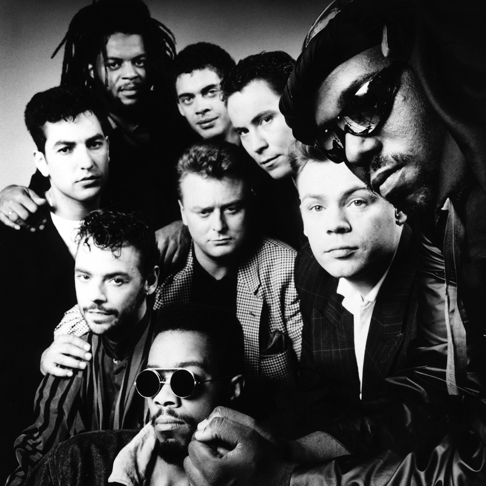
And we should note the impressive longevity of the band, given that those three number ones were spread out over a decade (while the Campbell brothers have one more shot at top spot, in a featuring role, to come). But I think it’s fair to say, and this is coming from someone who wouldn’t count himself as a fan, that UB40 are not best represented by their three #1s. Two of them are fairly pedestrian covers, while ‘Red Red Wine’ – which was also a cover, of course – has bit more charm to it, though still plays it fairly safe.

They had a few more years of chart hits in them, including two further Top 10s, but its perhaps right to mark this as UB40’s swansong. They remain a going concern, with four of the original eight members still in the band. Ali Campbell, however, left in 2008, after disagreements with the band’s management.

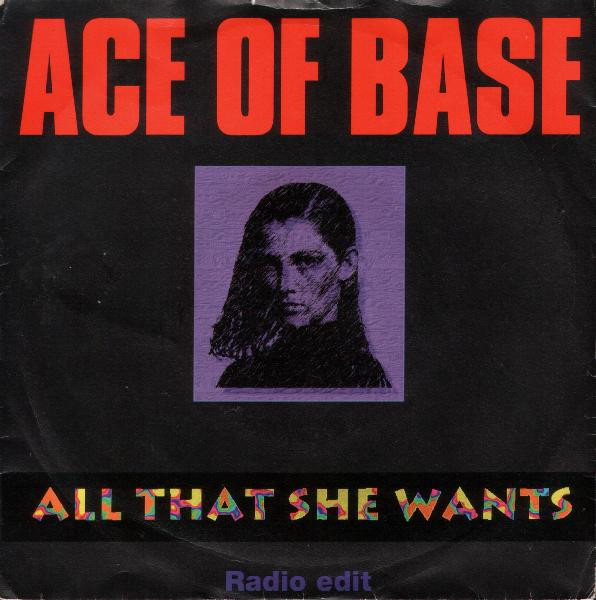
689. ‘All That She Wants’, by Ace of Base

Enter Sweden’s 3rd biggest-selling pop act… (Answers for 2nd place on a postcard… I’ll reveal it at the end of the post!)

All That She Wants, by Ace of Base (their 1st and only #1)

3 weeks, from 16th May – 6th June 1993

And in the grand Swedish tradition, it’s a male-female combo – two men, two women (though as far I can tell no marriages) – Ace of Base. With what I’ve always thought to be a deeply strange pop song.

There’s the sparse, ghostly intro, for example. And all the empty spaces in the song, where it’s just nothing more than a drum machine and a lumbering synth riff, and the low-key ending. It’s not your normal pop smash, even if it has more than a hint of dub-reggae – soon to be one of the dominant chart sounds – in the steady, hypnotic beat. And that’s before we dissect the lyrics…

All that she wants, Is another baby, She’s gone tomorrow boy… They tell the tale of a femme fatale, who prowls an unnamed beach looking for men… She’s the hunter, You’re the fox… And in that respect it’s great. Girl power! Fifteen years ago Brotherhood of Man told the story of a holiday resort lothario in ‘Figaro’, but Ace of Base flip it on its head. If it were sung by men it might be a bit cliched, but no. Go girls!

The problem I have with the lyrics is the fact that, as a kid, I took them literally. All that she wants, Is another baby… I thought she was wandering the beach looking for a man to get her pregnant. Which is weird, and I apologise; but having done some research I find I’m not alone. “As far as I can remember, ‘All That She Wants’ by Ace of Base is the only hit single ever to talk about a lady who uses men for stud service so that she can become an unwed mother,” said LA Weekly at the time. I like to think Ace of Base knew what they were doing, keeping the lyrics intentionally vague and menacing. Either way, I feel seen.

‘All That She Wants’ is definitely a grower. Even now, on my fourth or fifth listen, I’m remembering why it is such a good pop tune. I’m not sure what the hooks are – or perhaps it’s because there are so many it’s hard to pinpoint them – but it worms its way in and stays there. Just like Sweden’s biggest pop group, the one it’s impossible not to compare Ace of Base to… It’s not out of the question to imagine that, had ABBA been around in 1993, they might have been making records like this. And, like Agnetha and Frida, the girls here have similarly accented, idiosyncratic, but still very alluring, English.

This was only Ace of Base’s second chart hit, and what a hit. A number one across Europe, presumably unavoidable at beach bars from Faro to Faliraki in the summer of ’93, and a #2 in the US. It set them up for a run of Top 10s through the 1990s, including US #1 ‘The Sign’ and a cover of ‘Don’t Turn Around’, which Aswad had taken to the top in 1988. But permit me to give a shout out to my favourite Ace of Base tune, ‘Always Have, Always Will’, which takes everything you love about ABBA, Motown, sixties girl groups, and serves it up in pop perfection. Its #12 peak be damned!

This would be their only visit to the top of the charts, but they remain Sweden’s 3rd most successful act. ABBA are obviously the 1st, but what of the runners-up…? Well, it’s Roxette (another male-female act!), who never made it higher than #3 in the UK. Personally I’d have named garage rock loons The Hives as my second favourite Swedish act, but they’ve never come close to troubling the top of the charts.

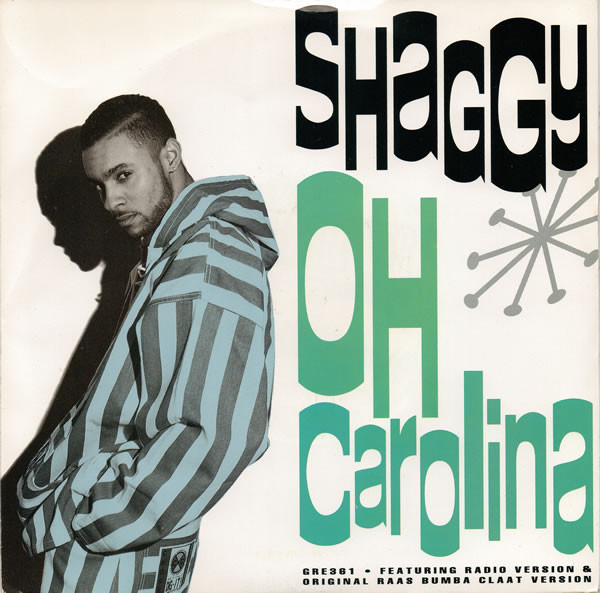
686. ‘Oh Carolina’, by Shaggy

There’s so much to unpack with this next number one… How did this unknown Jamaican, who growls and slurs his way through his breakthrough smash, go on to become one of the longer-lasting hitmakers of the decade? Why did this summery smash, that sounds like its coming to you live from a beach bar in Montego Bay, make #1 in March? And just why is reggae the chart genre that refuses to die…?

Oh Carolina, by Shaggy (his 1st of four #1s)

2 weeks, from 14th – 28th March 1993

Let’s address that last question first. For this is the purest reggae, not the pop version of UB40, or the watered down offering of Boris Gardner. It’s ragga, its dancehall; it’s rough and grimy, so much so that you almost have to wipe the sweat from the stereo after playing it. It’s a cover of an old ska song from the early sixties, by the Folkes Brothers, the opening riff of which is sampled on Shaggy’s version, giving this a folksy, distinctive edge, a world away from the polished beats of the 1990s. This doesn’t in any way answer why reggae keeps coming back to the top of the charts – other than the fact it is impossible not to dance to songs like this – but we’re entering what is perhaps the most reggae-heavy period in chart history, between 1993 and the middle of the decade.

Once the main rhythm, and the up to date production rolls in, the song still doesn’t lose its edge. And that’s mostly thanks to Shaggy’s gruff toasting. I have no idea what he’s saying, but it all sounds pretty filthy… I believe Carolina moves her body just like a squirrel, can jump and prance… And at one point I think Shaggy claims to love how she shag… (I could just Google the lyrics, but I have no desire to prove myself wrong.)

As to why it made #1 months ahead of schedule? Well aside from a need for some escapism from a misty, miserable March, it was included on the soundtrack to the movie ‘Sliver’, starring Sharon Stone (15% on Rotten Tomatoes). Whether that helped or not I don’t know, but if it did I’m glad. This is a rough and ready song, with a wonderfully raw feel. It’s certainly Shaggy’s forgotten chart-topper, but it’s probably his most credible.

Which brings us on to the very first question I posed. ‘Oh Carolina’ has one-hit wonder written all over it, and yet… I can’t adequately explain the subsequent career of Shaggy (AKA Mr Boombastic, AKA Mr Lover-Lover), even though I lived through it. He’s somehow cool – he is an ex-Marine after all – and yet completely ludicrous. By the time of his turn-of-the-century, biggest hit (you know, the one about ‘banging on the bathroom floor’) he was basically a cartoon character. He duetted with Ali G, for Pete’s sake!

Anyway, we can address all this in good time. For now, let’s enjoy his first chart-topper, in all its raunchy, mumbling glory. (I think it helps to enjoy Shaggy when you don’t understand what he’s saying…) And, for the third chart-topper in a row, I have specific memory attached to this record. A primary school friend had a (highly unrequited) crush on a girl called Caroline. Cut to our Primary 4 disco, where we requested this song on his behalf, made sure the DJ announced who it was for, and an entertaining meltdown ensued…

605. ‘Don’t Turn Around’, by Aswad

A Happy New Year to all! In the real world it’s 2023; in #1s blog world it’s March 1988, and time for the year’s obligatory reggae #1. It feels as if every year of the decade has had one: Boy George, Boris Gardner, UB40

Don’t Turn Around, by Aswad (their 1st and only #1)

2 weeks, from 20th March – 3rd April 1988

And to be honest, I’m usually all for these little reggae interludes. I’ve mentioned it many times before now, but this blog has really raised the genre in my estimations. I used to find it a bit samey, a bit plodding but, in small doses, it’s very welcome. Was very welcome, I should say. Because 1988’s obligatory reggae #1 is testing my new-found reggae tolerance.

Maybe it’s the eighties production. Maybe it’s the nasal delivery of the lead singer. Maybe I’m just not in the mood today. But something’s not working. Don’t turn around, I don’t want you seeing me cryin’… The good thing about reggae is that is often quite a rough and ready style of music: a simple beat and simple lyrics. But here, the echoey effects, and the synths, not to mention the strings, all feel like overkill.

It was the style of the time, yes. But the style of the time spoils so many of this era’s records, that otherwise might have been very good, and it gets annoying. Aswad should perhaps have known better, having been around since the mid-seventies, but who can blame them for updating their sound and going for a big hit. The biggest of hits. A number one.

Still, reggae works best when kept simple. Any attempts to dress it up, as Aswad do here, fall flat. For me, at least. But, again, there’s a reason why I’m writing about this song today, and clearly it didn’t fall flat for a lot of people. It gave Aswad their first hit after a decade of trying (none of their previous releases had breached the Top 40). They were from east London, the sons of Caribbean emigrants, while ‘Aswad’ means ‘black’ in Arabic. They’d score one further Top 10 – ‘Shine’, some six years after this – and they hung around for a long time, releasing their final album in 2009.

Like pretty much every recent reggae chart-topper, ‘Don’t Turn Around’ was a cover. But the original was not reggae – it was a thumping power ballad by Tina Turner, released as a ‘B’-side in 1986 (I must admit I far prefer that version). Soul singer Luther Ingram recorded a version the following year, which is how Aswad became aware of the song. Meanwhile it has also been covered by Neil Diamond and Bonnie Tyler (very much in the Tina Turner style), and was taken back into the Top 5 by Ace of Base in 1994. A very versatile song!

Advertisements