747. ‘Setting Sun’, by The Chemical Brothers

There’s no doubt that ‘Firestarter’ was the big, banging dance-rock crossover hit of 1996; but that song’s infamy probably means that it has unfairly overshadowed the year’s other big, banging dance-rock crossover hit…
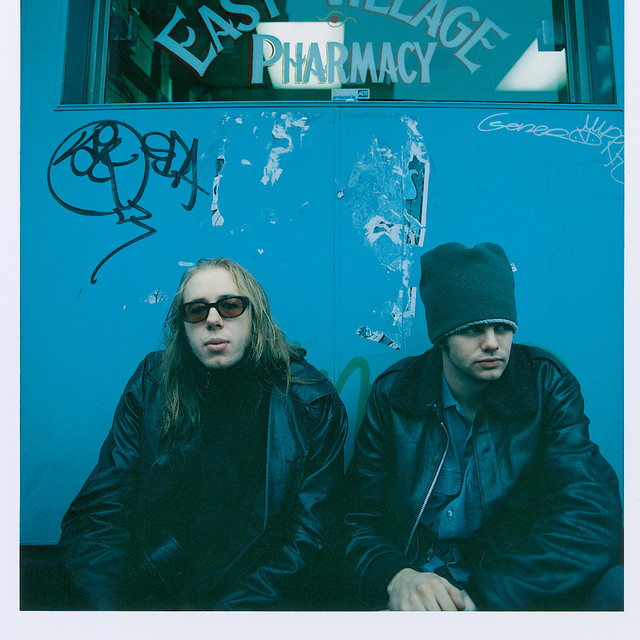
Setting Sun, by The Chemical Brothers (their 1st of two #1s)

1 week, from 6th – 13th October 1996

Because ‘Setting Sun’ hits even harder than ‘Firestarter’, and it hasn’t been tamed by years of ubiquity. I hadn’t heard it properly for ages, and was genuinely taken aback by how nasty it sounds. Take the relentlessly monotonous, boldly uncommercial, one-minute long intro for a start. These are big beats with a capital ‘B’.

The shrieking klaxons and the gut-dropping bass hold the track together, and are very nineties. But in the droning sitar, and the vocals played in reverse, there’s also more than a nod to the original tape-looping, Eastern-looking, psychedelic game-changer: the Beatles’ ‘Tomorrow Never Knows’. At one point lawyers looked like getting involved, before a musicologist was brought in to prove that the song was merely inspired by, and didn’t sample, The Beatles. The fact that it was used as a template for a dance track thirty years later surely just proves how incredibly ahead of its time ‘Tomorrow Never Knows’ was.

And what could be more Beatlesy, back in 1996, than to have Noel Gallagher on vocals? Uncredited, and filtered through layers of feedback, but still recognisable from the off, he even manages to rip-off his own lyrics from ‘Half the World Away’… You said your body was young but your mind was very old… And I have to say that this is probably the best #1 single that he features on, as much as I do enjoy many of Oasis’s chart-toppers.

Other brilliant moments include the intense break half-way through, which sounds like a helicopter landing on your head. (I was going to call it the ‘middle-eight’ but I don’t think traditional terms like that apply to boundary pushers like this.) And then there’s the completely unhinged outro, in which the song disintegrates before our ears. The video I’ve attached below is the radio edit, but it’s worth hearing the full five and a half minute version, to drag out the exquisite nastiness…

Another thing that’s interesting about this record is that, unlike The Prodigy when they unleashed ‘Firestarter’, The Chemical Brothers had only a couple of minor hits to their name before ‘Setting Sun’. According to most sources, airplay was limited too. So it seems to have been a genuine underground, word of mouth smash (with Noel G for added clout) that set the duo up to become one of the biggest dance acts of the late-90s and early-00s.

The Chemical Brothers (yet again, like the Walkers, the Righteouses and the Outheres, they are not actually brothers!) had met at the University of Manchester in 1989, and had bonded over their love of rave culture. There can be few chart-topping DJs with a degree in late-Medieval history, but the Chem’s Ed Simons is one. They have one further chart-topper to come, but it will have to go some to match the power of this.

736. ‘Firestarter’, by The Prodigy

Right in the middle of the Britpop years, we finally get a proper punk number one!

Firestarter, by The Prodigy (their 1st of two #1s)

3 weeks, from 24th March – 14th April 1996

Obviously ‘Firestarter’ is not musically ‘punk’ – more techno-metal – but everything else is pretty on point. The aggression, the repetitive, nuclear siren riff, the nastiness of the lyrics: I’m the bitch you hated, Filth infatuated, Yeah…

Within the song’s opening ten seconds, it is already one of the grittiest sounding number one singles we’ve heard. Everything about it seems designed to put you on edge, to make your hairs stand on end – the harsh drums and bass, the abrasive riff, the metal on metal grinding rhythm. It’s not often a song this raw, this unapologetically hardcore, crosses over into huge mainstream success.

I was ten when this came out, but I remember it feeling and sounding dangerous. I’m the Firestarter, Twisted Firestarter… I’m pretty sure it made the evening news, amid fears around the arson-promoting lyrics and Keith Flint’s performance in the video, in which he flings himself about an abandoned tunnel, covered in piercings, with his memorable reverse-Mohican hairdo. Watching it now, it’s amazing to think that many stations refused to play it before the watershed – there’s no violence, no swearing, nothing sexual; just Flint’s unhinged performance. But, to be fair, it is terrifying, especially when he pauses to stare, dead-eyed into the camera (and perhaps quite poignant, now, knowing that he had his demons).

The Prodigy were already a hugely successful dance act, and had been scoring Top 10 hits since the early nineties. So the lead single from their third album was bound to be big. But ‘Firestarter’ was almost a reinvention – a heavier, rockier sound, presumably brought about by the fact that guitars were ‘in’ in 1996. Which brings us back to the troubles we’ve had in defining ‘Britpop’ recently: Prodigy weren’t Britpop – they were a dance act that pre-dated the genre – but it’s hard to argue ‘Firestarter’ and the subsequent ‘The Fat of the Land’ album weren’t huge Britpop moments.

We do have to acknowledge that much of this song is a patchwork of samples: from the Breeders, and a Chicago house group called ‘Ten City’. Even the ‘Hey! Hey! Hey!’ refrain is from Art of Noise. But if ever there were an argument against sampling being lazy, it is in a banger like this, the fact that the band heard something in those three wildly disparate songs and creating something fearlessly new.

And yet, I will say that, as great and thrilling as ‘Firestarter’ is, it’s neither The Prodigy’s best single, nor their most controversial. Their best will also make #1 before the end of 1996, while their most controversial was the 3rd release from ‘The Fat of the Land’, the ever-charming ‘Smack My Bitch Up’.

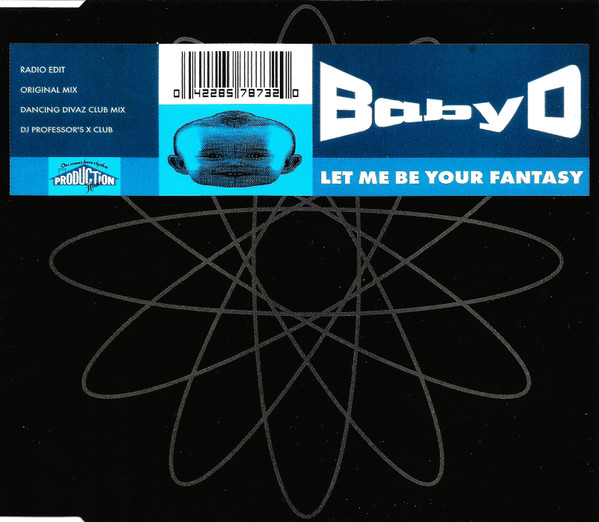
713. ‘Let Me Be Your Fantasy’, by Baby D

I know very little about dance music. I can just about tell my techno from my chillout, but you may have noticed from my previous posts on dance #1s that I play pretty fast and loose with the terminology. So indulge me while I throw around some ideas that may be complete nonsense…

Let Me Be Your Fantasy, by Baby D (their 1st and only #1)

2 weeks, from 20th November – 4th December 1994

‘Let Me Be Your Fantasy’ might be the most ‘hardcore’ dance chart-topper yet. The beat is either ‘house’, if we’re looking backwards, or ‘garage’ if we’re looking forwards. Is it maybe even the first ‘drum ‘n’ bass’ number one? I’ll also throw in the suggestion that it also incorporates ‘jungle’, if only because I think it sounds fun.

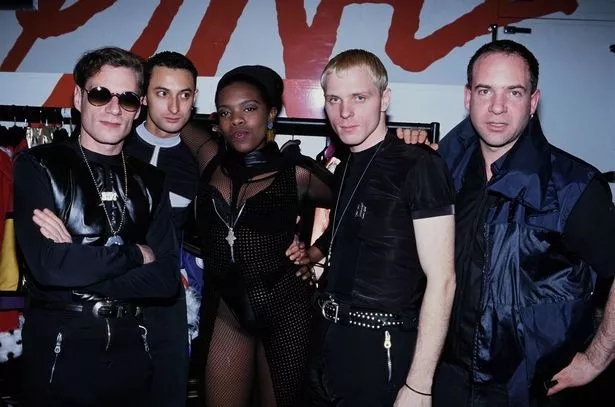
I could list dance sub-genres all day long (Wikipedia also suggests ‘breakbeat’ and ‘happy hardcore’) but to be honest, they mean little to me and probably mean as much to you. Let me give the quotation marks a rest, and describe what ‘Let Me Be Your Fantasy’ makes me feel… Well, it’s atmospheric – I like what sounds like a robot breathing in the mellow breaks between the verse – and the vocals are impressive. They’re the part of the song that feels the most familiar: a dance hit helmed by a large-lunged diva a la Black Box, or Snap!. Here the singer is Dorothy ‘Dee’ Galdes (presumably the ‘D’ in Baby D) and she has a wonderfully light-yet-full-bodied voice.

It’s another step towards the dance music that was dominating the charts when I came of age in the later part of the decade – dance music that had moved away from samples and novelty raps, dance music that had the confidence to strip things back, to drop the beats per minute, to let things breathe. This record is similar in that way to 1994’s other ‘cool’ dance hit by Tony Di Bart, rather than the more novelty offerings from Doop and Whigfield.

But I’ll also take that word ‘cool’, strengthen it into ‘cold’, and use it to describe how this song leaves me feeling. It’s not my thing, and as much as I try I can’t move past detached admiration as I listen and critique – much like I would an artefact in a museum – and I move on without particularly wanting to hear it again. I will always, sorry to say, enjoy the inane cheesiness of a 2 Unlimited song more…

Baby D had been around since the late eighties, and had scored a handful of minor hits earlier in the nineties. ‘Let Me Be Your Fantasy’ had been around since 1992, when it made #76 and become something of a lost classic. Until it was ‘found’, re-released, and it reached #1. Baby D followed it up with a couple of #3 hits before fading. Their last hit was a remix of this, their biggest hit, that made #16 in 2000. Their keyboard player, Terry Jones, took a slight change in direction and went on to write and produce for the Backstreet Boys, Eternal, and Peter Andre…

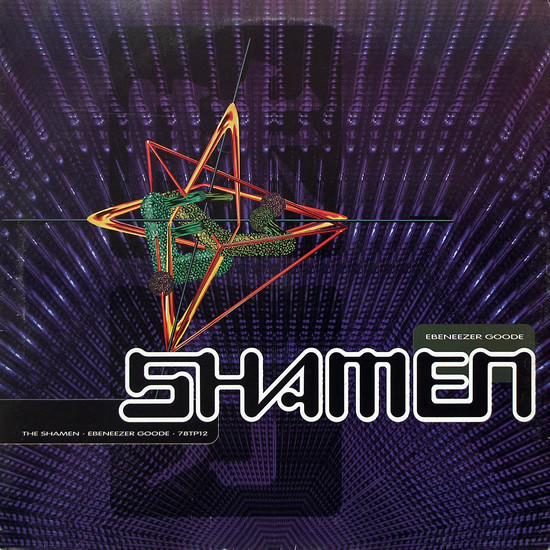
680. ‘Ebeneezer Goode’, by The Shamen

Hot on the heels of ‘Rhythm Is a Dancer’ comes another ‘90s dance classic…

Ebeneezer Goode, by The Shamen (their 1st and only #1)

4 weeks, from 13th September – 11th October 1992

And as magisterial as Snap!’s track was, ‘Ebeneezer Goode’ represents the flip-side of dance music in the early years of the decade. Aggressive and in-your-face, the opening voiceover sets the tone: A great philosopher once wrote… Naughty, naughty, Very naughty…. And off we go, cackling like Sid James…

Since forever, pop music and drugs have gone together. Sex and drugs and rock and roll, and all that. But no genre has ever been quite so entwined with illegal substances as electronic dance, and with one Class-A substance in particular. So when a track comes along by one of the big dance acts of the day, shamelessly celebrating said drug, and getting all the grown-ups’ knickers in a twist at the same time, you know it’s going to be a big old hit.

The clever bit here (I was going to use the word ‘genius’, but I think that would be stretching it slightly) is that the drug reference isn’t immediately obvious. ‘Ebeneezer Goode’, you might think, sounds like a character invented by Charles Dickens. Eezer good, Eezer good, He’s Ebeneezer Goode… A silly novelty song, parents around the country might have thought, as they heard it blaring from their teenagers’ bedrooms. Harmless nonsense. But, wait…

And like the teacher who’s twigged on far too late that the class is having a joke at their expense, the parents realise that the chorus could just as well be saying ‘E’s are good, ‘E’s are good… ‘E’s as in Ecstasy… And look, the song’s at number one already. It’s not big, and it’s not clever, but it is pretty amusing. Very naughty indeed…

But amid all the innuendo, the guffawing and the gurning, this is still a banger. The joke would have worn very thin, very quickly, if this wasn’t a good pop tune. I don’t think it’s quite up there with ‘Rhythm Is a Dancer’, and I don’t think you’d want to hear it all that often, but it’s a lot of fun. And it’s a significant number one because rave culture isn’t really represented at the top of the charts, despite being one of the big musical movements of the day, and while this is diluted, poppy rave, and it lost the Shamen a lot of ‘hardcore’ fans, it still counts.

It’s also, despite the modern sound, a treasure trove of peculiarly British references. We’ve got rhyming slang, and a shout-out to Vera Lynn, of all people: Anybody got any Vera’s…? Lovely… (‘Vera Lynns’ being rhyming slang for ‘skins’, which people used to mix cannabis and ecstasy) and a reference to ‘Mr Punchinella’ AKA Mr Punch from ‘Punch & Judy’. While  in the second verse there’s even a bit of sensible advice: But go easy on old ‘Eezer, ‘E’s the love you could lose… Pop pills responsibly, kids.

The BBC, always up for a good banning, initially refused to air the song, but relinquished when it became a huge hit. Hilariously, the week that ‘Ebeneezer Goode’ climbed to number one was the Corporation’s ‘drug awareness week’. On TOTP the band changed some of the lyrics, including adding a reference to ‘underlay’, which they explained as a ‘gratuitous rug reference’. Boom and indeed tish. It was far from the first hit song to reference an illegal substance – The Beatles were doing it twenty-five years earlier – but few had done it quite so shamelessly.

The Shamen were a Scottish band, formed in Aberdeen in 1985, and had been around since the very earliest days of house music. They started out making psychedelic pop, before moving to a more electronic sound. This wasn’t their first Top 10 hit, but it was so unexpectedly huge that the band decided to delete it while it was still on top of the charts, so that it wouldn’t come to define them. Sadly, though, it still did, and their hits grew smaller and smaller until they split in 1999. But, as founding member Colin Angus says, ‘Uncle Ebeneezer is still looking after me to this day.’ Whether he’s still dropping MDMA, or he’s talking about royalties, I do not know, but it seems fitting to end this post on a double-entendre.

645. ‘Killer’, by Adamski

The first word that comes to mind as this next number one begins is ‘lumbering’. Like Godzilla trampling Tokyo underfoot, the beat here is heavy, and relentless…

Killer, by Adamski (his 1st and only #1)

4 weeks, from 6th May – 3rd June 1990

It’s a fourth consecutive dance #1, and each one has done something slightly different within the genre’s confines. ‘Dub Be Good to Me’, ‘The Power’, ‘Vogue’, this. They’ve all had one thing in common, though: pretty low bpm. There have been moments, while listening to each one, in which I’ve wondered whether you could do much dancing to them. The early ‘90s was the height of rave culture in the UK, of people off their tits and mad for it in a field in Hampshire, but you wouldn’t necessarily know it by listening to the most popular dance tracks of the time.

While ‘Vogue’ well and truly warmed up after a slow start, I’m not sure if ‘Killer’ ever quite rises above its plodding beat, decorated with creepy synth effects that sound like aliens trying to broadcast to the mothership. There’s a moment in the middle where some choppy trickery with the vocals turns them into a sort of dance Morse Code, and this kicks things into life. There’s a more traditionally ‘dancey’ piano riff after that, and a moment where you think this might be turning into a banger. But it doesn’t quite manage it.

Solitary brother… I like this line… Is there still a part of you that wants to live…? Again, not your run-of-the-mill dance lyrics. And while we should applaud strangeness, and creativity, and so on; it doesn’t mean that I particularly enjoy this record. I’d file in under ‘interesting’, rather than ‘fun’.

The vocalist was an at the time unknown bloke called Seal. (So unknown that the Official Charts didn’t credit him on the single, which seems a bit harsh.) He’d been a funk and soul singer in Britain and the Far East, and was sleeping on a friend’s sofa when he met DJ and producer Adamski, handing him a demo tape. The rest is history, though nothing he did after his big breakthrough hit has the same oomph. He went back down the smooth soul route, and along the way recorded one of my least favourite songs of all time: ‘Kiss From a Rose’. (It just gives me goosebumps, and not the good kind…)

What’s ‘Killer’ about, though? The lyrics, written by Seal, are an exhortation to freedom and to transcending whatever holds you back, according to the man himself. That sounds more like M People than this weirdly ominous record, while Adamski meanwhile thinks it sounds like the soundtrack to a movie murder scene. It ends with a message: Racism in amongst future kids can only lead to no good… Which is worthy, but which means the record ends on a strangely sombre note.

Seal released his debut solo album later that year, and has gone on to sell twenty million records around the world, and to marry Heidi Klum. Adamski, meanwhile, scored a #7 with the follow-up, before fading from popular view. He still records though, and tours as a DJ.

Of the past four number ones – the spring of dance, I’ll call it – I’d have ‘Vogue’ as my favourite, closely followed by Beats International. But I’d have ‘Killer’ in third, ahead of Snap! It’s a very odd song, an uncomfortable, edgy record; but there’s greatness there, buried somewhere deep. Up next, an act that are undoubtedly dance music pioneers, the daddies of all this electronic business, and one of the most influential bands of the 1980s… With Peter Beardsley.