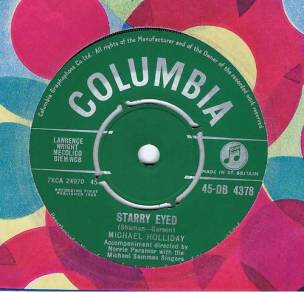
95. ‘Starry Eyed’, by Michael Holliday

Here we go then. One tentative foot in front of the other. A hop and a skip and… We’re into the 1960s! Hurrah! It’s one small step for man… as someone will quite famously say before this decade is through.
BtTnVMQBmkKGrHqEH-D8EvE9BvcOBL7ZdIM5g_12

Starry Eyed, by Michael Holliday (his 2nd of two #1s)

1 week, from 29th January – 5th February 1960

On first listen, however, the 1960s sounds suspiciously like the 1950s. Backing singers? Check. Basic rock ‘n’ roll guitar? Check. Croony male lead singer? Check. Where’s the innovation? Where are the groovy new sounds? Where are all the drugs and free love?

Bum-bam-bum-bam-bum… Why am I so starry-eyed, Starry-eyed and mystified, Every time I look at you, Fallin’ stars come into view… So far so standard. A song about being in love, and about seeing stars because you’re so in love, and to be honest it’s been done a million times before. When we touch I hear angels sing, When we kiss I hear wedding bells ring… Yeah yeah, blah blah blah.

But actually, to dismiss this song because of its unremarkable lyrics would be to do it a huge disservice. Because, on a second, third and fourth listen, this record has got a lot going for it. Firstly there are the backing singers and their Bum-bam-bums. They’re not just any old Bum-bam-bums – they sound echo-y and ethereal, like woozy church bells or a trippy version of the intro to ‘Mr. Sandman.’ It’s really cool.

Adding to this effect is the guitar, which is restricted to a few strums during the verses and chorus but which comes in nice and layered, fed through the same robotic distortions as the backing singers, during the solo. It gives the record a real dreamy quality, like the singer’s dazed after a blow to the… Wait, I get it! He’s starry-eyed. He has been whacked over the head. With love!
78964385

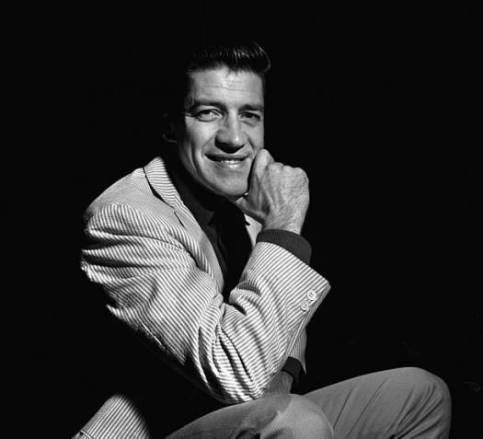
I could complain about Michael Holliday’s sonorous voice being a little too sombre, a little too straight-laced for this song but, after a few listens, it kind of works. His voice has an innocence to it, as he gazes into his lovers mystical eyes and his pupils morph into cartoon love-hearts. Underpinning it all there’s a groovy little rhythm – a bossanova? – that actually makes it quite a sexy record. A record to which there’s more than meets the ear and which improves with every listen. We’re not in the swinging sixties just yet; but this is a sniff of what’s to come…

‘Starry Eyed’ is certainly a lot better than the song which first brought Mr. Holliday to our attention a couple of years back – the fairly bland and saccharine ‘The Story of My Life’. I mentioned then that he only ever scored a handful of hits in his career – in fact he managed to squeeze two #1s from just three top ten hits. The story of his life – see what I did there! – is in truth quite a tragic one. Holliday suffered from crippling stage fright and, shortly after ‘Starry Eyed’ hit the top spot, he suffered a nervous breakdown. He took drugs to keep going and sadly died of an overdose in 1963, aged just thirty-eight. He joins the ‘Died Far Too Early’ club along with the likes of Dickie Valentine and Buddy Holly, perhaps proving that pop stars have always died young and in dubious circumstances, and that it didn’t just start with Jimi Hendrix. Remember him this way: by discovering – as I’ve just done – this forgotten gem of a UK Number One.

94. ‘What Do You Want to Make Those Eyes at Me For?’, by Emile Ford & The Checkmates

What’s that I hear? Tick, tick, tick, tick… Is it a clock racing to the turn of a decade? From the Fabulous Fifties to the Swinging Sixties? Tick, tick, tick, tick… Or is it just the intro to this next chart-topper?

s-l640

What Do You Want to Make Those Eyes at Me For?, by Emile Ford and The Checkmates (their 1st and only #1)

6 weeks, from 18th December 1959 – 29th January 1960 (including 1 week joint with Adam Faith from 18th – 25th December 1959)

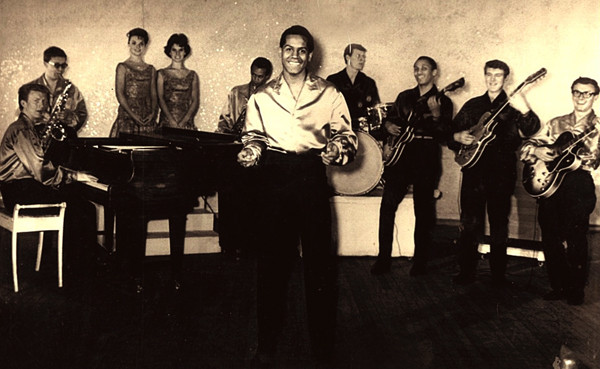
It begins with some ticks, and then the vocals swoop in. This is a Doo-Wop record in the truest sense: in that much of it consists of the backing singers – The Checkmates, presumably – going a-doo-wop bee doo be doo be doo-wop…

I love this song, I do. What with all the doo-wops, the key changes and the brilliant false ending I can’t see how anyone could fail to enjoy it. I first heard it on a compilation called ‘Don’t Stop – Doo Wop’, which must have been released in the early ‘90s and which I picked up in a second hand CD shop years ago. I think I mentioned it in my post on The Teenagers’ ‘Why Do Fools Fall in Love’, which also featured on it.

The lyrics, though, to ‘What Do You Want to Make Those Eyes at Me For?’ (abbreviated forever more into WDYWTMTEAMF because that is a hell of a title to type out in full)… Hmmm. Questionable. What do you wanna make those eyes at me for, If they don’t mean what they say… That sounds like the justifications of a sex pest: “She was askin’ for it, guv! Those eyes!” You’re foolin’ around with me now, We-ell you lead me on and then you run away… She does sound like a tease… Of course, during these enlightened #MeToo times, we know that no means no. In 1959 it was perhaps a different story. We-ell that’s alright, I’ll get you alone tonight… Ok… And baby you’ll find, You’re messing with dynamite… Oo-er. Sexual dynamite? Or is he just going to give the disobedient hussy a black eye?

I jest, I jest… I’m willing to give Emile Ford the benefit of the doubt, as he keeps this song the right side of jaunty throughout and, to be honest, you can listen to it several times – as I did – without ever noticing the slightly sinister lyrical undertones. And, in defence of the 1950s as a whole – a decade, don’t forget, in which certain professions were closed to women, in which hotels could stick ‘No Blacks, No Irish’ in their windows, in which gay men were being slung in jail, in which people could still be sentenced to hanging – there have been very few #1 singles that stand out as troublesome for the modern listener. Very few lyrics have veered away from the catchy or the bland. I’d perhaps nominate WDYWTMTEAMF  and Guy Mitchell’s ‘She Wears Red Feathers’, from way back when (i.e. 1953) as being the most ‘of their time.’

A-347098-1418674966-5971.jpeg

As I mentioned in my last post, this disc was one of the last two records ever to share the top-spot in the UK charts. I suggested earlier that the death of the joint number one was due to a wider range of sales figures coming in but now I’ve just realised another theory: there will never be two such similarly titled #1 singles sitting at the top of the charts. Think about it: people go in to HMV looking to buy ‘What Do You Want?’ by Adam Faith, take a quick glance at the shelves, and come away with ‘What Do You Want to Make Those Eyes at Me For?’ by Emile Ford! Or vice-versa. Must have happened loads! Mystery solved.

WDYWTMTEAMF (that might actually be more of a pain to type than just writing it out in full) has quite the story, beyond this most famous of versions. It was written in 1916 (!) as a duet – in which the woman actually got to defend her wanton ways – and has been recorded by acts as varied as Shakin’ Stevens and former England, Barcelona and Tottenham manager Terry Venables. (Yes. Seriously.)

And so. We come to the end of the 1950s. And the start of the 1960s. Is this the last #1 record of the ‘50s, or the first of the ‘60s? Philosophical questions best left for another day. We are about to delve into a decade that will bring the most innovative pop ever recorded, the birth of modern rock, Merseybeat, Flower Power, psychedelica etc. and so on. So, I thought it might be interesting to gaze forward to the record that will be atop the charts on 31st December 1969, and to wonder at the advancements to come over the next ten years. Except. The final #1 of the sixties will be… ahem… ‘Two Little Boys’ by Rolf Harris. So… From a record with sex-offender lyrics to a record by an actual, convicted sex-offender. Ladies and Gentlemen, I give you the 1960s!

Let’s linger a while yet in the more innocent air of 1959, and end this post as Emile Ford (the first, and presumably only, St. Lucian to hit #1 in the UK – correct me if I’m wrong)  ended his sole chart-topping hit. Possibly the best ending we’ve heard yet. One more time, then: adoo-wop bee doo be doo be doo-wop be doo be doo be doo-wop be doo be doo be doo… Yeah!

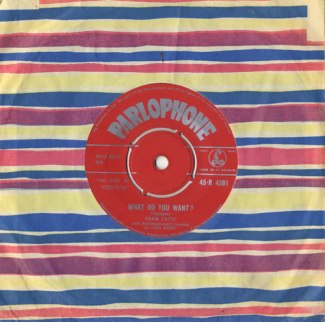
93. ‘What Do You Want?’, by Adam Faith

So. I finish writing that last post, search out the next chart-topping record on Spotify – ‘What Do You Want’ by Adam Faith – and settle down to take some notes. The song begins… And then the song finishes. I take precisely two notes, the second of which is ‘This song is short…’

ADAM_FAITH_WHAT+DO+YOU+WANT-407258

What Do You Want?, by Adam Faith (his 1st of two #1s)

3 weeks, from 4th – 25th December 1959 (including 1 week joint with Emile Ford & The Checkmates from 18th – 25th December)

It is, in fact, the shortest ever UK #1 single, clocking in at 1 minute and 38 seconds. That is seriously short. We’ve covered plenty of records thus far that have hovered around the two minute mark. This knocks a full twenty seconds off them. Adam Faith gets in and gets out, and gets his first chart-topper. (For the record, we’ll be meeting the longest UK #1 single – a nine-minutes-plus behemoth – in exactly thirty eight years’ and two months’ time. Bonus points for those who can name it.)

The first note I took upon listening to ‘What Do You Want’ was: ‘Strong whiff of ‘It Doesn’t Matter Anymore’. Now, I wouldn’t ever want to use a phrase liked ‘ripped off’… So let’s just say Mr. Faith and his song writing team were heavily influenced by Buddy Holly’s recent, posthumous hit. It’s sung at the same pace, with the same staccato strings, while Faith tries to replicate Holly’s famous hiccup.

What do you want if you don’t want money, What do you want if you don’t want gold… Say what you want and I’ll give it you darlin’, Wish you wanted my love baby… Adam loves a girl, but she isn’t feeling it. So Adam hurls all sorts of rubies and trinkets at her – ermines and pearls, amongst others – but to no avail. It’s not the best message to be sending out in a song… maybe she’s just not that into you Adam, yeah?

He even gets a little petty in the final verse: One of these days when you need my kissin’,  One of these days when you want me too, Don’t turn around ‘cos I’ll be missin’, Then you’ll want my love, baby… I get the feeling that this girl just thinks he’s a dick, no matter what he buys her.

T_What-Do-You-Want

I know, I know – I’m perhaps looking a little too hard into what is an extremely light and fluffy #1 single. It’s cute, it’s jaunty, and it certainly doesn’t outstay its welcome. Adam Faith’s voice is kind of endearing as well. He’s not a great singer; but he lends the song something distinctive (check out his ‘bay-buh’), and he’s a clear successor to the likes of Dickie Valentine and Tommy Steele in the British cheeky-chappy, teen idol stakes. I’ll delve deeper into his life and works when he scores his second chart-topper in a few months.

But for now I’m struggling to think of much more to write… Perhaps such a short song requires a short post. One final thing to note is that the penultimate #1 of the 1950s is also one of the last two songs ever to have tied for the top spot. It’s happened four times now: once each in 1953, 1957, 1958 and now ’59. It seems that the upcoming switch of the ‘official’ chart from the NME to Record Retailer will have something to do with killing off the tied number one (more record shops’ sales figures going towards the charts, perhaps?) I can confidently say that it will never happen again, such is the accuracy with which sales and streams are tracked nowadays. Apparently if it does, the song with the biggest increase in sales for that particular week will be given the #1 position – kind of like goal-difference in football. And part of me is slightly sad about that… Farewell, then, to the shared number one single. Well, after we’ve covered the record with which Adam Faith had to share, that is.

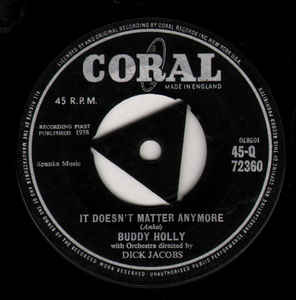
84. ‘It Doesn’t Matter Anymore’, by Buddy Holly

First, a bit of history… On February 2nd 1959, a group of popular rock ‘n’ roll stars played a show in Clear Lake, Iowa, as part of ‘The Winter Dance Party’ tour. In order to avoid a long, cold bus journey to their next concert in Moorhead, Minnesota, some of the musicians chartered a plane. Though the weather that night was poor, the visibility terrible and the pilot unqualified to fly using only instruments, they took off regardless and minutes after take-off, just gone 1am on the morning of the 3rd, the plane slammed into a cornfield. All four aboard were killed instantly. They were the pilot Roger Peterson, J.P. Richardson (AKA The Big Bopper), Ritchie Valens, and Buddy Holly.

R-493764-1314372312.jpeg

It Doesn’t Matter Anymore, by Buddy Holly (his 1st and only solo #1)

3 weeks, from 24th April – 15th May 1959

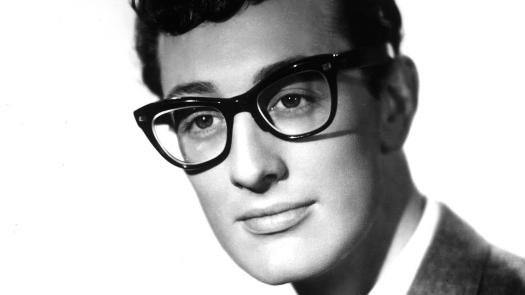
All of which means that the eighty-fourth UK #1 single is the first ever to do so posthumously. Released a couple of weeks after Holly’s death, and hitting the top a full two months later, ‘It Doesn’t Matter Anymore’ gives The Father of Modern Pop Music (I know, I know, I’ve literally just made this title up; but I dare you to challenge me on it!) one final hurrah. Would it have topped the listings anyway – given that Holly was only twenty-two when he died and at the peak of his powers? Maybe… The manner in which it meandered up the charts suggests that this wasn’t some flash in the pan reaction to his death, while the peak positions of his previous two singles (#17 and #30) beg to suggest otherwise.

To the song… Some people make a lot of the rather nihilistic title as being somehow appropriate in the wake of his death. But it wasn’t suicide; so that’s always seemed a slightly strange angle to view this record from. No, this is a song about a break up: There you go and baby, Here am I, Well you’ve left me here, So I could sit and cry, We-ell golly-gee, What have you done to me, Well I guess it doesn’t matter anymore… His girl’s up and left him, but Buddy’s putting on a brave face: There’s no use in me a-cryin’, I’ve done everything and now I’m sick of tryin’, I’ve thrown away my nights, And wasted all my days over you…

The lines come thick and fast, the song rattles to a conclusion in a mere two minutes, and in the end BH has decided to shrug it off and move on: You go your way and, I’ll go mine, Now and forever till the end of time, I’ll find, Somebody new and baby, We’ll say we’re through, And you won’t matter anymore…

And it’s not what you would immediately imagine a Buddy Holly record to sound like. The only instruments here are violins and a lightly-tickled guitar – far removed from his more recognisable rock ‘n’ roll hits like ‘Oh Boy!’ and ‘Rave On’. Plus, despite all his fame as a songwriter and composer, this record was actually written by our friend Paul Anka.

investigators-may-reopen-buddy-holly-plane-crash-fdrmx

Despite the minimalist instrumental accompaniment and the fact that he didn’t write it, Holly still makes this record his own. Because? That voice. In the space of two minutes he finds room for all the tricks in his repertoire. Hiccups (…over you-ou-ou-ou-Ah-hoo…), snarls, times when his voice has a deep, gloopy quality and times when it is light as a feather. For all his talents as a guitarist and composer, Mr. Holly was a pretty decent singer too. And in the context of Buddy Holly’s solo songs, away from The Crickets, this slips in nicely along with other non-guitar led tracks such as ‘Everyday’, ‘Raining in My Heart’, and ‘True Love Ways’ (I know I’m going a bit link-heavy, but really everyone should take a moment out of their days to appreciate What Buddy Did For Us. Not for nothing did acts like The Beatles and The Rolling Stones start out by playing covers of his songs…)

You could also argue that this is, as well as being the first posthumous #1, the first ‘popular band member gone solo’ chart-topper. OK, ok, this was nowhere near Buddy Holly’s first single release as a solo-act but still… The fact that he did it paved the way for, let me see… Diana Ross, Michael Jackson, George Michael, Sting, Robbie, Geri, Zayn and many, many more.

But to finish, let’s go back to the night of February 2nd, 1959. The Day the Music Died. Some of the tales are semi (or perhaps completely) legendary. The fact that Holly only commissioned the plane because his drummer had caught frostbite on the freezing tour bus. That the Big Bopper only took a seat on the plane because he had the flu and wanted to get a good night’s sleep. (Let me include a link here to his biggest hit ‘Chantilly Lace’, featuring the filthiest laugh ever captured on record). Ritchie Valens won his seat on the plane in a coin toss with Holly’s guitarist Tommy Allsop. Allegedly – and I so hope that this is all true – Valens claimed it was the first thing he’d ever won, while Allsop went on to open a restaurant called ‘Heads Up’ (he’d called tails…) It was all immortalised in song by Don McLean some twelve years later. We won’t be meeting his version of ‘American Pie’ in this countdown, unfortunately, but we will be meeting the Madonna version. Which will be fun.

Anyway, let me leave you with one final link. Proof, perhaps, of Buddy Holly’s magic. Not only did he write gorgeous, timeless and immeasurably influential songs, but thirty five years after his death all Weezer had to do was stick his name on a song and they were blessed with a classic of their own.

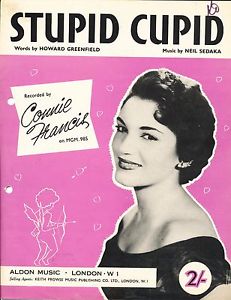
75. ‘Stupid Cupid’ / ‘Carolina Moon’, by Connie Francis

Connie-Francis-Stupid-Cupid-MGM-45

Stupid Cupid / Carolina Moon, by Connie Francis (her 2nd of two #1s)

6 weeks, from 26th September – 7th November 1958

A double ‘A’-side, which again means double the songs to write about. I’d better get cracking.

Connie Francis is back at the top. Three months on from ‘Who’s Sorry Now’s six-week reign at #1, ‘Stupid Cupid’ arrives to spend – you guessed it – six weeks at #1. She may only have had two chart-toppers, but twelve weeks in total at the top is nothing to be sniffed at. It reminds me of Rosemary Clooney’s chart run from a couple of years ago: two quick-fire chart toppers by a sparky female lead…

In ‘Who’s Sorry Now’, Connie was enjoying a bit of schadenfreude at her ex’s expense. Now, in ‘Stupid Cupid’, she’s back in love. Except she doesn’t want to be…

We start with a staccato sax, chugging drums, and then: Stupid Cupid, you’re a real mean guy, I’d like to clip your wings so you can’t fly, I’m in love and it’s a cryin’ shame, And I know that you’re the one to blame, Hey, hey, set me free, Stupid Cupid… Stop pickin’ on me! There’s a twang in her voice to match the twang in the guitar, and the song bounces along nicely. It’s a very sax-heavy track – with a chunky little solo in the middle – and it seems that we might be having a bit of a ‘sax phase’ at the top of the UK charts with this following on from ‘When’. It’s nice, considering that we’ve already had plenty of guitar and piano – the three main rock ‘n’ roll instruments taking their turn to dominate.

As with ‘Who’s Sorry…’, the best bit of this record is the bridge. It seems to be the point in her songs where Ms Francis really lets loose, belting the lines out while losing none of her sparkle: You mixed me up but good right from the very start, Hey! Go play Robin Hood with somebody else’s hea-a-a-art… Cue handclaps and a shimmy.

By the end of the song, however, it turns out that her reluctance in love has been a bit of front: Since I kissed his lovin’ lips of wine, The thing that bothers me is that I like it fine… The little minx! And the way she lingers over the final ‘I like it fine’ is perhaps the most playful, nudge-nudge, wink-wink moment of any chart-topper so far.

s-l300 (1)

Which makes the flip-side of this disc all the more disappointing… ‘Carolina Moon’, to be perfectly honest, is a bit dull. I get that you want to show off the different sides to a singer’s range – though in the previous double ‘A’ both Lonnie Donegan tracks were pretty similar. ‘Stupid Cupid’ is simply a really hard act to follow.

The sax is gone, replaced by a harmonica, a plinky piano and swaying guitars. Carolina moon, Keep shinin’, Shinin’ on the one who waits for me… Now Connie’s sitting at home pining for a guy. Make up your mind, love… How I’m hopin’ tonight, You’ll go, To the right, Window… Tell him that I’m blue and lonely… Dreamy Carolina moon…

I know Connie Francis’s music quite well, but somehow I’d never heard this before. And I wasn’t missing much. Lyrically, this pretty old-fashioned. There was a surfeit of songs back in 1953 / ’54 where people were waiting patiently for their distant loved ones. There was even one – ‘I See the Moon’ by The Stargazers – in which the singer implored the moon to ‘shine on the one they loved’. These days we’re used to something a bit more immediate, though, a bit less passive. Don’t just sit at home relying on the moon to tell the man of your dreams that you love him! Get out there and make him notice you!

Francis’s voice is still very nice on this record, but it lacks bite. She definitely sings better when there’s a bit of sass in the lyrics. This is just an average rock ‘n’ roll ballad… I had a sneaking suspicion that this might have been a pretty old song resurrected for the rock age, a la ‘Who’s Sorry Now’… And I was right. Wiki tells us that it was originally a hit way back in 1928.

And with this double whammy, Connie Francis’s short-lived time as a UK chart-topper comes to an end. Mopey songs about moons aside, her two lead singles have been highlights of the year so far. One a ballad with a spikey twist, the other a rollicking ride of a pop song. I’ll link here to some of her better non-chart toppers: songs such as ‘Where the Boys Are’, ‘Lipstick on Your Collar’, ‘Everybody’s Somebody’s Fool’, and hands-down the raunchiest song recorded in 1959: ‘Plenty Good Lovin’ (sample lyric: People say he’s not too smart, But he knows the way to a woman’s heart, Plenty of things that he don’t know, But this boy shines when the lights are low…) Oh, Connie. You are awful! I have a suspicion that we’ll be missing you before long.

62. ‘All Shook Up’, by Elvis Presley

elvis-presley-all-shook-up-that-s-when-your-heartaches-begin-hmv-pop-359--53154-p

All Shook Up, by Elvis Presley (his 1st of twenty-one #1s)

7 weeks, from 12th July – 30th August 1957

And so it begins…

Between the 12th July 1957 and the 6th February 2005, Elvis Presley will score 21 UK #1 singles… (The most any artist we’ve met so far has managed is four). He will spend 80 weeks at #1, 386 weeks in the Top 10, 1062 weeks in the Top 40, 1304 weeks in the Top 75… And that’s before we get started on the albums chart… Elvis won’t just dominate the UK charts; he’ll hump their brains out.

I feel like whatever way I introduce the ultimate pop star (rock star, performer, King of Whatever) it won’t be enough. I’ve already struggled to set the scene for Sinatra, and I’m sure I’ll struggle similarly when it comes to The Beatles, Michael Jackson and co. Best thing is, I think, to just jump straight into the song.

‘All Shook Up’ is actually a fairly low key start for Elvis. There’s a roly-poly riff, a little Hawaiian guitar and someone slapping on a cardboard box (?). There’s no solo, no change of pace, and it’s over inside two minutes. Although I knew what to expect from this song, it does sound a little underwhelming as the record that announced ELVIS PRESLEY’S!! ARRIVAL at the top of the charts. (Of course, this was far from being his debut single – it was Presley’s 7th Top Ten appearance – and I can’t help feeling that some of the singles that went before, such as ‘Heartbreak Hotel’, ‘Hound Dog’ or ‘Blue Suede Shoes’, would have made much more of a statement as his first #1).

What the minimalist production does do, however, is show off Elvis’s voice to perfection. We’ve got the now iconic I’m all shook up – uh huh huh… which impersonators will be doing dodgy copies of until the end of time. We’ve also got the beautiful moment at the end of either verse (not that this song really has ‘verses’, but still) when the instruments pause and we are left with nothin’ but Elvis: My heart beats so an’ it scares a-me to death…

My favourite bit of the whole song, though, comes towards the end. And it’s not a lyric or a guitar lick or anything like that. For a song that’s about the feeling of being in love, and of being all shaken up from falling in love, the lyrics are quite tame. Lots of knees shakin’ and tongues gettin’ tied and so on. But just before the second last I’m all shook up, in a moment of silence, Elvis lets out a little grunt – a tiny little orgasmic sigh – and in that moment we catch the merest whiff of the scandalous Elvis: the Elvis that was causing a moral panic, ‘Elvis the Pelvis’ who couldn’t be shown from below the waist on TV.

article-2256834-16BE3173000005DC-708_634x834

I suppose I should state from the beginning that I know every one of Elvis’s chart-toppers very well. There will be no surprises as far as he’s concerned. I bought my first Greatest Hits when I was around sixteen and never looked back and, while I don’t listen to him as often as I used to, he’s been a pretty constant part of my life’s soundtrack for near twenty years. But it will be interesting to listen to these records in a more critical way, to dissect them as the little pieces of history that they are.

Of course, there’s the well-trodden argument that even by 1957 Elvis had sold-out. Purists will tell you that he recorded all his best, his rawest and most compelling singles, during the Sun years, before he signed to RCA. And there’s some truth to that. There’s also some (a lot?) of truth to the notion that he recorded some utter drivel in the 1960s. But it would be criminal to discount the late-50s singles – utter cornerstones of pop music the lot of them – many of which we will be encountering on this countdown erelong. And ‘All Shook Up’ – while it has never been one of my favourites – deserves its place amongst them…

Uh-huh-huh!