And so we arrive at yet another staging-post on the long, but thinly spread, chart-topping career of Michael Jackson. One number one with his brothers, and seven solo, stretched out over two decades. Interestingly, and perhaps aptly, he only ever made #1 in odd numbered years…
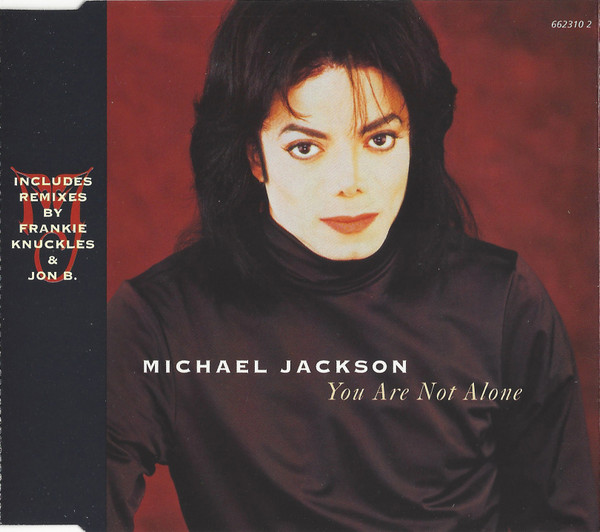
You Are Not Alone, by Michael Jackson (his 5th of seven #1s)
2 weeks, from 3rd – 17th September 1995
’77, ’81, ’83, ’87, ’91 and now 1995. And this is just what we’ve been missing on our 1995 bingo card. After all the dance, the Britpop and the power balladry, what we really needed was some slow and syrupy, mid-nineties R&B. This sound was (thankfully) much more prevalent on the Billboard charts, possibly the sound of US pop at the time, and few acts would have had the star power to drag this sludge to the top spot in the UK.
Trust MJ, though. It was the second single from the ‘HIStory’ album, following ‘Scream’, the duet with sister Janet, more famous for its record-breakingly expensive video. And there is a sweet simplicity to this song. The chorus plays almost like a lullaby: You are not alone, I am here with you, Though you’re far away, I am here to stay… Like a lullaby in that it’s pretty, and in that it may send you to sleep.
Jackson puts in a pretty strong vocal performance as well, limiting the ticks and the gulps that have marked most of his music since ‘Bad’ (there’s not a single ‘eeeh hee’ either). He gives the lungs a workout towards the end, post key-change, reminding us that underneath it all he was always a fine singer.
And yet… Watch the video, and it’s easy to become distracted from the actual song. He is now fully white, and very plastic-looking. We’re almost treated to a full-frontal from the King of Pop, as he smooches with then wife Lisa Marie Presley, wrapped only in a towel. It’s all pretty icky. Of course, knowing what we know now means that any Jacko love song comes with its own in-built ick-factor. (‘You Are Not Alone’ was also written by R Kelly, just in case we needed any extra ickiness.)
So, in summary, this is a sweet enough, well-performed ballad, your enjoyment of which depends on how much you can block out thoughts of what we know now, and of a near-naked MJ canoodling with Elvis’s daughter. 1995 will actually turn out to be Jackson’s most successful year, in terms of chart-toppers. He still has a massive Christmas #1 to come, in which he puts his clothes back on and returns to his usual preposterous, overblown nonsense.
When old fogies stop to reminisce about the 1990s, about the music that soundtracked final few years of the 20th Century, we might think of the Spice Girls, Take That, or Pulp. Maybe even The Prodigy, or The Chemical Brothers. But if you had to bet on it, you’d bet that we think of this one moment: the chart dated 20th-26th August 1995.
Country House, by Blur (their 1st of two #1s)
2 weeks, from 20th August – 3rd September 1995
Oasis Vs Blur. North Vs South. Working-class Mancs vs posh(er) Essex lads. Cliches, cliches, all the way. Legend has it that Liam Gallagher taunted Damon Albarn about Oasis having a number one single, spurring Blur’s management to cheekily change their next release date to clash with Oasis’s ‘Roll With It’, making for great publicity, and the highest sales week for a decade (setting the way for single sales to hit an all-time high in the coming years).
But the story here is the song, primarily, and I should block out all the hype and noise and focus on the tune. As with ‘Some Might Say’, ‘Country House’ may have been Blur’s first #1, but it’s not one of their very best singles. From their earlier hits, ‘Girls & Boys’ is better musically, while ‘Parklife’ has left a much larger cultural legacy. Still, it’s a fun, multi-coloured romp, right from the helter skelter intro through to the brass section in the fade-out. And it tells a story not much heard in chart-topping singles: that of a country squire living a life of rural asceticism. He’s got a fog in chest, So he needs a lot of rest… He doesn’t drink, smoke, laugh, Takes herbal baths… In the country…
There’s a lot going on, musically, and a lot of knowing references to British bands past. Oasis get a lot of stick for being musical magpies, but I hear plenty of Kinks and Small Faces, as well as Madness, and the ghosts of British music hall, here. (Chas & Dave, too, according to Noel Gallagher, but he meant it as an insult…) The video also has Brit-references galore: Page 3 girls, Benny Hill themed hi-jinks, a nod to ‘Bohemian Rhapsody’, Matt Lucas, Jo Guest and Keith Allen (featuring in his second chart-topping video). And for the ultimate Britpop seal of approval, it was directed by Damien Hirst.
The story, like I said, should be the song. And yet, would ‘Country House’ have made #1 were it not for all the hullaballoo? Maybe, as it was the lead single off a hotly-anticipated new album. But maybe not, as Blur had only three previous Top 10 hits to their name, and just one Top 5. So perhaps we can’t fully separate this song from all the nonsense. What’s certain is that the right song won. ‘Roll With It’ is probably Oasis’s laziest single. I do like it, but you can see why it’s been called ‘Status-Slade’ (though that’s not the insult some might think…) Also, in terms of the ‘Battle of Britpop’, Blur were the originals – their 1992 hit ‘Popscene’ is claimed by many as the very first Britpop single.
In my post on ‘Some Might Say’, I mentioned that my love for Oasis has dimmed over the years. With Blur, the opposite has happened. Nobody I knew at school would have admitted to liking them over Oasis – they were too clever, too arty… Everyone liked ‘Song 2’, but then that’s their dumbest song by far. As a sensible adult, though, I can admit that Blur were the more expansive songwriters. More fun, too – just look at them in the video, pratting about in bubble-baths, then try to imagine Liam doing the same…
Still, this is the first of only two times that we I’ll be writing about Blur (Albarn does also have a Gorillaz #1 to his name). Oasis may have lost this chart battle, but they definitely won the war…
For many, Take That peaked with ‘Back for Good’, their sixth and best-loved number one single. Where to go from there, then? Back to decent-but-unremarkable pop, such as ‘Sure’? Or do they get Jim Steinman, a kids’ choir, and a sample from Verdi’s ‘Requiem’, and throw together an extravagantly OTT remake of a track from their most recent album?
Never Forget, by Take That (their 7th of twelve #1s)
3 weeks, from 30th July – 20th August 1995
I’m sure you already know, but it was the latter. Trumpets of the type usually reserved for announcing royalty herald this next chart-topper. Angelic children’s voices telling us that we’ve come so far, and we’ve reached so high… Depending how you score on the Barlow-tolerance meter, this is either further evidence that Take That were not just another boyband… Or the sound of them, and their songwriter-in-chief, disappearing up their collective arses.
When all the choirs and the Verdi are done, and the song slips into a bog-standard mid-nineties soul-pop beat, it’s a little disappointing. Much of this song’s near seven-minute runtime is fairly mundane, but nobody remembers that. They remember the soaring chorus (that takes well over two minutes to arrive) and the extended fade-out, rather than the dull verses.
It’s now a standard boyband cliché: the song about how fame hasn’t changed them, or how fame isn’t everything it’s cracked up to be. This record might be where that trope stems from, as Howard Donald (on rare lead-vocal duty) announces weighty lyrics like We’ve had success, We’ve had good times, But remember this… while a slideshow of pictures from their childhoods plays in the video, interspersed with clips of them winning awards and generally being adored.
Again, if you have a cynical little mind (like I do) you could see this entire project as a massive humblebrag. My mind starts to wondering if Robbie left before or after ‘Never Forget’, as his voice is nowhere to be heard. But then he appears, eventually, to throw some ad-libs around in the long fade-out. Perhaps his diminished role is a clue as to why he did finally quit the band, post-recording but before ‘Never Forget’ was released. He’s had a fairly small role in all but one of their #1s (‘Everything Changes’), with nothing to suggest that he was going to be the huge solo star that he is.
I do like aspects of this single, just in case I’ve sounded too down on it. The sheer scale of it, the Jim Steinman-isation of it. The chorus is one of their very best, too. But by the six minute mark I’ve had my fill, and there’s a false ending that really tests the patience. Still, it was a huge hit – of course it was – and their seventh chart-topper in just two years. Yet it was the beginning of the end. Robbie had left, no further singles were released from the album, and there’s only a fairly limp Bee Gees cover to come before Britain’s biggest boyband are laid to rest. For a bit, anyway.
A very happy new year to all who follow this blog! So, where were we…? In the real world it’s 2024, while back here it’s the spring of 1995…
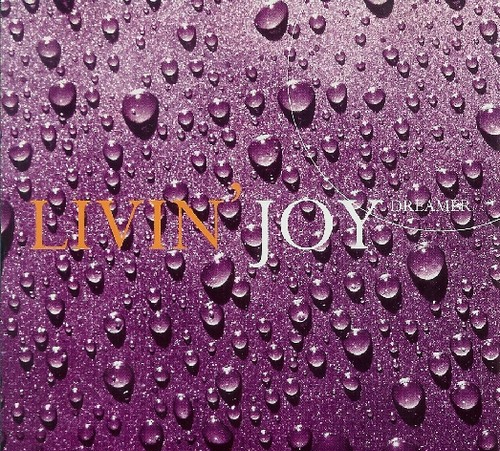
Dreamer, by Livin’ Joy (their 1st and only #1)
1 week, from 7th – 14th May 1995
We left things a few weeks ago having just welcomed Oasis to the top of the charts with ‘Some Might Say’, officially kicking off the Britpop age. Our next number one is the direct flip-side to that wall of guitar; the other, equally valid, sound of the nineties.
That is, the sound of a hitherto unknown Europop outfit appearing out of nowhere with a proper old-school dance banger. Having it large, mate! Nice one! Big fish, little fish, cardboard box… etc. etc. I may struggle to convince as a dance music fan, but I really do like songs like this. Songs with conviction. Dance music with the power of rock and roll. Hands to the sky, don’t ask why.
Livin’ Joy were a pair of Italian brothers, who took care of the production, and American singer Janice Robinson, who fronted the whole thing. As with all the best dance tracks – ‘Rhythm Is a Dancer’, ‘Let Me be Your Fantasy’ and the like – the vocals are made to be belted out between mouthfuls of dry ice. Probably the closest comparison to be drawn, though, is with Black Box’s ‘Ride on Time’ – not just because they were also Italian, but because Robinson is one of the few dance divas who can compete with Loleatta Holloway in the belting stakes.
And also because ‘Dreamer’ has quite a few retro house touches, especially as we end with the title line on a tight loop, as if the record has stuck, leaving us dancing to it for eternity. I drew a comparison to rock and roll a moment ago, and in all honesty dance music in the 1990s is what rock was in the 1950s… If you wanted to rock around the clock in 1995, you would do so to songs like ‘Dreamer’, with upbeat lyrics like Love, life, and laughter, Is all that I believe… None of that silly introspective nonsense. There’s also a good example of the ‘dance music as church’ phenomenon, in lines like My saviour is pure now, Because my lonely heart would bleed… They don’t mean much, if they mean anything at all, but they sound good in the moment. Euphoric, even.
I say that Livin’ Joy were ‘hitherto unknown’ before this, but in truth ‘Dreamer’ had made #18 – a not inconsiderable hit – just the year before. Its popularity kept growing, causing it to re-enter the lower reaches of the charts a couple of times, before a full re-release sent it walloping straight in at number one.
The band were good for another couple of Top 10 hits, but they did so without Janice Robinson, who left in 1996 to try a solo career. She has toured with Tina Turner and Lionel Richie, and written songs for a variety of different pop singers. Livin’ Joy meanwhile continued on with a different singer in Tameka Star. Wikipedia lists them as still active, but they haven’t released any new music since 1999.
The results are in, the public has spoken. Earlier this week, Wham! finally made the festive top spot with ‘Last Christmas’, thirty-nine years late. (Hopefully now that it has achieved its ultimate goal, the song will be purged from every device on the planet, and we’ll never have to hear it again…) But in an even more important call to arms, I asked readers of this blog to choose their favourite, and their least-favourite, Xmas #1s.
The vote stopped in 1994, as that’s where our regular blog is (and because that is, I firmly believe, the end of the golden-age of the Christmas chart-topper). I also didn’t include every official Xmas #1 – just those that were Christmassy or silly enough – because everyone knows the Beatles were good, and we didn’t need them adding this honour to their role-call. So without further ado, the Top 3 Best Christmas #1s, as voted by you, are…
3rd place
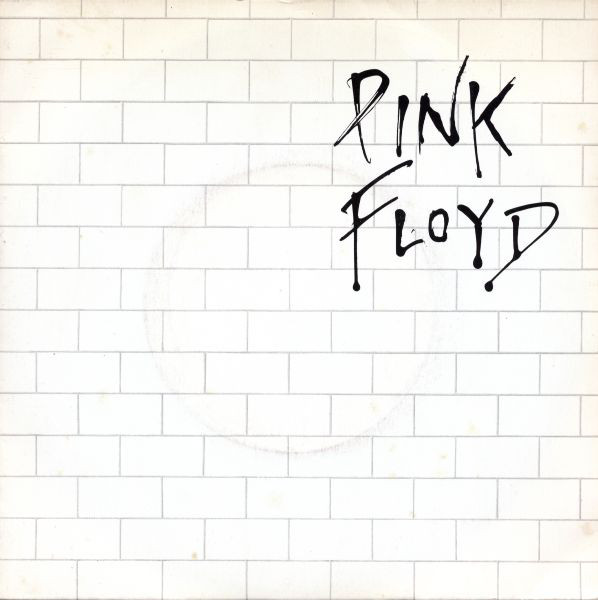
‘Another Brick in the Wall (Part 2)’, by Pink Floyd
The final Christmas #1 from THE decade for Christmas #1s, it’s the only single ever released by Pink Floyd (references needed). It ticks some of the boxes for a festive hit – novelty value, children singing en masse – but otherwise it’s got bugger all to do with the holiday season, and lots to do with abuse of power and brainwashing of youngsters. Margaret Thatcher hated it, and there’s no greater endorsement than that! (Read my original post on it here.)
2nd place
‘Stay Another Day’, by East 17
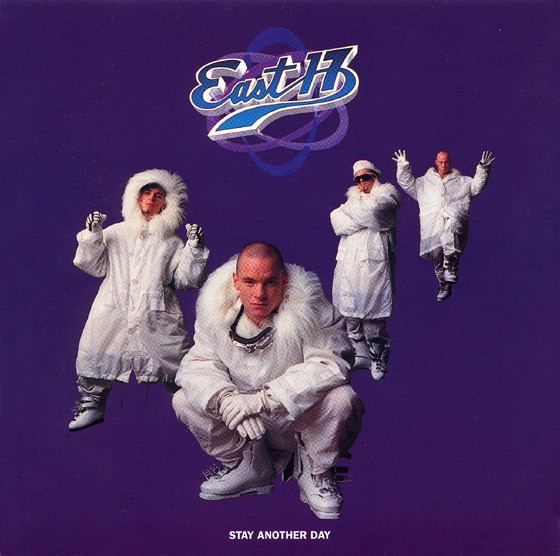
More Christmassy than Pink Floyd, though still not officially a ‘Christmas song’ (but, the bells!)… The 1994 Xmas chart-topper. Written about the suicide of Tony Mortimer’s brother, it’s both sad, and uplifting, as I mentioned in my post on it a few weeks back. And those white parkas have become enshrined in British pop culture. It was still some way off the winning song, though…
1st place
‘Merry Xmas Everybody’, by Slade
It had to be, didn’t it? With just over 30% of the vote, it’s the song that kicked of the very idea of the ‘Christmas Number One’. A glam classic, and a raucous festive singalong, for many it simply isn’t Christmas until Noddy Holder has belted out his famous line… All together now… It’s Christmaaaaaas…!
Anyway, now that’s done, on to the really important bit. The WORST… And interestingly, more votes were cast in this one than for the ‘good’ Christmas songs. Nice to see everyone indulging their dark side… One song was a clear leader from the start but, like all the best Xmas #1 races, a second contender caught up and ended the vote neck and neck. Yes, we have a tie…
Joint 1st place
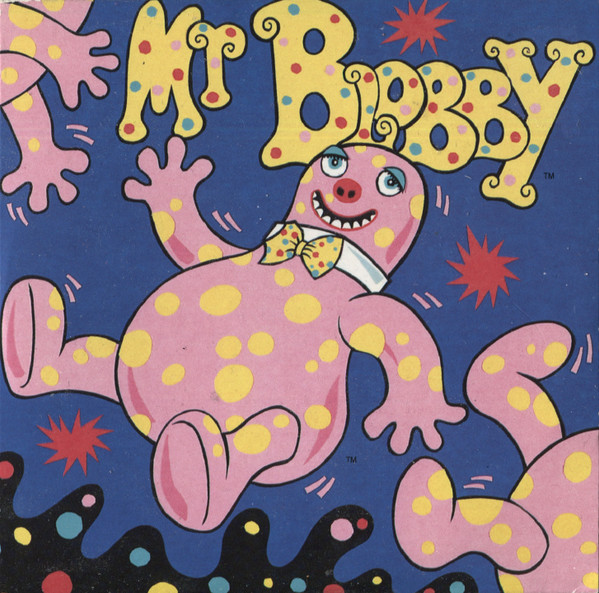
‘Mr Blobby’, by Mr Blobby, and ‘There’s No One Quite Like Grandma’, by The St Winifred’s School Choir
I’m not sure there can be many complaints, as these are two truly terrible pieces of music, for very different reasons. One is manically unhinged, the other is sickeningly saccharine. Both represent the British public’s tendency to send utter tat to the top of the charts, especially at Christmas. But… I do have a soft spot for one of them; while the other needs, in my opinion, to be torched by a flame-thrower. Regular readers will know which is which.
Thanks for voting, for reading this post, and for reading, liking, and commenting on all my posts throughout this year, and the years before. For the first time since starting this blog in 2018, I’ll be taking a winter break. I’ll still be around, interacting in the blogosphere, but the next #1s post will be (hopefully) on the 7th January.
All that’s left is to wish you and yours a very Merry Christmas, and a Happy New Year! See you in 2024!
It’s the most wonderful time of the year, at least according to Andy Williams, which means stockings above the fireplace, geese getting fat, goodwill to all… And the annual race for Christmas Number One.
By now it’s certainly a British tradition, and the one time of the year that the singles chart is guaranteed to make the news, but most people would say that the honour of being the nation’s biggest-selling song on December 25th has lost a lot of its lustre. I’d agree. In fact, I’d say that we’ve already covered the heyday of the Christmas Number One in my regular blog… The most recent festive #1 was 1994’s: East 17’s ‘Stay Another Day’, a classic that I’ve just named one of the Very Best. From here on its a slippery slope, past The Spice Girls, endless X-Factor winners, countless charity singles, to the very bottom of the barrel, and the dreaded LadBaby.
Now it’s time for you to decide: what is the greatest Xmas #1? And, perhaps more importantly, what is the worst?? See below two polls, in which you can choose as many or as few songs as you like, for both honours.
Perhaps controversially, I’ve not listed every Xmas #1 since 1952. Until the early seventies, the idea of a ‘Christmas Number One’ wasn’t particularly relevant, so the only pre-1973 hits I’ve included in the vote are specifically Chistmassy, or novelty songs that probably wouldn’t have made #1 at any other time of year (so, sorry, no Beatles…) Even post-1973, I’ve excluded pop songs that just happened to be #1 at Christmas (so no Human League, or Pet Shop Boys). However, there is space at the bottom for you to nominate any Xmas #1 you think I’ve unfairly missed off the list. You may, for example, feel very strongly that ‘Two Little Boys’ deserves the title…
Here’s the poll for the best…
And the worst…
I’ll announce the results on Christmas Eve, so you have until then to cast your votes. Have at it!
We ended the last thirty #1s on Oasis, and ‘Some Might Say’, a clarion call for the Britpop era to come. But, looking back, the previous era can go under one name only: ‘Take That Totality’! (Send any better words beginning with ‘T’ on a postcard, please…) Yes, Britain’s biggest-ever boyband scored six chart-toppers over the last thirty, which has to be some kind of record. I’m not sure that even Elvis or The Beatles, during their periods of domination in the 1960s, managed six in one recap.
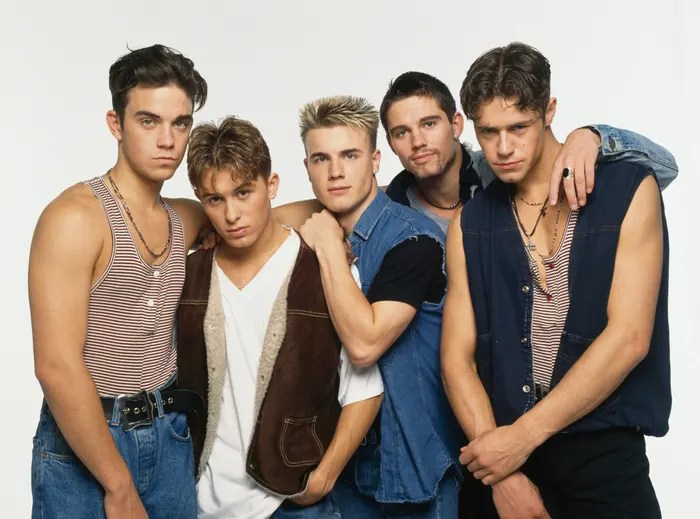
Their hits have ranged from the super-famous-and-slightly-overrated (‘Back for Good’) to the surprisingly enjoyable (‘Sure’) to the predictably so-so (‘Babe’ and ‘Everything Changes’) to a fun intergenerational duet (‘Relight My Fire’, with the lovely Lulu). The best for me, though I didn’t quite appreciate it at the time, was their first: ‘Pray’. While they’re not done yet – in real-time we’re on the verge of Robbie’s walkout – by our next recap they’ll have long since split, and Gary will have embarked on his wildly successful solo career. For all their #1s, though, the best boyband hit of the past two years was not by Take That… More on that in due course.
In and around all the screaming teeny-boppers, we’ve had some par-for-the-course reggae, with two reinventions of ‘60s classics. Chaka Demus & Pliers gave us a fun take on ‘Twist and Shout’, while Pato Banton gave us a slightly more predictable run through of ‘Baby Come Back’ alongside the Campbell brothers from UB40. We’ve also had the pre-requisite ‘90s power ballads: Meat Loaf’s batshit ‘I Would Do Anything For Love’, Mariah Carey’s unnecessary cover of ‘Without You’, and Celine Dion’s much more welcome ‘Think Twice’.
We also met, and endured, another of the longest-running #1s ever. Wet Wet Wet’s cover of ‘Love Is All Around’ was much lighter and more enjoyable than the Bryan Adams and Whitney Houston behemoths from last time out, but still didn’t merit anything like fifteen weeks at the top. (As an aside, the number of times I’ve typed the words ‘cover’ or ‘version’ in the last few minutes has me wondering just how many of the past thirty #1s were covers. Seven, apparently, which seems like a lot, but I haven’t time to go back and check…)
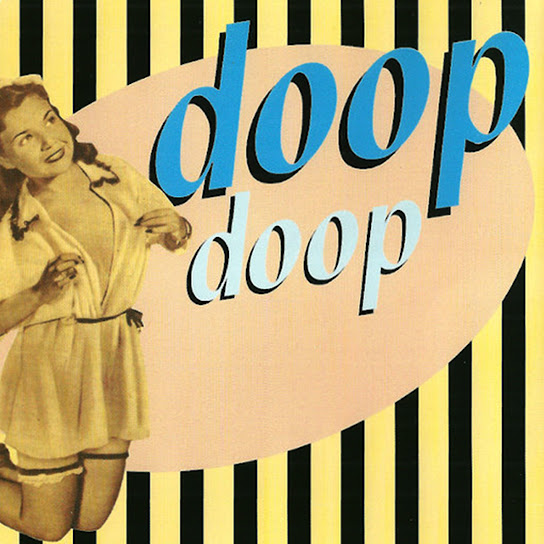
And of course, this being the mid-nineties, we’ve had our fair share of chart-topping dance records. Some classic, or at least well-respected – ‘Mr Vain’, D:Ream, ‘The Real Thing’ and Baby D – some very cheap and tacky – Doop, Whigfield, ‘Cotton Eye Joe’ and the Outhere Brothers (which was also the most profanity-strewn number one yet, by far …)
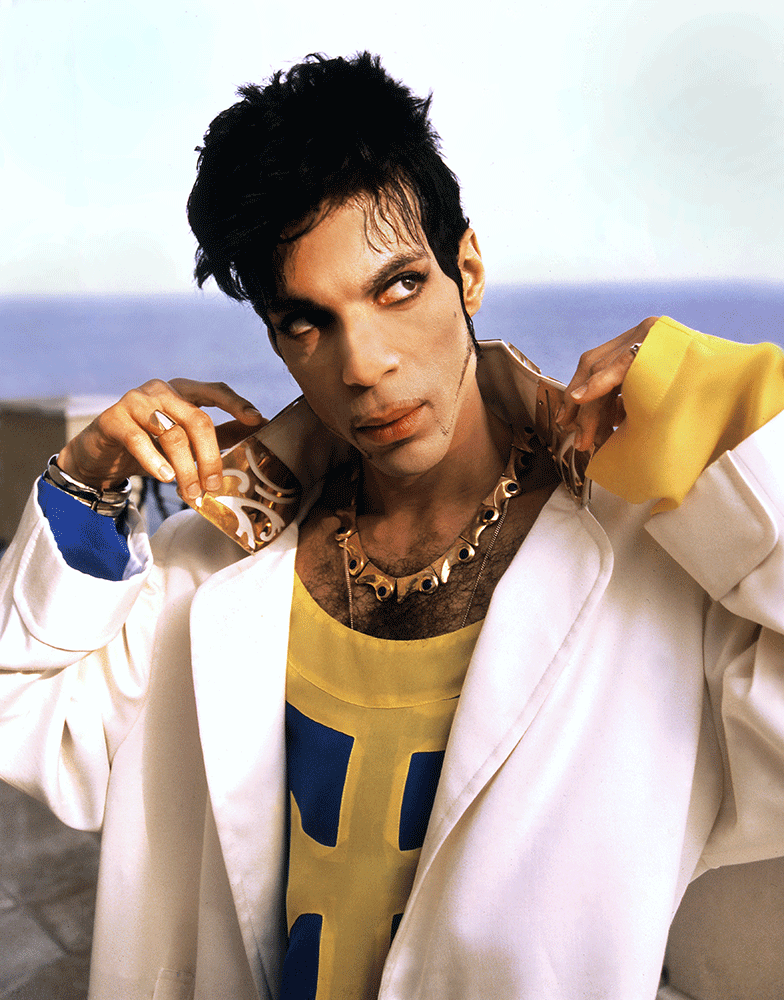
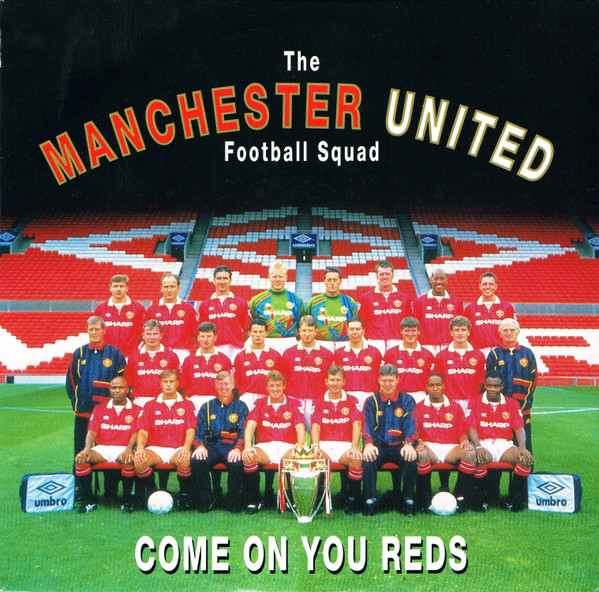
If all the above feels fairly expected, then we’ve also had a few firsts and anomalies. Some chap with a squiggly symbol for a name, formerly known as Prince, managed his one and only British chart-topper with the underwhelming ‘The Most Beautiful Girl in the World’. We also had our sole grunge #1: Stiltskin’s ‘Inside’, which added to the growing sub-genre of ‘chart-toppers brought about by Levi’s adverts’. And our first and last football club #1: Man Utd branching out from league domination to take over the singles charts (with a little help from Status Quo).
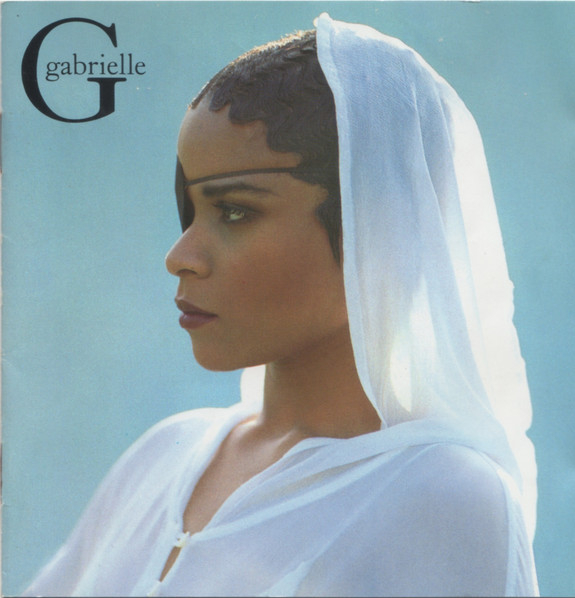
Awards time, then! Starting, as is customary, with The ‘Meh’ Award for songs that failed to get my pulse even mildly aroused. And there have been a few so-so chart-toppers recently. I could plump for a couple of Take That contenders, in ‘Babe’ and ‘Everything Changes’, but the former had a weird creepiness to it and the latter was catchy enough. ‘Love Can Build a Bridge’ – this recap’s charity effort – was also fairly bland, though with a cast of characters that caught the eye at least. I could be controversial and give it to Prince… But no, I’m going for Gabrielle’s ‘Dreams’: nice enough, dinner-party soul-pop. It may be because it’s not fresh in the memory – it was the first of the thirty – or it may be because it’s just plain boring.
The WTAF Awardfor being interesting if nothing else is always a fun one to do. And boy, do we have an interesting range of contenders. Meat Loaf (and Jim Steinman’s) outrageous tale of all the things he would do for love barring one has to be in the mix for the bombast, the video, and the record-breaking runtime. Then there’s ‘Mr Blobby’ – a horrible record, but one which holds a strange, car-crash type fascination for me. And there’s Doop, with their eponymous hit, a disorienting fusion of Eurodance and ragtime…
It’s a toughie, and so I looked back at previous WTAF winners. It seems I’ve tended to go for songs I quite like – that are just a bit zany, or against the tide – rather than songs that disturb. ‘Nut Rocker’, ‘Kung Fu Fighting’, ‘Doctorin’ the Tardis’ and the like. So Blobby’s out. And so, sadly, are Doop. Meat Loaf wins!
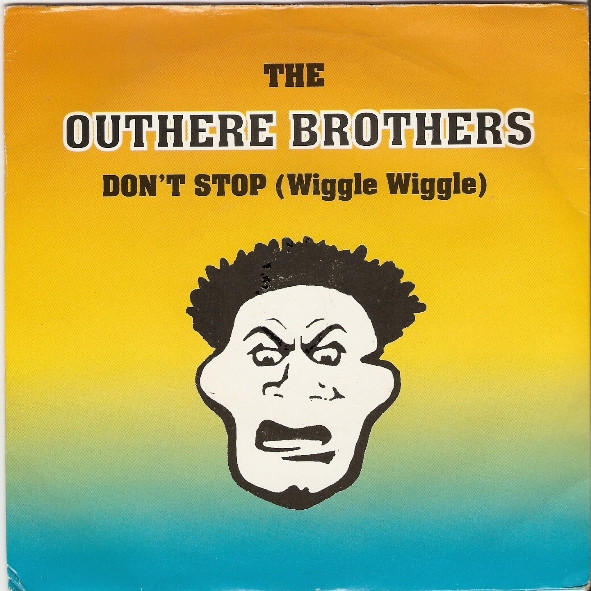
Perhaps I should save Blobby for the next award: TheVery Worst Chart-Topper? For a long while I did think he’d have to win. But I didn’t reckon on two horror-shows from early 1995. When the Rednex came along sporting their brand of techno-bluegrass I thought they had it sewn up, for sure. Except then came The Outhere Brothers, with the moronic, repetitive, genuinely unfunny ‘Don’t Stop (Wiggle Wiggle)’, which none of its many remixes could redeem. In the interests of fairness, I should really listen to them both one more time… But why subject myself to that? ‘Cotton Eye Joe’ is a terrible song, but a song nonetheless. ‘Don’t Stop (Wiggle Wiggle)’ is a mess of tedious beats, shouting and swearing. It wins.
And finally, the 25thVery Best Chart-Topper. To be honest, the pickings were slim. Plenty of records I liked, few that I love. So I’ll dispense with the usual debating, the umming and aahing, and announce that since this was undoubtedly Take That’s era, I’m giving the award to East 17, for their classic Christmas ballad ‘Stay Another Day’. Tis the season, after all…
To recap the recaps:
The ‘Meh’ Award for Forgettability
‘Hold My Hand’, by Don Cornell.
‘It’s Almost Tomorrow’, by The Dream Weavers.
‘On the Street Where You Live’, by Vic Damone.
‘Why’, by Anthony Newley.
‘The Next Time’ / ‘Bachelor Boy’, by Cliff Richard & The Shadows.
‘Juliet’, by The Four Pennies.
‘The Carnival Is Over’, by The Seekers.
‘Silence Is Golden’, by The Tremeloes.
‘I Pretend’, by Des O’Connor.
‘Woodstock’, by Matthews’ Southern Comfort.
‘How Can I Be Sure’, by David Cassidy.
‘Annie’s Song’, by John Denver.
‘I Only Have Eyes For You’, by Art Garfunkel.
‘I Don’t Want to Talk About It’ / ‘The First Cut Is the Deepest’, by Rod Stewart.
‘Three Times a Lady’, by The Commodores.
‘What’s Another Year’, by Johnny Logan.
‘A Little Peace’, by Nicole.
‘Every Breath You Take’, by The Police.
‘I Got You Babe’, by UB40 with Chrissie Hynde.
‘Who’s That Girl’, by Madonna.
‘A Groovy Kind of Love’, by Phil Collins.
‘Do They Know It’s Christmas?’, by Band Aid II.
‘Please Don’t Go’ / ‘Game Boy’, by KWS.
‘Dreams’, by Gabrielle
The WTAF Award for being interesting if nothing else
‘I See the Moon’, by The Stargazers.
‘Lay Down Your Arms’, by Anne Shelton.
‘Hoots Mon’, by Lord Rockingham’s XI.
‘You’re Driving Me Crazy’, by The Temperance Seven.
‘Nut Rocker’, by B. Bumble & The Stingers.
‘You’ll Never Walk Alone’, by Gerry & The Pacemakers.
‘Little Red Rooster’, by The Rolling Stones.
‘Puppet on a String’, by Sandie Shaw.
‘Fire’, by The Crazy World of Arthur Brown.
‘In the Year 2525 (Exordium and Terminus)’, by Zager & Evans.
‘Amazing Grace’, The Pipes & Drums & Military Band of the Royal Scots Dragoon Guard.
‘Kung Fu Fighting’, by Carl Douglas.
‘If’, by Telly Savalas.
‘Wuthering Heights’, by Kate Bush.
‘Hit Me With Your Rhythm Stick’, by Ian Dury & The Blockheads.
‘Shaddap You Face’, by Joe Dolce Music Theatre.
‘It’s My Party’, by Dave Stewart & Barbara Gaskin.
‘Save Your Love’ by Renée & Renato.
‘Rock Me Amadeus’, by Falco.
‘Pump Up the Volume’ / ‘Anitina (The First Time I See She Dance)’, by M/A/R/R/S.
‘Doctorin’ the Tardis’, by The Timelords.
‘Sadeness Part 1’, by Enigma.
‘Ebeneezer Goode’, by The Shamen.
‘I Would Do Anything for Love (But I Won’t Do That)’, by Meat Loaf
The Very Worst Chart-Toppers
‘Cara Mia’, by David Whitfield with Mantovani & His Orchestra.
‘The Man From Laramie’, by Jimmy Young.
‘Roulette’, by Russ Conway.
‘Wooden Heart’, by Elvis Presley.
‘Lovesick Blues’, by Frank Ifield.
‘Diane’, by The Bachelors.
‘The Minute You’re Gone’, by Cliff Richard.
‘Release Me’, by Engelbert Humperdinck.
‘Lily the Pink’, by The Scaffold.
‘All Kinds of Everything’, by Dana.
‘The Twelfth of Never’, by Donny Osmond.
‘The Streak’, by Ray Stevens.
‘No Charge’, by J. J. Barrie
‘Don’t Give Up On Us’, by David Soul
‘One Day at a Time’, by Lena Martell.
‘There’s No One Quite Like Grandma’, by St. Winifred’s School Choir.
‘I’ve Never Been to Me’, by Charlene.
‘Hello’, by Lionel Richie.
‘I Want to Know What Love Is’, by Foreigner.
‘Star Trekkin’’, by The Firm.
‘Nothing’s Gonna Change My Love for You’, by Glenn Medeiros.
‘Let’s Party’, by Jive Bunny & The Mastermixers.
‘(Everything I Do) I Do It for You’, by Bryan Adams.
‘Don’t Stop (Wiggle Wiggle)’, by The Outhere Brothers
The Very Best Chart-Toppers
‘Such a Night’, by Johnnie Ray.
‘Cherry Pink and Apple Blossom White’, by Perez ‘Prez’ Prado & His Orchestra.
‘Great Balls of Fire’, by Jerry Lee Lewis.
‘Cathy’s Clown’, by The Everly Brothers.
‘Telstar’, by The Tornadoes.
‘She Loves You’ by The Beatles.
‘(I Can’t Get No) Satisfaction’, by The Rolling Stones.
‘A Whiter Shade of Pale’, by Procol Harum.
‘I Heard It Through the Grapevine’, by Marvin Gaye.
‘Baby Jump’, by Mungo Jerry.
‘Metal Guru’, by T. Rex.
‘Tiger Feet’, by Mud.
‘Space Oddity’, by David Bowie.
‘I Feel Love’, by Donna Summer.
‘Heart of Glass’, by Blondie.
‘The Winner Takes It All’, by ABBA.
‘My Camera Never Lies’, by Bucks Fizz.
‘Relax’ by Frankie Goes to Hollywood.
‘You Spin Me Round (Like a Record)’, by Dead or Alive
‘Stand by Me’, by Ben E. King (Honorary Award)
‘It’s a Sin’, by Pet Shop Boys.
‘Theme from S-Express’, by S’Express.
‘Nothing Compares 2 U’, by Sinéad O’Connor.
‘Would I Lie to You?’, by Charles & Eddie
‘Stay Another Day’, by East 17
I’m planning on taking break over Christmas and New Year, but before I go I’ll be back next week with something special on Christmas #1s…
These are the types of posts I least enjoy writing. Famous songs, that everyone knows, about which loads has already been said…
Back for Good, by Take That (their 6th of twelve #1s)
4 weeks, from 2nd – 30th April 1995
Quite often, too, they’re not songs I particularly like. And I should, in the interests of full-disclosure, admit off the bat that I’m not a huge fan of this record… I can recognise it as a good pop song – a well-constructed, grown-up pop song far beyond your usual boyband fare – and admire it thus. From a distance. With one listen per year, at most.
It’s the Barlow Conundrum, again. He’s often trying, to my ears at least, to write the perfect pop song. To prove that he and his band had long since grown beyond their ‘British New Kids on the Block’ origins. That he is to be Taken. Seriously. And of course he should be. He’s a very capable, competent songwriter. ‘Back for Good’ won an Ivor Novello award, one of British music’s ultimate accolades, for a start.
But… Compare and contrast this with another recent blockbuster boyband ballad, on a very similar lyrical theme: ‘Stay Another Day’. The lyrics to that are simple to the point of almost being trite. But something – something in their universality, in the way Brian Harvey delivers them like a lost child, in the song’s hidden subject matter – hits home in a way ‘Back for Good’ never manages.
Take the second verse here, in particular. Unaware but underlined, I figured out this story… In the corner of my mind, I celebrated glory… In the twist of separation, You excelled at being free… It all sounds clever, but does it actually mean anything? The harmonies are lovely, the want you back hook burrows its way in and never leaves, but is it all a bit fur coat and no knickers?
Or maybe it’s just me. ‘Back for Good’ has cropped up in pretty much every ‘Best songs of the…’ list for thirty years now. I am fully prepared for comments on how very wrong I am on this… But this record leaves me, like a fair old chunk of the Barlow Songbook, cold. Luckily for Take That, I am (sadly) not the arbiter of popular music, and this was a massive, massive hit all around the world. Even on the Billboard 100, where it made #7.
My feelings aside, ‘Back for Good’ was clearly the moment that Take That were made credible. Everyone who had written them off as just another boyband, even those way too cool for school, liked this record. I think it’s fair to say that without this song’s success, the band would not still be filling stadiums and topping the album charts in 2023. Back in 1995, and one of those aforementioned converts who confessed himself a fan of this song was Noel Gallagher. Speaking of whom…
Is 1995 the year with the biggest disparity between what it is remembered for, and what actually made #1? 1977 might have a case, the year punk exploded yet in which David Soul was the breakthrough star. 1995, though…?
Don’t Stop (Wiggle Wiggle), by The Outhere Brothers (their 1st of two #1s)
1 week, from 26th March – 2nd April 1995
I mention this because this next number one has left me in a state of shock. Shock at how I don’t really remember it. Shock at some of the lyrics. And shock at just how bloody awful it is… Biiiyyaaatch!
I thought that Rednex had my upcoming ‘Worst #1 Award’ in the bag. But as horrible as ‘Cotton Eye Joe’ is, at least it is identifiable as a ‘song’. This is an absolute racket. The pitch of the singer’s voice as he repeats the title line: Don’t stop movin’ baby oh that booty drive me crazy…, the one-note beat and the bubble-popping sound effect, the way that that one line is chopped up over and over again, ad nauseum… Some mixes are better than others – and the video attached at the foot of this post is the most palatable version, with a Hi-NRG beat – but most are dire.
I’m torn between wrapping this post up as soon as possible, trying to forget that this record ever existed, and delving a bit deeper. The radio edit of ‘Don’t Stop (Wiggle Wiggle)’ is repetitively, mind-numbingly, boring. But that wasn’t the reason this made number one. For the other, non-edited mixes reveal this to be the filthiest number one single we’ve heard so far on this countdown.
No, make that one of the filthiest number ones, ever. Period. Even in this post-‘WAP’ world, the lyrics here still raise an eyebrow. There’s that opening Biiiyyaaatch! for a start. Then there’s: Put your ass on my face… I love the way your… No I can’t type the rest. Girl you’ve got to suck my… Nope, still can’t. I’m not a prude, but this isn’t something I’ve never had to consider in my seven hundred and seventeen previous posts. The worst word we’ve encountered so far has been, I think, ‘bullshit’. And that’s a word I heard on Radio 4 the other day… I knew the 1990s would see morals and standards loosen (God, I sound like Mary Whitehouse), but I though it would be gradual. A ‘bitch’ here and a ‘fuck’ there. But no, it all arrived at once, right here: a smorgasbord of vulgarity. Which means that ‘Don’t Stop (Wiggle Wiggle)’ is actually a hugely important chart-topper…
But nah, I don’t want to give it that sort of weight. It happened. Swearing in #1 singles is fine now. Let’s move on. (And anyway, luckily for all of us, The Outhere Brothers have an even bigger hit coming up very soon…) They were a duo from Chicago – yet another pair of fake chart-topping siblings – and this was their breakthrough hit, after previous releases such as ‘Pass the Toilet Paper’ had failed to chart. Thirteen-year-old boys around the world then kept the pair in hits for the next couple of years, though their subsequent album ‘1 Polish, 2 Biscuits and a Fish Sandwich’ wasn’t as successful (and you can look up the meaning of that title, if you dare…)
Back to what I mentioned in the intro, about 1995 being a strange year, in which most of the acts and songs we remember the year for didn’t make the top of the charts. It’s a theme I’ll return to, especially when a different gruesome twosome dominate later in the year. Up next, though, I’m sort of instantly proven wrong, for it’s the decade’s biggest boyband, with one of the nation’s best-loved songs…
We’ve had Whitney, we’ve had Mariah… Now we welcome onstage the 3rd member of the Three Tenoritas…
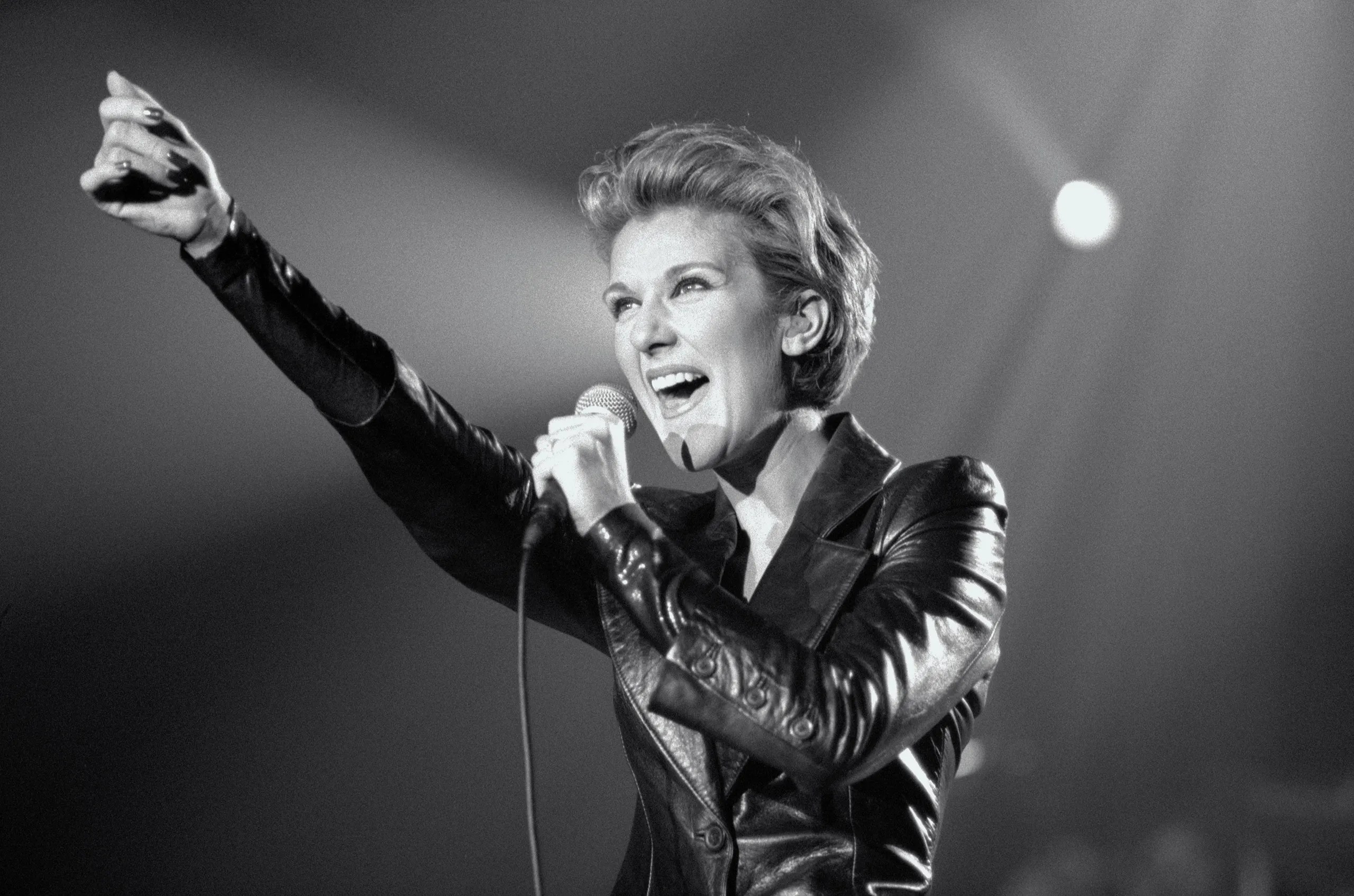
Think Twice, by Celine Dion (her 1st of two #1s)
7 weeks, from 29th January – 19th March 1995
It’s yet another colossal power ballad, of the style so beloved by the decade’s large-lunged divas. I was hard on ‘I Will Always Love You’, and down on ‘Without You’, and you probably think you know where this post is going. But, you’d be wrong. For this one goes straight to the top of the pile marked ‘Guilty Pleasures’.
What’s the difference between ‘Think Twice’ and those aforementioned crimes against eardrums? To be honest, I’m not sure. The first minute of this song is average, dull even. There are moody synths, as Celine Dion sings about her man starting to pull away. There are pan-pipes too, for God’s sake. It doesn’t sound promising. But at the start of the second verse, when the drums and guitars kick in, and Celine starts fighting for her man, the song transforms into a different beast.
My complaint about recent power ballads is that the sense of fun has drained out of them. They’ve become earnest and stodgy, not to mention that they’ve been clogging up the number one spot for months on end. But ‘Think Twice’ has a sense of OTT silliness that the best ‘80s power ballads – the likes of ‘Total Eclipse…’ and ‘Take My Breath Away’ – had. Then there’s the fact that it features an actual guitar solo! Not to mention the rhyming of ‘serious’ with ‘you or us’. And finally, there’s the way that Celine goes completely unhinged for the final chorus.
It’s impossible not join in with her ad-libs, the ba-ay-ay-bays and the NOnononoNOs, as this record hurtles to its gigantic conclusion. It’s all helped by the steamy video, in which Celine mopes around while a hunk in dungarees carves massive blocks of ice into sexy shapes. He storms off angrily, and Celine proceeds to caress and grind against his giant sculptures until he returns. It’s a cross between soft-porn and a tacky karaoke video, and it adds a further layer of flamboyance to what is already a piece of high camp.
This slow-burner of a power ballad had a suitably slow-burning journey towards becoming one of the biggest selling hits of the decade. Recorded in 1993, it was released as a single in September 1994, before finally making #1 five months later. Its fifteen-week climb to the top was a record and, in an interesting sign of the times, it was the first #1 not to be made available in vinyl.
Celine Dion had been a star in Quebec since the early ‘80s, but it wasn’t until 1990 that she started recording primarily in English. ‘Think Twice’ was just her 3rd Top 10 hit in the UK, but it set her up for many more. And although I like this much more than many of Houston or Carey’s monster ballads; I don’t have the same love for the rest of Dion’s career. She’s never really moved far beyond glossy ballads, and none of them came close to this classic. In fact, I suspect part of the reason that this record sounds so good is that it makes a refreshing change from hearing her signature song, her second number one… You know, the one involving an iceberg. And I won’t be anywhere near as nice about that dirge…















 The UK Number Ones Blog