Mambo No. 5 (A Little Bit Of…), by Lou Bega (his 1st and only #1)
2 weeks, from 29th August – 12th September 1999
…this is Mambo Number Five. Autumn may have begun while this record was at number one, but the Latin summer of 1999 is still going strong. As with both our previous Latin chart-toppers – ‘Livin’ la Vida Loca’ and ‘Mi Chico Latino’ – yes, this is cheesy, and yes, this is Latin music with all the raw edges softened. But I challenge anyone to listen to this and not smile, just a bit. And even today, you throw this on at any kids party, or wedding, hell even at a funeral, and the dancefloor will light up.
It’s been a while since we’ve had a mambo at number one. Forty-four years, to be exact, when Rosemary Clooney scored her second chart-topper with ‘Mambo Italiano’ (which was mambo in name more than anything else), and Pérez Prado had an instrumental smash with ‘Cherry Pink and Apple Blossom White’. It was Prado himself, the King of Mambo, who originally recorded ‘Mambo No. 5’ in 1949. He had also been back in the charts in 1995, despite dying in 1989, when ‘Guaglione’ made #2 thanks to a feature on a Guinness advert.
Lou Bega, a German-born Italian-Ugandan rapper, had the idea to sample ‘Mambo No. 5’ and turn it into a modern pop-rap song while living in Miami, where he had been turned on to Latin music. The brass band, and the shouts, are that of Prado; but Bega added lots of ad-libs, and some wonderfully dated record scratches and tapes-getting-all-tangled-in-the-deck sound effects (kids these days will never know the pain…)
And of course, he also added the words. Seven ladies that went down in history. Monica, Erica, Rita, Tina, Sandra, Mary, and Jessica. There is a particular joy in knowing someone by any of these names, and of trying to crowbar their accompanying line into conversation. I used to work with a Rita (all I need), while I also know a Mary (all night long), but my personal goal is to meet a Sandra (in the sun).
What’s interesting is not just how big this genre of music suddenly became in the summer of 1999, but how much songs like this and ‘Livin’ la Vida Loca’ remain in the public consciousness, far more than the Westlife’s many ballads and anonymous dance tunes. Lou Bega managed one more minor hit in the UK with the follow-up to this, ‘I Got a Girl’, in which he yet again lists his many girlfriends. He remains active, still dressing like Pablo Escobar on his summer holidays, still peddling his schtick (his most recent release on Spotify samples ‘Macarena’).
Still, he’ll always have ‘Mambo No. 5’. Stick a random pin on a map and chances are you’ll hit a country where this record made #1. In France it was there for a mind-blowing twenty weeks… The success wasn’t all positive though, as Bega and his producers spent seven years locked in a legal battle with Pérez Prado’s estate, before a judge ruled that the writing credits be split evenly. Meanwhile my favourite story connected with ‘Mambo No. 5’ is that it was originally chosen as the theme song for the US Democrats’ 2000 convention, before someone pointed out that having Bill Clinton walk out to A little bit of Monica in my life wasn’t such a hot idea…
After a slightly disappointing start to her solo career, missing out on #1 by a few hundred copies to Boyzone, Ginger becomes the second Spice Girl to make top spot away from the band, and the first to do so completely on her own…
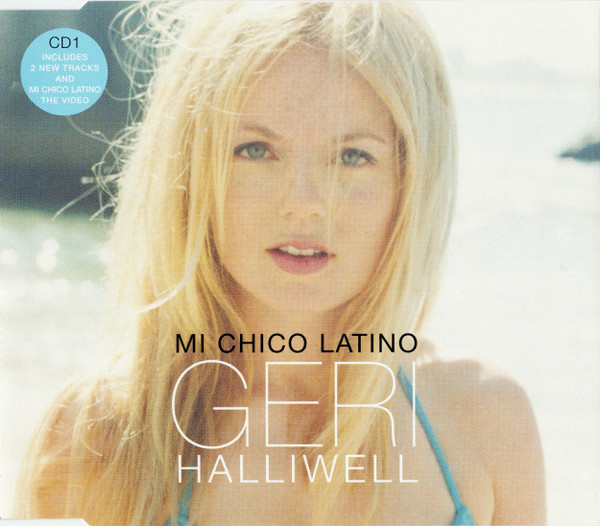
Mi Chico Latino, by Geri Halliwell (her 1st of four solo #1s)
1 week, from 22nd – 29th August 1999
Just a few weeks on from ‘Livin’ la Vida Loca’, Geri Halliwell hops aboard the Latin-revival bandwagon. Or is it the mid-80s Madonna bandwagon? For this slice of Spanish silliness owes quite a large debt to Madge’s 1987 chart-topper ‘La Isla Bonita’. It also reminds me of holiday classic ‘Lambada’ in the melancholy chord progressions, not to mention ‘Viva Forever’s flamenco guitars, and even ‘Spice Up Your Life’ in the propulsive beat.
But what ‘Mi Chico Latino’ lacks in originality, it makes up for in camp charm. From the start, Geri clearly knew that her core fanbase were gay men, and she had no illusions of much wider appeal. (The video features a liberal amount of men in trunks, while the ‘B’-side was literally titled ‘G.A.Y.’) And she is, as has been well documented, no great vocalist. But she carries this tune along with a likeable purr in her voice.
Geri has, I have just discovered, a Spanish mother, which gives the lyrics a little more respectability. She chucks around some GCSE-level stuff like confetti – Donde esta… Yo no se… – but I’m fairly sure there was no mention of el hombre con fuego en la sangre in the textbooks my school used… I might have studied a bit harder if there had been.
Like the Westlife song it replaced at number one, nobody is going to argue that ‘Mi Chico Latino’ is a classic. But at the same time, it is. Sort of. A classic of the summer of ’99, when Latin pop was having a resurgence, and a one-time Spice Girl was on her way to becoming the country’s biggest female star, for a year or two at least. There’s something quite appealing in the way this record barrels along, on the castanets and the ayayays. ‘Loveably crap’ might be a good way to sum it up. That might also be a good way to sum up the entire solo career Geri Halliwell, my now-favourite Spice Girl.
Westlife’s first number one was knocked off top spot by Backstreet Boys, demonstrating the gulf in quality between glossy, Max Martin produced uber-pop and its rather limp and sickly British equivalent. So, for their second chart topping single, they took a leaf out of the American boyband playbook…
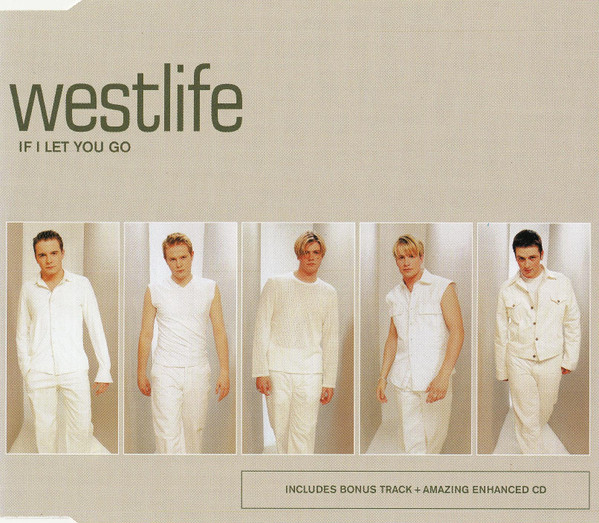
If I Let You Go, by Westlife (their 2nd of fourteen #1s)
1 week, from 15th – 22nd August 1999
First a disclaimer: I know Westlife are not British, and that calling an Irish act ‘British’ risks pissing off an entire nation, as well as ignoring a lot of recent, bloody history. But they were very popular in the UK, and we’re going to count them as one of us. We have a lot of Westlife number ones coming up, so it’s better to clarify things early on. Plus, geographically speaking, Ireland is part of the British Isles, so there.
To the music. ‘If I Let You Go’ is a much better song than ‘Swear it Again’. It sounds like it’s aimed at actual teenagers, not their aunties. I can imagine this being sung by Backstreet Boys, something I couldn’t say about Westlife’s debut hit. They’ve taken that faux hip-hop drumbeat which any pop song worth its salt was using in 1999, they’ve added a hugely effective bridge, and some classic boyband Oooh babys and Oh yeahs. Plus, we have a key change! Westlife were not often good; but when they were a key change was never far away.
Other enjoyable moments include the overblown drumbeat before the choruses, and the electric guitars that bring the song to something of a soaring climax. Electric guitars! Blimey. It’s all a bit… fun! Plus, it sounds as if the boys themselves are having a good time singing it, which always makes a song more enjoyable for the listener. I think we should take a moment to appreciate all this, knowing some of the horrors to come from these five lads.
Here I am, defending Westlife! I had mentioned in earlier comments that there were two Westlife songs I can tolerate. I wasn’t thinking of this one when I wrote that, and so file a third tune under ‘Westlife Songs I Don’t Mind’. It’s still a fairly basic pop song, but at least it’s not their usual syrupy crap. Or, rather, it is still their usual syrupy crap, but dressed up in a manner which could give Backstreet Boys a run for their money.
I did warn you… Just because Boyzone’s chart-topping days are over, we’re far from hearing the last of Groanin’ Ronan.
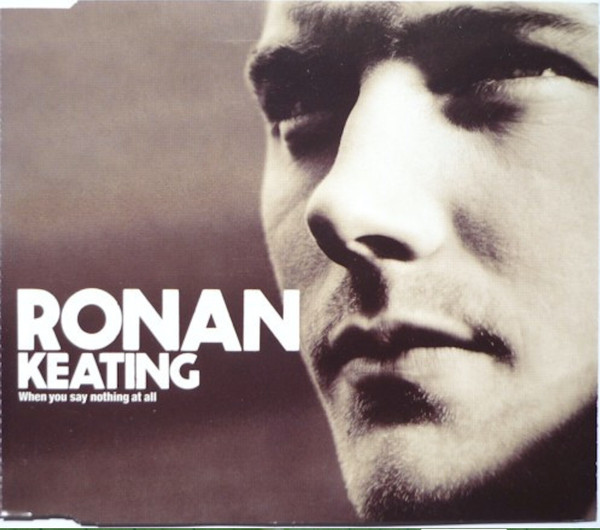
When You Say Nothing at All, by Ronan Keating (his 1st of three solo #1s)
2 weeks, from 1st – 15th August 1999
Barely three months on from ‘You Needed Me’, and before his band had even released their final single, Keating launched a solo career, with immediate success. Of course, he was helped in this by having his debut single included on the soundtrack to the year’s biggest romcom, ‘Notting Hill’, but still. I’ll admit, quietly and grudgingly, that I’ve always quite liked this…
It’s got a nice country lilt to it, and a decent chorus. Some of the production is very late-nineties bells and whistles, and it could have done without the overpowering backing singers. Plus the tin-whistle chorus is better not mentioned. Still, I’d tentatively state that this is better than at least four out of Boyzone’s six number ones.
The worst thing about it is… Yup, you guessed it. The singer. Ronan Keating is not a bad singer. He hits the right notes, he holds them, and you can make out what he’s saying (a quality my late gran held above all else). But his vocal affectations, his growls and lisps, his insistence on pronouncing his ‘ch’s and ‘sh’s like Sean Connery… He doesn’t speak like that. It’s put on when he sings. It’s annoying! And it was a huge risk for him to tempt every comedian in the land by releasing a record with the crucial line: You say it best, When you say nothing at all…
I’ve had various people commenting on Keating’s voice in previous posts. One has suggested that he might have had an alternate career as a grunge singer, which I can understand. Another has suggested that he is better on upbeat numbers, a theory that his performance on ‘When the Going Gets Tough’ doesn’t hold up but that we can put to the test again with his next chart-topper. Further thoughts on his vocal stylings are always welcome.
This was the fourth time in just over a decade that ‘When You Say Nothing At All’ had been a hit. Keith Whitley took it to the top of the Billboard Country Charts in 1988, while Alison Krauss & Union Station took it to the lower reaches of the Hot 100 in 1995. Both of those versions are a lot rawer, and less polished. Frances Black then took it to the Irish Top 10 in 1996, which is when Ronan first heard it. He upped the Irishness – perhaps inspired by B*Witched’s recent dedication to all things Celtic – and scored the biggest hit of all.
The two earlier ‘Today’s Top 10’s I’ve done were pretty succesful. Thanks to all who had a look, liked and commented. I was wondering what to do with the feature going forward, and I think I’ll use it to take a deeper look at interesting periods in chart history. What can the Top 10 tell us about where pop music was at a particular time and place?
So, we’ve done the death of the ’60s, and we’ve done the Summer of Love. Now we turn to perhaps one of the most exciting times in modern popular music: late-1963. The moment when the sixties finally started to swing. Thanks, mainly, to the Beatles. But not, as this chart will hopefully prove, solely because of them. For those interested in significant world events, this was also the Top 10 on the week that JFK was assassinated.
10. Let It Rock / Memphis, Tennessee, by Chuck Berry – down 4 (7 weeks on chart)
But what’s this…? Two rock ‘n’ roll tunes first released in 1959. How the charts like to mess with us… The reason is tied to the times, though. The Godfathers of rock, Buddy Holly, Jerry Lee Lewis, and Chuck Berry, had inspired the new Beat groups that we’ll be meeting further up this chart. The Beatles early albums were full of Berry songs, while the Stones’ first hit had been a cover of ‘Come On’ earlier in 1963. Pye Records saw an opportunity, and released some of these influential tunes for the first time in the UK. Amazingly, this was Berry’s first ever visit to the UK Top 10. A runaway train might not be the most obvious topic for a rock ‘n’ roll tune, but this wasn’t Berry’s first time singing about a railroad. And the way he makes his guitar sound like a train horn is iconic.
It was paired with the more laidback ‘Memphis, Tennessee’, which had also been a hit in a version by Dave Berry & the Cruisers around the same time. It pulls the same trick as such classics as Gilbert O’ Sullivan’s ‘Clair’, and Brotherhood of Man’s ‘Save Your Kisses for Me’, by tricking the listener into thinking that the singer is singing about a girlfriend, when he is actually singing about a small child. Berry, though, consumate storyteller that he was, manages to do it in a far less creepy manner, making the song more about the messy break-up, and the father’s regret, than about dodgy double entendres.
9. I’ll Keep You Satisfied, by Billy J. Kramer & The Dakotas – up 2 (3 weeks on chart)
This one’s much more 1963. One of the big beat combos that had broken through earlier in the year (with another three to come higher up), and who had been at #1 just a few weeks earlier with the Lennon-McCartney tune ‘Bad to Me’. ‘I’ll Keep You Satisfied’ is another L&M composition and, while it would peak decently at #4, it isn’t quite as good. Still, it’s better than the Dakota’s next hit, the dubious ‘Little Children’. Watching the video above, the music may be (slightly) rocking, but Billy J. is giving good crooner energy. Nothing to worry grandma… yet.
8. I (Who Have Nothing), by Shirley Bassey – up 1 (9 weeks on chart)
A constant presence on the charts of the ’50s and ’60s: a bit of Bassey. This is three minutes of pure melodrama, as Shirley watches an old-flame woo his new girl. ‘I (Who Have Nothing)’ was adapted from an Italian hit, which was something of a theme in the early sixties. It’s a classic of its genre: an intro of swirling strings, quiet bits, and bits where she lets loose, belting out high notes like nobody else can. I always find Shirley Bassey somewhat lacking in subtlety, but then again – if you’ve got it flaunt it. If I could sing like her then I’d be belting out my Starbucks orders.
7. Blue Bayou / Mean Woman Blues, by Roy Orbison – down 3 (10 weeks on chart)
Another double-‘A’ side from an American rocker, who had been around since the ’50s. Unlike the Chuck Berry record, though, this was a new hit. ‘Blue Bayou’ is one of Orbison’s gentler numbers – for the Big ‘O’ could of course give Shirley Bassey a run for her money in the belting stakes – but it’s always been one of my favourites. Even as a young ‘un who had no idea what the hell a ‘bayou’ was. Linda Rondstadt recorded a famous cover in 1977, though that didn’t make the UK Top 10.
On the flipside of this disc was a cover of ‘Mean Woman Blues’, an Elvis track from 1957. Personally, while they are both fine singers, I prefer Elvis’s version. I prefer bombastic, overblown Orbison to rocking Orbison. On this record he tries out the famous Grrrrrr, which he’d use to great effect on his chart-topping ‘Oh, Pretty Woman’ the following year.
6. Secret Love, by Kathy Kirby – up 6 (3 weeks on chart)
We’re keeping an eye out for the bands that came along in 1963 and changed popular music forever. But for every beat combo that made it big, there were plenty of British women who were just as instrumental in making the sixties swing. Kathy Kirby’s name hasn’t lasted alongside the likes of Cilla, Dusty, Lulu or Sandie Shaw, but here she is, enjoying her biggest hit. Her take on ‘Secret Love’ starts off very bombastically, much like Doris Day’s chart-topping original from a decade earlier, but soon a groovy guitars-and-backing-singers beat takes over, nicely updating the song for a new era. Plus, she has a great voice, with a bit of bite to it. Kirby may have retired from showbusiness in the early eighties and died in relative obscurity, but for a while she was a huge name: representing the UK at Eurovision in 1965 (finishing as runner-up) and hosting her own television programme.
5. Don’t Talk to Him, by Cliff Richard & The Shadows – up 2 (3 weeks on chart)
Common knowledge would have it that with the arrival of the Beatles et al the career of Cliff Richard – the hottest star in the land just a year or so earlier – fell off a, well, cliff. But glance at any Top 40 from any random moment post-1962, and it quickly becomes clear that Cliff went nowhere. Okay, he didn’t hit #1 as regularly, but ‘Don’t Talk to Him’ was one of an astounding 33 Top 10 hits he achieved across the sixties. I’d never heard this before, but it’s actually a really good song, combining a latin rhythm with some very current, beat guitars. This could easily have been written and recorded by one of the acts a couple of places up this chart, proving that Cliff gave those young whippersnappers a stronger run for their money than the history books suggest. *Some sources disagree as to whether this was Cliff solo, or Cliff with the Shadows, but I’ve gone with the latter*
4. Be My Baby, by the Ronettes – up 1 (6 weeks on chart)
The first of two all-time great, hall of fame pop songs in this week’s Top 4. The fact that this never made it higher than number four is a shock, and I’ve already done a post on how this really Should Have Been a #1. Even on this chart, in the year that it was recorded, where girl groups like the Ronettes were common, ‘Be My Baby’ stands out as special. It would stand out as special on any chart, in any era, simply because it is better than 99.95% of anything else in the history of pop.
3. Sugar and Spice, by the Searchers – down 1 (5 weeks on chart)
Here we are then, a purely Liverpudlian Top 3. The Searchers had been the 3rd Merseybeat band to make number one that year, after the two acts ahead of them in this chart, with their cover of The Drifters’ ‘Sweets for My Sweet’. Although still on the candy theme, ‘Sugar and Spice’ was an original, written by producer Tony Hatch. The chiming guitars and harmonies, as well the almost skiffle rhythm section, are pleasant, almost proto jangle-pop. But within a year, once the Stones, Kinks and Animals started making the upper reaches of the charts, it would start to sound a bit safe. The Searchers had two much better hits to come: their majestic second #1 ‘Needles and Pins’, and their cover of ‘When You Walk in the Room’. Like so many Beat bands that didn’t, or couldn’t, write their own material, the Searchers’ chart shelf-life was limited.
2. She Loves You, by The Beatles – up 1 (13 weeks on chart)
The song that officially kicked off the swinging sixties? The way that ‘She Loves You’ barrels in, chorus-first, on a wave of tight guitars and precision drumming, and yeah yeah yeahs. In France, this style of Beat music literally became known as ‘Yé-yé’ (and surely everyone knows by now how Mr McCartney Senior thought ‘yes, yes, yes’ would have sounded much more proper…) It is utterly perfect pop, to rank alongside the Ronettes a couple of places below it on this week’s chart. Although they developed their sound so far beyond this, I would still rank ‘She Loves You’ in my personal Beatles Top 3. You can read my original post on it, as a number one, here. On this week in November 1963, it was on its way back to number one, having already spent a month there that autumn, and on its way to becoming the biggest-selling single ever, at that point, in the UK (where it remains the Fab Four’s highest seller). Also, the seven-week gap between its two runs at the top remains a record to this day.
1. You’ll Never Walk Alone, by Gerry & the Pacemakers – non-mover (7 weeks on chart)
The 4th Beat group in the Top 10 on this day sixty-one years ago, Gerry & the Pacemakers had made history by being the first act to make #1 with their first three singles. This was the final week of a month-long run for ‘You’ll Never Walk Alone’, and it would also be The Pacemakers final week on top of the charts. (You can read my original post on it here.) The fact that for only their 3rd single the band had turned to a cover of a song from a 1945 musical is telling. While the Beatles were just warming up, their contemporaries were often relying on covers (or on handouts from Lennon & McCartney). Plus there was the fact that for record labels and producers, rock and roll was still a very new thing, one that many were convinced wouldn’t last. It was seen as essential for bands to branch out, and to nurture a wider appeal.
Of course we know now that rock ‘n’ roll was here to stay, even if Gerry & The Pacemakers weren’t. ‘You’ll Never Walk Alone’ was also here to stay, and by the end of its initial chart run it had already been adopted by the crowd at Anfield as Liverpool FC’s unofficial anthem, to be belted out pre-match from here to eternity. The song returned to number one in a charity version by The Crowd, following the Bradford City fire, while it also made top spot for a third time in 2020 in a version featuring Michael Ball and the 100-year-old Captain Tom Moore, a phenomenon that can only be explained by how crazy we all went during lockdown. It is nothing short of a modern-day hymn, given the song’s role in the current British psyche.
I hope you enjoyed this flashback to Today’s Top 10 in 1963. What a snapshot of popular music that was, as Britain finally cast off the shadow of the War and started to get a little groovy. Up next we’ll return to 1999, and to a country just a few months away from the terrifying uncertainty of a new millenium. Would all the computers crash? Would planes start dropping from the sky…? Nobody knew, so confused and distracted were people that they kept buying Ronan Keating records in large quantities. Stress will do that to you…
In my last post, on ATB’s ‘9PM’, I wrote about how rooted in the late-nineties that song seemed. I get a similar feeling about this number one, although they sound nothing alike. It’s just so 1999…
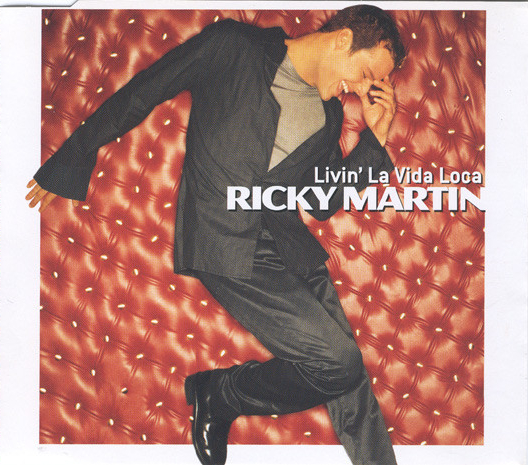
Livin’ la Vida Loca, by Ricky Martin (his 1st and only #1)
3 weeks, from 11th July – 1st August 1999
And I don’t mean that as an insult. This is a fun slice of Latin-pop, played at breakneck speed. It’s got ska horns. It’s got surf guitars. Not enough number ones feature surf guitars! In one of the most pure-pop years in chart history, ‘Livin’ la Vida Loca’ can count itself as one of its catchiest, and poppiest, number ones. But it also manages to do so with selling its soul to cheese – there is something respectably real about this, sounding like it was recorded by an actual band, with actual instruments.
It also has some memorable lyrics, about a fairly unhinged femme fatale, who’s into superstitions and voodoo dolls. She’ll make you take your clothes off, And go dancing in the rain… So fun are the words, and so fast do they rattle by – this really is a breathless song – that we don’t mind when she slips Ricky a sleeping pill and nicks his wallet in the second verse. Plus I’d argue that the title entered the wider pop culture for a good few years after this had been a hit.
I don’t whether this sounds so of its time because a) it’s a classic, b) because it reminds me of being thirteen (that devil nostalgia again…) or c) because it kicked off a big latin pop resurgence at the turn of the century. Think Santana’s ‘Smooth’, a Geri Halliwell #1 soon to come, as well as a bit of Mambo No. 5, not to mention J-Lo, Shakira, and Enrique Iglesias. This record’s popularity cannot be denied, though, and can be proven in one simple statistic: we’re over halfway through 1999 and ‘Livin’ la Vida Loca’ is the first chart-topper to spend more than a fortnight at the top!
From Puerto Rico, Ricky Martin had been a star in the Spanish-speaking world since the age of twelve, when he’d joined boyband Menudo. They had been going since the seventies, and had a policy of chucking members out when they reached sixteen, though Martin survived until he was seventeen. He clearly had something special… In 1991 he released his first solo album, while ‘Livin’ la Vida Loca’ was from his English language debut (though he’d had a smaller hit the year before with his ’98 World Cup theme ‘The Cup of Life’.)
I have a friend who is somewhat Ricky Martin obsessed, and have been with her to see him live in concert, in the front row. He put on a great show, and my friend is still a big fan of his, despite him announcing in 2010 that she is officially not his type… Meanwhile ‘Livin’ la Vida Loca’ may be his biggest hit, and his only UK #1, but I’ve always had an even softer spot for the similarly chaotic ‘She Bangs’, a #3 in 2000.
After plenty of boyband balladry and teeth-clenchingly sweet bubblegum, what else is on our 1999 checklist…? Of course: a one-off dance hit!
9PM (Till I Come), by ATB (his 1st and only #1)
2 weeks, from 27th June – 11th July 1999
I believe the airy trance riff that holds this hit together is classed as Balearic, after the island chain in the Mediterranean, where tunes like this blast from beach bars and clubs all summer long. I have never been to Ibiza, but as I listen to this next chart-topper I can’t help but picture a beach bathed in late-afternoon sun, a cocktail glass glistening, a sunburnt Brit vomiting Stella onto a street corner…
It’s an evocative track. While I must remind readers yet again that I am no dance music afficionado, I can’t deny that this is ear-catching, and atmospheric. And sophisticated too, compared to the Vengaboys (though a Whoopee Cushion would sound sophisticated next to the Vengaboys…) The main riff was created on a guitar, and has an almost flamenco tinge to it. While I’m convinced that elsewhere in the mix there’s a banjo, which must be a first for a dance #1.
Of course the somewhat risqué title and lyrics also played a part in this becoming such a huge smash. Till I come… a breathy voice coos over and over… Change it and see… Change what and see, we’re left wondering? As examples of titillation in number one singles go, it’s pretty subtle. Which I like. As we move into the 21st century, we’ll meet plenty of chart-toppers so brazen that they make this one sound relatively prudish.
ATB is the stage name of German DJ and producer André Tanneberger, for whom ‘9PM’ was a first smash hit, the first of three-in-a-row in the UK. (Which, okay, ruins what I said in the intro about this being a ‘one-off’, but you know what I mean.) It was the year’s 5th highest-selling hit, and the 44th highest of the entire decade! The riff proved so memorable that ATB recycled part of it for the #3 follow-up ‘Don’t Stop’, while it also returned him to the Top 10 in 2021 when a remake, ‘Your Love (9PM)’, was released. He was voted the world’s #1 DJ in 2011.
Detached appreciation is the best I can muster for this sort of dance hit, though it is a nice change of pace. I will say that this song was so ubiquitous at the time that, listening to it now, ‘9PM (Till I Come)’ feels so of the ‘late-nineties’ that it’s the sort of track you’d use in a film or TV show as a setting shorthand, making sure an audience knows exactly what time period they’re in.
Normal service is resumed, after the strangest of detours courtesy of Baz Luhrmann’s ‘Sunscreen’… Here’s some A-grade, late-nineties tween-pop.
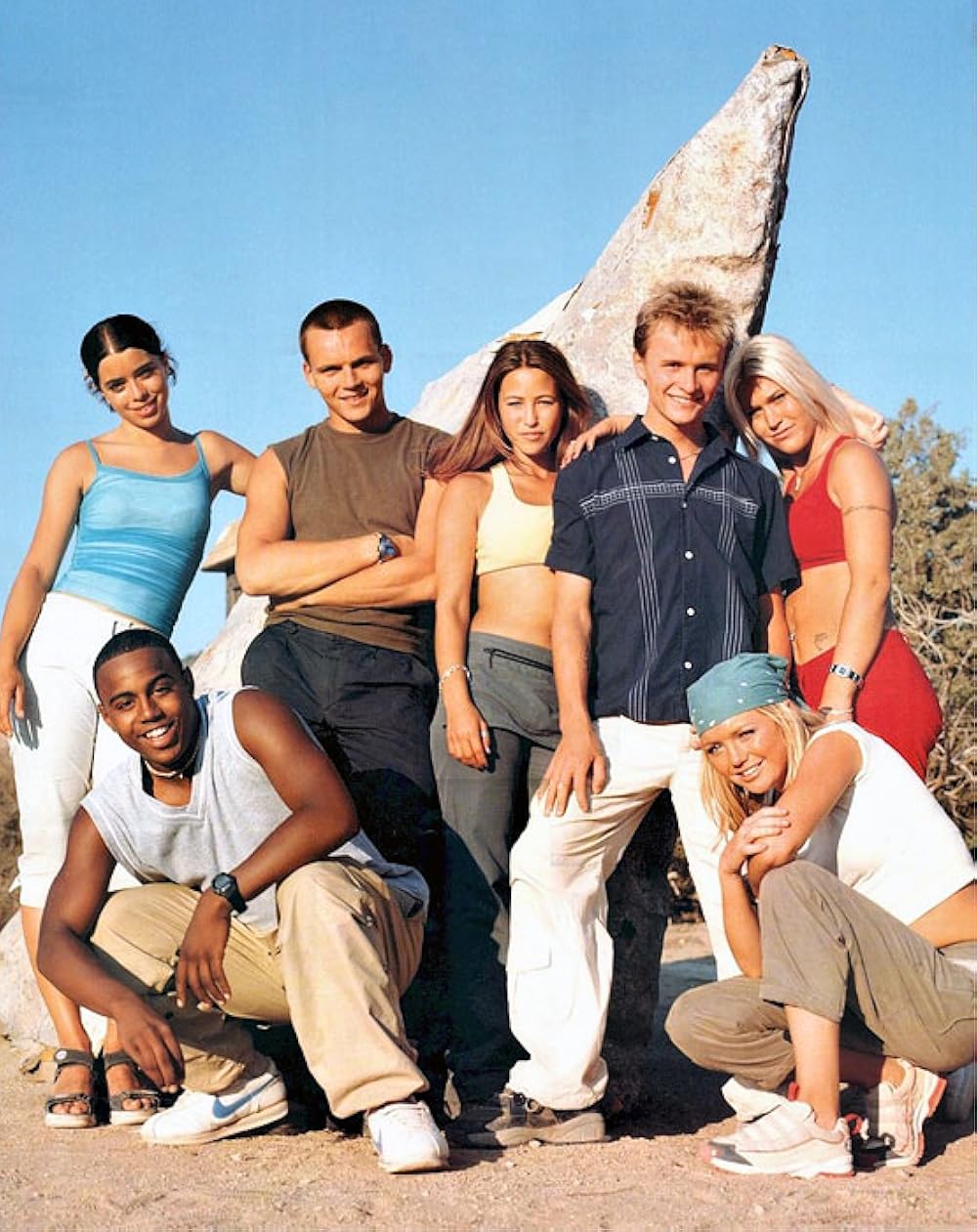
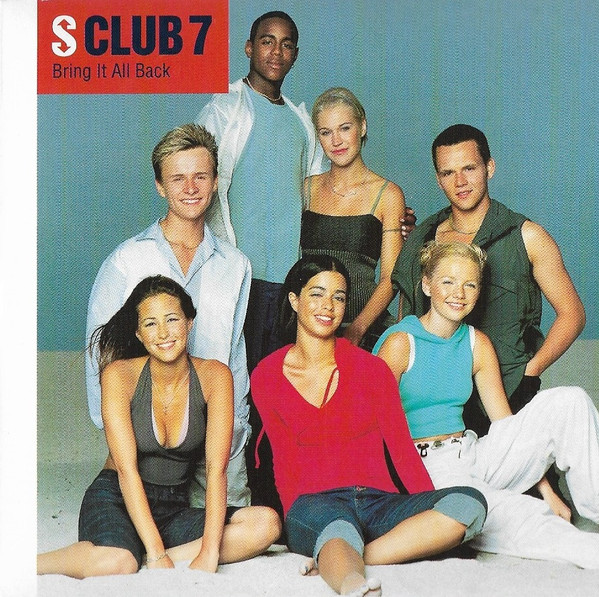
Bring It All Back, by S Club 7 (their 1st of four #1s)
1 week, from 13th – 20th June 1999
I hear the Jacksons, I hear the Archies, I hear Disney themes… I hear a whole host of influences from classic sixties and seventies bubblegum. I’ve noticed that while listening to many of the recent pop number ones, I’ve ended up spending more time working out what they’re derivative of rather than hearing them as their own entities. And there isn’t a single note in ‘Bring It All Back’ that isn’t borrowed from somewhere else. Which means I want to sneer at it – my thirteen-year-old self certainly did – but dammit I can’t. It’s just too catchy, too packed with hooks, not to grudgingly admire.
Not that it’s at all clever, or that it isn’t cynical in the way it relentlessly hits each hook after hook, as if some modern day Pied Piper has designed a song that will lure in seven-year-olds across the land. I haven’t been able to listen to it for too long this morning without starting to feel queasy. Plus there’s no edge, no hint of an underlying melancholy, to the lyrics: Don’t stop, Never give up, Hold your head high and reach the top… It almost makes B*Witched sound punk. But still, as a pure pop song, it works.
Besides, I could never truly hate this. This is nostalgia. This is watching kids’ TV while still in my school uniform, looking forward to ‘Neighbours’ and ‘The Simpsons’, before, or perhaps after, playing football across the street, with my mum cooking dinner next door… Baz Luhrmann may have just warned us against the dangers of nostalgia, but I would pay a good sum of money just to spend five minutes back in that world.
This record is further evidence of a point I made a few posts ago, about British pop sounding, and looking, cheap and tacky next to the mega-watt US stars of the day. You can imagine Britney Spears’s team hearing five seconds of this, and dismissing it with a roll of the eyes and a “that’s cute”. And yet, ‘Miami 7’, the show for which this served as the theme song, was popular in the US. Clearly even their tweens had an appetite for British cheese.
S Club 7 were the brainchild of Simon Fuller, after he had been sacked by the Spice Girls in 1997. Presumably he wanted younger, more pliable charges (who wouldn’t rebel against him) which I guess fed through to the cuter, more upbeat music. It is said that the ‘S’ in the band name stands for ‘Simon’, which feels a bit cultish, but that’s never been confirmed. With Steps around at the same time, and with Hear’Say and Liberty X to come soon, it could be said that we are in the second golden age of mixed-gender pop groups, after the days of Bucks Fizz, Brotherhood of Man, and a certain quartet of Swedes (I hesitate to type out that band’s name, in case a casual skim-reader thinks I’m actually comparing them to S Club 7!)
I will happily admit, however, that S Club 7 have much better songs to come… At least two of which are genuine pop classics. Their sound matured, while their songwriters remained skilled at using strong reference points for their hits, be it Motown, disco, or even classical interpolations (see 2000’s ‘Natural’). Plus, I’ve met Bradley McIntosh – the only chart-topping artist I have ever touched – and he was cool.
Ummmm…. 1999 might not be a top-tier year from a musical standpoint, but it’s certainly turning into one of my favourite years to write about…
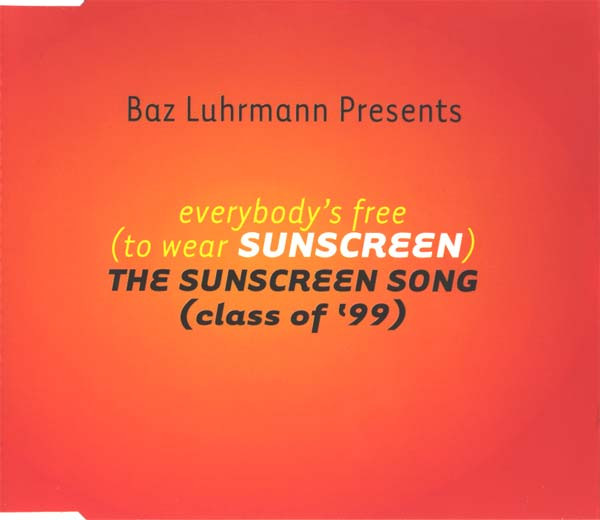
Everybody’s Free (To Wear Sunscreen), by Baz Luhrmann (his 1st and only #1)
1 week, from 6th – 13th June 1999
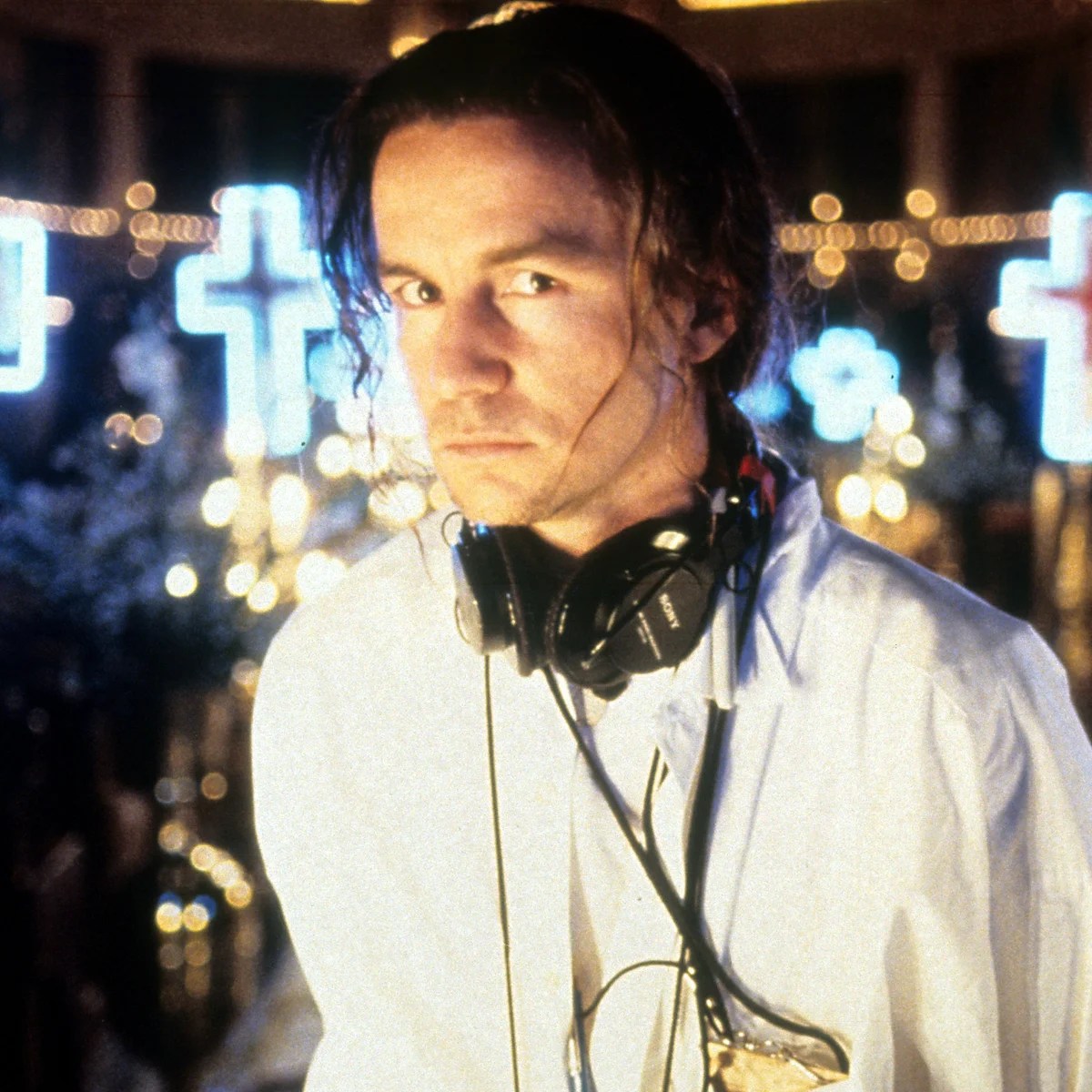
We’ve pinged from pop-punk, to new wave, to bubblegum, to garage, with plenty of boyband pap in between, to this… This monologue on life from an Australian film director. It is a word-for-word recital of an imagined graduation speech, written by columnist Mary Schmich for the Chicago Tribune in 1997, that had gained fame through that most late-nineties of ways: as a viral email.
The voice on the record is Australian voice actor Lee Perry, who dispenses Schmich’s pearls of wisdom with a likeably dry authority. Some are practical (Floss! Stretch!), while some are fanciful (Maybe you’ll divorce at forty, Maybe you’ll dance the funky chicken at your 75th wedding anniversary…). Some are funny (Read the directions, Even if you don’t follow them…), and some are touching (Get to know your parents, You never know when they’ll be gone for good…) All of it is bookended by the one and only piece of advice that has been proven by scientists: Wear sunscreen!
The backing track is the choral version of a dance hit from 1991, which also lends the record its title, Rozalla’s ‘Everybody’s Free (To Feel Good)’, a song Luhrmann had previously used in ‘Romeo + Juliet’. It’s got a nice laid-back, trip-hop, surf-rock feel to it. In extended mixes, a new version of the chorus from the Rozalla original is included, although the single mix skips any singing and makes this a purely spoken-word #1, to rank alongside Telly Savalas and J.J. Barrie.
Although I have an aversion anything labelled as ‘self-help’, there is something appealing about this weird, post-modern single. It’s the sort of thing Andy Warhol might have released, had he had a pop music career. Like a lot of Lurhmann’s work, it’s not half as deep as it thinks it is. Some of the lyrics are downright trite, live laugh love level bullshit (Do one thing every day that scares you…), but there are a couple of verses that verge on the profound. My favourites are the lines on the power of youth in the first verse, and on nostalgia towards the end: Advice is a form of nostalgia, Dispensing it is a way of fishing the past from the disposal, wiping it off, painting over the ugly parts, And recycling it for more than it’s worth…
I think it also appeals because it’s now twenty-five years old, and is itself a reminder of a simpler time. A time when emails went viral, when newspapers would bother publishing a piece of whimsy like this, and when a pop record this innovative could make the top of the charts. Plus, spend five minutes scrolling through Instagram today, and you’ll be bombarded with an avalanche of crappy, pop-psychology memes with captions ten times more glib and cheesy than this record. (Oops, there’s me falling into nostalgia’s sneaky trap already…)
Baz Luhrmann may have had a far more prolific career as a director, but this isn’t the only time that he has had a say in the world of music. Tracks from the soundtracks of his movies, from ‘Romeo + Juliet’, to ‘Moulin Rouge’, to ‘Elvis’, have all made the upper reaches of the singles charts, including a soon to come number one.
As with some of our more left-field recent chart-toppers (Mr. Oizo and Spacedust spring immediately to mind) I’m more in the ‘Whyyyyy?’ than the ‘Yayyyyy!’ camp with this record, but it makes for a fun curio. And as a fair-skinned person living in a hot climate, I can attest: Trust him on the sunscreen!
I was about to sound the random dance hit klaxon, 1999’s most used alarm, before I noticed that this next number one isn’t really dance. I was going to claim it as drum ‘n’ bass, but then realised that it was actually our first example of a very turn-of-the-century genre: garage.
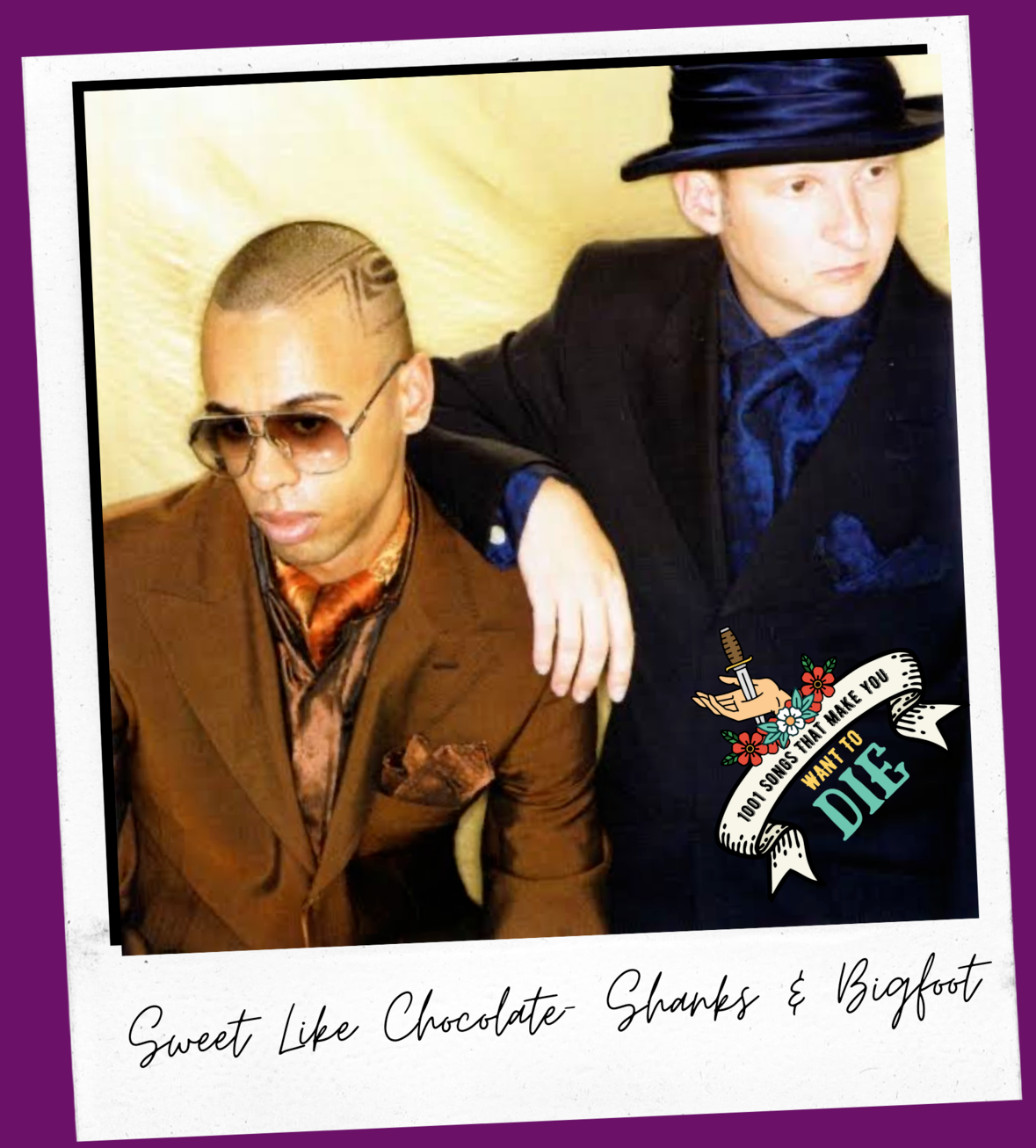
Sweet Like Chocolate, by Shanks & Bigfoot (their 1st and only #1)
2 weeks, from 23rd May – 6th June 1999
Sadly this has nothing to do with garage rock. Or with car repair. The genre stems from Paradise Garage, a NYC gay nightclub popular in the ‘70s and ‘80s (and which had been built as a parking garage back in the ‘20s). From there we can trace a route from disco in the seventies, to garage house in the eighties (alongside Chicago house acts like Steve ‘Silk’ Hurley), to the 90s when it crossed the Atlantic, got sped up, and became known as UK garage. From there we can look into a future of grime, and drill… A rushed potted history I know, but I’m very amused to discover that this often misogynist and homophobic genre can trace its family tree back to a gay bar presumably full of leather queens and cock-duster moustaches…
Not that there’s anything offensive about ‘Sweet Like Chocolate’. No, our introduction to garage is as light and fluffy as they come, with some staccato strings and a gentle brass section that builds over the 2-step beat that will become one of the sounds of the next few years. I’ll readily admit that I was never – now, or at the time – the biggest fan of the genre, but also that this is as pleasant an intro as we could have wished for.
What I’ve always remember about this record are the high-pitched vocals, from a singer named Sharon Woolf. And the animated video, in which the entire world is made of chocolate (and which now looks wonderfully dated). Oh yes, and the jokes at school about how this might not actually be about chocolate… You are sweet on the tip of my tongue, You are warm like the rays of the sun… (The steamy noises that Woolf makes in the extended original mix only serve to confirm my teenage suspicions.)
Shanks & Bigfoot were a duo called Steven Meade and Danny Langsman, who had had a #20 hit the year before, ‘Straight from the Heart’, under the name Doollally. Following the success of ‘Sweet Like Chocolate’, they released the same song, as Shanks & Bigfoot, and made #9. I wonder if there are any other songs which have charted twice by ‘different’ acts?
Though I’ll probably be down on the many of the garage records which will top the charts between now and 2002, I should emphasise the authenticity of the genre. Garage relied on underground nightclubs, MCs, and pirate radio to break through. I may not much like it, but it was the sound of the streets, like skiffle and punk had been to generations before. Which is something, in an era where manufactured pop held so much sway.










 The UK Number Ones Blog