Should Have Been a #1…? ‘They Don’t Know’, by Tracey Ullman

Thanks again to our guest writers this week, who have donated fine posts on the Stones, Wizzard, ‘Crimson and Clover’, and the very concept of being ‘number one’... Our final guest post of the week comes from Kevin (AKA freddybobs) with the record he wishes could have taken that final step up to the number one position. And it’s another classic…

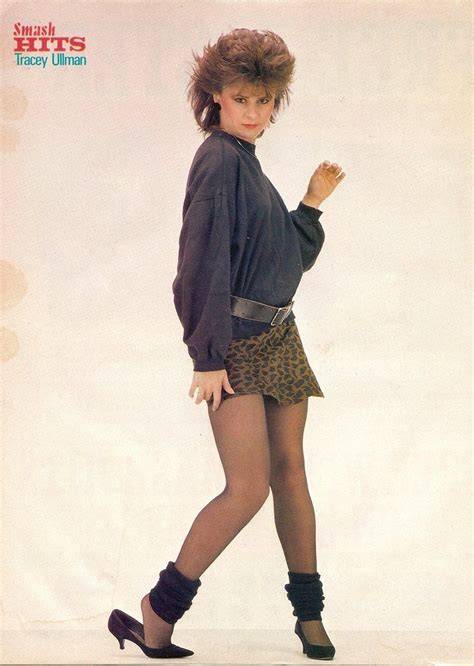
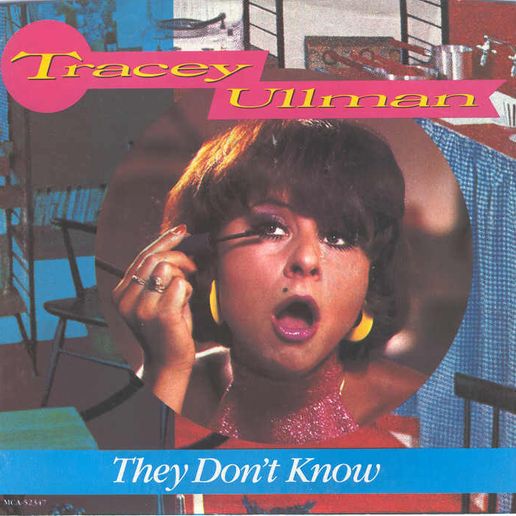
As in sport, getting to number one can grant you immortality, but the runners-up are yesterday’s jam in no time at all. So it is that ‘Karma Chameleon’ is still ubiquitous 40-plus years on, but you never hear a song that it kept pegged at number two for two weeks in the autumn of 1983.  I speak of “They Don’t Know” by Tracey Ullman.

They Don’t Know, by Tracey Ullman

#2 for 2 weeks in October 1983, behind ‘Karma Chameleon’

I think it’s one of the great love songs. No, I really do. It’s not a power ballad, because it doesn’t need to be. There’s no desperation or yearning or heartache to tell of; it’s a simple and joyful paean to young love where the only thing that matters is being with that one person, regardless of what others think. Because you know, and they don’t.

Kirsty MacColl was nineteen when she wrote it, and took the original version all the way up to #62 in 1979.  Some prefer her version, but for me Tracey’s cartoon-character voice sounds younger, and contributes to the overall feel of wide-eyed innocence.

The song opens with wedding chimes, lolloping piano and Tracey singing wistfully about her love for her own Prince Charming despite the disapproval of everyone she knows.  The words she uses describe something universal. I get a feeling when I look at you, she sings.  We don’t know what that feeling is, but we definitely recognise it. And her friends? When they look at you, they don’t see what I see... These are not complicated sentiments, they’re very simple; but they say more about the helpless joy of young love than a dozen Celine Dion songs ever could. And ultimately, the denouement: They’ve never heard of love.  No, they don’t understand; they couldn’t possibly. 

The song’s innocent feel is enhanced by its strong ’60s and Phil Spector influences. There’s definitely some Ronettes or Shangri-Las there, particularly in the “do do do” backing vocals in the middle-eight – ironically from Kirsty herself – as is the “Bay-bee” crescendo, a couple of notes that Tracey couldn’t quite reach…

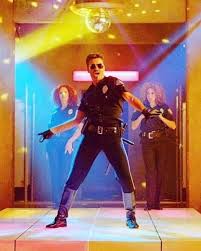
The song was accompanied by a cheap and cheerful video featuring Tracey getting ready for a date at the bowling alley, blotting her lipstick with the Marc Bolan pics on the wall and pointing excitedly at her engagement ring. Then she sees his terrible attempts at bowling and grimaces at his awful shoes, but it doesn’t matter; she loves his faults as well. At the end, she’s wearing slippers at the supermarket; she’s dowdy, with a child in the trolley and another on the way. But “they” weren’t proved right. She fantasises about Paul McCartney and rolls her eyes when her moustachioed hero pinches her ass, but her joyfulness is undiminished.

And that’s one of the two elements that make this song so poignant. The song captures a feeling that everyone has at some stage or other, but yes, it’s bound to fade. No-one wants to live with that intensity forever, but it’s a shame it’s gone. 

The other element, of course, is Kirsty MacColl’s death aged just forty-one in Mexico in 2000. She debuted with her version, and the whole premise of the song – embarking on one of life’s great adventures – mirrors her own tentative steps into the music business.  And tragically, she died while there were still so many adventures ahead of her.

‘They Don’t Know’ was the second of three top ten hits by Tracey Ullman in 1983. She had a couple of minor hits in 1984 and then decided her pop career had probably peaked. So she resumed her comedy career to great success in the USA, where of course she premiered ‘The Simpsons’.

But yes, this stalled at number two behind ‘Karma Chameleon’, a frothy and lightweight zillion-seller, condemning this fabulous song to be forgotten before that year’s Christmas decorations were up. No-one ever said it was fair, but it would have been nice if Tracey and Kirsty had sneaked just a week from Boy George. For young lovers everywhere.

Thanks again freddybobs, and everyone else who has contributed a post, a like or a comment this week. And to everyone who has voted in our ultimate #1s polls below, too. There are still 24 hours to vote before I reveal the results, and it remains close!

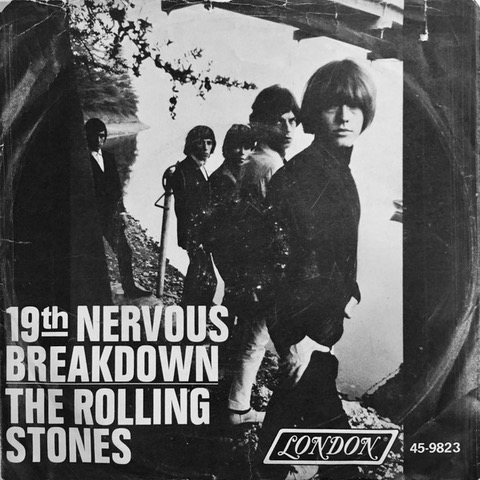
Should Have Been a #1…? ’19th Nervous Breakdown’, by The Rolling Stones

Welcome to the first of a week of guest posts to celebrate reaching our 1000th number one. First up, long-time follower John Van der Kiste gets things underway with an ode to an unruly, and perhaps unlucky, classic from the Stones…

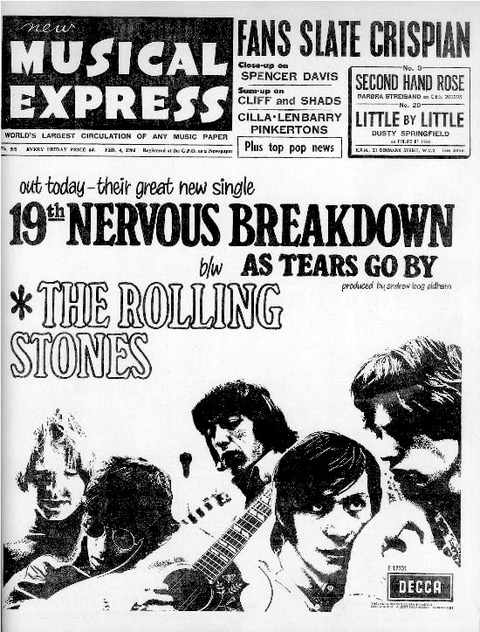
When is a No. 1 not a No. 1? When it’s so controversial that mainstream retailers won’t stock it, and we argue that sales figures were ‘adjusted’ that week to keep it at No. 2? Or, when the Official Charts Company say no while the music press Top 30s suggest otherwise? That was the fate of The Rolling Stones’ ‘19th Nervous Breakdown’.

19th Nervous Breakdown, by The Rolling Stones

#2 for 3 weeks in February & March 1966, behind ‘These Boots Are Made for Walkin”

In the New Musical Express and Melody Maker charts, it enjoyed three weeks in pole position from 19th February 1966. Ditto for BBC TV’s Top of the Pops, which then based its weekly Top 20 on samplings from these and the other music weeklies, Record Mirror and Disc. The OCC, which has the Record Retailer Top 50 charts as its source from 1960 to 1969, made it No. 2 for those three weeks, with Nancy Sinatra’s ‘These Boots Are Made For Walkin’, walkin’ all over them at No. 1. Otherwise it would have given the band seven consecutive chart-toppers between July 1964 and May 1966.

It was written on their autumn 1965 American tour and recorded in December at RCA Studios, California, its title apparently inspired by an exhausted Mick Jagger saying he was about ready for his nineteenth nervous breakdown. As usual he wrote the lyrics, Keith Richards provided the music. However it’s not about work-related stress, but a poor little rich girl who was given everything by her parents, a mother who owed a million dollars tax and a father still perfecting ways of making sealing wax. She had a thousand toys, but still she cried all night. Jagger was moving in high society circles with glamorous girls ready to meet England’s most rebellious rock star if they could, and like Ray Davies of The Kinks, he was happy to satirise them mercilessly. He also sneaked in a subtle drugs reference, maybe to see if it got past the moral guardians: On our first trip I tried so hard to rearrange your mind… Radio and TV missed that.

There are some wonderful musical touches too, like when Brian Jones’ guitar borrows a distinctive lick from Bo Diddley’s ‘Diddley Daddy’, a 1955 American single. Towards the fade, Bill Wyman supplies that notable bass run. ‘I bounced the string with the top of my finger on the pickup, and ran my finger down the string,’ he said. ‘That’s what created that so-called dive-bombing sound.’ Not to mention a guitar fuzz tone on the riff before each chorus, or the sweet and sour vocal harmonies, or Charlie Watts’ superb drum fills and cymbal beats.

Had it not been for The Animals’ ‘House of the Rising Sun’ (4.29) in 1964, at 3.50 this would have been the longest UK No. 1 in terms of playing time until superseded a year later by Procol Harum’s ‘A Whiter Shade of Pale’.

Because it wasn’t an ‘official’ No. 1, it seems to have flown a little below the radar on radio playlists. Perhaps it remains that bit more fresh for not having been aired so often as the band’s chart-toppers.

John has recently published a book in the Rock Classics Series on the Stones’ Let it Bleed album, plus an On Track title about Gerry Rafferty, with an On Track on Bob Seger, currently being edited and due for publication in July – all three through Sonicbond.

Don’t forget to vote for your best and worst number ones! I’ll publish the results on Sunday…

Random Runners-Up… 6th April

Time for another trio of randomly selected (thanks to Random.org) number two hits from this date in chart history. Or, as I like to call them, our Random Runners-Up…
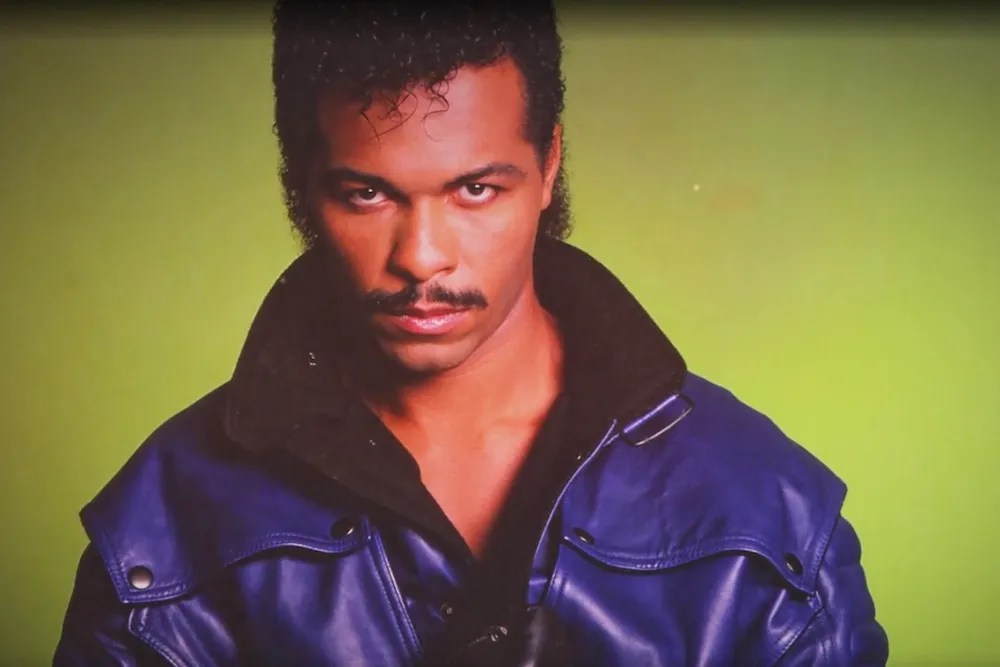
‘You See the Trouble With Me’, by Barry White – 2 weeks at #2, from 28th March – 10th April 1976 (behind ‘Save Your Kisses for Me’)

First up, a perfect marriage of disco and soul from the master of merging disco with soul, Barry White. In this song, the lyrics are limited, and way back in the mix, as if the most important thing here is the beat, and that’s hard to disagree with. The final minute of what is only a three and a half minute track is just grooving. Just what is the trouble with Barry? He can’t do nothing without his baby…

This was White’s fifth and final UK Top 10 hit, though he remained very much active until his death in 2003. A few years before that, ‘You See the Trouble With Me’ had been reduced to something of a novelty by dance act Black Legend… and reached to #1. They had to use a Barry White soundalike, as he refused to clear a sample, saying the remix was “cheap, and had no soul”.

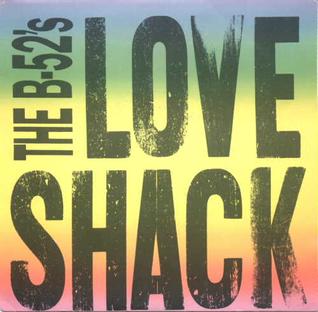
‘Love Shack’, by the B-52’s – 3 weeks at #2, from 18th March – 14th April 1990 (behind ‘Dub Be Good to Me’ and ‘The Power’)

On this day in 1990 – though not a song you could possibly date just by hearing it – the B-52’s were enjoying their biggest UK chart success in an already decade-long career. Wikipedia lists ‘Love Shack’ as pop rock, dance rock, surf rock and funk rock, as well as new-wave. (The B-52’s were originally new-wave, but I don’t think you could still have called them that in 1990.) Anyway, that melange of genres pretty much sums up this devilishly catchy tune.

‘Love Shack’ was a comeback for the band, after less than stellar chart fortunes, and the death of founding member Ricky Wilson in 1985. With lyrics about partying in a rusty shed, it is exuberant, and danceable, even if I have to be honest and admit that I’ve always found it a little irritating.

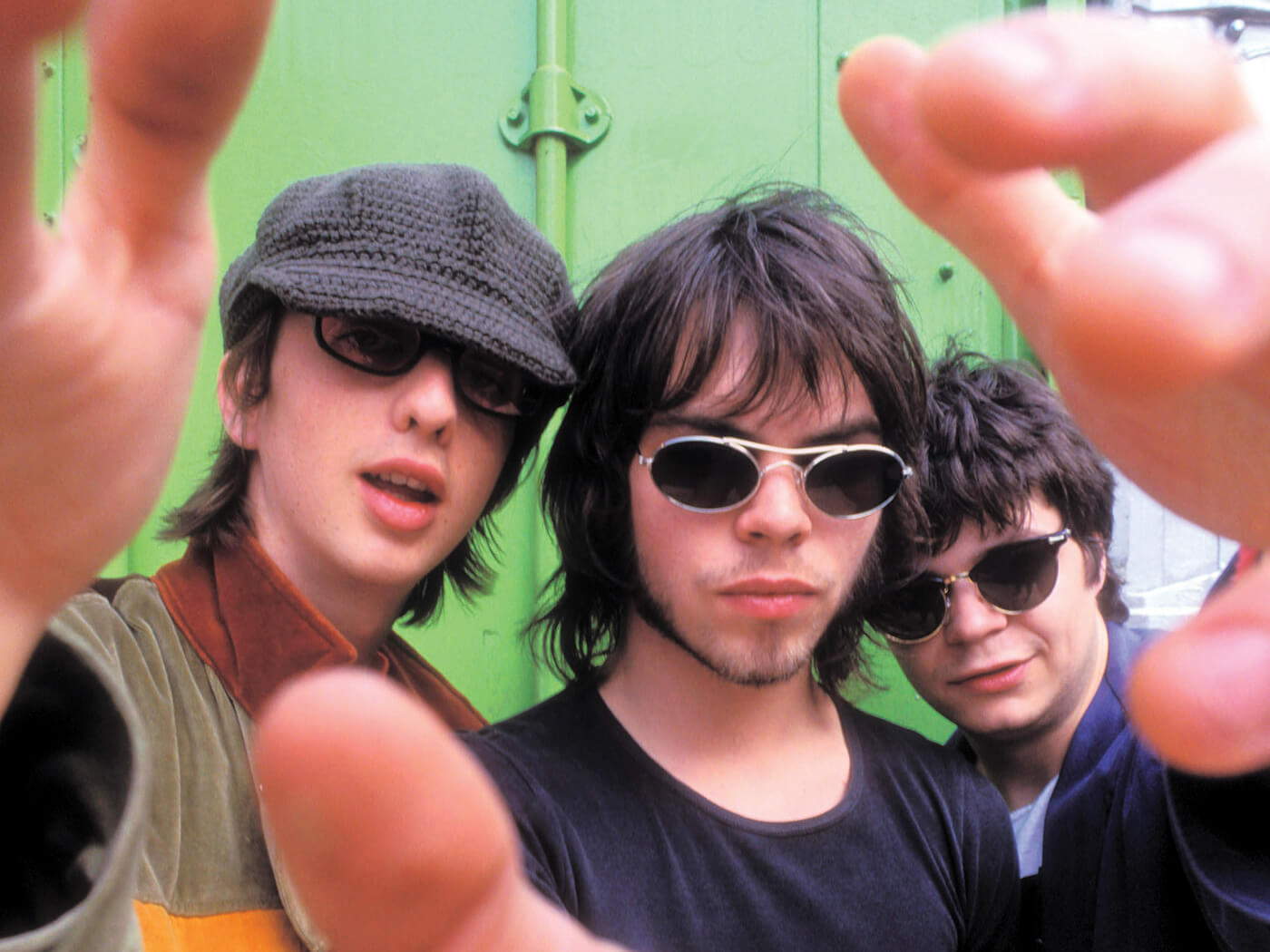
‘Richard III’, by Supergrass – 1 week at #2, from 6th – 13th April 1997 (behind ‘I Believe I Can Fly’)

I will argue long and hard for Supergrass as Britpop’s fourth best band… Okay, maybe 5th, after Suede. This banging track is now long forgotten, while the similarly heavy Britpop classic that made #2 the week after (‘Song 2’) lives on and on and on.

Supergrass could blend proper rock with perfect pop melodies, and this is one of their greatest songs, in a peerless run of singles between the mid-nineties and the mid-noughties. Oh, and it features a theramin, which always sounds fun. It is not about the famously hunchbacked king, nor about the Shakespeare play on the subject. It is a placeholder title – Supergrass gave all their tracks-in-progress people’s names – though they have since drawn a connection between the dark and menacing lyrics and the much-maligned historical character. And tell me that a line like Spent too much time, Wondering why, I got an opinion… isn’t Shakespearean-level thinking for the modern age.

Hope you enjoyed this threesome of #2s… Back to the regular stuff in a couple of days!

Random Runners-Up… 5th November

Remember, remember (the singles that were sitting at #2 in the charts on) the 5th of November. Beat groups, new wave, and pop…

Apologies for my non-British readers, who will have no idea what I was reaching for there. Yes, time for another dose of randomly chosen runners-up. Every so often we cast our eyes away from the number one spot, down a place to be precise, and find three classics which fell agonisingly short of featuring in one of my regular blog posts.

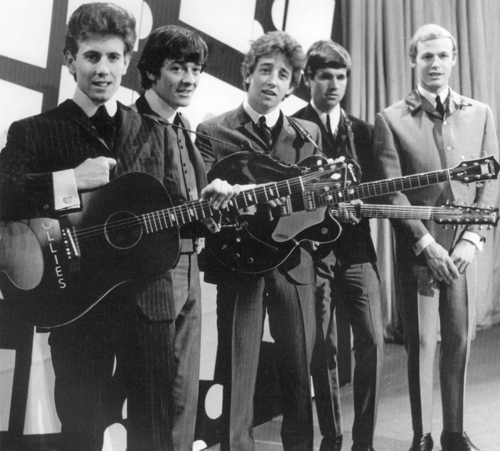
Stop Stop Stop’, by the Hollies – #2 for 2 weeks between 3rd – 16th November 1966, behind ‘Reach Out I’ll Be There’.

The Beatles, The Stones, The Who, The Kinks… What’s the correct band to put next in this particular logic puzzle? Probably The Hollies, who scored seventeen Top 10 hits between 1963 and 1974, but only one #1 (the buzzing ‘I’m Alive’). They also made a belated return to top spot in 1988, with a Budweiser inspired re-release of ‘He Ain’t Heavy, He’s My Brother’. I have already featured the classic ‘The Air That I Breathe’ as a random runner-up, but I doubt anyone will begrudge them another appearance.

Like all the best ’60s beat groups, the Hollies adapted their sound almost single by single, and in late 1966 they brought in a distinctive banjo (with added echo to fool people into thinking it was a balalaika) for this tale of a chap who, overcome by the beauty of a belly dancer, ends up knocking tables over and getting chucked out of a club. It fits in well with the year in which any band worth their salt was exploring the sounds of the east and reaching for the sitar, while keeping a uniquely earthy Hollies-ness to it.

‘Happy Birthday’, by Altered Images – #2 for 3 weeks between 25th October – 14th November 1981, behind ‘It’s My Party’ and ‘Every Little Thing She Does Is Magic’

Despite there already being a fairly famous tune called ‘Happy Birthday’, dating from 1893, several pop acts have had a go at updating the birthday songbook. The Beatles and Stevie Wonder made probably the two most famous attempts, but not far behind are Scottish new wave act Altered Images.

It’s a fizzing, peppy tune, which sounds perfect for kids to sing along to after filling up on cake and e-numbers. I’ve tried to look at the lyrics for deeper meaning, but there doesn’t seem to be any. Still the glockenspiel and guitar riff is nice, and you can see why this became such a big hit. It was probably helped by frontwoman Claire Grogan (AKA the Scottish Debbie Harry) and her recent appearance in hit movie ‘Gregory’s Girl’, and it set the band up for two years’ worth of success before they split in 1983.

Before moving on to our final #2, I have to address a question that’s been nagging at me for the past ten minutes… What did people in 1892 sing when it was someone’s birthday?

‘Outside’, by George Michael – #2 for 2 weeks, between 25th October – 7th November 1998, behind ‘Believe’

Another question. You are a world-famous pop star caught ‘engaging in a lewd act’ in a public toilet by an undercover police officer. This cowardly sting operation has forced you into declaring that you are gay, at a time when that could have still been a career-damaging, if not ending, announcement. Do you A) lie low for a while? Or B) release a disco-pop banger all about the joys of al fresco shagging? Way to handle a scandal.

George Michael, of course, chose option B. And the result was ‘Outside’. I think I’m done with the sofa, I think I’m done with the hall, I think I’m done with the kitchen table, Baby… His last UK chart-topper, a couple of years earlier, had been the ode to anonymous sex, ‘Fastlove’. But ‘Outside’ makes that tune seem positively chaste. And it’s one of his very best singles: clever, fun, danceable, and unrepentant. I’d service the community… George declares, halo shining… But I already have, You see…

I will admit to, and stand by, being a bit bored of George Michael’s slower, more serious chart-toppers. He always had a playful side, from ‘Faith’ and ‘I Want Your Sex’ through to this, and the similarly saucy ‘Freeek!’ from 2002, which makes brilliant use of a dial-up modem as a base for the beat. Sadly though, it seems that GM could only ever make #1 in the UK if he was on his best behaviour.

Hope you enjoyed this latest detour of what-might-have-been on top of the charts. Back to the regular countdown in a few days!

Random Runners-Up… August 17th

Welcome to the latest installment of Random Runners-Up, where we celebrate the records that came close, but no cigar. Three records, all sitting at #2 on this date in history…

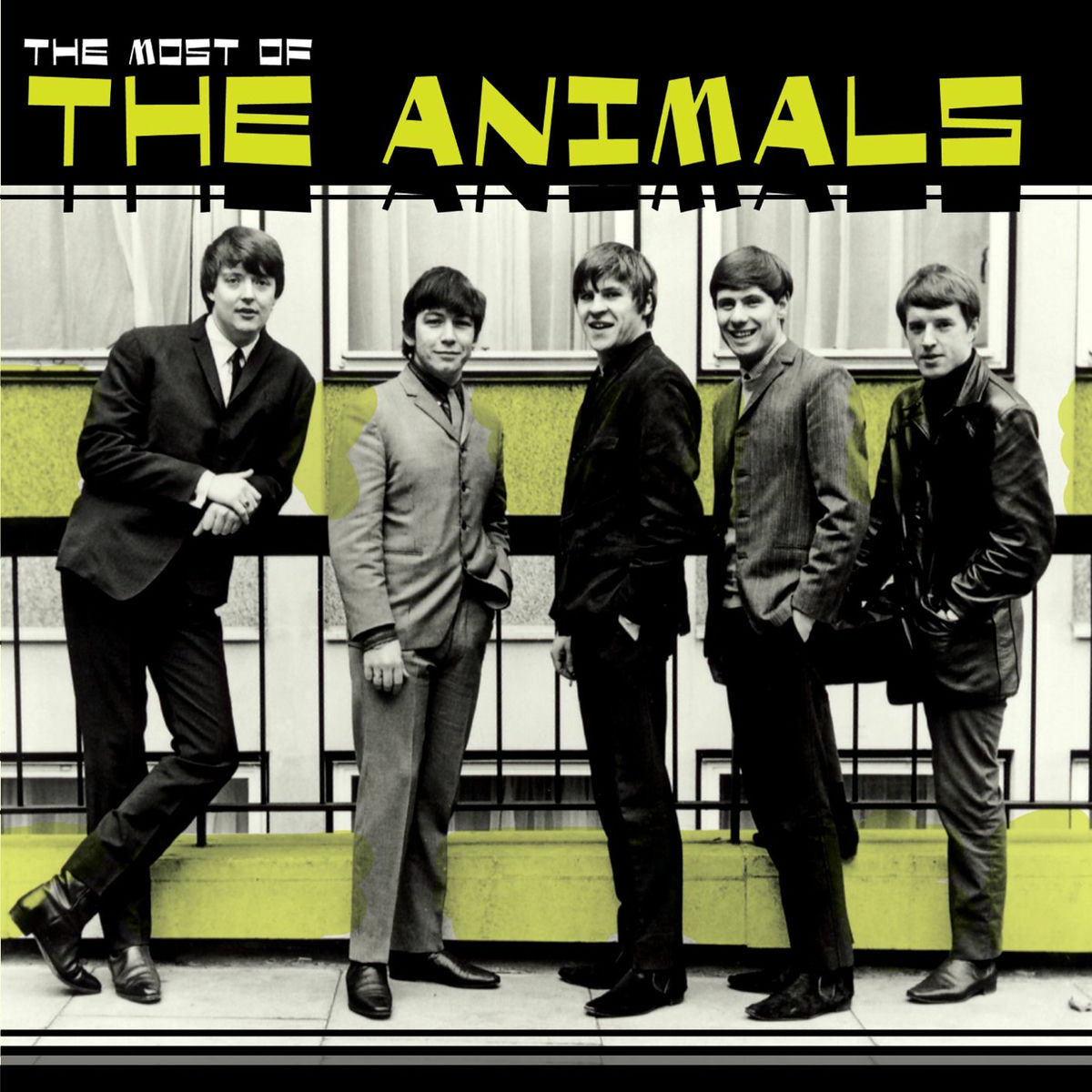
‘We’ve Gotta Get out of This Place’, by the Animals – #2 for 1 week in 1965, behind ‘Help!’

Some classic sixties R&B to start us off. This is gritty stuff, with a winding bassline, snarling guitars, and the gutteral yowl of lead singer Eric Burden telling a tale of hardship and poverty. It was written by Brill Building duo Barry Mann and Cynthia Weil, intended for the Righteous Brothers. The Animals changed the lyrics slightly, to reflect their childhoods in Newcastle. Watch my daddy in bed a-dyin’, Watch his hair been turning grey… And then out of nowhere springs a very upbeat, pop-leaning chorus. It is a positive song, despite the misery of the verses. The singer will get out of this place: Believe me baby, I know it baby, You know it too…

This was the Animals’ second-biggest hit, after their 1964 chart-topper ‘The House of the Rising Sun’, and was one of seven Top 10s the band enjoyed before fracturing in 1966. ‘We’ve Gotta Get out of This Place’ was released right at the start of the Vietnam War, and became an anthem for US soldiers stationed out there in the late-sixties.

‘You Got What It Takes’, by Showaddywaddy – #2 for 1 week in 1977, behind ‘Angelo’

The seventies were a time of great musical innovation… They were also a time of Showaddywaddy. Not that I’m complaining, because I can’t resist Showaddywaddy and their rock ‘n’ roll revival schtick. They had one number one in the UK, ‘Under the Moon of Love’, but were a constant presence in the charts during the latter half of the decade. ‘You Got What it Takes’ was the third in a run of seven straight Top 10 hits, and one of the band’s four #2s.

Like their chart-topper, this was a cover of an oldie: a 1960 #7 hit by Marv Johnson. Musically it owes a great debt to Lloyd Price’s ‘Personality’, and lyrically it tells the tale of a girl who doesn’t doesn’t live in a beautiful place, doesn’t dress with the best of taste… Nature didn’t give you such a beautiful face… And yet she has what it takes. What exactly that is isn’t specified, leaving our imaginations to run riot. Johnny Kidd & The Pirates and the Dave Clark Five also had hits with this tune, which makes it all the more surprising that I had never heard it before today!

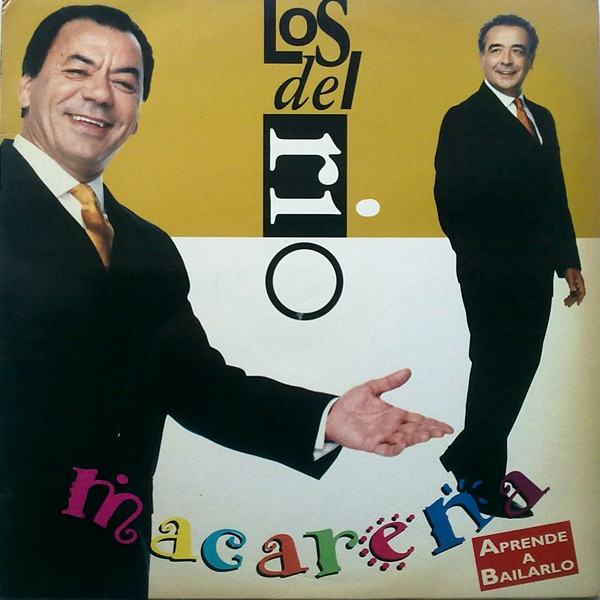
‘Macarena’, by Los Del Rio – #2 for 1 week in 1996, behind ‘Wannabe’

For some reason I had visions of ‘Macarena’ being lodged in the Top 10 for months on end, but in truth it spent just one week at number two and didn’t have a chart run out of the ordinary. I guess I thought it must have hung around like a bad smell because it was the bane of my existance for endless school discos. This, and Whigfield’s ‘Saturday Night’. Both dances looked so simple, and yet… I could never quite get them right. Any dance that involves alternating left and right, or turning, and I short-circuit.

This hit version is a remix of a 1993 original, from Los Del Rio’s 18th studio album. They were (are, in fact, as they’re still going!) a Spanish duo from the sixties, and by the time this made them UK one-hit wonders both men were almost in their sixties. And no, the Macarena is not the name of the dance, but the name of one of the men’s daughters. Britain was one of the few countries where this didn’t go to #1. In the States, it stayed on top for fourteen, presumably very long, weeks…

Random Runners-Up… 1st May

I’m revamping the ‘Random Runners-Up’ feature. From this post on, you’ll be getting three tunes for the price of one. All of them sitting at number two on a specific date. All of them still – hand on heart – chosen completely at random. Starting with…

‘Simon Says’, by 1910 Fruitgum Company
#2 for 1 week in 1968, behind ‘What a Wonderful World’ / ‘Cabaret’

A good old-fashioned novelty. With emphasis on the ‘old-fashioned’ bit, because we had definitely dropped the ‘Simple’ by the time I was playing Simon Says in the late eighties. Let’s not get all self-righteous, though, as this is fun slice of late-sixties pop: a nicely judged blend of bubblegum and garage rock. Not something I’d add to a playlist, but an undeniably catchy way to spend two minutes.

It’s also sent me down the rabbit hole of discovering who Simon was, and apparently it goes back to Simon de Montford, Earl of Leicester in the 13th century, or perhaps even Cicero in ancient Rome, which sounds sort of like ‘Simon’. The ‘simple’ came, perhaps, from an 18th century London begging ‘simpleton’ named Simon Edy. It’s a shame this never got to number one, really, as that’s a fairly unique backstory. As for the 1910 Fruitgum Company, they were one-hit wonders in the UK, but remained popular for a while longer in their native US. They reformed in 1999, and Wikipedia lists over thirty past and present members of the band.

‘Back Off Boogaloo’, by Ringo Starr
#2 for 2 weeks in 1972, behind ‘Amazing Grace’

Ringo is, of course, the only Beatle not to manage a solo UK #1. The Victoria Beckham of his day, as it were. But oh, if only. If only this glam rock stomper had managed to outsell the bagpipes and drums of the Royal Scots Dragoon Guards. I’m not exaggerating, but this would probably have been my favourite ex-Beatle number one. Yes, ahead of ‘My Sweet Lord’. Yes, ahead of ‘Imagine’.

The lore surrounding this song is legendary. George Harrison co-wrote it, and played slide guitar on it. The bizarre video, in which Ringo is followed around by a Frankenstein’s monster, was filmed in John Lennon’s garden. The ‘boogaloo’ is Marc Bolan, who Starr was making a movie about (‘Born to Boogie’) at the same time. The line give me something tasty was inspired by none other than Jimmy Hill, he of the legendary chin, who often used ‘tasty’ to describe a piece of footballing skill. My favourite fact, though, is that Starr offered the song to Cilla Black, who turned it down. I would give good, good money to hear Cilla’s interpretation… One thing that Ringo has denied is that the nasty ‘boogaloo’ is Paul McCartney, with whom he was wasn’t on the best of terms at the time.

‘Opposites Attract’, by Paula Abdul & The Wild Pair
#2 for 1 week in 1990, behind ‘Vogue’

Number two on this day thirty-five years ago, a perfect example of early-nineties synth-funk, with a healthy splash of new jack swing. Paula Abdul never came close to replicating her US success in Britain (this was her fourth of six Billboard #1s in a row). But we chose the best song to become her biggest hit, as this is gloriously catchy.

The video is a treat too, and pretty impressive from a technical point of view, as Paula dances, frolics, and at one point strangles, a cartoon cat (MC Skat Kat). The raps and male vocals are provided by the Wild Pair, regular backing vocalists for Abdul. And it would be remiss not to include a link to Peter Griffin’s famous interpretation of the song too.

Random Runners-Up: ‘The Pushbike Song’, by The Mixtures

As part of our drive to diversify, I’m going to start sprinkling my ‘Random Runners-Up’ at fittingly random points in the schedule (as opposed to devoting a week to them every year), and also tying them to the date on which I’m posting. And so, at number two in the charts on this day fifty-four years ago, we have something that sounds a little familiar…

The Pushbike Song, by The Mixtures

#2 for 4 weeks, from 31st January – 28th February 1971

The percussion and proto-beatboxing that the Mixtures, an Australian band, use here are the spit of Mungo Jerry’s monster hit from the previous year, ‘In the Summertime’. To complicate matters further, the Mixtures had already had a huge hit in their homeland with a cover of ‘In the Summertime’. (Their version had in fact knocked Mungo Jerry’s off number one). This was apparently brought about by a ‘pay for play’ dispute between Aussie broadcasters and record labels, leading to a surge of copycat cover versions of popular hits.

But what this tune lacks in originality, it makes up in catchy enthusiasm. The British public clearly enjoyed this sound as, fresh from making ‘In the Summertime’ the biggest selling single of 1970, they helped ‘The Pushbike Song’ spend a full month in the runners-up position in February 1971, behind George Harrison’s ‘My Sweet Lord’. Incredibly, the record that finally knocked them down to #3 was… ‘Baby Jump’ by Mungo Jerry.

And after all the many rock songs about hot rods and hogs, who would deny the humble pedal bike its moment in the sun? Round, round wheels going round, round, Down up pedals up down… Queen may have since recorded the definitive bike song, but The Mixtures made their own contribution to the cycling canon. They didn’t do much else mind, and are bona fide one-hit wonders on the British chart.

Never Had a #1… Sash!

I thought my ‘Never Had a #1…’ series had reached a natural end. I’d gone through the main suspects: The Who, Bon Jovi, Janet Jackson, Bob Dylan, Bob Marley, among others, and was struggling to think of many other significant acts that hadn’t topped the UK singles chart. Until I remembered the act that can lay claim to being the unluckiest in chart history… Sash! (The exclamation mark is theirs, not mine…)

Between 1997 and 2000, Sash! scored five #2 singles without managing a single chart topper. Of course, plenty of acts have finished as runner-up more often than that. Madonna has twelve number two hits to her name, Cliff and Kylie have eleven… Elvis has seventeen if you include his 2005 re-releases. But the difference is that those legends also managed plenty of number ones between them. Not Sash!

Sash! were – still are – a German DJ and production four-piece, formed in 1995. They had a distinctive Euro-trance sound, and a clear ‘if it ain’t broke’ approach to hit-making, so this rundown of their tunes might start to sound like a spot-the-difference exercise…

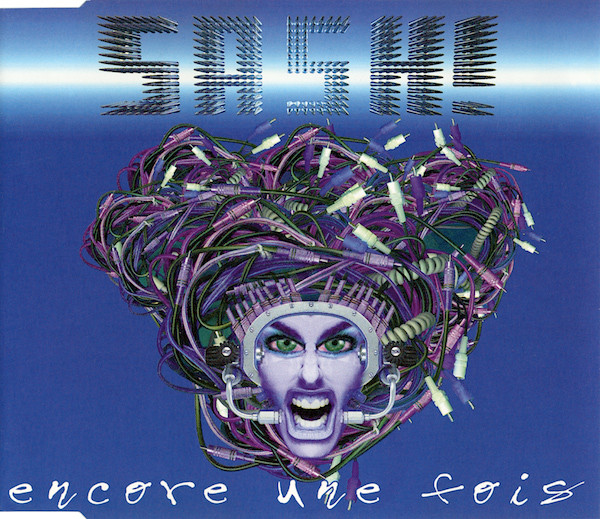
‘Encore Une Fois’ – #2 in 1997

If you only listen to one of these, then make it this one. This is a banger, and the only one of Sash’s hits that I truly remember. The female vocalist has always made me think of a station announcer. The French title translates as ‘one more time’, which is fitting because…

‘Ecuador’ ft. Rodriguez – #2 in 1997

They came back with more of the same. For their follow up hit, they swapped a woman shouting in French for a man shouting in Spanish. Rodriguez, presumably. This is still pretty catchy, a little lighter, a little more House-y.

‘Stay’ ft. La Trec – #2 in 1997

Completing their hat-trick of #2s in 1997, we get an intro in a 3rd language. English! By this point it’s getting hard to tell one trance riff from the next, but at least this one does have verses and choruses, and not just shouting.

‘Mysterious Times’ ft. Tina Cousins – #2 in 1998

The second single from their second album (the lead only made #3!) is a little more subtle. I’d also say a little more bland. I actually miss the shouting.

‘Adelante’ – #2 in 2000

We return to something a little more banging, with a little more Spanish, for Sash’s final UK #2. ‘Adelante’ means ‘forward’, which is fitting for a song released in February 2000, with a whole new millenium stretching out promisingly ahead of us… I would struggle to tell any of their non-‘Encore Une Fois’ hits from the other, although this track has to be praised for the novel use of accordions in a dance song.

If anyone has any other suggestions for acts that would merit a ‘Never Had a #1’ post (as in acts with lots of hits but no chart-toppers, rather than a band you really like but that have never been above #23) then let me know in the comments!

Next up, we prepare to party like it’s 1999…

Random Runners-Up: ‘Let’s Hear It for the Boy’, by Deniece Williams

I hope you’ve enjoyed our latest Random Runners-Up series. We’ve been back to the ’60s, to the ’70s, the ’90s, even the ’50s. For the final runner-up of the weekend, it’s the turn of the 1980s…

‘Let’s Hear It for the Boy’, by Deniece Williams

#2 for 2 weeks, from 27th May – 10th June 1984 (behind ‘Wake Me Up Before You Go-Go’)

I’m always wary of the term ‘feel good’, as most things specifically designed to make the average person feel good just end up as annoying. But I challenge anyone to hear the intro to ‘Let’s Hear It for the Boy’ and not feel their heart soar, just a teeny a bit.

It is so 1984. The purest, extra-virgin mid-eighties pressing, mixing together drum machine, squelchy bass, and a synthesised piano line. And when Deniece Williams comes in, you can hear the smile on her face as she sings. My baby he don’t talk sweet, He ain’t got much to say… It’s a riff on the old idea that a guy don’t gotta have money, looks, or charisma, as long as he gives good loving… What he does he does so well, Makes me want to yell…

It would be easy to read a smutty subtext into lines like he’s my lovin’ one-man show… or let’s give the boy a hand… but I’m above that. Plus the rest of the song is so bright and breezy, so gosh-darned wholesome, that it would feel forced. Adding to the eighties-ness of this tune is the fact that it’s from one of the decade’s best-loved films, ‘Footloose’, and was kept off top spot by one of the era’s best-remembered pop hits, Wham’s ‘Wake Me Up Before You Go-Go’ (what a joyous guilty pleasure of a top two!)

Deniece Williams had been to the top of the UK charts once, seven years earlier, when the rather more understated ‘Free’ spent a fortnight at #1. This was her fourth and final appearance in the Top 10, but she remains active in her seventies, and in 2021 became one of the first inductees to the Women Songwriters Hall of Fame.

Of course, a song as fun and frothy as this, and with a title like ‘Let’s Hear It for the Boy’, was always going to become something of a gay anthem. I probably first heard it in what may well be the best episode of ‘Will and Grace’, featuring a ‘sneaky hetero’ Matt Damon.

Up next we return to 1998, and the first solo chart-topper for one of Britain’s biggest ever pop stars…

Random Runners-Up: ‘Love Is a Many Splendored Thing’, by The Four Aces

For the fourth part of this Random Runners-Up series, we’re going back almost as far as it’s possible to go. In chart terms, at least. To the mists of November 1955… It’s over five years since I wrote my posts on the fifties number ones, discovering that for every hot slice of rock ‘n’ roll there were three rather stodgier slices of big-lunged balladry. But if you’re a more recent visitor to these pages, I would recommend a journey back to the dawn of the charts as an interesting counterpoint to the #1s we’re covering now.

‘Love Is a Many Splendored Thing’, by the Four Aces

#2 for 2 weeks, from 25th November – 9th December 1955 (behind ‘Rock Around the Clock’)

Anyway, on to the #2 at hand. And interestingly, this very record was held from top spot by ‘Rock Around the Clock’, the first rock and/or roll number one. Which goes to prove that there was no instant rock revolution; more a smattering of guitar-led hits that slowly started to break up the heavy crooning. In fairness, ‘Love Is a Many Splendored Thing’ has quite a springy bass line, but aside from that it’s a big, beefy pre-rock ballad. A dramatic intro, strings, vocal harmonies, and a lead singer who croons like his life depends on it.

I am familiar with this song, as a version of it famously plays during the opening scene of ‘Grease’, while Sandy and Danny frolic on a beach. I’d bet most people are familiar with the title line at least, from a variety of pop culture references. Away from the soaring chorus, things are slightly less memorable, and we have some classic 1950s metaphors for love: It’s the April rose, That only grows, In the early spring…

It sounds very dated, not to mention that the recording needs a remastering or two. But it’s hard to dislike a song that is belted out with such conviction. My memories of writing about the ‘50s number ones are lots of songs like this, about flowers, sunshine and morning dew, sung with operatic conviction. None of which would work for a modern audience. When did we all become so cynical…? (And thank God we did…)

The Four Aces were a four-piece from Pennsylvania, who enjoyed decent chart success on either side of the Atlantic until, like so many pre-rock acts, 1957 or so. ‘Love Is a Many Splendored Thing’ meanwhile was the theme to a movie of the same name, and won the Oscar for Best Original Song in 1956. It was recorded by a plethora of famous names following this success, as was the style of the time, including Eddie Fisher, Doris Day, Nat King Cole, Bing Crosby, Andy Williams, Sinatra, and Connie Francis (in Italian), among others.

Our final #2 is up tomorrow! It’s the turn of the eighties, and another soundtrack classic…