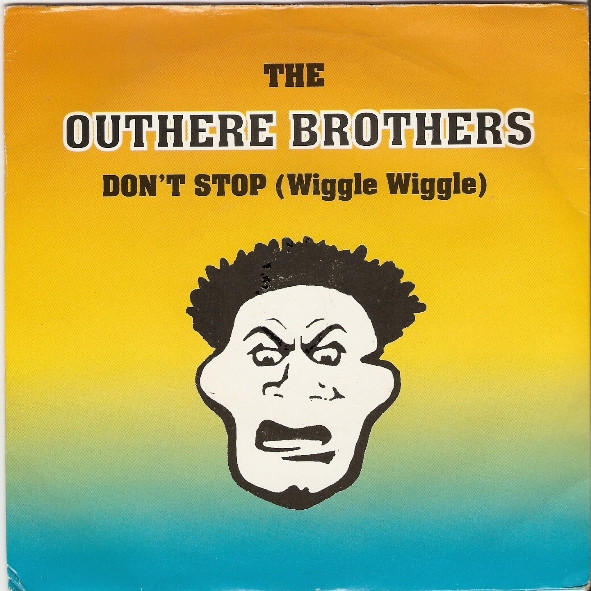
718. ‘Don’t Stop (Wiggle Wiggle)’, by The Outhere Brothers

Is 1995 the year with the biggest disparity between what it is remembered for, and what actually made #1? 1977 might have a case, the year punk exploded yet in which David Soul was the breakthrough star. 1995, though…?

Don’t Stop (Wiggle Wiggle), by The Outhere Brothers (their 1st of two #1s)

1 week, from 26th March – 2nd April 1995

I mention this because this next number one has left me in a state of shock. Shock at how I don’t really remember it. Shock at some of the lyrics. And shock at just how bloody awful it is… Biiiyyaaatch!

I thought that Rednex had my upcoming ‘Worst #1 Award’ in the bag. But as horrible as ‘Cotton Eye Joe’ is, at least it is identifiable as a ‘song’. This is an absolute racket. The pitch of the singer’s voice as he repeats the title line: Don’t stop movin’ baby oh that booty drive me crazy…, the one-note beat and the bubble-popping sound effect, the way that that one line is chopped up over and over again, ad nauseum… Some mixes are better than others – and the video attached at the foot of this post is the most palatable version, with a Hi-NRG beat – but most are dire.

I’m torn between wrapping this post up as soon as possible, trying to forget that this record ever existed, and delving a bit deeper. The radio edit of ‘Don’t Stop (Wiggle Wiggle)’ is repetitively, mind-numbingly, boring. But that wasn’t the reason this made number one. For the other, non-edited mixes reveal this to be the filthiest number one single we’ve heard so far on this countdown.

No, make that one of the filthiest number ones, ever. Period. Even in this post-‘WAP’ world, the lyrics here still raise an eyebrow. There’s that opening Biiiyyaaatch! for a start. Then there’s: Put your ass on my face… I love the way your… No I can’t type the rest. Girl you’ve got to suck my… Nope, still can’t. I’m not a prude, but this isn’t something I’ve never had to consider in my seven hundred and seventeen previous posts. The worst word we’ve encountered so far has been, I think, ‘bullshit’. And that’s a word I heard on Radio 4 the other day… I knew the 1990s would see morals and standards loosen (God, I sound like Mary Whitehouse), but I though it would be gradual. A ‘bitch’ here and a ‘fuck’ there. But no, it all arrived at once, right here: a smorgasbord of vulgarity. Which means that ‘Don’t Stop (Wiggle Wiggle)’ is actually a hugely important chart-topper…
But nah, I don’t want to give it that sort of weight. It happened. Swearing in #1 singles is fine now. Let’s move on. (And anyway, luckily for all of us, The Outhere Brothers have an even bigger hit coming up very soon…) They were a duo from Chicago – yet another pair of fake chart-topping siblings – and this was their breakthrough hit, after previous releases such as ‘Pass the Toilet Paper’ had failed to chart. Thirteen-year-old boys around the world then kept the pair in hits for the next couple of years, though their subsequent album ‘1 Polish, 2 Biscuits and a Fish Sandwich’ wasn’t as successful (and you can look up the meaning of that title, if you dare…)

Back to what I mentioned in the intro, about 1995 being a strange year, in which most of the acts and songs we remember the year for didn’t make the top of the charts. It’s a theme I’ll return to, especially when a different gruesome twosome dominate later in the year. Up next, though, I’m sort of instantly proven wrong, for it’s the decade’s biggest boyband, with one of the nation’s best-loved songs…

(The ‘best’ version of the song…)

(The explicit version, if you must…)

717. ‘Love Can Build a Bridge’, by Cher, Chrissie Hynde & Neneh Cherry with Eric Clapton

Love Can Build a Bridge, by Cher (her 3rd of four #1s), Chrissie Hynde (her 2nd and final solo #1) and Neneh Cherry with Eric Clapton (their 1st and only #1s)

1 week, from 19th – 26th March 1995

What this? Cher… Chrissie Hynde?… Neneh Cherry and Eric Clapton? It can only mean one thing: charity single ahoy!

It probably means one other thing… That this record isn’t going to be much good. Not that it stinks – no, we’ve endured far worse chart-toppers in the name of a good cause. But following directly on from one of the all-time power-ballads, this one meanders by fairly blandly.

The three women gamely try to wring some cheer out of this tune, spending much of the video swaying arm in arm as if it was a trailer for ‘Steel Magnolia’s II’ (the fact that they do so while standing on a moving collage of famine victims seems slightly tasteless…) But really, a song with such an impressive cast-list should have little more life to it. The two moments that raise the pulse are the middle eight – When we stand together, It’s our finest hour… – and the solo, provided by one of the most famous guitarists ever to wield the instrument. File Eric Clapton under an ever-expanding folder titled: ‘legends poorly served by their ‘biggest’ hit’…

‘Love Can Build a Bridge’ was written and originally recorded by mother and daughter duo The Judds in 1990, with lyrics inspired by Naomi Judd’s battle against Hepatitis C. This version was the 1995 Comic Relief single, which is interesting, as there’s nothing ‘comic’ about this song. But considering that previous Comic Relief number ones have included Cliff and The Young One’s remake of ‘Living Doll’, and ‘The Stonk’, this comes as something of a relief (if you’ll pardon the pun).

Though this does mean that there’s not as much to write about here, compared to the truly heinous charity singles. The most noteworthy thing is that it is Clapton and Neneh Cherry’s highest-charting hit (it being the fourth of only five UK Top 10s for Cherry), and Chrissie Hynde’s final #1, after ‘Brass in Pocket’ with The Pretenders and a duet with UB40 (interestingly a cover of Sonny & Cher’s ‘I Got You Babe’). The one contributor that we will be hearing from again is, of course, Ms Sarkisian, who has the small matter of releasing the biggest-selling hit by a solo female… ever… to come.

716. ‘Think Twice’, by Celine Dion

We’ve had Whitney, we’ve had Mariah… Now we welcome onstage the 3rd member of the Three Tenoritas…

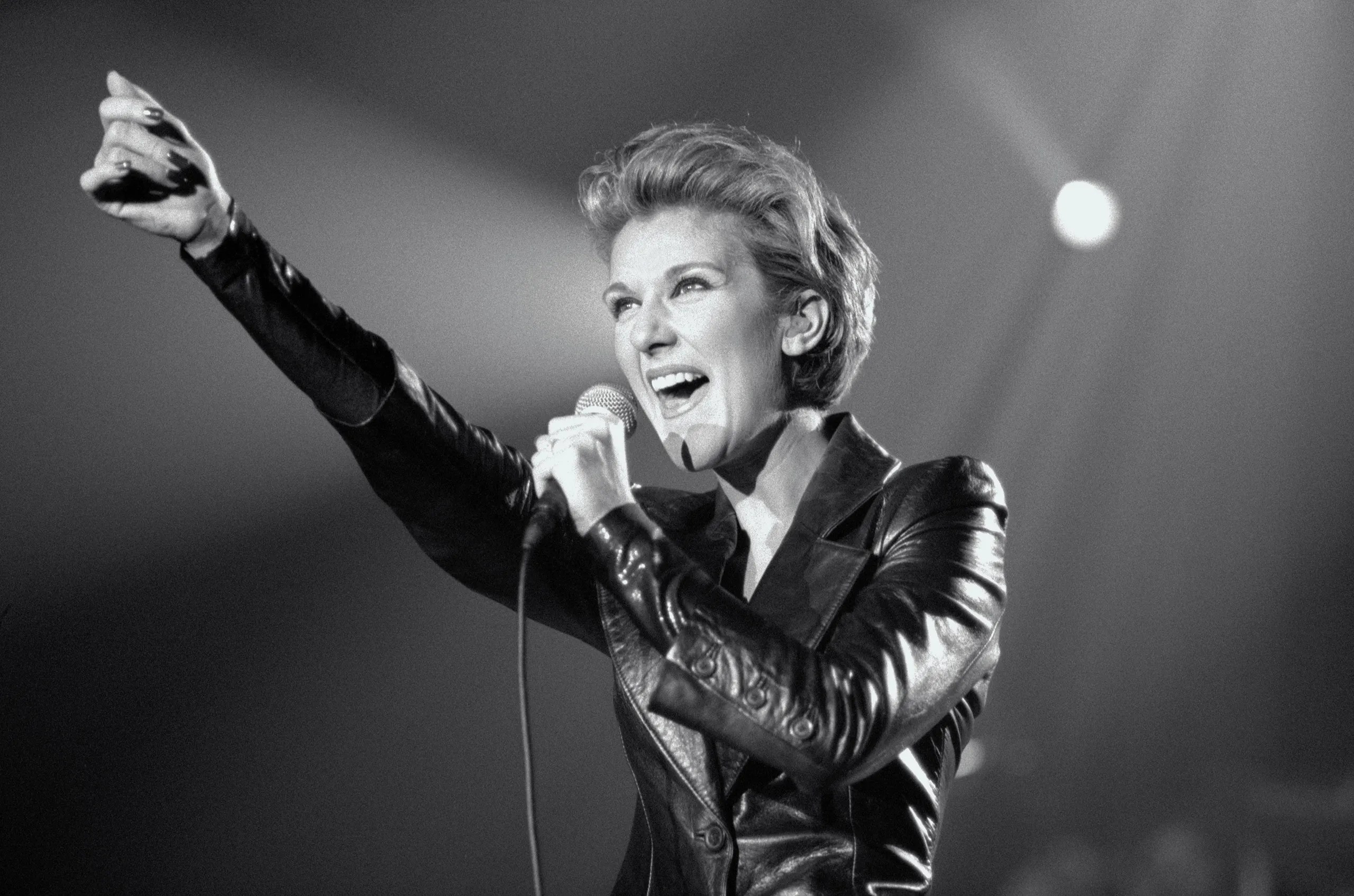
Think Twice, by Celine Dion (her 1st of two #1s)

7 weeks, from 29th January – 19th March 1995

It’s yet another colossal power ballad, of the style so beloved by the decade’s large-lunged divas. I was hard on ‘I Will Always Love You’, and down on ‘Without You’, and you probably think you know where this post is going. But, you’d be wrong. For this one goes straight to the top of the pile marked ‘Guilty Pleasures’.

What’s the difference between ‘Think Twice’ and those aforementioned crimes against eardrums? To be honest, I’m not sure. The first minute of this song is average, dull even. There are moody synths, as Celine Dion sings about her man starting to pull away. There are pan-pipes too, for God’s sake. It doesn’t sound promising. But at the start of the second verse, when the drums and guitars kick in, and Celine starts fighting for her man, the song transforms into a different beast.

My complaint about recent power ballads is that the sense of fun has drained out of them. They’ve become earnest and stodgy, not to mention that they’ve been clogging up the number one spot for months on end. But ‘Think Twice’ has a sense of OTT silliness that the best ‘80s power ballads – the likes of ‘Total Eclipse…’ and ‘Take My Breath Away’ – had. Then there’s the fact that it features an actual guitar solo! Not to mention the rhyming of ‘serious’ with ‘you or us’. And finally, there’s the way that Celine goes completely unhinged for the final chorus.

It’s impossible not join in with her ad-libs, the ba-ay-ay-bays and the NOnononoNOs, as this record hurtles to its gigantic conclusion. It’s all helped by the steamy video, in which Celine mopes around while a hunk in dungarees carves massive blocks of ice into sexy shapes. He storms off angrily, and Celine proceeds to caress and grind against his giant sculptures until he returns. It’s a cross between soft-porn and a tacky karaoke video, and it adds a further layer of flamboyance to what is already a piece of high camp.

This slow-burner of a power ballad had a suitably slow-burning journey towards becoming one of the biggest selling hits of the decade. Recorded in 1993, it was released as a single in September 1994, before finally making #1 five months later. Its fifteen-week climb to the top was a record and, in an interesting sign of the times, it was the first #1 not to be made available in vinyl.

Celine Dion had been a star in Quebec since the early ‘80s, but it wasn’t until 1990 that she started recording primarily in English. ‘Think Twice’ was just her 3rd Top 10 hit in the UK, but it set her up for many more. And although I like this much more than many of Houston or Carey’s monster ballads; I don’t have the same love for the rest of Dion’s career. She’s never really moved far beyond glossy ballads, and none of them came close to this classic. In fact, I suspect part of the reason that this record sounds so good is that it makes a refreshing change from hearing her signature song, her second number one… You know, the one involving an iceberg. And I won’t be anywhere near as nice about that dirge…

715. ‘Cotton Eye Joe’, by Rednex

We’ve just ticked over the exact midway point of the nineties, as we head into 1995. One of the most renowned years in British music, during which Britpop, and some of the nation’s best-loved bands, went mainstream. And yes, we will get to all that… But kicking off the year we have something much less fondly remembered.

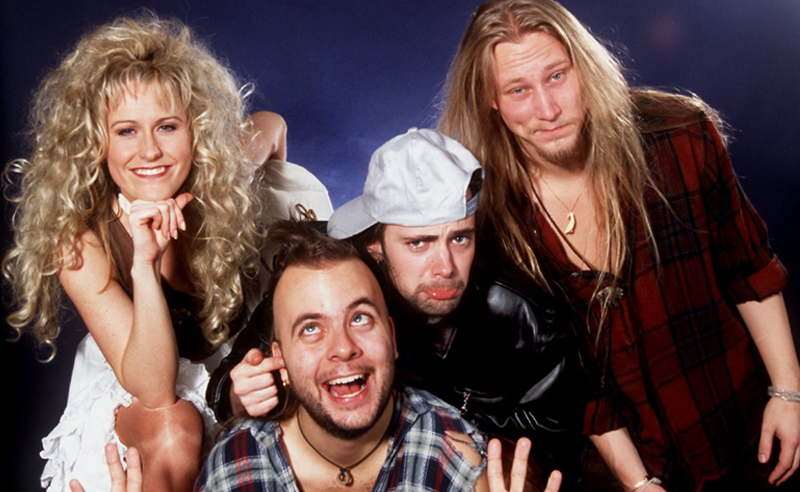
Cotton Eye Joe, by Rednex (their 1st and only #1)

3 weeks, from 8th – 29th January 1995

This jaw-clenchingly, skin tighteningly bad piece of techno-bluegrass can only be explained as a hangover from the festive period, from New Year’s parties full of people too drunk to care what was blasting out over the stereo… Oh, who can I kid? By now it’s clear that the British public need no excuse to send utter dross to the top of the charts. ‘Cotton Eyed Joe’ is shit – so shit it was guaranteed to be massive.

It was a perennial at my school discos, but I didn’t like it aged nine and haven’t chosen to hear it for the better part of thirty years. You need a strong stomach to listen to it even now: the mix of banjos, fiddles and heavy synths makes me feel very tense, something the horse and gunshot sound effects don’t do much to alleviate, while the aggressive chanting makes me wonder if hell is actually being locked in an eternal barn dance.

The video builds on this theme – I’m genuinely not sure if they were going for something funny, or for something more like a horror movie. The Rednex all play straggly-haired, yellow-teethed, rat-fondling hillbillies, who appear to be subjecting a younger, prettier girl to a never-ending ride on a bucking bronco. I don’t say this at all lightly, but I would take ‘Mr Blobby’ over this scary mess.

Rednex were Swedish (not American, sadly) and had stage names like Bobby Sue and Ken Tacky. ‘Cotton Eye Joe’ was their first hit, and in the UK they would manage only one more of note: ‘Old Pop in an Oak’ which made #12. In Sweden they remained successful well into the 2000s, scoring chart-toppers there as late as 2008! The mind boggles… The album that their two biggest hits came from was titled ‘Sex and Violins’, which is possibly the only funny thing the band ever put their name to.

Sad thing is, the history behind ‘Cotton Eye Joe’ is quite interesting. It pre-dates the US Civil War, probably originating among black slaves in the cotton fields. Proposals for what the phrase means vary from someone being drunk, to someone with milky cataracts, to the contrast between black skin and white eyeballs. It was first published in 1882, and has been recorded in country, polka, and trad-Irish versions, as well as featuring in the movie ‘Urban Cowboy’.

All that history has been obliterated by the Rednex version, which became a worldwide hit and which we will all be hearing until our dying days. It even made the charts in the US, which was unusual for a Eurodance track, and became a sports event/kids’ party standard. In recent years, some sports teams have stopped playing it in their stadiums due to the song’s potentially racist origins. Usually I’m not a fan of cancel culture, but I’ll make an exception if it means never hearing this particular chart-topper ever again…

714. ‘Stay Another Day’, by East 17

Every good guy needs a bad guy. Every superhero a nemesis. And the cutest, cleanest-cut boyband of the day needed some rough east London lads as their foils…

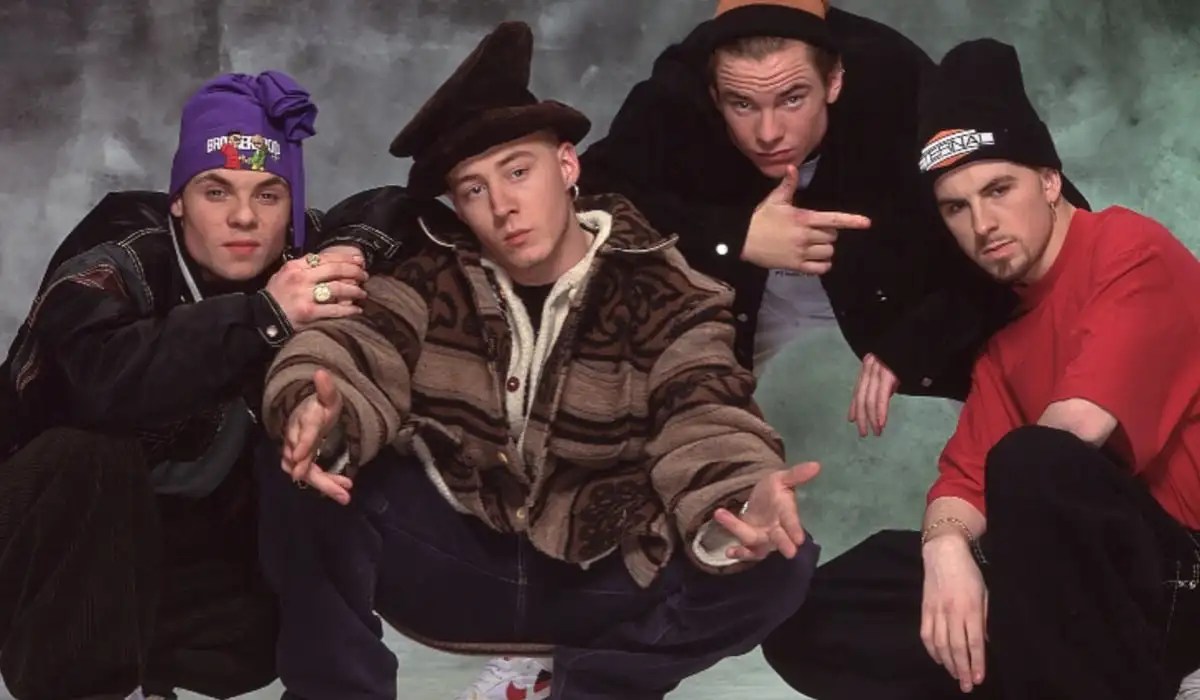
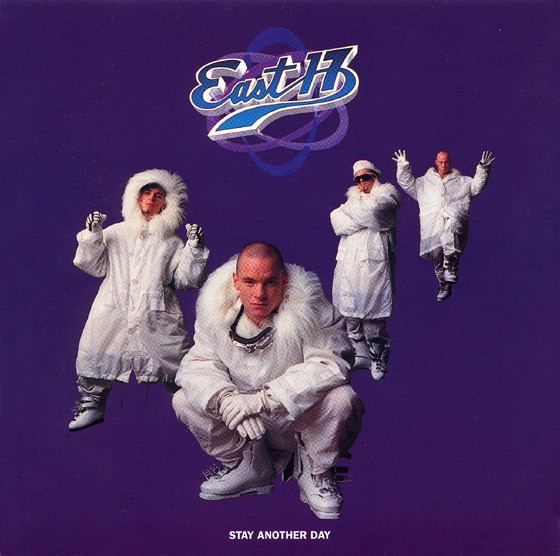
Stay Another Day, by East 17 (their 1st and only #1)

5 weeks, from 4th December 1994 – 8th January 1995

Take That have dominated the charts of 1993-1995 like few acts ever do: they’re on five number ones in our countdown – and it’ll very soon be eight – having stuck to a winning pop formula. East 17 meanwhile had been ticking along since mid-1992, scoring five Top 10 hits packed with edgier dance and hip-hop touches, yet not coming close to matching Gary and the boys’ success.

Though the one thing East 17 can lay claim to that Take That can’t is a Christmas number one. A classic Christmas number one at that. A record… I’m just going to stick my neck on the line right now… better than any Take That ever released. (Yes, including that one…) And, ironically, to score their only number one they momentarily dropped the bad-boy posturing, and out-Barlowed Barlow himself; recording a sophisticated, grown-up ballad the likes of which Take That’s chief songwriter would have jumped at.

Baby if you’ve got to go away, Don’t think I could take the pain, Won’t you stay another day… It’s a ballad, of course, and on first listen the lyrics are standard weepy, break-up fare. The four voices meld together in an almost a cappella way – a nod to Christmas hits past? – led by a painfully young sounding Brian Harvey. It’s touching, but when you learn that Tony Mortimer actually wrote it following his brother’s suicide, then lyrics the might on the surface sound simplistic Oh don’t leave me alone like this… hit ten times harder, and elevate the song much higher.

The only controversy that surrounds this record is whether or not it’s a Christmas song. So pressing an issue is it that YouGov polls have been conducted on the subject (the ‘no’s had it, with a slim majority). I’d have to say it is though. It clearly ends in a hail of church bells, that were tacked on once the song had been slated for a festive release. Plus the video has snow in it! Luckily the fact that it now gets filed away with the other festive favourites for ten and a half months of the year means it’s not been done to death. Unlike some other boyband ballads from the mid-nineties…

Speaking of the video… It’s both iconic (those white parka jackets) and yet terrible (pretty much everything else – the dodgy green screen, the floating dancer, the white gloves…) But even that can’t ruin the song. East 17 would continue until the end of the decade – scoring a further six Top 10s – with their fair share of sackings, drama and drug-related controversies. Take That, it’s fair to say, won the war, if there ever was one. Though I was very surprised to learn that if you look beyond British shores, East 17 actually sold more records worldwide, thanks to their popularity in Europe and Australia. And recording one of the best ever boyband singles ever probably helped too.

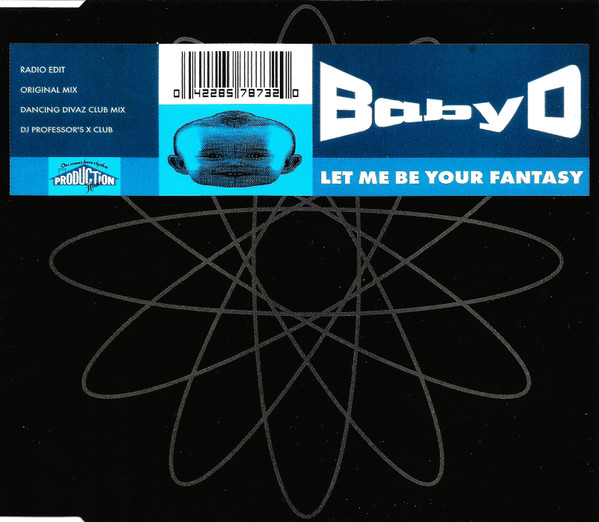
713. ‘Let Me Be Your Fantasy’, by Baby D

I know very little about dance music. I can just about tell my techno from my chillout, but you may have noticed from my previous posts on dance #1s that I play pretty fast and loose with the terminology. So indulge me while I throw around some ideas that may be complete nonsense…

Let Me Be Your Fantasy, by Baby D (their 1st and only #1)

2 weeks, from 20th November – 4th December 1994

‘Let Me Be Your Fantasy’ might be the most ‘hardcore’ dance chart-topper yet. The beat is either ‘house’, if we’re looking backwards, or ‘garage’ if we’re looking forwards. Is it maybe even the first ‘drum ‘n’ bass’ number one? I’ll also throw in the suggestion that it also incorporates ‘jungle’, if only because I think it sounds fun.

I could list dance sub-genres all day long (Wikipedia also suggests ‘breakbeat’ and ‘happy hardcore’) but to be honest, they mean little to me and probably mean as much to you. Let me give the quotation marks a rest, and describe what ‘Let Me Be Your Fantasy’ makes me feel… Well, it’s atmospheric – I like what sounds like a robot breathing in the mellow breaks between the verse – and the vocals are impressive. They’re the part of the song that feels the most familiar: a dance hit helmed by a large-lunged diva a la Black Box, or Snap!. Here the singer is Dorothy ‘Dee’ Galdes (presumably the ‘D’ in Baby D) and she has a wonderfully light-yet-full-bodied voice.

It’s another step towards the dance music that was dominating the charts when I came of age in the later part of the decade – dance music that had moved away from samples and novelty raps, dance music that had the confidence to strip things back, to drop the beats per minute, to let things breathe. This record is similar in that way to 1994’s other ‘cool’ dance hit by Tony Di Bart, rather than the more novelty offerings from Doop and Whigfield.

But I’ll also take that word ‘cool’, strengthen it into ‘cold’, and use it to describe how this song leaves me feeling. It’s not my thing, and as much as I try I can’t move past detached admiration as I listen and critique – much like I would an artefact in a museum – and I move on without particularly wanting to hear it again. I will always, sorry to say, enjoy the inane cheesiness of a 2 Unlimited song more…

Baby D had been around since the late eighties, and had scored a handful of minor hits earlier in the nineties. ‘Let Me Be Your Fantasy’ had been around since 1992, when it made #76 and become something of a lost classic. Until it was ‘found’, re-released, and it reached #1. Baby D followed it up with a couple of #3 hits before fading. Their last hit was a remix of this, their biggest hit, that made #16 in 2000. Their keyboard player, Terry Jones, took a slight change in direction and went on to write and produce for the Backstreet Boys, Eternal, and Peter Andre…

712. ‘Baby Come Back’, by Pato Banton ft. Ali & Robin Campbell of UB40

I thought it was about time… Time for our semi-regular blast of nineties reggae!

Baby Come Back, by Pato Banton (his 1st and only #1) ft. Ali & Robin Campbell of UB40 (their only solo #1s)

4 weeks, from 23rd October – 20th November 1994

Bookending 1994 are two reggae number ones, both covers of sixties classics. Back in January, Chaka Demus & Pliers reinvented ‘Twist and Shout’ for the beach bars of Montego Bay, and now Pato Banton has updated The Equal’s 1968 #1 ‘Baby Come Back’, with a little help from British reggae royalty.

It’s probably more ska than reggae, given the higher tempo and the short, sharp horn blasts (and the prevalence of two-tone black and white in the video), but it barrels along happily enough. It’s lively and enjoyable, without doing anything spectacular to the source material. It certainly isn’t as drastic a reimagining as Chaka Demus & Pliers, though it is nice that it is based one of the very first chart-toppers to have had a reggae influence (it made number one just months before the first ‘official’ reggae #1: Desmond Dekker’s ‘Israelites’). My favourite part of this version is the surf guitar playing the distinctive riff from the original.

Like ‘Twist and Shout’, one of the main updates is the addition of a various raps and toasts from Pato Banton. Come back man! Don’ leave me! Bring back me CD collection! Banton was a British singer and toaster from Birmingham, who had been active since the early eighties. He had appeared on UB40’s 1985 album ‘Bagariddim’, which presumably led to the Campbell brothers repaying the favour here. They take chorus duty, and score their fourth #1 in total, though the only one they’d ever manage away from their band. After this, Banton scored a couple more minor hits before seeming to slip off the radar. He released his last album in 2008.

In the course of his toasting, Banton does manage to slip in a cheeky drug reference of the sort that might have seen this record whacked with a BBC ban, had they known what he was on about. Come back, Yes with me bagga sensi… ‘Sensi’ being short for ‘sinsemilla’ – a cannabis plant that is seedless, and therefore much stronger than normal ganja.

Other than that, there’s not an massive amount to write home about here. It’s a fun record that breezes by nicely. Quite why it became the 4th highest selling single of 1994, I’m not totally sure. Though if writing this blog has taught me anything, it’s to never be surprised by the enduring popularity of reggae.

711. ‘Sure’, by Take That

Any act that racks up twelve number ones is going to have some chart-toppers that are better remembered than others… May I present to you, then, Take That’s all-but-forgotten #1.

Sure, by Take That (their 5th of twelve #1s)

2 weeks, from 9th – 23rd October 1994

I’m ‘sure’ I’ve heard this somewhere – the sure, so sure hook in the chorus was familiar – but the rest was a surprise. A pleasant surprise at that. The intro fools you, with lullabying chords suggesting that a syrupy ballad is on its way. But then everything goes a bit funky: with a squelchy bass, and lots of horns and scratchy turntables. If Take That’s previous hits had relied on retro, disco influences – ‘Relight My Fire’ and ‘Everything Changes’ – then ‘Sure’ sees the band turn to modern, American R&B.

Though, in fairness, this new jack swing beat had been around for a while, so they were actually quite late to the party. Still, it’s a solid pop song, and boybands are always at their most bearable when they’re keeping things upbeat. The lyrics are a bit PG, compared to similar acts – it’s been well over three years since Color Me Badd wanted to sex us up. Though there is a reference here to Gary Barlow’s relationship checklist: It’s got to be social, compatible, sexual, irresistible… (Take That’s big ‘rivals’ East 17 were a lot steamier on hits like ‘Deep’, but then they weren’t scoring #1 after #1. Definitely something to be said for keeping it family-friendly.)

Speaking of Mr Barlow, I do wish he’d relinquished lead vocal duty for this one. As fun a song as it is, he just doesn’t convince as a sexy alpha on the record, or when the lads cut a slick dance routine in the video. I’ve written in my previous posts on Take That that he clearly had ambitions above ‘boyband star’ – ambitions that will come to fruition with their next number one – and on the basis of their first five chart-toppers he was clearly the dominant force. Possibly too dominant. Small wonder Robbie wanted to break free…

‘Sure’ was the lead single from the band’s third album, and so was guaranteed to be a massive hit. It got the epic, seven-minute video treatment too. Though in truth half the video tells a very dull story in which the boys babysit a little girl while also trying to get ready for a house party. (Skip forward three and a half minutes if you just want to hear the actual song.) And yet, like I said in the intro, this record feels forgotten among their more famous hits. None more so than their sixth chart-topper: a genuinely huge pop-culture moment, coming along very soon.

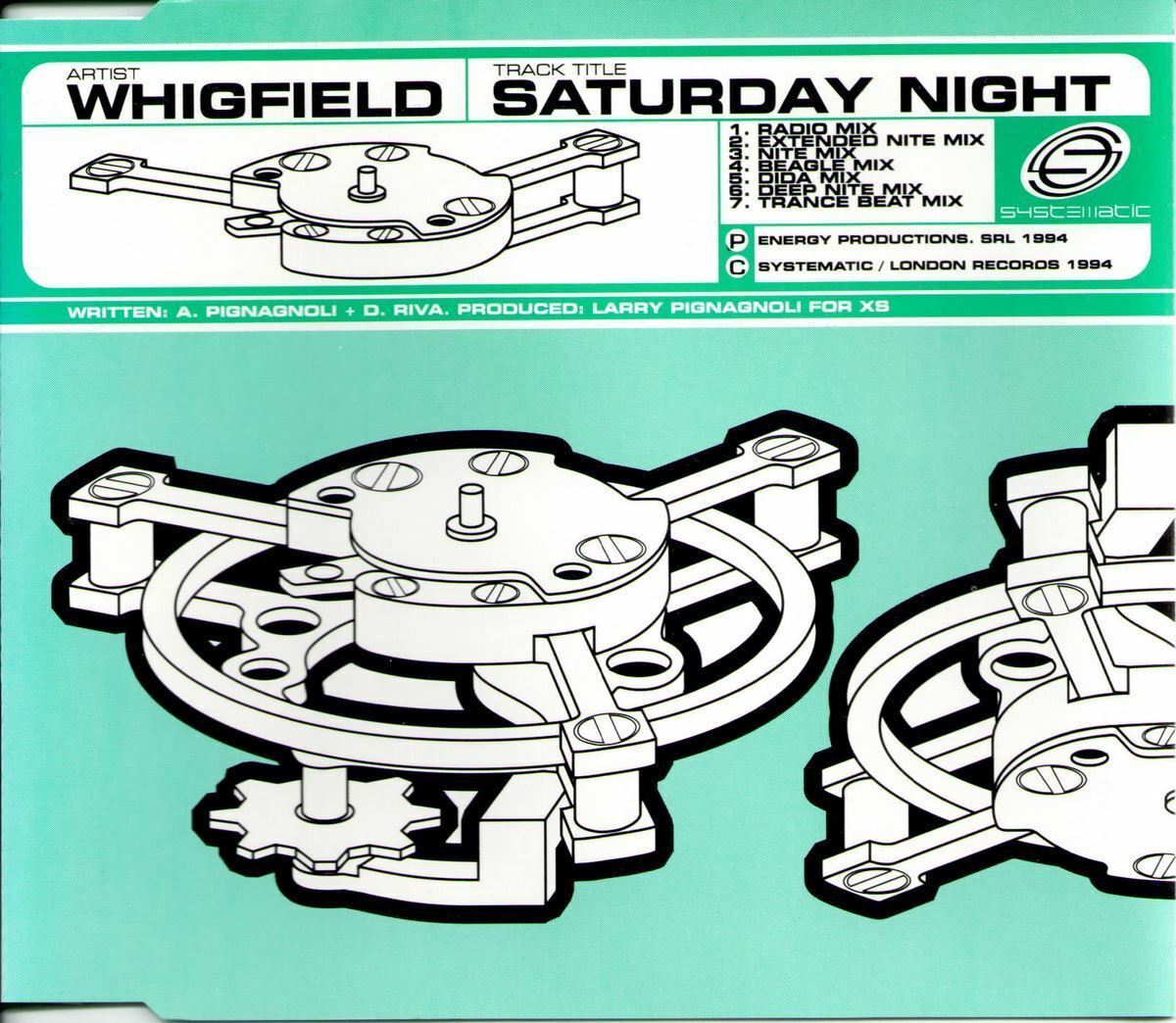
710. ‘Saturday Night’, by Whigfield

After fifteen weeks of ‘Love Is All Around’, I’m sure the nation (including Wet Wet Wet themselves) was happy for literally anything to come along and give us a new number one…

Saturday Night, by Whigfield (her 1st and only #1)

4 weeks, from 11th Sept – 9th Oct 1994

Well, here with the dictionary definition of the phrase ‘careful what you wish for’, is Danish beauty Whigfield, and her ode to the penultimate night of the week. I innocently thought I’d enjoy hearing this tune again, cheese that it is, while assorted memories of primary school discos came flooding back…

But, alas. It’s a bit crap. The first ten seconds are the most interesting. The famous di-di-da-da-da intro and the quacking synths. Here we go, I think, nostalgia central. Except, as ever, nostalgia ain’t what it used to. The remaining four minutes of ‘Saturday Night’ are repetitive and dull. The banal lyrics – Saturday night and I like the way you move… It’s party time and not one minute we can lose… Be my baby… and some la-di-dahs to fill the gaps… – the banal beat, the banal quacking. I notice that as part of the current ‘the nineties were the best decade ever’ movement, there are attempts to cast this as a ‘90s dance classic, up there with ‘Rhythm Is a Dancer’ and ‘Ebeneezer Goode’. But it’s really not.

Not that it’s terrible either. It’s a novelty, but not the most offensive kind. It’s biggest relevance, in chart terms, is in being the ultimate post-summer holiday hit. Presumably played in bars across the continent all summer, it smashed straight in at number one when finally released at the start of September. Oh, and there’s the fact that in entering at #1, Whigfield became the first act to have their debut single do so.

As with Alice Cooper, and Marilyn Manson (two artists to whom I didn’t expect to be drawing a comparison today) people make the mistake of referring to Whigfield as the singer rather than the band (or ‘musical project’ as Wikipedia refers to them). The singer, Sannie Charlotte Carlson, was Danish, and the producers were Italian. Carlson, though, was the very pretty star of the show. I’m sure the video, in which she prances around in a towel, getting ready for a big night out, did the song’s chances no harm. Whigfield would go on to have just two further Top 10 hits, though Carlson continues to record and perform.

I think another reason writing this post didn’t bring about a warm Proustian glow is that my repeated plays of ‘Saturday Night’ have reminded me of the dance routine. Interestingly, Carlson doesn’t do the dance in the video, and the craze seems to have stemmed from her backing dancers when she performed on Top of the Pops. However it started though, it quickly caught on, and the social anxiety that came from the being nine-years-old and the only person in the school who couldn’t do it properly remains to this day (see also: ‘The Macarena’).

709. ‘Love Is All Around’, by Wet Wet Wet

The charts of the first half of the 1990s have had many stories to tell: interesting one-hit wonders, new sounds coming, old sounds going, acts appearing and becoming huge… And yet from a certain angle it can look like the period was dominated by just three songs, all from film soundtracks, which together spent forty-one weeks atop the charts. (Set back to back that would stretch for over nine months, a period in which you could conceive, gestate, and birth a human child…)

Love Is All Around, by Wet Wet Wet (their 3rd and final #1)

15 weeks, from 29th May – 11th Sept 1994

We’ve already endured Bryan Adams and Whitney, and now here is the third and final chart-hogging behemoth. And thankfully it’s the best of the three, by far. It’s not an overwrought power-ballad, for a start. More a low-power ballad, with some jaunty flourishes among the cheesy sentiments and Marti Pellow’s over-singing.

I like the woozy fills before the chorus, and the way the band manage to update a song from the sixties with just enough nineties rock touches: a string section, some power chords, and a soaring guitar for the fade-out. ‘Love Is All Around’ was originally recorded by the Troggs, making #5 in 1967. This gave Reg Presley a writing credit on a second #1, after the band’s 1966 #1 ‘With a Girl Like You’. (Rather brilliantly, he spent the unexpected royalties on crop circle research…)

The fact that it’s a more upbeat number than its ginormous predecessors is also reflected in the movie it came from. ‘Four Weddings and a Funeral’ was a rom-com, compared to the epic ‘Robin Hood – Prince of Thieves’ and the slushy ‘Bodyguard’. For the soundtrack, Wet Wet Wet were asked to choose between covering this, Barry Manilow’s ‘Can’t Smile Without You’ and Gloria Gaynor’s ‘I Will Survive’ (which would have been interesting…) ‘Love Is All Around’ was, I’d imagine, an easy choice for the pop-rocking Wets.

As much as this record is a relief after the other two long-runners, I shouldn’t overstate its quality. It’s fine. It’s serviceable. It’s a decently done cover. Nothing more. The original has a low-key charm to it that this version cannot reproduce with its lush production, and the fact that Marti Pellow doesn’t do ‘low-key’. And of course, we can’t ignore that it far outstayed its welcome on top of the charts. You often hear talk about ‘The Song of the Summer’. Never has it been quite as literal as this, with the record on top from late-May to early-September.

By the end of its run, some radio stations were refusing to play it. The band were well aware of the record becoming a millstone around their necks, and deleted it from production. ‘We did everyone’s head in’, Pellow succinctly summed up. This meant that it fell one week short of matching Adams’ record for consecutive weeks at #1. ‘Love Is All Around’, however, did outsell both Adams and Houston in the long run, and currently sits at almost two million copies (number eleven in the all-time sales table).

This song’s success didn’t completely sour Wet Wet Wet’s reputations in the UK. They wouldn’t again make number one, but they scored five further Top 10s before splitting in 1997 after a dispute over royalties. They reformed a decade later, and continue touring and recording with two of the four original members.