811. ‘Praise You’, by Fatboy Slim

A 4th chart-topping guise for Norman Cook, then. After some indie a cappella with the Housemartins, some dub-dance with Beats International, and a funky remix of Cornershop’s ‘Brimful of Asha’, he finally makes number one under his own steam…
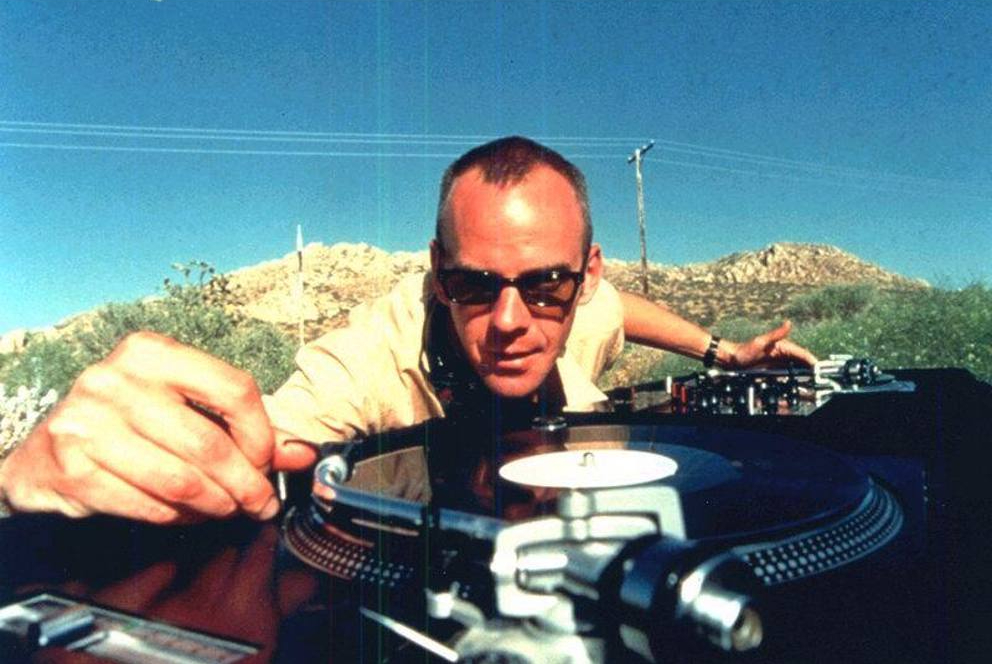
Praise You, by Fatboy Slim (his 1st and only solo #1)

1 week, from 10th – 17th January 1999

The piano line is captivating, as are the smokily soulful opening vocals. We’ve come a long, long way together, Through the hard times and the good… I like the way the final note of these lines is dragged out, and out, and out… and out, as the percussion builds in anticipation of a monumental drop… That never comes. Just more of the same groove, and more of the same vocals.

As on ‘Brimful of Asha’, Fatboy Slim’s mixing style is crowd-pleasing and accessible. Nothing too fancy, nothing too hardcore; just big beats that make you want to dance. But the intro is definitely the best part, oozing a promise that isn’t quite delivered. It’s appealing and catchy, but there are only so many ways that you can chop and twist the two vocal lines that make up this entire song. The album version drags on for a much too long five and a half minutes, though a more palatable radio-edit was used for the single.

‘Praise You’ is a wild smorgasbord of samples, prime among them ‘Take Yo’ Praise’ by Camille Yarborough. Thus twenty-five years later I belatedly realise that it is a woman’s voice singing on this track… I genuinely had no idea. Buried deeper we have a piano line from the Steve Miller Band, drums from John Fogerty, the theme to a cartoon called ‘Fat Albert and the Cosby Kids’, and a guitar lick from Disney anthem ‘It’s a Small World’. From Mickey Mouse, to CCR, to Bill Cosby; ‘eclectic’ doesn’t even begin to cover it!

The video was also a big selling point, secretly filmed in front of Fox Bruin Theatre in LA. It’s a flashmob, at least ten years before that concept went viral, featuring some apeshit breakdancing from director Spike Jonze. It wasn’t staged at all, apparently, including the moment when a theatre employee storms out and turns off their stereo.

Norman Cook finally scores a solo number one, then, and it acts as a swansong to one of the more leftfield chart-topping careers. There can’t be many, if any, other acts to have four different #1s under four different guises. He still had plenty more hits to come, though, and the other singles from his ‘You’ve Come a Long Way Baby’ album, like ‘Rockafeller Skank’ and ‘Gangster Trippin’, really are the sound of the late nineties for me. He also remained an active remixer, and I would point you in the direction of his great work on Missy Elliott’s ‘Gossip Folks’, and the Beastie Boys’ ‘Body Movin’.

785. ‘Brimful of Asha’, by Cornershop

Up next, a quirky little number one. An indie-pop tune about classic Indian movies, by a band who had never previously been higher than #60 in the charts…

Brimful of Asha, by Cornershop (their 1st and only #1)

1 week, from 22nd February – 1st March 1998

‘Brimful of Asha’ had originally been released in 1997, in a more pedestrian, lo-fi version. It’s nice – a different angle on British rock in the late-Britpop years – but it needed a sprinkling of stardust to turn it into a hit. Enter Norman Cook, AKA Fatboy Slim. This is already Cook’s third chart-topping persona, following a spot as a member of the Housemartins in 1986, and with Beats International in 1990.

Compared to some of the other big dance acts of the time – think Prodigy or the Chemical Brothers – Cook’s work as Fatboy Slim has a much poppier, more accessible style. The production on this record – the chunky drum fills, the loops – is very late nineties. But it probably sounds ‘very late nineties’ because Fatboy Slim was one of the defining sounds of that era. ‘Brimful of Asha’ was the launchpad for him to enjoy several years of hits.

And while it does sound rooted in the late-90s, ‘Brimful of Asha’ also has nods back to the sixties in the guitar line, and the fact that Cook added a sample from ‘Mary, Mary’, by the Monkees. The ‘Asha’ in the title refers to Asha Bosle, a famous soundtrack singer and one of the most influential names in Bollywood. And of course there’s the famous hook: Everybody needs a bosom for a pillow, Everybody needs a bosom… It all comes together to create an intoxicatingly catchy song.

Cornershop were from Wolverhampton, and had been ploughing an alt-indie furrow since 1991. Their references to Indian cinema came from founders and brothers Tjinder and Avtar Singh (though Avtar had left in 1995), and the band’s name is a tongue-in-cheek reference to the stereotypical line of work that Indian immigrants tended to take up in the UK. It’s actually quite a big cultural moment, this: British Indians topping the charts with a song celebrating their ancestral country. It’s also a surprisingly early nostalgic tribute to vinyl records (Brimful of Asha on the ’45…) just after the format had been largely killed off, and before hipsters rediscovered it.

Sadly, Cornershop would struggle for hits when Norman Cook wasn’t involved. The follow-up, ‘Sleep on the Left Side’, made #23, and their last Top 100 appearance came in 2004. They remain active, though, both recording and touring. Norman Cook, meanwhile, went from strength to strength after this. In the months following ‘Brimful of Asha’s success, he had his first hit as Fatboy Slim with ‘The Rockafeller Skank’, setting him up for several years of solo success. I have a feeling that his poppy, Big Beat style might have been looked down upon in more fashionable dance circles, but he was always undeniably catchy. And he’ll be back along with his own solo #1 very soon!

The 1997 original:

The Norman Cook Remix:

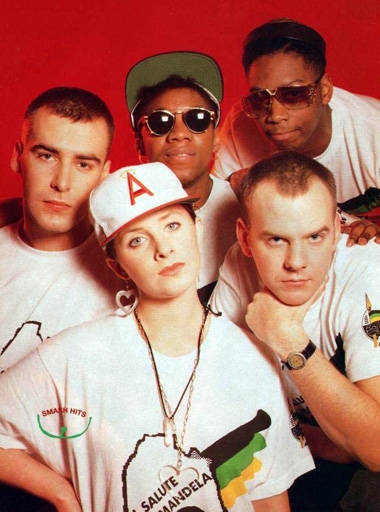
642. ‘Dub Be Good to Me’, by Beats International

Tank fly boss walk jam nitty-gritty, You’re listening to the boy from the big bad city, This is jam hot…

Dub Be Good to Me, by Beats International (their 1st and only #1)

4 weeks, from 25th February – 25th March 1990

I often find writing intros to be the hardest part of a new post. Not today: for who can argue with those opening lines? Jam hot, indeed. (Not that I have a clue what he’s on about, but hey ho…) Off we go, then, into a #1 single a little less intense than ‘Nothing Compares 2 U’, but perhaps every bit as iconic (that word again…)

If you listen carefully, both this record and Sinéad O’Connor’s predecessor follow a similar beat. It’s very nineties, as if both these records were setting the tempo for the decade to come. Other than that, though, they’re very different beasts. ‘Dub Be Good to Me’ takes us for a stroll through the backstreets of the big bad city. The laconic harmonica sounds like a train rumbling past, the horn towards the end sounds like a sad busker, the humming break in the middle sounds like the crazy guy you’d cross the road to avoid…

Meanwhile, you can just picture the singer walking along with a ghetto blaster, singing the title line: I don’t care about your other girls, Just be good to me… Like Soul II Soul and Black Box before it, this record is a more modern, stripped-back version of dance music, another step away from the sample-heavy culture of the 1980s. Just a beat, that harmonica, and a female diva giving it large (Lindy Layton, who in some places gets a ‘featuring’ credit on the record).

Not that ‘Dub Be Good to Me’ doesn’t contain a sample, or two. Actually, it’s pretty much all samples. The lyrics and melody come from The SOS Band’s 1983 song ‘Just Be Good to Me’. The bassline is the Clash’s ‘Guns of Brixton’, the harmonica is from Ennio Morricone’s theme for ‘Once Upon a Time in the West’, and the catchy intro rap is called ‘Jam Hot’, and is by Johnny Dynell. I know that for some sampling is a sin, that music should always be original. But it takes a special ear to hear music from acts as disparate as The Clash, Morricone, and a little-known rapper, and spot a number one hit lurking among the noise. And, unlike some recent dance hits, all the samples seem to have been cleared and consensual, with no subsequent legal battles for Beats International.

For the record, I have no problem with sampling. The more imaginative, the better. Sometimes you’re maybe left with a hot mess. But this record is a masterclass in sampling various pieces into a very smooth, very cool piece of music. Beats International were the brainchild of Norman Cook, whom we last met playing bass for The Housemartins. To say that Beats International were a musical departure for him is something of understatement, but I’d also say that there’s a cheeky, indie ethos to both acts. Beats International are described on Wiki as a ‘loose confederation’ of DJs, rappers and musicians, as well as a graffiti artist who would paint as the band played on stage.

They weren’t around for long, as after two albums they disbanded (they did get one Billy Bragg sampling follow-up Top 10 in the wake of their biggest hit). Cook moved quickly on to form another band, ‘Freak Power, before going it alone as Fatboy Slim. We’ll meet him again before the decade is out. Back in 1990, though, we’re left with a cool and funky glimpse of things to come. And it’s jam hot…