938. ‘The Ketchup Song (Aserejé)’, by Las Ketchup

Ah, the classic autumn Eurotrash hit. Played in bars across Europe all summer, and belatedly making #1 in the UK after the leaves have started to fall…

The Ketchup Song (Aserejé), by Las Ketchup (their 1st and only #1)

1 week, from 13th – 20th October 2002

To Whigfield, Eiffel 65 and DJ Ötzi we can now add Las Ketchup, with this slice of Spanglish surf rock. And, of course, the accompanying dance routine. They were a Spanish girl group, three sisters, and this was their first hit. And call me cynical, but when your group and your first single share a title, and that title involves ‘Ketchup’, then it’s safe to assume you’re not aiming for longevity.

But also, call me surprised, because this isn’t at all as bad as I’d expected. It’s horribly catchy, sure, and largely nonsense (‘aserejé’ is not a Spanish word, nor is ‘buididipi’, nor ‘seibuinova’) with a chorus based on ‘Rapper’s Delight’, but it’s much more of a rock song than I recalled, with the guitars switching between eighties soft, and growling surf, rock. It’s not as in-your-face irritating as some of the Eurotrash that’s gone before and, despite its obvious disposableness, it still sounds like a real song.

This is all a revelation, presumably because sixteen-year-old me wrote this off as novelty crap without giving it a proper listen. I’d still not choose to listen to it, but couldn’t promise that it wouldn’t get me on a dancefloor in double quick time after a jug of sangria. And at least it came out when I was too old to be haunted by its dance routine at primary school discos, unlike ‘Saturday Night’ and ‘Macarena’.

My teenage aloofness has also caused me to miss how bloody massive this song was in 2002. It made #1 in twenty-seven countries, and Wiki lists it as being a chart-topper in every territory in which it was released except the US, Japan, and – the only European hold-outs – Croatia. It didn’t lead to any lasting success, however, and Las Ketchup are gold-star one hit wonders in the UK. Their last release was in 2006, when they represented Spain at Eurovision, finishing twenty-first with ‘Un Blodymary’, though they continue to perform.

One other thing that had passed me by regarding ‘The Ketchup Song’, as well as its relative quality and its success, was the fact that the gibberish lyrics are alleged in Latin America to be secretly demonic… ‘Aserejé’, some religious types argued, sounds like ‘a ser hereje’ (‘let’s be heretical’), with other lyrics supposedly referring to hell and Satanic rituals. The song was banned by a TV station in the Dominican Republic on these grounds… So, press play below at your peril!

834. ‘Mambo No. 5 (A Little Bit Of…)’, by Lou Bega

Ladies and gentlemen…

Mambo No. 5 (A Little Bit Of…), by Lou Bega (his 1st and only #1)

2 weeks, from 29th August – 12th September 1999

…this is Mambo Number Five. Autumn may have begun while this record was at number one, but the Latin summer of 1999 is still going strong. As with both our previous Latin chart-toppers – ‘Livin’ la Vida Loca’ and ‘Mi Chico Latino’ – yes, this is cheesy, and yes, this is Latin music with all the raw edges softened. But I challenge anyone to listen to this and not smile, just a bit. And even today, you throw this on at any kids party, or wedding, hell even at a funeral, and the dancefloor will light up.

It’s been a while since we’ve had a mambo at number one. Forty-four years, to be exact, when Rosemary Clooney scored her second chart-topper with ‘Mambo Italiano’ (which was mambo in name more than anything else), and Pérez Prado had an instrumental smash with ‘Cherry Pink and Apple Blossom White’. It was Prado himself, the King of Mambo, who originally recorded ‘Mambo No. 5’ in 1949. He had also been back in the charts in 1995, despite dying in 1989, when ‘Guaglione’ made #2 thanks to a feature on a Guinness advert.

Lou Bega, a German-born Italian-Ugandan rapper, had the idea to sample ‘Mambo No. 5’ and turn it into a modern pop-rap song while living in Miami, where he had been turned on to Latin music. The brass band, and the shouts, are that of Prado; but Bega added lots of ad-libs, and some wonderfully dated record scratches and tapes-getting-all-tangled-in-the-deck sound effects (kids these days will never know the pain…)

And of course, he also added the words. Seven ladies that went down in history. Monica, Erica, Rita, Tina, Sandra, Mary, and Jessica. There is a particular joy in knowing someone by any of these names, and of trying to crowbar their accompanying line into conversation. I used to work with a Rita (all I need), while I also know a Mary (all night long), but my personal goal is to meet a Sandra (in the sun).

What’s interesting is not just how big this genre of music suddenly became in the summer of 1999, but how much songs like this and ‘Livin’ la Vida Loca’ remain in the public consciousness, far more than the Westlife’s many ballads and anonymous dance tunes. Lou Bega managed one more minor hit in the UK with the follow-up to this, ‘I Got a Girl’, in which he yet again lists his many girlfriends. He remains active, still dressing like Pablo Escobar on his summer holidays, still peddling his schtick (his most recent release on Spotify samples ‘Macarena’).

Still, he’ll always have ‘Mambo No. 5’. Stick a random pin on a map and chances are you’ll hit a country where this record made #1. In France it was there for a mind-blowing twenty weeks… The success wasn’t all positive though, as Bega and his producers spent seven years locked in a legal battle with Pérez Prado’s estate, before a judge ruled that the writing credits be split evenly. Meanwhile my favourite story connected with ‘Mambo No. 5’ is that it was originally chosen as the theme song for the US Democrats’ 2000 convention, before someone pointed out that having Bill Clinton walk out to A little bit of Monica in my life wasn’t such a hot idea…

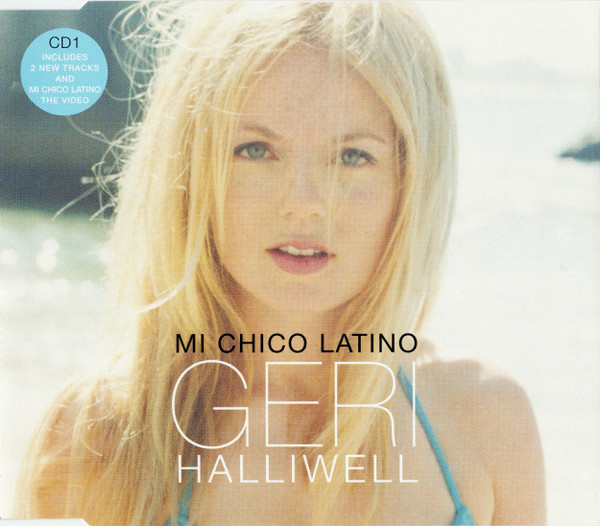
833. ‘Mi Chico Latino’, by Geri Halliwell

After a slightly disappointing start to her solo career, missing out on #1 by a few hundred copies to Boyzone, Ginger becomes the second Spice Girl to make top spot away from the band, and the first to do so completely on her own…

Mi Chico Latino, by Geri Halliwell (her 1st of four solo #1s)

1 week, from 22nd – 29th August 1999

Just a few weeks on from ‘Livin’ la Vida Loca’, Geri Halliwell hops aboard the Latin-revival bandwagon. Or is it the mid-80s Madonna bandwagon? For this slice of Spanish silliness owes quite a large debt to Madge’s 1987 chart-topper ‘La Isla Bonita’. It also reminds me of holiday classic ‘Lambada’ in the melancholy chord progressions, not to mention ‘Viva Forever’s flamenco guitars, and even ‘Spice Up Your Life’ in the propulsive beat.

But what ‘Mi Chico Latino’ lacks in originality, it makes up for in camp charm. From the start, Geri clearly knew that her core fanbase were gay men, and she had no illusions of much wider appeal. (The video features a liberal amount of men in trunks, while the ‘B’-side was literally titled ‘G.A.Y.’) And she is, as has been well documented, no great vocalist. But she carries this tune along with a likeable purr in her voice.

Geri has, I have just discovered, a Spanish mother, which gives the lyrics a little more respectability. She chucks around some GCSE-level stuff like confetti – Donde esta… Yo no se… – but I’m fairly sure there was no mention of el hombre con fuego en la sangre in the textbooks my school used… I might have studied a bit harder if there had been.

Like the Westlife song it replaced at number one, nobody is going to argue that ‘Mi Chico Latino’ is a classic. But at the same time, it is. Sort of. A classic of the summer of ’99, when Latin pop was having a resurgence, and a one-time Spice Girl was on her way to becoming the country’s biggest female star, for a year or two at least. There’s something quite appealing in the way this record barrels along, on the castanets and the ayayays. ‘Loveably crap’ might be a good way to sum it up. That might also be a good way to sum up the entire solo career Geri Halliwell, my now-favourite Spice Girl.

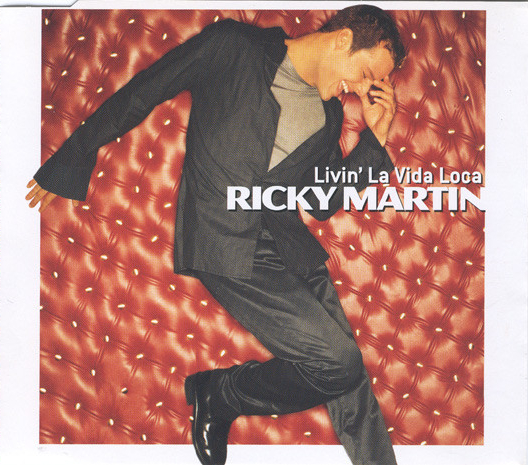
830. ‘Livin’ la Vida Loca’, by Ricky Martin

In my last post, on ATB’s ‘9PM’, I wrote about how rooted in the late-nineties that song seemed. I get a similar feeling about this number one, although they sound nothing alike. It’s just so 1999…

Livin’ la Vida Loca, by Ricky Martin (his 1st and only #1)

3 weeks, from 11th July – 1st August 1999

And I don’t mean that as an insult. This is a fun slice of Latin-pop, played at breakneck speed. It’s got ska horns. It’s got surf guitars. Not enough number ones feature surf guitars! In one of the most pure-pop years in chart history, ‘Livin’ la Vida Loca’ can count itself as one of its catchiest, and poppiest, number ones. But it also manages to do so with selling its soul to cheese – there is something respectably real about this, sounding like it was recorded by an actual band, with actual instruments.

It also has some memorable lyrics, about a fairly unhinged femme fatale, who’s into superstitions and voodoo dolls. She’ll make you take your clothes off, And go dancing in the rain… So fun are the words, and so fast do they rattle by – this really is a breathless song – that we don’t mind when she slips Ricky a sleeping pill and nicks his wallet in the second verse. Plus I’d argue that the title entered the wider pop culture for a good few years after this had been a hit.

I don’t whether this sounds so of its time because a) it’s a classic, b) because it reminds me of being thirteen (that devil nostalgia again…) or c) because it kicked off a big latin pop resurgence at the turn of the century. Think Santana’s ‘Smooth’, a Geri Halliwell #1 soon to come, as well as a bit of Mambo No. 5, not to mention J-Lo, Shakira, and Enrique Iglesias. This record’s popularity cannot be denied, though, and can be proven in one simple statistic: we’re over halfway through 1999 and ‘Livin’ la Vida Loca’ is the first chart-topper to spend more than a fortnight at the top!

From Puerto Rico, Ricky Martin had been a star in the Spanish-speaking world since the age of twelve, when he’d joined boyband Menudo. They had been going since the seventies, and had a policy of chucking members out when they reached sixteen, though Martin survived until he was seventeen. He clearly had something special… In 1991 he released his first solo album, while ‘Livin’ la Vida Loca’ was from his English language debut (though he’d had a smaller hit the year before with his ’98 World Cup theme ‘The Cup of Life’.)

I have a friend who is somewhat Ricky Martin obsessed, and have been with her to see him live in concert, in the front row. He put on a great show, and my friend is still a big fan of his, despite him announcing in 2010 that she is officially not his type… Meanwhile ‘Livin’ la Vida Loca’ may be his biggest hit, and his only UK #1, but I’ve always had an even softer spot for the similarly chaotic ‘She Bangs’, a #3 in 2000.

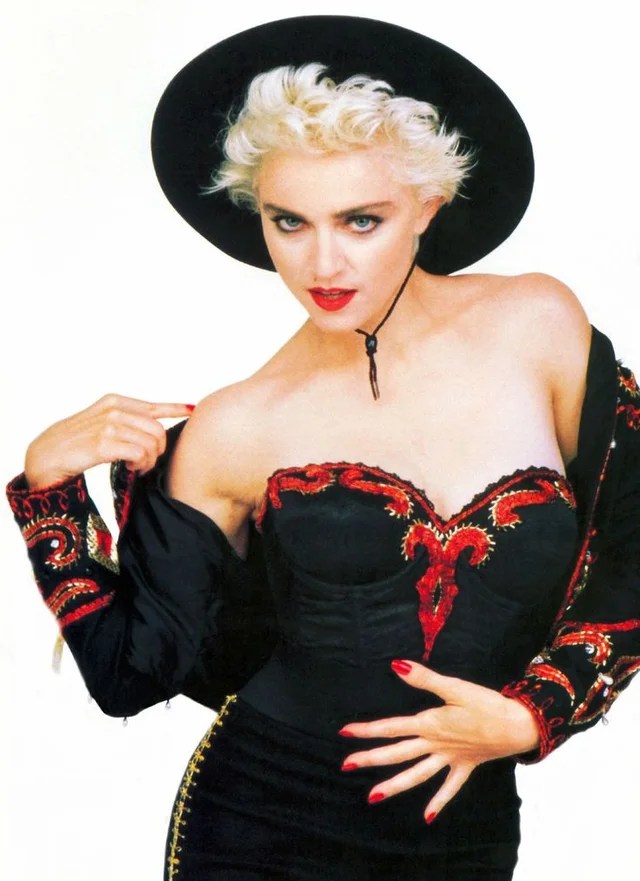
589. ‘La Isla Bonita’, by Madonna

Four Madonna number ones down; four very different sounds from the soon-to-be Queen of Pop…

La Isla Bonita, by Madonna (her 4th of thirteen #1s)

2 weeks, from 19th April – 3rd May 1987

‘La Isla Bonita’ is a Latin-funk tune, with a nice strong bass line, some horn blasts and a sharp Spanish guitar. Everything is fine-tuned, and tight. It has a gloss to it, a modernness to the production, that suggests Madonna had available to her the best studios and equipment. It’s got a steady beat, but it’s still likely to fill a dancefloor.

Except, yeah… I don’t love this one. It’s my least favourite of the four so far. Something about it feels gimmicky to me. Why is she singing in Spanish, for a start? Como puede ser verdad, she purrs in the intro. How can it be true…? If Madonna knows one foreign language, surely it’s Italian?

Anyway, Madonna has fallen in love. Not with a Cuban hunk, rather with an island. I fell in love with San Pedro… Tropical island breeze, All of nature wild and free, This is where I long to be, La isla bonita… Problem is, when non-Latina stars go Latina, they tend to resort to these cliches of warm breezes and Spanish lullabies.

To be fair to Madonna, ‘La Isla Bonita’ may have been her first attempt at Latin music, but it was far from her last. She has a love for it that goes beyond mere musical shapeshifting. Problem is, Madonna is a bit of a trendsetter. She opened the floodgates for every female pop star going to have a ‘Latin phase’: from Lady Gaga to Geri Halliwell. And I’m a traditionalist: no woman has done Latin nonsense better than Rosemary Clooney back in 1955!

So, to me, ‘La Isla Bonita’ feels like a default chart-topper from the biggest star in the world. It was the fifth single to be released from the ‘True Blue’ album, and you have to be pretty darn popular to get the fifth single off your album to number one. This was her 3rd of four #1s between the summers of 1986 and 1987. Again, not many artists manage four chart-toppers in a year.

I was amazed to see that this was Madonna’s 4th most listened-to song on Spotify, above ‘Like a Virgin’, ‘Like a Prayer’ and ‘Vogue’. It just feels like such an average moment in her back catalogue… Not terrible – far from it – but nowhere near her best. Rolling Stone has it as her 40th best song, apparently, and that sounds much more reasonable.

Advertisements