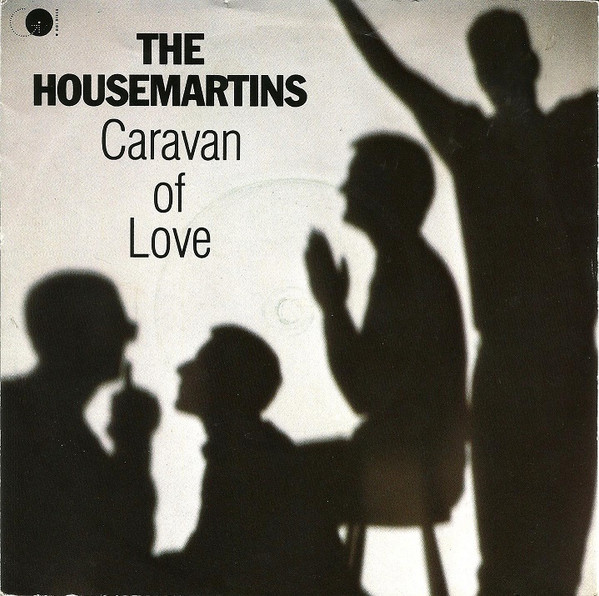
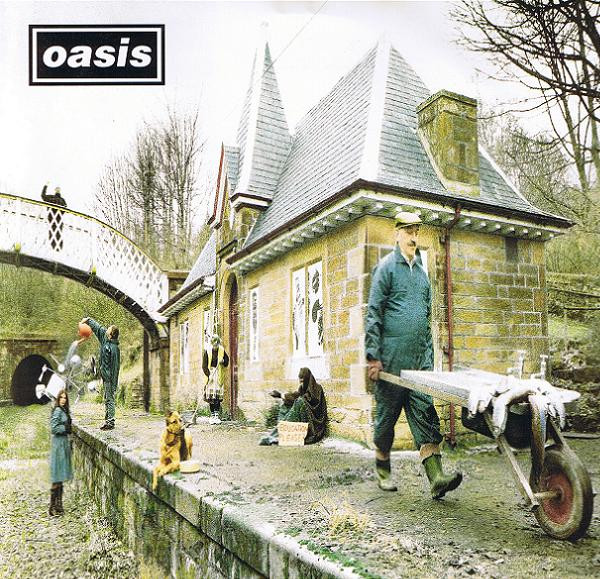
720. ‘Some Might Say’, by Oasis

I’m both thrilled and downhearted that we’ve reached the beginning of the Oasis era. Much like I wrote in the intro to my last post, on Take That’s ‘Back for Good’… What can I add to the three decades’ worth of column inches dedicated to Britain’s most polarising band.
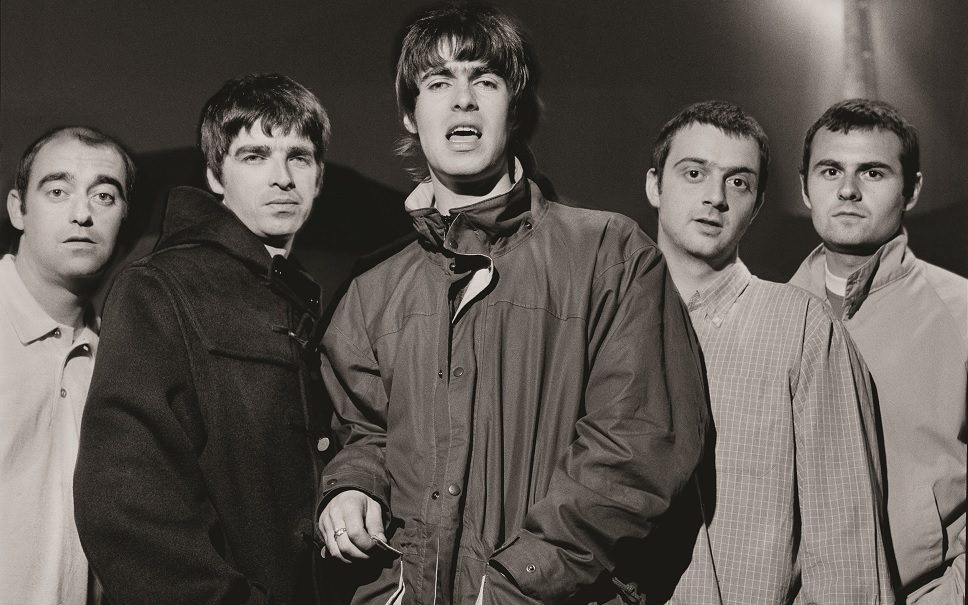
Some Might Say, by Oasis (their 1st of eight #1s)

1 week, from 30th April – 7th May 1995

Basically, what to say about Oasis that isn’t cliched? I need to approach this completely subjectively, then. Which isn’t hard, because Oasis were my first big musical love (OK, second… but we’ll deal with that Spice Girls-shaped elephant in the room when the time comes…) ‘Some Might Say’ has never been among my very favourite Oasis records but, actually, this is a good thing, as far as this post is concerned. It hasn’t been overplayed to death, and I’m glad that this made #1, and not the two #2 hits that followed.

On the other hand, I’d rather their two preceding singles – ‘Whatever’, or ‘Cigarettes and Alcohol’, had been the first chart-topper. ‘Some Might Say’ has some of the vim, the punkish energy of ‘Definitely Maybe’ – I’d say it’s the song from ‘What’s the Story…’ that could most easily slip onto their debut – but signs of bloat are already appearing. After a brilliant glam riff opening, it settles into a slightly plodding, overlong rock song (why, oh why, is this five and a half minutes long?) And, despite the long-held belief that Oasis were a rejection of grunge’s misery and introspection, there are some very heavy, grungy chords in the chorus.

I had a pop at Gary Barlow’s lyrics in that last post, and I have to call Noel out here too, even if this is where I tip into well-trodden cliché. Oasis lyrics walk the line between revelatory and ridiculous. One minute you’re thinking ‘Yes, profound!’. The next you’re thinking ‘Maybe not…’ Some might say they don’t believe in heaven, Go and tell it to the man who lives in hell… is a great line. Some might say you get what you’ve been given, If you don’t get yours I won’t get mine as well… is more at the ‘maybe not’ end. (Though we can all agree that The sink is full of fishes, She’s got dirty dishes on the brain… is a lyric for the ages…)
The star here, as in many of Oasis’s early songs, is the man interpreting these words, and making them his own. Liam. The last true rock star, and one of the all-time great frontmen. A beautiful moron (‘Some Might Say’ doesn’t have a proper video because he never showed up for the shoot), his sweetly aggressive vocals attack his brother’s unwieldy lines and transform them. Just try singing this song like he does. It’s very difficult – your voice ends up straining, and cracking, and getting lost among the walls of guitar (Oasis were, thankfully, never fans of understated production.)

Like I said, I once loved Oasis – growing up male, in small town Scotland, in the late ‘90s/early ‘00s, it was all but mandatory – but it is a love that has faded. I’ve accepted that they were limited, that they did have a habit of ‘borrowing’ riffs and melodies (even now I’ll listen to a Kinks album track and hear a bit that sounds familiar…), and that they believed their own hype a little too much. And yet, they were never as bad, as unoriginal, as much a Bargain Bucket Beatles, as some critics were desperate to make out.

Anyway, I’m writing as if this was their one and only chart-topper, not as if they have seven more to come. It’s easy to forget just how phenomenally successful they were. All seven of their studio albums entered the charts at #1, while ‘Some Might Say’ was the first of eight singles in a row to make either #1 or #2, between 1995 and 2000. It might not be the perfect song to be crowned their first chart-topper – the first chart-topper of the Britpop era even – but Some might say, We will find a brighter day… is perhaps the perfect summation of the Oasis manifesto.
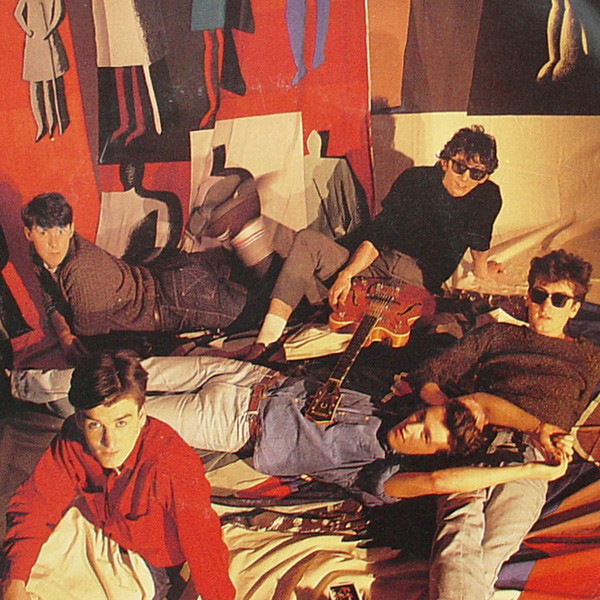
687. ‘Young at Heart’, by The Bluebells

If we thought ‘Oh Carolina’ was an unpolished step away from the usual sounds of the early nineties, then what to make of this folksy jig…?

Young at Heart, by The Bluebells (their 1st and only #1)

4 weeks, from 28th March – 25th April 1993

We need to sound the ‘random re-release’ klaxon, one that has been honked fairly often during these past few chart years, for the success of this record was not completely organic. ‘Young at Heart’ was originally a #8 hit, in 1984, for Scottish jangle-pop act The Bluebells. It was their biggest hit, from the only studio album they released before disbanding in 1985. Fast-forward nearly a decade, and the song is being featured in a commercial for Volkswagen (not Levi’s, for once!)… Hey presto. Number one.

And aren’t we glad that it was! It’s distinctive, bordering on strange, and yet oh so catchy. Banjos, harmonicas, and most of all violins – the solo has to be one of the most ‘out there’ moments in a #1 for many a year – come together at the barn dance for a tale of young love: They married young, For love at last, Was their only crime…

It’s always hit me as a sort of ‘Come On Eileen’ Part II, both in terms of the Celtic sounds and the subject matter. Plus at its heart, despite all the country dressing, it has a pure pop bridge and a soaring chorus, which hint at an interesting origin story. I’ll let you in on a secret, one that raised my eyebrows when I found it out barely five minutes ago… The reason this song has such strong pop credentials is because it was written, and originally recorded by, Bananarama! I know, right…!

They recorded it for their debut album in 1983 – it was actually co-written by Siobhan Fahey (sort of giving her a second non-Bananarama number one) and the band’s guitarist Bobby Bluebell (not his real name) – and, if we’re honest, their version is fairly bland. In fact, The Bluebells’ take is a lesson in how to do a cover version right: changing the tone, the tempo, the genre, to the point where you’d have to be listening pretty closely to notice that they were the same song.

The Bluebells reformed especially for the TOTP performance brought about by the record’s unexpected success, and have continued to come back together on and off over the years. One of their former members is a lecturer in music business, while another is a golf correspondent for The Guardian.

Sadly, I make this the final ‘random re-release’ we’ll see, for a while at least. There are plenty more to come, especially in the 21st century, but this is the end of that golden spell in the late-eighties and early-nineties, when Ben E King, Jackie Wilson, The Clash, The Righteous Brothers, The Hollies and The Steve Miller Band all scored belated, sometimes posthumous, chart-toppers thanks to films, TV shows and, more often than not, adverts for Levi’s jeans. Let’s salute them, then, these random re-releases, for spicing up the charts, and breaking up all the SAW, the dance, and the movie soundtrack power ballads.

652. ‘A Little Time’, by The Beautiful South

Let’s slow things down, with a little saloon-bar crooning…

A Little Time, by The Beautiful South (their 1st and only #1)

1 week, from 21st – 28th October 1990

1990 certainly is taking a mellower turn. After a spring of dance… I won’t say bangers, because I’m not sure that they were… but classics at least, we’ve arrived in an autumn of lower-case rock. ‘The Joker’, ‘Show Me Heaven’, and now the year’s most low-key hit, from The Beautiful South.

It’s a duet in the classic sense, as the male and the female vocals bounce off one another, telling a story. The guy is trying to wriggle his way out of a relationship: I need a little time, To think it over… A little space, Just on my own… His girlfriend is having none of it: Need a little room for your big head, Don’t ya, Don’t ya…?

Meanwhile a piano rolls, and some horns softly toot, and you’re left to wonder how this record found itself on top of the charts. A quiet week? The Beautiful South had already had hit singles, and this was the lead from their second album, so perhaps demand was there. And it’s far from unwelcome: it’s just very understated, and short, so that it’s over before you really start to appreciate how good it is.

By the end, the man has had the little time that he wanted, but the girl’s moved on. The freedom that you wanted bad, Is yours for good, I hope you’re glad… It’s sort of an earlier version of Beyonce’s ‘All the Single Ladies’; in sentiment, if not in sound. There’s a good amount of humour here too, while Briana Corrigan’s voice reminds me, somehow, of Cyndi Lauper.

Is this another late eighties’ ‘indie’ hit, to file alongside Fairground Attraction and The Housemartins? Or is it – bold statement incoming – the first Britpop #1? It’s probably the former, as it sounds nothing like your average Britpop hit (it’s got a woman on it, for a start) and the only reason I’m suggesting otherwise is due to the change of decade. But rock will be a constant, if never quite dominant, chart-topping force in the nineties, which it never really was for much of the eighties.

Speaking of The Housemartins, this record gives the second and third former members of the band a 1990 #1, after Beats International’s Norman Cook. Paul Heaton and Dave Hemingway (the wantaway male singer here) had formed The Beautiful South in 1988 after their former band split. Their debut single ‘Song for Whoever’ had made #2 the year before this, their only chart-topper.

The reason I suggest this as ‘Britpop’, is that The Beautiful South had definitely been lumped in with that scene come the middle of the decade, when they were scoring hits like ‘Rotterdam’, ‘Don’t Marry Her’ and ‘Perfect 10’. All of which were pop culture touchstones, a statement I’m basing on the fact that they were all popular in my school playground (especially ‘Don’t Marry Her’, with its incongruous swearing in the chorus). They would continue to have decent chart success until their split in 2007.

581. ‘Caravan of Love’, by The Housemartins

Reintroducing that most niche of chart-topping genres: the festive a cappella #1…

Caravan of Love, by The Housemartins (their 1st and only #1)

1 week, from 14th – 21st December 1986

Following on from the Flying Pickets’ ‘Only You’ from three years before, The Housemartins give us more warm and fuzzy feelings for Christmas, using only their voices (and some finger clicks). Hand in hand we’ll take a caravan, To the marvel land… One by one we’re gonna stand up with pride, One that can’t be denied…

The lyrics are uplifting – everyone being free, the young and the old, love flowing – vaguely religious, but not preachy. The harmonising is beautiful, led by a spectacular lead vocal from Paul Heaton (imagine an angelic Morrissey…) My judgement may be clouded by the fact that I’m literally listening to his honeyed tones as I type these words, but is this the 1980’s best chart-topping vocal performance? The he’s my brother… line is the pick, up there with the finest fifties doo-wop.

Every woman, every man, Join the caravan of love… Stand up, stand up… It’s a clarion call, but is it for a revolution, or for God? The song had been written by one half of the Isley Brothers (Isley-Jasper-Isley) the year before, with religion in mind. The video for the Housemartins’ version makes the religious intent very clear: Heaton plays a preacher in a pulpit, and the band have crucifixes shaved into their heads… I’m normally one for the separation of church and pop; but this I can just about stomach, because it’s about love rather than sanctimony.

Speaking of Morrissey, this single-week number #1 represents one of the very few moments that ‘80s indie made the highest reaches of the charts (much like Europe flying the flag for hair metal last time out…) The Housemartins had made #3 earlier in the year with the jangly ‘Happy Hour’, and their albums had pithy titles like ‘London 0 Hull 4’ and ‘That’s What I Call Quite Good’. They were clearly going for the Christmas #1 here, ticking all the feel-good boxes, gaining support from both indie kids and their grandmas, but were foiled at the last by an even more unexpected hit… More on that next time.

They split in 1988, but this is just the start for two of The Housemartins… Heaton went on to form ‘The Beautiful South’, before going solo. In a fun coincidence, he is literally on top of the UK albums chart as we speak… Meanwhile bassist Norman Cook became a DJ and producer with Beats International and then as Fatboy Slim. And I can think of at least three ‘90s chart-toppers that he’ll account for…

Advertisements