923. ‘The Hindu Times’, by Oasis

My intro to this next number one amounts to four simple words: Thank God for Oasis.

The Hindu Times, by Oasis (their 6th of eight #1s)

1 week, from 21st – 28th April 2002

Not just for cleansing the palate after the Pop Idol syrup-fests that had hogged the charts for several weeks previous, but for returning guitars to the top spot after what has probably been their longest hiatus. Not counting George Harrison’s posthumous comeback, I think this is the first rock #1 since, gulp, Limp Bizkit in January 2001.

Yes, this isn’t one of their classics. But I also think ‘The Hindu Times’, and anything Oasis released post-1998, gets unfairly maligned. They were great at side one, track one songs like this (and ‘Hello’, and ‘Turn up the Sun’, and ‘Fuckin’ the Bushes’), songs the sole purpose of which is to reassure the listener that, yes, they are listening to Oasis.

And I love it when Oasis are being Oasis. If you aren’t a fan then you might struggle with a song so droning, so snarly, so unrepentantly simple, but that’s your loss. If you can’t appreciate the way Liam drags out the you’re my sunshine you’re my rain… line in the chorus, presumably a knowing nod to ‘Live Forever’, then Oasis simply aren’t for you.

Experimentation feels like a dirty word in an Oasis context, one that soft southerners might use. But there is a bit of that going on. The ‘sitar’ riff, the droning, the gigantic wall of sound feel. It’s as big and beefy as they’d sounded since ‘Definitely Maybe’, and it’s not completely crazy to suggest that a higher tempo ‘Hindu Times’ wouldn’t sound out of place on their debut album. Despite the sitar sound, and the title, Noel had not been spending time with the Maharishi like his ‘60s idols; he saw the title as a slogan on a t-shirt.

With this single, and the subsequent ‘Heathen Chemistry’ album, Oasis debuted two new members in Gem Archer and Andy Bell (not the Erasure Andy Bell, though that would have been a direction I’d love to have heard Oasis go in…) Archer and Bell remained in the band until their split in 2009, and have returned for the reunion tour. The album is okay – sixteen-year-old me thought it was amazing – but second single ‘Stop Crying Your Heart Out’ is probably the one 21st century Oasis single that people are happy to compare with their nineties output. For me, though, I’d go with the lovely ‘Songbird’, the album’s fourth single and the first to be written by Liam. I was very disappointed to see that the only post-1998 song they were playing on their recent tour was ‘Little by Little’, which I’ve always thought a dull plodder.

Despite rock music being back, baby, it won’t be hanging around for long. No Oasis #1 ever spent more than a week on top, and the next identifiably ‘rock’ chart-topper is more than a year away… Luckily though, we’re about to embark on a run of pretty decent, non-rocking number ones, starting with a ‘00s girl group classic.
Cover Versions of #1s… Kingmaker & Jesus and Mary Chain

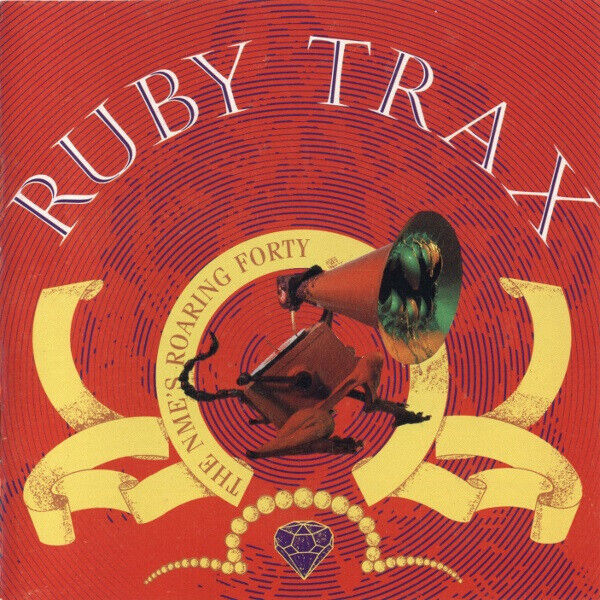
As in my two previous Cover Versions of #1s posts, I’m returning to Ruby Trax, a compilation released in 1992 to celebrate the 40th anniversaries of both the NME and the UK singles chart.

It’s a veritable gold mine of weird and wonderful covers of chart-topping hits by the big (and not so big) acts of the day. While this is the last time I’m going to feature these Trax, for a while at least, the album is definitely worth checking out if you enjoyed the covers by Bob Geldof and Sinead O’Connor, or Suede and Manic Street Preachers.

And of course, for a compilation of tracks celebrating number one singles, there had to be room for some interesting interpretations of Britain’s two greatest groups, the Beatles and the Stones. Some might say they are sacrosanct, I say have at them!

Probably sensibly, both covers are of the legendary acts’ less famous number ones. And it’s quite fun to hear ‘Lady Madonna’, famously Paul McCartney’s boogie-woogie tribute to Fats Domino, reimagined for guitars. Or maybe its because my favourite bit of the original is when George Harrison’s snarling guitar comes in for the second verse. At the same time, despite the switch in lead instrument, this is a fairly faithful cover.

I had never heard of Kingmaker before writing this post, and going by the limited number of views the above video has had on YouTube I think they’ve very much been consigned to the pre-Britpop dustbin. It seems they were nearly the next big thing back in the 1992-93, with a couple of #15 hits and tours with Radiohead and Suede as their support acts, before a falling out with their record label.

A much bigger name are ’80s shoegaze icons, and East Kilbride’s finest, The Jesus and Mary Chain. Their scuzzy, distorted, feedback drenched take on ‘Little Red Rooster’, the Stones’ 2nd #1 back in 1964, is a much more impressive proposition. The song dates back to the early sixties, written by Willie Dixon and made famous by Howlin’ Wolf, and despite all the noise-pop dressing the JAMC sensibly keep that driving blues riff as the song’s focal point.

‘Little Red Rooster’ may or may not be a phallic metaphor (the Stones’ version wasn’t released as a single in the US allegedly because of this), but the Jesus and Mary Chain replace bawdiness with menace. You would not be messing with this particular little red rooster on the prowl, who isn’t so much horny as he is looking for a fight.

If you are interested in hearing more of this album, it can be a bit tricky to Trax down, with many of the forty songs not available on Spotify or YouTube, at least not in great quality uploads. But if the idea of EMF covering ‘Shaddap You Face’, or Boy George doing ‘My Sweet Lord’, Vic Reeves doing ‘Vienna’ (they bent the rules to include that one…) or Billy Bragg covering The Three Degrees appeals to you, or at least sounds morbidly fascinating, then do have a browse. The full forty-track listing is here, on the LP’s Wikipedia page.

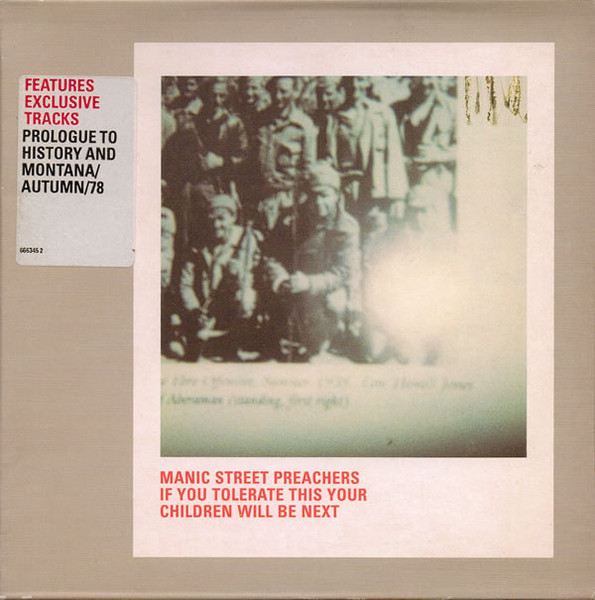
799. ‘If You Tolerate This Your Children Will Be Next’, by Manic Street Preachers

I have a recap coming up in a couple of posts, in which I’ll name the best/worst/weirdest/dullest of the most recent number one singles. But if I ever decide to dish out awards for ‘Best Song Title’, then we’ll have an easy all-time winner…

If You Tolerate This Your Children Will Be Next, by Manic Street Preachers (their 1st of two #1s)

1 week, from 30th August – 6th September 1998

I make the nine-word ‘If You Tolerate This Your Children Will Be Next’, to be the second longest chart-topping title not to feature brackets (and obviously not counting double-‘A’s). Bonus points for naming the eleven-word winner of that award… Anyway, so far so interesting. But is the song any good…?

Well, the dreamy reverb on the guitars is cool, and the song has a big, beefy wall-of-sound feel to it. It’s confident, and orchestral, and as the lead single from their fifth album it declares the Manics to be perhaps the biggest band in post-Britpop Britain. It’s also fairly mid-tempo, a bit Radio 2, when compared to some of their earlier, spikier hits.

Of course, with a title like that, the lyrics were surely going to be the most interesting aspect of this song. And on one level they don’t let us down. So if I can shoot rabbits, Then I can shoot fascists… is a line unlike most others in the preceding seven hundred and ninety-eight #1s. Inspiration for the song came from a Spanish Civil War-era poster, showing a child killed by Franco’s forces with the title-line printed below. The singer is singing from a modern viewpoint though, and feels gutless when he thinks about the generations before him who fought fascism.

The lyrics are also what leave me a little cold, when faced with writing a post on this record. I’d like to celebrate the Manics making number one – a rock song making number one in the very poppy charts of late ’98 – but they have better songs in their canon. And it’s not that I’m put off by the preachy-ness of it (the hint is in the band’s name, after all), but ‘A Design for Life’ did the socialist-statement-with-strings-and-a-massive-chorus much better than this two years earlier (and only made #2). ‘If You Tolerate This Your Children Will Be Next’ is a little too on the nose, a little too much edge without substance. And, removed from the song’s actual lyrics, it can be co-opted by any crackpot conspiracy theorists, as happened in 2009 when the BNP used the song on their website.

I go through phases with the Manics where I listen to them a lot; and then at other times I seem to forget they exist. They always remained somewhat outside the world of Britpop, pre-dating the movement by several years, and by managing hits well into the 2000s, long after most of the other big nineties rock acts had imploded. I do like them, though. And just to prove that I don’t mind political statements in songs, as long as the song itself is strong enough to carry said statement, I will be giving their second number one a glowing write-up.

***I should also mention that I’ve written a post for Kinks Week at Powerpop Blog, which was published earlier today. Please do check it out, along with the rest of Max’s always entertaining and informative posts on music and pop culture!***

785. ‘Brimful of Asha’, by Cornershop

Up next, a quirky little number one. An indie-pop tune about classic Indian movies, by a band who had never previously been higher than #60 in the charts…

Brimful of Asha, by Cornershop (their 1st and only #1)

1 week, from 22nd February – 1st March 1998

‘Brimful of Asha’ had originally been released in 1997, in a more pedestrian, lo-fi version. It’s nice – a different angle on British rock in the late-Britpop years – but it needed a sprinkling of stardust to turn it into a hit. Enter Norman Cook, AKA Fatboy Slim. This is already Cook’s third chart-topping persona, following a spot as a member of the Housemartins in 1986, and with Beats International in 1990.

Compared to some of the other big dance acts of the time – think Prodigy or the Chemical Brothers – Cook’s work as Fatboy Slim has a much poppier, more accessible style. The production on this record – the chunky drum fills, the loops – is very late nineties. But it probably sounds ‘very late nineties’ because Fatboy Slim was one of the defining sounds of that era. ‘Brimful of Asha’ was the launchpad for him to enjoy several years of hits.

And while it does sound rooted in the late-90s, ‘Brimful of Asha’ also has nods back to the sixties in the guitar line, and the fact that Cook added a sample from ‘Mary, Mary’, by the Monkees. The ‘Asha’ in the title refers to Asha Bosle, a famous soundtrack singer and one of the most influential names in Bollywood. And of course there’s the famous hook: Everybody needs a bosom for a pillow, Everybody needs a bosom… It all comes together to create an intoxicatingly catchy song.

Cornershop were from Wolverhampton, and had been ploughing an alt-indie furrow since 1991. Their references to Indian cinema came from founders and brothers Tjinder and Avtar Singh (though Avtar had left in 1995), and the band’s name is a tongue-in-cheek reference to the stereotypical line of work that Indian immigrants tended to take up in the UK. It’s actually quite a big cultural moment, this: British Indians topping the charts with a song celebrating their ancestral country. It’s also a surprisingly early nostalgic tribute to vinyl records (Brimful of Asha on the ’45…) just after the format had been largely killed off, and before hipsters rediscovered it.

Sadly, Cornershop would struggle for hits when Norman Cook wasn’t involved. The follow-up, ‘Sleep on the Left Side’, made #23, and their last Top 100 appearance came in 2004. They remain active, though, both recording and touring. Norman Cook, meanwhile, went from strength to strength after this. In the months following ‘Brimful of Asha’s success, he had his first hit as Fatboy Slim with ‘The Rockafeller Skank’, setting him up for several years of solo success. I have a feeling that his poppy, Big Beat style might have been looked down upon in more fashionable dance circles, but he was always undeniably catchy. And he’ll be back along with his own solo #1 very soon!

The 1997 original:

The Norman Cook Remix:

781. ‘All Around the World’, by Oasis

A few months after the highest-selling number one single of all time, a slightly different chart record falls. Oasis were planning to release the penultimate track from ‘Be Here Now’ as that album’s final single, a track that ran to well over nine minutes (long even by that bloated album’s standards). Surely, people assumed, there would be a single edit? But of course not. For this was Oasis, the biggest, boldest band in the land, and nobody could tell them what to do.

All Around the World, by Oasis (their 4th of eight #1s)

1 week, from 18th – 25th January 1998

In fact, the single version of ‘All Around the World’ drags things out even further than the album version, meaning that it runs to a staggering nine minutes thirty-eight seconds. You wonder why they didn’t just keep it going to the ten-minute mark… Still, it stands as the longest number one single ever, almost two minutes ahead of Meat Loaf in second place. But what gets overlooked in all the chat about how long it is, and how OTT ‘Be Here Now’ is, is the fact that this is a pretty good song.

It’s one of the album’s clearer, more instant moments. It’s a simple enough concept, with slightly jazzy, slightly Beatlesy (duh!) chord progressions. The simple concept is built upon, with layers of overdub and na-na-na-ing, until it grows into a thumping gospel track, with Liam chanting his mantra: I know what I know, It’s gonna be okay… We all know now that by 1998 Oasis were a coked-up mess; but this is Oasis at their coked-up best. I’ve always thought it very underrated.

Perhaps ‘All Around the World’ stands out as different to the rest of ‘Be Here Now’ because it was actually one of Noel’s earliest song writing efforts, with live performances dating back to 1992. I don’t imagine those early versions of the song sounded as gigantic as this, but it does have that early-Oasis theme of everyone getting along, making better days. Plus it has Liam chewing the life out of the word sheeeiiiiinnnneeee, which is a real Oasis 101.

Added to this early-nineties seed of a song were seven whole minutes of coda. Lots of key changes, lots of subtle rearranging of the na-na-nas. I particularly like the seismic shift around 5:30, before Liam comes back bellowing through a loudspeaker. Of course it’s too long – it’s a preposterous length for a pop song – and of course it’s self-indulgent. Plus, of course the Beatles’ references are way too obvious (‘Hey Jude’, for one, and ‘Yellow Submarine’ in the mesmerising animated video).

But as with ‘D’You Know What I Mean?’, and as with ‘Be Here Now’ on the whole, you do just have to sit back and admire the sheer bravado of releasing this beautiful, overblown nonsense, and then lament the passing of rock music that is this big. It’s a shame that a track of ‘All Around the World’s size is relatively forgotten among the Oasis back-catalogue, and that it sneaked a January number one when competition was scarce. By now, a backlash had begun against Oasis, as always happens when acts become that popular. It will be over two years before their next chart hit, as the band take a much needed breather after the wild ride of the Britpop years.

758. ‘Beetlebum’, by Blur

Continuing with our run of quirky number ones…

Beetlebum, by Blur (their 2nd and final #1)

1 week, from 26th January – 2nd February 1997

On the one hand, there’s nothing very quirky about Britain’s second biggest band scoring their second chart-topper, with the lead single from their highly anticipated fifth album. And yet… ‘Beetlebum’ isn’t Blur at their most accessible – a fuzzy, droning number about taking heroin. It would actually make a good pub quiz question: name Blur’s two UK number ones. Everyone remembers ‘Country House’ because of the hoo-haa around the Battle of Britpop. But I doubt many casual fans would name this one over ‘Parklife’, or ‘Song 2’.

At the time, ‘Beetlebum’ was seen as a disappointment by some, and it’s hard to imagine this now, as it effectively signalled the start of Blur MK II, the Blur we’ve known for the past two decades. But until now, most of their singles had been laddish and upbeat, delivered with a knowing wink. ‘Beetlebum’ is a much rawer beast, perhaps the first song to mark the comedown from Britpop’s highs.

Damon Albarn was at first reluctant to admit what the song was about, but lines like And when she lets me slip away… Nothing is wrong, I just slip away and I am gone… Plus a whole minute of He’s on, He’s on, He’s on it… give the game away pretty quickly. The song neither glamourises, nor demonises the drug; more gives the feel of what it is like to be under its influence. ‘Sleepy, and sexy’, according to Albarn.

I remember reading a line – though I don’t remember where – describing ‘Beetlebum’ as ‘bum Beatles’. Which is harsh, even if the comparisons to White Album/Abbey Road-era Beatles are obvious, especially in the chorus harmonies. Perhaps because of the Beatles’ influence, Noel Gallagher went on record naming this as the one Blur song he wishes he had written.

And I think nowadays, now that people have got over the disappointment of it not being ‘Girls and Boys Part II’, we can agree that ‘Beetlebum’ is a great song, and if you listen carefully you can hear that it’s as full of hooks as any of their other hits, culminating in one of the creepiest endings to a #1 single – a full minute’s worth of that droning riff, weird noises, effects and alarms, ending with one final click. It’s definitely worthy of being Blur’s ‘other’ chart-topper. Plus, I’ve always had a more personal soft spot for the record, as it was my 11th birthday number one.

They have no further chart-toppers to come, sadly. Follow-up ‘Song 2’, their biggest hit outside the UK, stalled somewhat appropriately at number two, and the lead single from their next album, ‘Tender’, will famously be held off the top by Britney Spears. Damon will be back, though, as the mastermind behind Gorillaz. Two #1s for the best Britpop band (something I’ve just decided this very second, but it feels right) is pretty paltry, so I’ll do a Blur ‘Best of the Rest’ sometime soon.

757. ‘Your Woman’, by White Town

In my last post I promised you something quirky. Is this quirky enough for you? Are you not quirked??

Your Woman, by White Town (his 1st and only #1)

1 week, from 19th – 26th January 1997

A gender-bending tale, centred around a trumpet sample from the 1930s, all written , recorded and produced by a fairly geeky looking chap in his bedroom. And catchy. I should also mention that it’s incredibly catchy.

It’s also very hard to describe. Is it dance, funk, indie, Britpop…? Is it lo-fi, hip-hop… boom bap?? (I have no idea what ‘boom bap’ is – Wikipedia suggested it, and I just liked the sound of it.) It’s at times creepy – the horn sample sounds like a haunted gramophone – but also quite funny – the middle eight with the plinky-plonky Game Boy sound effect is brilliant, my favourite part of the song, but also surely a musical piss-take.

Most of all it’s pretty subversive. Musically so, because number one singles aren’t meant to be recorded by nerds in their bedroom. And lyrically, because it sounds at first like our most explicitly gay chart-topper since ‘Relax’. A clipped, very English-sounding man delivering lines like: Well I guess what you say is true, I could never be the right kind of boy for you, I could never be your woman… The man behind it has said that it’s not explicitly queer though, more just about loving someone who isn’t right for you, when love and lust get mixed with your highbrow ideals…

The man behind White Town being Jyoti Mishra, born in India and raised in Derby, who had been in bands since the late 1980s and was well-known in underground scenes. ‘Your Woman’ was pushed heavily by Radio 1, leading to it entering the charts at the top, but Mishra struggled to follow it up. Having signed with EMI, he felt a loss of creative freedom, as well as frustration at his sudden fame. Frustrating for me is the fact that the follow-up to ‘Your Woman’ managed to scrape to #57, meaning that White Town isn’t strictly a one-hit wonder.

I mentioned above that the trumpet hook came from the ‘30s, more specifically ‘My Woman’, a 1932 hit written by Bing Crosby. (The music video nicely plays with the 1930s theme, aping the pratfalls and scene fades of old silent films.) The version sampled by Mishra is a different version, still from 1932, by Lew Stone & His Monseigneur Band. It’s been used since by rapper Naughty Boy and, probably most famously, by Dua Lipa on her 2020 song ‘Love Again’. It’s also been suggested that the original trumpet riff inspired one of the world’s most famous pieces of film score: the ‘Imperial March’ from Star Wars.

Jyoti Mishra and White Town were quickly dropped by EMI, and went back to recording independently, releasing their most recent album last year. For the 20th anniversary of ‘Your Woman’, he re-recorded the song using instruments commonly used in 1917. Because why not. Back in 1997, the tune was such a smash that it made its way onto ‘Now That’s What I Call Music 36’, which was the first edition of the series I ever bought, on cassette, probably with my 11th birthday money. And I’m not just inventing a cute ending for this post when I say that back then ‘White Town’ was my favourite track across the whole four sides… It really was.

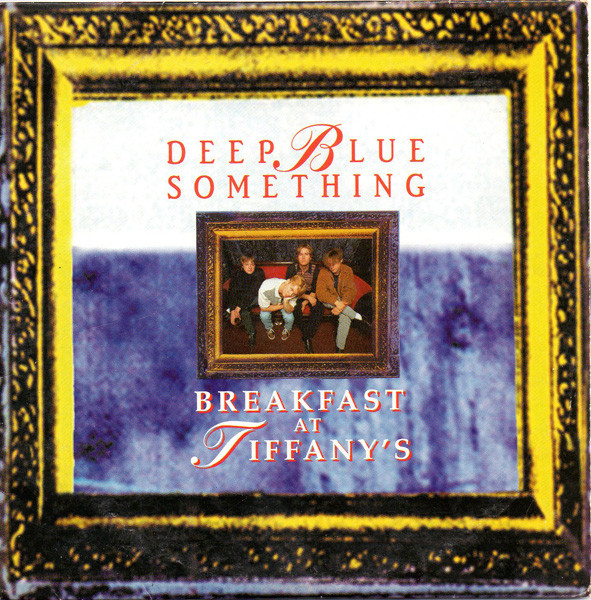
746. ‘Breakfast at Tiffany’s’, by Deep Blue Something

I’ve made a big deal about British rock (‘indie’, ‘Britpop’, call it what you will) not getting its fair share of airtime at the top of the singles chart in the ‘90s. I even did a special post on it. But here’s an even rarer sighting of the US equivalent…

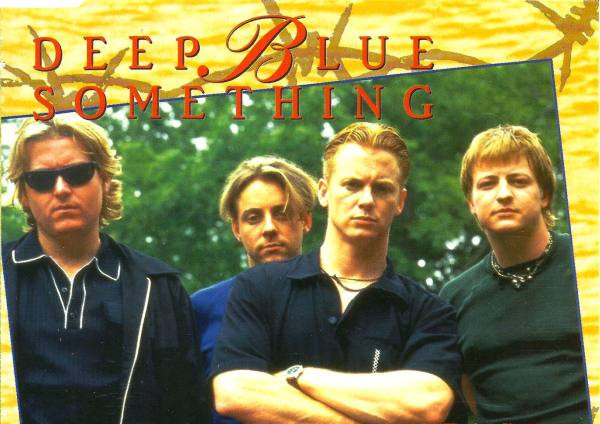
Breakfast at Tiffany’s, by Deep Blue Something (their 1st and only #1)

1 week, from 29th September – 6th October 1996

When I think of US alternative rock, post-grunge, in the mid-1990s, I think of REM, the Chili Peppers, Hootie & the Blowfish, and… I’m struggling, to be honest. Britain was bursting at the seams with their own alt-rock, and not many American acts broke through. Here then is US indie, alt-, college (again, call it what you will) rock’s one week in the sun. I might even go as far as suggesting that this is the first such #1 since The Highwaymen in 1961, though that might be pushing things slightly.

It’s a catchy record, with jangly verses which contrast against the power chords in the chorus. It’s a very different sound to Oasis, or Blur – there’s an earnestness to US rock that its British equivalent often deliberately avoids – but I’m sure the prevalence of Britpop benefitted this in making it to #1. And, though I was still young at the time, I can remember it being everywhere on the radio…

The most interesting thing about this record is the lyrics. Even the title intrigues… ‘Breakfast at Tiffany’s’? I make it only the second number one single to share its name with a book, after ‘Wuthering Heights’, but I’ll happily be proven wrong if I’ve forgotten one! It’s about a dying relationship, that the singer tries to save by thinking of one thing the pair have in common. And I said, What about, ‘Breakfast at Tiffany’s? She said I, Think I, Remember the film… I think we’re meant to assume that this is enough for them to give it another go. I always thought that the next line was And as I recall, I read the book and I liked it… with the film and the book versions of ‘Breakfast at Tiffany’s’ being pretty different and a sign of the couple’s ill-suitedness… Except it turns out that the real line is as I recall I think we both kinda liked it… Call me a cynic, but my subconscious didn’t want them to stay together.

I see a lot of hate for this song online, hate that was also around at the time. And I can kind of see it, the fact that it’s cookie-cutter mid-nineties soft rock. The lyrics could also be seen as contrived, though I think they’re endearingly clumsy. It’s certainly not worthy of #6 on the ‘50 Most Awesomely Bad Songs Ever’ list, as VH1 and ‘Blender’ named it!

Deep Blue Something were from Denton, Texas and, despite forming in 1991 this was their first hit. Their only hit in much of the world, apart from in the UK. We felt sorry for them, and allowed their follow-up ‘Josey’ to make #27, sparing them a one-hit wonder tag. They split in 2001, but reformed in 2014. The members juggle being in Deep Blue Something with other day jobs in the music industry. Apart from, that is, guitarist Clay Bergus, who is a manager of Eddie V’s Prime Seafood restaurant in Fort Worth. Which is great.

733. ‘Spaceman’, by Babylon Zoo

The second number one of 1996, and one of the year’s most interesting hits, is yet another Levi’s assisted chart-topper.

Spaceman, by Babylon Zoo (their 1st and only #1)

5 weeks, from 21st January – 24th February 1996

I had no idea before starting this blog the extent of the jeans brand’s grip on the British charts. I make this, I think, the seventh Levi’s-assisted #1 in under ten years, but I admit I’ve lost count. (If we treated Levi’s as an act in themselves, they’d be up there with the Stones and ABBA in the overall list.) And almost all of them have been good #1s – re-released oldies from the Clash and the Steve Miller Band, as well as quirky, newer hits from Stiltskin and Shaggy. And let’s remember that, kicking off this whole era of Levi’s domination, they helped ‘Stand By Me’ to a belated but very deserving number one position

‘Spaceman’ is not at that level, but it is a remarkable chart-topper. People harshly suggested that it made #1 solely because the advert featured just the opening fifteen seconds, which make the song sound like a high-speed techno number. Space man, I always wanted you to go, Into space, Man… trills a high-pitched alien vocal, as we prepare our glowsticks.

Except, most of the song is a much heavier, rockier beast. It lurches from Britpop verses to industrial grunge in the chorus, before ending on a trip-hop, dance beat once again. It’s ear-catching, attention grabbing… And I’m going to stick my neck out and say it’s good. Lyrically it also treads novel ground. The singer, to summarise, is sick of life on earth. The sickening taste, Homophobic jokes, Images of fascist votes, Beam me up because I can’t breathe… are not your average #1 single’s lyrics. I can’t get off the carousel, I can’t get off this world…

Of course, that bit didn’t feature in the commercial. But it’s unfair to suggest that people were duped into buying this record. And the fact that it remained on top for five weeks, with plenty of airplay one presumes, clearly shows the song’s popularity. It became the fastest-selling debut single ever, going on to sell well over a million copies. It may be OTT and hyperactive, lurching from one sound to another, but I like its gothic silliness. There’s also a case for it being the first glam rock number one in quite a few years…

It was also my 10th birthday number one, so I feel a personal connection to it too. Babylon Zoo were a band from Wolverhampton, who had never charted before ‘Spaceman’ went, well, intergalactic. They’re cast as one-hit wonders, even though two further songs from their debut went Top 40. They struggled to sell albums, though, and suffered some terrible reviews for their live shows. They disbanded in 1999.

725. ‘Country House’, by Blur

When old fogies stop to reminisce about the 1990s, about the music that soundtracked final few years of the 20th Century, we might think of the Spice Girls, Take That, or Pulp. Maybe even The Prodigy, or The Chemical Brothers. But if you had to bet on it, you’d bet that we think of this one moment: the chart dated 20th-26th August 1995.

Country House, by Blur (their 1st of two #1s)

2 weeks, from 20th August – 3rd September 1995

Oasis Vs Blur. North Vs South. Working-class Mancs vs posh(er) Essex lads. Cliches, cliches, all the way. Legend has it that Liam Gallagher taunted Damon Albarn about Oasis having a number one single, spurring Blur’s management to cheekily change their next release date to clash with Oasis’s ‘Roll With It’, making for great publicity, and the highest sales week for a decade (setting the way for single sales to hit an all-time high in the coming years).

But the story here is the song, primarily, and I should block out all the hype and noise and focus on the tune. As with ‘Some Might Say’, ‘Country House’ may have been Blur’s first #1, but it’s not one of their very best singles. From their earlier hits, ‘Girls & Boys’ is better musically, while ‘Parklife’ has left a much larger cultural legacy. Still, it’s a fun, multi-coloured romp, right from the helter skelter intro through to the brass section in the fade-out. And it tells a story not much heard in chart-topping singles: that of a country squire living a life of rural asceticism. He’s got a fog in chest, So he needs a lot of rest… He doesn’t drink, smoke, laugh, Takes herbal baths… In the country…

There’s a lot going on, musically, and a lot of knowing references to British bands past. Oasis get a lot of stick for being musical magpies, but I hear plenty of Kinks and Small Faces, as well as Madness, and the ghosts of British music hall, here. (Chas & Dave, too, according to Noel Gallagher, but he meant it as an insult…) The video also has Brit-references galore: Page 3 girls, Benny Hill themed hi-jinks, a nod to ‘Bohemian Rhapsody’, Matt Lucas, Jo Guest and Keith Allen (featuring in his second chart-topping video). And for the ultimate Britpop seal of approval, it was directed by Damien Hirst.

The story, like I said, should be the song. And yet, would ‘Country House’ have made #1 were it not for all the hullaballoo? Maybe, as it was the lead single off a hotly-anticipated new album. But maybe not, as Blur had only three previous Top 10 hits to their name, and just one Top 5. So perhaps we can’t fully separate this song from all the nonsense. What’s certain is that the right song won. ‘Roll With It’ is probably Oasis’s laziest single. I do like it, but you can see why it’s been called ‘Status-Slade’ (though that’s not the insult some might think…) Also, in terms of the ‘Battle of Britpop’, Blur were the originals – their 1992 hit ‘Popscene’ is claimed by many as the very first Britpop single.

In my post on ‘Some Might Say’, I mentioned that my love for Oasis has dimmed over the years. With Blur, the opposite has happened. Nobody I knew at school would have admitted to liking them over Oasis – they were too clever, too arty… Everyone liked ‘Song 2’, but then that’s their dumbest song by far. As a sensible adult, though, I can admit that Blur were the more expansive songwriters. More fun, too – just look at them in the video, pratting about in bubble-baths, then try to imagine Liam doing the same…

Still, this is the first of only two times that we I’ll be writing about Blur (Albarn does also have a Gorillaz #1 to his name). Oasis may have lost this chart battle, but they definitely won the war…