Legendary songwriter Burt Bacharach sadly died a couple of days ago, and to mark his passing I thought I’d run through the UK number ones that he (and his partner Hal David) were responsible for. There are seven in total, by acts ranging from Perry Como, to Cilla Black, to Bobbie Gentry, among his fifty-two Top 40 hits.
And, because the charts never play fair, we can only give such timeless classics as (deep breath)… ‘Walk on By’, ‘Raindrops Keep Falling on My Head’, ‘(They Long to Be) Close to You’, ‘The Look of Love’, ‘I Just Don’t Know What to Do With Myself’, ‘Twenty Four Hours from Tulsa’, ‘What the World Needs Now Is Love’ and ‘I Say a Little Prayer’… a shout-out now, because they never made the top spot. Still, we have a fair few good ones to be working with, and there’s a link to my original posts in the song titles.
‘The Story of My Life’ – #1 in 1958 for Michael Holliday
Bacharach’s first big hit, originally written for Marty Robbins. Quite jaunty, very whistle-heavy, and not too much of an indication of what was to come… No matter, for a monster hit was just around the corner.
‘Magic Moments’ – #1 in 1958 for Perry Como
Very few songwriters manage to replace themselves at number one, but Bacharach and David managed it with their first two hits. Crooner Perry Como knocked Holliday off the top, and stayed there for eight weeks. More whistling, but still it’s a song that has seeped into our collective conscience. Anyway, these were just the warm-up for a run of all-time classics in the 1960s.
‘Tower of Strength’ – #1 in 1961 for Frankie Vaughan
I’d put ‘Tower of Strength’ in my Top 5 songs I’ve discovered since starting this blog. It’s a real barnstormer, in which Frankie Vaughan spends two minutes just letting rip. He’s the star here, but he needed good source material. In the US it was hit for Gene McDaniels, in a much more laidback version.
‘Anyone Who Had a Heart’ – #1 in 1964 for Cilla Black
Cilla’s version of Dionne Warwick’s original gave her the biggest female hit of the entire decade in the UK. I’m not one to indulge in idle gossip, but… Apparently Warwick hated the fact that Cilla Black got the bigger hit out of this song, claiming that had she so much as coughed on the original then Cilla would have done the same on her cover version. Bacharach was a big fan, however, personally arguing for Cilla to record it ahead of Shirley Bassey.
‘(There’s) Always Something There to Remind Me‘ – #1 in 1964 for Sandie Shaw
Another song originally recorded by Dionne Warwick – Bacharach and David’s muse throughout their long careers – though her version wasn’t released until 1968. Instead it was a bare-footed seventeen-year-old who took it to #1 in late-1964, launching the career of one of the biggest British singers of the decade. It wasn’t a hit in the US until Naked Eyes’ new-wave version in 1983.
‘Make It Easy on Yourself’ – #1 in 1965 for The Walker Brothers
The classiest #1 single ever? Never has Bacharach and David’s effortlessly slick songwriting had a cooler delivery. This was another one first recorded by Dionne Warwick, before being shelved. Along came The Walker Brothers a few years later, to give the songwriting duo their 6th UK chart-topper.
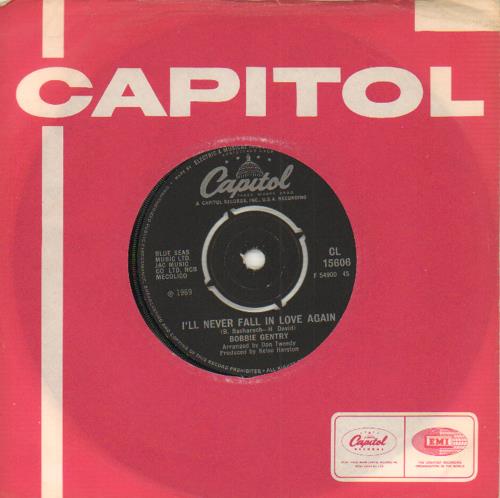
‘I’ll Never Fall in Love Again’ – #1 in 1969 for Bobbie Gentry
The last #1 hit for Bacharach and David (in the UK, at least) was also one of the 1960’s final chart-toppers. After the first two, fluffier songs on this list, the duo settled into a run of songs detailing exquisite heartbreak. Towers of strength, things being there to remind you, people not having hearts… And then this, a classic anti-love song dressed up in trademark B&D gloss. Plus, one of the best ryhming couplets in pop music history…
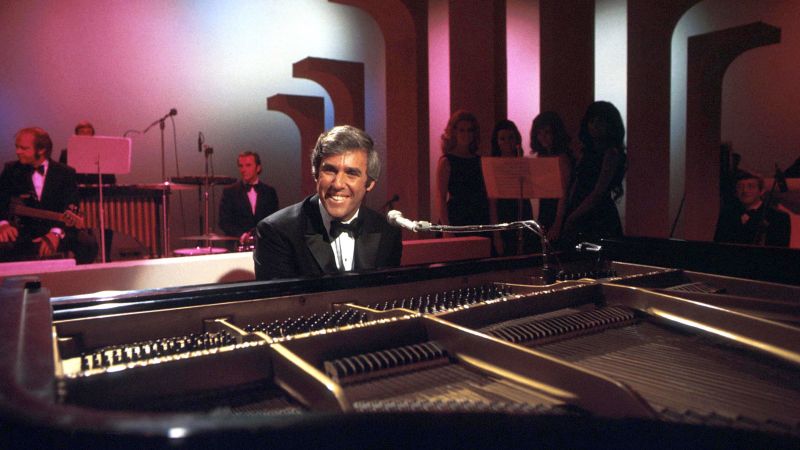
Burt Bacharach, May 28th 1928 – February 8th 2023

 The UK Number Ones Blog