756. ‘Professional Widow (It’s Got to Be Big)’, by Tori Amos

1997, then. The late ’90s! And we get off to a banging start…

Professional Widow (It’s Got to Be Big), by Tori Amos (her 1st and only #1)

1 week, from 12th – 19th January 1997

‘Professional Widow’ was a track from singer-songwriter Tori Amos’s third studio album, ‘Boys for Pele’, which had made #2 exactly a year before this. It had been released as the album’s third single, making #20. It’s a woozy, rude, barroom stomper of a song, driven by a harpsichord, and Amos’s Kate Bush like vocals. It’s ear-catching, but it does nothing to prepare you for the remix that would eventually top the chart.

The word ‘remix’ doesn’t feel sufficient here. A remix is a song rearranged, extended, or stretched out over a new beat. This is a song completely reimagined, huge chunks chopped off it, with very little of the original remaining. One line is repeated over and over: Honey bring it close to my lips… while the other line – It’s gotta be big – must be somewhere in the original, even if I can’t quite hear it.

It’s amazing how Armand Van Helden, the DJ responsible, could hear the opening harpsichord riff and reimagine it as a modern disco bassline. Some remixes are fairly lazy, with few changes of any note; but not this. It almost samples the original, the riff and the two lines, and creates a completely different song. Van Helden is American, and the track is more house-influenced than our recent dance #1s, but there’s hints of the Prodigy and the Chemical Brothers in the big chunky beats, in the creepy background noises, and the sudden break halfway through.

The ‘Professional Widow’ of the title is apparently a snide reference to Courtney Love, something that Amos has neither confirmed nor outright denied. She had nothing to do with the remix – she was contractually obliged to approve them – but in interviews she has said she enjoys Van Helden’s version. It brought about the biggest hit of her long career, anyway – surpassing the #4 peak of the folksy ‘Cornflake Girl’ from 1994 – and is, to date, Amos’s last visit to the UK Top 10. Armand Van Helden was just getting started, and will go on to be one of the biggest dance producers of all time. He’ll be back at number one, fully credited, fairly soon.

We can’t finish without mentioning the misheard lyric – one of pop’s filthiest mondegreens – where It’s gotta be big becomes… Well, I won’t write it out. Safe to say, once you hear it you can’t unhear it. Misheard or not, it does fit in fairly well with the bawdy original.

You could say that this is a classic January #1 – a fairly random remix sneaking a week at the top in the post-Christmas lull. In fact, January 1997 is one of the best examples the phenomenon, with a run of fun and quirky one-weekers coming up that I’m looking forward to getting into.

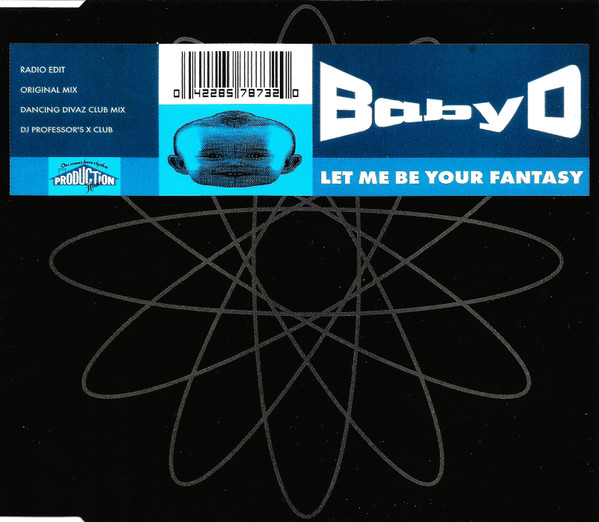
713. ‘Let Me Be Your Fantasy’, by Baby D

I know very little about dance music. I can just about tell my techno from my chillout, but you may have noticed from my previous posts on dance #1s that I play pretty fast and loose with the terminology. So indulge me while I throw around some ideas that may be complete nonsense…

Let Me Be Your Fantasy, by Baby D (their 1st and only #1)

2 weeks, from 20th November – 4th December 1994

‘Let Me Be Your Fantasy’ might be the most ‘hardcore’ dance chart-topper yet. The beat is either ‘house’, if we’re looking backwards, or ‘garage’ if we’re looking forwards. Is it maybe even the first ‘drum ‘n’ bass’ number one? I’ll also throw in the suggestion that it also incorporates ‘jungle’, if only because I think it sounds fun.

I could list dance sub-genres all day long (Wikipedia also suggests ‘breakbeat’ and ‘happy hardcore’) but to be honest, they mean little to me and probably mean as much to you. Let me give the quotation marks a rest, and describe what ‘Let Me Be Your Fantasy’ makes me feel… Well, it’s atmospheric – I like what sounds like a robot breathing in the mellow breaks between the verse – and the vocals are impressive. They’re the part of the song that feels the most familiar: a dance hit helmed by a large-lunged diva a la Black Box, or Snap!. Here the singer is Dorothy ‘Dee’ Galdes (presumably the ‘D’ in Baby D) and she has a wonderfully light-yet-full-bodied voice.

It’s another step towards the dance music that was dominating the charts when I came of age in the later part of the decade – dance music that had moved away from samples and novelty raps, dance music that had the confidence to strip things back, to drop the beats per minute, to let things breathe. This record is similar in that way to 1994’s other ‘cool’ dance hit by Tony Di Bart, rather than the more novelty offerings from Doop and Whigfield.

But I’ll also take that word ‘cool’, strengthen it into ‘cold’, and use it to describe how this song leaves me feeling. It’s not my thing, and as much as I try I can’t move past detached admiration as I listen and critique – much like I would an artefact in a museum – and I move on without particularly wanting to hear it again. I will always, sorry to say, enjoy the inane cheesiness of a 2 Unlimited song more…

Baby D had been around since the late eighties, and had scored a handful of minor hits earlier in the nineties. ‘Let Me Be Your Fantasy’ had been around since 1992, when it made #76 and become something of a lost classic. Until it was ‘found’, re-released, and it reached #1. Baby D followed it up with a couple of #3 hits before fading. Their last hit was a remix of this, their biggest hit, that made #16 in 2000. Their keyboard player, Terry Jones, took a slight change in direction and went on to write and produce for the Backstreet Boys, Eternal, and Peter Andre…

706. ‘The Real Thing’, by Tony Di Bart

Well, I didn’t expect this. To get to May 1994 and come across a number one hit I have genuinely never heard before…

The Real Thing, by Tony Di Bart (his 1st and only #1)

1 week, from 1st – 8th May 1994

This record both is, and isn’t, your average mid-nineties dance tune. It’s a banger, all throbbing synths and a bassline that goes right through you, but it’s main references aren’t techno, or Eurodance. It looks back to the house tunes of the late-eighties – meaning it probably qualifies as retro already – and in the beat and the piano chords it nods even further back, to the days of disco.

It’s a slow-build sort of song. I was about to write it off as bland on first listen, but on my second I heard a hook buried in the melancholy chords, and by the third listen I was intrigued. There’s something there. Despite its retro influences, it feels very modern. If I can’t have you, I don’t want nobody baby… Most dance hits in the mid-nineties were euphoric, in-your-face – the likes of 2 Unlimited and Snap! springing to mind. ‘Dancing through the tears’ is a very 21st century concept, popularised by acts like Robyn, and The Weeknd. The latter of whom I bring up, because Tony Di Bart sounds remarkably like Abel Tesfaye, with his falsetto, and the longing in his voice.

The man known as The Weeknd counting Tony Di Bart as an influence seems unlikely, given that ‘The Real Thing’ was the only Top 20, and one of only two Top 40 hits, Di Bart managed. Neither of which did very much in North America. This single hadn’t done much initially in the UK either, when it was released in November 1993. It took a remix to send it up the charts, and that’s why I haven’t attached a video below: none seems to have been made for the much more atmospheric remix. (Listen to the original version here.)

As Italian as Antonio Carmine Di Bartolomeo AKA Tony Di Bart sounds, he was actually from Slough. His Wikipedia page is sparse, with few details given as to how he went from selling bathrooms to the top of the charts. His post-fame entries make for sad reading: one of his more recent public appearances was at a village fête in Buckinghamshire, before he was arrested and pleaded guilty to assaulting a police officer earlier this year.

Still, assault charges or no assault charges, you can’t take away the fact that Tony Di Bart has a number one single. One that is actually quite good, the more you listen and get lost in its wistful synths. Up next, an equally forgotten one-week wonder…

693. ‘Living on My Own’, by Freddie Mercury

It feels like we’ve been bidding farewell to Freddy Mercury for a while now. From the re-release of ‘Bohemian Rhapsody’, paired with ‘These Are the Days of Our Lives’, in the weeks following his death, to George Michael’s tributes on the ‘Five Live EP’, to this.

Living on My Own, by Freddie Mercury (his 1st and only solo #1)

2 weeks, from 8th – 22nd August 1993

And of the three, this remix of his minor 1985 hit is the tribute that Freddie himself might have enjoyed the most. On the one hand it is a shame that his solitary solo number one isn’t a blistering rocker; but then he was a musician who never let himself be restricted within one genre. ‘Living on My Own’ is updated nicely for the early-mid nineties, with a chilled out house beat, by a production trio called No More Brothers and, although it was still listed on the charts as the 1985 original, it was undoubtedly this remix that sent it to #1.

I say that Freddie would have liked this version and, presumptuous as that might be, if you listen to the original, from his ‘Mr. Bad Guy’ solo album, then it was already much more dance than rock. The lyrics, meanwhile, are very personal: Sometimes I feel I’m gonna break down and cry, Nowhere to go, Nothing to do with my time… I get lonely… They’re based heavily on quotations from Greta Garbo (which feels very Freddie Mercury…) and each chorus ends on the positive mantra: Got to be some good times ahead… Though knowing how soon it all would end, that line is tinged with sadness.

I will also give a shoutout to an earlier remix – which I initially thought was the chart-topping version – by Julian Raymond. This is my favourite of the three versions, with a faster, industrial beat, more of Mercury’s trademark yodelling, alongside a frenetic piano line. It was commissioned as part of the ‘Freddie Mercury Album’, released in November 1992 to mark the 1st anniversary of his death, but never released as a single.

The video to the 1993 version of ‘Living on My Own’ was the same as the 1985 one, and featured footage of a Drag Ball held for Mercury’s 39th birthday party. I love this quote: “Because of the garishly costumed homosexuals and transvestites celebrating a decadent, raucous party in the video clip, the BBC long refused to broadcast the music video on its channels.” Good old Beeb, always ready to ban those garish homosexuals…

I hadn’t realised quite how well Freddie Mercury’s solo career – while nothing compared to Queen’s discography – had been ticking along since the mid-80s, when he made the Top 10 with ‘Love Kills’. The ‘Living on My Own’ remix was his seventh, and final, Top 20 hit, and a huge smash across Europe. (Especially in France, where it did a Bryan Adams and stayed at #1 for fifteen weeks! Bryan or Freddie… I know who I’d rather have clogging up the number one spot…)

With this we can finally bid farewell to Freddie Mercury. Three number one singles in his lifetime, two after his death, and one well-intentioned tribute in-between. For my money, he is the greatest frontman of all time. Not only could he rock with the very best; he could do opera, musical theatre, pop, disco, camp ditties about girls with fat bottoms… And he sounds just as at home here, on a house track released two years after his death, as he does anywhere.

659. ‘3A.M. Eternal (Live at the S.S.L.)’, by The KLF

I’m going to stick my neck out here, and claim that we’re in the midst of what is the strangest run of number one singles. From ‘Unchained Melody’, past Vanilla Ice and Christian Cliff, Iron Maiden bringing our daughters to the slaughter, Enigma’s Gregorian chanting, and Queen’s ‘other’ epic single… to the KLF.

3A.M. Eternal (Live at the S.S.L.), by The KLF (their 1st and only #1)

2 weeks, from 27th January – 10th February 1991

And on the face of it, ‘3A.M. Eternal’ is a return to the dance music that’s shaped the early ‘90s. If you were being harsh, you could claim it to be a rehash of Snap!’s ‘The Power’, with its Russian radio intro, and its mix of a male rapper with a big-voiced female (the singer belting it out at the start is soul legend P.P. Arnold). But this is The KLF, and with them nothing is what it seems.

For a start, the sound that immediately follows the radio intro is a machine gun, strafing the listener into pieces. There’s all the chanting about the ‘Ancients of Mu Mu’ (the band’s former name). And then there’s the crowd noise, and the announcement at the end that KLF have now left the building… It’s all fake, the S.S.L. in the title refers to a Solid State Logic mixing desk. And there’s the fact that this is actually a remix of a 1989 release of the same name: a deep trance track that failed to chart and that sounds unrecognisable from this much poppier version.

But above all that, one fact remains: it’s a banger. All my talk of comparing it to ‘The Power’ fades away because this, in my opinion, is the far better song. It’s dance music with rock chords, and with about three different hooks: the KLF is gonna rock you chant, the uh-huh-uh-huhs, and the Ancients of Mu Mu. And as fake as it may be, the soaring crowd noise adds an epic, stadium quality to the track. (This was #1 on my fifth birthday, and it’s one of my very favourite birthday chart-toppers.)

This being the KLF, you do wonder if this remix was done with the aim of aping the big dance hits of the age – all the ingredients are there – and in the end making a song that betters them all. They’d done it once before, as The Timelords (they’ve gone under quite a few names over the years…) and the ridiculously catchy, sample-heavy ‘Doctorin’ the Tardis’ from three years earlier. And they weren’t done remixing ‘3AM Eternal’, as a year later they recorded a thrash metal version with crust punk group Extreme Noise Terror, with whom they duetted at the Brit awards, and pretended to machine gun the audience (the original plan had been to disembowel a dead sheep live on stage, before the lawyers stepped in…) The performance is on YouTube, and it’s amazing to think that it was broadcast on primetime BBC.

You’d need an entirely separate blog post to go into sufficient detail on the KLF, Bill Drummond and Jimmy Cauty, their many guises and their many moments of notoriety. Aside from their Brits performance, shout outs need to be made to their duet with Tammy Wynette on ‘Justified and Ancient’, which made #2 later in 1991, in shades of the Pet Shop Boys and Dusty. And their retirement, when they deleted their entire back catalogue (it was only restored a couple of years ago) and set fire to their remaining one million pounds in royalties on a remote Scottish island.

So there you go. As talented as they were tasteless, and responsible for yet another weird and wonderful number one. You’ll be glad to hear that things aren’t getting any less bizarre either, for up next is the most famous pop star of the age, with the most famous animated family of all time…

633. ‘Ride on Time’, by Black Box

In which we meet the first modern dance record…?

Ride on Time, by Black Box (their 1st and only #1)

6 weeks, from 3rd September – 15th October 1989

I’m a child of the nineties, the decade in which the music we recognise today as ‘dance’ really came into being. There have been dance #1s popping up regularly throughout the second half of the 1980s but, as good as many of them have been (‘Theme from S-Express’ says ‘hello’), they have sounded quite dated – often chaotic mish-mashes of samples and sound effects.

‘Ride on Time’, however, is much less cluttered – just a beat, a few synth hooks, a classic piano riff – but all the more weighty for it. One of the song’s creators mentioned wanting to create a dance track with the power of a rock song. And then there are the vocals. Though I think describing them as just ‘vocals’ isn’t quite doing them justice. They are colossal, momentous… add whatever synonym for ‘very big’ you want. There aren’t many lines, and half of them are just woah-wa-wa-wa-oh, but not for nothing is this record classed under the sub-heading ‘diva house’. The singer does a great job. I hesitate in naming this ‘singer’, as there was a lot of controversy over who they actually were. The record originally used the vocals of a 1980 hit by Loleatta Holloway, called ‘Love Sensation’, which Black Box didn’t have the rights to. They then re-recorded the track with Heather Small, soon to become a star in her own right with M People.

To confuse matters further, the woman in the video and the record sleeve below is model Katrin Quinol, who had been brought in to mime on TV performances and the like. I’m not 100% sure which version I’ve been listening to – a search for ‘Ride on Time Heather Small’ on YouTube throws up nothing – but since Black Box finally bought the rights to ‘Love Sensation’ in 2018 I assume it’s Loleatta Holloway’s big lungs that are blasting my cobwebs away. Sadly she died in 2011, though she did eventually receive enough royalties from the song to, as she put it, buy herself a fur coat.

Every time an electronic dance number one comes along, I feel contractually obliged to mention that it isn’t my favourite genre. I’m guitars and drums all day long. But good dance, just like good rap and good reggae, can transcend my fussy tastes. Good is good, and ‘Ride on Time’ is pretty darn good. (I said a lot of the same stuff about Soul II Soul’s ‘Back to Life’ and, although the two songs have very different vibes, they are two sides of the same futuristic dance coin.) I’d go as far as to say that, in the right nightclub, in the right mood, ‘Ride on Time’ could be euphoric. And it also feels like a direct riposte to the cheap ‘n’ cheesy tat that it replaced at #1…

And as I said above, ‘Ride on Time’ feels much more streamlined and precise after previous years’ big dance hits. But that’s not the only reason, I don’t think, for it being a huge, game-changing hit. It also, cleverly, harks back to disco, with its big-voiced diva on lead vocals, giving a timeless sheen to its very modern sound. And also, we have to nod our heads to acts like Pet Shop Boys, and even Stock Aitken Waterman, for making pop music much more dance-oriented over the past couple of years. In the ‘60s and ‘70s ‘pop’ usually equalled ‘rock’ (think Merseybeat, and glam), while in the 80s ‘pop’ has shifted in a dancier direction. The 90s will see pop shift back to guitars, and then towards an R&B/hip-hop future.

Black Box were an Italian act, kicking off a trend for European DJs and dance acts scoring big hits across the Channel, often in the autumn after Brits had spent the summer on Mediterranean beaches. The Euro-house influences are clear, and very different from the American house we’ve met up to now. Clearer, classier… dare we give into stereotypes and say ‘chic’? My favourite aspect of the song is that the lyrics are clearly Because you’re right on time… But the Italian DJs’ English wasn’t great, and they misheard it as ‘Ride’. Which I think is cute (and much more memorable than the correct phrase).

And yet, for all my talk of game-changing modernity, the charts will do what they always do and completely disprove all my blethering with the next number one. Yes, that damn rabbit is back, next.

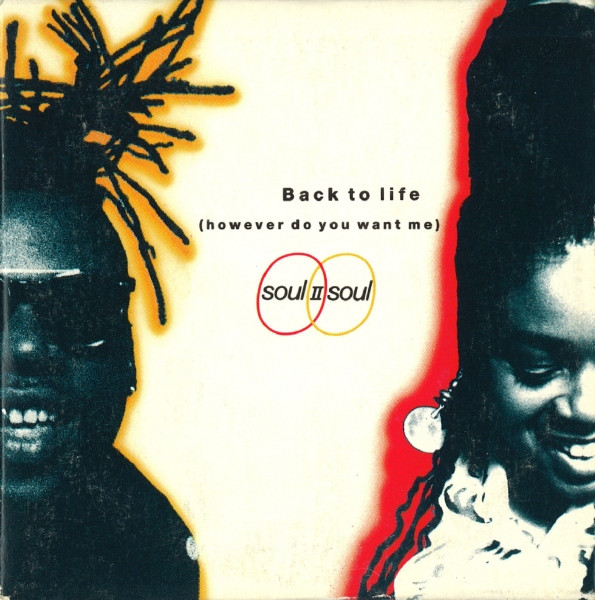
630. ‘Back to Life (However Do You Want Me)’, by Soul II Soul

As fun as 1989 has been so far – and I’ve enjoyed it, at least – it’s not been very cool. Cheesy pop a-plenty, earnest balladeering, charity singles and sixties covers. Madonna romping with our Lord and Saviour in ‘Like a Prayer’ has been as edgy as it’s got…

Back to Life (However Do You Want Me), by Soul II Soul (their 1st and only #1)

4 weeks, from 18th June – 16th July 1989

Until now, though. For ‘Back to Life’ is a cool record. A mix of hip-hop beats and soulful vocals. It’s a little bit of dance, a little bit of house. Wikipedia lists it as ‘proto-jungle’, which sounds slightly terrifying but very fun. Yet for all these influences, it’s not a cluttered track. The production is sparse – just a beat and some strings for the most part – and ‘sparse’ is not something I’ve not been able to say about the sample-heavy dance hits we’ve met in recent years.

It started out life as an a cappella track, which makes sense, as Caron Wheeler’s vocal turn is the stand out star of this record. It’s her that makes me want to announce this as the start of the nineties, six months early, as the next decade will be dotted throughout with dance tracks ft. female divas. Elsewhere, the beat and the production is unfussed, and unhurried, almost unbothered whether you like it or not, whether you think it’s upbeat enough to dance to. It’s very contemporary, a world away from SAW’s cheap and cheerful approach, until a scrrraaatch on the DJ’s decks places it firmly in 1989.

Proto-jungle is not my kind of thing (I prefer my jungle fully formed…), but a good record is a good record, and this is a good record, if you know what I mean. It’s moving things along, like a mini ‘Rock Around the Clock’ or ‘I Feel Love’, and for that I respect it. It’s the future, and we’ll be hearing a lot more like it soon…

Soul II Soul were a musical collective of some nine members, founded by DJ Jazzie B, who ran a club night in Brixton that played music with British, African, Caribbean and American influences. They had even hosted a hot new LA rap group called NWA in 1988. ‘Back to Life’ was just their fourth single, and their second Top 10 hit. ‘Keep On Movin’’ had been their breakthrough, but for me that one’s lacking ‘Back to Life’s hook. Impressively, ‘Back to Life’ also made the Top 10 in the US, where it had homegrown hip-hop/R&B to compete with.

As I mentioned above, the difference between this and the earlier dance #1s, like ‘Pump Up the Volume’ or ‘Theme from S-Express’, is that it’s not at all heavy on the samples. There’s just one: the drums from funk band Graham Central Station’s ‘The Jam’. Or two, if you count Caron Wheeler’s a cappella original. This was Wheeler’s last single with Soul II Soul – she would leave to pursue a solo career before returning in 1996.

So, we start a new chart-topping chapter here. And appropriately enough, before we delve further towards the nineties, we have a recap…

610. ‘Doctorin’ the Tardis’, by The Timelords

My first reaction upon seeing the title of our next #1 was: “Oh God, not another song based on a popular sci-fi series!” The scars from having to write about ‘Star Trekkin’’ still cut deep…

Doctorin’ the Tardis, by The Timelords (their 1st and only #1)

1 week, from 12th – 19th June 1988

But wait… Is that glam classic ‘Block Buster! mixed with the ‘Dr. Who’ theme? And is that a refrain based on ‘Rock ‘n’ Roll Part II’? Plus lots of obnoxious punk chanting? Is this not actually quite great? Stupidly brilliant? Brilliantly stupid?

It takes two very separate strands of music – the sample-heavy house scene that has already given us a classic #1 (‘Theme from S’Express’) and a couple of others (‘Pump Up the Volume’ and ‘Jack Your Body’) and the glam scene of fifteen years previous – while throwing a TV theme into the mix. It shouldn’t work, they shouldn’t be able to meld, but it does. In fact, it sounds incredibly like Muse. Genuinely – and I say this as someone who loves Muse – as if Matt Bellamy has based his band’s entire recent output around this novelty song.

The Daleks are a bit much, mind (I say that as someone with next to no interest in ‘Dr. Who’) but I suppose they’re the most identifiable thing from the programme, and so we need an Exterminate! or two. Oh, and we haven’t mentioned the fact that the You what? chant is from Harry Enfield’s ‘Loadsamoney’ character, and so we have an added undercurrent of Thatcher-era social commentary thrown in too: Loadsamoney presumably being as cheap and as vacuous as this song is meant to be. (Enfield had also taken a single based on the Loadsamoney character to #4 just a few weeks before ‘Doctorin’ the Tardis’ made #1. ‘Enjoy’ that here…)

And then… ho boy, this is a real cluster bomb of a record… Gary Glitter jumped on the bandwagon and helped record a new version, called ‘Gary in the Tardis’ with chants from his big glam hits: He’s the leader, Of the gang… Do you want to touch me…? and so on. That version featured on some of the various 12” mixes, but he wasn’t officially credited. He performed it live though, I’m guessing on TOTP. (And I’ve just realised the twisted irony in Gary Glitter deposing a record that had been raising money for Childline…)

This has so many strands running through it that we haven’t yet mentioned the Timelords themselves. This was their first and only hit under that name, but we’ll meet Bill Drummond and Jimmy Cauty again shortly, as The KLF. They had released a few underground sample-heavy hits before, as The JAMs, but this was the big time. The song’s title was presumably a nod to Coldcut’s recent sample-tastic hit ‘Doctorin’ the House’. Drummond called their first big hit ‘nauseating’, and then released a book based on making the song called ‘The Manual: How to Have a Number One the Easy Way’.

But hey, never has a cynical grab for chart glory sounded so catchy. Glam is back! For one week only, Britain’s pop past and future – glam, punk and house – mix in a riotous mess of a chart-topper. And I love it! If nothing else, it’s flushed the last remnants of ‘Star Trekkin’’ out of my system…

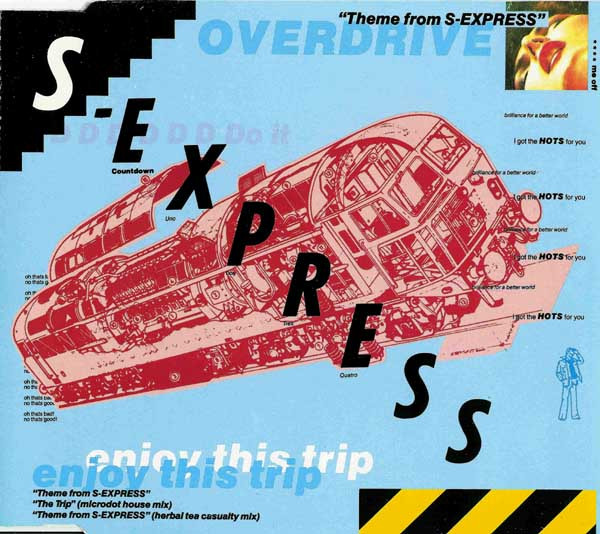
607. ‘Theme from S-Express’, by S’Express

Dance music will never be my favourite genre. I will always go for guitars over keyboards and synthesisers. But sometimes, just sometimes, a dance tune will hit my sweet spot in a way that most rock songs could only hope to do…

Theme from S-Express, by S’Express (their 1st and only #1)

2 weeks, from 24th April – 8th May 1988

And this is one of them. It’s far from the first dance #1, it’s not even the first house #1, but it’s the first that I’ve really liked, the first that’s been more than just an interesting distraction. From the opening note of this industrial meat grinder of an intro, as a voice announces Enjoy this trip…and someone counts down in Spanish, I’m sold. I’m quite a fussy dancer, ready to leave the floor the moment a song I even slightly dislike comes on. But I’d be working up a sweat all night if dance music always sounded like this.

To my ears, the two earlier house #1s, ‘Jack Your Body’ and ‘Pump Up the Volume’ were a mess of samples, thrown together for the sake of it rather than because they should have been. But the ‘Theme from S-Express’ is a masterclass in picking the right samples. The foundation of the song is from Rose Royce’s ‘Is It Love You’re After’, which sounds incredibly modern for a song released at the height of disco. And all the vocal hooks work: Come on and listen to me baby now ooh… I’ve got the hots for you boop boop… and the wonderfully dated Drop! That! Ghetto blastah! It all genuinely works well together. It’s still busy, there’s still a lot going on, but it never feels like overkill. Even the screeching. (In the comments to the YouTube video below, someone has kindly listed and time-tagged all the samples.)

I love the Rio carnival interlude that comes along a minute in, as it provides a moment of lightness. But most of all I love the pounding Oh my God… break halfway through (though I don’t know if songs like this can have breaks, verses, choruses and bridges – normal songwriting rules go out the window) The dance music that works for me is dance that could be rock, and there’s something almost metal in this record’s relentless beat. It’s when dance goes all light and airy, with a piano hook and a breathy female vocal, that I tend to lose interest.

But that kind of EDM is a decade or more off. Here we are in the early days of the genre, where people were having fun with samples and filling dancefloors with the results. These results weren’t always perfect, but when they worked – as they do here – it was great. S’Express was a collective helmed by British DJ Mark Moore, and their ‘Theme’ was their first ever chart hit. They’d enjoy two more Top 10s in 1988, and hung around through the golden age of acid house before Moore ended the project in 1994. Whether they were ‘S-Express’ or ‘S’Express’ seems to depend on what font they used when printing their record sleeves, so I’ve used both. (And I’ve just noticed that it clearly spells ‘Sex Express’.)

I first heard this song when I worked in a bowling alley as a student – the very same bowling alley I mentioned in my post on ‘Give It Up’. Who knew bowling alleys would offer such formative musical experiences? But if you can picture bowling to ‘Theme from S-Express’ with the lights dimmed and the neon flashing, then you’ll know why it worked so well.

598. ‘Pump Up the Volume’ / ‘Anitina (The First Time I See She Dance)’, by M/A/R/R/S

Right at the start of this year (and by ‘this year’ I mean 1987, not the actual year in which you are reading this) we had our first ever house #1: Steve ‘Silk’ Hurley’s ‘Jack Your Body’. That was Chicago house, and here we now have Britain’s answer…

Pump Up the Volume / Anitina (The First Time I See She Dance), by M/A/R/R/S (their 1st and only #1)

2 weeks, from 27th September – 11th October 1987

I’m pretty sure everybody’s heard the classic title line: Pump up the volume… Dance! Dance! The adjacent, ominous piano note is iconic, too. Problem is, that line and the piano note add up to about five seconds of music. The rest of the song – four minutes in its shortest edit; a good seven minutes on the 12” – suffers from the same gimmicky feel as ‘Jack Your Body’.

But whereas ‘Jack…’ was just repetitive, ‘Pump Up the Volume’ suffers from an everything but the kitchen sink, ‘what does this button do?’ approach. It makes for an interesting, if rarely very enjoyable listen. It’s a mix of distorted guitars, whale noises, your neighbours letting off fireworks in their back garden, and someone shouting Brothers and sisters, Pum-pump it up! ‘Less is more’ was clearly not the M/A/R/R/S motto.

I like the funky, more hip-hop leaning break that pops up a couple of times, in which all the effects are discarded. It’s the only part of the record that makes me want to Dance! Dance! and it doesn’t last long enough. I also like the ‘Indian’ sounding section. But, at the risk of sounding like my late grandmother, a lot of the song is just noise.

There isn’t an original note in it, either. This was a watershed moment for sampling in popular music. In its various edits and mixes, a grand total of twenty-nine different samples feature on the record, from acts such as Public Enemy, Run DMC, James Brown and Stock Aitken Waterman (who took legal action). Some of these samples amount to nothing more than a ‘Hey’ or a couple of musical notes. Anyone opposed to sampling on the grounds of musical puritanism should probably stop and consider that it would likely have been easier to write a completely original song than to stitch all these parts into something even vaguely listenable.

And that isn’t all. It’s been a while since we had a double-‘A’ single on top of the charts: well over five years. While ‘Pump Up the Volume’ is a ground-breaking record, it’s still a pop song at heart, that sits comfortably on top of the chart. The flip-side, ‘Anitina (The First Time I See She Dance)’ is a completely different beast. This has no business being at #1…

It’s abstract, arty, and avant-garde. It’s grungy and acidic. Trippy, distorted vocals with yet more samples reverberating around them, and everything absolutely dripping in harsh feedback. It’s not an easy listen, and it’s definitely not anything you’ll be dancing to – the title is misleading in the extreme. But I like it more than its gimmicky twin. It’s harsh and uncompromising, and potentially the most uncommercial track ever to make the top.

I say ‘potentially’, for I’m not sure how much airplay ‘Anitina’ got at the time. I’m guessing next to none. But it’s there, listed in the records, and from it you can pretty much trace a straight line to the Prodigy and the Chemical Brothers a decade hence. And these were the only two songs that M/A/R/R/S ever released. They were a supergroup of sorts, composed of an electronic act called Colourbox and an alternative rock band called A.R. Kane, brought together in an uncomfortable arranged marriage by their label manager. Colourbox added the dancier elements to A.R. Kane’s ‘Anitina’, while A.R. Kane added the wailing guitars to ‘Pump Up the Volume’. Neither particularly liked the other’s song and they refused to work together again. And so M/A/R/R/S are one-hit wonders in the purest sense.

At least one half of this record lives on, though. ‘Pump Up the Volume’, and its nods towards hip-hop and the beginnings of acid house make it as central to the late-eighties as Madonna and the SAW stable of hitmakers. While up next, following on from this most modern of chart-toppers, come a group who have been popping up on this blog for quite a while now…

Advertisements