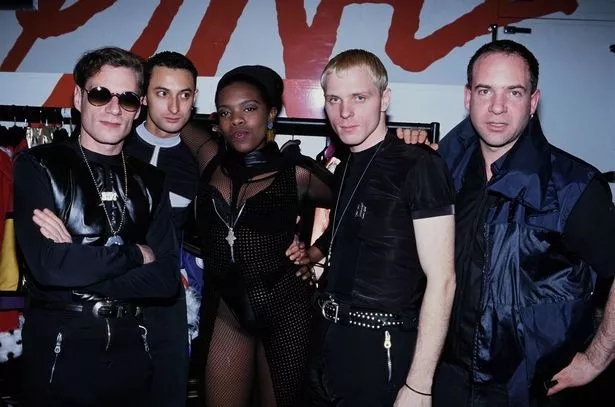
751. ‘Breathe’, by The Prodigy

Post-recap, we delve into the next thirty. And it’s a very strong start to the next bunch: more headbanging nastiness from The Prodigy.

Breathe, by The Prodigy (their 2nd and final #1)

2 weeks, from 17th November – 1st December 1996

Is ‘Breathe’ better than ‘Firestarter’? Or is it just more of the same thing? Not that more of the same thing, when the thing in question is ‘Firestarter’, is a bad thing, but still… It’s definitely built around the same foundations: a Drum and Bass beat, a heavy riff, a distinctive sample (that sounds to me like someone throwing nunchuks around), and some pretty aggressive lyrics.

Come play my game… growls Keith Flint, like the villain in a particularly twisted fairy-tale. Inhale, Inhale, You’re the victim! responds rapper Maxim, who also gets the song’s best line: Psychosomatic! Addict! Insane! As with ‘Firestarter’, the lyrics are kept to a minimum, but it seems to be a panic attack set to some Big Beats. The video, featuring lots of creepy-crawlies, darkened rooms, and crazed gurning through holes in walls, certainly emphasises this.

I’d say that if it does pale in comparison with the Prodigy’s previous single, it’s because it lacks the shock factor. Would ‘Breathe’ have been the one that got the tabloids in a tizz, and be better remembered today, if it had come first? Or is it a shadow number-one, that wouldn’t have made it without the controversial predecessor? It’s certainly even heavier than ‘Firestarter’, and less commercial sounding, meaning that it really stands out as one of the angriest, most brutal chart-toppers the UK has ever had.

Again, the song was built around a couple of eclectic samples: a drum fill from Thin Lizzy, and ‘whiplash swords’ (AKA the nunchuks) from the Wu-Tang Clan. It was the 2nd single from the massive ‘Fat of the Land’ album, but it gets overshadowed by the songs released either side of it. Following this came the still-controversial ‘Smack My Bitch Up’, which some say glorified drug use and domestic violence.

But if ‘Breathe’ is overshadowed, then it’s to the song’s benefit. It remains fairly fresh, and still packs a big old punch through your headphones. And whether or not it is better or worse than ‘Firestarter’ is beside the point, really. I’m just glad the Prodigy have been around to add some nasty, punk energy to the top of the charts for 1996.

After this the band took a break for several years, before releasing their fourth album in 2004. They have been putting out new music fairly regularly ever since, though the only consistent member has been founder Keith Howlett, and they scored their most recent Top 10 hit in 2009. Keith Flint, who had struggled with depression and addiction over the years, was tragically found to have hanged himself in 2019.
736. ‘Firestarter’, by The Prodigy

Right in the middle of the Britpop years, we finally get a proper punk number one!

Firestarter, by The Prodigy (their 1st of two #1s)

3 weeks, from 24th March – 14th April 1996

Obviously ‘Firestarter’ is not musically ‘punk’ – more techno-metal – but everything else is pretty on point. The aggression, the repetitive, nuclear siren riff, the nastiness of the lyrics: I’m the bitch you hated, Filth infatuated, Yeah…

Within the song’s opening ten seconds, it is already one of the grittiest sounding number one singles we’ve heard. Everything about it seems designed to put you on edge, to make your hairs stand on end – the harsh drums and bass, the abrasive riff, the metal on metal grinding rhythm. It’s not often a song this raw, this unapologetically hardcore, crosses over into huge mainstream success.

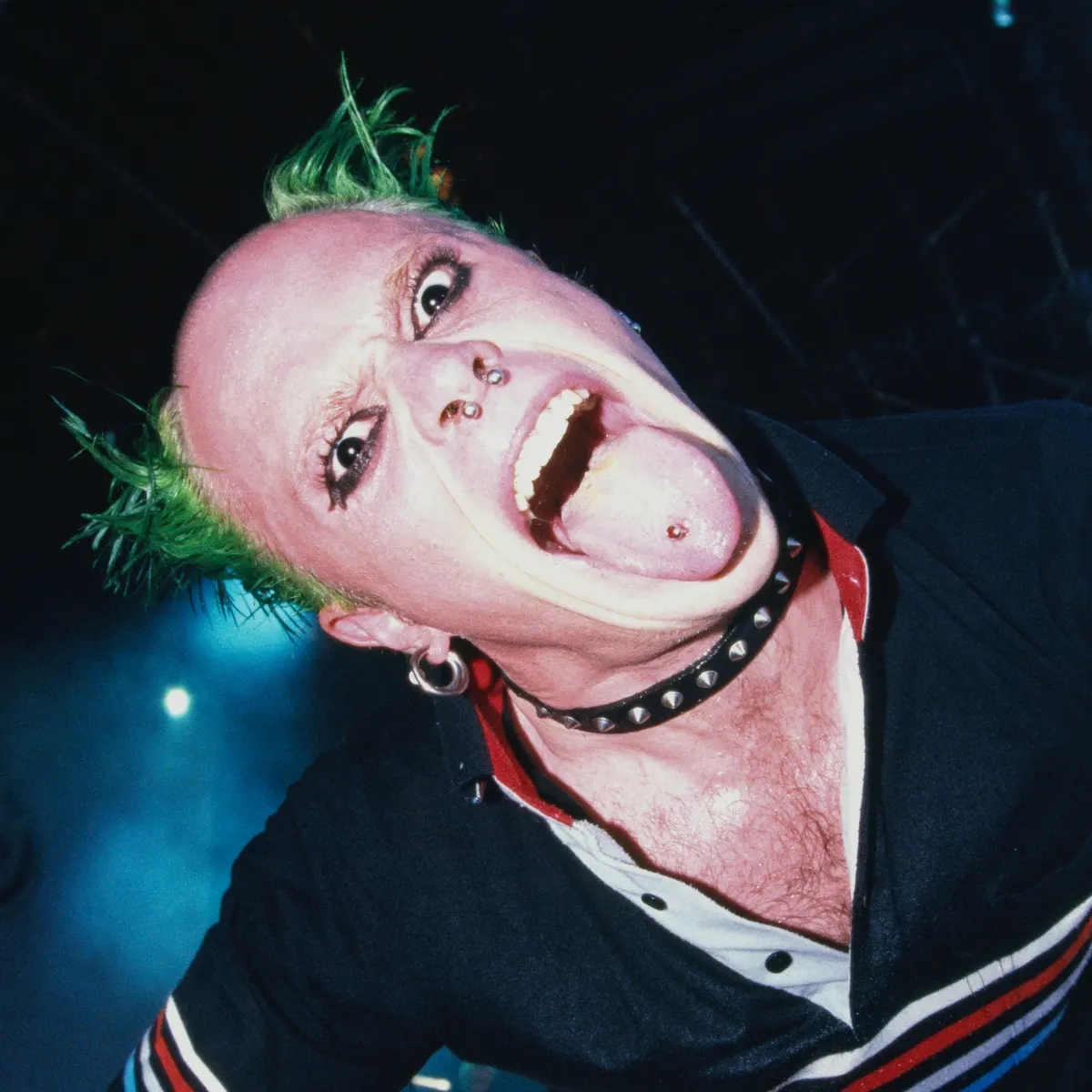
I was ten when this came out, but I remember it feeling and sounding dangerous. I’m the Firestarter, Twisted Firestarter… I’m pretty sure it made the evening news, amid fears around the arson-promoting lyrics and Keith Flint’s performance in the video, in which he flings himself about an abandoned tunnel, covered in piercings, with his memorable reverse-Mohican hairdo. Watching it now, it’s amazing to think that many stations refused to play it before the watershed – there’s no violence, no swearing, nothing sexual; just Flint’s unhinged performance. But, to be fair, it is terrifying, especially when he pauses to stare, dead-eyed into the camera (and perhaps quite poignant, now, knowing that he had his demons).

The Prodigy were already a hugely successful dance act, and had been scoring Top 10 hits since the early nineties. So the lead single from their third album was bound to be big. But ‘Firestarter’ was almost a reinvention – a heavier, rockier sound, presumably brought about by the fact that guitars were ‘in’ in 1996. Which brings us back to the troubles we’ve had in defining ‘Britpop’ recently: Prodigy weren’t Britpop – they were a dance act that pre-dated the genre – but it’s hard to argue ‘Firestarter’ and the subsequent ‘The Fat of the Land’ album weren’t huge Britpop moments.

We do have to acknowledge that much of this song is a patchwork of samples: from the Breeders, and a Chicago house group called ‘Ten City’. Even the ‘Hey! Hey! Hey!’ refrain is from Art of Noise. But if ever there were an argument against sampling being lazy, it is in a banger like this, the fact that the band heard something in those three wildly disparate songs and creating something fearlessly new.

And yet, I will say that, as great and thrilling as ‘Firestarter’ is, it’s neither The Prodigy’s best single, nor their most controversial. Their best will also make #1 before the end of 1996, while their most controversial was the 3rd release from ‘The Fat of the Land’, the ever-charming ‘Smack My Bitch Up’.

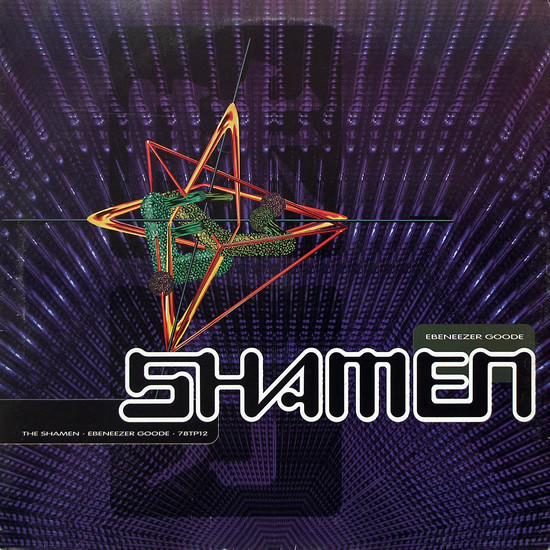
680. ‘Ebeneezer Goode’, by The Shamen

Hot on the heels of ‘Rhythm Is a Dancer’ comes another ‘90s dance classic…

Ebeneezer Goode, by The Shamen (their 1st and only #1)

4 weeks, from 13th September – 11th October 1992

And as magisterial as Snap!’s track was, ‘Ebeneezer Goode’ represents the flip-side of dance music in the early years of the decade. Aggressive and in-your-face, the opening voiceover sets the tone: A great philosopher once wrote… Naughty, naughty, Very naughty…. And off we go, cackling like Sid James…

Since forever, pop music and drugs have gone together. Sex and drugs and rock and roll, and all that. But no genre has ever been quite so entwined with illegal substances as electronic dance, and with one Class-A substance in particular. So when a track comes along by one of the big dance acts of the day, shamelessly celebrating said drug, and getting all the grown-ups’ knickers in a twist at the same time, you know it’s going to be a big old hit.

The clever bit here (I was going to use the word ‘genius’, but I think that would be stretching it slightly) is that the drug reference isn’t immediately obvious. ‘Ebeneezer Goode’, you might think, sounds like a character invented by Charles Dickens. Eezer good, Eezer good, He’s Ebeneezer Goode… A silly novelty song, parents around the country might have thought, as they heard it blaring from their teenagers’ bedrooms. Harmless nonsense. But, wait…

And like the teacher who’s twigged on far too late that the class is having a joke at their expense, the parents realise that the chorus could just as well be saying ‘E’s are good, ‘E’s are good… ‘E’s as in Ecstasy… And look, the song’s at number one already. It’s not big, and it’s not clever, but it is pretty amusing. Very naughty indeed…

But amid all the innuendo, the guffawing and the gurning, this is still a banger. The joke would have worn very thin, very quickly, if this wasn’t a good pop tune. I don’t think it’s quite up there with ‘Rhythm Is a Dancer’, and I don’t think you’d want to hear it all that often, but it’s a lot of fun. And it’s a significant number one because rave culture isn’t really represented at the top of the charts, despite being one of the big musical movements of the day, and while this is diluted, poppy rave, and it lost the Shamen a lot of ‘hardcore’ fans, it still counts.

It’s also, despite the modern sound, a treasure trove of peculiarly British references. We’ve got rhyming slang, and a shout-out to Vera Lynn, of all people: Anybody got any Vera’s…? Lovely… (‘Vera Lynns’ being rhyming slang for ‘skins’, which people used to mix cannabis and ecstasy) and a reference to ‘Mr Punchinella’ AKA Mr Punch from ‘Punch & Judy’. While  in the second verse there’s even a bit of sensible advice: But go easy on old ‘Eezer, ‘E’s the love you could lose… Pop pills responsibly, kids.

The BBC, always up for a good banning, initially refused to air the song, but relinquished when it became a huge hit. Hilariously, the week that ‘Ebeneezer Goode’ climbed to number one was the Corporation’s ‘drug awareness week’. On TOTP the band changed some of the lyrics, including adding a reference to ‘underlay’, which they explained as a ‘gratuitous rug reference’. Boom and indeed tish. It was far from the first hit song to reference an illegal substance – The Beatles were doing it twenty-five years earlier – but few had done it quite so shamelessly.

The Shamen were a Scottish band, formed in Aberdeen in 1985, and had been around since the very earliest days of house music. They started out making psychedelic pop, before moving to a more electronic sound. This wasn’t their first Top 10 hit, but it was so unexpectedly huge that the band decided to delete it while it was still on top of the charts, so that it wouldn’t come to define them. Sadly, though, it still did, and their hits grew smaller and smaller until they split in 1999. But, as founding member Colin Angus says, ‘Uncle Ebeneezer is still looking after me to this day.’ Whether he’s still dropping MDMA, or he’s talking about royalties, I do not know, but it seems fitting to end this post on a double-entendre.