872. ‘Music’, by Madonna

Maybe it’s just my age, and the fact that I was in prime ‘coming of age’ territory during the summer of 2000, but it feels like every chart-topper at the moment has a line, or a moment, that resonates to this day.

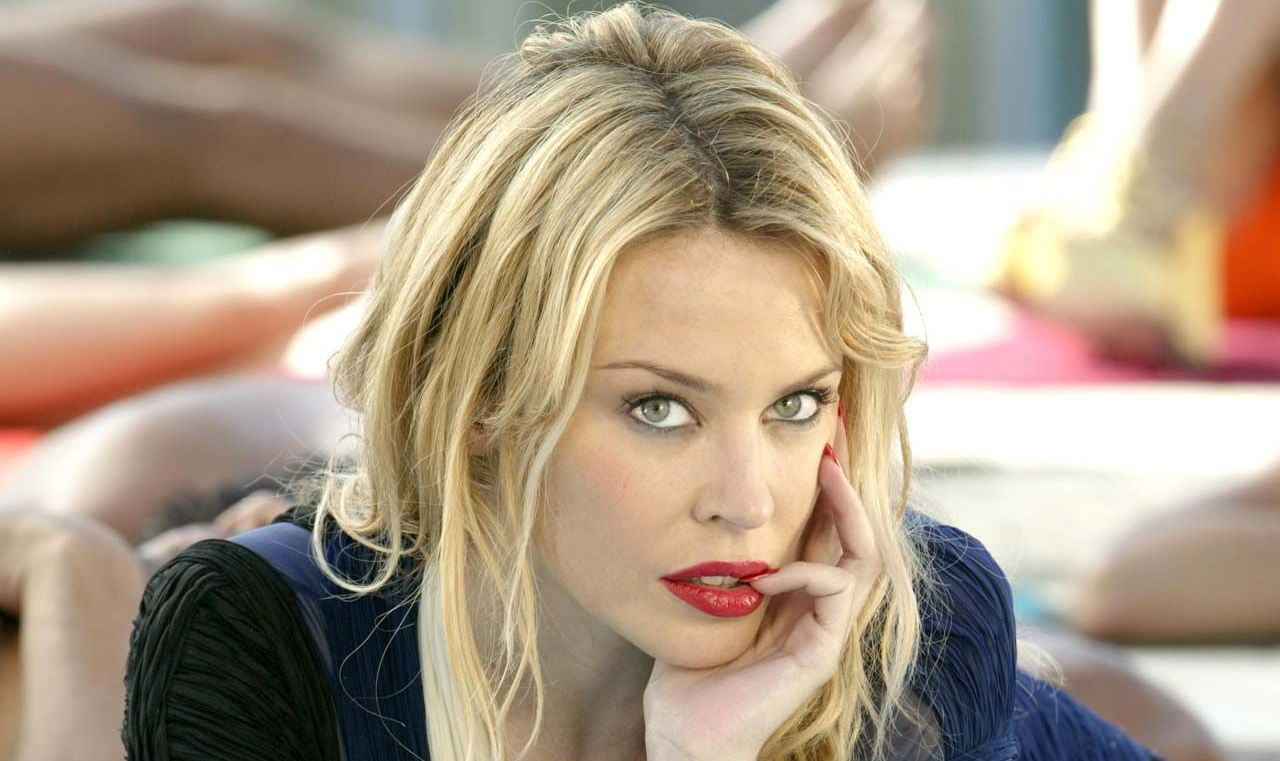
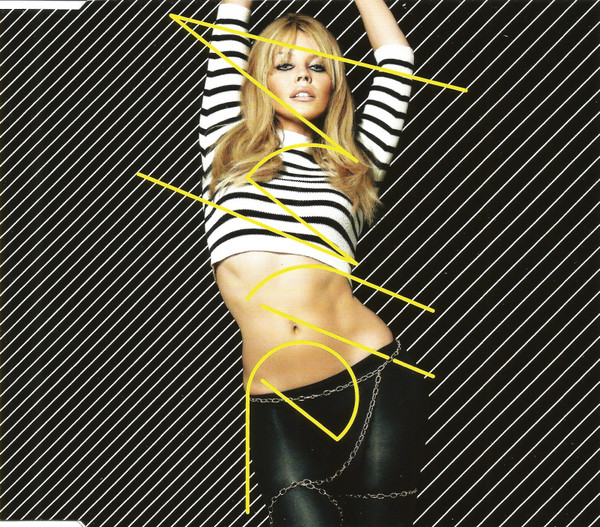
Music, by Madonna (her 10th of thirteen #1s)

1 week, from 27th August – 3rd September 2000

We’ve had Craig David’s seven days of wooing. Robbie’s ‘Rock DJ’. Will the real Slim Shady please stand up and If it ain’t love, Then why does it feel so good… To the list we can add Madonna’s command: Hey Mr DJ, Put a record on, I wanna dance with my baby…

When I claimed that her version of ‘American Pie’ wasn’t as bad as people said, but that it was also a bit too safe, I was looking ahead to this record. Imagine if she had bent and twisted that hallowed classic of rock ‘n’ roll using the grinding, whirring, blurping production that she employs on ‘Music’. It may have turned out terrible, but it would have been every bit as fun and provocative as her other most controversial moments.

As it is, we are left with ‘Music’, and for a woman in her forties, almost two decades into her chart career, it is a remarkably modern record. The video and the lyrics may reference disco balls and boogying, but musically this is forward-facing electro-funk. Again, Madonna shows herself to be bang on-trend, as this sounds both like Daft Punk circa 1997, and Hot Chip circa 2006. It also leaves room for a bit of cheese amongst the cool, in the heavily distorted Do you like to boogie-woogie refrain.

Lyrically this is standard sort of ‘music brings the world together’ stuff. Although she does try to reach for a higher plane of thought with the line: Music, Mix the bourgeoisie, And the rebel… Apparently Madonna was inspired to write this at a Sting concert, noting the euphoric reaction of the crowd when he started to play the old Police hits. The video isn’t one of her most thought-provoking either, featuring Sacha Baron-Cohen in character as Ali G (how very Y2K) driving her around in a pimped-out limo.

No, here Madonna isn’t trying to outrage or annoy, she just wants us up on our feet. And I, for one, will always head to the dancefloor when this one comes on. This record took her into double-figures in the total number ones count, the first woman in British chart history to manage it. She joined Elvis, The Beatles, and Cliff Richard in managing ten or more chart-toppers. Meanwhile ‘Music’ itself made history by becoming the first song ever to be played on an iPod.

I may have overstated it in the intro, or allowed nostalgia’s rose-tinted specs to influence my take. Perhaps the chart-topping lyrics of the day were no more memorable than any other era’s. Perhaps I was just of an age to remember them. But I do think the #1s of the summer of 2000 were an integral part of turn-of-the-century popular culture, one of those periods when the charts reflected more than just musical taste. And that’s something, in this fragmented, online age, that I don’t think we’ll ever see again.

786. ‘Frozen’, by Madonna

Of all Madonna’s thirteen number ones, ‘Frozen’ – her first in almost eight years – has to be the strangest…

Frozen, by Madonna (her 8th of thirteen #1s)

1 week, from 1st – 8th March 1998

It’s her longest for a start, and probably the least accessible. There’s no instant hook, as with ‘Into the Groove’, and no controversial gimmicks, as with ‘Like a Prayer’. Instead there’s a shimmering, undulating electronic beat, beefed up at intervals by strange, reverberating sound effects and drum fills. And there are the strings that add an air of grandiosity to the song, especially when they come to the fore midway through, like an ‘Arabian Nights’ film score. A Rolling Stone reviewer at the time described it as “arctic melancholy”, and I think that’s perfect.

Interestingly for Madonna, the lyrics are the least noticeable thing about ‘Frozen’. They seem to be about a lover who is closed off: You only see what your eyes want to see, How can life be what you want it to be, You’re frozen, When your heart’s not open… Or perhaps it’s more religious, with Madonna, who had begun taking an interest in Eastern spiritualism, singing as a sort of high priestess. The video would bear this interpretation out, Madge floating above a desert, all in black, as a sort of nun-slash-witch, before turning into a flock of crows, and then a large dog.

In fact, despite me claiming that this isn’t one of her gimmicky chart-toppers, the first thing that springs to mind when I think of ‘Frozen’ is Madonna – famously blonde for most of the past fifteen years – now with long jet-black hair. Always one for the visuals… The second thing I remember about this record is hearing it almost as often as ‘My Heart Will Go On’ at the pool bar in Lanzarote during my spring holiday that year.

And the fact that it was on such heavy rotation at the time perhaps proves that this isn’t as inaccessible as I suggested. In truth, there are just as many hooks here as in Madonna’s poppier numbers, they’re just buried in the trip-hop beats, and stretched out over six minutes. Of 1998’s seven number ones so far, three have now run on beyond five minutes – ‘Never Ever’, ‘All Around the World’, and this – while Celine Dion wasn’t far behind (and that one certainly feels longer than five minutes…)

Although this was her first number one since ‘Vogue’, Madonna hadn’t ever been away from the top of the charts. In fact, she’d casually racked up a further seventeen (!) Top 10 hits between ‘Vogue’ and now. At the same time, ‘Frozen’ was the lead single from her first studio album in four years, following a few years of compilations and soundtracks.

Undoubtedly then, we can class this is one of Madge’s famous re-inventions. She wasn’t just following current trends with William Orbit on production duty, she was setting them. Fifteen years is a lifetime for a female pop star, and this was a statement release, one that announced the Queen of Pop wasn’t going anywhere. ‘Frozen’ was an interesting choice for the lead-single though, especially considering that follow-up ‘Ray of Light’ is the much better remembered hit, but it makes for an interesting detour in Madonna’s chart history. This is her second and final ‘90s #1, making it by far her least successful chart-topping decade. However, she has five more ‘00s #1s to come, all perhaps owing a debt to how successfully she updated her sound here.

679. ‘Rhythm Is a Dancer’, by Snap!

I’m not a huge dance music fan – I feel I should have that phrase on permanent ‘copy paste’, given how many times I’ve said/will say it – but when a dance song clicks…

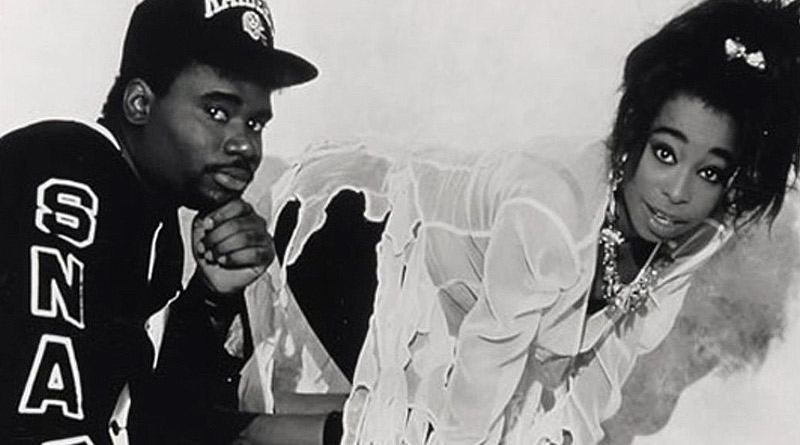
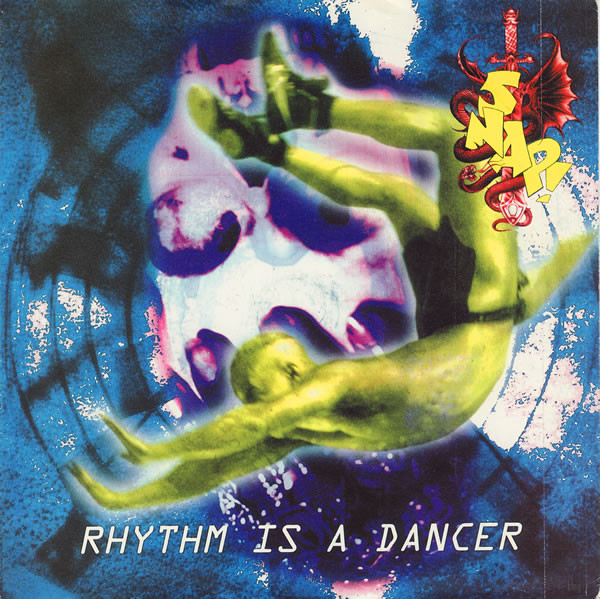
Rhythm Is a Dancer, by Snap! (their 2nd and final #1)

6 weeks, from 2nd August – 13th September 1992

‘Rhythm Is a Dancer’ is one of those that just clicks. And it clicks immediately, grabbing you as the atmospheric intro builds, from the three intertwining synth lines, to the drums, to the backing vocals. When the main vocals and the bass eventually kick in together, I’m inspired to compare it with the ultimate slow-build intro, ‘Smoke on the Water’. Yes, rock snobs, I went there…

The song as a whole is slick and streamlined, much more grown-up than Snap’s first chart-topper, ‘The Power’, which I found harsh and gimmicky. The lyrics are very generic – the title itself is nonsense, if you’ve ever stopped to think about it – but no dance tune needs deep lyrics. Rhythm is a dancer, It’s a soul’s companion… Lift your hands and voices, Free your mind and join us, You can feel it in the air… Complete waffle. But when you’re topless in a sweaty club, choking on the dry ice, it might sound like the dance equivalent of a hymn.

What ‘Rhythm Is a Dancer’ is best remembered for today, though – as well as being a 1990s club classic – is for its rapped verse. The fact that there’s a rap in the first place is still worth noting. Today it feels standard, but as I mentioned in my post on ‘Black or White’ the idea of sticking a rapped verse in your dance/pop song was a pretty new one in 1992. (‘The Power’ was one of the very first, in fact.) And this is one of the first raps that doesn’t feel tacked on, or gimmicky, bearing in mind that some previous hip-hop chart-toppers have involved the Teenage Mutant Ninja Turtles, The Simpsons, and Vanilla Ice.

Let the rhythm ride you, Guide you, Sneak inside you… raps Turbo B, sounding like he’s spent the past two years practising. It’s fine, until he reaches the final line, and spoils it: I’m serious as cancer, When I say rhythm is a dancer… In fairness to Turbo, his first reaction was supposedly ‘No way am I singing that shit’. But sing it he did, to a mixed reaction. In my opinion, it’s so crass and so unexpected that it somehow works, and anyway Snap! didn’t invent it – it was a phrase that had been used in hip-hop tracks for years.

My only complaint about this majestic track is that it just glides to a finish. It’s a bit of a flat ending, but then the rest of the song is so cool and icily confident that to finish with something showy might have spoiled it. ‘Rhythm Is a Dancer’ has placed on all sorts of ‘Best Songs of the 90s’ and ‘Greatest Dance Tunes Ever’ sorts of lists, and has been re-recorded and/or re-leased by Snap! three times since this original release.

Despite being remembered now mainly for their two number ones, Snap! were genuinely huge in the first half of the 1990s, scoring nine Top 10 hits between 1990 and 1994. None were bigger than this, however – the second-highest seller of 1992. They remain active today, with original vocalist Penny Ford back on board, though sadly no more Turbo B.

Never Had a #1… Depeche Mode

This week, in a break from our regular schedule, I’m going to be celebrating some acts with plenty of Top 10 hits to their name. Household names, the lot of them. But acts that, for whatever reason, have never made it to pole position.

In fact, the acts I’m going to cover – two bands, two soloists; three whose careers began in the ’80s and stretch to the present day, one who was present on the very first chart way back in 1952 – are perhaps the unluckiest pop stars around. They are the bands and artists who have managed the most Top 10 hits without ever making number one. As recompense for their bad luck, I’ll present to you the three records from each band/artist that came closest…

First up… Well, I kind of gave that away in the title:

Depeche Mode – 14 Top 10 hits between 1981 and 2005

‘People Are People’ – #4 in 1984

None of Depeche Mode’s biggest hits are the tunes you’d expect. No ‘Enjoy the Silence’, no ‘Just Can’t Get Enough’ or ‘Personal Jesus’. ‘People Are People’ was the lead single from their fourth album, and their joint biggest hit (they’ve never risen above #4). The clanking irons and booming cannons that intro this record are almost too ‘eighties’ for me, but they are certainly striking. Interestingly, I’d have thought that this was from a few years later, when the synths in the charts got harsher and tinnier. This record, then, was a trendsetter, a nod towards a Pet Shop Boys, SAW future. The lyrics are the sort that are sadly always going to be prescient: I can’t understand, What makes a man, Hate another man, Help me understand…

‘Barrel of a Gun’ – #4 in 1997

Deep in the midst of the Britpop years, Depeche Mode were on their 9th album, and the lead single was this moody, churning, paranoid beast. It takes a chorus that could have been by Oasis, mixes it with Nine Inch Nails, and some grungy leftovers, and a hip-hop beat for good measure, to create an very unlikely hit single.

‘Precious’ – #4 in 2005

The Mode’s final Top 10 single (to date… who knows?) is also their joint highest charting. By the mid-00s, synth-pop was making a comeback thanks to acts like the Killers, Goldfrapp, the Bravery and more, and Depeche Mode were the granddaddies. Perhaps that’s why they managed such a late career flourish (or perhaps it was the fact that singles sales were in the toilet in 2005). It’s a low-key, melancholy track, written by Martin Gore to his children as an apology for his impending divorce.

Another unlucky artist is up tomorrow, and we’re going right back to the dawn of the British singles chart…

645. ‘Killer’, by Adamski

The first word that comes to mind as this next number one begins is ‘lumbering’. Like Godzilla trampling Tokyo underfoot, the beat here is heavy, and relentless…

Killer, by Adamski (his 1st and only #1)

4 weeks, from 6th May – 3rd June 1990

It’s a fourth consecutive dance #1, and each one has done something slightly different within the genre’s confines. ‘Dub Be Good to Me’, ‘The Power’, ‘Vogue’, this. They’ve all had one thing in common, though: pretty low bpm. There have been moments, while listening to each one, in which I’ve wondered whether you could do much dancing to them. The early ‘90s was the height of rave culture in the UK, of people off their tits and mad for it in a field in Hampshire, but you wouldn’t necessarily know it by listening to the most popular dance tracks of the time.

While ‘Vogue’ well and truly warmed up after a slow start, I’m not sure if ‘Killer’ ever quite rises above its plodding beat, decorated with creepy synth effects that sound like aliens trying to broadcast to the mothership. There’s a moment in the middle where some choppy trickery with the vocals turns them into a sort of dance Morse Code, and this kicks things into life. There’s a more traditionally ‘dancey’ piano riff after that, and a moment where you think this might be turning into a banger. But it doesn’t quite manage it.

Solitary brother… I like this line… Is there still a part of you that wants to live…? Again, not your run-of-the-mill dance lyrics. And while we should applaud strangeness, and creativity, and so on; it doesn’t mean that I particularly enjoy this record. I’d file in under ‘interesting’, rather than ‘fun’.

The vocalist was an at the time unknown bloke called Seal. (So unknown that the Official Charts didn’t credit him on the single, which seems a bit harsh.) He’d been a funk and soul singer in Britain and the Far East, and was sleeping on a friend’s sofa when he met DJ and producer Adamski, handing him a demo tape. The rest is history, though nothing he did after his big breakthrough hit has the same oomph. He went back down the smooth soul route, and along the way recorded one of my least favourite songs of all time: ‘Kiss From a Rose’. (It just gives me goosebumps, and not the good kind…)

What’s ‘Killer’ about, though? The lyrics, written by Seal, are an exhortation to freedom and to transcending whatever holds you back, according to the man himself. That sounds more like M People than this weirdly ominous record, while Adamski meanwhile thinks it sounds like the soundtrack to a movie murder scene. It ends with a message: Racism in amongst future kids can only lead to no good… Which is worthy, but which means the record ends on a strangely sombre note.

Seal released his debut solo album later that year, and has gone on to sell twenty million records around the world, and to marry Heidi Klum. Adamski, meanwhile, scored a #7 with the follow-up, before fading from popular view. He still records though, and tours as a DJ.

Of the past four number ones – the spring of dance, I’ll call it – I’d have ‘Vogue’ as my favourite, closely followed by Beats International. But I’d have ‘Killer’ in third, ahead of Snap! It’s a very odd song, an uncomfortable, edgy record; but there’s greatness there, buried somewhere deep. Up next, an act that are undoubtedly dance music pioneers, the daddies of all this electronic business, and one of the most influential bands of the 1980s… With Peter Beardsley.