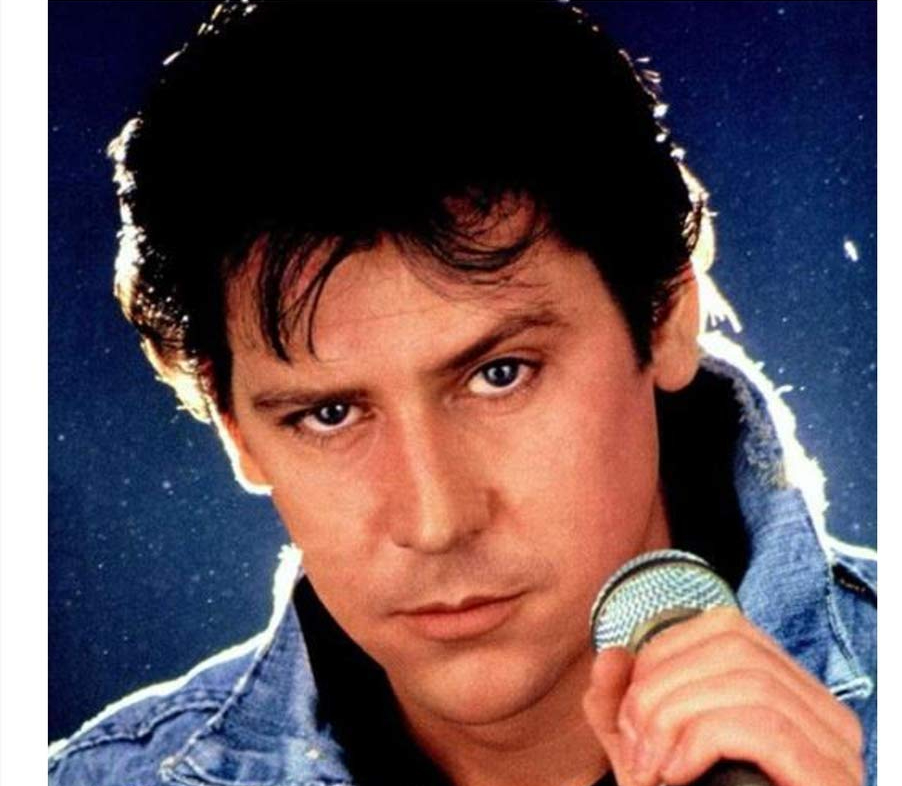
How to explain Shakin’ Stevens, to readers from foreign shores, or to readers not old enough to have experienced him in real time…?
This Ole House, by Shakin’ Stevens (his 1st of four #1s)
3 weeks, 22nd March – 12th April 1981
The twanging rockabilly in this take on ‘This Ole House’ sounds completely out of place in early 1981, after two years of sharp, spiky new-wave, and just before the New Romantics came along. Stevens’ delivery too – all energy and cheesy grins – is an outlier in this too-cool-for-school world. But while this is an unlikely hit record, it’s not unwelcome.
I can never say no to some old-fashioned rock ‘n’ roll. The production may be glossier, the guitars coming through in a warm stereo, but this is a step back to the 1950s. Is it better than Rosemary Clooney’s original, from way back in 1954…? No, probably not. But it is equally manic. That had an out of control honky-tonk piano, Shaky’s take has a distorted guitar solo: this version’s only concession to modern sounds.
He sounds like he’s having a lot of fun singing this – a song stuffed with nonsense lyrics about fixing shingles and mending window-panes – and because of this it is very hard not to have fun while you listen. The hipsters may have rolled their eyes, and turned their Ultravox records up, but the grannies and the kids clearly lapped it up. Just think… The young ones who bought Clooney’s version would have been hitting fifty by now. We have covered a lot of ground here!
I did wonder if this might have been Shakin’ Stevens debut: a smash hit from nowhere, perhaps after winning a TV talent show. But I couldn’t have been more wrong – he had been plugging away for well over a decade, releasing singles in the UK and Europe throughout the ‘70s. Born in Cardiff, he’d been a milkman, before forming his band The Sunsets. They’d supported The Rolling Stones of all people, in 1969. By the mid-seventies he was impersonating Elvis in the West End before finally scoring a minor chart hit with ‘Hot Dog’ in early 1980.
After that the rise was meteoric, and it’s hard to begrudge someone who’s waited that long and worked so hard for success. But. This still doesn’t explain why this Welsh Elvis finally became one of the biggest stars in the land… Maybe the rock ‘n’ roll revival that was gave us Showaddywaddy and Mud a few years back never truly went away? Maybe he was the chart-friendly face of the post-punk rockabilly scene? Or maybe it’s another ‘Shaddap You Face’: some light-relief after weeks of mourning John Lennon? I don’t know.
One thing’s for sure – if this cover of a near thirty-year-old song was a one-hit wonder then it would make perfect sense. A flash in the pan, a moment of frivolity. Except, it’s the first of four chart-toppers for a thirty-something ex-Elvis impersonator, who was on his way to becoming the biggest-selling British singles artist of the decade. More from Shaky, then, very soon…
Yesterday I ranked the songs that didn’t quite make my Top 10 of ABBA’s non-#1s. Here, then, is the main event…
10. ‘Does Your Mother Know’ – reached #4 in 1979
The only ABBA hit on which one of the boys took lead vocals, and their final glam-rock stomper. The lyrics are very of their time BUT, crucially, Bjorn acts like a true gentleman towards this teenage tearaway. Take it easy… Does your mother know? You can picture him helping the girl out the club, giving her a bottle of water, and waiting with her until the Uber arrives.
9. ‘Under Attack’ – reached #26 in 1982
One that benefits from not being over-played… This was the last single released before the band split up in December 1982. Sadly it didn’t help them go out with a bang, and limped to a Top 30 peak over Christmas. I love it though: it keeps the moodiness from ‘The Visitors’ album in the verses before dishing out a classic ABBA chorus. Never has a line like: Under attack, I’m being taken… sounded so positive.
8. ‘Don’t Shut Me Down’ / ‘I Still Have Faith in You’ – reached #9 / # 14 in 2021
The comeback hits. One of which, astonishingly, restored ABBA to the Top 10 for the first time in forty years. I’m treating them as a double-‘A’, as in days gone by that’s presumably what they would have been released as. I don’t really know where to place them, how to assess them with regards to the rest of their output yet, so have plonked them right in the middle. One things for sure: both songs hold their own with those from decades before. ‘Don’t Shut Me Down’, to my ears, combines ‘Dancing Queen’ and ‘One of Us’, two of the band’s best. ‘I Still Have Faith in You’ I found a little underwhelming on first listen, but in time it’s grown into an epic that could only have been created by one band.
7. ‘Head Over Heels’ – reached #25 in 1982
The single that broke their run of 18 uninterrupted Top 10 hits… But I think it’s a mini-classic. It’s ABBA at their frothiest, and is definitely the lightest moment on ‘The Visitors’ album. It helps that you rarely hear it these days – perhaps if it was as played as ‘Dancing Queen’ I’d be ranking it lower. The video, in which Frida plays a messy It girl, is cheap and cheerful, but Good God those jumpsuits! She’s extreme, If you know, What I mean…
6. ‘Gimme! Gimme! Gimme! (A Man After Midnight)’ – reached #3 in 1979
Until their re-evaluation in the ’90s, the ABBA flame was kept alight in gay bars. Most claim ‘Dancing Queen’ to be their gay anthem, for obvious reasons, but surely they were never gayer than when Frida and Agnetha were demanding a man after midnight. Those exclamation marks after each ‘Gimme’ in the title are everything, as is the pounding, horse-hoof beat, that sounds as close as disco ever came to splicing with a spaghetti-western soundtrack. It was later sampled by Madonna for one of her best songs, however I can’t listen to it now without hearing it sung in the style of Kathy Burke.
5. ‘SOS’ – reached #6 in 1975
I’ve heard this referred to as ABBA’s heavy-metal moment, ABBA’s emo moment, ABBA’s finest moment… I’d say it’s simply pure power-pop perfection. ‘SOS’ was their first big post-‘Waterloo’ hit, and it set them up for half a decade of chart domination. Even this early in their career, with both couples still happily together, ABBA’s melodies and hooks were underscored by melancholy. Even Pierce Brosnan couldn’t ruin this one…
4. ‘The Day Before You Came’ – reached #32 in 1982
Just what is this record about…? Is it the day before meeting the man of your dreams? Is it the day before your death? Your murder? Suicide?? A biting satire on the meat-grinder that capitalism throws us through in the name of a career…? Whatever it might be about, this six-minute, chorus-less epic is probably the most experimental moment of ABBA’s career. The hits were drying up, so why bother trying to write a hit? It was also the very last song they ever recorded (until the comeback). Legend has it that Agnetha recorded her vocals alone, in a darkened recording studio, before walking out and drawing ABBA to a close. Those vocals contain some of the band’s best lines, picking out the mundanity of this woman’s life. I must have lit my seventh cigarette at half past two… and There’s not, I think, a single episode of ‘Dallas’ that I didn’t see… She isn’t at all sure of what happened that day, really; a very unreliable narrator. You could write a dissertation on the many way this song can be interpreted. Who know, someone might already have. Strange, sinister perfection.
3. ‘Voulez-Vous’ / ‘Angeleyes’ – reached #3 in 1979
Apart, neither ‘Voulez-Vous’ nor ‘Angeleyes’ would get this high… As a double-‘A’ side, though, their combined forces get third place. (And, without giving the game away, the highest-placing of ABBA’s ’70s hits…) Both songs are disco heaven, and both are about a sleaze-ball of a man. The same sleaze-ball? In ‘Angeleyes’ the girls want to warn his new lover not to trust him, to warn her away… While in ‘Voulez-Vous’, in the heat of the dance floor, they give in and ask him bluntly: Voulez-vous? Take it now or leave it…
2. ‘Lay All Your Love on Me’ – reached #7 in 1981
In which ABBA move from disco, into electronic dance. The bass slaps (I believe that’s the term), the beat is unrepentant, and the lyrics are classic ABBA (how many dance tracks have words like ‘incomprehensible’ in them…?) My favourite bits are the violins that come in at the end, and the synthesised drops before the choruses, but really it’s all great. This was never intended to be a single, and when it was released it was only put out on 12″, which explains the relatively low peak. Though it was, at the time, the best selling 12″ record ever.
1. ‘One of Us’ – reached #3 in 1981
The first song the band released as two divorced couples; and the last genuine hit single they had. A coincidence…? It has everything you want from an ABBA single: singing through the tears, glorious harmonising from the girls, just the right number of cheesy touches (the parping bass, for example). I’m not sure it’s their best song, but something about it just hits a sweet spot – the Wishing she was somewhere else instead… line is perfection – and so it gives me great pleasure to name ‘One of Us’ as the best of ABBA’s rest.
We’ve covered all nine of ABBA’s UK #1s, from ‘Waterloo’ to ‘Super Trouper’, but I’m not ready to bid them farewell just yet. Here then, are the rest of the band’s 17 non chart-topping UK Top 40 hits, ranked, and split over two days. Bear in mind that I do not actively dislike any of these songs, even the lowest placing. While the records at the top of this list do, I’d say, rank alongside the best of ABBA’s chart-topping hits. Here we go…
17. ‘I Do, I Do, I Do, I Do, I Do’ – reached #38 in 1975
The worst of the rest (but still an earworm). This is ABBA at their schlager-iest: the saxophones, the wedding bells, the silly title. The band were struggling to follow up ‘Waterloo’, to score a hit away from Eurovision, and when this limped to #38 it looked as if the game might have been up. Luckily their next single did significantly better, and the rest is history…
16. ‘I Have a Dream’ – reached #2 in 1979
ABBA’s final single of the seventies was this Christmas Number Two. Sorry, that sounded a bit rude. It’s not that bad, but I’ve never connected with it. Listening to ‘ABBA Gold’ as a kid, this was the one song I wished would end sooner than it ever did, and then along came Westlife’s rotten cover version. I still feel the same way: it’s a bit plodding – the sitar doesn’t help – and children’s choirs in pop songs are, as St. Winifred’s showed us, dangerous things.
15. ‘Chiquitita’ – reached #2 in 1979
Another number two – again, not being rude – from 1979, and from the ‘Voulez-Vous’ album. I can see that this is a well-made piece of music: the baroque piano, the chorus that demands to be belted out, the terrifying snowman in the video; and a well-loved moment in the ABBA canon. But it still leaves me a little cold. ‘Chiquitita’ could well be the lover of ‘Fernando’, and I’d rank the two songs together: catchy choruses, but nowhere near peak-ABBA.
14. ‘Money, Money, Money’ – reached #3 in 1976
If it were down to the video alone, this’d be near the top. The close-ups, the strobe lights, the diamond encrusted kimonos… As a song though, it’s fine. It’s worth a sing-a-long if it comes on the radio. It sounds a bit like it’s been snatched from a musical that nobody has ever seen, and it has one hell of a key-change. Apart from that, the best bit is when Frida pouts the line I bet he wouldn’t fancy me… Um, I bet he probably would, love.
13. ‘Ring, Ring’ – reached #32 in 1974
The title hit from their first album in 1973, albeit only charting in a re-release after the success of ‘Waterloo’. This is such an early hit – their first Swedish #1 – that the band hadn’t yet assumed their iconic acronym (they released it as Bjorn and Benny, Agnetha and Frida). They had a few glam-rock stompers – ‘Waterloo’, ‘So Long’, this. In the video, Bjorn looks like he’s stumbled in after an audition for The Sweet. ‘Twas the style of the time.
12. ‘Thank You for the Music’ – reached #33 in 1983
Their signature hit? Until quite recently, this was ABBA’s chart swansong. Originally recorded in 1977 and included on ‘ABBA – The Album’ but not released as a single until after they’d officially split. A few years ago I’d have ranked this rock-bottom: I thought it tipped too far into camp theatricality. And it still does… But I’ve grown to like it. Who knows, in another decade this might be my favourite? I always imagine Freddie Mercury singing it with Agnetha – the little ‘mm-hmm’ in the second verse is pure Freddie. Can you imagine..?
11. ‘Summer Night City’ – reached #5 in 1978
The band’s first foray into disco, ahead of the ‘Voulez-Vous’ album. While I like the impetus and the drive of this one, I don’t think it’s quite in the same league as their later disco hits, which I’ve ranked higher up the list. And, just confirm, the lyric is: Walking in the moonlight… and not what you think you heard.
A little hors d’oeuvre then, before the main event. Still some classics mixed in there. Same time tomorrow: The Top 10…
The fourth and final part of Britain’s period of national mourning for John Lennon and we end, quite fittingly, with a glossy tribute.
Jealous Guy, by Roxy Music (their 1st and only #1)
2 weeks, 8th – 22nd March 1981
To my ears, this is an interesting choice of both song and band to end up with the big Lennon tribute hit. ‘Jealous Guy’ wasn’t one of his very biggest hits, and Roxy Music aren’t the first act you’d think of to have been influenced by The Beatles, or John Lennon. Then again, what band that formed in the early ‘70s wouldn’t have been influenced by The Beatles? And maybe a more predictable cover of ‘Imagine’, or ‘Give Peace a Chance’, would have been met with a collective shrug.
I went through a phase, as a teenager, where ‘Jealous Guy’ was my favourite song, ever. It’s overwrought, and needy, you see… It’s Lennon’s ‘emo’ record. Feeling insecure… Swallowing my pain… Shivering inside… Those sorts of things. I still like it, though there are other Lennon tracks I much prefer these days. And I quite like this cover version. Bryan Ferry’s vocals are excellent – tremulous but powerful, and not as theatrical as he sometimes can be – but the music is slightly self-indulgent soft-rock.
It’s slow – though the original is, too – and over-long. I count three solos: guitar (good), synth (fine), saxophone (not for me). At least they kept the whistling. That was always my favourite bit. If there’s one thing I’ve discovered since starting this blog, it’s that whistling in pop songs usually works for me. If every sax solo ever recorded was replaced by whistling then the world would be a better place.
This was Roxy Music’s sole number one single, almost a decade into their chart careers. They had a similar chart run to ELO, who had scored their solitary #1 a year before. Both were a huge presence throughout the seventies (though Roxy Music had a two-year hiatus in the middle), and both scored a belated chart-topper with what was far from their best song. Though, I have to admit, my knowledge of Roxy Music beyond their biggest hits is patchy.
It’s worth noting, as we reach the end of it, the effect John Lennon’s death had on the top of the UK charts for three whole months. Other big, premature artist deaths – Buddy Holly, Elvis – resulted in posthumous #1s, but not in weeks of domination. And it will never happen again, in the download/streaming age, where an artist’s back-catalogue is at our fingertips, and we are no longer at the mercy of re-releases. Anyway. Next time out, ‘normal’ service is resumed.
Giving us a three-week break from the Lennon-love-in, even if we didn’t ask for it… Joe Dolce and his Musical Theatre.
Shaddap You Face, by Joe Dolce Music Theatre (his 1st and only #1)
3 weeks, 15th February – 8th March 1981
Giuseppe is in 8th Grade, and he don’t want to follow no rules. He shoots pool, flunks school. What does his mother think about this? Well, mama’s not happy: Whats-a matter you, Got-ta no respect… Luckily for her, Mama’s got a catchphrase. Altogether now: Ah… Shaddap You Face!
What comes immediately to my mind are those adverts for Dolmio pasta sauce, with the ridiculous Italian puppets (‘Whens-a your Dolmio day??’) Dolce gets away with it (just about) as he is Italian-American. Plus this tune is so dumb, the contents so lightweight, only the professionally offended could actually complain about the caricature.
What you may well want to complain about is the music itself. Giuseppe grows up, becomes a big star… All he can hear is Mama’s catchphrase. We are treated to an accordion solo, and then a raucous call-and-response section: One more time for Mama! (Oh, must we…?) This record is a load of crap; but it’s not abhorrent in the way that the very worst novelty songs can be. I’m not sure what the joke is, or why it became such a big hit, but as I suggested in my previous post maybe the world was just desperate for something light after The Great Lennon Mourning Period.
‘Shaddap You Face’ was, for many years, the biggest-selling single in Australia (a fact that says much more about Australians than it does about the merits of the song.) Actually, I should say it was only the best-selling single by an Australian act, as Dolce had moved to Melbourne in 1978. This was his first hit – the only single he had released before this was a much more worthy number about the struggles of Vietnamese boat people.
In the UK he is a one-hit wonder of the purest kind. A chart-topper, then nothing else. Zilch. And he’d have probably faded into even greater obscurity, if it wasn’t for the record he kept off #1. Any bore with a passing interest in the charts can tell you two things: that Bryan Adams holds the record for most consecutive weeks at #1, and that Ultravox’s stark, synth classic ‘Vienna’ was held off the top by ‘Shaddap You Face’. I’m sure I’m not alone in this, so I’m going to come out and say it: ‘Vienna’ is overrated, and more than a little pretentious. I’m glad that it was outsold by this Joe Dolce trifle, causing the snobs to fume.
Anyway, has ‘Vienna’ ever been translated into an Aboriginal dialect? ‘Shaddap You Face’ has… Joe Dolce is known more these days as a poet and an essayist. He’s doing alright for himself. Mama would be proud. Meanwhile, coming up next, one final tribute to John Lennon.
Part III of the Great John Lennon Mourning Period. A single from his brand new record kicks the re-released classic from top spot, only the second time an artist had replaced themselves at #1 (Lennon was also quite heavily involved when ‘I Want To Hold Your Hand’ replaced ‘She Loves You’ seventeen years earlier).
Woman, by John Lennon (his 3rd and final #1)
2 weeks, 1st – 15th February 1981
Just like ‘Starting Over’ – see what I did there –this is another love-letter to Yoko. He starts off by whispering The other half of the sky… (reminding me of the whispered ‘Happy Christmases’ on ‘Happy Xmas (War Is Over)’) and then launches into a detailed explanation of why this woman is so special: Woman, I will try to express, My inner feelings, And thankfulness…
It is a bit soppy. And a bit simplistic. Like ‘Imagine’, the message is sincere but basic. And Lennon’s voice is as close to simpering as I’ve ever heard it, especially on the Hold me close to your heart… line. While the chorus is all ooh-ooh-oohs and do-do-do-dodos. ‘Strawberry Fields Forever’ it is not. Nor is it the equal of much of Lennon’s earlier solo stuff: ‘Mind Games’, ‘Whatever Gets You Thru the Night’, ‘#9 Dream’ and the like…
That’s not to say it’s a bad song. It’s fine. It’s still a song written by John Lennon, and the quality is there. But like ‘Starting Over’, this wouldn’t have been coming anywhere close to #1 had the tragic not occurred. And I’ve always thought that calling the song ‘Woman’ was a little insulting. He could just as easily have called it ‘Yoko’ and it would still have scanned (though perhaps wouldn’t have sold quite as well…) Still, as Lennon himself said, it is a tribute to all women: Yoko, and you’d imagine his late mother, the aunt that raised him, his first wife Cynthia… That makes it a little more sincere to my ears.
I’ve never fully listened to ‘Double Fantasy’, the album from which this and ‘(Just Like) Starting Over’ came, released three weeks before Lennon’s murder. Going by the song titles there was a bit of a theme going on: ‘Dear Yoko’ and ‘Beautiful Boy (Darling Boy)’ from John, and ‘Beautiful Boys’ and ‘Every Man Has a Woman Who Loves Him’ from Yoko. It’s a celebration of love and family, against which the image of Lennon being gunned down in the doorway of his home, his wife watching on, becomes even more horrific.
But from what I have heard from the album, I’m not sure it would be so well-regarded if it hadn’t been for his soon-to-follow death. Lennon himself won’t be back on top of the charts – the 3rd single, ‘Watching the Wheels’, only made #30, which is a shame because it’s better than either of the #1s – but there is one more tribute to come before the Great Mourning Period wraps up. It must have been a sad time, and people must have been looking for some light relief. For what else would explain our next #1 single…? Gulp!
Herein lies the beauty of a weekly chart of popular singles based solely on sales, rather than on accepted tastes and public decency. We can swing straight from ‘There’s No One Quite Like Grandma’, to this…
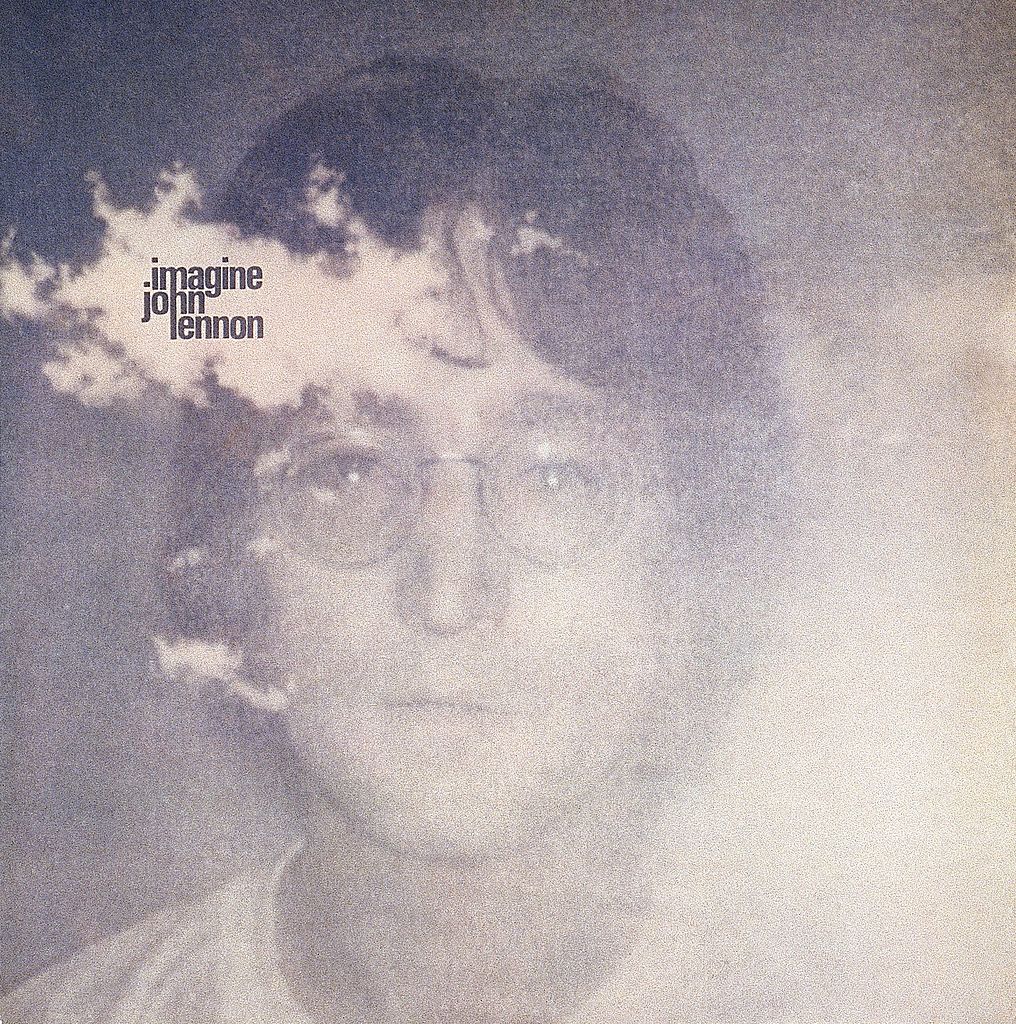
Imagine, by John Lennon (his 2nd of three #1s)
4 weeks, 4th January – 1st February 1981
There are surely very few people left on this planet who haven’t heard ‘Imagine’s hushed and reverential piano. I’m not sure what this was recorded on, but the piano sounds off in the distance, as if the opening chords are floating in from the nearest cloud. Then in come John’s vocals, and it is young John – Beatles John – sounding significantly different from ‘Starting Over’, though I couldn’t put my finger on why.
It’s simple, it’s stately. Piano, drums and subtle strings. It already sounds like a remnant from another era, despite being only a decade old (I noted the same thing with ‘Suicide Is Painless’), and musically I find this record quite beautiful. This is as close as we’ve come to a pop music hymn… If it weren’t for the irreligious lyrics.
And the lyrics are where ‘Imagine’ starts to lose its shine. Imagine there’s no heaven, It’s easy if you try… Imagine no hell, no countries, no religion or possessions. Imagine all the people, Living life in peace… I’ve taught ‘Imagine’ to twelve-year-olds and, if we’re being honest, pre-teens are the only people who are going to buy the message on offer here. From our teenage years onwards, the vast majority of us are far too cynical to genuinely believe in a world of people living life in peace.
Maybe Lennon was being playful when he wrote this. He did have a wicked streak, and you can perhaps picture him grinning evilly at the thought of there being no countries, or possessions, and of every one living in the moment, in an orgy of flesh and, let’s face it, violence. Not to mention the church’s tutting at the idea of there being no heaven. Or maybe not. I think he did mean it. And only he, perhaps, could get away with recording this and not having people laugh in his face.
It’s easy to dismiss this song as the trite ramblings of a very rich rock star. In the wrong hands it can sound deludedly ridiculous. (Remember that celebrity cover version from the early days of Covid last year, later described as ‘creative diarrhoea’…?) But you can see why this was the Lennon record that everyone flocked to in the wake of his horrific death: a fitting eulogy for a flawed but beautiful man. It was the title track of his 1971 album, and had been released belatedly in 1975, when it made #6.
‘Imagine’ is a huge, weighty record. It’s impossible now to properly judge it. Or even to properly enjoy it. I doubt I’d ever actually choose to listen to it and, if I did want to be preached to by John Lennon, I’d opt for ‘Happy Xmas (War Is Over)’, which was also riding high in the charts during the festive season of 1980-81. But it feels only right that ‘Imagine’ had this month on top of the UK singles charts, only to be replaced by…
There has been a lot of talk in recent years that 1984 was ‘The Best Year’ for pop music, ever. I would disagree and, from the chart-toppers POV that this blog takes, 1984 is in truth a far from vintage year which we’ll hear all about soon enough. No, my vote for best year of the ‘80s, in terms of #1s, would be 1980 itself. Blondie, ABBA, The Jam, The Pretenders, The Specials, Bowie, Lennon and ELO. Yes, yes, yes. A done deal. Except…
There’s No One Quite Like Grandma, by St. Winifred’s School Choir (their 1st and only #1)
2 weeks, 21st December 1980 – 4th January 1981
1980 had to go and ruin things with its final #1. For, ladies and gentlemen, I present this year’s Christmas Number One, and the record that kept the late John Lennon from scoring an unprecedented three consecutive chart-topping singles: the sweet, sweet tones of St. Winifred’s School Choir.
Whichever way you try to approach this record – as a novelty, as a camp curio, as a nursery rhyme, as a cynical attempt to cash-in at Christmas – one thing’s for sure. It’s a God-awful piece of music. The budget kiddies-TV backing track, the choir, the little girl who sings the lead… Grandma we love you, Grandma we do… The key-change! (Oh Christ, the key-change…) The stench only intensifies when you find out that this was originally written as a tribute to the Queen Mother for her eightieth birthday!
It’s so bad that it’s almost not worth elaborating. The bit where the lead girl sings about ‘potty time’ (I presume it’s actually ‘party time’) and the bit where grandma is killed off towards the end… We’ll look back and say, There’s no one quite like grandma, She has helped us on our way… It’s all terrible, and you don’t need me to tell you why. Just listen, shudder, then go about your day as best you can (after liking and commenting, ta…) It would also be whacking some very low-hanging fruit to make fun of these seven and eight-year-olds, singing their little hearts out for their dear old grannies.
This song storms instantly into my Top 3 worst chart-toppers so far (alongside ‘All Kinds of Everything’ and ‘No Charge’, in case you’re wondering). But I’ve never bothered properly ranking them because I don’t want to really remember that they exist. It has also caused me to reassess this song’s obvious counterpart, Clive Dunn’s ‘Grandad’, the (almost) Xmas #1 from 1970. Compared to this, ‘Grandad’ is quite the sharp-eyed satire.
This isn’t actually the first time we’ve heard from St. Winifred’s School Choir – the school is in Stockport, Greater Manchester, and they provided uncredited backing vocals on Brian & Michael’s Mancunian anthem ‘Matchstalk Men and Matchstalk Cats and Dogs’. It is though, thankfully, the last time we’ll hear from them. The choir has released eight (8!) albums, and if you’d like to hear their takes on ‘Dancing Queen’, ‘Bright Eyes’ and ‘Rivers of Babylon’ then you’ll have to search for them yourself cause I ain’t linking!
So there we are. The first year of the 1980s finally draws to a close. Though its final chart-topper was a complete and utter howler, I am still ranking it among the very best years for the quality of its number ones. I fear I may not be so generous about what remains of this decade…
(I’m breaking my rule on not posting ‘live’ versions here but, to be honest, each one’s as bad as the next…)
It’s been well over a decade since we heard this voice at the top of the charts, one of rock’s most famous. It’s great to hear it again… just a shame about the circumstances.
(Just Like) Starting Over, by John Lennon (his 1st of three #1s)
1 week, 14th – 21st December 1980
Three clear notes are struck – three notes that always make me think of a yacht coming into harbour – before an old-style acoustic intro. Our life… Together… Is so precious… Together… John Lennon made no secret for his love of rock ‘n’ roll music, and this is his tribute to the stars he grew up with, those who caused him to pick up a guitar: Elvis is the one who comes across most in the vocals, but there’s Roy Orbison, Buddy Holly and Gene Vincent in there too.
It’s a love-letter too, to his second wife, Yoko Ono, who appears on the cover and on the ‘B’-side… But when I see you darling, It’s like we both are falling in love again… It’ll be, Just like starting over… As controversial as her role in The Beatles’ final years is (and I think she gets a very bad rap), Lennon loved her dearly.
When the beat kicks in, the production is very early-eighties gloss. Thick, echoey drums, noodley guitar licks and the like. It’s got a karaoke backing-track feel to it – if that isn’t a huge insult to one of the 20th century’s most revered musicians – and doesn’t scream ‘lead-single from John Lennon’s first album in five years’. He chose it as the lead, though, not because he thought it was the best song on the LP, but because the theme of ‘starting over’ fit in with his comeback.
‘(Just Like) Starting Over’ doesn’t scream ‘huge #1 hit’ either, to be honest. It’s fine, it’s catchy, it’s far from Lennon’s greatest moment. I prefer the rock ‘n’ roll covers he had put out a few years earlier: they’re rawer, cooler. This needed a push to return him to the top, and that push came on the evening of December 8th, when a deluded fan, Mark Chapman, shot him in the entrance to his apartment in New York.
This single had peaked at #8 a few weeks earlier, but had dropped to #21 the day before his death. When the news broke, fans rushed out to buy his records as a mark of respect – in those pre-download days you had to make do with what was on the shelves – and this single was waiting for them. It’s the same reason why ‘Way Down’ became Elvis’s ‘funeral number one’. And ‘… Starting Over’ must have seemed nailed-on to become Christmas #1 too… yet fate had other ideas.
Unlike Elvis’s death, this chart-topper kicks off a run of Lennon-mania at the top of the charts. Between December 1980 and the following March, four out of the six UK number ones will be by John Lennon, or a cover of. The two records that disturb this run…? Um, classics, the pair of them… The first of which is up next.
I had no idea, when I wrote this post on ABBA’s final UK #1, that I would be publishing it the day after ABBA returned triumphantly to the top of the charts with their comeback album. It’s a nice bit of symmetry…
Super Trouper, by ABBA (their 9th and final #1)
3 weeks, 23rd November – 14th December 1980
In my eight earlier posts on ABBA, I believe I’ve given very short shrift to those among us that dislike Sweden’s greatest gift to the world (sorry IKEA, sorry Vikings…) Until now, that is. For I do kind of understand why ‘Super Trouper’ might get on your nerves.
That’s not to suggest anything but love for this, their final UK #1. Ask twelve-year-old me, and he’d probably name ‘Super Trouper’ as his favourite ABBA song. The chorus is pitched perfectly at a kid’s ears: the soopapa troopapa backing vocals, the computer game synths… But the chorus, unexpectedly, is the worst part of this song.
One of the reasons I loved this song as a child is that it name checks Scotland’s biggest city in its opening lines: I was sick and tired of everything, When I called you last night from Glasgow… (Glasgow! My gran and grandpa live in Glasgow!) Childhood associations aside, that line is pure ABBA. Then they go and rhyme it with ‘last show’. Most bands using English as a first language would have tossed it out with the first draft. Besides, Glasgow is hardly the first place you’d think of to encapsulate the life of a world-famous pop star…
Or maybe that’s the point. Because ‘Super Trouper’ is all about the drudgery of pop stardom. All I do is eat and sleep and sing, Wishing every show was the last show… (A super trouper is a stage light, whose beams might indeed blind those on stage.) ABBA weren’t the first, nor the last, band to write a song about how terrible it is being famous. But somehow they manage to do it without the message grating. It’s a gift, definitely, to be able to wrap lines bemoaning a success that never ends in glossy pop chords, and getting away with it.
This record might not hit the heights of some of the band’s earlier hits, but there’s still one moment of pure ABBA Gold. Frida’s vocals in the bridge: So I’ll be there, When you arrive… In ABBA’s final number one, it’s the last of many moments of pop perfection. From ‘Waterloo’s glam-rock pre-chorus, to this. Thank you, as they themselves would say, for the music. Just in case anyone’s interested, I would rank ABBA’s nine #1s thusly:
That list only tells half the story, though, as many of the band’s classics, and some of my favourites, never got to number one. I will do a ‘Best of the Rest’ soon, and I can’t wait. Following this final chart-topper, they would have just two more Top 10s, releasing what many think is their best album, before finally fizzling out in 1982.
I don’t know quite how true it is, but popular knowledge would have it that ABBA were done and dusted, the carpet pulled over them like an embarrassing stain, by the late eighties. My parents liked them, though they are definitely not representative of society as a whole. But then the ‘90s brought ‘ABBA Gold’, Erasure’s covers, and ‘Mamma Mia’. By the time the stage-show had been made into a movie, everyone loved ABBA again. Unless you’ve already moved to your doomsday bunker in the woods, you’ll have heard that they reformed earlier this year, and have released said #1 album, their first in forty years. Who knows, there may still yet be time for them to add to their tally of #1s…?




 The UK Number Ones Blog