This next number one carries a lot of baggage: involving the singer, the video, the theme of the song… So much that it’s easy to forget that it’s actually quite a breezy pop tune, built around an actually quite cool riff. Compared to Michael Jackson’s big ‘80s hits – ‘Billie Jean’, ‘Bad’, ‘Smooth Criminal’ – it’s a lot more ‘pop’.
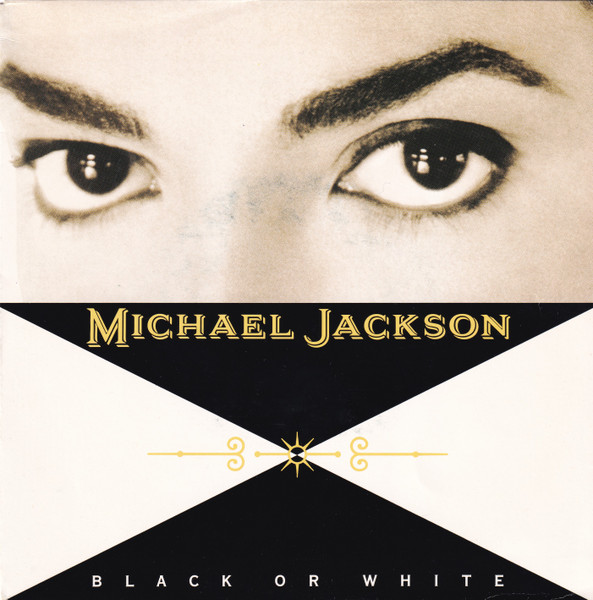
Black or White, by Michael Jackson (his 4th of seven #1s)
2 weeks, from 17th November – 1st December 1991
It’s also a very modern sounding song, moving from said pop, to rock, to rap, with a tribal drumbeat laid underneath, with effortless ease. By the middle of the decade it will be common for pop songs to incorporate a rapped verse, but this is one of the first chart-topping examples I can think of. The huge change in tone for the middle-eight sticks out like a sore thumb, but also somehow works too, and is our first glimpse into how this is more than just a nice pop song.
I ain’t scared of no sheets, I ain’t scared of nobody… Jackson spits (‘sheets’ referring to the white cloths of the KKK), and the rest of the song’s lyrics are similarly hard-hitting. Don’t tell me you agree with me, When I saw you kicking dirt in my eye… he sings, as the main riff kicks back in again. But the true classic line is kept for the rap: I’ve seen the bright getting duller, I’m not gonna spend my life bein’ a colour…
This being Michael Jackson, though, the message that it don’t matter if you’re black or white comes with a little extra baggage. Compared to the MJ that we saw in the video to his last UK #1 – 1987’s ‘I Just Can’t Stop Loving You’ – he looks a lot less… black. His nose, too, has changed beyond recognition. It would turn out to be a combination of plastic surgery, vitiligo and skin bleaching. In releasing a song called ‘Black or White’, you have to either marvel at Jackson’s confidence, knowing that he was going to invite comment and criticism, or suspect that he was becoming divorced from reality.
Still, he was the biggest pop star on the planet, and the music video premiered to the biggest audience ever. Like many of Jackson’s videos, it’s an eleven-minute piece of cinema. It opens in a suburban kid’s bedroom (the kid being child star du jour Macauley Culkin), before taking us on a tour of the world, as MJ dances with African tribesmen, Native Americans, Thai dancers and Cossacks before ending up on top of the Statue of Liberty. Nowadays you might label it as well-intentioned but clumsy. The most affecting part of the video is the simplest: the face shifting sequence, in which white men morph into black women into Asian men into white women.
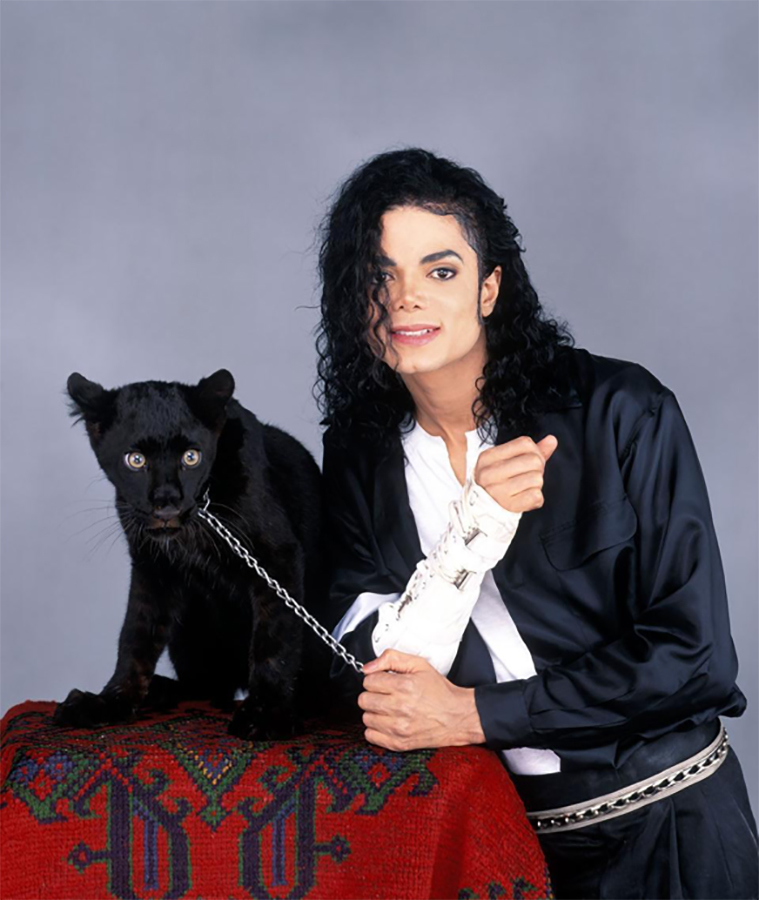
The song ends, but the video continues with a five minute long scene where Jackson morphs into a panther, then embarks on a vandalism rampage, smashing shop windows and car windscreens. He got criticism for this, and cut it from later screenings of the video. (Personally, I’d criticise it for being self-indulgent and pointless, rather than encouraging violence…) Years later he edited this section of the video so that he was smashing windows that had been spray painted with racist slogans to better explain his actions. Oh, yeah, and then the video actually ends by cutting to an episode of ‘The Simpsons’, in which Bart has just watched the video to Homer’s annoyance (handily harking back to Jackson’s alleged other #1 from earlier in the year).
It’s a complex beast, then, this single. On the one hand a breezy tune with a positive message, on the other a sign that the King of Pop might have been living up to the ‘Wacko’ nicknames. It was the lead single from ‘Dangerous’, his last truly great album (though one that still probably couldn’t quite live up to its 1980s predecessors). Despite that, the 1990s would end up being Jackson’s most successful decade of all for number one singles, with three more to come… And I’m going to spoil things by saying that ‘Black or White’ is probably the best.
 The UK Number Ones Blog