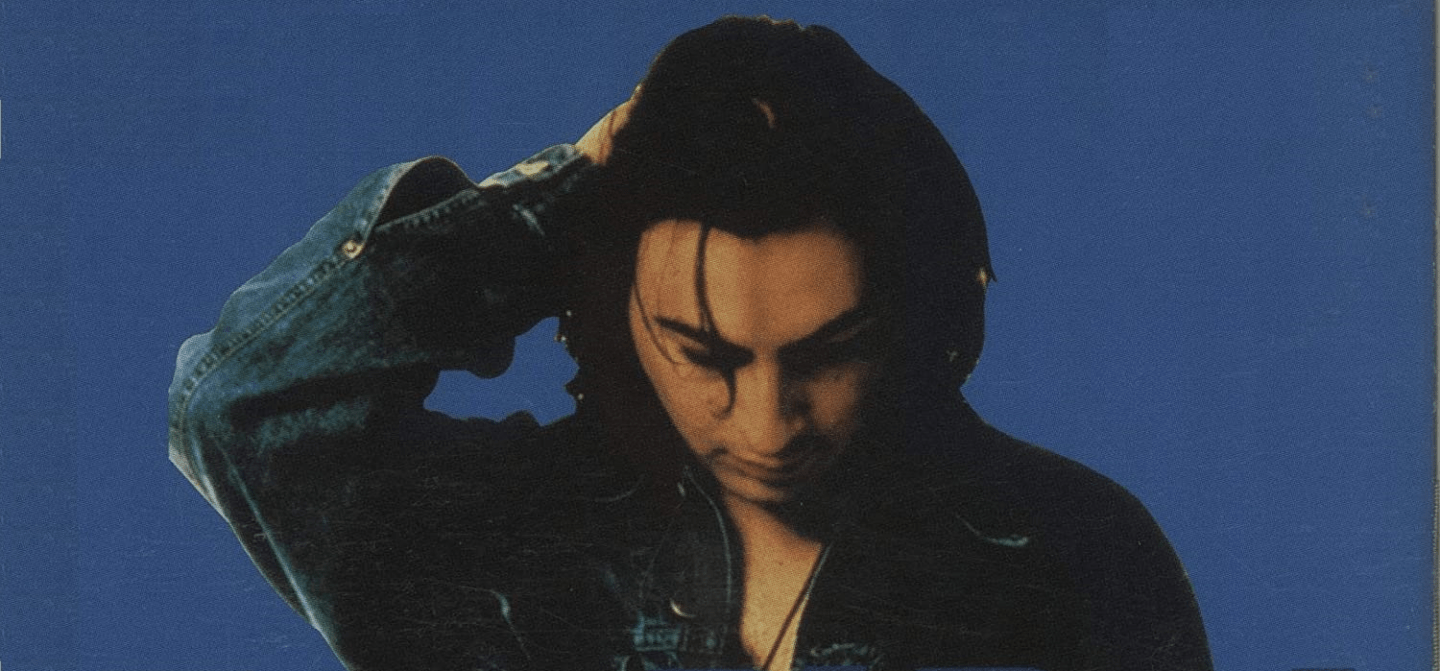
747. ‘Setting Sun’, by The Chemical Brothers

There’s no doubt that ‘Firestarter’ was the big, banging dance-rock crossover hit of 1996; but that song’s infamy probably means that it has unfairly overshadowed the year’s other big, banging dance-rock crossover hit…

Setting Sun, by The Chemical Brothers (their 1st of two #1s)

1 week, from 6th – 13th October 1996

Because ‘Setting Sun’ hits even harder than ‘Firestarter’, and it hasn’t been tamed by years of ubiquity. I hadn’t heard it properly for ages, and was genuinely taken aback by how nasty it sounds. Take the relentlessly monotonous, boldly uncommercial, one-minute long intro for a start. These are big beats with a capital ‘B’.

The shrieking klaxons and the gut-dropping bass hold the track together, and are very nineties. But in the droning sitar, and the vocals played in reverse, there’s also more than a nod to the original tape-looping, Eastern-looking, psychedelic game-changer: the Beatles’ ‘Tomorrow Never Knows’. At one point lawyers looked like getting involved, before a musicologist was brought in to prove that the song was merely inspired by, and didn’t sample, The Beatles. The fact that it was used as a template for a dance track thirty years later surely just proves how incredibly ahead of its time ‘Tomorrow Never Knows’ was.

And what could be more Beatlesy, back in 1996, than to have Noel Gallagher on vocals? Uncredited, and filtered through layers of feedback, but still recognisable from the off, he even manages to rip-off his own lyrics from ‘Half the World Away’… You said your body was young but your mind was very old… And I have to say that this is probably the best #1 single that he features on, as much as I do enjoy many of Oasis’s chart-toppers.

Other brilliant moments include the intense break half-way through, which sounds like a helicopter landing on your head. (I was going to call it the ‘middle-eight’ but I don’t think traditional terms like that apply to boundary pushers like this.) And then there’s the completely unhinged outro, in which the song disintegrates before our ears. The video I’ve attached below is the radio edit, but it’s worth hearing the full five and a half minute version, to drag out the exquisite nastiness…

Another thing that’s interesting about this record is that, unlike The Prodigy when they unleashed ‘Firestarter’, The Chemical Brothers had only a couple of minor hits to their name before ‘Setting Sun’. According to most sources, airplay was limited too. So it seems to have been a genuine underground, word of mouth smash (with Noel G for added clout) that set the duo up to become one of the biggest dance acts of the late-90s and early-00s.

The Chemical Brothers (yet again, like the Walkers, the Righteouses and the Outheres, they are not actually brothers!) had met at the University of Manchester in 1989, and had bonded over their love of rave culture. There can be few chart-topping DJs with a degree in late-Medieval history, but the Chem’s Ed Simons is one. They have one further chart-topper to come, but it will have to go some to match the power of this.

739. ‘Ooh Aah… Just a Little Bit’, by Gina G

One day I’ll do a feature on the #1 singles with the best intros – the likes of ‘Satisfaction’, and ‘I Heard It Through the Grapevine’. It’ll be a great blog post, attracting widespread acclaim… Except for one problem. I’ll feel duty bound to include ‘Ooh Aah… Just a Little Bit’.

Ooh Aah… Just a Little Bit, by Gina G (her 1st and only #1)

1 week, from 19th – 26th May 1996

You see, few intros hold more nostalgic power for me. Within two of these tinny notes – this synthesised siren demanding you report immediately to the dancefloor – I am ten years old again, at a primary school disco, among the flashing lights, and the dry ice that always smelled a bit like pee, high on Fanta and prawn cocktail Skips.

Yes, this is cheesy crap. But it is also magnificent. It is the final part of a holy trinity of Eurovision anthems – this, ‘Waterloo’, and ‘Making Your Mind Up’ – and the fact that it only finished in 8th place is truly shocking. It’s very camp – as any song with ‘Ooh Aah…’ in the title must be – and yet flirts with almost being cool. Lines like Every night makes me hate the days… and the way that the drum machine and the synths reach near-techno levels, for example.

You could be smart, and claim that this is ‘post-rave’ or something, but actually trying to give this record a clever label would be doing it a disservice. Something this gloriously tacky doesn’t need clever labels. In a nutshell, ‘Ooh Aah… Just a Little Bit’ sounds like Stock, Aitken and Waterman back in their chart-topping heyday, but only if the lads had just popped some Ecstasy and downed five bottles of Hooch.

Although she represented the UK at the Eurovision Song Contest in 1996, Gina Gardiner was Australian, from Brisbane. She had genuine dance music credentials, having been a DJ since the early ‘90s, and a member of the group Bass Culture. Post-Eurovision, ‘Ooh Aah…’ was a hit around Europe, and even made #12 in the US. It led to two further #6 hits for Gina, who released her last single in 2011, and hasn’t been active since. She apparently has her own record label, and lives in LA with her husband. I hope she’s happy, and would like her to know that her biggest hit still elicits an almost Pavlovian response from this man in his late-thirties…

Interestingly, Gina G’s is the first female voice to feature on a UK number one since Janice Robinson belted out her vocals on Livin’ Joy’s ‘Dreamer’, and the first woman to be credited on a UK chart-topper since Cher, Chrissie Hynde and Neneh Cherry well over a year ago. 1995 was very male heavy – and the worst year for number ones in quite a while. The remainder of 1996 promises more female voices, and thankfully much more enjoyable #1s.

738. ‘Fastlove’, by George Michael

George Michael bows out from chart-topping duty, after eleven #1s – both solo and with Wham! – in just under twelve years. And dare we say he bows out with his best…?

Fastlove, by George Michael (his 7th and final solo #1)

3 weeks, from 28th April – 19th May 1996

I doubt many other people would name ‘Fastlove’ as Michael’s best chart-topper, but it’s my favourite. As worthy, and lyrically beautiful, as ‘Jesus to a Child’ was; I’m glad that he wraps up with this banger. Gotta get up to get down… And if his number one from earlier in the year was an ode to a lost love, then this is an ode to getting over a lost love. An ode to anonymous and fleeting satisfaction, as Cher once memorably put it.

I ain’t mister right, But if you’re looking for fast love… he purrs, over a funky bassline and some contemporary disco beats. All that bullshit conversation, Baby can’t you read the signs… I also love the line about all his friends having babies, while he’s just wanting to have fun, which is something every gay man in their thirties can relate to. In the background we can hear ‘interpolated’ – as we must always refer to sampling from hereon in – the hook from 1982 hit ‘Forget Me Nots’ by Patrice Rushen (which Will Smith will soon ‘interpolate’ even more blatantly).

I called this a ‘banger’, but it’s actually quite smooth and slinky. The melody and the groove wrap themselves around you like a particularly sexy snake, and don’t let go. There are still some of the over-indulgences that, for me, always mark George Michael’s work down a notch: the muzaky saxophones, and the fact that it goes on for over five minutes. A three-minute quicky would have been more appropriate here, especially given the subject matter. But the funky break in the middle is a thing of beauty.

Like all great pop songs, though, there is more going on under the surface. The lyrics aren’t just celebratory, they reveal a pain behind all the sex. George needs affirmation, needs someone to ease his mind. In the absence of security, I made my way into the night… Which sounds quite dark, until a few lines later he proposes a quick shag in his BMW. But there’s enough here to suggest that his need for ‘fastlove’ isn’t an entirely healthy thing, and may be linked to the loss in ‘Jesus to a Child’. The most telling line is surely I miss my baby… It’s admirable that he made a very catchy pop song out of such personal issues.

Post-‘Fastlove’, George Michael would remain a fairly regular presence in the UK charts, including four more #2s. One of which is the truly glorious, and definitely worthy of the term ‘banger’, ‘Outside’ – a brilliant middle-finger to all the fuss over his sexuality. He died in 2016, aged just fifty-three, and took his place in the highest-echelons of dead pop superstars. I have my opinions on his current standing among the greats, but it seems churlish to drone on about them here.

And, of course, he isn’t actually done with chart-topping, as the streaming era has given ‘Last Christmas’ – for years the highest-selling #2 hit of all time – a new lease of life. But that’s something that we’ll get to, again, and again, and again, in due course…

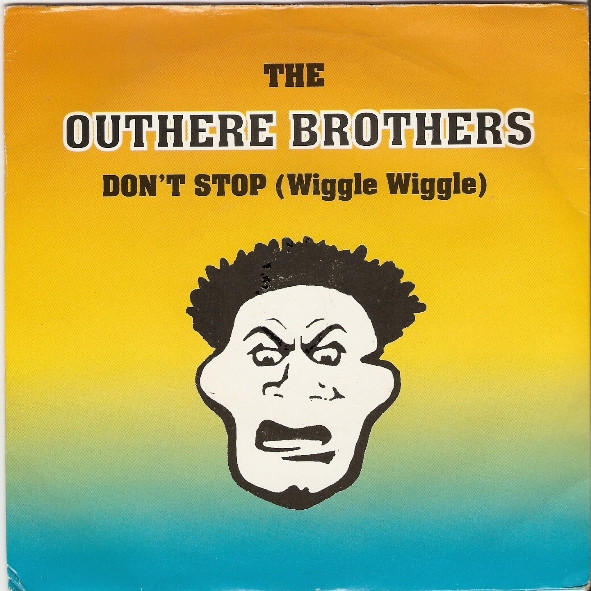
718. ‘Don’t Stop (Wiggle Wiggle)’, by The Outhere Brothers

Is 1995 the year with the biggest disparity between what it is remembered for, and what actually made #1? 1977 might have a case, the year punk exploded yet in which David Soul was the breakthrough star. 1995, though…?

Don’t Stop (Wiggle Wiggle), by The Outhere Brothers (their 1st of two #1s)

1 week, from 26th March – 2nd April 1995

I mention this because this next number one has left me in a state of shock. Shock at how I don’t really remember it. Shock at some of the lyrics. And shock at just how bloody awful it is… Biiiyyaaatch!

I thought that Rednex had my upcoming ‘Worst #1 Award’ in the bag. But as horrible as ‘Cotton Eye Joe’ is, at least it is identifiable as a ‘song’. This is an absolute racket. The pitch of the singer’s voice as he repeats the title line: Don’t stop movin’ baby oh that booty drive me crazy…, the one-note beat and the bubble-popping sound effect, the way that that one line is chopped up over and over again, ad nauseum… Some mixes are better than others – and the video attached at the foot of this post is the most palatable version, with a Hi-NRG beat – but most are dire.

I’m torn between wrapping this post up as soon as possible, trying to forget that this record ever existed, and delving a bit deeper. The radio edit of ‘Don’t Stop (Wiggle Wiggle)’ is repetitively, mind-numbingly, boring. But that wasn’t the reason this made number one. For the other, non-edited mixes reveal this to be the filthiest number one single we’ve heard so far on this countdown.

No, make that one of the filthiest number ones, ever. Period. Even in this post-‘WAP’ world, the lyrics here still raise an eyebrow. There’s that opening Biiiyyaaatch! for a start. Then there’s: Put your ass on my face… I love the way your… No I can’t type the rest. Girl you’ve got to suck my… Nope, still can’t. I’m not a prude, but this isn’t something I’ve never had to consider in my seven hundred and seventeen previous posts. The worst word we’ve encountered so far has been, I think, ‘bullshit’. And that’s a word I heard on Radio 4 the other day… I knew the 1990s would see morals and standards loosen (God, I sound like Mary Whitehouse), but I though it would be gradual. A ‘bitch’ here and a ‘fuck’ there. But no, it all arrived at once, right here: a smorgasbord of vulgarity. Which means that ‘Don’t Stop (Wiggle Wiggle)’ is actually a hugely important chart-topper…

But nah, I don’t want to give it that sort of weight. It happened. Swearing in #1 singles is fine now. Let’s move on. (And anyway, luckily for all of us, The Outhere Brothers have an even bigger hit coming up very soon…) They were a duo from Chicago – yet another pair of fake chart-topping siblings – and this was their breakthrough hit, after previous releases such as ‘Pass the Toilet Paper’ had failed to chart. Thirteen-year-old boys around the world then kept the pair in hits for the next couple of years, though their subsequent album ‘1 Polish, 2 Biscuits and a Fish Sandwich’ wasn’t as successful (and you can look up the meaning of that title, if you dare…)

Back to what I mentioned in the intro, about 1995 being a strange year, in which most of the acts and songs we remember the year for didn’t make the top of the charts. It’s a theme I’ll return to, especially when a different gruesome twosome dominate later in the year. Up next, though, I’m sort of instantly proven wrong, for it’s the decade’s biggest boyband, with one of the nation’s best-loved songs…

(The ‘best’ version of the song…)

(The explicit version, if you must…)

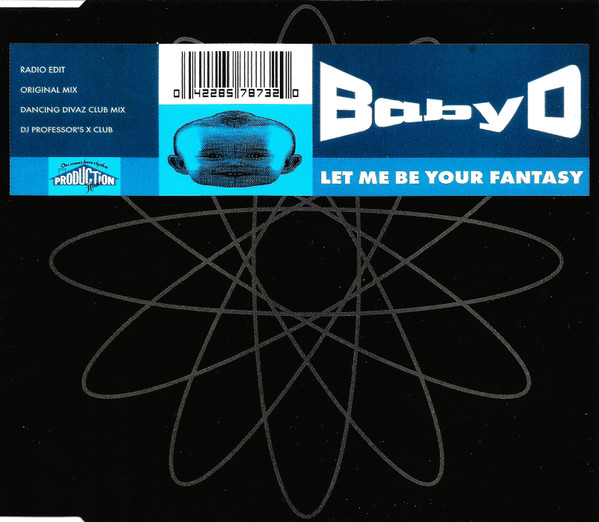
713. ‘Let Me Be Your Fantasy’, by Baby D

I know very little about dance music. I can just about tell my techno from my chillout, but you may have noticed from my previous posts on dance #1s that I play pretty fast and loose with the terminology. So indulge me while I throw around some ideas that may be complete nonsense…

Let Me Be Your Fantasy, by Baby D (their 1st and only #1)

2 weeks, from 20th November – 4th December 1994

‘Let Me Be Your Fantasy’ might be the most ‘hardcore’ dance chart-topper yet. The beat is either ‘house’, if we’re looking backwards, or ‘garage’ if we’re looking forwards. Is it maybe even the first ‘drum ‘n’ bass’ number one? I’ll also throw in the suggestion that it also incorporates ‘jungle’, if only because I think it sounds fun.

I could list dance sub-genres all day long (Wikipedia also suggests ‘breakbeat’ and ‘happy hardcore’) but to be honest, they mean little to me and probably mean as much to you. Let me give the quotation marks a rest, and describe what ‘Let Me Be Your Fantasy’ makes me feel… Well, it’s atmospheric – I like what sounds like a robot breathing in the mellow breaks between the verse – and the vocals are impressive. They’re the part of the song that feels the most familiar: a dance hit helmed by a large-lunged diva a la Black Box, or Snap!. Here the singer is Dorothy ‘Dee’ Galdes (presumably the ‘D’ in Baby D) and she has a wonderfully light-yet-full-bodied voice.

It’s another step towards the dance music that was dominating the charts when I came of age in the later part of the decade – dance music that had moved away from samples and novelty raps, dance music that had the confidence to strip things back, to drop the beats per minute, to let things breathe. This record is similar in that way to 1994’s other ‘cool’ dance hit by Tony Di Bart, rather than the more novelty offerings from Doop and Whigfield.

But I’ll also take that word ‘cool’, strengthen it into ‘cold’, and use it to describe how this song leaves me feeling. It’s not my thing, and as much as I try I can’t move past detached admiration as I listen and critique – much like I would an artefact in a museum – and I move on without particularly wanting to hear it again. I will always, sorry to say, enjoy the inane cheesiness of a 2 Unlimited song more…

Baby D had been around since the late eighties, and had scored a handful of minor hits earlier in the nineties. ‘Let Me Be Your Fantasy’ had been around since 1992, when it made #76 and become something of a lost classic. Until it was ‘found’, re-released, and it reached #1. Baby D followed it up with a couple of #3 hits before fading. Their last hit was a remix of this, their biggest hit, that made #16 in 2000. Their keyboard player, Terry Jones, took a slight change in direction and went on to write and produce for the Backstreet Boys, Eternal, and Peter Andre…

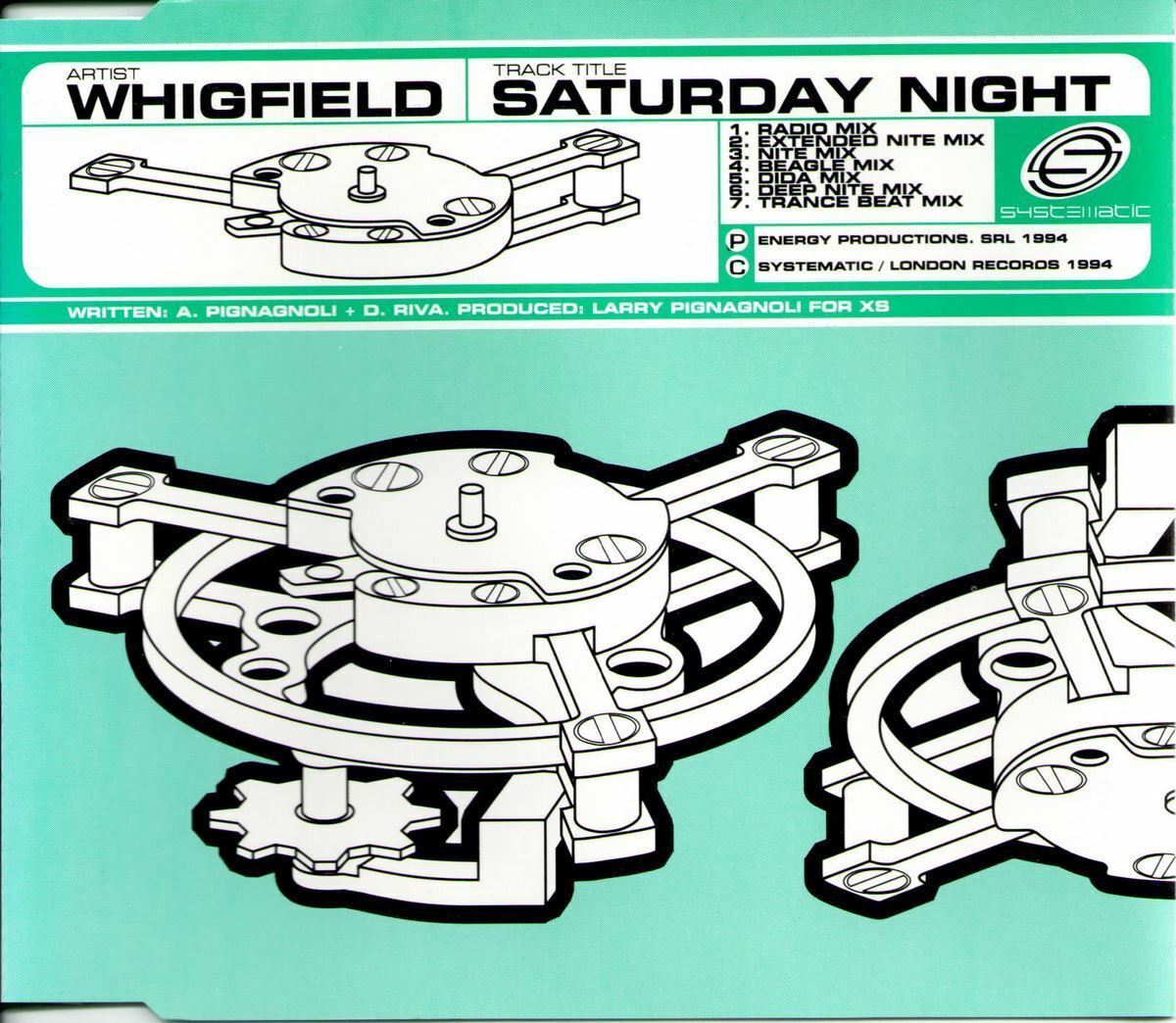
710. ‘Saturday Night’, by Whigfield

After fifteen weeks of ‘Love Is All Around’, I’m sure the nation (including Wet Wet Wet themselves) was happy for literally anything to come along and give us a new number one…

Saturday Night, by Whigfield (her 1st and only #1)

4 weeks, from 11th Sept – 9th Oct 1994

Well, here with the dictionary definition of the phrase ‘careful what you wish for’, is Danish beauty Whigfield, and her ode to the penultimate night of the week. I innocently thought I’d enjoy hearing this tune again, cheese that it is, while assorted memories of primary school discos came flooding back…

But, alas. It’s a bit crap. The first ten seconds are the most interesting. The famous di-di-da-da-da intro and the quacking synths. Here we go, I think, nostalgia central. Except, as ever, nostalgia ain’t what it used to. The remaining four minutes of ‘Saturday Night’ are repetitive and dull. The banal lyrics – Saturday night and I like the way you move… It’s party time and not one minute we can lose… Be my baby… and some la-di-dahs to fill the gaps… – the banal beat, the banal quacking. I notice that as part of the current ‘the nineties were the best decade ever’ movement, there are attempts to cast this as a ‘90s dance classic, up there with ‘Rhythm Is a Dancer’ and ‘Ebeneezer Goode’. But it’s really not.

Not that it’s terrible either. It’s a novelty, but not the most offensive kind. It’s biggest relevance, in chart terms, is in being the ultimate post-summer holiday hit. Presumably played in bars across the continent all summer, it smashed straight in at number one when finally released at the start of September. Oh, and there’s the fact that in entering at #1, Whigfield became the first act to have their debut single do so.

As with Alice Cooper, and Marilyn Manson (two artists to whom I didn’t expect to be drawing a comparison today) people make the mistake of referring to Whigfield as the singer rather than the band (or ‘musical project’ as Wikipedia refers to them). The singer, Sannie Charlotte Carlson, was Danish, and the producers were Italian. Carlson, though, was the very pretty star of the show. I’m sure the video, in which she prances around in a towel, getting ready for a big night out, did the song’s chances no harm. Whigfield would go on to have just two further Top 10 hits, though Carlson continues to record and perform.

I think another reason writing this post didn’t bring about a warm Proustian glow is that my repeated plays of ‘Saturday Night’ have reminded me of the dance routine. Interestingly, Carlson doesn’t do the dance in the video, and the craze seems to have stemmed from her backing dancers when she performed on Top of the Pops. However it started though, it quickly caught on, and the social anxiety that came from the being nine-years-old and the only person in the school who couldn’t do it properly remains to this day (see also: ‘The Macarena’).

706. ‘The Real Thing’, by Tony Di Bart

Well, I didn’t expect this. To get to May 1994 and come across a number one hit I have genuinely never heard before…

The Real Thing, by Tony Di Bart (his 1st and only #1)

1 week, from 1st – 8th May 1994

This record both is, and isn’t, your average mid-nineties dance tune. It’s a banger, all throbbing synths and a bassline that goes right through you, but it’s main references aren’t techno, or Eurodance. It looks back to the house tunes of the late-eighties – meaning it probably qualifies as retro already – and in the beat and the piano chords it nods even further back, to the days of disco.

It’s a slow-build sort of song. I was about to write it off as bland on first listen, but on my second I heard a hook buried in the melancholy chords, and by the third listen I was intrigued. There’s something there. Despite its retro influences, it feels very modern. If I can’t have you, I don’t want nobody baby… Most dance hits in the mid-nineties were euphoric, in-your-face – the likes of 2 Unlimited and Snap! springing to mind. ‘Dancing through the tears’ is a very 21st century concept, popularised by acts like Robyn, and The Weeknd. The latter of whom I bring up, because Tony Di Bart sounds remarkably like Abel Tesfaye, with his falsetto, and the longing in his voice.

The man known as The Weeknd counting Tony Di Bart as an influence seems unlikely, given that ‘The Real Thing’ was the only Top 20, and one of only two Top 40 hits, Di Bart managed. Neither of which did very much in North America. This single hadn’t done much initially in the UK either, when it was released in November 1993. It took a remix to send it up the charts, and that’s why I haven’t attached a video below: none seems to have been made for the much more atmospheric remix. (Listen to the original version here.)

As Italian as Antonio Carmine Di Bartolomeo AKA Tony Di Bart sounds, he was actually from Slough. His Wikipedia page is sparse, with few details given as to how he went from selling bathrooms to the top of the charts. His post-fame entries make for sad reading: one of his more recent public appearances was at a village fête in Buckinghamshire, before he was arrested and pleaded guilty to assaulting a police officer earlier this year.

Still, assault charges or no assault charges, you can’t take away the fact that Tony Di Bart has a number one single. One that is actually quite good, the more you listen and get lost in its wistful synths. Up next, an equally forgotten one-week wonder…

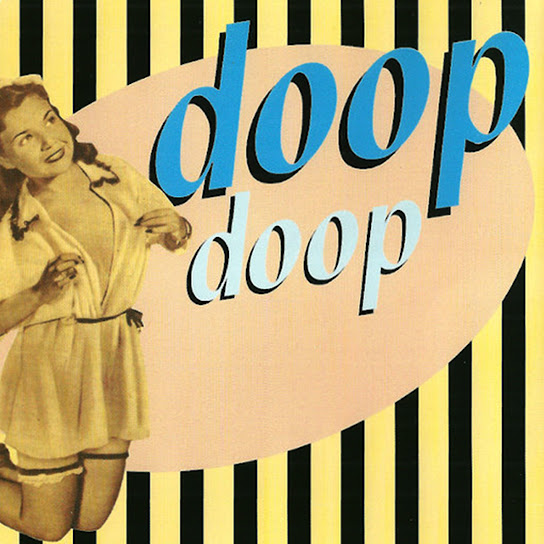
703. ‘Doop’, by Doop

And now for something a little different… Eurodance meets the Charleston.

Doop, by Doop (their 1st and only #1)

3 weeks, from 13th March – 3rd April 1994

More impressively, Eurodance meets the Charleston, and the results aren’t a complete disaster. ‘Doop’s merging of wildly disparate musical eras works. It’s fast, catchy, and fun – a novelty for sure, but not too irritating. It works its way right into your brain, thanks to its frenetic pace and puppy dog energy, and stays there…

It’s a completely instrumental track, apart from the doopy-doopy-do-do-doos which give the song its name. It’s the last instrumental number one since… I’m not sure, to be honest, but it’s been a good while. It’s also probably one of the last, as they’ve become rarer and rarer since their heyday in the late fifties-early sixties.

There’s not much to it – a big band sample stretched out over a techno beat. With the aforementioned doops, of course. The most complex thing about this record is how many remixes there were, and working out which one was actually getting airplay at the time. They all have a varying techno-to-Charleston ratio. The ‘Official Video’ on YouTube is the most modern, a dance beat interspersed with trumpet blasts. I prefer the more big band-heavy versions, such as the Sidney Berlin Ragtime Band mix, from the Maxi-CD release, or the Urge-2-Merge radio edit.

The best mixes are also the ones that keep proceedings down to the three-minute mark for, as fun as this tune is, it can get a little repetitive when stretched over seven minutes. Short and sweet is the order of the day here. Doop were, you’ll be shocked to realise, from the Netherlands, the one country that can rival masters Germany for Europop cheese. And let’s be honest, giving your debut single the same name as your band (or vice-versa) suggests that you’re quite happy in aiming for one-hit wonder status.

In fairness, Doop did manage a #88 follow-up hit with ‘Huckleberry Jam’, in which they tried the same trick using an old blues riff, while an earlier incarnation of the group, Hocus Pocus, made #1 in Australia with a song called ‘Here’s Johnny!’ Really though, this is real one-hit wonder stuff: a flash in the pan, bottled lightning moment, and I’m not sure this track has been played on the radio for years.

It was a trend-setter of sorts, though. I can’t think of many dance tracks that sampled pre-rock and roll music before Doop, but I can think of a few that came afterwards, including at least a couple of number ones. Anyway, I like it, as throwaway as it is. The NME disagree, though, naming it among their ‘25 most annoying songs ever’… Which seems rich given some of the crap they’ve championed over the years.

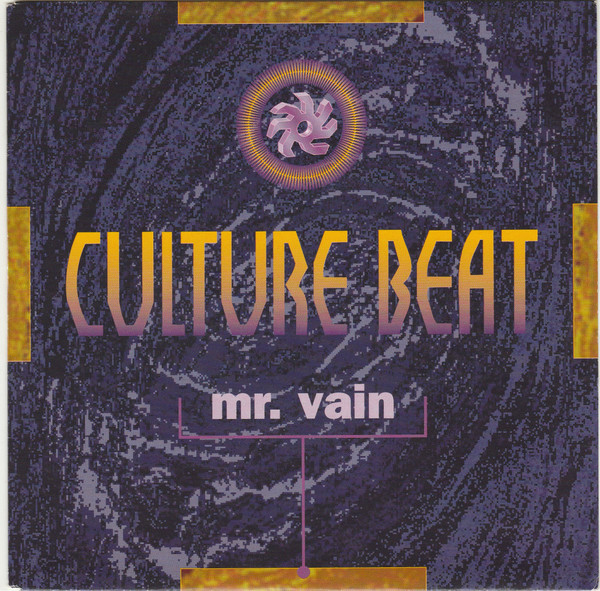
694. ‘Mr. Vain’, by Culture Beat

The intro to our next number one kicks in, and I’m struggling to tell if it sounds like something we’ve already met in our journey through the early 90s, or if it was simply copied into ubiquity in the years that followed…

Mr. Vain, by Culture Beat (their 1st and only #1)

4 weeks, from 22nd August – 19th September 1993

On the one hand, ‘Mr. Vain’ is cheesy, throwaway Eurodance – the soundtrack to many a summer holiday in Ibiza (the 1990s is littered with dance hits that made the higher reaches of the charts in early autumn, after everyone had returned home from a fortnight in the Med). On the other, it’s an astute slice of dance-pop so of its time it could be in a museum.

It follows a tried and tested formula: one girl who sings, one boy who raps, over a throbbing beat. It’s amazing how successful this was, over and over again, between 1990 and 1994. Snap!, 2 Unlimited, Culture Beat… ‘Mr. Vain’ is a both a cheap and cheerful rehash of ‘Rhythm Is a Dancer’, especially in the portentous intro, and a slightly less stupid take on ‘No Limit’, with its techno riff and juddering drum machine. It takes what was great about both those records, and creates a streamlined, optimised dance hit – perhaps the epitome of its genre.

Call him Mr Raider, Call him Mr Wrong… Away from the pulsing beat, there are lyrics that just beg to be chanted en masse. I know what I want and I want it now… A decade later, when I started going to nightclubs, this record would still get a regular spin, and girls would pick out their own personal ‘Mr. Vain’ among the strobes and the dry ice. Meanwhile, Mr. Vain responds in the rapped verses: Call me what you like, As long as you call me time and again…

I’m going to take bets on where Culture Beat were from. Place your chips…. There’s no way they were British – the thought didn’t even cross my mind, given that this is dictionary-definition Eurodance. I was tempted to go Dutch, or maybe Belgian… But no. They were a German creation, of course, from a producer with two rent-a-voices, keeping up a grand tradition that stretches all the way back to Boney M. For ‘Mr. Vain’, though, the large-lunged vocals are from a Brit – Tanya Evans – while the rap is supplied by an American – Jay Supreme.

They’d had a couple minor hits previously, but this one sent them into the stratosphere: a number one in eleven countries across Europe, setting them up for a year or so of follow-up Top 10s. In Germany their success lasted the better part of a decade, until a remake of their biggest hit, ‘Mr Vain Recall’, in 2003. Culture Beat remain a going concern, presumably touring festivals across central Europe every summer, with a completely different line-up, Evans and Supreme having left way back in 1997.

693. ‘Living on My Own’, by Freddie Mercury

It feels like we’ve been bidding farewell to Freddy Mercury for a while now. From the re-release of ‘Bohemian Rhapsody’, paired with ‘These Are the Days of Our Lives’, in the weeks following his death, to George Michael’s tributes on the ‘Five Live EP’, to this.

Living on My Own, by Freddie Mercury (his 1st and only solo #1)

2 weeks, from 8th – 22nd August 1993

And of the three, this remix of his minor 1985 hit is the tribute that Freddie himself might have enjoyed the most. On the one hand it is a shame that his solitary solo number one isn’t a blistering rocker; but then he was a musician who never let himself be restricted within one genre. ‘Living on My Own’ is updated nicely for the early-mid nineties, with a chilled out house beat, by a production trio called No More Brothers and, although it was still listed on the charts as the 1985 original, it was undoubtedly this remix that sent it to #1.

I say that Freddie would have liked this version and, presumptuous as that might be, if you listen to the original, from his ‘Mr. Bad Guy’ solo album, then it was already much more dance than rock. The lyrics, meanwhile, are very personal: Sometimes I feel I’m gonna break down and cry, Nowhere to go, Nothing to do with my time… I get lonely… They’re based heavily on quotations from Greta Garbo (which feels very Freddie Mercury…) and each chorus ends on the positive mantra: Got to be some good times ahead… Though knowing how soon it all would end, that line is tinged with sadness.

I will also give a shoutout to an earlier remix – which I initially thought was the chart-topping version – by Julian Raymond. This is my favourite of the three versions, with a faster, industrial beat, more of Mercury’s trademark yodelling, alongside a frenetic piano line. It was commissioned as part of the ‘Freddie Mercury Album’, released in November 1992 to mark the 1st anniversary of his death, but never released as a single.

The video to the 1993 version of ‘Living on My Own’ was the same as the 1985 one, and featured footage of a Drag Ball held for Mercury’s 39th birthday party. I love this quote: “Because of the garishly costumed homosexuals and transvestites celebrating a decadent, raucous party in the video clip, the BBC long refused to broadcast the music video on its channels.” Good old Beeb, always ready to ban those garish homosexuals…

I hadn’t realised quite how well Freddie Mercury’s solo career – while nothing compared to Queen’s discography – had been ticking along since the mid-80s, when he made the Top 10 with ‘Love Kills’. The ‘Living on My Own’ remix was his seventh, and final, Top 20 hit, and a huge smash across Europe. (Especially in France, where it did a Bryan Adams and stayed at #1 for fifteen weeks! Bryan or Freddie… I know who I’d rather have clogging up the number one spot…)

With this we can finally bid farewell to Freddie Mercury. Three number one singles in his lifetime, two after his death, and one well-intentioned tribute in-between. For my money, he is the greatest frontman of all time. Not only could he rock with the very best; he could do opera, musical theatre, pop, disco, camp ditties about girls with fat bottoms… And he sounds just as at home here, on a house track released two years after his death, as he does anywhere.