935. ‘The Tide Is High (Get the Feeling)’, by Atomic Kitten

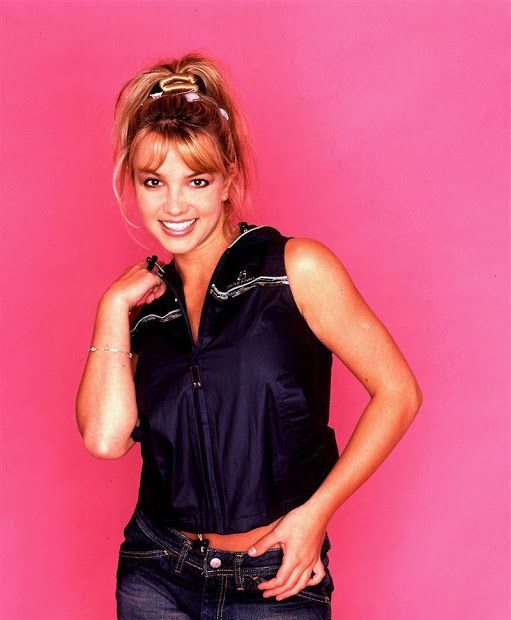
The Kittens are back, and so is that tacky, pre-set drumbeat. Seriously they should have patented it, so that it could only ever have been used to announce a new tune from Britain’s favourite Scouse likely lasses.

The Tide Is High (Get the Feeling), by Atomic Kitten (their 3rd and final #1)

3 weeks, from 1st – 22nd September 2002

Last time out they were desecrating the memory of the Bangles, with their truly criminal cover of ‘Eternal Flame’. Now it’s the turn of an iconic act from the other end of the eighties to act as a scratching post: Blondie. However, despite being much more a fan of Blondie than the Bangles, I can’t get so worked up about this take on ‘The Tide Is High’

Maybe because this is, by far, my least favourite of Blondie’s six chart-toppers? Maybe because it’s a cover of a cover, Blondie having taken The Paragon’s sixties original? Maybe because it’s an upbeat track, which is much more in Atomic Kitten’s wheelhouse, and not an emotional ballad?

Not that I’m going to argue that this record is particularly good, either. But it washes over me, putting me in a late summer kind of mood. They remain limited singers, but this far into Atomic Kitten’s career that is no surprise. You knew what you were going to get. Plus, they add a new middle-eight – an original composition called ‘Get the Feelin’’ – so it feels slightly more than just a straight cover.

Still, the fact that it stayed at number one for three weeks – a long stretch by early ‘00s standards – is surprising. In fact, it should be noted that none of the Kitten’s three chart-toppers were one-weekers, which is impressive, and suggests that they had a casual, widespread appeal rather than a devoted fanbase. For purely circumstantial evidence of this theory, I can confirm I have never met anyone who would confess to being an Atomic Kitten fan.

We bid farewell to Liz, Tash and Jenny here, but they were good for six more Top 10 hits through to 2005, when they went on hiatus. In total they enjoyed thirteen Top 10s across six years: an amazing achievement for a group that couldn’t sing all that well and relied on that bloody drumbeat. Some will take that as evidence of slipping societal standards. But I take it as evidence of Atomic Kitten having something, whatever that something is, to elevate them above the many other similar groups of the time who also relied on pre-set beats and couldn’t sing all that well. I will, one final time, also bemoan the fact that none of the fun, innovative pop tracks from their first album made #1, and that we were left with their three, largely meh, chart-toppers.

Cover Versions of #1s… Kingmaker & Jesus and Mary Chain

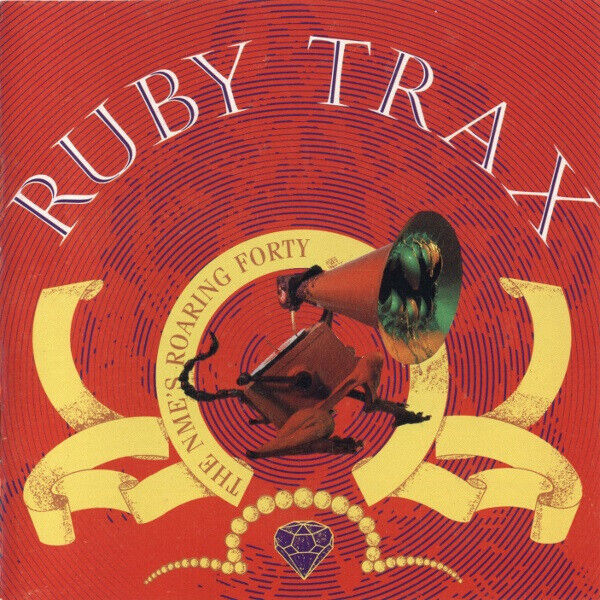
As in my two previous Cover Versions of #1s posts, I’m returning to Ruby Trax, a compilation released in 1992 to celebrate the 40th anniversaries of both the NME and the UK singles chart.

It’s a veritable gold mine of weird and wonderful covers of chart-topping hits by the big (and not so big) acts of the day. While this is the last time I’m going to feature these Trax, for a while at least, the album is definitely worth checking out if you enjoyed the covers by Bob Geldof and Sinead O’Connor, or Suede and Manic Street Preachers.

And of course, for a compilation of tracks celebrating number one singles, there had to be room for some interesting interpretations of Britain’s two greatest groups, the Beatles and the Stones. Some might say they are sacrosanct, I say have at them!

Probably sensibly, both covers are of the legendary acts’ less famous number ones. And it’s quite fun to hear ‘Lady Madonna’, famously Paul McCartney’s boogie-woogie tribute to Fats Domino, reimagined for guitars. Or maybe its because my favourite bit of the original is when George Harrison’s snarling guitar comes in for the second verse. At the same time, despite the switch in lead instrument, this is a fairly faithful cover.

I had never heard of Kingmaker before writing this post, and going by the limited number of views the above video has had on YouTube I think they’ve very much been consigned to the pre-Britpop dustbin. It seems they were nearly the next big thing back in the 1992-93, with a couple of #15 hits and tours with Radiohead and Suede as their support acts, before a falling out with their record label.

A much bigger name are ’80s shoegaze icons, and East Kilbride’s finest, The Jesus and Mary Chain. Their scuzzy, distorted, feedback drenched take on ‘Little Red Rooster’, the Stones’ 2nd #1 back in 1964, is a much more impressive proposition. The song dates back to the early sixties, written by Willie Dixon and made famous by Howlin’ Wolf, and despite all the noise-pop dressing the JAMC sensibly keep that driving blues riff as the song’s focal point.

‘Little Red Rooster’ may or may not be a phallic metaphor (the Stones’ version wasn’t released as a single in the US allegedly because of this), but the Jesus and Mary Chain replace bawdiness with menace. You would not be messing with this particular little red rooster on the prowl, who isn’t so much horny as he is looking for a fight.

If you are interested in hearing more of this album, it can be a bit tricky to Trax down, with many of the forty songs not available on Spotify or YouTube, at least not in great quality uploads. But if the idea of EMF covering ‘Shaddap You Face’, or Boy George doing ‘My Sweet Lord’, Vic Reeves doing ‘Vienna’ (they bent the rules to include that one…) or Billy Bragg covering The Three Degrees appeals to you, or at least sounds morbidly fascinating, then do have a browse. The full forty-track listing is here, on the LP’s Wikipedia page.

904. ‘Eternal Flame’, by Atomic Kitten

I admitted to a nostalgic appreciation of the cheap and cheerful production on Atomic Kitten’s first number one, ‘Whole Again’. It worked fine on an original composition…

Eternal Flame, by Atomic Kitten (their 2nd of three #1s)

2 weeks, from 29th July – 12th August 2001

But to replace the iconic, tingling intro to ‘Eternal Flame’ with the exact same pre-set drumbeat is sacrilege. And all three Kittens combined cannot compare to Susanna Hoffs tremulous vocals. We’ve heard a lot of inessential covers cropping up at number one in recent years, many of them re-dos of eighties classics, and I’d say that this rivals A1’s ‘Take on Me’ for cheapening banality.

Ironically for a song widely believed to have brought about the end of the Bangles, this version of ‘Eternal Flame’ was the official relaunch of Atomic Kitten, Kerry Katona having been replaced by Jenny Frost during the promotion of their previous number one. It set the tone for several more years of mid-level balladry and cheap covers, none of which were a patch on the catchy, playful singles from their first album. We can once again conclude that Kerry ‘That’s why mum’s go to Iceland’ Katona was the genuine creative force in the group…

What’s interesting-slash-alarming to realise is that there were only twelve years between the two versions of ‘Eternal Flame’ making number one. Yet to my ears, considering I was aged three for one and fifteen for the other, they sound as if they’re from completely different millennia. Which they technically are, but that’s not what I mean… Whatever is beyond your living memory is automatically ‘ancient’, and anything you can remember is ‘modern’, even if there’s but a year between them. It’s the same as how I can watch ‘Top Gun’, or footage from the 1986 World Cup, and struggle to believe that I was alive at the same time…

Apologies for that tangent, but is there a better place to get lost in contemplation of the perception of time than in a post on Atomic Kitten’s butchering of ‘Eternal Flame’? And luckily for us, this isn’t the last eighties chart-topper that the Kittens are going to get their claws stuck into. Their final chart-topper awaits…

Cover Versions of #1s – Bob Geldof & Sinéad O’Connor

As with my previous cover versions post (featuring the Manics and Suede), I am again mining ‘Ruby Trax’, the 1992 covers compilation put together by the NME to celebrate the fortieth anniversary of the singles chart (and of the NME, where the very first charts were published).

While the forty acts featured on the album tended to be the hot rock and indie bands of the day – Teenage Fanclub, The Wonder Stuff, Inspiral Carpets and so on – there was room for some less predictable choices. Such as relative veteran Bob Geldof’s take on the Kinks’ 1966 classic ‘Sunny Afternoon’.

It’s actually a great cover, taking the original’s already strong music hall sound, and turning it into a rousing bar room anthem. You can almost hear Geldof and his band rolling out the barrel, while the strings and accordion give it a nicely Celtic feel. I mean, it is a song about a drunken, dissolute character, and so giving it a boozy edge certainly does work.

Elsewhere on the 3-CD album, another outspoken Irish star took on an even more golden oldie. ‘Secret Love’ was a nine-week number one for Doris Day way back in 1954, taken from the soundtrack to the movie musical ‘Calamity Jane’.

Sinéad O’Connor takes what was a fairly sparse and emotive ballad, and turns it into a swinging, big band extravaganza. I think this style suits the lyrics better, as she sounds suitably happy that her secret love is no secret anymore. (Though I’ve never seen ‘Calamity Jane’, and am unsure whether this is a good thing in the context of the film.) One thing O’Connor keeps the same is the way she belts out the iconic Now I shout it from the highest hill… in a manner befitting of Day herself. The song also featured on O’Connor’s 1992 covers album ‘Am I Not Your Girl?’

873. ‘Take on Me’, by A1

I’ve mentioned this before, but it’s definitely becoming a bit of a chart theme over the past year or so: classic #2s making #1 in inferior cover versions. We’ve had 911’s ‘A Little Bit More’, Westlife’s ‘I Have a Dream’, and Madonna’s infamous ‘American Pie’. But is this next chart-topping cover the most egregious…?

Take on Me, by A1 (their 1st of two #1s)

1 week, from 3rd – 10th September 2000

Or is it a harmless tribute, bringing a much-loved classic to the ears of a new generation…? (Though there were only fifteen years between this and the original ‘Take on Me’, so I’m not sure enough time could have passed for it to have been forgotten.) The first thing that stands out are the reedy vocals, which simply cannot compete with Morten Harket, the ‘80s most crystalline voice. The producers try to paper over the cracks, by distorting, or by beefing them up with reverb and echo, and in the chorus Ben Adams makes a decent enough attempt at the high note (though the sceptic in me wonders if he didn’t have some electronic assistance…)

The original riff is of course, forever and always, a classic. So if you were to stumble across this version without ever having heard the original, then you might be impressed. But on top of the riff there are lots of pointless effects and window dressing. In fact, ‘pointless’ is the perfect word here. Why did A1 need to do this?

They had already enjoyed four Top 10 hits from their debut album, and the single following this – if I’m not mistaken – is something of a noughties pop classic. So, was it more of a statement? We’re back, with our second album, and a cover that’s bound to get us attention? I mean it worked, after all. Here they are, with their first #1. And they weren’t done meddling with the pop canon, as the B-Side was a Beatles medley.

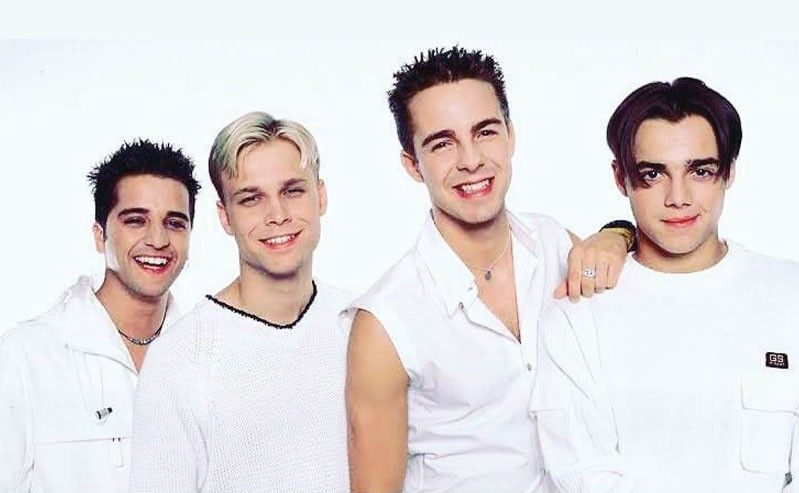
A1 had been formed by Tim Byrne, the mastermind behind Steps, and Paul Marazzi, who had failed the audition to be in Steps. In my mind, they were very much a second division boyband, more Another Level than Take That, but they stayed together for three albums and eight Top 10 singles in total. The A-ha connection goes beyond this record, too, as they had a Norwegian member, Christian Ingebrigsten, and were almost as successful in Norway as they were in the UK.

Cover Versions of #1s – Suede and Manic Street Preachers

In 1992, to celebrate the 40th anniversary of the UK Singles Chart, the NME released ‘Ruby Trax’: an album of forty cover versions of number one singles. It featured acts as diverse as Billy Bragg, Dannii Minogue, and the Jesus and Mary Chain, and it is a wonder. And something I shall be mining for all my upcoming ‘Cover Versions of #1s…’ posts.

Starting with two covers by two of the early nineties’ biggest alternative bands. November 1992 saw British rock on the verge of a big shift. The following May, Blur would release the first of their Britpop trilogy, ‘Modern Life Is Rubbish’, shortly after the arrival of the eponymous debut LP from Suede.

Suede had only released two singles when they contributed this cover of the Pretenders’ ‘Brass in Pocket’ to ‘Ruby Trax’, but they were already darlings of the music press. ‘The Best New Band in Britain’ according to Melody Maker upon the release of their first single (and, in hindsight, probably the very first ‘Britpop’ single) ‘The Drowners’.

Their cover of ‘Brass in Pocket’, is a slow-burn, adding a layer of menace that the more upbeat, seize-the-day feel of the original lacks. Brett Anderson’s voice, though, has persuasive charm like Chrissie Hynde, albeit the persuasive charm of someone begging you for drugs at a party (note also the subtle lyrics changes that add some early-nineties edge). This cover wasn’t released as a single, but was included on a 2018 re-issue of Suede’s debut album.

The only single released from ‘Ruby Trax’ was by perhaps the hottest band in Britain in 1992: Manic Street Preachers. Their take on ‘Suicide is Painless’, AKA the theme from ‘M*A*S*H’, became the band’s first Top 10 hit, peaking at #7.

I’m reluctant to ever claim a cover version as ‘better’ than an original – can you ‘better’ something that isn’t your original work? – but I will say that the Manics’ version sounds much more how I imagine a song titled ‘Suicide Is Painless’ should sound. Despite the sombre topic, the light arrangment and the choral voices of the original theme mean it can’t help sounding like a TV show theme. Which, I’ll admit, was probably the point.

In the Manics’ hands, overwrought lyrics like The game of life is hard to play, I’m gonna lose it anyway… hit home. Even the clunky title line Suicide is painless, It brings on many changes… works. Just about. Of course, knowing now the widely-believed fate of Richey Edwards adds a very sad edge to the Manics singing a song about suicide. Here though, Edwards joins the band in bringing the song to a garage rock crescendo.

I hope you enjoyed these two covers, especially if they’re new to you. If anything, it’s been nice to break up the relentless pop and dance of the year 2000’s chart-toppers for a moment… A very brief moment. I’ll feature some more covers from ‘Ruby Trax’ later in the year.

850. ‘American Pie’, by Madonna

Just before our next recap, do we have a contender for the Worst Number One award…?

American Pie, by Madonna (her 9th of thirteen #1s)

1 week, from 5th – 12th March 2000

It’s fair to say that Madonna’s version of Don McClean’s ‘American Pie’ is much maligned. I’m guilty for some of this maligning, as I’ve pre-dissed it in earlier posts and comments, despite not having heard it for a quarter of a century. So, question is: is it as bad as everyone seems to think?

No, not at all. If this was the original version of ‘American Pie’, then it might be quite a fairly innocuous entry to the Madonna canon. But it’s not, of course. I think critics are more offended by the idea of this track than the song itself. Madonna? That cone bra wearing, Jesus humping, sex book publishing harpy, daring to cover one of the pillars of rock and roll?? And I’d guess that Madonna was fully aware of this, and that her deciding to cover this classic is an act every bit as provocative as the time she went down on Black Jesus.

At the same time, there’s nothing amazing about this version. It’s as if deciding to record it was bold enough, because Madonna forgot to make it particularly interesting. Sensibly, she doesn’t do the full eight minute version, and she uses McClean’s final verse, which most radio edits of the original skip. Perhaps she was attracted by the reference to the Father, Son, And the Holy Ghost, in keeping with her usual religious schtick.

‘American Pie’ was produced by William Orbit, just like the previous chart-topper from All Saints. This puts ‘American Pie’ in the unenviable position of sounding quiet a lot like its predecessor, but being not as good. All the Orbit swishes and swirls are there, but it ends up sounding like the B-side to ‘Pure Shores’. I’d have like Madge to have gone full, crunching electro – much like her second #1 of the year 2000 – just to truly give the purists a heart attack.

Madonna recorded this cover – and she’s not someone who has recorded very many covers during her career – for the soundtrack to her romcom ‘The Next Best Thing’ (her co-star Rupert Everett cavorts with her in the video, which also acts as an ‘America at the turn of the millennium’ time machine, with firefighters, body builders, blended families and kissing lesbians). It’s becoming something of a trend in the late nineties/early noughties for famous #2 hits make #1 in inferior cover versions. We’ve had ‘A Little Bit More’, and ‘I Have a Dream’. Now this, with a few more to come soon.

Perhaps, though, the final word should go to Don McClean himself, who was whole-hearted in his support for Madonna’s cover. ‘I have received many gifts from God’, he said, ‘but this is the first time I have ever received a gift from a goddess.’ (By ‘gifts’ we can only speculate that he meant ‘royalty cheques’.)

In other news, I recently wrote another guest post for Keith’s Nostalgic Italian blog, about books from our childhood. Check it out here.

Cover Versions of Christmas #1s

For our last post of the year, let’s take a look at some classic Christmas number ones, but in versions you might not have heard before… Some good, some not so good, some just plain odd.

Starting with the daddy of all festive chart-toppers, Slade’s ‘Merry Xmas Everybody’. Noel Gallagher recorded a cover for the ‘Royle Family’ Christmas special in 2000 (a sitcom that his band had famously contributed the theme song for). It sounds exactly as you’d expect Noel Gallagher doing a cover of Slade’s Christmas classic would. Except it lacks the raucous energy of the original, instead opting for a woozy drone. And there’s no It’s Chriiiiissssttttmmmmmaaaaasssss…. So shame on you, Noel.

That same year, way over on the other side of the pop spectrum, Steps recorded their own version, and is it wrong that I’m enjoying this version more…? For a start, they lead with It’s Christmaaaaaas… so bonus points there. But there’s also something in the propulsively camp beat, and the faux-Cher autotune, that is more in keeping with the anarchic original.

Or if neither of those straight covers do it for you, then how about this remix that made #30 in 1998? It’s a bizarre record: a fairly anonymous trance beat over which Slade occasionally pop up. Flush were a Swedish act, and this was presumably made with Slade’s permission, given that it’s Noddy Holder’s vocals.

Christmas #1 the year following Slade’s colossus, Mud took a more sombre approach to festive pop on ‘Lonely This Christmas’. In 2013 Traitors! recorded this fun pop-punk version for a charity album called ‘It’s Better to Give than to Receive’. And that’s about all I know. The band don’t have a website or Wiki page, and their only other release seems to have been a four track EP. I don’t even remember where I heard this version first, but it’s been on my festive playlist for a few years now. So thank you Traitors!, whoever you are/were.

Of course, Christmas is actually about more than just presents and gluttony… There’s also ‘Die Hard’. I mean, there’s also the birth of our Lord and Saviour, Jesus H Christ. And sometimes religious songs have made Christmas number one, such as in 1976. Johnny Mathis’s version of ‘When a Child Is Born’ is fairly gentle and respectful, not enough to wake the sleeping babe in his crib. The same cannot be said for larger than life Greek Demis Roussos, who rattles the gates of heaven with his bombastic take. If I were Jesus, I know which approach I’d prefer.

And then there are the times when the festive number one isn’t about Christmas at all. in 1979, Pink Floyd made number one with their first chart hit in over a decade, ‘Another Brick in the Wall Pt II’. In 2004, nu-metal band Korn covered all three parts of the song (Pt II starts around the 1:30 mark). It was described as “one of the worst classic rock covers of all time” by Ultimate Classic Rock magazine, but I suspect they might be a tad biased against anything released post-1980. I’d call it a brutally efficient cover version.

‘Another Brick in the Wall Pt II’ then returned to the charts in 2007 when remixed by Swedish DJ Eric Prydz. His take, ‘Proper Education’, made #2, and gave us an interesting video in which a group of young hooligans break into some flats and… turn off all the energy wasting devices.

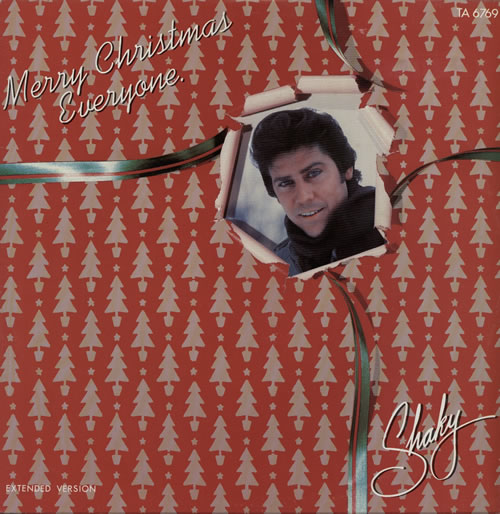
Our final cover is a 2015 remake of Shakin’ Stevens’ 1985 Xmas #1 ‘Merry Christmas Everyone’, by Shaky himself. ‘Echoes of Merry Christmas Everyone’ is a completely re-imagined bluegrass version, with lots of banjo and harmonica, recorded to raise money for the Salvation Army, and it’s amazing how a jaunty, slightly irritating original, was transformed into a melancholy, slightly haunting cover.

That’s it from the UK Number Ones Blog for 2024! I’m going to take a couple of weeks off, before returning in the first week of January, when I’ll be launching a couple of new features to mix things up in amongst all the usual chart toppers. I’d like to thank everyone who has read, followed, liked and commented this year, and wish you all a very merry Christmas and a happy new year!

Cover Versions of #1s – ‘I Don’t Want to Talk About It’ / ‘The First Cut Is the Deepest’

We finish Cover Versions week with a two-for-the-price-of-one deal. Rod Stewart scored his 4th number one in 1977 with two covers of acoustic classics – ‘I Don’t Want to Talk About It’ and ‘The First Cut Is the Deepest’. I was a bit hard on it when recapping (I gave it a ‘Meh’ Award), and by far the most memorable thing about the record is that it kept the Sex Pistols’ ‘God Save the Queen’ off the top… fairly or otherwise.

But really, both songs are quite lovely. If either had topped the charts on their own, it would have been fine. Both together, with Rod dragging the arse out of them, and I got a bit bored. Luckily for us, there are plenty of other versions of both songs for us to get our teeth into.

Both songs existed before Rod got his hands on them. ‘I Don’t Want to Talk About It’ was recorded by US band Crazy Horse, for their first album after Neil Young had left them to form Crosby, Stills, Nash & Young. Stewart didn’t stray very far from this when recording his own hit version. It’s very early-seventies country-rock, and hides a tragic backstory in the fact that the writer (and singer of this original) Danny Whitten would die of a drug overdose barely a year after it was recorded.

For something a bit different, we’d have to wait until 1988, when Everything But the Girl made #3 with their own version. In truth, it’s more the band performing it that makes this one stand out, as it’s a similarly heartfelt, acoustic take, albeit it with a few more strings. This was the duo’s only Top 10 hit between their debut in 1982, and their now signature song ‘Missing’ in 1995.

‘The First Cut Is the Deepest’ dates back further than ‘I Don’t Want…’, as it was written by Cat Stevens in 1965. Stevens sold the song for thirty pounds to US soul singer P.P. Arnold, who was the first to have a hit with it in 1967. Her version has an interesting production: part-Motown, part-sixties beat band, part-soul stomper… Sonically it’s more enjoyable, for me, than any of the more straightforward, guitar-led versions.

Cat Stevens would eventually record his own version as an album track, while it was a Canadian number one in 1973 in a particularly strident version by Keith Hampshire. Then thirty years later, Sheryl Crow brought the song back to the charts with a fairly predictable cover, put out as the ‘new’ single on a Best Of album. By far the most unusual cover of ‘The First Cut Is the Deepest’, though, came in 1995 from Swedish rapper Papa Dee. It’s a classic slice of mid-nineties reggae-pop, complete with an Ace of Base beat and a ragga break in the middle. I’m suprised it wasn’t a hit in the UK, given how many reggae interludes we’ve enjoyed in recent months. Still, it was popular across Europe, especially in Scandivania, where it went Top 10 in Sweden, Denmark, and Norway.

I hope you’ve enjoyed ‘Cover Versions’ week, and have perhaps heard a version of a well-known hit that was new to you. I know I did! This weekend we’ll get back to more familiar songs, and artists, starting with possibly the most anticipated single of the 1990s.

Cover Versions of #1s – Torre Florim & The Pogues

‘Firestarter’, by Torre Florim

I have to thank the person who, in the comments section on ‘Firestarter’, pointed me in the direction of this version of the Prodigy’s controversial classic. (Folks, please put your name in the comments!) It’s a complete reinvention – as all the best cover versions are – ‘Firestarter’ as performed by ‘White Album’ era Beatles, and sung by Scott Walker. Still, it retains the song’s ominous, bubbling nastiness, even as it lulls to you to sleep with its droning lullaby beat. It’s performed by Torre Florim, of Dutch band De Staat, and came to prominence on the soundtrack for the video game ‘Just Cause 3’.

‘Honky Tonk Women’, by The Pogues

If ever there were a band to rival the Stones for hellraising and general debauchery, it’s the Pogues. And they covered one of Jagger & Richards debauched classic ‘Honky Tonk Women’ as the ‘B’-side to their single ‘Yeah Yeah Yeah Yeah Yeah’ in 1988. So this must be officially the most rock ‘n’ roll record ever made…? Unusually for a Pogues song at the time, lead vocals are taken by Spider Stacy rather than Shane MacGowan, but the raucous air remains intact. This cover version doesn’t reinvent the wheel, but then sometimes you just don’t need to.

Some final covers coming up tomorrow!