A few months after the highest-selling number one single of all time, a slightly different chart record falls. Oasis were planning to release the penultimate track from ‘Be Here Now’ as that album’s final single, a track that ran to well over nine minutes (long even by that bloated album’s standards). Surely, people assumed, there would be a single edit? But of course not. For this was Oasis, the biggest, boldest band in the land, and nobody could tell them what to do.
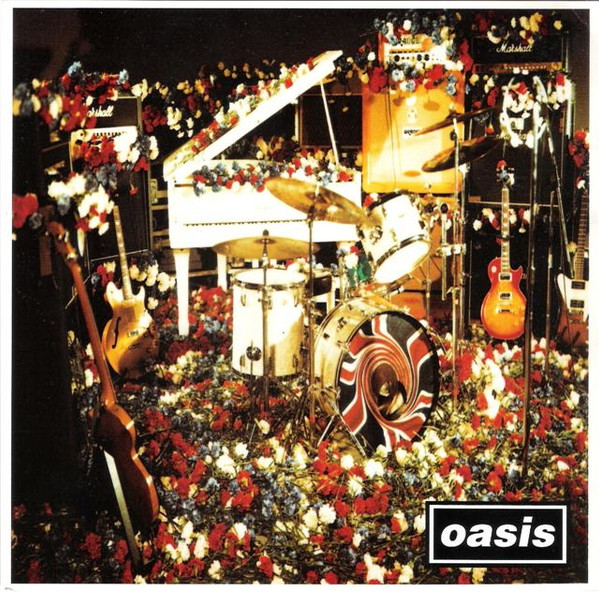
All Around the World, by Oasis (their 4th of eight #1s)
1 week, from 18th – 25th January 1998
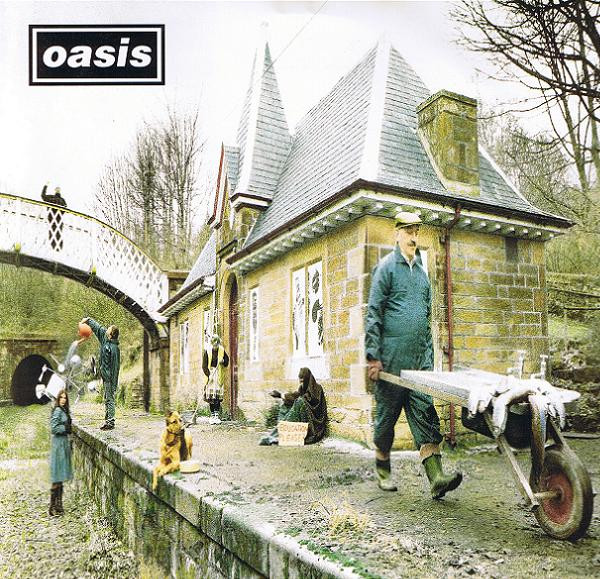
In fact, the single version of ‘All Around the World’ drags things out even further than the album version, meaning that it runs to a staggering nine minutes thirty-eight seconds. You wonder why they didn’t just keep it going to the ten-minute mark… Still, it stands as the longest number one single ever, almost two minutes ahead of Meat Loaf in second place. But what gets overlooked in all the chat about how long it is, and how OTT ‘Be Here Now’ is, is the fact that this is a pretty good song.
It’s one of the album’s clearer, more instant moments. It’s a simple enough concept, with slightly jazzy, slightly Beatlesy (duh!) chord progressions. The simple concept is built upon, with layers of overdub and na-na-na-ing, until it grows into a thumping gospel track, with Liam chanting his mantra: I know what I know, It’s gonna be okay… We all know now that by 1998 Oasis were a coked-up mess; but this is Oasis at their coked-up best. I’ve always thought it very underrated.
Perhaps ‘All Around the World’ stands out as different to the rest of ‘Be Here Now’ because it was actually one of Noel’s earliest song writing efforts, with live performances dating back to 1992. I don’t imagine those early versions of the song sounded as gigantic as this, but it does have that early-Oasis theme of everyone getting along, making better days. Plus it has Liam chewing the life out of the word sheeeiiiiinnnneeee, which is a real Oasis 101.
Added to this early-nineties seed of a song were seven whole minutes of coda. Lots of key changes, lots of subtle rearranging of the na-na-nas. I particularly like the seismic shift around 5:30, before Liam comes back bellowing through a loudspeaker. Of course it’s too long – it’s a preposterous length for a pop song – and of course it’s self-indulgent. Plus, of course the Beatles’ references are way too obvious (‘Hey Jude’, for one, and ‘Yellow Submarine’ in the mesmerising animated video).
But as with ‘D’You Know What I Mean?’, and as with ‘Be Here Now’ on the whole, you do just have to sit back and admire the sheer bravado of releasing this beautiful, overblown nonsense, and then lament the passing of rock music that is this big. It’s a shame that a track of ‘All Around the World’s size is relatively forgotten among the Oasis back-catalogue, and that it sneaked a January number one when competition was scarce. By now, a backlash had begun against Oasis, as always happens when acts become that popular. It will be over two years before their next chart hit, as the band take a much needed breather after the wild ride of the Britpop years.
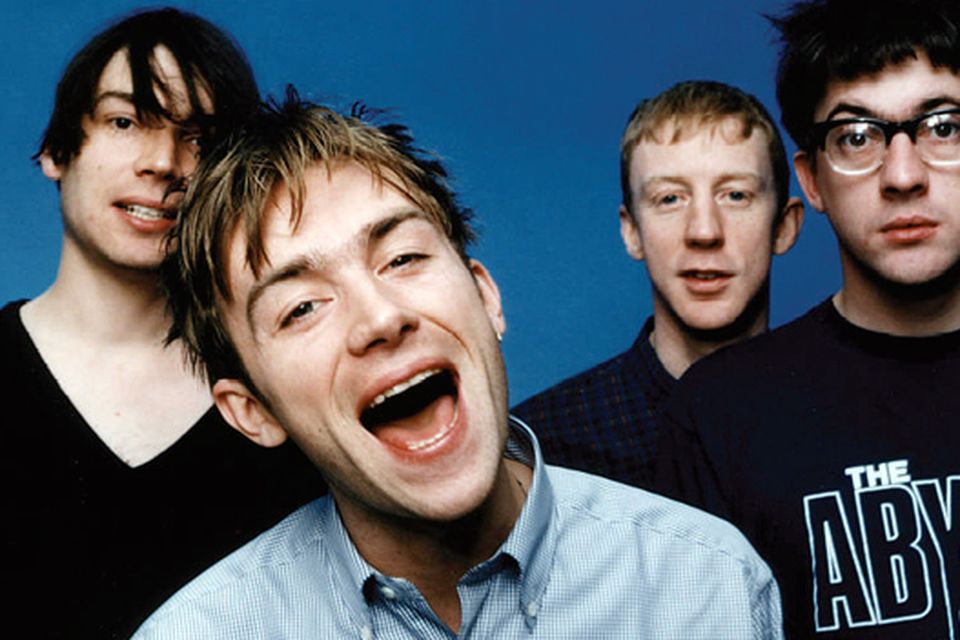
Oi Oi! Here’s a Best Of for Britpop’s cheekiest chappies. And it’s got nothing to do with your Vorsprung durch Technik, y’know… For I haven’t chosen ‘Parklife’ as one of them. Nor have I chosen either of Blur’s #1s – ‘Country House’ and ‘Beetlebum’. What I have done is pick my favourite non-chart topping single (no album tracks allowed) from each of their nine studio albums, plus a couple of standalone singles for good measure. Off we swagger, then…
‘She’s So High’ – from Leisure
Blur’s first album stands out as something of an oddity. Apart from it clearly being Damon Albarn on lead vocals, they don’t sound like the Britpop icons that they would go on to become. ‘She’s So High’ was their first ever release, making #48 in October 1990. It’s very much a shoegaze single, lulling you in with its pounding drone and stoned vocals. It was twinned with ‘I Know’ as a double-‘A’, which is a more uptempo number with a funky Madchester beat. Both songs are a neat time capsule of what indie music sounded like at the dawn of the ’90s, long before anyone had heard of ‘Brit Pop’.
‘Popscene’ – non-album single
I’m cheating a bit here, as ‘Popscene’ wasn’t on any album, but it seems too important to miss off this list. It feels like the sound of Blur coming into their own, the Blur that would go on to become one of the decade’s biggest bands, and is a song that they were proud of and excited to release. When it stalled at #32, in 1992, they were disappointed, and blamed grunge for not allowing upbeat rock music to flourish. Which was sour grapes, even if they did have a point. However, ‘Popscene’ is now regarded as one of, if not the, first real Britpop single. One that would influence a whole genre with its mix of punk and glam, its energy and its snotty Britishness, even if its legacy isn’t reflected in its chart position.
‘Sunday Sunday’ – from Modern Life Is Rubbish
‘Modern Life Is Rubbish’ kicked off the Britpop phase of Blur’s career, and the album’s third single set the template for the sort of perky, Kinks-y hits that they would churn out by the dozen between 1993 and 1996. Many would say they surpassed it a year later on ‘Parklife’, but this song is saved by not having been bludgeoned into our skulls for the past three decades. Plus ‘Parklife’ also doesn’t have ‘Sunday Sunday’s frantic middle-eight, that sounds like a malfunctioning arcade game, or the big brass band that sees us home. The lyrics are no ‘Autumn Almanac’, but there’s charm here in its depiction of a lazy Sunday: He sings the Songs of Praise every week but always falls asleep… The three singles from the album all made the Top 30, and though a good case could be made for ‘For Tomorrow’, I think ‘Sunday Sunday’ best encapsulates Blur on the verge of becoming massive.
‘Girls & Boys’ – from Parklife
And massive they became, thanks to ‘Parklife’, and its lead single ‘Girls & Boys’. Sometimes Britpop gets written off as a regressive movement, a fin de siecle piss-up for the lads and ladettes. But that was just one half of it (the Oasis half). The other half was Brett Anderson’s floppy fringe and amyl nitrate innuendo, Jarvis Cocker’s knowing looks and camp asides. And of course Blur, singing about Girls who want boys, Who like boys to be girls, Who do boys like they’re girls, Who do girls like they’re boys… All over a squelching electro-disco beat, and a brilliantly cheap looking green-screened video. Yes, it’s a satire about 18-30s holidays, and could be viewed in a sneering ‘look at those plebs’ sort of way. But I don’t think you need to overthink brilliant pop like this.
All the singles from ‘Parklife’ could have been chosen, as all have a claim to being among Blur’s best. From the soaring lounge-pop of ‘To the End’, the ubiquity of the title-track, to the bittersweet ‘End of a Century’. But I’ll go with the lead-single, which made #5 in the spring of 1994, and really kicked Britpop into gear.
‘The Universal’ – from The Great Escape
‘The Great Escape’ gave Blur their first number one single, which also brought with it all the hullaballoo of the ‘Battle of Britpop’. But it was the album’s second single, a #5 hit in November 1995, which is the real highlight. It’s a sweeping ballad, more strings than guitars, about a future where technology has taken over. The looming end of the twentieth century was a theme that cropped up throughout Blur’s Britpop phase, never more so than in ‘The Universal’: No-one here is alone, Satellites in every home… Eerily prescient, perhaps, as we look back from our social media age. The video is similarly creepy, a tribute to a ‘A Clockwork Orange’, with Blur all in white, playing to a bar full of uninterested, and increasingly chaotic, yuppies. Can we also take a moment to appreciate Damon Albarn, already the ’90s best-looking frontman, in mascara… (Fun fact: former Tottenham forward and BBC pundit Garth Crooks bought one of the all-seeing golf balls from the video at a charity auction in 1999).
‘Song 2’ – from Blur
I’m going for the second single from their fifth album, as the lead single made #1 and I’ve already covered it. And while I do like ‘Beetlebum’, I probably would have chosen ‘Song 2’ because, well, it bloody rocks. It’s also perfectly named, as not only was it the second single, it is also exactly two minutes long, made #2 in the charts, and it is the second track on the album (the song’s title is a placeholder that they never bothered to change). Things had been going sour for Blur following ‘The Great Escape’, and it’s not much of an exaggeration to say that they helped kill off Britpop with the follow-up. Gone are the larking cheeky-chappies; it is much darker, grittier, electronic in places, and grungier… Speaking of which, since their ill-fated tour of the States in 1992, Blur had spoken out against grunge, and American rock, and some say that ‘Song 2’ was intended as a piss-take of the genre. They apparently had no idea that their label would want the song on the album, let alone want it released as a single. And of course, when it did come it out it became their best-known song in the US. Funny that… Going by Damon’s outburst when they played Coachella earlier this year, he still has some unresolved anger towards Americans…
(Also, an honorable mention to this album’s fourth single, ‘M.O.R.’, which also rocks.)
‘Coffee & TV’ – from 13
Second single from the album, again. ’13’ was even more experimental than ‘Blur’, coming out in 1999 with Britpop going through its death-spasms. The lead-single was the near eight-minute long ‘Tender’, which is a good song – a swampy, gospel oddity – stretched way too thin. It was famously (and rightfully) held off number one by ‘…Baby One More Time’. The follow-up was ‘Coffee & TV’, written and sung by Graham Coxon about his struggles with alcohol. It contains, for my money, one of the greatest opening lines of all time: Do you feel like a chain store, Practically floored… Plus there’s also the award winning video featuring Milky, the animated milk carton.
‘Out of Time’ – from Think Tank
In the four years between ’13’ and ‘Think Tank’, Graham Coxon had left the band and Damon Albarn had released a well-aclaimed and succesful album with Gorillaz. For their seventh album, the remaining three members decamped to Morrocco. ‘Out of Time’, the album’s lead single and Blur’s most recent Top 10 hit, features an orchestra from Marrakesh, who provide the eerie, ethereal sounds that swirl around this gorgeous song. It also features perhaps Albarn’s best vocal performance, so soothing and clear that it works as a form of ASMR. Following this album, and the subsequent tour, Blur disbanded for the better part of a decade. (A shout out too for ‘Think Tank’s second single, the completely different ‘Crazy Beat’, a sort of ‘Song 2’ on steroids.)
‘Under the Westway’ – non-album single
Since we had ‘Popscene’, we can have this one too. An out-of-the-blue release in 2012, of a song written by Albarn and Coxon for a charity performance. Perhaps Blur’s most melancholy ballad, written about a man sitting under the A40 flyover in West London. Think a 21st century ‘Waterloo Sunset’, but far less hopeful. And yet it’s beautiful, ending on a thumping piano note reminiscent of ‘A Day in the Life’. It is the band’s most recent Top 40 hit to date.
‘Ong Ong’ – from The Magic Whip
Blur reformed in the early 2010s, and went out on tour. A new album was not on the cards, however, until a festival they were supposed to be playing in Japan was cancelled, leaving the band in Hong Kong with time to spare. They booked a small studio in Kowloon, and bashed what would go on to become ‘The Magic Whip’ out in five days. ‘Ong Ong’ has a joyful bounciness to it that harks back to the goofiness of ‘Sunday Sunday’ and ‘Parklife’, but also has a middle-aged melancholy buried within. Plus I have somewhat personal reasons for choosing it, as it’s a cute tribute to my home of twelve years, a land of black kites and wishing trees (as well as tarmac that melts on hot, sunny days like today…)
‘St. Charles Square’ – from The Ballad of Darren
I have to admit to not being that enthused by Blur’s most recent album, last year’s ‘The Ballad of Darren’. The standout track by far was the second single, the grungey, crunchy ‘St Charles Square’. It’s a ghost story – theres something down here and it’s living under the floorboards – but they are the ghosts of Britpop past. Apparently ‘Tesco Disco’was a real unlicensed club, next to a Tesco in Notting Hill. Which is brilliant.
I hope you enjoyed this frolic through the best British band of the ’90s… (please do disagree with that statement in the comments below!) Up next we return to regular programming, starting out on 1998!
A slight change in direction then, after Will Smith’s intergalactic, family friendly, summer blockbusting number one…
The Drugs Don’t Work, by The Verve (their 1st and only #1)
1 week, from 7th – 14th September 1997
This is surely one of the saddest chart-toppers in history. Not many hits have made the toppermost of the poppermost with lines such as: Like a cat in a bag, Waiting to drown… This time I’m comin’ down…
I suppose we have to class this as Britpop; but it also feels bigger, more timeless than that. And if it is Britpop (bearing in mind that the Verve formed as a shoegaze band, way back in 1990) then it is another song marking the comedown, more ‘Beetlebum’ than ‘D’You Know What I Mean?’ It’s interesting, actually, that the closing years of the decade will see (slightly) more rock chart-toppers than 1995-6, the peak years of Britpop.
As with Blur’s second #1, this one’s about drugs, and the bands’ struggles with them. I mean, it’s right there in the title. But added to that is the perhaps apocryphal story that it’s about watching a close family member die of cancer. The drugs don’t work, They just make you worse, But I know I’ll see your face again… Richard Ashcroft has never confirmed this, but has mentioned in interviews that this is now the song’s widely-accepted meaning. And he seems genuinely moved by this, the fact that he’s written a song that accompanies people through some of their darkest moments.
Despite all this, and despite me just calling it “one of the saddest chart-toppers in history”, it’s not a miserable song. The reverb, and the strings, give it a light quality, and I love the bluesy rasp to Ashcroft’s voice. The highlight is the middle-eight, the gorgeously soaring Cause baby oooh, If heaven calls… ‘The Drugs Don’t Work’ was the second release from their widely acclaimed ‘Urban Hymns’ album, and the strings in particular tie it back to the previous single, ‘Bitter Sweet Symphony’. That record is probably the Verve’s best remembered – especially as it was their only hit in the US – but it’s not a song I’ve ever loved. For me, this record, their sole number one, is their towering achievement.
So, I wouldn’t like to overly suggest that the success of ‘Bitter Sweet Symphony’, which had made #2 a couple of months earlier, was the reason for this making #1. This record deserves better than ‘shadow #1’ status. Perhaps more of a factor in this being such a big hit is the fact that it was released the day after the death of Princess Diana. Lots of sources have retrospectively claimed that her death, and the public’s need for something both maudlin and uplifting, meant it went straight to number one. Maybe that’s true, but again I’d give a song of this quality a bit more benefit of the doubt. ‘Urban Hymns’ went on to become one of the decade’s biggest albums, but its success caused the band to fracture. Ashcroft embarked on a successful solo career, and the next Verve album didn’t appear until 2008.
Anyway, if the public were desperate to mark Diana’s death by purchasing a CD single, they didn’t have to wait long for an even more appropriate song to come along…
Was this the most anticipated song of the nineties? The decade’s ultimate band, whose previous album had become one of the biggest in history, releasing the lead single from their third LP. In this moment, Oasis were everything, and everywhere.
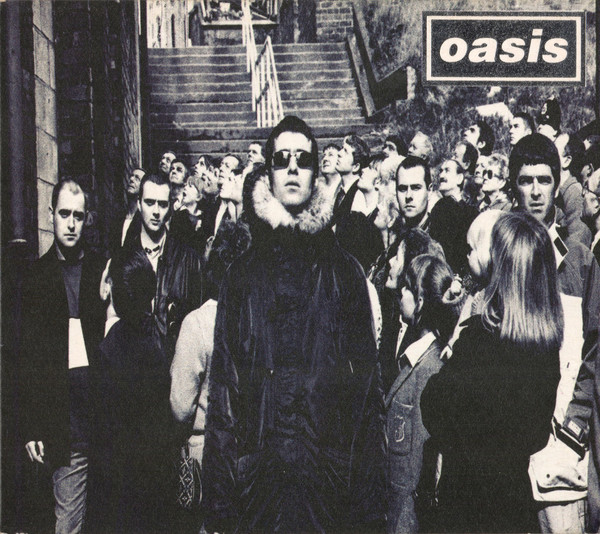
D’You Know What I Mean?, by Oasis (their 3rd of eight #1s)
1 week, from 13th – 20th July 1997
‘Definitely Maybe’ had the attitude, and the riffs, while ‘What’s the Story’ had the globe-straddling ambition, and huge pop choruses. ‘Be Here Now’ would have to go some to be even bigger than its predecessors… And ‘go some’ it did. Starting with the seven-minute lead…
Seven and a half minutes, in fact, that are completely overblown and ridiculous, and somehow still pretty boring. On the album version, clocking in at almost eight minutes, the scene is set with a full minute of helicopters, feedback, bleeping and blooping, before the song even starts. The first chorus doesn’t arrive until the two and a half minute mark. The final minute or so is more feedback, and psychedelic loops for good measure. Most of the verses are slow and plodding, with so many different tracks welded together that listening to it, especially on headphones, can be a trippy experience. There’s a decent song in there, somewhere, buried under a landslide of sound.
The best thing about ‘D’You Know What I Mean?’ is the lyrics, Oasis at their most Oasis-y. In fact it might as well be the Liam manifesto, with pearls like: Comin’ in a mess, Goin’ out in style, I ain’t good-looking but I’m someone’s child… and I met my maker, Made him cry… Is this his best vocal performance on an Oasis #1? Perhaps. And of course there are two Beatles references (The fool on the hill and I feel fine…) so blatant that Noel was clearly playing to the gallery.
It didn’t really matter what it sounded like, this was always going to go to number one, and the fact that it is so overblown and so far up its own arse makes for an interesting chart-topping record. (Though despite it selling almost 400,000 copies in its first week, Puff Daddy returned to the top a week later.) ‘Be Here Now’ was equally always going to be the year’s biggest album; but after early adulation, the critical response to it quickly soured. It is, how to say… a bit much. Obnoxious, overlong, overproduced, over-the-top. The problem was that Oasis were too big to edit, and they were taking far too much cocaine. Even the title of this record, ‘D’You Know What I Mean?’ sounds like a conversation with a drugged-up bore.
That’s not to say I don’t like ‘Be Here Now’ – it’s got some great tunes buried within it, and gets too much stick from people who probably haven’t listened to it in twenty-five years. And actually, so what if it’s a bloated whale-corpse of a record, made by a band who had spent two years gorging on champagne and coke…? That’s rock ‘n’ roll, baby. Perhaps one of the genre’s last great excesses, just two years out from the horrors of a new millennium. Which of the 21st century’s big rock bands would even attempt something so hideously gargantuan? Coldplay? Snow Patrol? Imagine Dragons…?
In my post on ‘Beetlebum’, I pinpointed that record as the start of the Britpop comedown. Blur had taken themselves off to bed as shivering, sweating wrecks. But ‘D’You Know What I Mean?’ is the sound of Oasis keeping the party going, for better or worse, even though the morning sun is creeping through the cracks in the blinds, as the song drones on and on, and on.
It became the second-longest #1 single ever, ahead of ‘Hey Jude’ but thirty seconds behind Meat Loaf’s ‘I Would Do Anything for Love’. Never ones to be denied, Oasis’s third single from ‘Be Here Now’ will be so long that it will make ‘D’You Know What I Mean?’ seem short and sweet by comparison. And that one will be making number one soon enough.
On the one hand, there’s nothing very quirky about Britain’s second biggest band scoring their second chart-topper, with the lead single from their highly anticipated fifth album. And yet… ‘Beetlebum’ isn’t Blur at their most accessible – a fuzzy, droning number about taking heroin. It would actually make a good pub quiz question: name Blur’s two UK number ones. Everyone remembers ‘Country House’ because of the hoo-haa around the Battle of Britpop. But I doubt many casual fans would name this one over ‘Parklife’, or ‘Song 2’.
At the time, ‘Beetlebum’ was seen as a disappointment by some, and it’s hard to imagine this now, as it effectively signalled the start of Blur MK II, the Blur we’ve known for the past two decades. But until now, most of their singles had been laddish and upbeat, delivered with a knowing wink. ‘Beetlebum’ is a much rawer beast, perhaps the first song to mark the comedown from Britpop’s highs.
Damon Albarn was at first reluctant to admit what the song was about, but lines like And when she lets me slip away… Nothing is wrong, I just slip away and I am gone… Plus a whole minute of He’s on, He’s on, He’s on it… give the game away pretty quickly. The song neither glamourises, nor demonises the drug; more gives the feel of what it is like to be under its influence. ‘Sleepy, and sexy’, according to Albarn.
I remember reading a line – though I don’t remember where – describing ‘Beetlebum’ as ‘bum Beatles’. Which is harsh, even if the comparisons to White Album/Abbey Road-era Beatles are obvious, especially in the chorus harmonies. Perhaps because of the Beatles’ influence, Noel Gallagher went on record naming this as the one Blur song he wishes he had written.
And I think nowadays, now that people have got over the disappointment of it not being ‘Girls and Boys Part II’, we can agree that ‘Beetlebum’ is a great song, and if you listen carefully you can hear that it’s as full of hooks as any of their other hits, culminating in one of the creepiest endings to a #1 single – a full minute’s worth of that droning riff, weird noises, effects and alarms, ending with one final click. It’s definitely worthy of being Blur’s ‘other’ chart-topper. Plus, I’ve always had a more personal soft spot for the record, as it was my 11th birthday number one.
They have no further chart-toppers to come, sadly. Follow-up ‘Song 2’, their biggest hit outside the UK, stalled somewhat appropriately at number two, and the lead single from their next album, ‘Tender’, will famously be held off the top by Britney Spears. Damon will be back, though, as the mastermind behind Gorillaz. Two #1s for the best Britpop band (something I’ve just decided this very second, but it feels right) is pretty paltry, so I’ll do a Blur ‘Best of the Rest’ sometime soon.
Oh Lord, here we go. I steel myself, as I always do when a song concerning the England Football Team comes along…
Three Lions, by Baddiel & Skinner & The Lightning Seeds (their 1st of two #1s)
1 week, from 26th May – 2nd June 1996/ 1 week, from 30th June – 7th July 1996 (2 weeks total)
The thing is, I do like ‘Three Lions’. It’s a Britpop classic (you could argue that it’s the Britpop classic, alongside ‘Common People’ and ‘Don’t Look Back in Anger’, given how ubiquitous it remains, almost thirty years on…) and it’s given The Lightning Seeds – a brilliant pop act – a moment or two on top of the singles charts.
There’s also a lot I really bloody hate about this song; but for a moment let’s focus on the positives. Football aside, ‘Three Lions’ is a very British pop song, in the tradition of The Kinks and Blur, in that it is part music hall, part pub singalong, and yet part quite sophisticated rock music. Separated from the crowd noises and the snatches of commentary, the chords and the pianos are quite melancholy, almost baroque.
The lyrics are also very particularly British. Few nations would start a song that should ostensibly be about sporting glory, with a verse about how England’s gonna throw it away, Gonna blow it away… We don’t like to revel in success. If anything, we much prefer to wallow in disappointment. (And England are actually quite good at football! Wait till you hear about Scotland…)
‘Three Lions’ was recorded ahead of Euro ’96, the first big tournament to be held in the UK – the land that invented association football – since the 1966 World Cup. Hence the It’s coming home… refrain. David Baddiel and Frank Skinner are comedians, and were hosts of the popular ‘Fantasy Football League’ TV show, who teamed up with Ian Broudie of the Lightning Seeds. He had been asked by the FA to write the official England team song, but had declined the offer of the players singing on the song. Broudie wanted it to be different to its predecessors – ‘Back Home’, ‘World in Motion’ etc. – and be written from the fans’ point of view. The title, meanwhile, refers to the three lions on the England team’s crest.
All three men take turns on lead vocals: Brodie is clearly a good singer, Skinner acquits himself well, Baddiel…. Well, let’s just say he gives it a good go. Listening to the song now, it sounds a lot more lightweight, a lot simpler than I remember. Maybe I’m just used to hearing it bellowed out by tens of thousands rather than by three fairly reedy voices. And it contains one of pop music’s great mondegreens. Hands up who thinks the words are jewels remain still gleaming? When they are of course Jules Rimet still gleaming, a reference to the original World Cup trophy that England lifted in 1966, and which Brazil got to keep following their 1970 triumph.
So what is it that I hate about this song? Well, I hate what it’s become. I hate that it still gets bellowed out by England fans, usually drunk, often belligerent, sometimes with a flare stuck up their arse. ‘Oh but it’s a joke, it’s self-deprecating…’ some will argue. No, when it’s sung about a tournament not hosted by England (i.e. every major tournament since 1996) it sounds obnoxiously entitled, as if the trophy is coming home, pre-destined, to England. Except it never does. 1966 remains England’s only triumph. The thirty years of hurt in the lyrics now stand at fifty-eight, and long may that number continue to grow.
Luka Modric mentioned the song’s arrogance as a motivating factor for Croatia in their 2018 World Cup semi-final win over England. So maybe it’s time to retire the song as the moron’s anthem of choice, for England’s own good if anything, and return the song to beloved Britpop classic status. Deliciously, back in 1996, German fans started singing ‘Three Lions’ following their semi-final win over England. If only they had a word for taking pleasure in another’s misfortune…
This is already a very long post, and I know that most of my readers don’t give a hoot about football, or soccer, but I should mention the nice touches in the video. Baddiel and Skinner recreate famous moments from English football – when Lineker scored, that tackle by Moore – on a muddy playing field with the ’96 squad. (It’s definitely Steve Stone’s finest achievement in an England shirt.) And then Geoff Hurst – hattrick hero of ’66 – turns up at the pub, but they don’t realise.
One last thing before we finish: we need to give a shout out to the Lightning Seeds. ‘Three Lions’, in all its versions, is by far their biggest hit, but they were mainstays of the ‘90s and the sort of act who can put together a brilliant Greatest Hits. My personal favourites are ‘Lucky You’ and ‘Sugar Coated Iceberg’, and I’d check them out if you aren’t familiar.
‘Don’t Look Back in Anger’ isn’t Oasis’s best song (that is a question for a different post, but it would probably be something from their debut album). ‘Don’t Look Back in Anger’ is, though, probably the ultimate Oasis song. Oasis at their Oasisest.
Don’t Look Back in Anger, by Oasis (their 2nd of eight #1s)
1 week, from 24th February – 3rd March 1996
They set out their stall in the opening seconds, with the piano line from ‘Imagine’ which, according to Noel, was a deliberate middle finger to those who claimed Oasis were musical copycats. It hooks you in, declaring that the next five minutes are going to be epic. In fact, every part of this song, from that intro onwards, is a hook.
You can be the type of person who jots down every little chord, lyric or guitar lick that Oasis nicked – and I am that person sometimes – or you can be someone who admires the way they managed to distil British rock history into an elite-level run of singles (and two excellent albums), who admits that when they were good, they were very good. The drum-fill before the final, soaring chorus here is, no hyperbole, one of pop music’s great moments.
‘Don’t Look Back in Anger’ also features some of Noel’s more coherent lyrics. My personal favourite is the Please don’t put your life in the hands, Of a rock n roll band, Who’ll throw it all away… with the squealing guitars in between. A lot of the lines are still nonsense, but they work somehow. I assume it’s about a break-up, given all the stuff about walking on by, and not looking back. Or maybe it’s a mantra for living positively, not lingering on mistakes. Don’t go thinking that ‘Sally’ is anyone important, though. ‘It’s just a word that fit, y’know,’ says Noel. ‘Might as well throw a girl’s name in there.’
A song written and led by Noel has to beg the question: what of Liam? Well, despite having nothing to do, he spends the video mooching around the garden of a stately home in his shades, and still manages to be the star of the show. He is apparently responsible for the song’s most famous line: So Sally can wait… having misheard what Noel was really singing while writing it.
Despite what I wrote earlier, I’m going to briefly be the guy that points out the bits that Oasis nicked. I just now noticed that while everyone was distracted by the ‘Imagine’ piano in the intro, the floaty guitar in the outro is a rip-off of ‘Octopus’s Garden’. Is that common knowledge, or have I just unearthed another, previously undiscovered fossil?
‘Don’t Look Back in Anger’ was the 4th single from an album that had already sold in the multi-millions, and so the fact that it made number one is testament to how truly massive Oasis were in 1996. Over the past twenty-eight (!!!) years, it has gone from a pop song to almost a hymn, or an alternate national anthem. In the wake of the Manchester Arena bombing in 2017, gathering crowds spontaneously began singing it, giving the lyrics an even more resonant feel.
Meanwhile, it has also been voted the 4th Most Popular #1 Single ever, the 2nd greatest Britpop song (after ‘Common People’), and the Greatest Song of the 1990s. (And, most importantly, the 2nd Best Song to Sing Along to While Drunk – controversially robbed of top spot in that poll by Aerosmith’s God-awful ‘I Don’t Want to Miss a Thing’.) It is also by far the best of Oasis’s eight number ones… and I hope that’s not too much of a spoiler for what’s to come!
Often when I’ve done a ‘Should Have Been a #1…’ post, it’s because the song featured was particularly unlucky when being deprived of top spot. ‘God Save the Queen’ may have been the victim of a political manoeuvre, ‘Happy Xmas (War Is Over)’ the victim of the festive holidays, and ‘Groove Is in the Heart’ runner up in the closest sales race ever…
But ‘Common People’ was beaten fair and square, by the more popular, better-selling record: Robson & Jerome’s double-‘A’ of ‘Unchained Melody’ and ‘White Cliffs of Dover’. Still, I do think that this was the biggest chart travesty ever… A travesty of public taste. But this post isn’t just a lamentation on Pulp’s poor fortune; it’s a tribute to all the Britpop records that never made number one. (Robson & Jerome did the double a few months later, also keeping Oasis’s ‘Wonderwall’ in second place behind their cover of ‘I Believe’.)
If our journey through 1995 has taught us anything, it’s that Britpop was badly served at the top of the singles chart. Few big musical movements are less well-represented at the top – maybe punk, and heavy metal. Oasis and Blur have had a #1 each, and they’ll have more going forward. In the weeks and months to come we’ll meet the Prodigy, the Verve, and the Manic Street Preachers (none of whom can truly be defined as ‘Britpop’) as well as a remixed Cornershop, and a dubious one from the Lightning Seeds. Maybe that’s the problem: what was Britpop? Blur were around way before the term was coined. Pulp had been going since the early eighties. Maybe true ‘Britpop’ is literally just Oasis…
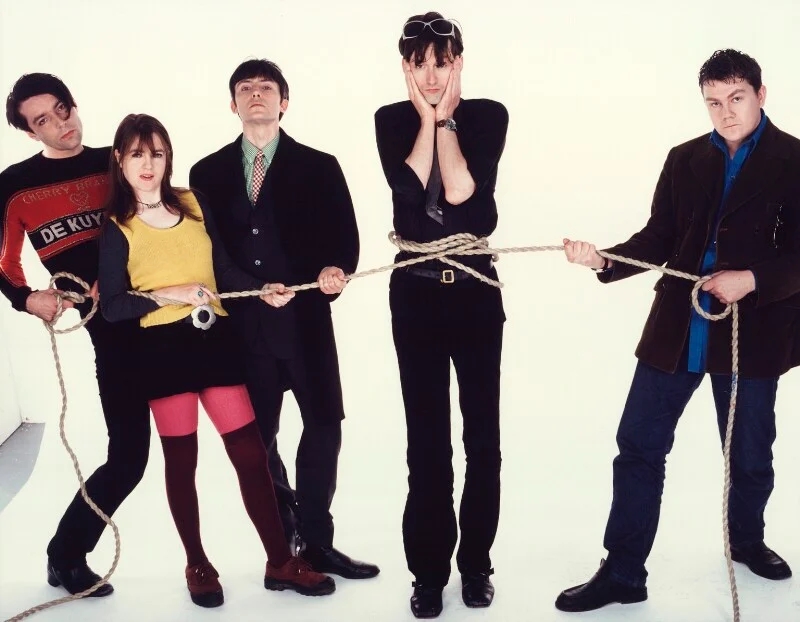
Anyway, Pulp may precede and post-date Britpop, but ‘Common People’ is the ultimate Britpop anthem. It’s confident, cocky, clever, and very British. It condenses centuries of class history into four minutes, plus you can dance to it. It bestrides British pop culture to this day, cropping up most recently in a funny reference in ‘Saltburn’. It came from the ‘Different Class’ album – by my money the best Britpop LP – which also featured another #2: ‘Sorted for E’s & Whizz’ / ‘Mis-Shapes’… (kept off top by Simply Red).
‘Sorted…’ had some rock ‘n’ roll controversy about it, getting the Daily Mirror’s knickers in a twist about its ‘pro-drugs message’. (Even the most perfunctory listen to the song reveals a distinctly non-positive drugs message…) ‘Mis-Shapes’ meanwhile is an outsiders anthem – You could end up with a smack in the mouth, Just for standing out, now, really… – the antithesis to some of the more laddish elements of Britpop.
Away from Pulp, the second biggest Britpop #2 (from a band that didn’t otherwise make #1) is the evergreen, ever-perky ‘Alright’, by Supergrass – kept off top by the dreaded Outhere Brothers. An ode to being young – the band were still teenagers when it was recorded – it’s impossible not to feel cheered when you hear it, with lyrics like: We wake up, We go out, Smoke a fag, Put it out, See our friends, See the sights, Feel alright… (I’m a big Supergrass fan, and can confirm that ‘Alright’, as fun as it is, isn’t even close to being their best song. Do a deep dive!) They made #2 again in 1997, with the thumping ‘Richard III’.
Another close call came in January 1996, when the Bluetones took the jangly, Stone Roses leaning ‘Slight Return’ to #2. And the oft-maligned Kula Shaker were the other Britpop runners-up, their lightly psychedelic rockers ending up in 2nd place twice: ‘Hey Dude’, and a cover of sixties classic ‘Hush’.
And I’ll end with the band many claim kicked off the entire Britpop genre: Suede. They never managed even a #2; but here’s their biggest hit, from their biggest album – 1996’s #3 smash ‘Trash’.
‘Trash’ is another song – like ‘Alright’ and ‘Common People’ – that celebrates people’s weirdness, their exuberance, their individuality. Britpop, for all it’s Blur Vs Oasis boorishness, was often more concerned with everyone getting along, and having a good time. The perfect musical movement, perhaps, as we charged towards the end of the 20th Century, and the dark unknown of the Y2K. I was just a little too late to enjoy it fully (I turned twelve in early 1998, as the genre began to dissipate) but the shadows of it reached deep into the music of my teens, the Stereophonics and the Coldplays and the Travises, and on into the indie-rock revival of 2003-2007.
But at the same time, perhaps it’s difficult to define what Britpop is, and why so many of its biggest names pre-dated and then outlasted it, because it was the first big musical movement to rely heavily on sounds that had gone before. Britpop was essentially a ‘Best Of’ British rock, taking everything from the Beatles to the Stone Roses, and all that came inbetween – the Kinks, the Small Faces, Slade, the Jam – distilling it into great pop songs. It was the last big evolution of rock music in the 20th century, the century that birthed rock and roll, but perhaps it was so backward-facing, so reverential to what had gone before, that it was also the last evolution of rock music, full stop. Like a Greatest Hits tour before the end of the rock ‘n’ roll century. Post-Britpop, guitar-led music never again dominated the pop charts. In 2024, the dominant British stars are rappers, DJs, female pop singers, and scruffy singer-songwriters types. And while I’m not such a rock snob that I can’t enjoy other types of music – hopefully I’ve made that clear plenty of times on the blog – I also can’t help looking back nostalgically to a time when guitar bands were the sound of the pop charts (though not the sound of the number one spot…)
When old fogies stop to reminisce about the 1990s, about the music that soundtracked final few years of the 20th Century, we might think of the Spice Girls, Take That, or Pulp. Maybe even The Prodigy, or The Chemical Brothers. But if you had to bet on it, you’d bet that we think of this one moment: the chart dated 20th-26th August 1995.
Country House, by Blur (their 1st of two #1s)
2 weeks, from 20th August – 3rd September 1995
Oasis Vs Blur. North Vs South. Working-class Mancs vs posh(er) Essex lads. Cliches, cliches, all the way. Legend has it that Liam Gallagher taunted Damon Albarn about Oasis having a number one single, spurring Blur’s management to cheekily change their next release date to clash with Oasis’s ‘Roll With It’, making for great publicity, and the highest sales week for a decade (setting the way for single sales to hit an all-time high in the coming years).
But the story here is the song, primarily, and I should block out all the hype and noise and focus on the tune. As with ‘Some Might Say’, ‘Country House’ may have been Blur’s first #1, but it’s not one of their very best singles. From their earlier hits, ‘Girls & Boys’ is better musically, while ‘Parklife’ has left a much larger cultural legacy. Still, it’s a fun, multi-coloured romp, right from the helter skelter intro through to the brass section in the fade-out. And it tells a story not much heard in chart-topping singles: that of a country squire living a life of rural asceticism. He’s got a fog in chest, So he needs a lot of rest… He doesn’t drink, smoke, laugh, Takes herbal baths… In the country…
There’s a lot going on, musically, and a lot of knowing references to British bands past. Oasis get a lot of stick for being musical magpies, but I hear plenty of Kinks and Small Faces, as well as Madness, and the ghosts of British music hall, here. (Chas & Dave, too, according to Noel Gallagher, but he meant it as an insult…) The video also has Brit-references galore: Page 3 girls, Benny Hill themed hi-jinks, a nod to ‘Bohemian Rhapsody’, Matt Lucas, Jo Guest and Keith Allen (featuring in his second chart-topping video). And for the ultimate Britpop seal of approval, it was directed by Damien Hirst.
The story, like I said, should be the song. And yet, would ‘Country House’ have made #1 were it not for all the hullaballoo? Maybe, as it was the lead single off a hotly-anticipated new album. But maybe not, as Blur had only three previous Top 10 hits to their name, and just one Top 5. So perhaps we can’t fully separate this song from all the nonsense. What’s certain is that the right song won. ‘Roll With It’ is probably Oasis’s laziest single. I do like it, but you can see why it’s been called ‘Status-Slade’ (though that’s not the insult some might think…) Also, in terms of the ‘Battle of Britpop’, Blur were the originals – their 1992 hit ‘Popscene’ is claimed by many as the very first Britpop single.
In my post on ‘Some Might Say’, I mentioned that my love for Oasis has dimmed over the years. With Blur, the opposite has happened. Nobody I knew at school would have admitted to liking them over Oasis – they were too clever, too arty… Everyone liked ‘Song 2’, but then that’s their dumbest song by far. As a sensible adult, though, I can admit that Blur were the more expansive songwriters. More fun, too – just look at them in the video, pratting about in bubble-baths, then try to imagine Liam doing the same…
Still, this is the first of only two times that we I’ll be writing about Blur (Albarn does also have a Gorillaz #1 to his name). Oasis may have lost this chart battle, but they definitely won the war…
I’m both thrilled and downhearted that we’ve reached the beginning of the Oasis era. Much like I wrote in the intro to my last post, on Take That’s ‘Back for Good’… What can I add to the three decades’ worth of column inches dedicated to Britain’s most polarising band.
Some Might Say, by Oasis (their 1st of eight #1s)
1 week, from 30th April – 7th May 1995
Basically, what to say about Oasis that isn’t cliched? I need to approach this completely subjectively, then. Which isn’t hard, because Oasis were my first big musical love (OK, second… but we’ll deal with that Spice Girls-shaped elephant in the room when the time comes…) ‘Some Might Say’ has never been among my very favourite Oasis records but, actually, this is a good thing, as far as this post is concerned. It hasn’t been overplayed to death, and I’m glad that this made #1, and not the two #2 hits that followed.
On the other hand, I’d rather their two preceding singles – ‘Whatever’, or ‘Cigarettes and Alcohol’, had been the first chart-topper. ‘Some Might Say’ has some of the vim, the punkish energy of ‘Definitely Maybe’ – I’d say it’s the song from ‘What’s the Story…’ that could most easily slip onto their debut – but signs of bloat are already appearing. After a brilliant glam riff opening, it settles into a slightly plodding, overlong rock song (why, oh why, is this five and a half minutes long?) And, despite the long-held belief that Oasis were a rejection of grunge’s misery and introspection, there are some very heavy, grungy chords in the chorus.
I had a pop at Gary Barlow’s lyrics in that last post, and I have to call Noel out here too, even if this is where I tip into well-trodden cliché. Oasis lyrics walk the line between revelatory and ridiculous. One minute you’re thinking ‘Yes, profound!’. The next you’re thinking ‘Maybe not…’ Some might say they don’t believe in heaven, Go and tell it to the man who lives in hell… is a great line. Some might say you get what you’ve been given, If you don’t get yours I won’t get mine as well… is more at the ‘maybe not’ end. (Though we can all agree that The sink is full of fishes, She’s got dirty dishes on the brain… is a lyric for the ages…)
The star here, as in many of Oasis’s early songs, is the man interpreting these words, and making them his own. Liam. The last true rock star, and one of the all-time great frontmen. A beautiful moron (‘Some Might Say’ doesn’t have a proper video because he never showed up for the shoot), his sweetly aggressive vocals attack his brother’s unwieldy lines and transform them. Just try singing this song like he does. It’s very difficult – your voice ends up straining, and cracking, and getting lost among the walls of guitar (Oasis were, thankfully, never fans of understated production.)
Like I said, I once loved Oasis – growing up male, in small town Scotland, in the late ‘90s/early ‘00s, it was all but mandatory – but it is a love that has faded. I’ve accepted that they were limited, that they did have a habit of ‘borrowing’ riffs and melodies (even now I’ll listen to a Kinks album track and hear a bit that sounds familiar…), and that they believed their own hype a little too much. And yet, they were never as bad, as unoriginal, as much a Bargain Bucket Beatles, as some critics were desperate to make out.
Anyway, I’m writing as if this was their one and only chart-topper, not as if they have seven more to come. It’s easy to forget just how phenomenally successful they were. All seven of their studio albums entered the charts at #1, while ‘Some Might Say’ was the first of eight singles in a row to make either #1 or #2, between 1995 and 2000. It might not be the perfect song to be crowned their first chart-topper – the first chart-topper of the Britpop era even – but Some might say, We will find a brighter day… is perhaps the perfect summation of the Oasis manifesto.








 The UK Number Ones Blog