On November 23rd 1991, Queen frontman Freddie Mercury released a statement announcing that he was HIV positive, and had developed AIDS, confirming years of speculation about his ailing health. Barely one day later another announcement followed: Mercury was dead, aged just forty-five.

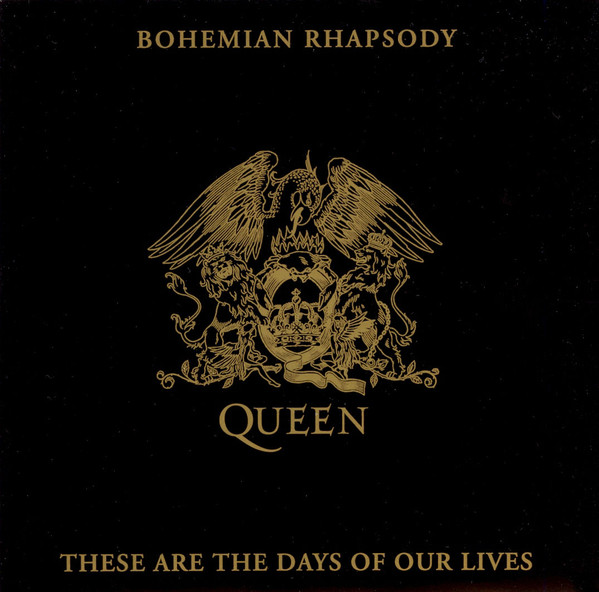
Bohemian Rhapsody / These Are the Days of Our Lives, by Queen (their 4th of six #1s)
5 weeks, from 15th December 1991 – 19th January 1992
Which brings us to the final #1 of the year – the Christmas Number One – and the first time a song has re-topped the charts. How to deal with this? Write about ‘Bohemian Rhapsody’ all over again? I’d rather not… Or just provide a link to my original post on the song, back when it was a nine-week chart-topper (and another Xmas #1) back in 1975-76? Neither seems the perfect solution… ‘Bo Rap’ may well be one of the best-loved, most innovative, outré pop songs of all time; but it has been played to death. We all know what it sounds like. Luckily, Queen twinned it with a song from ‘Innuendo’, their latest album, and gave us something else to talk about!
‘These Are the Days of Our Lives’ couldn’t be more different from its re-released partner. A lounging, glossy soft-rock tune, with a gentle Bossa nova beat. It’s not classic Queen – it sounds more like a Freddie Mercury solo record – until Brian May’s trademark guitar come chiming in towards the end. Lyrically, though, it’s the perfect swansong.
It was written by Roger Taylor, but lines like You can’t turn back the clock, You can’t turn back the tide, Ain’t that a shame… are sung ruefully by Mercury, in what many have claimed were the final vocals he ever recorded. It’s unashamedly sentimental, and usually that would have me running a mile, but when lyrics like Those days are all gone now, But one thing is true, When I look, And I find, I still love you… are sung by a dying man then they hit much harder.
The video – filmed in black and white to hide just how gaunt Mercury was – is certainly the last thing he filmed, six months before his death. Ever the showman – behold the cat waistcoat! – he asked for the closing shot to be re-filmed, in which he chuckles to himself, looks down, then whispers I still love you… Not a dry eye left in the house.
The lyrics shift from ‘those were’ the days of our lives to ‘these are…’, in a positive message, a sign that even in the shadow of death each day is a gift. Again, this is something I might balk at if it weren’t for the fact that a dying man is singing it. If he believes it then who am I to judge? Personally, I’d have liked ‘The Show Must Go On’ as the posthumous single – much more dramatic, much more Queen – but that had been released a couple of months earlier, making #16.
For sure ‘These Are the Days of Our Lives’ wouldn’t have made number one on its own, without either Mercury’s death or ‘Bo Rap’s re-release. A certain run-of-the-mill Elton John song will suffer a similar fate a few years later, caught up in another famous death, becoming one half of the highest-selling single ever in the process. ‘Bohemian Rhapsody’ meanwhile added five more weeks in top spot to its original nine, becoming the third longest-running #1 ever. And this isn’t the end of the chart-topping story for either Queen or Freddie. But it is the end for 1991, one of the more interesting years for chart-topping singles, with Gregorian chants, rapping cartoon characters, sixteen-weekers, Bono in character as ‘The Fly’, Vic Reeves (because why not?), and it all ending on a farewell to the greatest frontman who ever strutted the stage.



 The UK Number Ones Blog