Never Had a #1… Part 5

It’s been a while, so here is the next instalment of our look through the Top 40 biggest-selling global acts never to have had a UK #1 single.

We’re into the Top 20 today, counting down acts twenty through sixteen. Before we get going though, why not recap with Parts 1, 2, 3, and 4.

20. Carpenters

Biggest hits: ‘Yesterday Once More’ (#2 in 1973) & ‘Please Mr. Postman’ (#2 in 1975)

The Carpenters are possibly the most surprising name on this list. They weren’t a rock act that sold more albums than singles; they were a singles act that produced some of the best pop music of the seventies. It’s amazing that they didn’t manage a chart-topper in Britain, despite scoring three in the USA.

‘Yesterday Once More’ has one of their best melodies, and one of their catchiest hooks. Every shalalala, Every whoa-oh-oh… It was a very ’70s phenomenon, songs about how the old songs were the best, when the ‘old songs’ had barely come of age. And I’m sure I mentioned this in my post on how the Carpenters had never had a number one, but having traveled widely across Asia I can confirm that ‘Yesterday Once More’, and ‘Top of the World’, are two of the best-known English language songs every recorded.

‘Please Mr. Postman’, one of their American chart-toppers, is a decent enough cover. It was once voted as the duo’s best song by ITV viewers, which is just silly.

19. Bob Dylan

Biggest hit: ‘Like a Rolling Stone’ (#4 in 1965)

A man who needs little to no introduction from me, and another about whom I have previously done a ‘Never Had a #1’ post on.

What I will say specifically about Dylan’s biggest hit, is I think it quite fun that following worthy folk anthems like ‘Blowin’ in the Wind’ and ‘The Times They Are A-Changing’, it took a six-minute, sneering bitchfest to bring about his biggest British hit. He then followed it up with the even nastier ‘Positively 4th Street’, one of the great ‘haters gonna hate’ records, proving that he truly was the Taylor Swift of his day.

18. Dire Straits

Biggest hits: ‘Private Investigations’ (#2 in 1982) & ‘Walk of Life’ (#2 in 1986)

Only the third British act in this Top 40, after Genesis (#23) and Def Leppard (#22), and the second highest. (I won’t give the game away, but I’m sure most of you can work out the final British band left to appear…) Anyway, Dire Straits have made number two twice. Once with the languorous Spanish guitars and spoken word combo of ‘Private Investigations’, which really doesn’t sound much like a Top 40, let alone a #2, hit. And then with the far catchier and more immediate ‘Walk of Life’, from their fourteen-times-platinum monster album ‘Brothers in Arms’.

17. The Doors

Biggest hit: ‘Light My Fire’ (#7 in 1967)

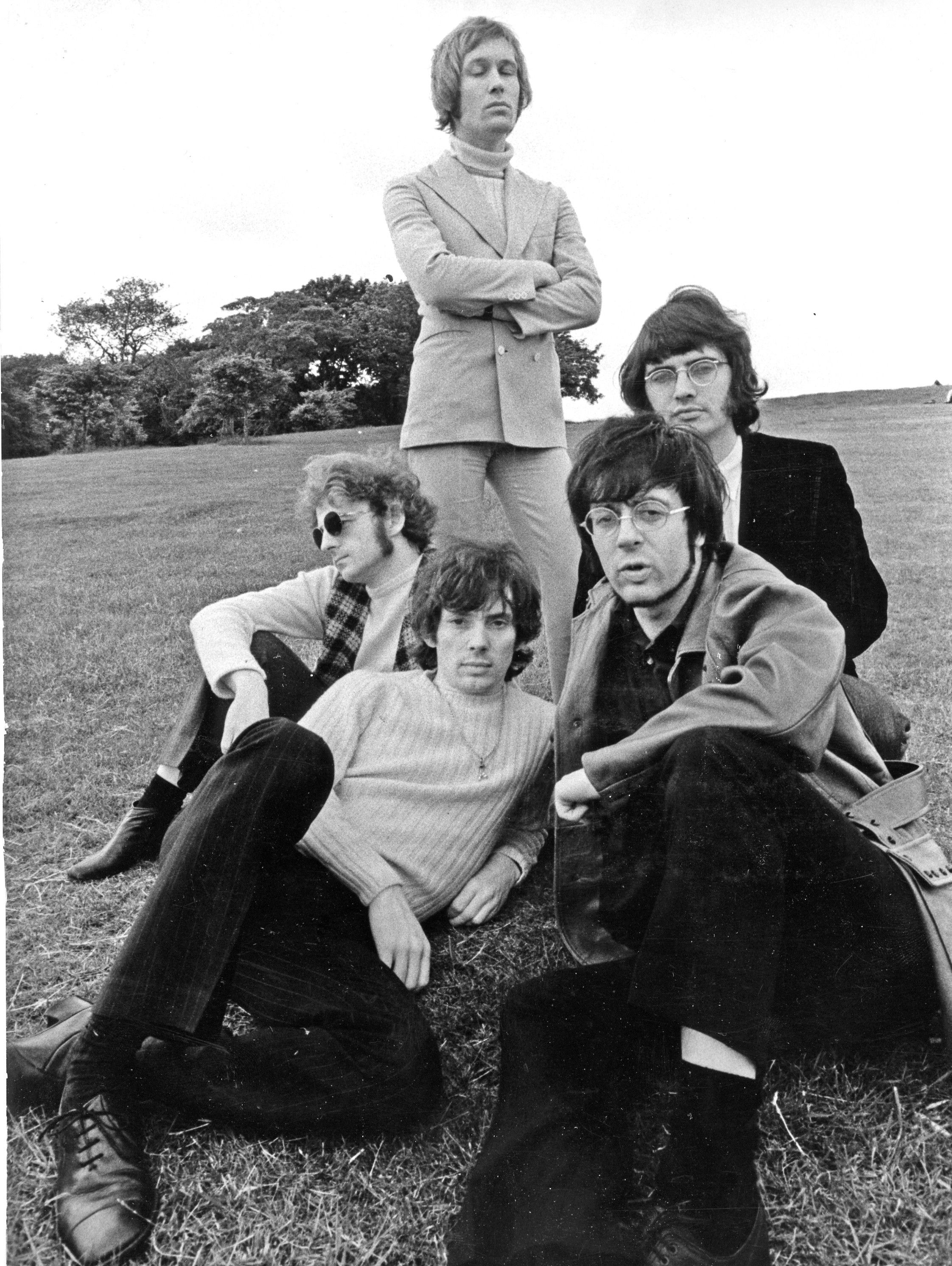
Back to the usual ‘bigger in the US’ type of acts that have populated this rundown so far, and it’s The Doors. Despite having two number ones to their name back home, ‘Light My Fire’ was their only Top 10 hit in the British Isles. And while the seven-minute organ solo version is great (the solo now has it’s own ‘chapter’ on this YouTube video), I have included the band’s shorter but much more controversial performance on the Ed Sullivan show, in which Jim Morrison reneged on a promise not to sing the girl we couldn’t get much higher… line. Sullivan refused to shake their hands, and banned them from the show indefinitely.

I have also already done a Doors ‘Never Had a #1…’ post, if you would like to read more.

16. Santana

Biggest hit: ‘Smooth’ ft. Rob Thomas (#3 in 2000)

Carlos Santana had been active since the sixties, both by himself and as leader of his eponymous band, but had never troubled the UK Top 10 until this late nineties classic.

It’s an interesting plot line of the fin de 20th siecle: classic rock acts having a renaissance. Aerosmith had their biggest ever hit in 1998, Blondie made an unexpected chart-topping comeback a few months later, and Santana finally breached the UK Top 10. With a little help from Matchbox 20’s Rob Thomas (who weren’t a British chart force either) they brought about this sexy, Latin-rock groover. (That little Mariachi drumbeat key change that leads to the solo is pop perfection in my book). In my mind this was the sound of the summer of ’99, when the record was initially released, but in reality it reached its chart peak in March 2000, and March is never a particularly hot and steamy time of the year…

So we’re almost into the Top 15, where we have remaining two solo females, three solo males, and ten bands, all of whom rock and/or roll, to varying extents. Until Part VI, then….

847. ‘Rise’, by Gabrielle

If there was an award for the artist that has flirted most with the number one spot on the UK charts without ever getting a date – the ‘nearly number one’ award – then Bob Dylan would be hot favourite to win. ‘Mr. Tambourine Man’ and ‘The Mighty Quinn’ were written by him, he sang a couple of lines on ‘We Are the World’, while ‘Knockin’ on Heaven’s Door’ made it in a cover version. All we need now is for someone to sample Dylan on a chart-topping single…

Rise, by Gabrielle (her 2nd and final #1)

2 weeks, from 30th January – 13th February 2000

Well wouldn’t you know… Here is the Bob Dylan-sampling number one. He liked this record so much that he allowed Gabrielle to use the sample – the guitar chords and his vocal harmonies from ‘Knockin’ on Heaven’s Door’ – free of charge. This sample adds a certain excitement to ‘Rise’, but I’m not quite sure what about the song convinced the often cantankerous Dylan to donate his work for gratis.

It’s a delicate, pretty ballad, nicely sung and sparingly arranged, with the gentlest of garage beats. In the ultra-processed, ultra-poppy early days of the 21st century it is a pleasant change of pace at the top of the charts. But ‘Rise’ never quite, ahem, rises above that word: ‘pleasant’. It’s nice enough to hear when it comes on Smooth FM (it has probably been on their playlists for twenty-five years straight), but I’d never rush to search it out.

I’m pretty sure I wrote much the same about Gabrielle’s first #1, ‘Dreams’ (in fact, I gave that a ‘Meh’ Award). There is something safe and very mum-leaning about her two biggest hits. I’ll argue that ‘When a Woman’ (the retro-pop follow-up to ‘Rise’), ‘Out of Reach’ (the ‘Bridget Jones’ soundtrack hit from 2001), or 1996’s big, brassy ‘Give Me a Little More Time’ – would have been worthier number ones.

As much as neither particularly excites me, it is worth noting the near seven-year gap between Gabrielle’s two number one singles. So much musical water has gone under the bridge since 1993 (for a snapshot: ‘Dreams’ knocked UB40 off the top, while ‘Rise’ displaces Britney Spears) that it is impressive how she managed to come back with such a big hit. She would go on scoring Top 20 hits until 2004, and released her most recent album just last year.

So, two number ones for Gabrielle, the most famous eye-patch wearing pop star since Johnny Kidd. And only ten letters between both titles, ‘Dreams’ and ‘Rise’. Has any singer managed to get more success out of even shorter song names? Nichest of niche pop knowledge, but let me know in the comments if you can think of one!

Never Had a #1… Bob Dylan

For my next three posts, I’ll be returning to a feature I tried out last year… The biggest bands and artists – who’ve sold millions and are beloved by billions – but who’ve never made it all the way to the top of the UK singles chart.

First up. A Nobel prize winning songwriter who put the concerns of an entire generation into his early records, who has featured twice in my countdown as a songwriter (‘Mr. Tambourine Man’ and ‘The Mighty Quinn’), who celebrated his 80th birthday just yesterday, and whose singing style I once heard described as sounding ‘as if he were sitting on top of a washing machine going at full spin’…

Bob Dylan has never been much of a singles artists but, at least early in his career, he was a consistent presence in the charts. Here are his handful of Top 10 singles:

‘The Times They Are A-Changin”, and ‘Subterranean Homesick Blues’, both #9 in 1965

1965 was Dylan’s most prolific year on the singles chart with four Top 10 singles – including this pair. One is a rousing clarion call to the young, telling the old fogeys to get out of their way… The order is rapidly fading… It sounds a bit preachy now, and the acoustic guitar and harmonica combo grate on me after a while. File under: Of Cultural Significance.

The latter single is much more fun, and has a very famous attempt at a music video. As the name hints, it’s a short, sharp bluesy number and where ‘The Times…’ is looking forward, ‘Subterranean Homesick Blues’ is looking up from the gutter. It drips with sarcasm and cynicism. The pump don’t work ’cause the vandals took the handles… They certainly did. ‘What??’ the last card reads as Bob swaggers off, too cool for school.

‘Positively 4th Street’, #8 in 1965

Probably my favourite of this bunch. Any song that opens with a line like: You got a lot of nerve, To say you are my friend… is going to be fun. Bob has a bone to pick! With whom exactly has been the subject of much discussion, but the consensus is that he’s taking aim at the critics of his move away from the acoustic folk of ‘The Times They Are A-Changin” and ‘Blowing in the Wind’ (4th Street runs through Greenwich Village, and the clubs where Dylan made his name).

‘Rainy Day Women #12 and 35’, #7 in 1966

Some people don’t like this song. Possibly because it sounds like Dylan and his band were having a lot of fun making it, and Bob Dylan’s music should at all times be taken SERIOUSLY! He’s a Nobel prize winner for God’s sake! Whatever. Apparently he insisted that everybody taking part in the recording of ‘Rainy Day Women’ be highly intoxicated, and it certainly has a boozy, woozy, last day of spring break feel to it. A ‘rainy day woman’, I have literally just learned, was 1950s slang for a doobie. Dylan claims that this isn’t a ‘drug song’. Except… Everybody must get stoned!… he shouts, as the band whoop and holler behind him. Radio stations at the time certainly had their suspicions, and many refused to play what turned out to be one of his biggest hits.

‘Lay Lady Lay’, #5 in 1969

His most recent Top 10 hit. Oftentimes Dylan’s lyrics are pretty oblique, but this one seems pretty clear. He wants his girl to stay, to lay across his big brass bed. That line, in the wrong hands, could sound ridiculous… But here it’s a sweet sentiment in a sweet song.

‘Like a Rolling Stone’, #4 in 1965

One of the foundation pillars of rock music. This tale of a spoiled rich girl whose life has fallen apart gave Dylan his biggest chart hit in the UK. It sounds a lot like ‘Positively 4th Street’, both in terms of the organ and the barely concealed sarcasm. And again, there has been a lot of debate over just who the song is about, but it has definitely not got anything to do with The Rolling Stones. At six minutes long, ‘Like a Rolling Stone’ was, at the time, one of the longest singles ever released.

Another #1-less artist coming up tomorrow – one that can’t compete with Bob Dylan’s legacy and influence, but that certainly has a better voice…

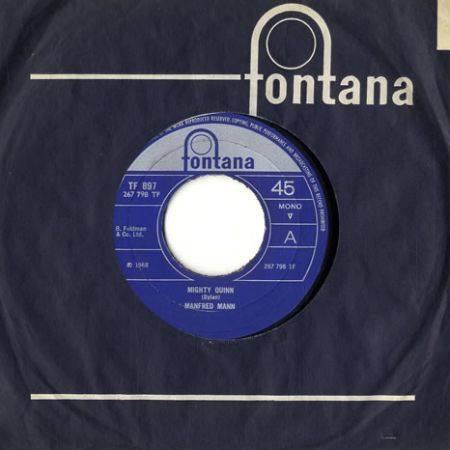
244. ‘Mighty Quinn’, by Manfred Mann

Our next #1 single starts with what sound suspiciously like pan-pipes. I leave that there as a word of warning. (It’s not actually pan-pipes, it’s a flute, but the tone has been set….)

1a4c5e804afbef83a43b798ba7ff7b22

Mighty Quinn, by Manfred Mann (their 3rd and final #1)

2 weeks, from 14th – 28th February 1968

Come on without, Come on within, You’ll not see nothing like the Mighty Quinn… It’s a swaying chorus that greets us as the song proper gets underway. A chorus that I knew, without ever really having listened to the song in full. A chorus that begs a question – just who is the Mighty Quinn?

He is, naturally, an Eskimo. What else? To give the song its’ full title – ‘Quinn the Eskimo.’ And when Quinn the Eskimo gets here, Everybody’s gonna jump with joy… And why will Quinn’s arrival be greeted with such jubilation? To be honest, I’m now on listen number three and I’m still not sure.

The verses have a verve and swagger to them, that really really reminds of something else that I just can’t quite put my finger on. It’s very frustrating. Anyway… Everybody’s building ships and boats, Some are building monuments, Others are jotting down notes… It seems like a comment on modernity, and the fact that something is missing from modern life. Nobody can get no sleep, There’s someone on everyone’s toes, But when Quinn the Eskimo gets here, Everybody’s gonna want a dose… Or is it ‘a doze’, as in a nap? Either way, this is pretty abstract stuff.

Boiled down, it seems like Quinn is some kind of Messiah figure, who’s going to calm everyone down and chill everyone out (as well as gathering all the pigeons around him…) Bob Dylan – for yes, ‘tis he who wrote this – has claimed that the song is nothing more than a nursery rhyme. But that’s what the writers of strange and obscure lyrics always say, isn’t it? His version is much more folky and laid-back, and wouldn’t be released until several years after Manfred Mann’s.

2f7c48bc-7c6c-43a4-8ef5-5d63d6802c51

I’m not sure what to make of this one. On the one hand it is interesting. There can’t have been many #1 singles about Eskimos. On the other it just doesn’t quite work for me. It’s Dylan’s 2nd chart-topper as a songwriter and it is certainly not anywhere near the level of his previous one, ‘Mr. Tambourine Man’.

And what of Manfred Mann? They sign off on their chart-topping account, having hit the top spot with three very different records. The Beat-pop swing of ‘Do Wah Diddy Diddy’, the sweet ‘Pretty Flamingo’ and now this. A #1 in ’64, ’66 and now ’68. A band for even-numbered years. A 2nd-tier, perhaps slightly underrated sixties band? They were soon to become Manfred Mann’s Earth Band, and to go pretty heavy on the prog-rock. They’ve kept ‘The Mighty Quinn’ as part of their concerts, and apparently live versions can go on for a good ten minutes… I’m not sure if that sounds brilliant, or terrifying…

To be honest, my first exposure to this record was probably miles away from Manfred Mann and the 1960s pop charts. Irish football fans used to sing a version of this song for their big striker, Niall Quinn. The nickname stuck to such an extent that he even named his autobiography – you guessed it – ‘The Mighty Quinn.’

199. ‘Mr. Tambourine Man’, by The Byrds

Heading towards the big two zero zero, and our next record opens with a riff that every man and his dog has heard, probably more than once. File it alongside ‘Shakin’ All Over’ and ‘You Really Got Me’ as one of the most prominent riffs to have wound up at the top of the charts so far.

the-byrds-Getty-600x400

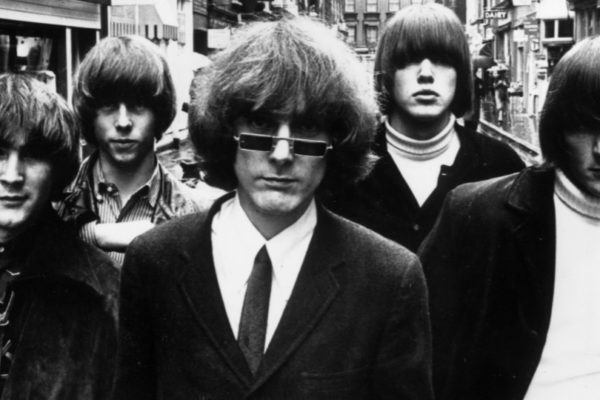
Mr. Tambourine Man, by The Byrds (their 1st and only #1)

2 weeks, from 22nd July – 5th August 1965

But, unlike the two records I just mentioned, this isn’t an aggressive riff. There’s no lust here. It’s a riff that, instead, aims for the heart. It’s the musical equivalent of the sun streaming out from behind a cloud. And when the vocals kick in it only adds to the effect. Hey mister tambourine man, Play a song for me… I’m not sleepy and, There ain’t no place I’m goin’ to… Suddenly we’re in California, on a long stretch of golden sand, watching the surf break and the gulls soar…

Lyrically, too, we’re far from home. These are the most abstract, poetic lyrics we’ve heard in this countdown. ‘Mr. Tambourine Man’ is the only #1 so far to have an ‘Interpretations’ section to its Wikipedia page. Take me for a trip upon your magic swirling ship, Oh my senses have been stripped, And my hands can’t feel to grip… Not weird enough for you? How about the moment when you expect a chorus (I love the way they draw it out, prolong the pleasure, by adding this gorgeous bridge) but get an insistent plea: I’m ready to go anywhere, I’m ready for to fade, On to my own parade, Cast your dancin’ spell my way…

Huh. I think, you know, that they may be making some drug references there. Going for trips, and senses being stripped… It’s the summer of ’65, and counter-culture has arrived at the top of the UK singles charts. The sixties are really starting to swing. Groovy, baby!

It’s not just the lyrics that feel like something new, though. There’s the jingle-jangle guitars (referenced in the jingle-jangle morning lyric), the structure of the song – chorus, verse, verse, chorus – and the long, trippy fade-out. As with so many of our chart-toppers over the past two years, ‘Mr. Tambourine Man’ sounds like the stakes being raised. It’s the sound of pop music being pushed forward.

P6180009_ml

It’s folk rock, but it’s a mile away from the couple of folk rock hits we’ve covered previously. The Highwaymen’s ‘Michael’ sounds like it was from another century – well, it was 1961 – while The Seekers sounded like they were merely playing at being folkies. The Byrds are the real deal. Who was the tambourine man? What was his ship? Does it matter? Just listen, and let yourself be swept away… Meanwhile, this song’s folk-rock credentials are helped massively by the fact it was written by a certain Robert Allen Zimmerman.

Bob Dylan will never (gasp!) top the singles charts as an artist. But this is the first of three #1s that he will enjoy as a composer. (I think it’s three… please correct me if I’m wrong… He has written an awful lot of songs…) Dylan’s version is, naturally, twice as long as this one – and it’s safe to say that The Byrds make it their own. He’s also gone on to deny that it’s in any way about drugs. So there you go.

‘Mr. Tambourine Man’ was The Byrds first hit in both the US and the UK – impressive considering they had only formed the year before. Following this, they were more successful in their homeland (‘Turn! Turn! Turn!’ hit the top there while it only reached #26 in Britain.) But even in the US their popularity didn’t last long. They were just too darn experimental, it seems, to maintain chart success. They went psychedelic, then Indian, then country, all the while changing members like most bands change socks… It couldn’t last; but their influence lingers on.

I’ve mentioned it many times before, but the vast majority of Merseybeat, R&B and rock groups that we’ve met since the Beat explosion have been British. Compare that to the fifties, when every rock ‘n’ roll hit, good or bad, was coming from across the Atlantic. Slowly but surely, though, the Americans are now staking their claim on the sixties. We’ve had some Motown, some Spector-patented Wall of Sound, and now some sun-drenched Californian folk-rock. There may not be too many US #1s at the moment; but when they do arrive, they’re golden.