650. ‘The Joker’, by The Steve Miller Band

If the most important chart trend of the late-eighties/early-nineties was the emergence and dominance of dance, then the second was surely the random re-releases…
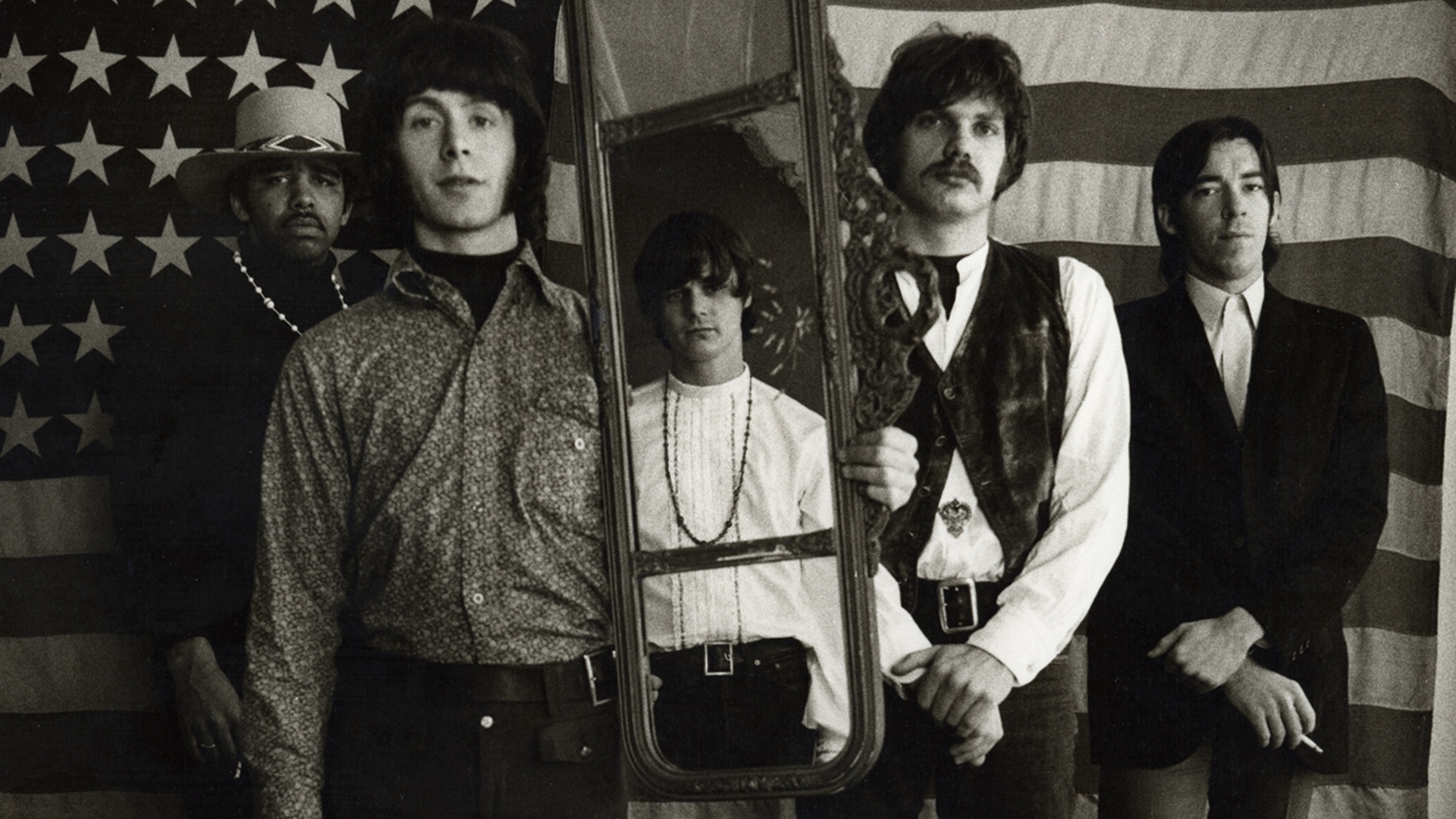
The Joker, by The Steve Miller Band (their 1st and only #1)

2 weeks, from 9th – 23rd September 1990

Such as this! There are usually two reasons for a golden oldie like ‘The Joker’ making number one years after its original release: use in a movie, or use in an advert. Place your bets… Yes, it was an advert this time, for Levi’s, that gave the Steve Miller Band their biggest hit, a mere twenty-five years into their career.

There’s little point in analysing this record from a musical point of view. It’s a strange little country, bluesy, slightly psychedelic number, recorded in 1973; and so in terms of its style and its production values it sounds a world away from ‘The Power’ (I will leave you to decide whether or not that is a good thing). It’s also very silly, with one of rock and roll’s great opening lines: Some people call me the space cowboy, Some call me the gangster of love…

Who is Maurice (wheep whoop)? What is a pompatus? They are references to earlier songs by Steve Miller but also, perhaps, the real answer lies in the Eaglesy chorus: I’m a joker, I’m a smoker, I’m a midnight toker… Yes, it’s an ode to ganja, and the joys of the doobie. It’s ironic that in 1990, as Britain’s youth raved their nights away, it took a seventeen year old AM radio staple to bring the drug references to the top of the charts…

It’s a fairly random, but very welcome, chilled-out, interlude in our countdown. There’s a great solo, played through some cool vocal effects, as well as the ridiculous cat-call effect in the verse. And a wonderfully filthy line towards the end: I really love your peaches, Wanna shake your tree… It didn’t make the UK charts in 1973, but it did make #1 on Billboard, meaning that Steve Miller Band now holds the record for longest gap between transatlantic chart-toppers. (The ‘band’ is basically Steve Miller, and a revolving door of supporting musicians. He’s still going, and was inducted into the Rock and Roll Hall of Fame in the mid-2010s).

They had already come close a decade earlier, when the equally fun ‘Abracadabra’ had peaked at #2. Except, in finally making #1, ‘The Joker’ caused some controversy. It sold what appeared to be exactly the same number of copies as that week’s number two single, Deee-Lite’s fabulous ‘Groove Is in the Heart’. But, rather than have two songs share the top position – as had happened often enough in the 1950s – Steve Miller won out thanks to having seen the largest sales increase over the previous week. You could bemoan the fact that a crusty old re-release beat a fresh and innovative dance number on a technicality – aren’t the charts supposed to be for what’s current and all that? – but ‘The Joker’ is fun and lively enough to get a pass from me. Plus, the chart compilers eventually confirmed, presumably after several recounts, that it had in fact sold a whopping eight copies more than Deee-Lite, and was there on merit. Just…
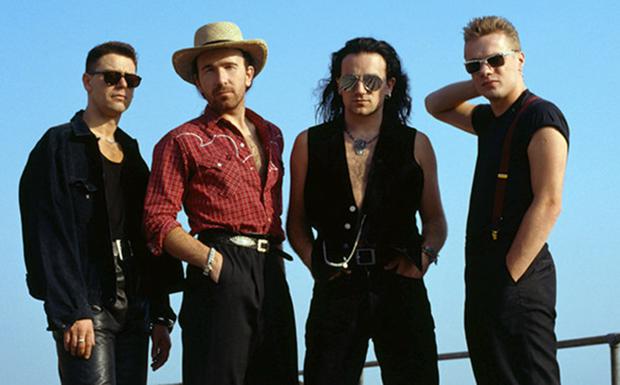
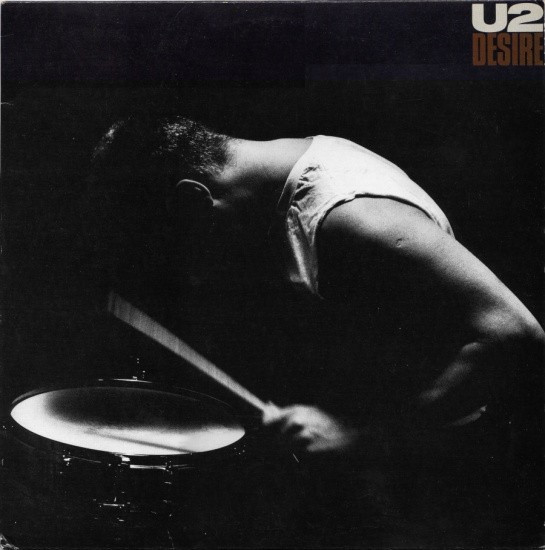
616. ‘Desire’, by U2

Go on, who had this down as the song that finally gave U2 their first #1…?

Desire, by U2 (their 1st of seven #1s)

1 week, from 2nd – 9th October 1988

For as good as this record is, and it’s a great little rocker, it’s not the first U2 song that springs to mind for most people. There haven’t been many bluesy chart-toppers, and the ones that have appeared came in the mid-sixties for the likes of the Stones and the Animals. But this one bangs straight in with a Bo Diddley beat, and a tale of an irresistible woman – She’s the candle, In my room… Or is it about drugs – I’m the needle, Needle and spoon…? Either way, it’s about something you just can’t say no to.

For a band not afraid of grandiosity this is a simple song; and all the better for it. They were influenced in recording it by The Stooges, and released what had been the demo version after deciding that the finished take was too polished. It’s short, sharp, and possibly one of Bono’s best vocal performances. Say what you want about Bono (and I just might, over the course of U2’s seven #1s) he’s a great rock star, when he remembers that he is a rock star, and not Jesus. Here he stutters, he growls and he soars, and sounds genuinely like a man crazed with desire.

Then there’s the harmonica which, after ‘He Ain’t Heavy…’ makes it two #1s in a row that have been heavy on the tin sandwich. And whisper it, but is 1988 turning out to be a good year for rock music…? I wasn’t expecting it in the era of SAW and house music, but chart-toppers for Fairground Attraction and Billy Bragg, Beatles covers, glam rock samples, a re-release for the Hollies, now this… It feels like it’s come out of nowhere, but it’s certainly welcome!

‘Desire’ was the lead single from ‘Rattle & Hum’, the follow-up to U2’s worldwide breakthrough album ‘The Joshua Tree’. They were probably the biggest rock band on the planet in 1988, and so whatever they released first from their new album may well have rocketed to the top. I’m glad it was this, though. A lot of U2’s music suffers, in my eyes, from the same problem ‘He Ain’t Heavy…’ suffered: grandiosity, and not a little pomposity. Not this one (and to be fair, not too many of their UK #1s – they usually like to announce a new album with a rocking single).

And so, U2 are up and running as a chart-topping force. Off the top of my head, they’re the 4th most successful rock act in terms of #1s, behind only the Beatles, the Stones and Oasis. But sadly, after me making such a big deal of it, this is where 1988 stops rocking… A block-busting ballad looms over the horizon.

Random Runners-up: ‘Let’s Work Together’, by Canned Heat

My special feature for the week is a moment in the sun for the singles that didn’t quite make it to the top. These aren’t particularly long-running, or unlucky #2 singles. They may not even be particularly good… They all simply peaked in the runners-up position.

Last one, and we’re off to the seventies today…

‘Let’s Work Together’, by Canned Heat

#2 for 1 week, behind ‘Love Grows (Where My Rosemary Goes)‘, from 15th – 22nd Feb. 1970

A groovy last runner-up for the week. It’s got that slightly fried feel of some of the late-sixties/early-seventies #1s – ‘Spirit in the Sky’, ‘Bad Moon Rising’ and ‘I Hear You Knocking’ – as if the band has been keeping the party going that little bit too long.

The message is positive, though: Together we stand, Divided we fall… Every boy, every woman and a-man…! while the frazzled lead guitar chops and changes, and the rhythm section chugs along with a nasty edge. It really feels like this should be the backing to a tale of sleaze and sauciness – a ‘Honky Tonk Women’ Pt II, for example – not such a feel-good rallying cry.

Lead-singer on this record, Bob Hite, also gives the lyrics a threatening edge. He snarls, rather than encourages. Come on, come on, Let’s work together… he sings, though I’m not sure I would, with him. I like it though, this scuzzy, bluesy, boogie-woogying tune.

It had been written and recorded in 1962, as ‘Let’s Stick Together’ by Wilbert Harrison, before being rerecorded in 1969, by the same guy, as ‘Let’s Work Together’. His version was the hit in the US, while Canned Heat had the success in the UK. It was by far their biggest hit here. I knew it best through the Bryan Ferry version, which he turned back to ‘Let’s Stick Together’… Way to complicate things… Ferry took that to #3 in 1976 – a great, if slightly glossier, reimagining in which he pleads with his wife not to divorce him.

I’ll leave you with the version that made #2 in early 1970, behind ‘Love Grows…’ (what a great top 2!) Enjoy. I’ll do another blast of random runners-up sometime, it was fun. The regular countdown will resume over the weekend.

260. ‘With a Little Help From My Friends’, by Joe Cocker

I recently did a series of posts on cover versions of #1 songs – previous chart-toppers that had been reimagined in different ways by different artists. ‘Different’ being the important word – a good cover version should bring something new to the table. What’s the point in releasing a karaoke version of the original? And while we have had plenty of cover versions hit number one already, this one takes the concept to another level.

Joe Cocker

With a Little Help From My Friends, by Joe Cocker (his 1st and only #1)

1 week, from 6th – 13th November 1968

The Beatles’ version of ‘With a Little Help From My Friends’ had been released the year before, on the ‘Sgt. Pepper’s Lonely Hearts Club’ LP. Joe Cocker, a British blues-rocker who had been around for a few years without enjoying much chart success, took it and made it his own. It’s slower, heavier, longer, downer and dirtier… Re-acquaint yourself with the original here, then settle in for the Cocker treatment.

It begins with a distant organ, as if you were standing outside a church before evensong. It’s an ominous build-up… You’re ready for something to happen. Then wham. Guitar! Proper hard-rock guitar. Hendrix and Clapton kind of guitar. The type of guitar that’s been nowhere near the top of the charts before. It’s bombastic, and outrageous. It makes you want to make devil-horns and punch the air.

The lyrics are the ones you know. What would you do, If I sang out of tune, Would you stand up and walk out on me…? But it sure isn’t Ringo singing it. Cocker’s voice is husky, and soulful. He delivers the lines late, squeezes the words in before the next one comes along. The backing singers, so important in any version of this song, sound like a gospel choir: How do I feel at the end of the day…? Are you sad because you’re on your own?

The best bit is the bridge – the Do you need anybody… bit. The guitars go super heavy and crunchy, like a motorbike revving up. The second time around, especially, when Cocker howls and the backing singers soar and we launch into the final minute of a mini rock-opera. I know we’ve had a lot of soul number ones in recent years – The Small Faces, Chris Farlowe, Long John Baldry and more – but this takes it to the next level.

s-l400

It kind of sounds a bit like a jamming session, or at least a live version, and that really adds something to the song. They captured lightning here. They would never have been able to re-record this exactly the same – it’s too raw, too intense. It lacks the polish of a regular #1 single, but you’re oh so glad that it somehow managed to have its week in the top spot

As I mentioned, it’s another long number one. You wait years for a #1 single that lasts longer than five minutes, then three come along at once. And that’s not all that links this to the previous two #1s. We’ve now had a number one recorded by The Beatles (‘Hey Jude’) replaced by one that was produced by a Beatle (‘Those Were the Days’) replaced in turn by a number one written by The Beatles. In case you’ve lost count, this is the fourth Beatles cover to reach the top in the past five years. They may have been reaching the end of their career as a band, but their grip on the charts wasn’t weakening.

We end in a frenzy of organs and guitars, as Cocker ad-libs over the fade-out. Phew. It’s not a subtle re-interpretation, I will admit, but for me it works. I knew this record by reputation, but it’s been great to give it an in-depth listen. ‘With a Little Help From My Friends’ is a song that will pop up another two times in this countdown, and I don’t think it’s giving too much away to say that neither of the upcoming covers are fit to lick this one’s boots…

Joe Cocker will only have one more Top 10 hit, until the early-eighties when he will record ‘Up Where We Belong’ with Jennifer Warnes for the soundtrack to ‘An Officer and a Gentleman.’ From Sheffield, but sadly no relation to Jarvis Cocker, he was still scoring Top 20 albums in the ‘00s and the 2010s. He died in 2014.

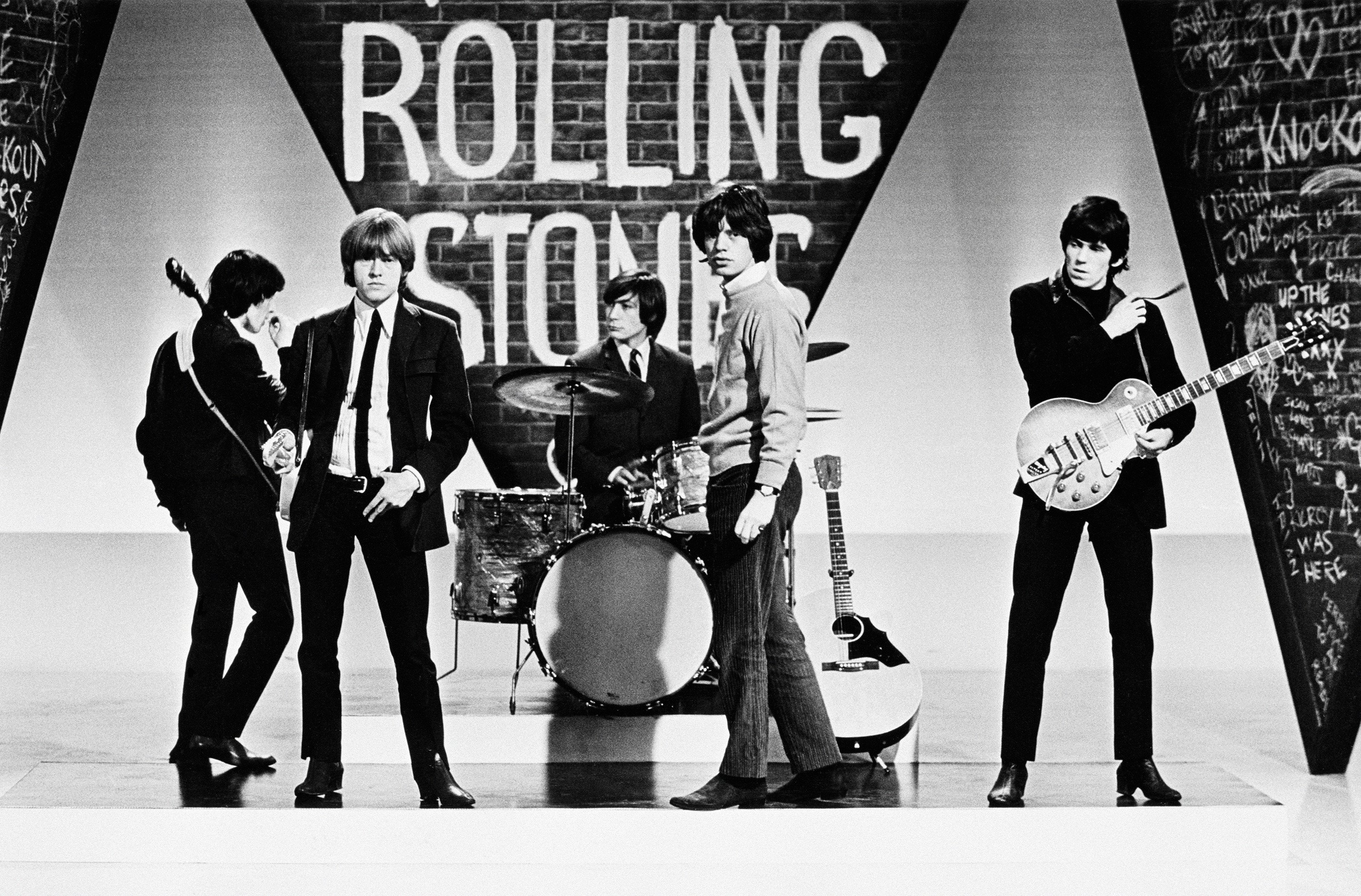
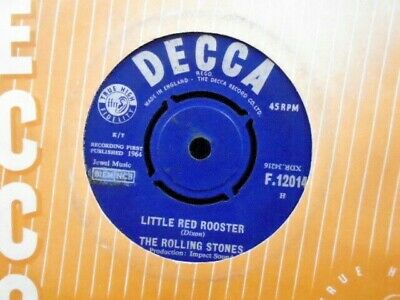
182. ‘Little Red Rooster’, by The Rolling Stones

Pack your welly boots, your straw hat and some industrial strength bug spray – we’re off to the country. To a farm somewhere in the Miss’ippi Delta. With The Rolling Stones.

TV Rehearsal

Little Red Rooster, by The Rolling Stones (their 2nd of eight #1s)

1 week, from 3rd – 10th December 1964

It feels like the Stones’ arrival, earlier this year, passed us by. ‘It’s All Over Now’ sneaked a week at the top in the summer, but surrounded as it was by some colossal pop tunes from some legendary acts I had basically forgotten about it. The first Stones #1 should have been a bigger thing, I feel. So, they’re back. And this time they’re making sure we notice them.

Their tactic? To return with a song so unlike any of the one hundred and eighty-one previous chart-toppers that you instantly sit up and start listening. A slow, woozy blues riff comes along, reeling you in, lulling you into a vision of sipping ice-tea on a farmhouse veranda, before Mick Jagger’s languorous vocals… I am the little red rooster, Too lazy to crow for days… I am the little red rooster, Too lazy to crow for days… It’s an atmospheric song – the dusty, heat-hazed farmyard unfolds before your very eyes. Dogs begin to bark, And hounds begin to howl… All the while the hypnotic, twelve-bar blues riff continues to drag you along. Watch out strange cat people, Little red rooster’s on the prowl…

1964 has been a year, by and large, of peerless pop. But this is no pop song, not by any stretch of the imagination. There are no verses, or chorus, or bubble-gum bridge here. This is low-down and dirty blues. It’s like the band pressed record on a jamming session, a warm-up before recording the actual single, and decided to release it instead. I’m listening to it on repeat as I write this, and it’s very easy to miss when the song starts over. It could be three minutes long; or thirty minutes.

THE-ROLLING-STONES-LITTLE-RED-ROOSTER

While the lyrics might sound like the Mick Jagger manifesto – I am the little red rooster… Keep everything in the farmyard upset in every way… – one that he’s been following for the best part of sixty years, the real star here is Brain Jones and his slide guitar. The main rhythm is acoustic, but Jones’s electric guitar flirts, and slinks, and playfully cavorts around every line. One minute it’s making the sound of dogs barking, then horses rearing, then it’s the little red rooster itself. Jones was blues through and through, and felt some discomfort at the band ‘selling out’ and becoming a pop group. As the sixties progressed and the Stones moved further and further away from their bluesy roots, he became a marginalised figure on the edge of the band, until his tragic death. Looking back, it’s easy to forget that he was as much a part of the original Stones as Jagger and Richards. This record is perhaps his finest hour, and a kind of vindication. He had managed to get a full-on blues song to #1 in the British charts – the only time that has ever happened.

‘Little Red Rooster’ had originally been recorded by Howlin’ Wolf, one of the Stones’ biggest early influences, in 1961. But it’s a folk song at heart, handed down through the mists of time, probably from well back in the 1800s. His version is very raw, while another version by Sam Cooke is much more polished, with a snazzy organ doing the work of Brian Jones’s slide guitar. In those earlier versions the singer has a little red rooster, rather than being the little red rooster – which brings to mind some saucy connotations. I’m surprised Mick and the lads changed it…

Understandably, the band’s management was against releasing this as a single. It doesn’t exactly scream ‘#1 smash hit’. But it was. And I feel that this, along with all their earliest singles, have been somewhat erased from The Rolling Stones canon. For years I thought – according to the greatest hits CDs I had – that their career began with ‘Time Is On My Side’. But now I know. And while I would never name ‘Little Red Rooster’ as one of my favourite Stones songs, I am truly glad that they took this slice of Delta blues to the top of the charts for a cold and drizzly December’s week.