On This Day… 20th March

Time for another look back at some famous moments in music history, and the chart-topping hits that go along with them…
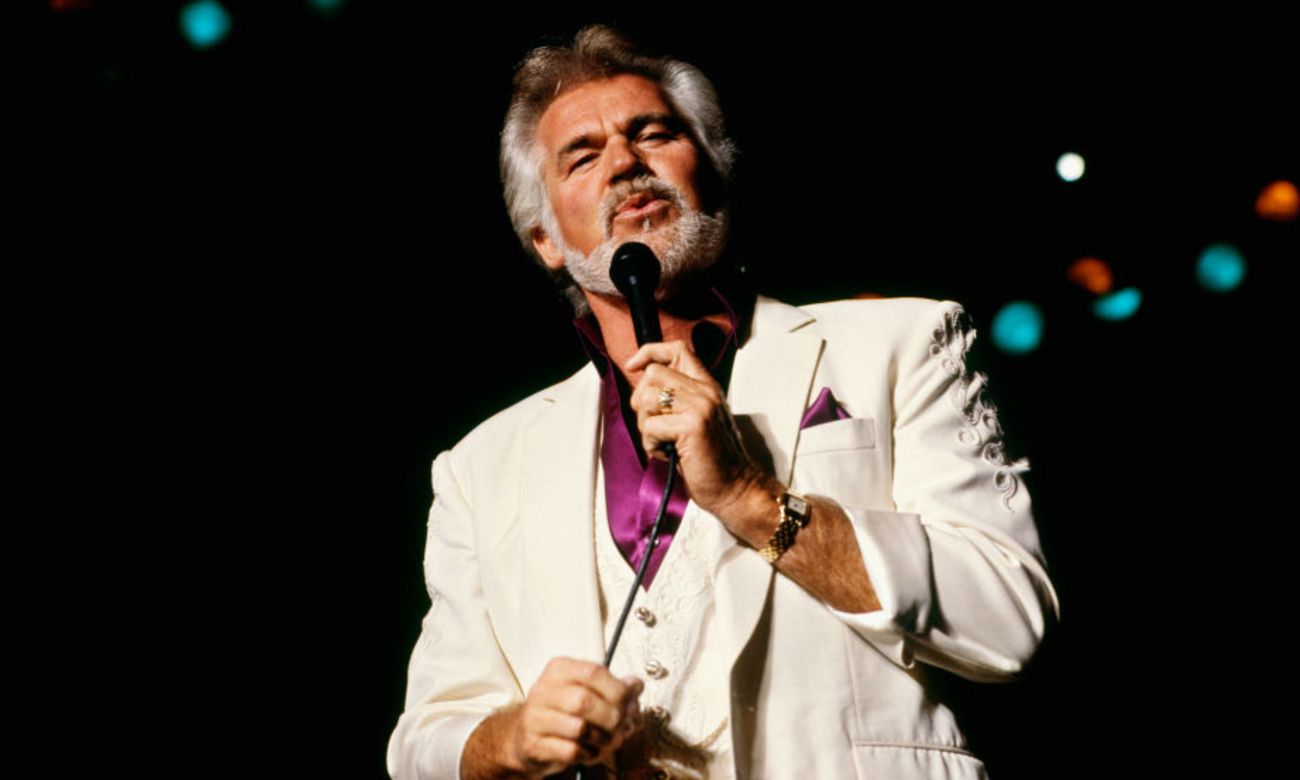
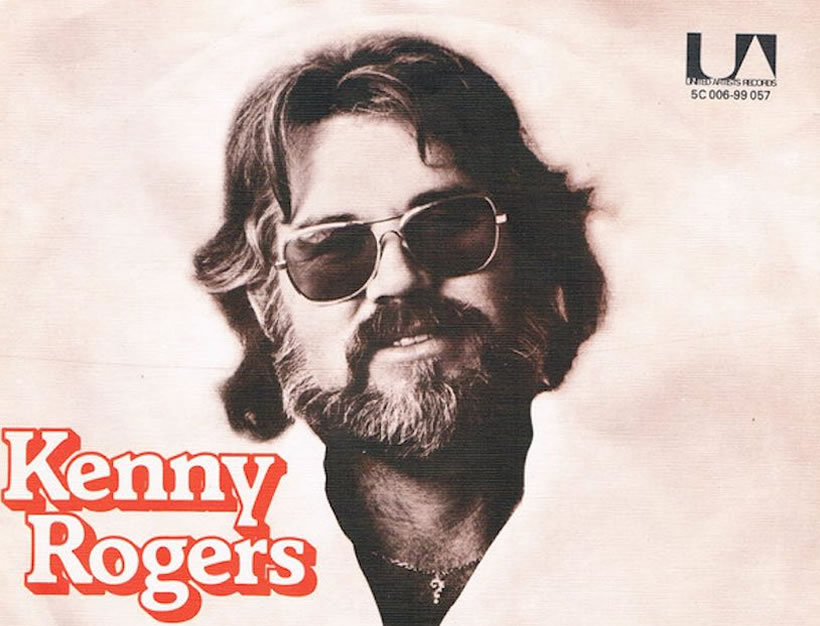
Starting with a birth and a death. March 20th 2020 saw the passing of country icon Kenny Rogers, who had managed two UK number ones in the late seventies and early eighties. Both songs were slightly out-of-kilter for the disco, punk and new-wave sounds of the time, but if listening to every single number one single has taught me anything, it’s that country and western (and reggae) are immune to popular tastes, and keep popping up time and again.

Here’s his first chart-topper, ‘Lucille’ (original post here), about a man who meets a downtrodden woman drowning her sorrows. I am a fan of a good opening line, and there have been few finer than In a bar in Toledo, Across from the depot, On a barstool she took off her ring…

Over a century before, March 20th 1917 saw the birth of Vera Lynn. A legendary name in British popular music, she began performing aged seven, released her first single in 1935 (aged eighteen), and scored her final Top 10 album in 2017 (aged one-hundred), giving her a career spanning ninety-six years! Despite this astounding longevity, Lynn only managed one UK #1: ‘My Son, My Son’ (original post here).

I won’t claim to particularly enjoy this very old-fashioned record, but Dame Vera doesn’t half sing the life out of it. And you can really make out what she’s singing, something my dear departed Gran was very particular about. Plus, I think it prominently features a clarinet, something not many other #1s have. I also did a Remembering post on Lynn, when she died in 2020.

Meanwhile, on this day in 1991, Michael Jackson signed what was the biggest record contract in history, with Sony. Both the advance, and his share of future record profits, were beyond anything seen before. You can see why the execs went out their way to keep hold of Jackson, given that his previous LPs, ‘Thriller’ and ‘Bad’, had been two of the highest sellers of all time. But you can also argue that this was the start of Jackson’s slow slide into creative inertia and over-indulgence, as little of his nineties output can rival that of his eighties hits. Still, here’s ‘Black and White’ the first single from the first album to be released under the new contract, ‘Dangerous’ (original post here).

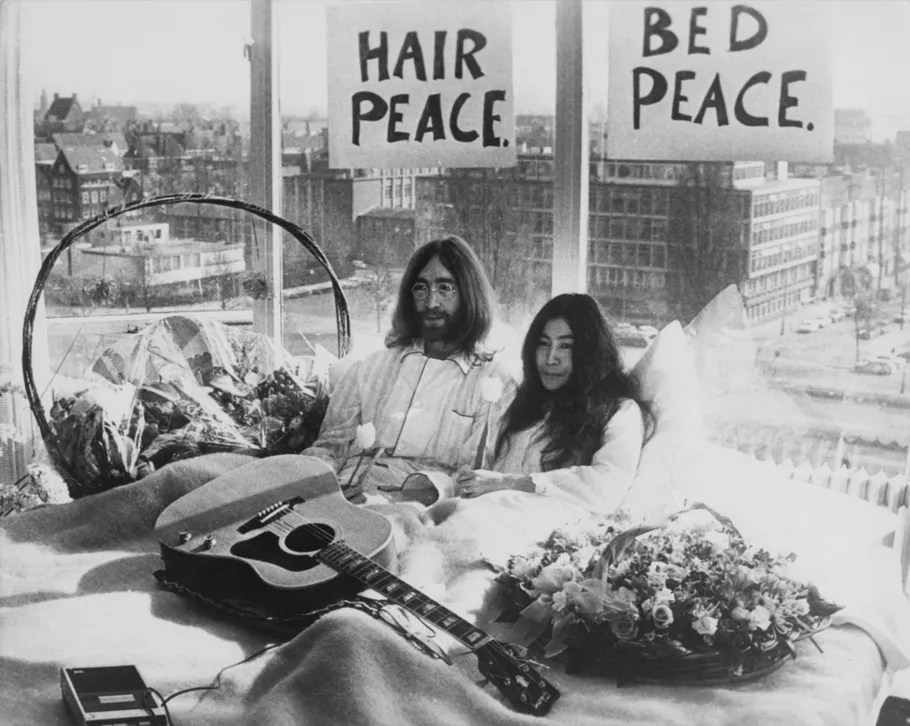
March 20th 1969 was also the day on which John Lennon married Yoko Ono at the British Consulate in Gibraltar (near Spain), before heading to the Amsterdam Hilton and talking in their beds for a week… Of course, these are not my own words, and so why don’t we let ‘The Ballad of John and Yoko’ tell the full story. This seemed for a long, long time to have been the Beatles’ final number one (though it famously only features John and Paul), until ‘Now and Then’ in 2023 (original post here).

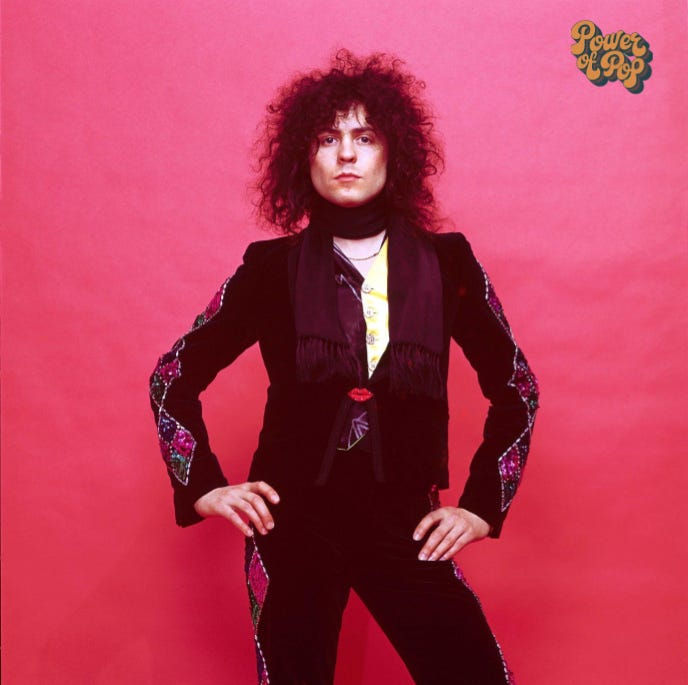
Lastly, on this day in 1977, T. Rex played their final British concert at the Locarno in Portsmouth. Their final ever live appearance would come a couple of months later in Stockholm, and three months after that Marc Bolan would die in a car crash. Neatly bookmarking T. Rex’s career, though, is the fact that ‘Hot Love’ was two weeks into a six-week residence on top of the charts on this day in 1971 (see original post here). Whether or not it was indeed the first glam rock #1 is up for debate. What is not up for debate is the song’s audacity (half of it is just nanananas), or its brilliance.

That one goes out to all those who are faster than most and who live on the coast… Regular posting resumes in a few days!
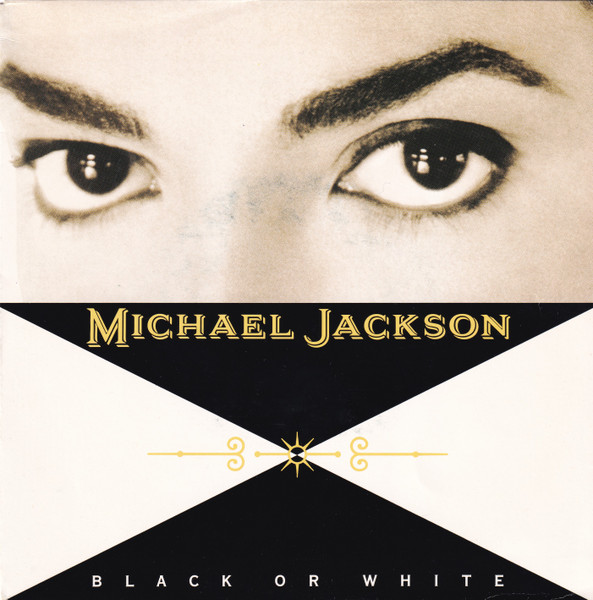
670. ‘Black or White’, by Michael Jackson

This next number one carries a lot of baggage: involving the singer, the video, the theme of the song… So much that it’s easy to forget that it’s actually quite a breezy pop tune, built around an actually quite cool riff. Compared to Michael Jackson’s big ‘80s hits – ‘Billie Jean’, ‘Bad’, ‘Smooth Criminal’ – it’s a lot more ‘pop’.

Black or White, by Michael Jackson (his 4th of seven #1s)

2 weeks, from 17th November – 1st December 1991

It’s also a very modern sounding song, moving from said pop, to rock, to rap, with a tribal drumbeat laid underneath, with effortless ease. By the middle of the decade it will be common for pop songs to incorporate a rapped verse, but this is one of the first chart-topping examples I can think of. The huge change in tone for the middle-eight sticks out like a sore thumb, but also somehow works too, and is our first glimpse into how this is more than just a nice pop song.

I ain’t scared of no sheets, I ain’t scared of nobody… Jackson spits (‘sheets’ referring to the white cloths of the KKK), and the rest of the song’s lyrics are similarly hard-hitting. Don’t tell me you agree with me, When I saw you kicking dirt in my eye… he sings, as the main riff kicks back in again. But the true classic line is kept for the rap: I’ve seen the bright getting duller, I’m not gonna spend my life bein’ a colour…

This being Michael Jackson, though, the message that it don’t matter if you’re black or white comes with a little extra baggage. Compared to the MJ that we saw in the video to his last UK #1 – 1987’s ‘I Just Can’t Stop Loving You’ – he looks a lot less… black. His nose, too, has changed beyond recognition. It would turn out to be a combination of plastic surgery, vitiligo and skin bleaching. In releasing a song called ‘Black or White’, you have to either marvel at Jackson’s confidence, knowing that he was going to invite comment and criticism, or suspect that he was becoming divorced from reality.

Still, he was the biggest pop star on the planet, and the music video premiered to the biggest audience ever. Like many of Jackson’s videos, it’s an eleven-minute piece of cinema. It opens in a suburban kid’s bedroom (the kid being child star du jour Macauley Culkin), before taking us on a tour of the world, as MJ dances with African tribesmen, Native Americans, Thai dancers and Cossacks before ending up on top of the Statue of Liberty. Nowadays you might label it as well-intentioned but clumsy. The most affecting part of the video is the simplest: the face shifting sequence, in which white men morph into black women into Asian men into white women.

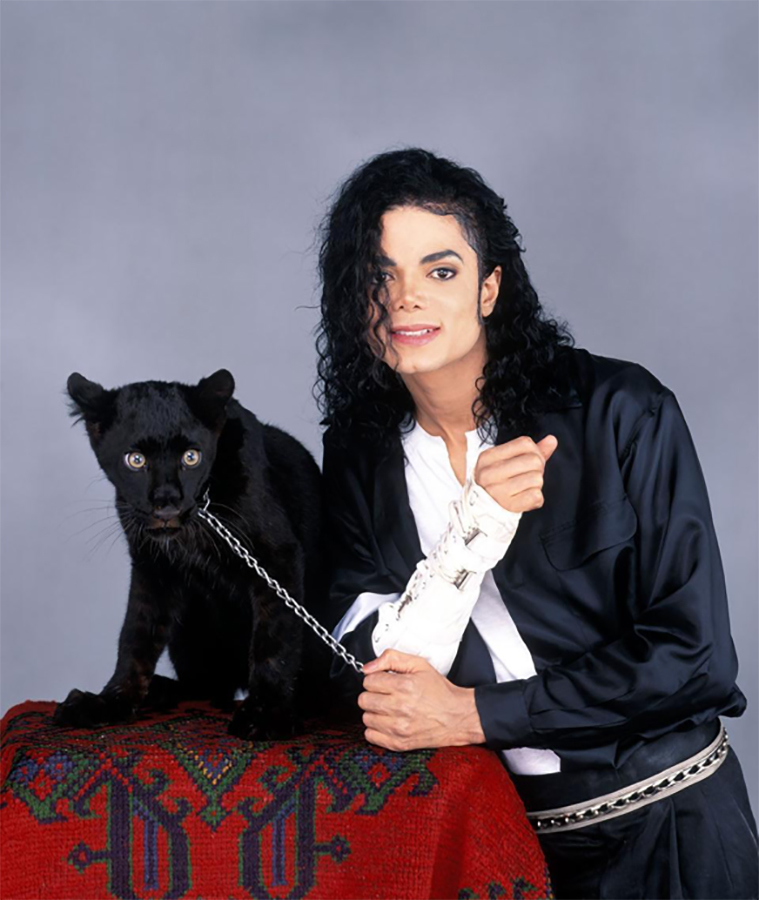
The song ends, but the video continues with a five minute long scene where Jackson morphs into a panther, then embarks on a vandalism rampage, smashing shop windows and car windscreens. He got criticism for this, and cut it from later screenings of the video. (Personally, I’d criticise it for being self-indulgent and pointless, rather than encouraging violence…) Years later he edited this section of the video so that he was smashing windows that had been spray painted with racist slogans to better explain his actions. Oh, yeah, and then the video actually ends by cutting to an episode of ‘The Simpsons’, in which Bart has just watched the video to Homer’s annoyance (handily harking back to Jackson’s alleged other #1 from earlier in the year).

It’s a complex beast, then, this single. On the one hand a breezy tune with a positive message, on the other a sign that the King of Pop might have been living up to the ‘Wacko’ nicknames. It was the lead single from ‘Dangerous’, his last truly great album (though one that still probably couldn’t quite live up to its 1980s predecessors). Despite that, the 1990s would end up being Jackson’s most successful decade of all for number one singles, with three more to come… And I’m going to spoil things by saying that ‘Black or White’ is probably the best.