965. ‘Mandy’, by Westlife

Blame me. I mentioned them in passing in my last post and, like a vengeful demon, that is all it takes to summon Westlife…
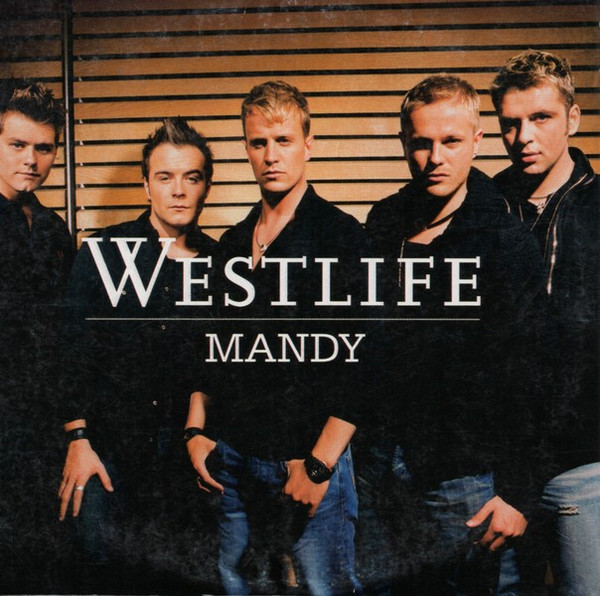
Mandy, by Westlife (their 12th of fourteen #1s)

1 week, 23rd – 30th November 2003

You might be wondering why I made a fuss about the end of ‘the golden age of boybands’, when Busted are the biggest pop group in the land, and Westlife are still cranking out the number ones. Well, I’ve explained why Busted weren’t actually a boyband, and in this post I’ll explain why Westlife were no longer one either.

Actually, the this cover of Barry Manilow’s 1974 UK #11 (and US #1) hit does the explaining for me. Westlife have renounced the boyband mantle, and any attempts to woo the traditional teenage girl market, and become full-on granny baiters. (Westlife, for all their many musical crimes, were not initially very cover-version heavy. This was only their fourth non-original #1 from twelve.)

And the fact that they are now mining a rich seam of proudly cheesy, easy-listening hits means that this is actually one of their more enjoyable chart-toppers. After the dirges that were ‘Unbreakable’, and ‘Queen of My Heart’, a cover of a Manilow classic is a pleasant surprise. Plus, they’ve added a strangely interesting sitar riff. And a key change, naturally.
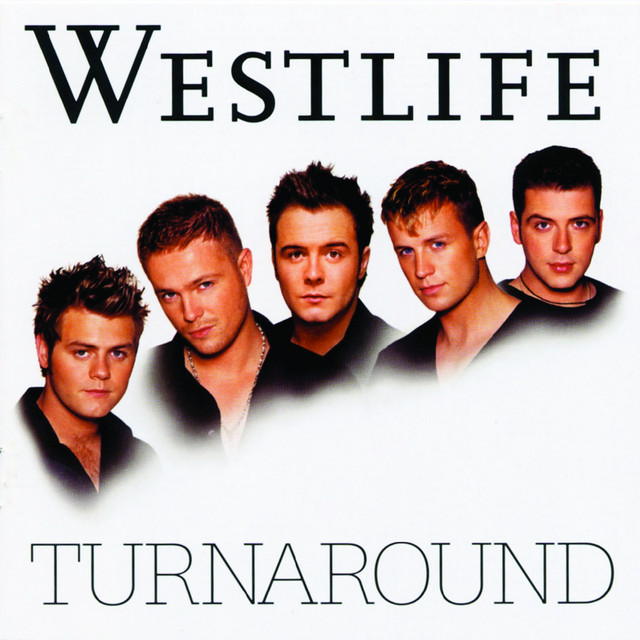
Giving up any pretence at being relevant was probably a sensible career move for Westlife, and the run of MOR covers that started with ‘Mandy’ probably extended their chart careers for a good few years (and set them up nicely for a post-chart career touring Asia, where people’s love of a soppy ballad knows no bounds). This was the second single from their fourth studio album, ‘Turnaround’. The lead single – the slightly more contemporary and actually quite upbeat ‘Hey Whatever’ – had done the unthinkable and stalled at #4 in September. Which proves my point about this being the right move for a boyband almost five years into their careers, as back to #1 they went.

A couple of interesting things about ‘Mandy’ before we finish. It was originally written as ‘Brandy’, and had reached #12 in the UK in 1971 for Scott English. Manilow changed the name to avoid confusion with Looking Glass’s big hit ‘Brandy (You’re a Fine Girl)’. And Westlife’s version technically has the biggest climb to #1 in chart history, after a handful of copies were made available a day early by mistake. It had charted at #200 the week before, then rocketed to #1 when properly released. The OCC only acknowledge the Top 100, however, and so it is officially a new entry at number one.

Never Had a #1… Part 1

Good morning, pop-pickers! I’m revamping my semi-regular ‘Never Had a Number One’ feature. Instead of featuring a randomly chosen, #1-less, artist for a post, I’m going to start counting down the Top 40 very biggest acts that have never featured at the top of the UK singles charts.

I’m basing it on worldwide sales (in both singles and albums), and have used the ever-trusty Wikipedia as my main source. All the acts to appear in this new feature have sold at least 75 million records across the world. I’ll cover all the Top 40 in eight parts with five acts in each (plus six honorary mentions for acts who have sold loads but have never charted in the UK).

We’ll do it in ascending order, and this first part features the lowest-selling of the bunch (all around the 75 million worldwide sales mark). Starting with…

40. Barry Manilow

Biggest hit: ‘I Wanna Do It With You’ (#8, in 1982)

It is frankly amazing that this was not only Barry Manilow’s biggest UK hit, but his sole Top 10 single in Britain across an entire fifty-year career. I had never heard this song before, but I like it: unashamed soft-rock with cute retro flourishes. And a cracking sax solo. I admire the British public for making this his biggest hit, ahead of schlock like ‘Mandy’, or ‘Copacabana’, and admiration for the British public is not something I’ve had much of recently.

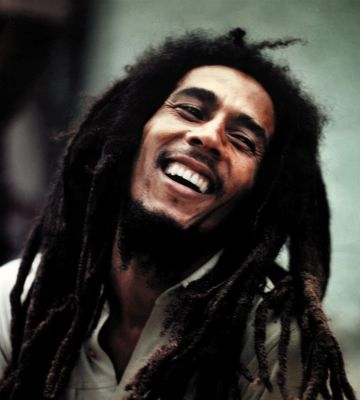
39. Bob Marley

Biggest hit: ‘Sun Is Shining’ (vs Funkstar De Luxe) (#3, in 1999)

A couple of surprises here too. First, that Bob Marley is so far down this list, and that his biggest UK chart hit was a dance remix released almost twenty years after his death. I did a post on Bob Marley a few years ago, so head over that way if you’d like more information on his non-charttopping career.

38. Kenny G

Biggest hit: ‘Songbird’ (#22, in 1987)

Some smooth, smooth jazz now. This list skews towards the US, because that’s where most records have historically been sold. Kenny G was remarkably, some might say bizarrely, popular in the States, and ‘Songbird’ made #4 there. Which is frankly amazing, and can only be explained by thousands of companies buying the record to use as their on-hold music. I have frequently tried to explain why some eighties music leaves me cold, and can offer no better explanation than pointing towards syrupy dross such as this.

37. Bob Seger

Biggest hit: ‘We’ve Got Tonight’ (#22, in 1995)

Another ‘much bigger in the US’ act: roots-rock icon Bob Seger. He released his first single in 1961, but had to wait fifteen years before charting in Britain, and another twenty years for his biggest hit. ‘We’ve Got Tonight’ had been recorded in 1978, and turned into a bigger hit for Kenny Rogers and Sheena Easton in 1983. A re-release in 1995 took it to #22 for Seger, and it finally made the UK Top 10 when covered by Groanin’ Ronan Keating and Lulu in 2002.

36. Alabama

Biggest hit: ‘Feels So Right’ (#91, in 1984)

More Americana now, from a band literally named after a State. Yee-haw! Alabama can count themselves lucky to feature, qualifying thanks to their solitary week’s appearance on the UK singles chart, at #91, in 1984. (KISS are the act they kept out of the Top 40, if you were wondering). They may have had little impact in Britain, but have a staggering thirty-two #1 hits on the Billboard Country Chart.

Hope you enjoyed the first part of this new feature, even if it was hardly a selection of classic records. Manilow and Marley in particular are much further down the list than I’d expected. Part 2 – very rock heavy – will be along in a couple of months!

Of course, these rankings can be disputed, and could be completely wrong. It’s near impossible to know exactly how many records an act has sold in every record shop in every country around the world, and downloads and streaming complicate things further. Wikipedia bases their ranking on ‘claimed sales’ rather than ‘certified units’, and for many artists the latter is much higher than the former. For example, the Beatles (who unsuprisingly are top of the best-sellers list) have certified sales of 296 million, but claimed sales of between 500-600 million. Michael Jackson, second on the list with 400-500 million claimed sales, actually tops the list on certified sales of 297 million.