773. ‘The Drugs Don’t Work’, by The Verve

A slight change in direction then, after Will Smith’s intergalactic, family friendly, summer blockbusting number one

The Drugs Don’t Work, by The Verve (their 1st and only #1)

1 week, from 7th – 14th September 1997

This is surely one of the saddest chart-toppers in history. Not many hits have made the toppermost of the poppermost with lines such as: Like a cat in a bag, Waiting to drown… This time I’m comin’ down…

I suppose we have to class this as Britpop; but it also feels bigger, more timeless than that. And if it is Britpop (bearing in mind that the Verve formed as a shoegaze band, way back in 1990) then it is another song marking the comedown, more ‘Beetlebum’ than ‘D’You Know What I Mean?’ It’s interesting, actually, that the closing years of the decade will see (slightly) more rock chart-toppers than 1995-6, the peak years of Britpop.

As with Blur’s second #1, this one’s about drugs, and the bands’ struggles with them. I mean, it’s right there in the title. But added to that is the perhaps apocryphal story that it’s about watching a close family member die of cancer. The drugs don’t work, They just make you worse, But I know I’ll see your face again… Richard Ashcroft has never confirmed this, but has mentioned in interviews that this is now the song’s widely-accepted meaning. And he seems genuinely moved by this, the fact that he’s written a song that accompanies people through some of their darkest moments.

Despite all this, and despite me just calling it “one of the saddest chart-toppers in history”, it’s not a miserable song. The reverb, and the strings, give it a light quality, and I love the bluesy rasp to Ashcroft’s voice. The highlight is the middle-eight, the gorgeously soaring Cause baby oooh, If heaven calls… ‘The Drugs Don’t Work’ was the second release from their widely acclaimed ‘Urban Hymns’ album, and the strings in particular tie it back to the previous single, ‘Bitter Sweet Symphony’. That record is probably the Verve’s best remembered – especially as it was their only hit in the US – but it’s not a song I’ve ever loved. For me, this record, their sole number one, is their towering achievement.

So, I wouldn’t like to overly suggest that the success of ‘Bitter Sweet Symphony’, which had made #2 a couple of months earlier, was the reason for this making #1. This record deserves better than ‘shadow #1’ status. Perhaps more of a factor in this being such a big hit is the fact that it was released the day after the death of Princess Diana. Lots of sources have retrospectively claimed that her death, and the public’s need for something both maudlin and uplifting, meant it went straight to number one. Maybe that’s true, but again I’d give a song of this quality a bit more benefit of the doubt. ‘Urban Hymns’ went on to become one of the decade’s biggest albums, but its success caused the band to fracture. Ashcroft embarked on a successful solo career, and the next Verve album didn’t appear until 2008.

Anyway, if the public were desperate to mark Diana’s death by purchasing a CD single, they didn’t have to wait long for an even more appropriate song to come along…

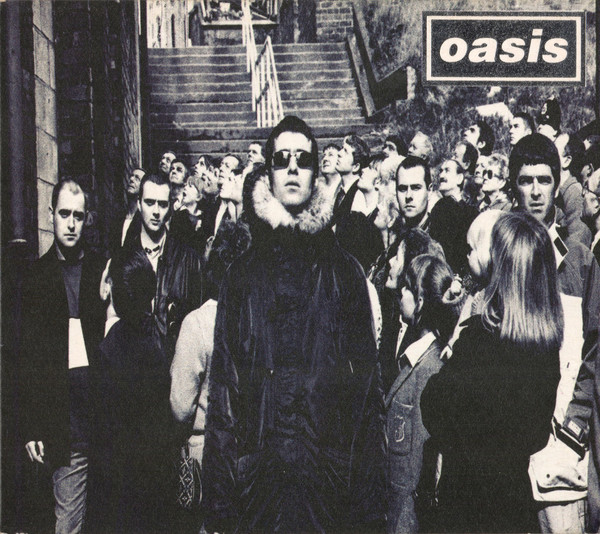
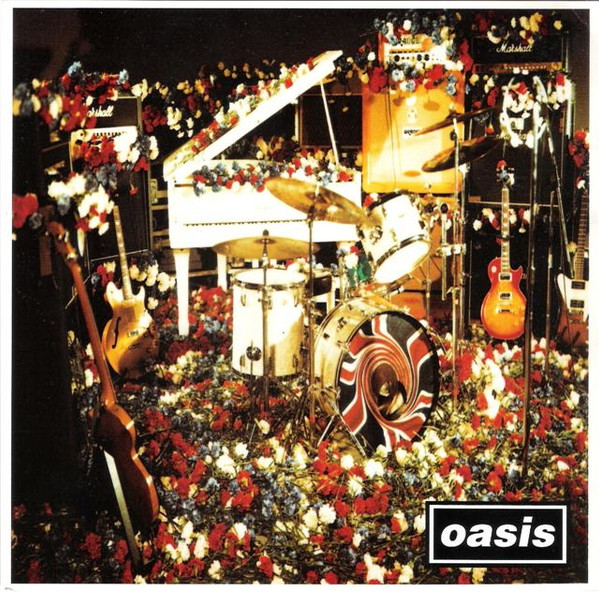
771. ‘D’You Know What I Mean?’, by Oasis

Was this the most anticipated song of the nineties? The decade’s ultimate band, whose previous album had become one of the biggest in history, releasing the lead single from their third LP. In this moment, Oasis were everything, and everywhere.

D’You Know What I Mean?, by Oasis (their 3rd of eight #1s)

1 week, from 13th – 20th July 1997

‘Definitely Maybe’ had the attitude, and the riffs, while ‘What’s the Story’ had the globe-straddling ambition, and huge pop choruses. ‘Be Here Now’ would have to go some to be even bigger than its predecessors… And ‘go some’ it did. Starting with the seven-minute lead…

Seven and a half minutes, in fact, that are completely overblown and ridiculous, and somehow still pretty boring. On the album version, clocking in at almost eight minutes, the scene is set with a full minute of helicopters, feedback, bleeping and blooping, before the song even starts. The first chorus doesn’t arrive until the two and a half minute mark. The final minute or so is more feedback, and psychedelic loops for good measure. Most of the verses are slow and plodding, with so many different tracks welded together that listening to it, especially on headphones, can be a trippy experience. There’s a decent song in there, somewhere, buried under a landslide of sound.

The best thing about ‘D’You Know What I Mean?’ is the lyrics, Oasis at their most Oasis-y. In fact it might as well be the Liam manifesto, with pearls like: Comin’ in a mess, Goin’ out in style, I ain’t good-looking but I’m someone’s child… and I met my maker, Made him cry… Is this his best vocal performance on an Oasis #1? Perhaps. And of course there are two Beatles references (The fool on the hill and I feel fine…) so blatant that Noel was clearly playing to the gallery.

It didn’t really matter what it sounded like, this was always going to go to number one, and the fact that it is so overblown and so far up its own arse makes for an interesting chart-topping record. (Though despite it selling almost 400,000 copies in its first week, Puff Daddy returned to the top a week later.) ‘Be Here Now’ was equally always going to be the year’s biggest album; but after early adulation, the critical response to it quickly soured. It is, how to say… a bit much. Obnoxious, overlong, overproduced, over-the-top. The problem was that Oasis were too big to edit, and they were taking far too much cocaine. Even the title of this record, ‘D’You Know What I Mean?’ sounds like a conversation with a drugged-up bore.

That’s not to say I don’t like ‘Be Here Now’ – it’s got some great tunes buried within it, and gets too much stick from people who probably haven’t listened to it in twenty-five years. And actually, so what if it’s a bloated whale-corpse of a record, made by a band who had spent two years gorging on champagne and coke…? That’s rock ‘n’ roll, baby. Perhaps one of the genre’s last great excesses, just two years out from the horrors of a new millennium. Which of the 21st century’s big rock bands would even attempt something so hideously gargantuan? Coldplay? Snow Patrol? Imagine Dragons…?

In my post on ‘Beetlebum’, I pinpointed that record as the start of the Britpop comedown. Blur had taken themselves off to bed as shivering, sweating wrecks. But ‘D’You Know What I Mean?’ is the sound of Oasis keeping the party going, for better or worse, even though the morning sun is creeping through the cracks in the blinds, as the song drones on and on, and on.

It became the second-longest #1 single ever, ahead of ‘Hey Jude’ but thirty seconds behind Meat Loaf’s ‘I Would Do Anything for Love’. Never ones to be denied, Oasis’s third single from ‘Be Here Now’ will be so long that it will make ‘D’You Know What I Mean?’ seem short and sweet by comparison. And that one will be making number one soon enough.

761. ‘Don’t Speak’, by No Doubt

Without realising it, 1997 has gotten off to a pretty rocking start. Established names like Blur, and U2, have ensured that guitars have been well-represented at the top of the charts. Carrying on the trend are a band enjoying their breakthrough smash…

Don’t Speak, by No Doubt (their 1st and only #1)

3 weeks, from 16th February – 9th March 1997

…which has gone on to become one of the decade’s best-remembered hits. ‘Don’t Speak’ is both of its time – it has that US alt-rock sound, with the post-grunge power chords, that had worked for Deep Blue Something a few months earlier. But it also has some more unusual ideas in the mix: a moody flamenco beat, and melodramatic lyrics delivered more like a showtune (You and me, I can see us dying, Aren’t we…?)

Perhaps, strangest of all, there’s a woman singing! A rock song! Any excuse not to do those dishes… I jest, of course! There have been plenty of women singing rock songs at the top of the chart, and female-fronted rock bands, like Blondie, the Pretenders, T’Pau, and…. You get my point. Gwen Stefani’s fantastic vocal performance was, I’d say, one of the main selling-points.

‘Don’t Speak’ had been around for a while – as had No Doubt, who formed in Anaheim, in 1986, and went through nearly a decade of trying to make it – in a more upbeat form. Stefani re-wrote it after breaking up with the band’s bassist Tony Kanal. The pair then took the leading roles in the video, which plays on the way the media side-lined the three other members to focus on Stefani. The band were on the verge of splitting up, allegedly, on the day they filmed it.

As good as ‘Don’t Speak’ is – and I do like it, though wouldn’t include it my pantheon of all-time nineties classics – it could be seen as a bit of a sell-out for the originally ska/punk No Doubt. The lead single from their 3rd album, the breakneck ‘Just a Girl’ had been a minor hit, and then made #3 on re-release later in 1997, and I do wish that had been the bigger smash.

Maybe it’s just the fact that the peak of their career coincides almost exactly with my formative years, but it seems very odd that this is No Doubt’s, and Gwen Stefani’s, only chart-topper. At least they managed one in the UK, with ‘Don’t Speak’ never officially being released in the US, despite a sixteen-week run on top of the airplay charts. Before we go then I should mention that, in my humble opinion, No Doubt’s grimy ‘Hella Good’, Stefani’s glorious solo debut ‘What You Waiting For?’, and her equally cool, um, ‘Cool’, all should have been number ones. No Doubt, meanwhile, recently reunited for the first time in almost a decade, and played a well-received set at Coachella.

760. ‘Discothèque’, by U2

We come to the last of five one-week number ones, the end of a run of interesting short-stays at the top of the charts. And is this the most interesting?

Discothèque, by U2 (their 3rd of seven #1s)

1 week, from 9th – 16th February 1997

U2 do dance. Or at least, U2 incorporate dance beats, loops and lots of effects into a rock song. Sadly, the title is misleading – there’s no disco to be found here. Bono doing his best Gloria Gaynor is sadly still a pipe-dream, though at various points he does attempt a falsetto to rival the Bee Gees.

No, the ‘dance’ element is firmly nineties-dance – house beats with a techno-ish edge. But underpinning it all is a pretty cool guitar riff, which is fed through different layers of feedback as the song winds on. It is at times crunchy, chiming and, in its best incarnation, gloriously scuzzy. It means that for all Bono’s theatrics, ‘Discothèque’ is actually the Edge’s show, especially when you see his handlebar moustache in the video…

But more on that in a sec. As soon as this single was played on the radio, rock snobs may well have clutched their pearls in horror at what U2 had become. Dance beats! In a rock song! And remixes… by DJs! Pass the smelling salts… But the Prodigy and the Chemical Brothers, even Babylon Zoo, have been pushing this sound for months already, to great success. If anything the critics could have accused U2 of bandwagon jumping. But who cares if it’s not that original – it’s a fun tune. A banger that is sadly forgotten among some of U2’s bigger, more po-faced, hits.

Plus, anyone complaining about this hadn’t been listening to U2 for the better part of a decade. Large swathes of ‘Achtung Baby’ and ‘Zooropa’ had incorporated non-rock influences. Their last #1, ‘The Fly’ was well over five years earlier, but you can hear the roots of ‘Discotheque’ in it, and for most of the 1990s they had been flirting with some avant-garde stuff. So, no, this cannot claim to be the quirkiest of our recent chart-toppers – that accolade remains with White Town. Finally, what confirms this as a good song is that the band look like they’re having great fun in the video, prancing around inside a disco ball, and dressing up as The Village People.

In my posts on U2’s previous number ones, ‘The Fly’ and ‘Desire’, I may have referred to them not being my favourite band, and Bono not being my favourite frontman. But actually, their first three chart-toppers are all very good, and very different. I might even name ‘Discothèque’ as my favourite of all their #1s, if I didn’t know one of the harder-rocking ones to come. It’s definitely better than their next chart-topper, which is U2 by numbers. In fact, this, and the ‘Pop’ album, were probably the last really experimental thing that the band did. For their next LP, in 2000, they went back to the stadium rock anthems that their fanbase loves, but that always leave me a little cold.

758. ‘Beetlebum’, by Blur

Continuing with our run of quirky number ones…

Beetlebum, by Blur (their 2nd and final #1)

1 week, from 26th January – 2nd February 1997

On the one hand, there’s nothing very quirky about Britain’s second biggest band scoring their second chart-topper, with the lead single from their highly anticipated fifth album. And yet… ‘Beetlebum’ isn’t Blur at their most accessible – a fuzzy, droning number about taking heroin. It would actually make a good pub quiz question: name Blur’s two UK number ones. Everyone remembers ‘Country House’ because of the hoo-haa around the Battle of Britpop. But I doubt many casual fans would name this one over ‘Parklife’, or ‘Song 2’.

At the time, ‘Beetlebum’ was seen as a disappointment by some, and it’s hard to imagine this now, as it effectively signalled the start of Blur MK II, the Blur we’ve known for the past two decades. But until now, most of their singles had been laddish and upbeat, delivered with a knowing wink. ‘Beetlebum’ is a much rawer beast, perhaps the first song to mark the comedown from Britpop’s highs.

Damon Albarn was at first reluctant to admit what the song was about, but lines like And when she lets me slip away… Nothing is wrong, I just slip away and I am gone… Plus a whole minute of He’s on, He’s on, He’s on it… give the game away pretty quickly. The song neither glamourises, nor demonises the drug; more gives the feel of what it is like to be under its influence. ‘Sleepy, and sexy’, according to Albarn.

I remember reading a line – though I don’t remember where – describing ‘Beetlebum’ as ‘bum Beatles’. Which is harsh, even if the comparisons to White Album/Abbey Road-era Beatles are obvious, especially in the chorus harmonies. Perhaps because of the Beatles’ influence, Noel Gallagher went on record naming this as the one Blur song he wishes he had written.

And I think nowadays, now that people have got over the disappointment of it not being ‘Girls and Boys Part II’, we can agree that ‘Beetlebum’ is a great song, and if you listen carefully you can hear that it’s as full of hooks as any of their other hits, culminating in one of the creepiest endings to a #1 single – a full minute’s worth of that droning riff, weird noises, effects and alarms, ending with one final click. It’s definitely worthy of being Blur’s ‘other’ chart-topper. Plus, I’ve always had a more personal soft spot for the record, as it was my 11th birthday number one.

They have no further chart-toppers to come, sadly. Follow-up ‘Song 2’, their biggest hit outside the UK, stalled somewhat appropriately at number two, and the lead single from their next album, ‘Tender’, will famously be held off the top by Britney Spears. Damon will be back, though, as the mastermind behind Gorillaz. Two #1s for the best Britpop band (something I’ve just decided this very second, but it feels right) is pretty paltry, so I’ll do a Blur ‘Best of the Rest’ sometime soon.

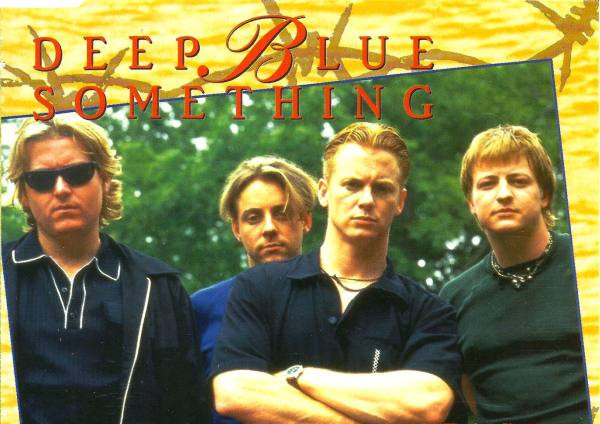
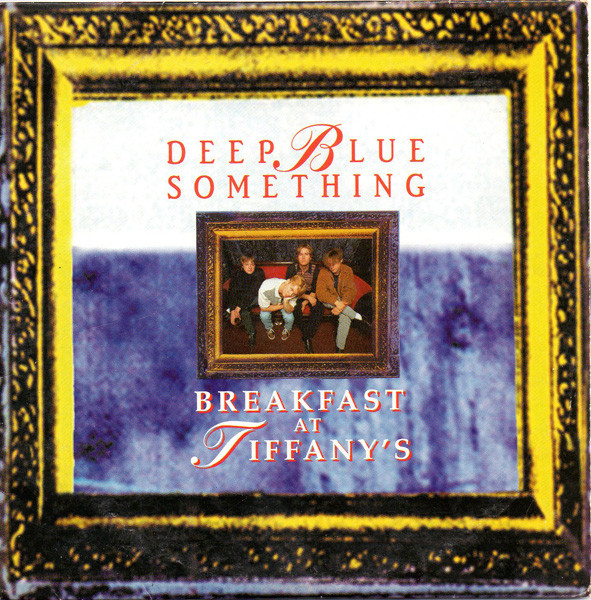
746. ‘Breakfast at Tiffany’s’, by Deep Blue Something

I’ve made a big deal about British rock (‘indie’, ‘Britpop’, call it what you will) not getting its fair share of airtime at the top of the singles chart in the ‘90s. I even did a special post on it. But here’s an even rarer sighting of the US equivalent…

Breakfast at Tiffany’s, by Deep Blue Something (their 1st and only #1)

1 week, from 29th September – 6th October 1996

When I think of US alternative rock, post-grunge, in the mid-1990s, I think of REM, the Chili Peppers, Hootie & the Blowfish, and… I’m struggling, to be honest. Britain was bursting at the seams with their own alt-rock, and not many American acts broke through. Here then is US indie, alt-, college (again, call it what you will) rock’s one week in the sun. I might even go as far as suggesting that this is the first such #1 since The Highwaymen in 1961, though that might be pushing things slightly.

It’s a catchy record, with jangly verses which contrast against the power chords in the chorus. It’s a very different sound to Oasis, or Blur – there’s an earnestness to US rock that its British equivalent often deliberately avoids – but I’m sure the prevalence of Britpop benefitted this in making it to #1. And, though I was still young at the time, I can remember it being everywhere on the radio…

The most interesting thing about this record is the lyrics. Even the title intrigues… ‘Breakfast at Tiffany’s’? I make it only the second number one single to share its name with a book, after ‘Wuthering Heights’, but I’ll happily be proven wrong if I’ve forgotten one! It’s about a dying relationship, that the singer tries to save by thinking of one thing the pair have in common. And I said, What about, ‘Breakfast at Tiffany’s? She said I, Think I, Remember the film… I think we’re meant to assume that this is enough for them to give it another go. I always thought that the next line was And as I recall, I read the book and I liked it… with the film and the book versions of ‘Breakfast at Tiffany’s’ being pretty different and a sign of the couple’s ill-suitedness… Except it turns out that the real line is as I recall I think we both kinda liked it… Call me a cynic, but my subconscious didn’t want them to stay together.

I see a lot of hate for this song online, hate that was also around at the time. And I can kind of see it, the fact that it’s cookie-cutter mid-nineties soft rock. The lyrics could also be seen as contrived, though I think they’re endearingly clumsy. It’s certainly not worthy of #6 on the ‘50 Most Awesomely Bad Songs Ever’ list, as VH1 and ‘Blender’ named it!

Deep Blue Something were from Denton, Texas and, despite forming in 1991 this was their first hit. Their only hit in much of the world, apart from in the UK. We felt sorry for them, and allowed their follow-up ‘Josey’ to make #27, sparing them a one-hit wonder tag. They split in 2001, but reformed in 2014. The members juggle being in Deep Blue Something with other day jobs in the music industry. Apart from, that is, guitarist Clay Bergus, who is a manager of Eddie V’s Prime Seafood restaurant in Fort Worth. Which is great.

734. ‘Don’t Look Back in Anger’, by Oasis

‘Don’t Look Back in Anger’ isn’t Oasis’s best song (that is a question for a different post, but it would probably be something from their debut album). ‘Don’t Look Back in Anger’ is, though, probably the ultimate Oasis song. Oasis at their Oasisest.

Don’t Look Back in Anger, by Oasis (their 2nd of eight #1s)

1 week, from 24th February – 3rd March 1996

They set out their stall in the opening seconds, with the piano line from ‘Imagine’ which, according to Noel, was a deliberate middle finger to those who claimed Oasis were musical copycats. It hooks you in, declaring that the next five minutes are going to be epic. In fact, every part of this song, from that intro onwards, is a hook.

You can be the type of person who jots down every little chord, lyric or guitar lick that Oasis nicked – and I am that person sometimes – or you can be someone who admires the way they managed to distil British rock history into an elite-level run of singles (and two excellent albums), who admits that when they were good, they were very good. The drum-fill before the final, soaring chorus here is, no hyperbole, one of pop music’s great moments.

‘Don’t Look Back in Anger’ also features some of Noel’s more coherent lyrics. My personal favourite is the Please don’t put your life in the hands, Of a rock n roll band, Who’ll throw it all away… with the squealing guitars in between. A lot of the lines are still nonsense, but they work somehow. I assume it’s about a break-up, given all the stuff about walking on by, and not looking back. Or maybe it’s a mantra for living positively, not lingering on mistakes. Don’t go thinking that ‘Sally’ is anyone important, though. ‘It’s just a word that fit, y’know,’ says Noel. ‘Might as well throw a girl’s name in there.’

A song written and led by Noel has to beg the question: what of Liam? Well, despite having nothing to do, he spends the video mooching around the garden of a stately home in his shades, and still manages to be the star of the show. He is apparently responsible for the song’s most famous line: So Sally can wait… having misheard what Noel was really singing while writing it.

Despite what I wrote earlier, I’m going to briefly be the guy that points out the bits that Oasis nicked. I just now noticed that while everyone was distracted by the ‘Imagine’ piano in the intro, the floaty guitar in the outro is a rip-off of ‘Octopus’s Garden’. Is that common knowledge, or have I just unearthed another, previously undiscovered fossil?

‘Don’t Look Back in Anger’ was the 4th single from an album that had already sold in the multi-millions, and so the fact that it made number one is testament to how truly massive Oasis were in 1996. Over the past twenty-eight (!!!) years, it has gone from a pop song to almost a hymn, or an alternate national anthem. In the wake of the Manchester Arena bombing in 2017, gathering crowds spontaneously began singing it, giving the lyrics an even more resonant feel.

Meanwhile, it has also been voted the 4th Most Popular #1 Single ever, the 2nd greatest Britpop song (after ‘Common People’), and the Greatest Song of the 1990s. (And, most importantly, the 2nd Best Song to Sing Along to While Drunk – controversially robbed of top spot in that poll by Aerosmith’s God-awful ‘I Don’t Want to Miss a Thing’.) It is also by far the best of Oasis’s eight number ones… and I hope that’s not too much of a spoiler for what’s to come!

733. ‘Spaceman’, by Babylon Zoo

The second number one of 1996, and one of the year’s most interesting hits, is yet another Levi’s assisted chart-topper.

Spaceman, by Babylon Zoo (their 1st and only #1)

5 weeks, from 21st January – 24th February 1996

I had no idea before starting this blog the extent of the jeans brand’s grip on the British charts. I make this, I think, the seventh Levi’s-assisted #1 in under ten years, but I admit I’ve lost count. (If we treated Levi’s as an act in themselves, they’d be up there with the Stones and ABBA in the overall list.) And almost all of them have been good #1s – re-released oldies from the Clash and the Steve Miller Band, as well as quirky, newer hits from Stiltskin and Shaggy. And let’s remember that, kicking off this whole era of Levi’s domination, they helped ‘Stand By Me’ to a belated but very deserving number one position

‘Spaceman’ is not at that level, but it is a remarkable chart-topper. People harshly suggested that it made #1 solely because the advert featured just the opening fifteen seconds, which make the song sound like a high-speed techno number. Space man, I always wanted you to go, Into space, Man… trills a high-pitched alien vocal, as we prepare our glowsticks.

Except, most of the song is a much heavier, rockier beast. It lurches from Britpop verses to industrial grunge in the chorus, before ending on a trip-hop, dance beat once again. It’s ear-catching, attention grabbing… And I’m going to stick my neck out and say it’s good. Lyrically it also treads novel ground. The singer, to summarise, is sick of life on earth. The sickening taste, Homophobic jokes, Images of fascist votes, Beam me up because I can’t breathe… are not your average #1 single’s lyrics. I can’t get off the carousel, I can’t get off this world…

Of course, that bit didn’t feature in the commercial. But it’s unfair to suggest that people were duped into buying this record. And the fact that it remained on top for five weeks, with plenty of airplay one presumes, clearly shows the song’s popularity. It became the fastest-selling debut single ever, going on to sell well over a million copies. It may be OTT and hyperactive, lurching from one sound to another, but I like its gothic silliness. There’s also a case for it being the first glam rock number one in quite a few years…

It was also my 10th birthday number one, so I feel a personal connection to it too. Babylon Zoo were a band from Wolverhampton, who had never charted before ‘Spaceman’ went, well, intergalactic. They’re cast as one-hit wonders, even though two further songs from their debut went Top 40. They struggled to sell albums, though, and suffered some terrible reviews for their live shows. They disbanded in 1999.

Should Have Been a #1…? ‘Common People’, by Pulp

Often when I’ve done a ‘Should Have Been a #1…’ post, it’s because the song featured was particularly unlucky when being deprived of top spot. ‘God Save the Queen’ may have been the victim of a political manoeuvre, ‘Happy Xmas (War Is Over)’ the victim of the festive holidays, and ‘Groove Is in the Heart’ runner up in the closest sales race ever…

But ‘Common People’ was beaten fair and square, by the more popular, better-selling record: Robson & Jerome’s double-‘A’ of ‘Unchained Melody’ and ‘White Cliffs of Dover’. Still, I do think that this was the biggest chart travesty ever… A travesty of public taste. But this post isn’t just a lamentation on Pulp’s poor fortune; it’s a tribute to all the Britpop records that never made number one. (Robson & Jerome did the double a few months later, also keeping Oasis’s ‘Wonderwall’ in second place behind their cover of ‘I Believe’.)

If our journey through 1995 has taught us anything, it’s that Britpop was badly served at the top of the singles chart. Few big musical movements are less well-represented at the top – maybe punk, and heavy metal. Oasis and Blur have had a #1 each, and they’ll have more going forward. In the weeks and months to come we’ll meet the Prodigy, the Verve, and the Manic Street Preachers (none of whom can truly be defined as ‘Britpop’) as well as a remixed Cornershop, and a dubious one from the Lightning Seeds. Maybe that’s the problem: what was Britpop? Blur were around way before the term was coined. Pulp had been going since the early eighties. Maybe true ‘Britpop’ is literally just Oasis…

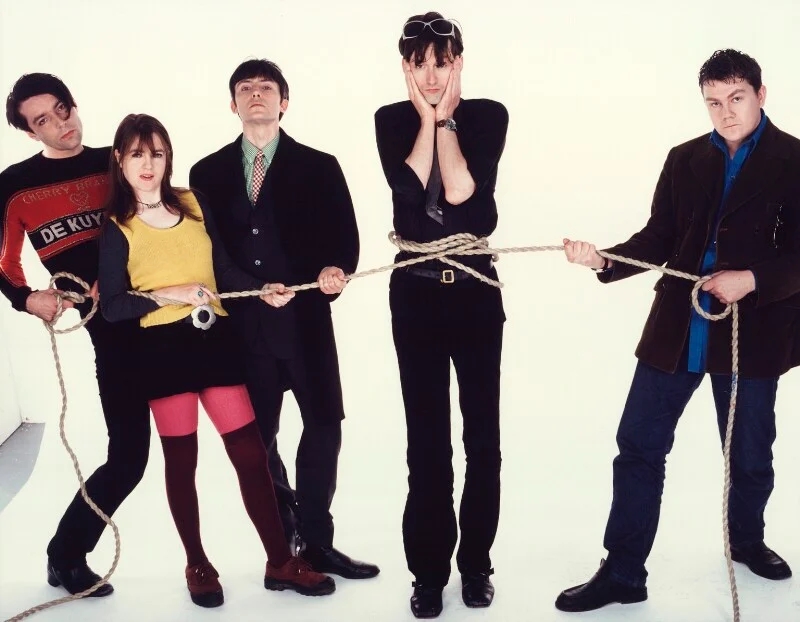
Anyway, Pulp may precede and post-date Britpop, but ‘Common People’ is the ultimate Britpop anthem. It’s confident, cocky, clever, and very British. It condenses centuries of class history into four minutes, plus you can dance to it. It bestrides British pop culture to this day, cropping up most recently in a funny reference in ‘Saltburn’. It came from the ‘Different Class’ album – by my money the best Britpop LP – which also featured another #2: ‘Sorted for E’s & Whizz’ / ‘Mis-Shapes’… (kept off top by Simply Red).

‘Sorted…’ had some rock ‘n’ roll controversy about it, getting the Daily Mirror’s knickers in a twist about its ‘pro-drugs message’. (Even the most perfunctory listen to the song reveals a distinctly non-positive drugs message…) ‘Mis-Shapes’ meanwhile is an outsiders anthem – You could end up with a smack in the mouth, Just for standing out, now, really… – the antithesis to some of the more laddish elements of Britpop.

Away from Pulp, the second biggest Britpop #2 (from a band that didn’t otherwise make #1) is the evergreen, ever-perky ‘Alright’, by Supergrass – kept off top by the dreaded Outhere Brothers. An ode to being young – the band were still teenagers when it was recorded – it’s impossible not to feel cheered when you hear it, with lyrics like: We wake up, We go out, Smoke a fag, Put it out, See our friends, See the sights, Feel alright… (I’m a big Supergrass fan, and can confirm that ‘Alright’, as fun as it is, isn’t even close to being their best song. Do a deep dive!) They made #2 again in 1997, with the thumping ‘Richard III’.

Another close call came in January 1996, when the Bluetones took the jangly, Stone Roses leaning ‘Slight Return’ to #2. And the oft-maligned Kula Shaker were the other Britpop runners-up, their lightly psychedelic rockers ending up in 2nd place twice: ‘Hey Dude’, and a cover of sixties classic ‘Hush’.

And I’ll end with the band many claim kicked off the entire Britpop genre: Suede. They never managed even a #2; but here’s their biggest hit, from their biggest album – 1996’s #3 smash ‘Trash’.

‘Trash’ is another song – like ‘Alright’ and ‘Common People’ – that celebrates people’s weirdness, their exuberance, their individuality. Britpop, for all it’s Blur Vs Oasis boorishness, was often more concerned with everyone getting along, and having a good time. The perfect musical movement, perhaps, as we charged towards the end of the 20th Century, and the dark unknown of the Y2K. I was just a little too late to enjoy it fully (I turned twelve in early 1998, as the genre began to dissipate) but the shadows of it reached deep into the music of my teens, the Stereophonics and the Coldplays and the Travises, and on into the indie-rock revival of 2003-2007.

But at the same time, perhaps it’s difficult to define what Britpop is, and why so many of its biggest names pre-dated and then outlasted it, because it was the first big musical movement to rely heavily on sounds that had gone before. Britpop was essentially a ‘Best Of’ British rock, taking everything from the Beatles to the Stone Roses, and all that came inbetween – the Kinks, the Small Faces, Slade, the Jam – distilling it into great pop songs. It was the last big evolution of rock music in the 20th century, the century that birthed rock and roll, but perhaps it was so backward-facing, so reverential to what had gone before, that it was also the last evolution of rock music, full stop. Like a Greatest Hits tour before the end of the rock ‘n’ roll century. Post-Britpop, guitar-led music never again dominated the pop charts. In 2024, the dominant British stars are rappers, DJs, female pop singers, and scruffy singer-songwriters types. And while I’m not such a rock snob that I can’t enjoy other types of music – hopefully I’ve made that clear plenty of times on the blog – I also can’t help looking back nostalgically to a time when guitar bands were the sound of the pop charts (though not the sound of the number one spot…)

725. ‘Country House’, by Blur

When old fogies stop to reminisce about the 1990s, about the music that soundtracked final few years of the 20th Century, we might think of the Spice Girls, Take That, or Pulp. Maybe even The Prodigy, or The Chemical Brothers. But if you had to bet on it, you’d bet that we think of this one moment: the chart dated 20th-26th August 1995.

Country House, by Blur (their 1st of two #1s)

2 weeks, from 20th August – 3rd September 1995

Oasis Vs Blur. North Vs South. Working-class Mancs vs posh(er) Essex lads. Cliches, cliches, all the way. Legend has it that Liam Gallagher taunted Damon Albarn about Oasis having a number one single, spurring Blur’s management to cheekily change their next release date to clash with Oasis’s ‘Roll With It’, making for great publicity, and the highest sales week for a decade (setting the way for single sales to hit an all-time high in the coming years).

But the story here is the song, primarily, and I should block out all the hype and noise and focus on the tune. As with ‘Some Might Say’, ‘Country House’ may have been Blur’s first #1, but it’s not one of their very best singles. From their earlier hits, ‘Girls & Boys’ is better musically, while ‘Parklife’ has left a much larger cultural legacy. Still, it’s a fun, multi-coloured romp, right from the helter skelter intro through to the brass section in the fade-out. And it tells a story not much heard in chart-topping singles: that of a country squire living a life of rural asceticism. He’s got a fog in chest, So he needs a lot of rest… He doesn’t drink, smoke, laugh, Takes herbal baths… In the country…

There’s a lot going on, musically, and a lot of knowing references to British bands past. Oasis get a lot of stick for being musical magpies, but I hear plenty of Kinks and Small Faces, as well as Madness, and the ghosts of British music hall, here. (Chas & Dave, too, according to Noel Gallagher, but he meant it as an insult…) The video also has Brit-references galore: Page 3 girls, Benny Hill themed hi-jinks, a nod to ‘Bohemian Rhapsody’, Matt Lucas, Jo Guest and Keith Allen (featuring in his second chart-topping video). And for the ultimate Britpop seal of approval, it was directed by Damien Hirst.

The story, like I said, should be the song. And yet, would ‘Country House’ have made #1 were it not for all the hullaballoo? Maybe, as it was the lead single off a hotly-anticipated new album. But maybe not, as Blur had only three previous Top 10 hits to their name, and just one Top 5. So perhaps we can’t fully separate this song from all the nonsense. What’s certain is that the right song won. ‘Roll With It’ is probably Oasis’s laziest single. I do like it, but you can see why it’s been called ‘Status-Slade’ (though that’s not the insult some might think…) Also, in terms of the ‘Battle of Britpop’, Blur were the originals – their 1992 hit ‘Popscene’ is claimed by many as the very first Britpop single.

In my post on ‘Some Might Say’, I mentioned that my love for Oasis has dimmed over the years. With Blur, the opposite has happened. Nobody I knew at school would have admitted to liking them over Oasis – they were too clever, too arty… Everyone liked ‘Song 2’, but then that’s their dumbest song by far. As a sensible adult, though, I can admit that Blur were the more expansive songwriters. More fun, too – just look at them in the video, pratting about in bubble-baths, then try to imagine Liam doing the same…

Still, this is the first of only two times that we I’ll be writing about Blur (Albarn does also have a Gorillaz #1 to his name). Oasis may have lost this chart battle, but they definitely won the war…