774. ‘Something About the Way You Look Tonight’ / ‘Candle in the Wind 1997’, by Elton John

So here it is. The biggest-selling single of all time. Where to begin…?

Something About the Way You Look Tonight / Candle in the Wind 1997, by Elton John (his 4th of ten #1s)

5 weeks, from 14th September – 19th October 1997

I suppose we should begin in Paris, sometime after midnight on Sunday 31st August, 1997. This isn’t really the place to go into the gory details – we all know what happened. I had the dubious honour of breathlessly breaking the news to my family, after an early morning trip to a campsite newsagents. The papers all screamed of a crash, though I’m not sure if they had confirmed the death. Anyway, radios went on and the tragedy unfolded.

Fast-forward to the funeral on September 6th, where Elton John, close friend of the Princess of Wales, performed a new version of his 1973 hit ‘Candle in the Wind’ in her honour. Straight after the service he went to the studio to record it, with Sir George Martin as producer. Seven days after that it had become the fastest-selling single in history.

Interestingly, though, ‘Candle in the Wind 1997’ is listed as the second half of this double-‘A’, and so we begin with the completely incongruous ‘Something About the Way You Look Tonight’. It’s a decent enough, mid-career, soft-rock ballad. Very MOR, AOR… whatever acronym you prefer. It rises to a pretty soaring peak, with squealing guitars and Elton giving a full-throated vocal performance, before ending with a strangely flat final minute or so.

It was the 2nd single from his ‘The Big Picture’ album, and the way it piggybacked its way on to the biggest-selling single of all time is actually quite funny. It had been released by itself on the Monday, but by Saturday had been combined with ‘Candle in the Wind’. If it had been left on its own, or perhaps if Diana had fastened her seatbelt, then ‘Something About the Way…’ would probably have been headed for a #24 peak. (Elton was still capable of a decent sized hit in the mid-1990s, but they were an eclectic mix. His most recent Top 10s before this had been a duet with Pavarotti, and a duet with RuPaul.)

On to the main event then, the real reason that people flocked to buy this record. The fact that this nonsense is the best-seller of all time is proof of just how much the nation lost its collective mind in the wake of Diana’s death. At its peak ‘Candle in the Wind 1997’ was selling an estimated six copies per second, with news bulletins telling tales of people frenziedly buying fifty or more CDs each. Released on Saturday 13th, by the next day it was announced as the new number one, having sold half a million in twenty-four hours. By the end of its first full week on sale, it had comfortably passed two million.

The lyrics also lay bare the madness surrounding Diana’s death. Goodbye England’s rose, May you ever grow in our hearts… (As an aside, why not ‘Britain’s Rose? It still scans, and she was Princess of the whole island. It really gets my goat when people – often Americans – talk about ‘the King of England’. There’s no such person!) You called out to your country, And you whispered to those in pain, Now you belong to heaven, And the stars spell out your name…

So they start off bad, and get progressively worse. The lowest point probably being the line about us always carrying a torch for the nation’s golden child… My feelings on the posthumous beatification of Diana, on the Royal Family, on the British public in general, aside (stories for another day and another blog…) it’s simply a bad rewrite. The music is fine – the original ‘Candle in the Wind’, and it’s lyrics about Marilyn Munroe, is a standout in Elton’s back-catalogue – but the new words are simplistic, trite and saccharine. It makes ‘I’ll Be Missing You’, 1997’s other elegiac hit, sound like Tennyson.

And I know that Elton was her friend, and that she did lots of charity work, and that the Queen was a bit hard on her (I’ve watched ‘The Crown’!), and that all the proceeds from this record went to a good cause… But still, none of that can change the fact that it’s a truly rotten song, the worst of Elton’s ten chart-toppers (okay, joint-worst with that Ladbaby drivel).

Yet here it is, with an unassailable lead at the top of the all-time sellers list. Over five millions copies sold, with ‘Do They Know It’s Christmas?’ lagging some million sales away, and ‘Last Christmas’ behind that. The glimmer of hope is that these festive hits will slowly catch up thanks to a month’s worth of sales and streams every December, but that won’t happen for many years, if it happens at all. For now, the biggest single ever remains a hastily-rewritten dirge for a dead princess, that nobody has actually listened to in twenty-five years, and an average soft-rock tune that came along for the ride.

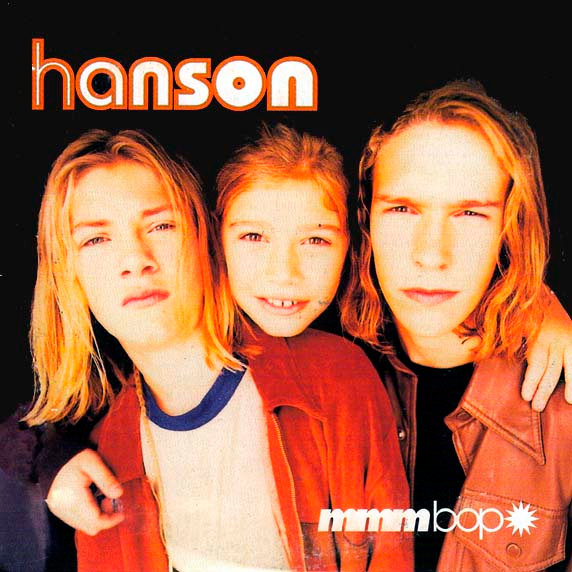
769. ‘MMMBop’, by Hanson

From an uplifting gospel classic, to some undeniable nineties bubblegum. The charts in the spring of 1997 were on a feelgood trip…

MMMBop, by Hanson (their 1st and only #1)

3 weeks, from 1st – 22nd June 1997

Having said that, though, I’m not sure that ‘bubblegum’ really does ‘MMMBop’ justice. Yes, it’s got the nonsense title, and the catchy chorus, but the verses are actually quite… grungy? The riff is not a million miles away from an acoustic version of ‘Smells Like Teen Spirit’, and the way the wordy lines bump up against the melody is quite sophisticated. Let’s not call it grunge, but note that it owes a debt to alt-rock acts of time.

Until the chorus, that is, when we leap wholeheartedly into pure-pop territory. Has there been a bigger, more instant, less forgettable, earworm in music history. Probably, but I can’t think of it right now. I can’t think of it because I’m listening to ‘MMMBop’, and am unable to focus on anything but that chorus.

I’m also remiss in calling the title ‘nonsense’, for I have just now googled ‘what is an MMMBop’, and found that it is the “sound of time passing very quickly”. How profound. Even more profound are the lyrics, which again I’d never paid much attention to: You have so many relationships in this life, Only one or two will last… When you get old and start losing your hair, Can you tell me who will still care…? Deep. Sightly clumsy – it was written by teenagers, after all – but deep.

When this record came out, all the talk in the playground wasn’t so much how young Hanson were, but how everyone thought their lead singer was a girl. Which, looking back now, seems ridiculous. It’s clearly a boy with long hair. But then small-town Scotland isn’t always the most cosmopolitan of places, and very few lads were strolling down our High Street with shoulder length blonde locks. I will credit Taylor Hanson, though, as being one of my very first crushes… He may not have been a girl, but I still thought he was cute. (I’ve just checked, and he’s still a decent looking chap in his forties…)

Taylor, and his brothers Isaac and Zac, from Tulsa, Oklahoma, had been in a band since 1992. They’d released a couple of independent albums, one of which featured a slower version of ‘MMMBop’. They were spotted playing at South by Southwest, and recorded an album produced by the Dust Brothers, who added all the cheesy touches and scratches to this lead single, which made #1 across the globe. In my review of the Spice Girls ‘Mama’ I called the same scratch effects ‘dated’, but here they seem to add to the period charm.

Do I love this as much as ‘I Wanna Be the Only One’? Probably not. Not sure why I need to compare them, other than the fact they topped the charts together, and are both feelgood classics. ‘MMMBop’ ultimately sounds a bit more of its time, though in today’s rush for all things nineties it’s definitely been reclaimed as a classic. Even in 1997 it broke through the critics’ defences, and was voted as Single of the Year by The Village Voice.

Hanson remain a going concern, with the brothers still recording and touring together. They have fifteen children between them, which is impressive. Away from music, they’re involved in a lot of charity work, and have even launched their own craft beer… wait for it… MMMHops.

768. ‘I Wanna Be the Only One’, Eternal ft. BeBe Winans

Ooh Lordy. Hallelujah! When I listened to this gospel-pop classic for the first time in absolute yonks, I was dragged off on a wave of nostalgia. I struggled to make any notes. It was the biggest Proustian rush I’ve experienced yet, as we delve further into the chart-toppers of my childhood.

I Wanna Be the Only One, by Eternal ft. BeBe Winans (their 1st and only #1s)

1 week, from 25th May – 1st June 1997

But for a nostalgic moment like this to really hit home, the memory needs to be a good one. Proust loved his madeleines, and I realised how much I enjoy this record, one of 1997’s best #1s. It’s a perfect blending of soul, R&B, and gospel, with enough sass and enough honesty, enough fun and enough seriousness… I may be waffling slightly, but the point stands.

In fact, this song survived the moment that I found out that it had religious connotations (well, I mean, it is a gospel song). Aged eleven, I was beginning to question why I had to tag along with my mother to church every Sunday. It wasn’t so much that I was questioning the theology as much as I just wanted a lie-in but my mum, to her credit, let me make my own decision. By twelve I had stopped going. If any of the hymns we sang had had the heft of this tune, however, I’d have been in the front pew every week, hands to the sky.

The key changes at the end, for example, could convert the most atheist of hearts. In my mind I remembered at least five as the song soars to a conclusion, but there’s actually only two. The one complaint you could make about this tune is that it’s not exactly subtle, that it sledgehammers its point home. But honestly, that’s what a song like this needs. The start of the second verse, for example: Now you deserve a mansion… My Lord, you too… is a bizarre line – clunky almost – a ridiculous call and response moment; but also the best bit of the song.

Eternal were probably the biggest British girl group in the first half of the 1990s. The only British girl group of the time, really, until the Spice Girls came along and opened the floodgates for the final years of the decade. They were a sort of British answer to En Vogue, two sisters and two others. Louise Nurding had left in 1995 to start a middling solo career, and to become one of the original WAGs by marrying Liverpool midfielder Jamie Redknapp. This was their 11th Top 10 hit since 1993, and they would only have one more before splitting in 1999. Fair to say, although they had some good pop singles, they peaked with this – a fitting record to become their only chart-topper.

Helping in that regard was BeBe Winans, an American soul and gospel singer, who had written and produced two of Eternal’s earlier hits. He provides the perfect counterpoint to the girls’ harmonies, giving the lyrics much more meaning than if they had been sung by just female voices. I’m not sure I’ve ever heard another song by him, but he left his mark.

‘I Wanna Be the Only One’ was the 2nd most played song on British radio for the year, meaning that plenty of people surely got sick of it. One of my key memories of the record is hearing it in a car park while eating an ice-cream, presumably sometime in May or June 1997, just at the moment I was getting interested in the charts (I believe that this was Track 1 on ‘Now 37’). Soon after that I would start faithfully writing the Top 40 down every week, trying to keep up with the live radio countdown in those pre-internet days. It’s not an exaggeration to say that if it hadn’t been for songs like this grabbing my attention at that formative age, I might not be writing this blog now.

766. ‘Love Won’t Wait’, by Gary Barlow

I was nonplussed when Gary Barlow launched his solo career with the dreary ballad ‘Forever Love’. Nonplussed, and bored. Was that it, from the man meant to be the next George Michael?

Love Won’t Wait, by Gary Barlow (his 2nd of three solo #1s)

1 week, from 4th – 11th May 1997

I was also surprised that I had no recollection of ever hearing what must have been a hugely anticipated record. Almost a year later, Barlow’s debut album was ready, and his second single was released ahead of it. ‘Love Won’t Wait’ also doesn’t ring a bell, but at least it’s relatively up-tempo. There’s a hint of disco in the beat, and the bridge has a soaring chord progression. This might be… fun?

And then we reach the chorus, and I do recognise this one! Love won’t wait, Forever and a day… It’s a pretty basic, soul-pop song with some nice seventies touches. One reviewer compared it to Cliff Richard’s output from that time, and now I can’t un-hear that. It also sounds like the sort of song Take That would have chucked out as the third or fourth single from one of their earlier albums. It’s no great shakes, is what I’m saying; but it’s much better than ‘Forever Love’.

It also has an interesting back-story. It was written by none other than Madonna, during sessions for her ‘Bedtime Stories’ album in 1994. I couldn’t imagine something this unremarkable coming from Madge, but someone’s uploaded the demo onto YouTube. It feels more Motown than disco, and even in its rough form it sounds better than Barlow’s version. That’s true star quality, I suppose.

And I also suppose we can claim this as a belated second ‘90s #1 for Madonna, her first since ‘Vogue’. She will be back soon, though, with a chart-topper under her own steam. Did anyone at the time imagine that we would have to wait so much longer for another Gary Barlow chart-topper, though? The album, ‘Open Road’, produced just one further Top 10 hit, while his second solo album in 1999 produced none. He won’t trouble the top spot for a decade, until Take That have their spectacular comeback, and won’t manage his final solo #1 for another fifteen years.

I have been, and probably still am, a bit harsh on Gary Barlow. Yes, he’s written some great pop songs. But though he’s finally achieved his goal, and ascended to the British pop pantheon, better late than never, he’s no Cliff, Elton, or George Michael. No Robbie Williams either, the man who will be taking the mantle of Britain’s Biggest Pop Star from under his former bandmate’s nose, very soon.

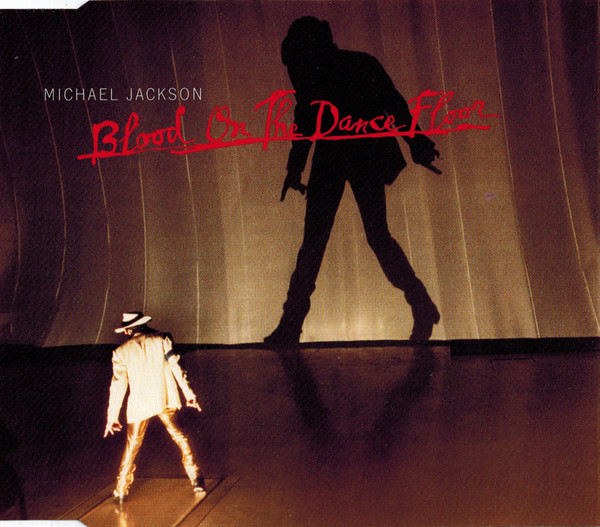
765. ‘Blood on the Dance Floor’, by Michael Jackson

And so Michael Jackson ends a twenty-year run of chart-toppers, with another of 1997’s curios…

Blood on the Dance Floor, by Michael Jackson (his 7th and final solo #1)

1 week, from 27th April – 4th May 1997

Throughout his career, it hasn’t been the MJ classics that have made #1. The Jacksons’ only made it there with ‘Show You the Way to Go’. Solo-wise, ‘One Day in Your Life’, ‘I Just Can’t Stop Loving You’, and ‘You Are Not Alone’ all made it, while ‘Bad’, ‘Beat It’, and ‘Smooth Criminal’ fell by the wayside. Only ‘Billie Jean’, and maybe ‘Black or White’, came close to popular ubiquity.

So what of his final #1? Well, at least it’s not a syrupy ballad, or one of his God-complex blockbusters. Actually, it’s much more reminiscent of his heyday. It isn’t up there quality-wise, but there are flashes. The bridge and chorus, the growl in his voice, and the dangerous woman in the lyrics, all feel very ‘Bad’-era. We can add Suzie (Suzie’s got your number, Suzie ain’t your friend…) to Billie Jean and Dirty Diana in Jackson’s list of ladies best avoided. Interestingly, some sources claimed that ‘Suzie’ was a metaphor for AIDS – giving a horrific double meaning to the line Look who took you under with seven inches in… – but Jackson denied it.

Elsewhere, the New Jack Swing production sounds quite dated, and away from the chorus he barely sings. The verses are a series of vocal tics strung together; sounding more like dolphins communicating, and just as indecipherable. When you learn that it was written originally back in 1991, during sessions for the ‘Dangerous’ album, the sound makes sense. The song was dusted off and tarted up ahead of Jackson’s remix album ‘HIStory in the Mix’.

In some ways, this is an underwhelming way for MJ to bow out. But then, several of his six other solo #1s have been underwhelming. And actually, compared to some of his nineties hits, this is a decent, if dated, dance tune with a fairly killer, funky beat. It was his 36th UK Top 10 hit, since his solo debut in 1972, and he still had a few more to come.

In fact, since his death he has featured on big hits with Akon, Justin Timberlake, and Drake, and so you wouldn’t count against him adding to his total in the years to come. Quite why records featuring Michael Jackson are still allowed to flourish while those featuring the man who preceded ‘Blood on the Dance Floor’ at number one – R. Kelly – have been buried in quicklime is a discussion for another day… Is it as simple as one having a court conviction? Or does musical snobbery come into play…? And I’ll end with an equally pressing question: am I the only person who just now realised that ‘dance floor’ is not one word…?

764. ‘I Believe I Can Fly’, by R. Kelly

Aside from Britpop, the rapid-fire turnover of number ones, and the dominance of the Spice Girls, there’s one not so expected theme for 1997… Problematic performers.

I Believe I Can Fly, by R. Kelly (his 1st of three #1s)

3 weeks, from 6th – 27th April 1997

Starting with the disgraced, and currently incarcerated, R. Kelly. I’m not going to come over all hand-wringy about it, mind you. We managed with Gary Glitter and his gang, and when Rolf Harris sang about ‘Two Little Boys’. And unlike them, ‘I Believe I Can Fly’ doesn’t have any lyrics that sound dubious in hindsight (we’ll save that for Kelly’s next #1, ‘Ignition’).

Though some double-entendres might have given us something entertaining to write about at least, because this is a fairly dull, very worthy, song for most of its verses and bridges. It was written for the movie ‘Space Jam’, a half cartoon/half live-action film in which Michael Jordan plays basketball with Bugs Bunny (that sounds crazy when you actually type it out, but as a kid I went with it…) So there are lots of lines about never giving up, achieving miracles… If I can see it, Then I can do it… If I just believe it, There’s nothing to it…

I will say that the chorus, however, has whatever choruses need to be great. Something in the chord progressions; the simple, but not clunky, rhymes; that pause in the beat on the word ‘believe’… I’m not sure exactly what it is, but it makes for a chorus that leaves the rest of mush behind, and burrows its way into the public conscience.

By the end, things have gone full-on gospel, with some soaring strings, and Kelly bringing it home with lots of whoops, hollers and melisma. Impressive, but not worth the four minutes of sludge we had to wade through to get there. And also quite a hard turn from his usual output, which had been much more upbeat, R&B for his two prior Top 10 hits, ‘She’s Got that Vibe’ and ‘Bump and Grind’ (dubious lyrics klaxon!). Plus, if schmaltzy and over-emoted nineties ballads are your thing, I’d say R. Kelly surpassed this two years later, with ‘If I Could Turn Back the Hands of Time’.

As with Glitter, I half-expected not to find Kelly on Spotify. They did, after all, make a big fuss about deleting his music in 2018, before reinstating it but refusing to feature it in any playlists. Which is a classic case of having your cake and eating it. I’m no fan of cancel culture, but if you are going to cancel someone then do it properly! Not this ‘loudly virtue signal but quietly still take the money’ nonsense. One person who did #cancelrkelly was Lady Gaga, who recorded the banging ‘Do What U Want’ with him in 2013 – long after the first allegations against him had come to light – then quickly replaced it with an (inferior) version featuring Christina Aguilera after a backlash… (I love Gaga, but I’m still sore about that one…)

Anyway, R. Kelly still has two more number ones to come, so we have plenty of time to cover his catalogue of crimes and get ourselves worked up about cancel culture if we so wish. In the meantime, let’s move on from all this, and pretend we’ve never had a problem with sex offenders having chart-topping singles, because up next it’s… Oh…

762. ‘Mama’ / ‘Who Do You Think You Are’, by The Spice Girls

Think ‘festive hits’, and your mind goes straight to Christmas, and then perhaps Halloween. Is there an Easter pop classic? Not that I can think of. What’s for certain is that the Spice Girl’s ‘Mama’ is the first, and only, number one single aimed at the Mother’s Day market.

Mama / Who Do You Think You Are, by The Spice Girls (their 4th of nine #1s)

3 weeks, from 9th – 30th March 1997

It’s a wonder why more acts haven’t tapped this under-used commercial seam… Or is it? Because ‘Mama’ pretty much ticks every box, sounding exactly how a pop song about how much we love our mothers should. ‘Mama’ killed the Mother’s Day hit off before it ever got going. It’s perfect.

But by perfect, I don’t mean it’s much good. It’s pleasant, with a nice minor-key melody, and is cleverly written as a letter of apology from a now adult child, for being such a little shit when they were growing up. I didn’t want to hear it then, But I’m not ashamed to say it now, Every little thing you said and did was right for me… And the Spices’ mums are in the video, holding pictures of the girls as kids, which is cute.

But by and large, it’s fairly bland. Plus, there are too many dated flourishes – scratchy fills between lines, and a strange organ riff – that distract from the actual song. It’s by far the weakest of their four singles so far. Luckily for us, ‘Mama’ is only half the main event here, and the record as a whole is redeemed by the other ‘A’-side.

‘Who Do You Think You Are’ is a fun slice of dance-pop: a tribute to the disco, funk and soul records of twenty years before. There’s a very funky bassline, and horns, and cheesy strings. There’s nothing particularly original in this pastiche, which means its only their second best song so far – still behind ‘Say You’ll Be There’ – but it’s become a wedding party staple. Plus it gave the world perhaps the ultimate Spice Girls image – Geri in her Union Jack dress, which she wore as the group performed the song at the 1997 Brit Awards.

‘Who Do You Think You Are’ was adopted as that year’s Comic Relief single, and a second video was made featuring The Sugar Lumps: a band comprised of French & Saunders, Kathy Burke, Llewella Gideon, and… Lulu. Who was a good sport because she’s actually, you know, a singer. This does mean, though, that she has been involved in the two biggest disco-pop hits of the nineties, after her feature on Take That’s ‘Relight My Fire’.

Charity records are at their best when they piggy-back on actual pop songs, and don’t inflict something ‘funny’ on the world in the name of a good cause. And this, with the Spice Girls at the height of their fame, probably made a lot more money than ‘The Stonk’. If I believed in such a thing as a ‘guilty pleasure’, then this would be one. Because who has not, at one point or another, belted out Mel C’s lines as the song closes? (She always got the best parts…)

The success of this pair of tunes confirmed a 100% chart-topping record for the Spices: four out of four. ‘2 Become 1’ had already lifted them into exalted company, as only the fifth act (and the first females) to reach #1 with their first three singles, behind luminaries such as Gerry & The Pacemakers, Frankie Goes to Hollywood… checks notes… Jive Bunny, and Robson & Jerome. And now this confirmed them as record breakers – chart-toppers with their first four, with many more to come.

Prince: Best of the Rest

April 21st marks the 8th anniversary of Prince’s death. One of the most talented musicians of his generation; and one of the most cheated when it comes to UK #1s. Just the one, in fact: 1994’s ‘The Most Beautiful Girl in the World’.

(We of course shouldn’t forget two very famous, and very good, songs written by Prince, that were chart-topping hits for Chaka Khan and Sinead O’Connor.)

So here are the Prince tunes that came closest: 8 records and 10 songs (thanks to two double-‘A’s) spread over quite a few decades… I’ll be the first to admit that I’m not as up on my Prince as I should be, so I’m not ranking them. We’ll just go by ascending chart position. Hopefully, I’ll learn something about the Purple One as we go…

‘Kiss’ (with the Revolution) – #6 in 1986

We start with the first Prince song I was ever aware of. And as an intro to the man, it ticks most of the right boxes… Outrageous funk, untamed horniness, a painfully high falsetto… check, check, check. But actually, the girl he’s looking for should be a blushing rose: no dirty talk, no flirting… You don’t have to watch ‘Dynasty’, To have an attitude… is the pick of the lines. Fun fact: the ‘ah-ah-ah’ effect is a compressed sample from Brenda Lee’s classic ‘Sweet Nothin’s’. A couple of years after the original, a remake by Art of Noise, fronted by Tom Jones, charted one place higher at #5. No comment…

‘Purple Rain’ (with the Revolution) – #6 in 2016

Title track from both an album and a movie, ‘Purple Rain’ is probably Prince’s signature tune. A gospel power-ballad, about the end of the world, it’s never really connected with me. I can respect it wholeheartedly; but I enjoy other Prince songs more. Originally written as a country song, and intended to be a duet with Stevie Nicks, ‘Purple Rain’ wouldn’t have made this list before Prince died, as it only made #8 originally. Upon his sudden death, this was understandably the song fans flocked to, making it re-chart and peak two places higher.

‘Controversy’ – reached #5 in 1993

Another song that peaked much later. Twelve years after it had failed to chart in the UK, ‘Controversy’ was re-released ahead of a Greatest Hits in 1993 and made #5. It’s tight and funky, with a disco beat, and lyrically lives up to its title. Am I black or white…? Prince asks… Am I straight or gay? In the seven-minute album version, he recites the Lord’s Prayer in full, presumably well aware that it would piss off a lot of people. Prince would spend the rest of his career playing up to similar controversy. For example, when I was at primary school, the one thing we all ‘knew’ about Prince was that he’d had two ribs removed in order to… how to put this… auto-fellate?

‘Sexy M.F.’ / ‘Strollin” (with the New Power Generation) – reached #4 in 1992

It took a while for the UK to catch up to Prince’s talents, but by the early nineties his singles were often charting higher in the UK than in the States. This coincided with what I see people now call Prince’s ‘gangsta period’. He raps most of this tune, classic lines like Can’t you see I’m harder than a man can get, I got wet dreams coming out of my ears… It’s a strangely uncommercial tune, all sharp horns and a monotonously funky beat, and that’s before we come to the x-rated title. So, in the UK it was twinned with ‘Strollin”, in the hope that radio would play that one. In the end, they just played an edit of ‘Sexy MF’ (You sexy mother-AOOW…!) ‘Strollin” is a much more jazzy, innocent number: Strollin’, strollin’, We can have fun just strollin’… and it can’t really compete with a sexy MF shakin their ass…

‘Gett Off’ (with the New Power Generation) – reached #4 in 1991

The crowning glory of Prince’s near-pornographic early nineties era. ‘Cream’, ‘Sexy MF’, and ‘Peach’ are all fun, but nothing matches the utter filth of ‘Gett Off’, from the ear-splitting shriek that kicks things off, through a tale of twenty-three positions in a one-night stand, to a brilliant flute-cum-guitar riff. Other highlights include a nod to that urban legend – Whatcha want to eat? “Ribs”, Ha, toy, I don’t serve ribs – and the crackly, funky James Brown tribute in the middle. If I were to rank these singles personally, then this one would be on top. Prince took himself seriously a lot of the time; but ‘Gett Off’ is a load of fun.

‘When Doves Cry’ – reached #4 in 1984

Early-nineties Prince might have been utter filth, but it’s not as if he was particularly pure and chaste before that… The video for ‘When Doves Cry’ caused consternation, setting up the controversy over the ‘Purple Rain’ album, and the introduction of ‘Parental Advisory’ stickers. The best single from the album, it was his breakthrough in the UK – only his second song to chart. It’s a deeply weird, deeply catchy song, that has no bass line.

‘Batdance’ – reached #2 in 1989

So, yep. Prince’s joint-second biggest hit in the UK is this. Recorded, quickly, for the soundtrack to the Michael Keaton ‘Batman’ reboot, ‘Batdance’ is a deeply, deeply strange song. If you can call it a song, which it isn’t in the traditional sense. There’s a lot going on: samples, audio from the movie, Prince’s raps, spoken asides, the classic Bat-maaaan… refrain all against a clanking, metallic beat… Then there’s a slow and funky middle-section that sounds like the needle has slipped on to a completely different song. Prince lovers may argue this an example of the scope of his talent, others might suggest it’s a classic example of over-egging the pudding. The guitar solo is wild, though.

‘1999’ / ‘Little Red Corvette’ – reached #2 in 1985

One of Prince’s more straight-forward pop moments, albeit one with a deeply cool synth-funk riff, and lyrics about dancing towards the apocalypse. ‘1999’ only made the Top 30 initially but made #2 when re-released in 1985. I wonder if ‘1999’ was ever Prince’s most popular hit, as it seems that the longer we get from the actual year in the title the more its fame is overshadowed by other Prince songs. It charted for a third time, making #10, in… 1999. For the ’85 re-release, it was paired with ‘Little Red Corvette’, which had been an even smaller hit originally. In it, Prince carries on the fine rock ‘n’ roll tradition of comparing beautiful women to cars (baby you’re much too fast…) It’s a fine song: a sort of smokey, disco-power ballad. Recorded in 1982, it’s the sound of the 1980s just starting to come into their own.

Aside from the music, there can be no doubt that Prince was one of, in not THE, ultimate rock star. Beautifully androgynous, deeply strange, myths and legends about him sprouting left, right and centre, and most importantly of all supremely talented. RIP.

757. ‘Your Woman’, by White Town

In my last post I promised you something quirky. Is this quirky enough for you? Are you not quirked??

Your Woman, by White Town (his 1st and only #1)

1 week, from 19th – 26th January 1997

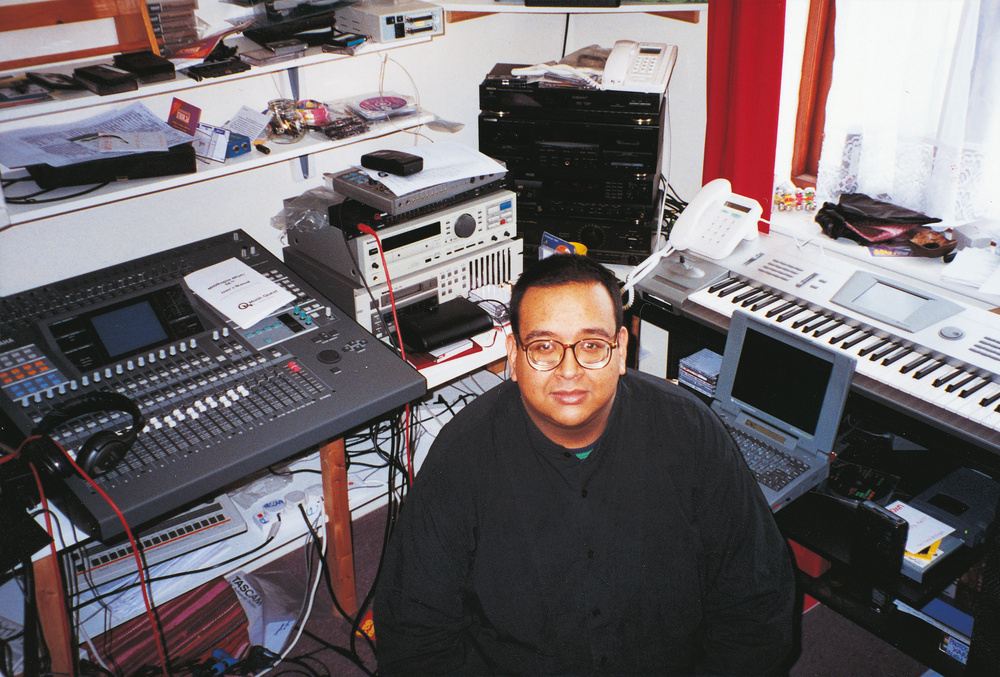
A gender-bending tale, centred around a trumpet sample from the 1930s, all written , recorded and produced by a fairly geeky looking chap in his bedroom. And catchy. I should also mention that it’s incredibly catchy.

It’s also very hard to describe. Is it dance, funk, indie, Britpop…? Is it lo-fi, hip-hop… boom bap?? (I have no idea what ‘boom bap’ is – Wikipedia suggested it, and I just liked the sound of it.) It’s at times creepy – the horn sample sounds like a haunted gramophone – but also quite funny – the middle eight with the plinky-plonky Game Boy sound effect is brilliant, my favourite part of the song, but also surely a musical piss-take.

Most of all it’s pretty subversive. Musically so, because number one singles aren’t meant to be recorded by nerds in their bedroom. And lyrically, because it sounds at first like our most explicitly gay chart-topper since ‘Relax’. A clipped, very English-sounding man delivering lines like: Well I guess what you say is true, I could never be the right kind of boy for you, I could never be your woman… The man behind it has said that it’s not explicitly queer though, more just about loving someone who isn’t right for you, when love and lust get mixed with your highbrow ideals…

The man behind White Town being Jyoti Mishra, born in India and raised in Derby, who had been in bands since the late 1980s and was well-known in underground scenes. ‘Your Woman’ was pushed heavily by Radio 1, leading to it entering the charts at the top, but Mishra struggled to follow it up. Having signed with EMI, he felt a loss of creative freedom, as well as frustration at his sudden fame. Frustrating for me is the fact that the follow-up to ‘Your Woman’ managed to scrape to #57, meaning that White Town isn’t strictly a one-hit wonder.

I mentioned above that the trumpet hook came from the ‘30s, more specifically ‘My Woman’, a 1932 hit written by Bing Crosby. (The music video nicely plays with the 1930s theme, aping the pratfalls and scene fades of old silent films.) The version sampled by Mishra is a different version, still from 1932, by Lew Stone & His Monseigneur Band. It’s been used since by rapper Naughty Boy and, probably most famously, by Dua Lipa on her 2020 song ‘Love Again’. It’s also been suggested that the original trumpet riff inspired one of the world’s most famous pieces of film score: the ‘Imperial March’ from Star Wars.

Jyoti Mishra and White Town were quickly dropped by EMI, and went back to recording independently, releasing their most recent album last year. For the 20th anniversary of ‘Your Woman’, he re-recorded the song using instruments commonly used in 1917. Because why not. Back in 1997, the tune was such a smash that it made its way onto ‘Now That’s What I Call Music 36’, which was the first edition of the series I ever bought, on cassette, probably with my 11th birthday money. And I’m not just inventing a cute ending for this post when I say that back then ‘White Town’ was my favourite track across the whole four sides… It really was.

756. ‘Professional Widow (It’s Got to Be Big)’, by Tori Amos

1997, then. The late ’90s! And we get off to a banging start…

Professional Widow (It’s Got to Be Big), by Tori Amos (her 1st and only #1)

1 week, from 12th – 19th January 1997

‘Professional Widow’ was a track from singer-songwriter Tori Amos’s third studio album, ‘Boys for Pele’, which had made #2 exactly a year before this. It had been released as the album’s third single, making #20. It’s a woozy, rude, barroom stomper of a song, driven by a harpsichord, and Amos’s Kate Bush like vocals. It’s ear-catching, but it does nothing to prepare you for the remix that would eventually top the chart.

The word ‘remix’ doesn’t feel sufficient here. A remix is a song rearranged, extended, or stretched out over a new beat. This is a song completely reimagined, huge chunks chopped off it, with very little of the original remaining. One line is repeated over and over: Honey bring it close to my lips… while the other line – It’s gotta be big – must be somewhere in the original, even if I can’t quite hear it.

It’s amazing how Armand Van Helden, the DJ responsible, could hear the opening harpsichord riff and reimagine it as a modern disco bassline. Some remixes are fairly lazy, with few changes of any note; but not this. It almost samples the original, the riff and the two lines, and creates a completely different song. Van Helden is American, and the track is more house-influenced than our recent dance #1s, but there’s hints of the Prodigy and the Chemical Brothers in the big chunky beats, in the creepy background noises, and the sudden break halfway through.

The ‘Professional Widow’ of the title is apparently a snide reference to Courtney Love, something that Amos has neither confirmed nor outright denied. She had nothing to do with the remix – she was contractually obliged to approve them – but in interviews she has said she enjoys Van Helden’s version. It brought about the biggest hit of her long career, anyway – surpassing the #4 peak of the folksy ‘Cornflake Girl’ from 1994 – and is, to date, Amos’s last visit to the UK Top 10. Armand Van Helden was just getting started, and will go on to be one of the biggest dance producers of all time. He’ll be back at number one, fully credited, fairly soon.

We can’t finish without mentioning the misheard lyric – one of pop’s filthiest mondegreens – where It’s gotta be big becomes… Well, I won’t write it out. Safe to say, once you hear it you can’t unhear it. Misheard or not, it does fit in fairly well with the bawdy original.

You could say that this is a classic January #1 – a fairly random remix sneaking a week at the top in the post-Christmas lull. In fact, January 1997 is one of the best examples the phenomenon, with a run of fun and quirky one-weekers coming up that I’m looking forward to getting into.