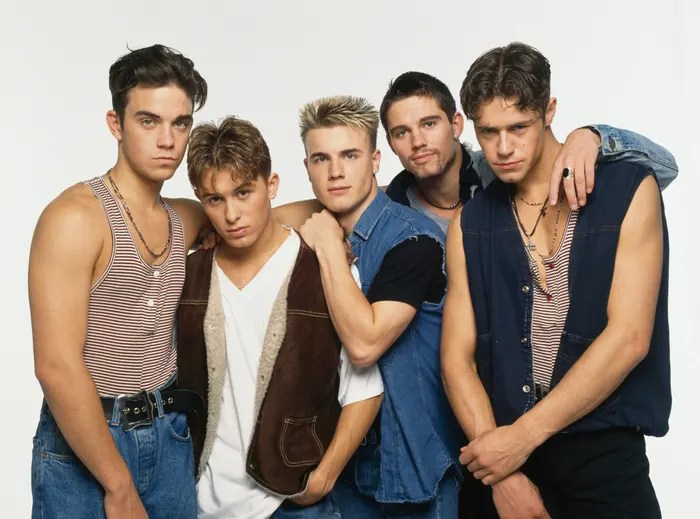
For their fourth #1 in nine months, Take That once again take turns at lead-vocal duty. We’ve had two Garys, one from Mark, and now a Robbie…
Everything Changes, by Take That (their 4th of twelve #1s)
2 weeks, from 3rd – 17th April 1994
Which gives a fairly throwaway pop song, a chart-topper more because of the band singing it than because of any innate quality the song might have, some significance. For here is the voice of the biggest British star of the coming decade… Though you might not have realised it at first, given the strange American accent he puts on for the album version’s intro…
On the single edit that bit is cut out, and we are rushed straight into another disco-tinged piece of retro-pop; the skinnier, sickly brother of ‘Relight My Fire’. I did wonder if ‘Everything Changes’ might have been a cover, as nobody under the age of sixty has ever used the term ‘taxicab’, but no – it’s a Gary Barlow (plus guests) writing credit. I guess they just needed the extra syllable to make it scan…
It’s perfectly serviceable pop. There’s nothing wrong with it (if we overlook the dated sax solo…) but neither is there much particularly memorable about it, apart perhaps from the for-ev-er… hook. There’s a reason why it was the fifth and final single from the band’s second album. There’s also a reason why it still made number one for a fortnight despite everyone already owning a copy of said album: Take That were bloody huge by this point.
While it might not have been his first lead vocals on a Take That single (I have little inclination to go back through their discography and check) it was definitely Robbie Williams’ first lead vocals on a #1. On their previous three, he very much took a back-seat. It felt strange to see him dancing gamely behind Barlow and Owen, knowing that he would go on to be bigger than any of them. But then, at the time, his departure was unexpected, and nobody would have bet on him having the success that he did.
Anyway, we’re getting ahead of ourselves. They’ve got a few more hits, and a few more chart-toppers, before he strikes out alone. And of the Take That #1s that have gone before, I’m starting to think I was a bit harsh on ‘Pray’… It’s head and shoulders above their other chart-toppers so far – as fun as ‘Relight My Fire’ was, and as strange as ‘Babe’ was. Quite possibly one of their very best…?
Mariah Carey, one of the biggest-selling stars of the 1990s, is very poorly served in terms of the UK number ones she scored in that decade. Just the one, in fact. This one.
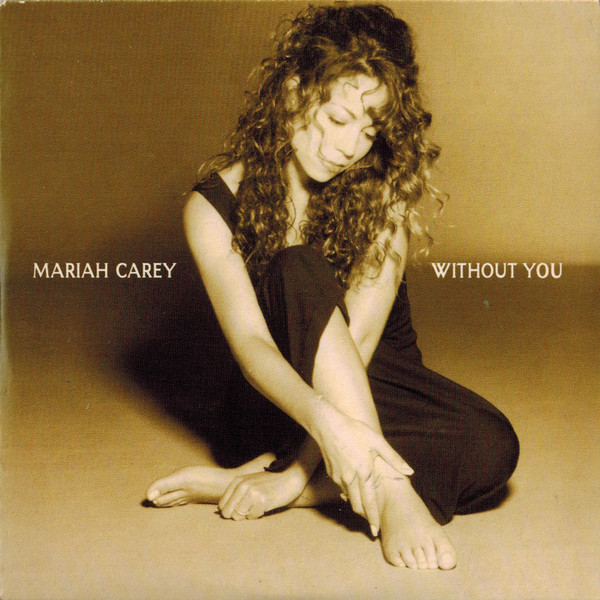
Without You, by Mariah Carey (her 1st of four #1s)
4 weeks, from 13th February – 13th March 1994
And I have to say, as much as I have a soft spot for ‘Mariah’ the camp icon – the ‘Cribs’ appearance, the ‘I don’t know her’ meme, all that nonsense – the fact that she didn’t dominate the British charts in the same way she took over the Billboard Hot 100 can only be a good thing. Yes, she can sing. No question. She takes Nilsson’s 1972 #1, and sings the absolute bejeezus out of it.
At one point, towards the end of this track, she extends the I can’t give any more… line for a full sixteen seconds, in a display of aggressive melisma. I can barely hold my breath for sixteen seconds, let alone belt out a succession of different musical notes for that length of time, and in purely technical terms it is very impressive. And yet, it’s these sorts of vocal gymnastics that ruin the song.
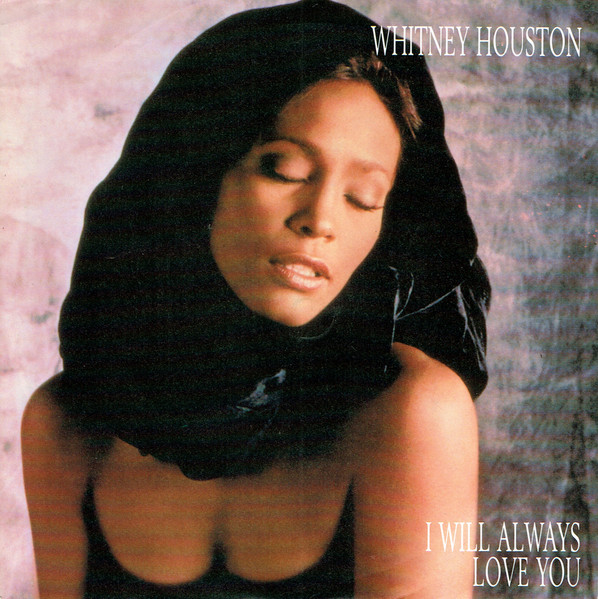
The same charges that were laid out against Whitney Houston as she whooped and hollered her way through ‘One Moment in Time’ and ‘I Will Always Love You’, can be made against Mariah here. Technically good singing will only get you so far, if you don’t mean what you’re howling about. Not in every song – plenty of decent pop songs can be churned out half-arsed – but in a torch song like this, with such a heartfelt original to compare it to, the difference shows. (Nilsson’s version, of course, wasn’t the original, but it is the version to which everyone compared Carey’s.)
Another comparison I can make between Mariah and Whitney is that I’ve always enjoyed Carey’s poppier moments more than her monster ballads. ‘Fantasy’, ‘Dreamlover’ and ‘Heartbreaker’ are all solid nineties pop tunes. What we also have to take into account, before complaining about her endless stream of ballads, is that she was tied in to a pretty controlling contract, and a pretty nasty relationship, with her manager Tommy Mottola.
I was under the impression that Harry Nilsson had died when this cover of his most famous hit was at #1, and was going to make a cheap joke about his cause of death. Except he had died a month before, in January 1994, at the very young age of fifty-two. I assume that Carey’s cover was already recorded by then, and wasn’t intended as a tribute, even if it did in the end become one. She had already had eight chart-toppers in the US, though ‘Without You’ stalled at #3 over there.
Younger readers may be surprised to discover that Mariah Carey actually had a recording career beyond a certain Christmas song, the name of which I dare not type out in case I accidentally get it stuck in my head. In truly shameless Mariah fashion, she’s really lent into her ‘Queen of Christmas’ alter-ego in recent years and, even as I sit here in late October, I’m counting down the days until her annual assault on the charts, and on our ears…
The 700th UK number one single. My word, haven’t we come far! Not only that, it’s the first #1 of 1994 – officially the mid-90s. Bring. It. On!
Twist and Shout, by Chaka Demus & Pliers with Jack Radics & Taxi Gang (their 1st and only #1s)
2 weeks, from 2nd – 16th January 1994
And it’s pretty fitting that this landmark chart-topper is a reggae song. For all the dance tunes, boyband pop, and the Britpop hits yet to come, I’ve already made the argument that reggae was the sound of 1993-5. And what I like about this, as with Shaggy’s ‘Oh Carolina’, is that it’s pretty uncompromising reggae. This isn’t dub, as heard recently from Ace of Base or UB40; it’s a proper sweaty dancehall track.
‘Twist and Shout’ is a fairly well known tune, mostly in the frantic version the Beatles’ released on their debut album, featuring a famous vocal performance from John Lennon. And so you could be forgiven for wondering if we really needed a reggae version. We definitely do, though. As with all the best cover versions, Chaka Demus and Pliers (a Jamaican DJ and singer) turn it into a completely different song.
The bare bones are still there: the chorus and, most importantly, the ascending aaahs that lead us to it. But beyond that there’s lots of toasting and rapping that neither Lennon, nor the Isley Brothers (who first had a hit with ‘Twist and Shout’ in 1962), could have imagined. Get up and move your body… One time… Pliers sings… Ooh man you drivin’ me crazy… The purists may have frowned, but I think it’s charming, and a lot of fun.
You couldn’t have picked a less likely time of year for this to be a hit, with it reaching the top the day after New Year’s. But we all need a bit of tropical escapism, don’t we, especially in a miserable British January? Plus, Chaka Demus & Pliers had already made the Top 5 twice in 1993 (tease me, tease me… till I lose control…) and this cemented them as Britain’s favourite reggae act.
For the recording, they roped in Jack Radics, who I believe is the gruffer voice you hear on the chorus, and Taxi Gang, a rhythm section associated with Jamaican music legends Sly & Robbie. This gives the song’s credits a very modern look, with four different artists attributed (I think this might have been a record at the time). It was Chaka Demus and Plier’s last big hit in the UK, though they would carry on until 1997, and still get together every now and again.
Every time we reach a century of #1s, it’s always good to take stock. Do they tell us anything about the styles of the time…? Well, in this case, yes. Reggae was enjoying a big resurgence in the charts. It’s certainly more relevant than the 500th #1 (Eurovision cheese from Nicole), or the 400th (Julie Covington’s ‘Don’t Cry for Me Argentina’). The most ‘of its time’, though, remains the 200th: the Beatles’ ‘Help’.
From Meat Loaf, to Mr. Blobby. From one larger-than-life epic, to another…
Mr. Blobby, by Mr. Blobby (his 1st and only #1)
1 week, from 5th – 12th December 1993/ 2 weeks, from 19th December 1993 – 2nd January 1994 (3 weeks total)
It’s been a while since I’d last heard this, for obvious reasons, and I thought I’d imagined the farting synths. No, actually, they’re not farting synths. They’re fart sounds. This number one single is built around farts, of the sort seven-year-olds make by blowing into their elbow cracks.
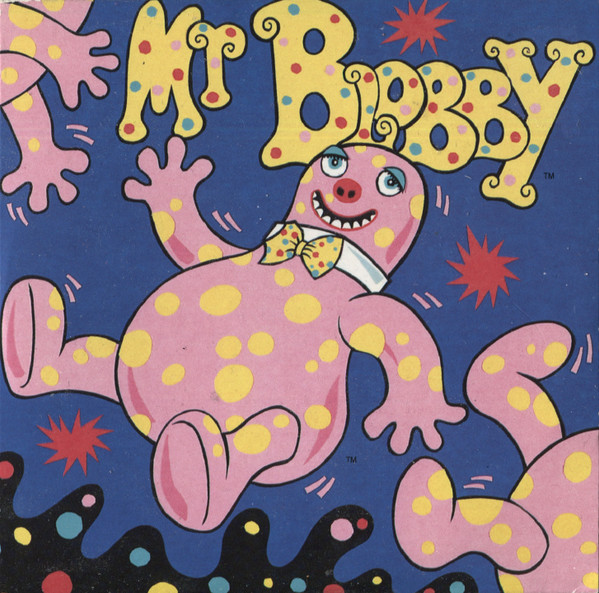
Before we delve any further into this murky swamp, I’d better explain exactly what a Mr Blobby is, for anyone not British, or anyone born in this century. There’s no better place to start than checking the picture embedded at the head of this post. It’s a man in a giant pink and yellow rubber suit, with a perma-grin and googly eyes, who’s only capable of saying ‘blobby’, over and over again in an electronically altered voice. His schtick is that he’s terminally clumsy, and anyone who comes in contact with him will end up flat on the floor and/or with a faceful of something sticky. He rose to fame on ‘Noel’s House Party’, a Saturday evening light entertainment show, set in a fictional mansion named ‘Crinkly Bottom’…
Before we go any further, I must stress that this is a truly heinous piece of music, one that I have no interest in ever hearing again once I’ve finished writing this post. And yet… When this came out, I was that seven-year-old, for whom fart noises, and the sight of Mr. Blobby falling through a drum kit, were the height of comedy. Even now, I’m ashamed to say, the video raises a smile…
In it Mr. Blobby is bathed on a slab, in a recreation of Shakespear’s Sister’s ‘Stay’ video, and leers over his backing band in a recreation of Robert Palmer’s ‘Addicted to Love’, as well as leading a gang of children in what looks like a Satanic ritual. He is chauffeured by Jeremy Clarkson, and has Carol Vorderman as some sort of scientific advisor in his ‘Blobby Factory’. There’s an air of utter anarchy, chaos, not to mention an underlying creepiness (though maybe that’s just the Noel Edmond’s cameo…)
With a lot of the truly terrible #1s that we’ve covered, a large part of what makes them awful is that the writers and performers don’t seem to realise how bad their song is (see ‘No Charge’, or St. Winifred’s, for example). This isn’t the case with ‘Mr. Blobby’ – the creators know they’re unleashing something horrendous on the world, and show a complete lack of contrition. Quite the opposite. So while I’m not going to argue the case for ‘Mr. Blobby’ being any good, I am going to gently suggest that might be one of the few truly punk #1s.
It’s also musically quite… complex? Like the video, the song doesn’t stay with any one sound for long. The farting and the children’s chanting (Blobby, Oh Mr Blobby, Your influence will spread throughout the land…) are constantly interrupted by sudden and incongruous swerves into dance and rap, by key changes and a rising and falling tempo. I jokingly called it an ‘epic’ in my intro, but maybe I wasn’t far off… It’s hyperactive, bright, zany, stupid… It’s ADHD in musical form. Or, rather, it’s a dog whistle for seven-year-olds, who are the only ones for whom this song holds any meaning.
For me, the moment that sums it all up comes towards the end of the video, when there’s footage of Blobby storming out from a helicopter and into the arms of a child, who looks like he’s seen the face of God. It sums up Blobby mania, which culminated here, in him reaching Christmas Number One. He was everywhere: on TV, in panto, in adverts, in a 1994 computer game, even running for election as an MP in 1995 (receiving 0.2% of the vote). Three separate Mr. Blobby theme park attractions were opened over the course of the 1990s, none of which survived the decade…
The fact this made Christmas number one is a story in itself, one that I’ll go into more detail on in my next post. It was initially knocked off the top, before roaring back, and amazingly became the first record in almost twenty-five years to have two separate spells at number one (during the same chart run). This was common in the fifties and sixties, and has become a normal occurrence again in the 21st century, but throughout the entirety of the seventies and eighties no record managed the feat. In terms of returning to number one with a different song, the closest Blobby came was with ‘Christmas in Blobbyland’, which made #36 two years later. He remains active to this day, popping up on ‘Britain’s Got Talent’ just this year…
On the one hand, we have to ask how this became a number one single. How did this outrageous, eight-minute long, barnstorming rock-opera push past the dance and all the Take That to become the biggest seller of the year?
I’d Do Anything for Love (But I Won’t Do That), by Meat Loaf (his 1st and only #1)
7 weeks, from 17th October – 5th December 1993
On the other, we have to ask ‘how could it not?’ What would be the point of a song this huge getting stuck at #23? You put this much time, and money, this many power chords, that many prosthetics on Meat Loaf’s face, then you have to aim for the top. Then there is the fact that it was the lead single from ‘Bat Out of Hell II’, Meat Loaf’s first album in almost a decade, and follow-up to one of the best-selling albums of all time. Maybe the demand and the interest was there…? Or, if we had an imaginary third hand, do we decide not to care why, and just give thanks that it did? The dramatic build-up, the soaring chorus, the sledgehammer duet, the fun innuendo in the title…
It tells the story of a frustrated lover, who would do anything for love, you know it’s true and that’s a fact. Except, for one thing. One thing that turns out to be vital. ‘That’. Many suggestions have been offered as to what ‘that’ is: some philosophical, some slightly more sexual… There’s even a Wikipedia entry on the ‘perceived ambiguity of ‘that’’. The video, directed by Michael Bay with a budget that would be the envy of many a feature film, pads the story out a bit more. Meat Loaf plays a monster, Dana Patrick plays a sexy siren, miming along to lines originally sung by Lorraine Crosby. It’s part ‘Beauty and the Beast’, part Channel 5 soft porn. At the end, the pair escape an approaching police squad on a motorbike. It’s every bit as fun, and as confusing, as the song itself, and I’d suggest a large factor in its success.
Speaking of the female vocalist, she has to wait a while before coming in, but when she does she makes the most of it. Will you cater to every fantasy I’ve got, Will you hose me down with holy water, If I get too hot? Hot! has to be one of the greatest lines ever in a number one single. It’s reminiscent of Meat Loaf’s other epic duets: with Cher on ‘Dead Ringer for Love’ and with Ellen Foley on ‘Paradise by the Dashboard Light’. Sadly, Crosby – like many of Loaf’s female partners – didn’t get a credit, or any royalties, for her part in the song.
Do we list this as the ‘90s version of ‘Bohemian Rhapsody’? It’s every bit as epic, though not as genre-hopping. Or is it just a power ballad – possibly the ultimate power ballad? – the likes of which have been popping up at the top of the charts for a decade. The fun had started to fade, with bloated and boring turns by Bryan Adams and Whitney Houston, so Meat Loaf arrives just in time to inject some much needed OTT silliness to the genre. It was, of course, a creation of Jim Steinman, who also had a hand in another contender for best power-ballad ever: ‘Total Eclipse of the Heart’.
My only complaint is that it doesn’t build to a crescendo, rather a more gentle finish as the woman lists the ways he’s going to break her heart and he, to my ears anyway, grudgingly agrees. But that’s a minor quibble about a song that has so many soaring peaks over the course of its epic runtime. The UK single edit comes in at 7mins 48s, making this the longest number one single ever at the time, beating ‘Hey Jude’s twenty-five year record. There’s a more manageable five and a half minute edit, and a frankly ridiculous twelve minute version on the album. Meanwhile, following on from Lulu, Meat Loaf becomes the second consecutive forty-something to top the charts (he was forty-six when this made it to the summit).
‘I Would Do Anything for Love’ is glorious, but I don’t think it quite hits the heights of some of the ‘Bat Out of Hell’ tunes. I was raised on that album as a child, and could quite probably sing all seven songs (plus ‘Dead Ringer’ on the deluxe version) word for word. But it did what none of those songs could do, and gave Meat Loaf a number one single… In twenty-eight countries, no less. It was only his second UK Top 10 hit, but he’d go on to have several more in the years that followed, including a #8 for a re-released ‘Bat Out of Hell’ in the wake of this. I saw him in concert in 2007 and, while it was a lot of fun, it was clear that his best days were behind him by then. He continued recording and performing well into his seventies, despite various health issues, remaining a larger than life presence on stage and in interviews, until his death from Covid-19 complications last year.
In their early years, in amongst the Hi-NRG pop and the ballads, Take That had made a habit of popping out covers of 1970s golden-oldies. A version of Tavares’s ‘It Only Takes a Minute’ had brought them to the Top 10 for the first time, while a pumped up take on Barry Manilow’s ‘Could It Be Magic’ gave them their first Top 5 hit.
Relight My Fire, by Take That (their 2nd of twelve #1s) ft. Lulu (her 1st and only #1)
2 weeks, from 3rd – 17th October 1993
‘Relight My Fire’, their second number one, was the pinnacle of their cover version days, and the final one before their ascent to superstardom. And it’s a perfectly fine piece of pop: complete cheese – though a nice camembert rather than plastic cheddar – and completely undeniable. It’s the ultimate soundtrack to Saturday evening family TV, to a kid’s birthday party at a Charlie Chalk’s, to a Butlin’s disco…
They don’t do anything clever with it, updating the disco beat and percussion for something more post-SAW, but otherwise keeping sensibly close to the Dan Hartman original. An original which hadn’t been a very big hit in the UK. I assumed it must have been a hit of some sort, as it just sounds so very ‘peak’ disco, but no. In the US, it had topped the Billboard Dance Chart for six weeks in late 1979; but in Britain people may not have been aware of it. (The female vocalist on the original was Loleatta Holloway, who we last heard being similarly uncredited on Black Box’s ‘Ride on Time’, while Hartman sadly died just a few months after this cover became a hit.)
I say Take That don’t do anything clever with their version of the tune, but actually… Roping in none other than Scottish pocket-rocket Lulu to belt out the Loleatta verse provided a clever bit of cross-generational appeal. And belt it out she does, as her rasping You gotta be strong enough to walk on through the night… is a clear highlight. She grasps with both hands this gold-plated chance at a chart comeback, also making sure she isn’t overshadowed by these young whippersnappers (though, amazingly, she was only forty-five when this made #1…)
It gave Lulu her first chart-topper a full twenty-nine years after her chart debut with ‘Shout’ – a record at the time. She had recently released her first album in eleven years, and this was her first Top 10 in almost twenty (not counting a re-release of ‘Shout’ in the ‘80s). But just as importantly as relaunching Lulu’s career, it announced to the world that Take That weren’t just teeny boppers aimed at twelve-year-olds. They were looking to become Britain’s foremost pop group, one that appealed to your mum, your granny, and your gay uncle (note Mark Owen’s crop top in the video, as well as Jason/Howard’s – who can tell them apart? – leather chaps…)
Come the end of the decade, all the boyband imitators that Take That had spawned would be trying the same thing. Off the top of my head, I can remember seventies covers from Boyzone, Westlife and 911 all doing very well in the charts, and I’m sure there were more. It’s songs like this which mean Take That are still filling stadiums across the country, thirty years on, with people of all ages looking for nothing more than a good night out. It’s easy to sniff (and sniff I do), but few do it better.
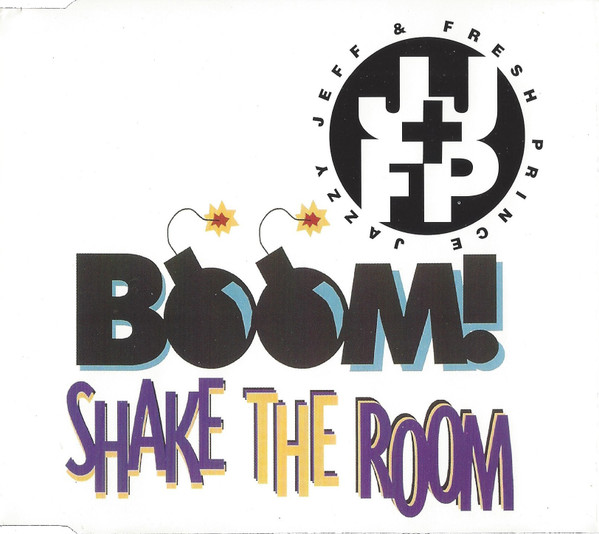
Yo back up now and give a brother room, The fuse is lit and I’m about to go boom…! The first thing that becomes immediately apparent when I press play on our next number one is that I know almost all the words. When and how this happened I don’t know, but here we are…
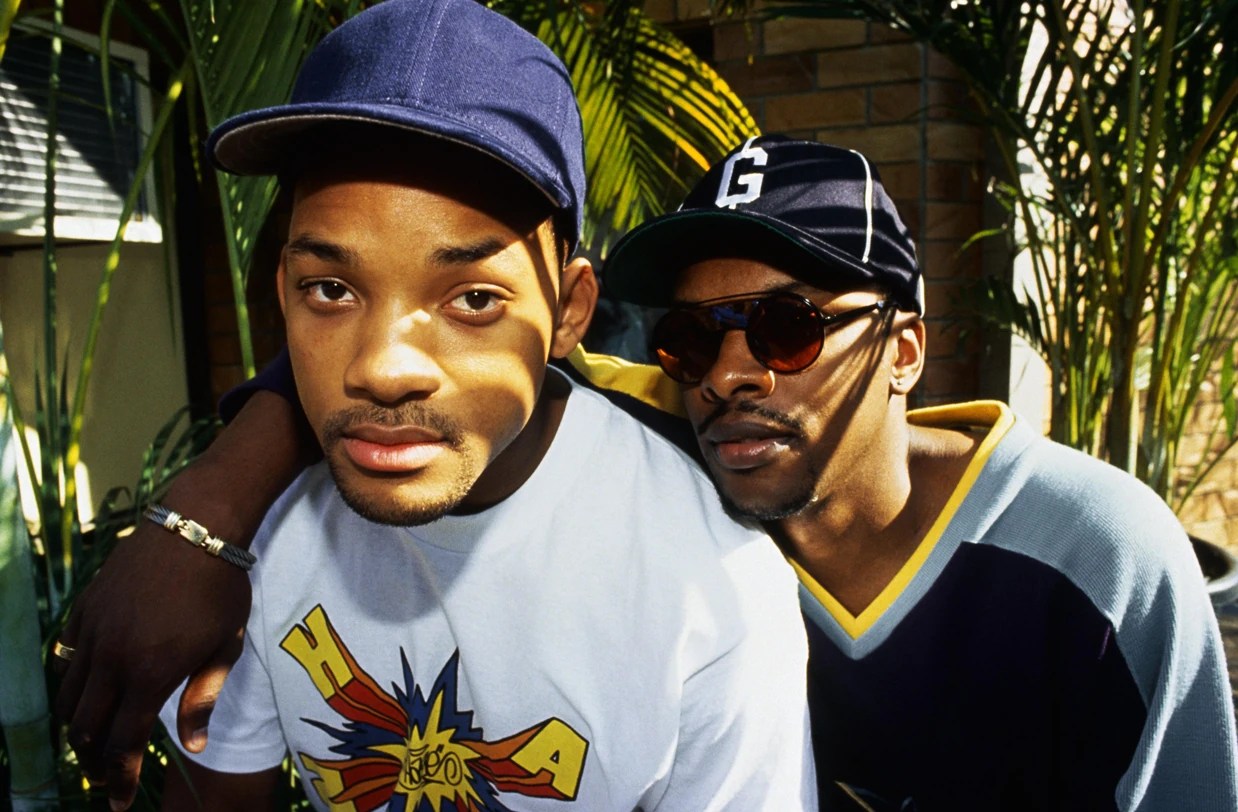
Boom! Shake the Room, by Jazzy Jeff & The Fresh Prince (their 1st and only #1)
2 weeks, from 19th September – 3rd October 1993
It’s the most rap-heavy #1 so far. No sung chorus, a bit of chanting, just Big Will spitting rhymes. Or should that be ‘The Fresh Prince’. It’s easy to assume that this was a tie-in with his role in the hit sitcom, but in reality the sitcom was a tie-in for a rap career which had been going since the mid-eighties.
And while it may be the purest hip-hop chart topper thus far, I’ll make the same comment that I’ve made about almost all rap songs we’ve featured: it’s hard now not to see this as a novelty. The call and response, the lines about ‘scoring like Jordan’, the stuttering verse… All very cute, all very tame. A kids party DJ could throw this on and fear no repercussions. The closest we get to something gangsta is when Will promises to find a girl, flip her around and then work that booty…
But, it’s a lot of fun. Like I said, I know nearly all the words. I grew up with rap a lot more explicit than this (with lots of words that a person of my complexion can’t go around saying…) I’m reminded of the classic Eminem line: Will Smith doesn’t have to cuss to sell records, Well I do, So fuck him, And fuck you too… That’s funny, but it also shows where Will Smith stood in the early 2000s: commercially very successful, but an outlier in the eyes of other rappers. Back in 1993, we’re on the verge of rap becoming a dominant sound in the charts, and I really don’t know if ‘Boom! Shake the Room’ was seen as cool, or already a relic of an earlier time.
Speaking of Eminem, we’re only seven years away from him scoring a huge #1 single about having his girlfriend gagged and bound in the boot of his car. That’s a huge shift, considering that the rap songs to have made #1 have been this, one about the Teenage Mutant Ninja Turtles, and Vanilla Ice. While the worst swearword that’s been uttered in a number one single has been, I think, ‘bullshit’. It’ll be interesting to watch how quickly tastes and standards change in the remaining years of the 1990s.
And while you could say that Will Smith became a figure of fun, spare a thought for the guy behind the decks on this record. Initially, Jazzy Jeff was the star of the duo, with first billing here and on their early hits, with wonderful titles like ‘Parents Just Don’t Understand’ and the ‘I Dream of Jeannie’ sampling ‘Girls Ain’t Nothing But Trouble’. At the very start of their relationship, Smith was Jazzy Jeff’s stand-in hype-man. Come the TV series, though, Jeff had become a punchline, spending most of his time getting launched out the door by Uncle Phil. ‘Boom! Shake the Room’ was the duo’s biggest hit, in the UK at least, but it was one of their last. Will Smith went solo in 1997 (more on that soon) with Jeff producing some his songs. He’s remained very active though, performing with Smith from time to time, while one of his biggest legacies is popularising the ‘transformer scratch’, a version of which opens this record.
If we’re being reductionists, we can distil the entire 1990s down to four chart-topping acts. Oasis, of course, and Blur. The Spice Girls. And Take That. And of the four, it’s the boy band who make it to number one first. Can we finally declare that the nineties, after many a false start, begin now…?
Pray, by Take That (their 1st of twelve #1s)
4 weeks, from 11th July – 8th August 1993
This record actually sounds quite cool – a new-jack swing beat and some edgy horn samples – until the voice comes in. Gary Barlow. Was he ever cool? I’d assumed he must have been, because he was young and in a hot new boyband. But even here, in his prime, he looks like the annoyingly well-behaved cousin that your mum insists on comparing you to… Why can’t you start a hugely successful boyband like Gary…? I mean, who’s he fooling, in the video, writhing around on the beach with his shirt hanging open.
Anyway, this isn’t the time to launch head first into my feelings on Gary Barlow (we can save that for his ill-fated solo career). He may sing lead here, but there are four other boys involved. And, to be fair, they all do their share of topless writhing in the video: on the beach, in the surf, in a fountain, entwined in the fronds of a banyan tree. On the one hand it’s quite arty; on the other it’s completely gratuitous.
The song itself is a funny mix. It treads a similar path to the Gabrielle hit that came before it: the verses are slow, wordy, and strangely lacking in hooks, considering that this is a pop song aimed at teenage girls. Barlow has always had ambition, writing songs that go above and beyond what you’d expect from his genre. He’s also always had the annoying habit of pulling a great chorus out of his arse. Just in time it comes racing in… Before I even close my eyes… All I do each night is pray…
We’ve had a few American boybands warming up the number one slot before this, in the shape of NKOTB, Color Me Badd, and Boyz II Men. But in the UK at least, Take That are the boyband of the decade. Perhaps of all time (1 Direction might have something to say about that, but I can’t bring myself to check the actual sales figures…) Either way, we’re going to be hearing an awful – interpret that word however you wish – lot of them in the coming posts.
And although they are the boyband of the decade, ‘Pray’ isn’t one of their hits that has been played to death. Which means that it’s actually fine to hear this again, and to enjoy the moments that soar past the sludgy verses. Take That had had quite a slow rise to the top, compared to some other pop acts. Their first release, the Hi-NRG ‘Do What U Like’ made #82 in the summer of 1991, and they slowly shed the pop-dance, scored hits with covers of Tavares and Barry Manilow, and went a bit more sophisticated. Once ‘Pray’ made #1, the rest was history. Though few at the time could have imagined that their chart-topping career would span almost two decades…
It’s a low-key way to kick off the next thirty tunes, a run of chart-toppers that will take us right into the heart of darkness… the mid-nineties.
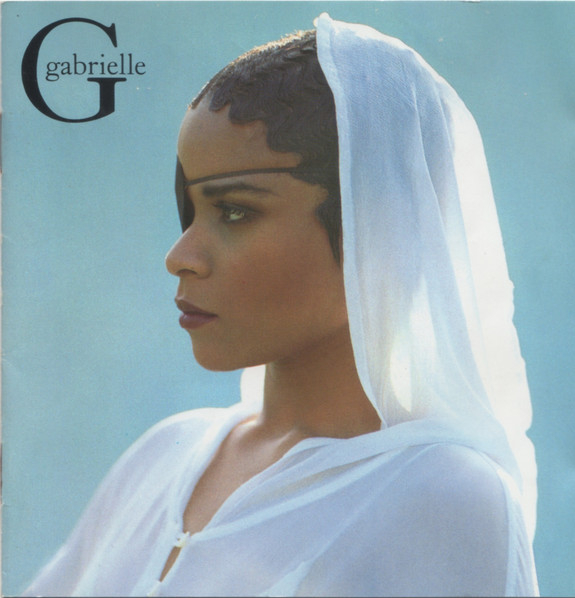
Dreams, by Gabrielle (her 1st of two #1s)
3 weeks, from 20th June – 11th July 1993
Looking back, Tasmin Archer was the forerunner of this sort of soul-lite, dinner-party-background-music peddling female singer, who will be very popular for the rest of the decade and beyond. Think Heather Small, Des’ree, and the doyenne of the genre: Gabrielle.
It’s light and airy, like a breeze stirring your curtains on a summer’s day – acoustic chords, springy strings, and Gabrielle’s gentle voice. One of the hallmarks of this genre is the uplifting lyrics – its fans don’t much want to linger on the fact that life is a crushing march towards oblivion – and ‘Dreams’ delivers fully on that front…
Dreams can come true… You know you got to have them, You know you got to be strong… (Except, the impossible ‘dream’ that came true is that she’s got a boyfriend, so…) Anyway, I can enjoy it, to a point. The problem is that it remains with you for just as long as the summer’s breeze it resembles. You hear it, think it’s pleasant enough, and then you move on.
It’s too controlled, too tidy. Precision-drilled pop. To me, it’s got #8 hit written all over it. But this record meant Gabrielle’s first ever release went to the top, and in debuting at #2 it became the highest charting debut single ever, so what do I know? It didn’t quite appear out of nowhere, though, as an earlier version had been doing the rounds for a year or two. It featured a sample of Tracy Chapman’s ‘Fast Car’ that the label which signed her couldn’t clear, so a re-record was ordered.
So maybe the earlier version had laid the groundwork for this to become a massive hit. Or maybe there’s something in the chorus that lingers after all (not for nothing does this remain Gabrielle’s signature song)? Or maybe it’s her voice, distinctive but pleasant, husky but warm. Or maybe it was nothing to do with the music… For when I think of Gabrielle the first word that springs to mind is ‘eyepatch’. She wears it due to a condition called ptosis, which causes drooping of the eyelid, and the sparkly model she sports in the video to this song is a real treat.
It might be stretching it a bit to claim that Gabrielle’s debut success is the start of a line of British female singers that stretches past Dido, Amy Winehouse, all the way to Adele. A stretch not least because ladies like the aforementioned Tasmin Archer, not to mention Lisa Stansfield, have already scored big soul-lite #1s. But this was certainly a type of singer that came of age in the 1990s, and none were bigger back then than Gabrielle. ‘Dreams’ set her up for a decade of consistent Top 10s, including one further chart-topper that we’ll meet in the early weeks of the new millennium.
For the twenty-third time, no less. This recap spans well over two years, from March 1991 to June 1993, which I think – without going back through all the previous twenty-two – might be a record. At least since the mid-fifties, when songs having double-digit runs at the top of the charts was the norm.
And the reason why we’ve taken so long to cover the last thirty #1s? It would be tempting to lay the blame at the feet of Bryan Adams, for his still record-holding sixteen-week consecutive run with ‘(Everything I Do) I Do It for You’, and Whitney Houston for her ten-week stint with ‘I Will Always Love You’. But we’ve also had an eight-weeker from Shakespear’s Sister, a six-weeker from Snap!, and six separate five-weekers. In a previous post, I went into some of the reasons behind this: a decline in vinyl sales not yet being covered by growing CD sales, resulting in sluggish charts. Give it a few years though, and all this will be behind us, with sales at an all-time high.
It might also have had something to do with the lack of a dominant ‘sound’ in the early nineties. Sales tend to peak with hot new genres – Merseybeat, glam, disco, new wave – and trough during the years in between. We’re currently between the house, dance and SAW of the late ‘80s and the Britpop years, and this is best indicated by the likes of Adams and Houston’s monster hits. Both were from blockbuster movies, and they were far from the only two. In fact, if we had to pick a dominant genre from the early ‘90s, it would be the movie soundtrack hit.
I count seven movie soundtrack #1s in this period, spanning all manner of genres: Chesney Hawkes (pop-rock), Cher (retro pop), Color Me Bad (boyband R&B), Adams and Houston (power ballads), Shaggy (reggae), and UB40 (reggae-lite), plus a bit of musical theatre from Jason Donovan. Some have been good, some have been okay, some I would happily never hear again.
If we had a runner-up in the ‘sounds of the early nineties’ category, then it would have to be the random re-release. They’ve been popping up since Jackie Wilson scored 1986’s Christmas number one, and they’ve usually – though not always – been TV advert tie-ins. The most recent two gave us a couple of pretty unique chart-toppers: The Clash’s ‘Should I Stay or Should I Go’, and The Bluebells’ ‘Young at Heart’, thanks to Levi’s and VW respectively. But these, sadly, mark the end of the re-release phenomenon (for now…)
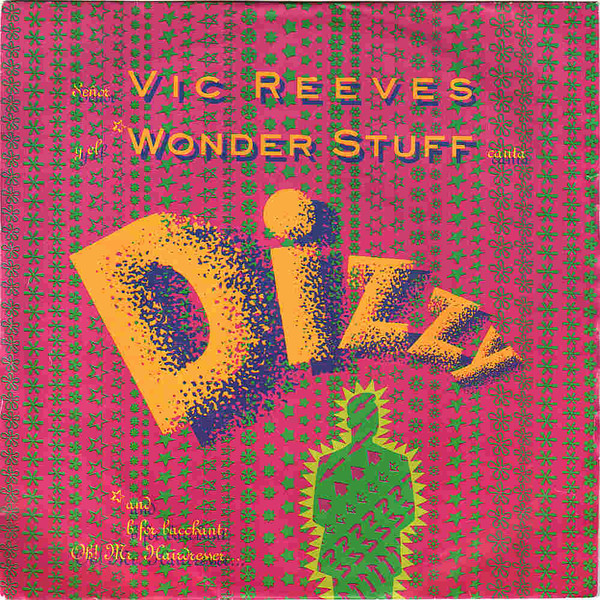
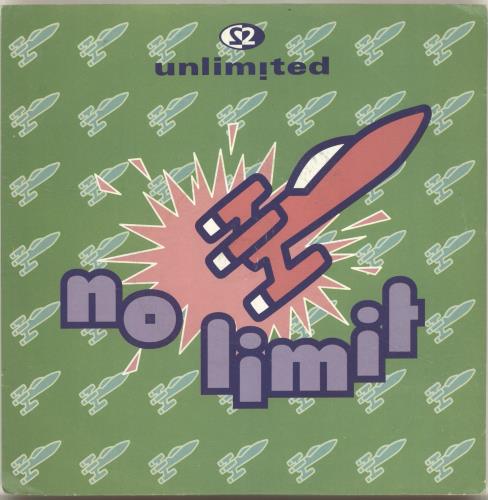
Before hitting the awards portion of this post, let’s go through some of the other stories from the past thirty chart-toppers. And it’s starting to feel like the ‘nineties’ as I remember it, with dance music continuing to shapeshift from its sample-heavy origins, into streamlined pop smashes like ‘Rhythm Is a Dancer’, and techno bangers such as ‘No Limit’ (not to mention the soon to be everywhere, half-hearted dance remakes of oldies a laKWS). There’s also been a whiff of Britpop in the unlikely shape of Vic Reeves and The Wonder Stuff.
We’ve bid farewell to Freddie Mercury, twice; with the posthumous ‘These Are the Days of Our Lives’ (paired with ‘Bohemian Rhapsody’) in the wake of his death, and the ‘Five Live E.P.’ on which Queen performed a live version of that hit, and of ‘Somebody to Love’, with Lisa Stansfield and George Michael. The other two tracks on that EP were Michael solo tracks which, along with his earlier live duet with Elton John on ‘Don’t Let the Sun Go Down on Me’, have helped confirm him as the biggest British solo star of the era.
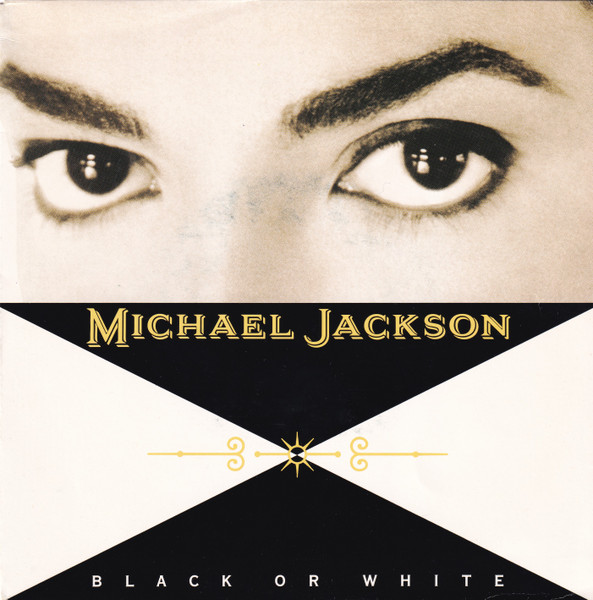
We’ve also started to ride the crest of another reggae wave. (In fact, the three #1s from Shaggy, Ace of Base and UB40 towards the end of this thirty set the charts up nicely for probably their most prolonged run of reggae hits.) Elsewhere, Michael Jackson premiered the biggest music video ever, in his usual understated way, and the evergreen Cher set a record for the longest gap between number one singles. Plus, we can’t finish without mentioning Erasure, who scored a chart-topper after years of trying, and kickstarted the modern ABBA-nnaisance.
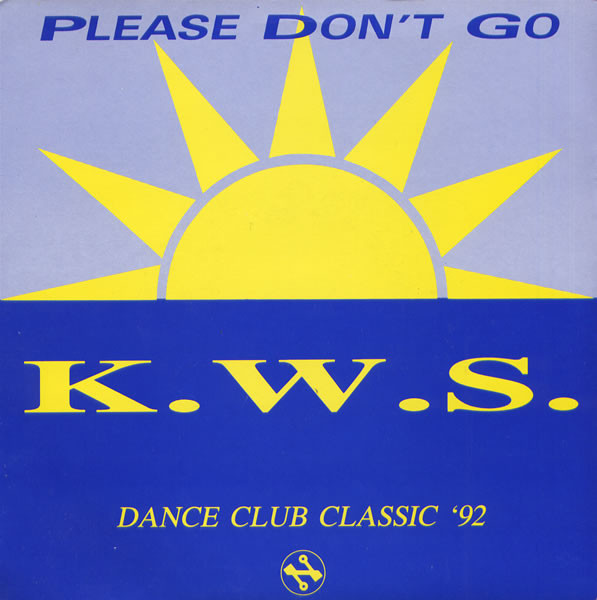
To the awards then. Starting, as is traditional, with the The ‘Meh’ Award for bland forgettability. I briefly considered Jason Donovan’s ‘Any Dream Will Do’, but that soundtrack was the first CD I ever owned, and residual fondness prevents me. There was also UB40’s pedestrian cover of ‘Can’t Help Falling in Love’, but I’ve already awarded them a ‘Meh’ award, and to do so twice would be cruel. So we’re left with Wet Wet Wet’s ‘Goodnight Girl’, which does have a good chorus, Tasmin Archer’s ‘Sleeping Satellite’, with a vocal performance which doesn’t really deserve such an award, and KWS’s bland dance double ‘Please Don’t Go’ / ‘Game Boy’. The KC & the Sunshine Band cover was dull, and the hardcore ‘Game Boy’ was ear-catching for a minute before it become repetitive. They win.
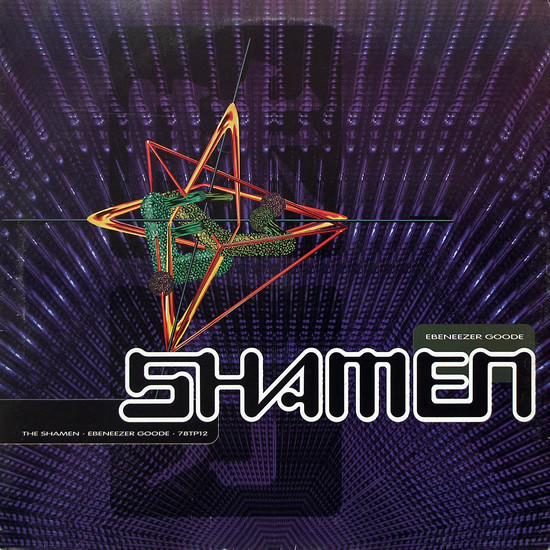
We don’t have quite as rich a set of pickings for The WTAF Awardfor being interesting if nothing else as we did in the last recap, but it’s still a strong field. You could give it to ‘Stay’, for the video alone. Or Right Said Fred for their jaunty, non-‘Sexy’, ‘Deeply Dippy’. Or maybe Hale and Pace’s char-com danceathon ‘The Stonk’ (though I perhaps have bigger things planned for that record…) No, I’m giving this WTAF award to The Shamen, for bringing rave culture and quality innuendo to the top of the charts, with the leering, gurning ‘Ebeneezer Goode’.
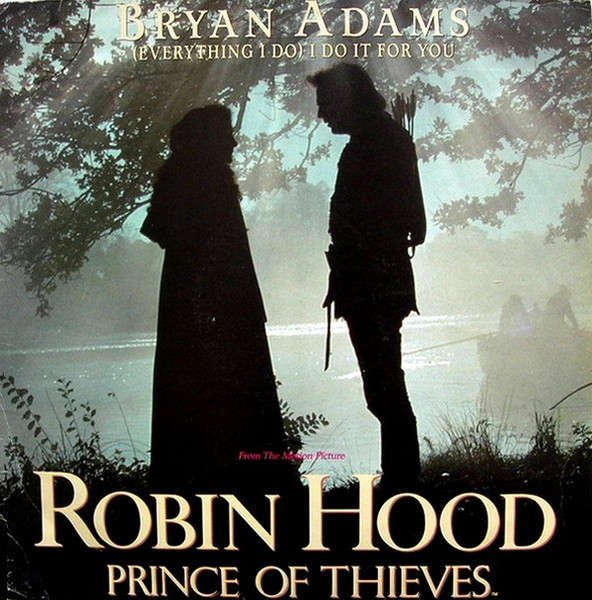
Where to go with this recap’s Very Worst Chart-Topper award, then. Do we give it to Color Me Badd and their lame attempts to woo us with ‘I Wanna Sex You Up’? Or do we give it to ‘The Stonk’ – a ‘comedy’ record so aggressively unfunny that it was almost sad…? Do we give it to either of the gruesome twosome who clogged the top of the charts up for over half a year between them…? To be honest, yes, let’s. I just can’t get past the elephant in the room – a record that stayed at #1 so long it started to stink like a beached whale-carcass, ticking every bad power-balled cliché on the list. Bryan Adams wins.
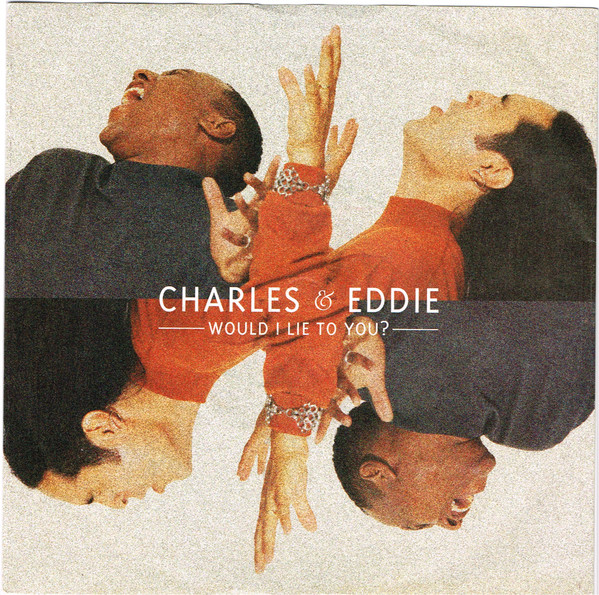
Finally, of course, the 23rdVery Best Chart-Topper award. I’ve been pleasantly surprised by the general quality of our recent number ones, but I’m struggling to pick an all-time classic. I’m tempted to give it to 2 Unlimited, for their very-1993 techno banger. It’s big, it’s dumb, it’s a whole lot of fun. But I couldn’t live with myself if I did, not really. Instead, I’m awarding it to Charles & Eddie, for the least nineties-sounding song of the entire thirty. It’s a slice of timeless soul, the quality of which surprised me when I listened to it for the first time in years. Check it out again below, if you haven’t. Unlike the two chaps in question, I wouldn’t lie to you…
Let’s recap the recaps:
The ‘Meh’ Award for Forgettability
‘Hold My Hand’, by Don Cornell.
‘It’s Almost Tomorrow’, by The Dream Weavers.
‘On the Street Where You Live’, by Vic Damone.
‘Why’, by Anthony Newley.
‘The Next Time’ / ‘Bachelor Boy’, by Cliff Richard & The Shadows.
‘Juliet’, by The Four Pennies.
‘The Carnival Is Over’, by The Seekers.
‘Silence Is Golden’, by The Tremeloes.
‘I Pretend’, by Des O’Connor.
‘Woodstock’, by Matthews’ Southern Comfort.
‘How Can I Be Sure’, by David Cassidy.
‘Annie’s Song’, by John Denver.
‘I Only Have Eyes For You’, by Art Garfunkel.
‘I Don’t Want to Talk About It’ / ‘The First Cut Is the Deepest’, by Rod Stewart.
‘Three Times a Lady’, by The Commodores.
‘What’s Another Year’, by Johnny Logan.
‘A Little Peace’, by Nicole.
‘Every Breath You Take’, by The Police.
‘I Got You Babe’, by UB40 with Chrissie Hynde.
‘Who’s That Girl’, by Madonna.
‘A Groovy Kind of Love’, by Phil Collins.
‘Do They Know It’s Christmas?’, by Band Aid II.
‘Please Don’t Go’ / ‘Game Boy’, by KWS.
The WTAF Award for being interesting if nothing else
‘I See the Moon’, by The Stargazers.
‘Lay Down Your Arms’, by Anne Shelton.
‘Hoots Mon’, by Lord Rockingham’s XI.
‘You’re Driving Me Crazy’, by The Temperance Seven.
‘Nut Rocker’, by B. Bumble & The Stingers.
‘You’ll Never Walk Alone’, by Gerry & The Pacemakers.
‘Little Red Rooster’, by The Rolling Stones.
‘Puppet on a String’, by Sandie Shaw.
‘Fire’, by The Crazy World of Arthur Brown.
‘In the Year 2525 (Exordium and Terminus)’, by Zager & Evans.
‘Amazing Grace’, The Pipes & Drums & Military Band of the Royal Scots Dragoon Guard.
‘Kung Fu Fighting’, by Carl Douglas.
‘If’, by Telly Savalas.
‘Wuthering Heights’, by Kate Bush.
‘Hit Me With Your Rhythm Stick’, by Ian Dury & The Blockheads.
‘Shaddap You Face’, by Joe Dolce Music Theatre.
‘It’s My Party’, by Dave Stewart & Barbara Gaskin.
‘Save Your Love’ by Renée & Renato.
‘Rock Me Amadeus’, by Falco.
‘Pump Up the Volume’ / ‘Anitina (The First Time I See She Dance)’, by M/A/R/R/S.
‘Doctorin’ the Tardis’, by The Timelords.
‘Sadeness Part 1’, by Enigma.
‘Ebeneezer Goode’, by The Shamen.
The Very Worst Chart-Toppers
‘Cara Mia’, by David Whitfield with Mantovani & His Orchestra.
‘The Man From Laramie’, by Jimmy Young.
‘Roulette’, by Russ Conway.
‘Wooden Heart’, by Elvis Presley.
‘Lovesick Blues’, by Frank Ifield.
‘Diane’, by The Bachelors.
‘The Minute You’re Gone’, by Cliff Richard.
‘Release Me’, by Engelbert Humperdinck.
‘Lily the Pink’, by The Scaffold.
‘All Kinds of Everything’, by Dana.
‘The Twelfth of Never’, by Donny Osmond.
‘The Streak’, by Ray Stevens.
‘No Charge’, by J. J. Barrie
‘Don’t Give Up On Us’, by David Soul
‘One Day at a Time’, by Lena Martell.
‘There’s No One Quite Like Grandma’, by St. Winifred’s School Choir.
‘I’ve Never Been to Me’, by Charlene.
‘Hello’, by Lionel Richie.
‘I Want to Know What Love Is’, by Foreigner.
‘Star Trekkin’’, by The Firm.
‘Nothing’s Gonna Change My Love for You’, by Glenn Medeiros.
‘Let’s Party’, by Jive Bunny & The Mastermixers.
‘(Everything I Do) I Do It for You’, by Bryan Adams.
The Very Best Chart-Toppers
‘Such a Night’, by Johnnie Ray.
‘Cherry Pink and Apple Blossom White’, by Perez ‘Prez’ Prado & His Orchestra.
‘Great Balls of Fire’, by Jerry Lee Lewis.
‘Cathy’s Clown’, by The Everly Brothers.
‘Telstar’, by The Tornadoes.
‘She Loves You’ by The Beatles.
‘(I Can’t Get No) Satisfaction’, by The Rolling Stones.
‘A Whiter Shade of Pale’, by Procol Harum.
‘I Heard It Through the Grapevine’, by Marvin Gaye.
‘Baby Jump’, by Mungo Jerry.
‘Metal Guru’, by T. Rex.
‘Tiger Feet’, by Mud.
‘Space Oddity’, by David Bowie.
‘I Feel Love’, by Donna Summer.
‘Heart of Glass’, by Blondie.
‘The Winner Takes It All’, by ABBA.
‘My Camera Never Lies’, by Bucks Fizz.
‘Relax’ by Frankie Goes to Hollywood.
‘You Spin Me Round (Like a Record)’, by Dead or Alive










 The UK Number Ones Blog