We’ve just ticked over the exact midway point of the nineties, as we head into 1995. One of the most renowned years in British music, during which Britpop, and some of the nation’s best-loved bands, went mainstream. And yes, we will get to all that… But kicking off the year we have something much less fondly remembered.
Cotton Eye Joe, by Rednex (their 1st and only #1)
3 weeks, from 8th – 29th January 1995
This jaw-clenchingly, skin tighteningly bad piece of techno-bluegrass can only be explained as a hangover from the festive period, from New Year’s parties full of people too drunk to care what was blasting out over the stereo… Oh, who can I kid? By now it’s clear that the British public need no excuse to send utter dross to the top of the charts. ‘Cotton Eyed Joe’ is shit – so shit it was guaranteed to be massive.
It was a perennial at my school discos, but I didn’t like it aged nine and haven’t chosen to hear it for the better part of thirty years. You need a strong stomach to listen to it even now: the mix of banjos, fiddles and heavy synths makes me feel very tense, something the horse and gunshot sound effects don’t do much to alleviate, while the aggressive chanting makes me wonder if hell is actually being locked in an eternal barn dance.
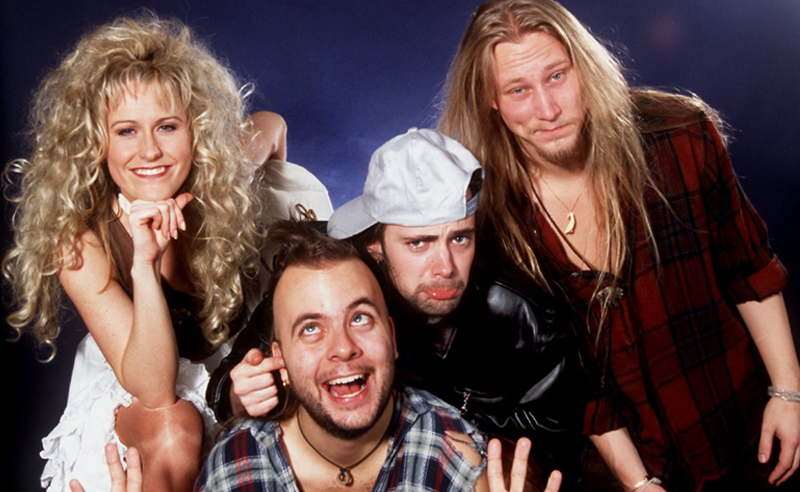
The video builds on this theme – I’m genuinely not sure if they were going for something funny, or for something more like a horror movie. The Rednex all play straggly-haired, yellow-teethed, rat-fondling hillbillies, who appear to be subjecting a younger, prettier girl to a never-ending ride on a bucking bronco. I don’t say this at all lightly, but I would take ‘Mr Blobby’ over this scary mess.
Rednex were Swedish (not American, sadly) and had stage names like Bobby Sue and Ken Tacky. ‘Cotton Eye Joe’ was their first hit, and in the UK they would manage only one more of note: ‘Old Pop in an Oak’ which made #12. In Sweden they remained successful well into the 2000s, scoring chart-toppers there as late as 2008! The mind boggles… The album that their two biggest hits came from was titled ‘Sex and Violins’, which is possibly the only funny thing the band ever put their name to.
Sad thing is, the history behind ‘Cotton Eye Joe’ is quite interesting. It pre-dates the US Civil War, probably originating among black slaves in the cotton fields. Proposals for what the phrase means vary from someone being drunk, to someone with milky cataracts, to the contrast between black skin and white eyeballs. It was first published in 1882, and has been recorded in country, polka, and trad-Irish versions, as well as featuring in the movie ‘Urban Cowboy’.
All that history has been obliterated by the Rednex version, which became a worldwide hit and which we will all be hearing until our dying days. It even made the charts in the US, which was unusual for a Eurodance track, and became a sports event/kids’ party standard. In recent years, some sports teams have stopped playing it in their stadiums due to the song’s potentially racist origins. Usually I’m not a fan of cancel culture, but I’ll make an exception if it means never hearing this particular chart-topper ever again…
I know very little about dance music. I can just about tell my techno from my chillout, but you may have noticed from my previous posts on dance #1s that I play pretty fast and loose with the terminology. So indulge me while I throw around some ideas that may be complete nonsense…
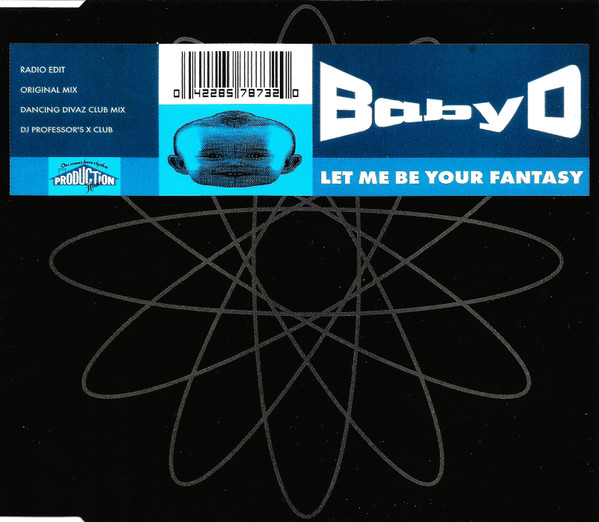
Let Me Be Your Fantasy, by Baby D (their 1st and only #1)
2 weeks, from 20th November – 4th December 1994
‘Let Me Be Your Fantasy’ might be the most ‘hardcore’ dance chart-topper yet. The beat is either ‘house’, if we’re looking backwards, or ‘garage’ if we’re looking forwards. Is it maybe even the first ‘drum ‘n’ bass’ number one? I’ll also throw in the suggestion that it also incorporates ‘jungle’, if only because I think it sounds fun.
I could list dance sub-genres all day long (Wikipedia also suggests ‘breakbeat’ and ‘happy hardcore’) but to be honest, they mean little to me and probably mean as much to you. Let me give the quotation marks a rest, and describe what ‘Let Me Be Your Fantasy’ makes me feel… Well, it’s atmospheric – I like what sounds like a robot breathing in the mellow breaks between the verse – and the vocals are impressive. They’re the part of the song that feels the most familiar: a dance hit helmed by a large-lunged diva a laBlack Box, or Snap!. Here the singer is Dorothy ‘Dee’ Galdes (presumably the ‘D’ in Baby D) and she has a wonderfully light-yet-full-bodied voice.
It’s another step towards the dance music that was dominating the charts when I came of age in the later part of the decade – dance music that had moved away from samples and novelty raps, dance music that had the confidence to strip things back, to drop the beats per minute, to let things breathe. This record is similar in that way to 1994’s other ‘cool’ dance hit by Tony Di Bart, rather than the more novelty offerings from Doop and Whigfield.
But I’ll also take that word ‘cool’, strengthen it into ‘cold’, and use it to describe how this song leaves me feeling. It’s not my thing, and as much as I try I can’t move past detached admiration as I listen and critique – much like I would an artefact in a museum – and I move on without particularly wanting to hear it again. I will always, sorry to say, enjoy the inane cheesiness of a 2 Unlimited song more…
Baby D had been around since the late eighties, and had scored a handful of minor hits earlier in the nineties. ‘Let Me Be Your Fantasy’ had been around since 1992, when it made #76 and become something of a lost classic. Until it was ‘found’, re-released, and it reached #1. Baby D followed it up with a couple of #3 hits before fading. Their last hit was a remix of this, their biggest hit, that made #16 in 2000. Their keyboard player, Terry Jones, took a slight change in direction and went on to write and produce for the Backstreet Boys, Eternal, and Peter Andre…
After fifteen weeks of ‘Love Is All Around’, I’m sure the nation (including Wet Wet Wet themselves) was happy for literally anything to come along and give us a new number one…
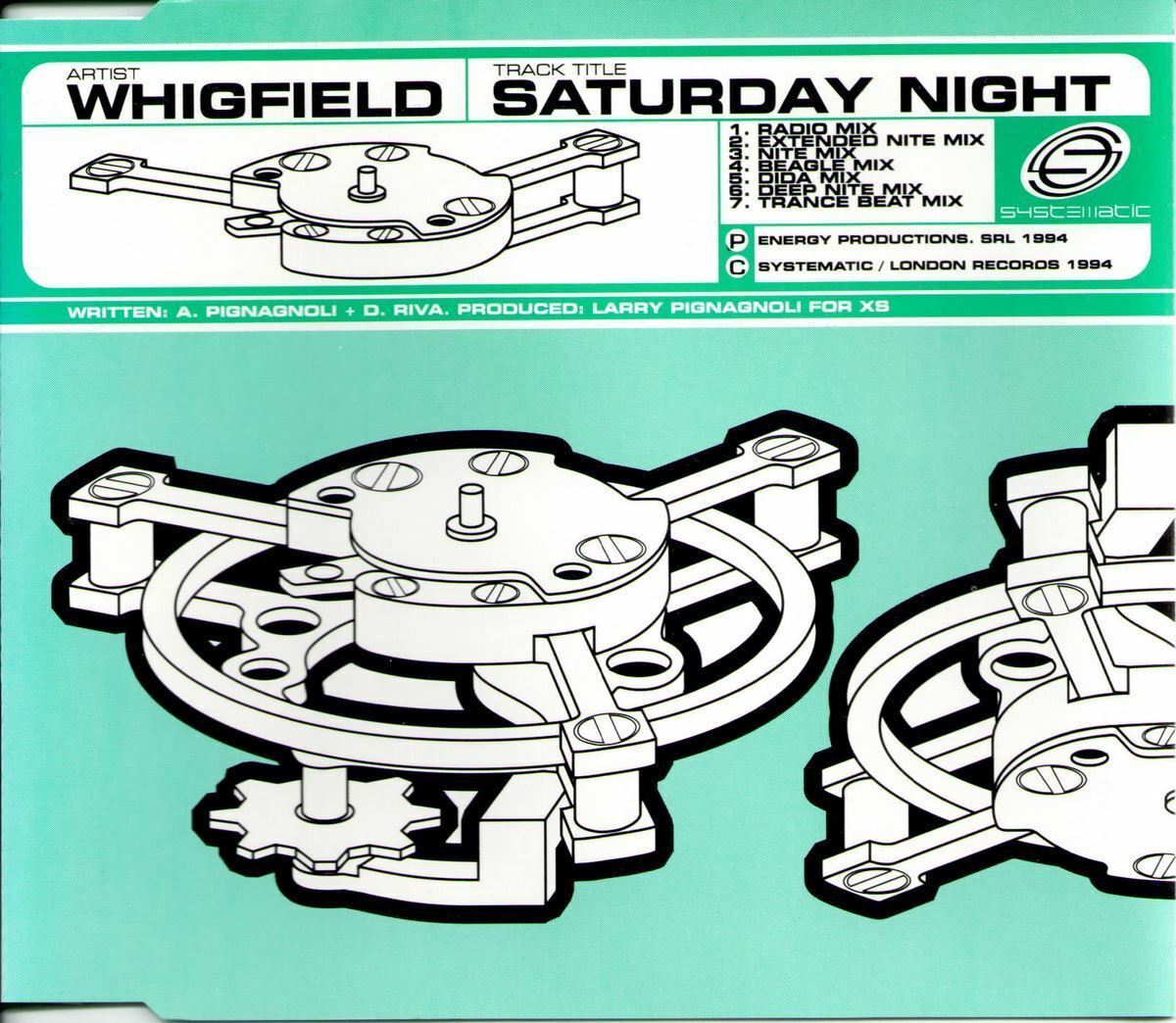
Saturday Night, by Whigfield (her 1st and only #1)
4 weeks, from 11th Sept – 9th Oct 1994
Well, here with the dictionary definition of the phrase ‘careful what you wish for’, is Danish beauty Whigfield, and her ode to the penultimate night of the week. I innocently thought I’d enjoy hearing this tune again, cheese that it is, while assorted memories of primary school discos came flooding back…
But, alas. It’s a bit crap. The first ten seconds are the most interesting. The famous di-di-da-da-da intro and the quacking synths. Here we go, I think, nostalgia central. Except, as ever, nostalgia ain’t what it used to. The remaining four minutes of ‘Saturday Night’ are repetitive and dull. The banal lyrics – Saturday night and I like the way you move… It’s party time and not one minute we can lose… Be my baby… and some la-di-dahs to fill the gaps… – the banal beat, the banal quacking. I notice that as part of the current ‘the nineties were the best decade ever’ movement, there are attempts to cast this as a ‘90s dance classic, up there with ‘Rhythm Is a Dancer’ and ‘Ebeneezer Goode’. But it’s really not.
Not that it’s terrible either. It’s a novelty, but not the most offensive kind. It’s biggest relevance, in chart terms, is in being the ultimate post-summer holiday hit. Presumably played in bars across the continent all summer, it smashed straight in at number one when finally released at the start of September. Oh, and there’s the fact that in entering at #1, Whigfield became the first act to have their debut single do so.
As with Alice Cooper, and Marilyn Manson (two artists to whom I didn’t expect to be drawing a comparison today) people make the mistake of referring to Whigfield as the singer rather than the band (or ‘musical project’ as Wikipedia refers to them). The singer, Sannie Charlotte Carlson, was Danish, and the producers were Italian. Carlson, though, was the very pretty star of the show. I’m sure the video, in which she prances around in a towel, getting ready for a big night out, did the song’s chances no harm. Whigfield would go on to have just two further Top 10 hits, though Carlson continues to record and perform.
I think another reason writing this post didn’t bring about a warm Proustian glow is that my repeated plays of ‘Saturday Night’ have reminded me of the dance routine. Interestingly, Carlson doesn’t do the dance in the video, and the craze seems to have stemmed from her backing dancers when she performed on Top of the Pops. However it started though, it quickly caught on, and the social anxiety that came from the being nine-years-old and the only person in the school who couldn’t do it properly remains to this day (see also: ‘The Macarena’).
Well, I didn’t expect this. To get to May 1994 and come across a number one hit I have genuinely never heard before…
The Real Thing, by Tony Di Bart (his 1st and only #1)
1 week, from 1st – 8th May 1994
This record both is, and isn’t, your average mid-nineties dance tune. It’s a banger, all throbbing synths and a bassline that goes right through you, but it’s main references aren’t techno, or Eurodance. It looks back to the house tunes of the late-eighties – meaning it probably qualifies as retro already – and in the beat and the piano chords it nods even further back, to the days of disco.
It’s a slow-build sort of song. I was about to write it off as bland on first listen, but on my second I heard a hook buried in the melancholy chords, and by the third listen I was intrigued. There’s something there. Despite its retro influences, it feels very modern. If I can’t have you, I don’t want nobody baby… Most dance hits in the mid-nineties were euphoric, in-your-face – the likes of 2 Unlimited and Snap! springing to mind. ‘Dancing through the tears’ is a very 21st century concept, popularised by acts like Robyn, and The Weeknd. The latter of whom I bring up, because Tony Di Bart sounds remarkably like Abel Tesfaye, with his falsetto, and the longing in his voice.
The man known as The Weeknd counting Tony Di Bart as an influence seems unlikely, given that ‘The Real Thing’ was the only Top 20, and one of only two Top 40 hits, Di Bart managed. Neither of which did very much in North America. This single hadn’t done much initially in the UK either, when it was released in November 1993. It took a remix to send it up the charts, and that’s why I haven’t attached a video below: none seems to have been made for the much more atmospheric remix. (Listen to the original version here.)
As Italian as Antonio Carmine Di Bartolomeo AKA Tony Di Bart sounds, he was actually from Slough. His Wikipedia page is sparse, with few details given as to how he went from selling bathrooms to the top of the charts. His post-fame entries make for sad reading: one of his more recent public appearances was at a village fête in Buckinghamshire, before he was arrested and pleaded guilty to assaulting a police officer earlier this year.
Still, assault charges or no assault charges, you can’t take away the fact that Tony Di Bart has a number one single. One that is actually quite good, the more you listen and get lost in its wistful synths. Up next, an equally forgotten one-week wonder…
And now for something a little different… Eurodance meets the Charleston.
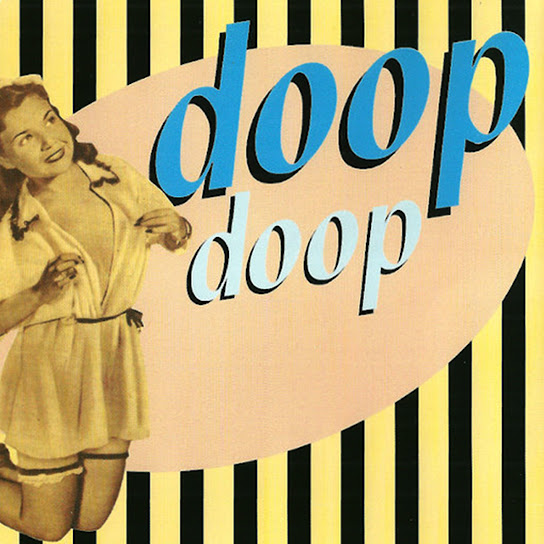
Doop, by Doop (their 1st and only #1)
3 weeks, from 13th March – 3rd April 1994
More impressively, Eurodance meets the Charleston, and the results aren’t a complete disaster. ‘Doop’s merging of wildly disparate musical eras works. It’s fast, catchy, and fun – a novelty for sure, but not too irritating. It works its way right into your brain, thanks to its frenetic pace and puppy dog energy, and stays there…
It’s a completely instrumental track, apart from the doopy-doopy-do-do-doos which give the song its name. It’s the last instrumental number one since… I’m not sure, to be honest, but it’s been a good while. It’s also probably one of the last, as they’ve become rarer and rarer since their heyday in the late fifties-early sixties.
There’s not much to it – a big band sample stretched out over a techno beat. With the aforementioned doops, of course. The most complex thing about this record is how many remixes there were, and working out which one was actually getting airplay at the time. They all have a varying techno-to-Charleston ratio. The ‘Official Video’ on YouTube is the most modern, a dance beat interspersed with trumpet blasts. I prefer the more big band-heavy versions, such as the Sidney Berlin Ragtime Band mix, from the Maxi-CD release, or the Urge-2-Merge radio edit.
The best mixes are also the ones that keep proceedings down to the three-minute mark for, as fun as this tune is, it can get a little repetitive when stretched over seven minutes. Short and sweet is the order of the day here. Doop were, you’ll be shocked to realise, from the Netherlands, the one country that can rival masters Germany for Europop cheese. And let’s be honest, giving your debut single the same name as your band (or vice-versa) suggests that you’re quite happy in aiming for one-hit wonder status.
In fairness, Doop did manage a #88 follow-up hit with ‘Huckleberry Jam’, in which they tried the same trick using an old blues riff, while an earlier incarnation of the group, Hocus Pocus, made #1 in Australia with a song called ‘Here’s Johnny!’ Really though, this is real one-hit wonder stuff: a flash in the pan, bottled lightning moment, and I’m not sure this track has been played on the radio for years.
It was a trend-setter of sorts, though. I can’t think of many dance tracks that sampled pre-rock and roll music before Doop, but I can think of a few that came afterwards, including at least a couple of number ones. Anyway, I like it, as throwaway as it is. The NME disagree, though, naming it among their ‘25 most annoying songs ever’… Which seems rich given some of the crap they’ve championed over the years.
There’s a niche category of number one singles, one I’m going to name ‘much loved chart-toppers that I don’t really get’ (catchy, isn’t it?) Our next #1 belongs to this category…
Things Can Only Get Better, by D:Ream (their 1st and only #1)
4 weeks, from 16th January – 13th February 1994
I don’t dislike ‘Things Can Only Get Better’; I just don’t quite see why people love it. I think the problem is the intro, the overwrought vocals and weighty piano chords gradually building, very slowly getting to the point. Is this a gospel track? A spiritual? No, it’s just a dance tune, and once the synths and the funky bassline come in, and you know where you stand, things improve.
I have a deep suspicion for songs that could be described as ‘motivational’, which is probably where my issues with this tune lie. ‘Motivational’ means ‘uplifting’, and the next step on the ladder from that is ‘spiritual’, or ‘religious’, and I’m someone who believes very strongly in the separation of church and pop. It’s not just this song – there is a strain of thought (or clever marketing) that positions dance music as a sort of religion, with nightclubs as churches, and the Ministry of Sound as some sort of Holy Father… Religious ecstasy taking on a new meaning in this case…
But then I sit down, and properly listen to the lyrics to ‘Things Can Only Get Better’, and wonder if they aren’t to do with accepting who you are, and holding your head up through scorn and insult… Burn the bridges as you’ve gone, I’m too weak to fight you, I’ve got my personal hell to deal with… Maybe it even alludes to those with AIDS (I must learn to live with this disease…), and I’m starting to feel bad for writing this song off as mindless motivational nonsense.
My favourite part of the song is the ending (and I don’t mean that sarcastically) as the entire song deconstructs, the horn riff goes wonky, and the lyrics taper off. I still don’t love it, but I think I’m beginning to appreciate it a little more. I can see it as a musical sibling of Yazz’s ‘The Only Way Is Up’, which is every bit as positive, but doesn’t quite wear its heart on its sleeve like this one.
D:Ream were the brainchild of Peter Cunnah, a Northern Irish singer-songwriter, who sings the vocals on this track. He sounds a bit like George Michael, actually – one moment light and airy, the next hitting a throaty growl. The other members changed fairly regularly, but one of their more famous alumni is the now TV-scientist Brian Cox, who famously played keyboards when the band performed ‘Things…’ on Top of the Pops.
This was their first big hit, but D:Ream had been plugging away for a few years before breaking through. This track had been released a year earlier, making #24, but its popularity in the clubs kept growing, leading to this re-release. In many ways, this is one of the chart-toppers that sum up the mid-to-late nineties: Britpop, Cool Britannia, Noel’s union jack guitar, Geri’s dress, all that razzamatazz. It was used as a campaign song by the great political hope of the age, New Labour, as they swept to victory in the 1997 general election. It all seems like a very long time ago, now…
The intro to our next number one kicks in, and I’m struggling to tell if it sounds like something we’ve already met in our journey through the early 90s, or if it was simply copied into ubiquity in the years that followed…
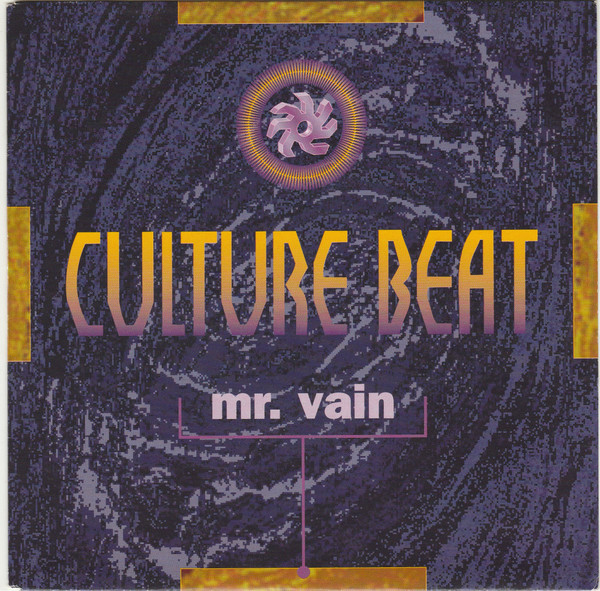
Mr. Vain, by Culture Beat (their 1st and only #1)
4 weeks, from 22nd August – 19th September 1993
On the one hand, ‘Mr. Vain’ is cheesy, throwaway Eurodance – the soundtrack to many a summer holiday in Ibiza (the 1990s is littered with dance hits that made the higher reaches of the charts in early autumn, after everyone had returned home from a fortnight in the Med). On the other, it’s an astute slice of dance-pop so of its time it could be in a museum.
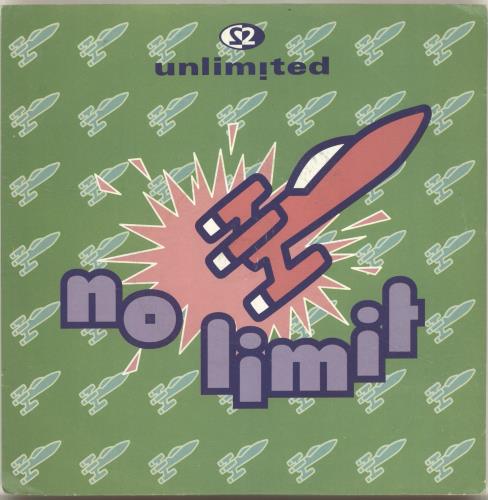
It follows a tried and tested formula: one girl who sings, one boy who raps, over a throbbing beat. It’s amazing how successful this was, over and over again, between 1990 and 1994. Snap!, 2 Unlimited, Culture Beat… ‘Mr. Vain’ is a both a cheap and cheerful rehash of ‘Rhythm Is a Dancer’, especially in the portentous intro, and a slightly less stupid take on ‘No Limit’, with its techno riff and juddering drum machine. It takes what was great about both those records, and creates a streamlined, optimised dance hit – perhaps the epitome of its genre.
Call him Mr Raider, Call him Mr Wrong… Away from the pulsing beat, there are lyrics that just beg to be chanted en masse. I know what I want and I want it now… A decade later, when I started going to nightclubs, this record would still get a regular spin, and girls would pick out their own personal ‘Mr. Vain’ among the strobes and the dry ice. Meanwhile, Mr. Vain responds in the rapped verses: Call me what you like, As long as you call me time and again…
I’m going to take bets on where Culture Beat were from. Place your chips…. There’s no way they were British – the thought didn’t even cross my mind, given that this is dictionary-definition Eurodance. I was tempted to go Dutch, or maybe Belgian… But no. They were a German creation, of course, from a producer with two rent-a-voices, keeping up a grand tradition that stretches all the way back to Boney M. For ‘Mr. Vain’, though, the large-lunged vocals are from a Brit – Tanya Evans – while the rap is supplied by an American – Jay Supreme.
They’d had a couple minor hits previously, but this one sent them into the stratosphere: a number one in eleven countries across Europe, setting them up for a year or so of follow-up Top 10s. In Germany their success lasted the better part of a decade, until a remake of their biggest hit, ‘Mr Vain Recall’, in 2003. Culture Beat remain a going concern, presumably touring festivals across central Europe every summer, with a completely different line-up, Evans and Supreme having left way back in 1997.
Living on My Own, by Freddie Mercury (his 1st and only solo #1)
2 weeks, from 8th – 22nd August 1993
And of the three, this remix of his minor 1985 hit is the tribute that Freddie himself might have enjoyed the most. On the one hand it is a shame that his solitary solo number one isn’t a blistering rocker; but then he was a musician who never let himself be restricted within one genre. ‘Living on My Own’ is updated nicely for the early-mid nineties, with a chilled out house beat, by a production trio called No More Brothers and, although it was still listed on the charts as the 1985 original, it was undoubtedly this remix that sent it to #1.
I say that Freddie would have liked this version and, presumptuous as that might be, if you listen to the original, from his ‘Mr. Bad Guy’ solo album, then it was already much more dance than rock. The lyrics, meanwhile, are very personal: Sometimes I feel I’m gonna break down and cry, Nowhere to go, Nothing to do with my time… I get lonely… They’re based heavily on quotations from Greta Garbo (which feels very Freddie Mercury…) and each chorus ends on the positive mantra: Got to be some good times ahead… Though knowing how soon it all would end, that line is tinged with sadness.
I will also give a shoutout to an earlier remix – which I initially thought was the chart-topping version – by Julian Raymond. This is my favourite of the three versions, with a faster, industrial beat, more of Mercury’s trademark yodelling, alongside a frenetic piano line. It was commissioned as part of the ‘Freddie Mercury Album’, released in November 1992 to mark the 1st anniversary of his death, but never released as a single.
The video to the 1993 version of ‘Living on My Own’ was the same as the 1985 one, and featured footage of a Drag Ball held for Mercury’s 39th birthday party. I love this quote: “Because of the garishly costumed homosexuals and transvestites celebrating a decadent, raucous party in the video clip, the BBC long refused to broadcast the music video on its channels.” Good old Beeb, always ready to ban those garish homosexuals…
I hadn’t realised quite how well Freddie Mercury’s solo career – while nothing compared to Queen’s discography – had been ticking along since the mid-80s, when he made the Top 10 with ‘Love Kills’. The ‘Living on My Own’ remix was his seventh, and final, Top 20 hit, and a huge smash across Europe. (Especially in France, where it did a Bryan Adams and stayed at #1 for fifteen weeks! Bryan or Freddie… I know who I’d rather have clogging up the number one spot…)
With this we can finally bid farewell to Freddie Mercury. Three number one singles in his lifetime, two after his death, and one well-intentioned tribute in-between. For my money, he is the greatest frontman of all time. Not only could he rock with the very best; he could do opera, musical theatre, pop, disco, camp ditties about girls with fat bottoms… And he sounds just as at home here, on a house track released two years after his death, as he does anywhere.
For the twenty-third time, no less. This recap spans well over two years, from March 1991 to June 1993, which I think – without going back through all the previous twenty-two – might be a record. At least since the mid-fifties, when songs having double-digit runs at the top of the charts was the norm.
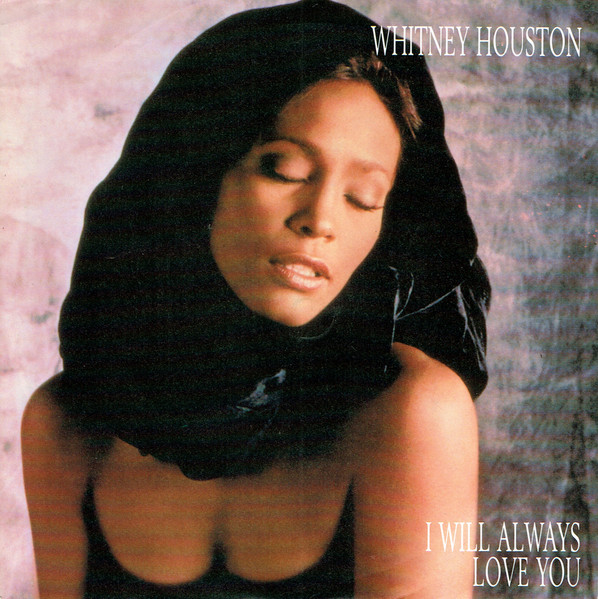
And the reason why we’ve taken so long to cover the last thirty #1s? It would be tempting to lay the blame at the feet of Bryan Adams, for his still record-holding sixteen-week consecutive run with ‘(Everything I Do) I Do It for You’, and Whitney Houston for her ten-week stint with ‘I Will Always Love You’. But we’ve also had an eight-weeker from Shakespear’s Sister, a six-weeker from Snap!, and six separate five-weekers. In a previous post, I went into some of the reasons behind this: a decline in vinyl sales not yet being covered by growing CD sales, resulting in sluggish charts. Give it a few years though, and all this will be behind us, with sales at an all-time high.
It might also have had something to do with the lack of a dominant ‘sound’ in the early nineties. Sales tend to peak with hot new genres – Merseybeat, glam, disco, new wave – and trough during the years in between. We’re currently between the house, dance and SAW of the late ‘80s and the Britpop years, and this is best indicated by the likes of Adams and Houston’s monster hits. Both were from blockbuster movies, and they were far from the only two. In fact, if we had to pick a dominant genre from the early ‘90s, it would be the movie soundtrack hit.
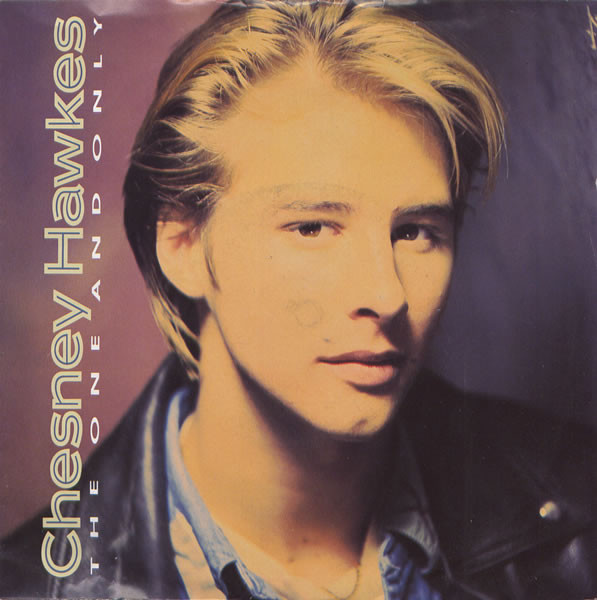
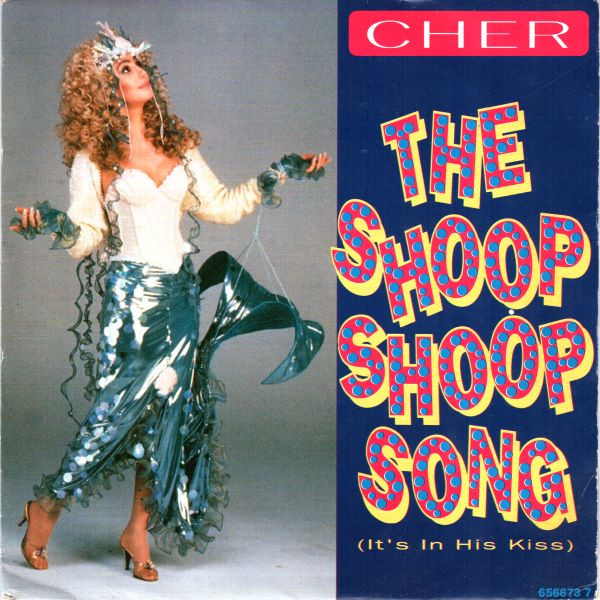
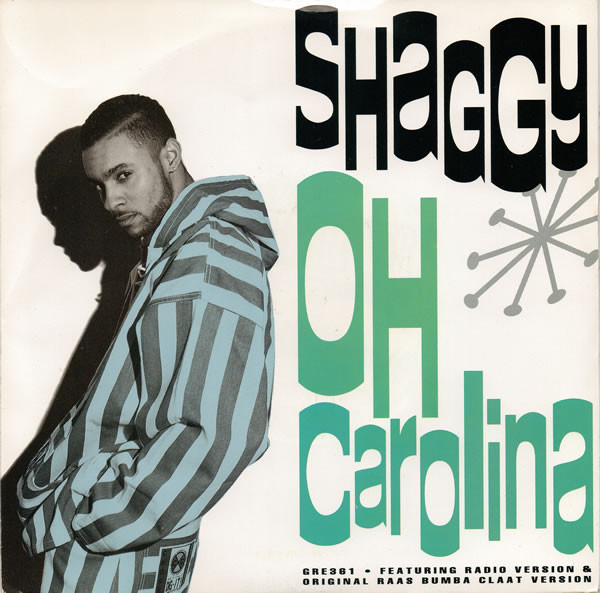
I count seven movie soundtrack #1s in this period, spanning all manner of genres: Chesney Hawkes (pop-rock), Cher (retro pop), Color Me Bad (boyband R&B), Adams and Houston (power ballads), Shaggy (reggae), and UB40 (reggae-lite), plus a bit of musical theatre from Jason Donovan. Some have been good, some have been okay, some I would happily never hear again.
If we had a runner-up in the ‘sounds of the early nineties’ category, then it would have to be the random re-release. They’ve been popping up since Jackie Wilson scored 1986’s Christmas number one, and they’ve usually – though not always – been TV advert tie-ins. The most recent two gave us a couple of pretty unique chart-toppers: The Clash’s ‘Should I Stay or Should I Go’, and The Bluebells’ ‘Young at Heart’, thanks to Levi’s and VW respectively. But these, sadly, mark the end of the re-release phenomenon (for now…)
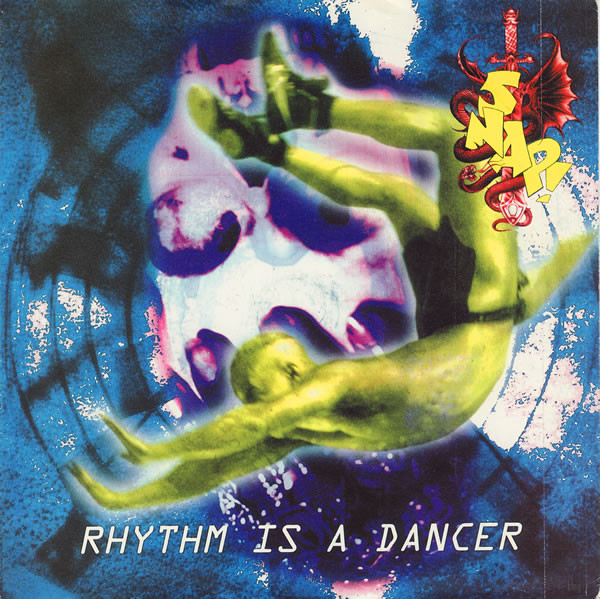
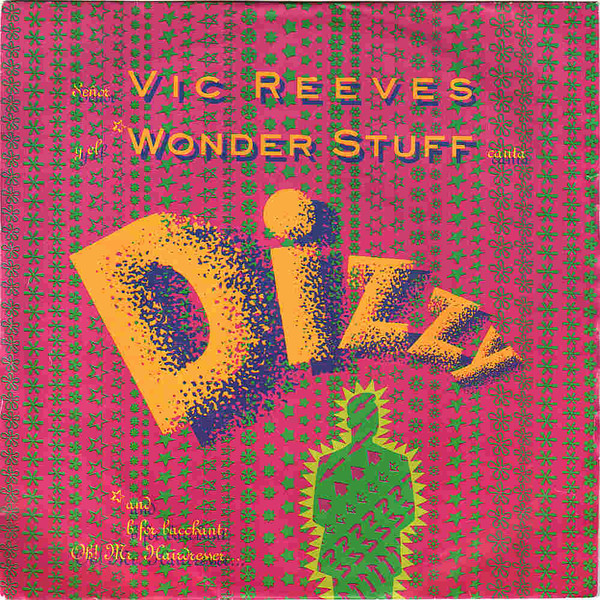
Before hitting the awards portion of this post, let’s go through some of the other stories from the past thirty chart-toppers. And it’s starting to feel like the ‘nineties’ as I remember it, with dance music continuing to shapeshift from its sample-heavy origins, into streamlined pop smashes like ‘Rhythm Is a Dancer’, and techno bangers such as ‘No Limit’ (not to mention the soon to be everywhere, half-hearted dance remakes of oldies a laKWS). There’s also been a whiff of Britpop in the unlikely shape of Vic Reeves and The Wonder Stuff.
We’ve bid farewell to Freddie Mercury, twice; with the posthumous ‘These Are the Days of Our Lives’ (paired with ‘Bohemian Rhapsody’) in the wake of his death, and the ‘Five Live E.P.’ on which Queen performed a live version of that hit, and of ‘Somebody to Love’, with Lisa Stansfield and George Michael. The other two tracks on that EP were Michael solo tracks which, along with his earlier live duet with Elton John on ‘Don’t Let the Sun Go Down on Me’, have helped confirm him as the biggest British solo star of the era.
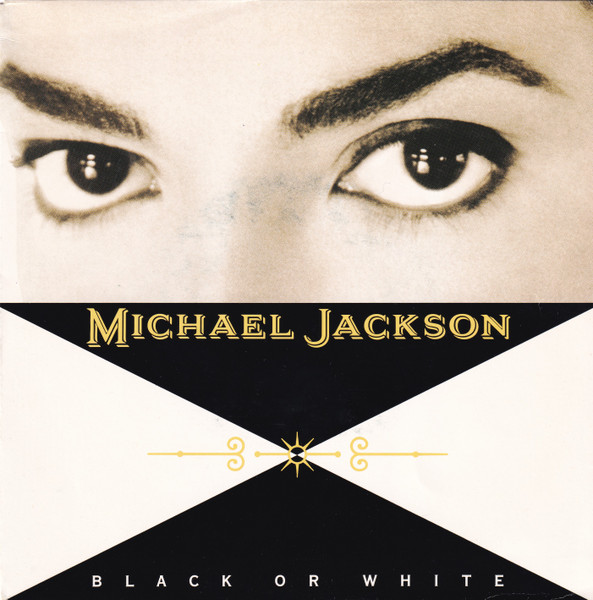
We’ve also started to ride the crest of another reggae wave. (In fact, the three #1s from Shaggy, Ace of Base and UB40 towards the end of this thirty set the charts up nicely for probably their most prolonged run of reggae hits.) Elsewhere, Michael Jackson premiered the biggest music video ever, in his usual understated way, and the evergreen Cher set a record for the longest gap between number one singles. Plus, we can’t finish without mentioning Erasure, who scored a chart-topper after years of trying, and kickstarted the modern ABBA-nnaisance.
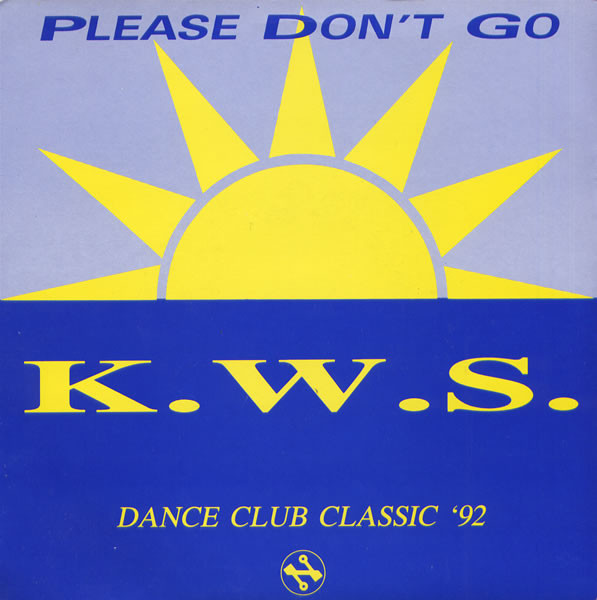
To the awards then. Starting, as is traditional, with the The ‘Meh’ Award for bland forgettability. I briefly considered Jason Donovan’s ‘Any Dream Will Do’, but that soundtrack was the first CD I ever owned, and residual fondness prevents me. There was also UB40’s pedestrian cover of ‘Can’t Help Falling in Love’, but I’ve already awarded them a ‘Meh’ award, and to do so twice would be cruel. So we’re left with Wet Wet Wet’s ‘Goodnight Girl’, which does have a good chorus, Tasmin Archer’s ‘Sleeping Satellite’, with a vocal performance which doesn’t really deserve such an award, and KWS’s bland dance double ‘Please Don’t Go’ / ‘Game Boy’. The KC & the Sunshine Band cover was dull, and the hardcore ‘Game Boy’ was ear-catching for a minute before it become repetitive. They win.
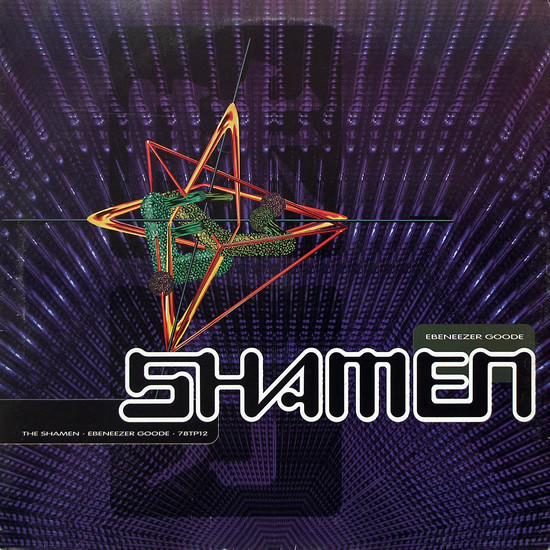
We don’t have quite as rich a set of pickings for The WTAF Awardfor being interesting if nothing else as we did in the last recap, but it’s still a strong field. You could give it to ‘Stay’, for the video alone. Or Right Said Fred for their jaunty, non-‘Sexy’, ‘Deeply Dippy’. Or maybe Hale and Pace’s char-com danceathon ‘The Stonk’ (though I perhaps have bigger things planned for that record…) No, I’m giving this WTAF award to The Shamen, for bringing rave culture and quality innuendo to the top of the charts, with the leering, gurning ‘Ebeneezer Goode’.
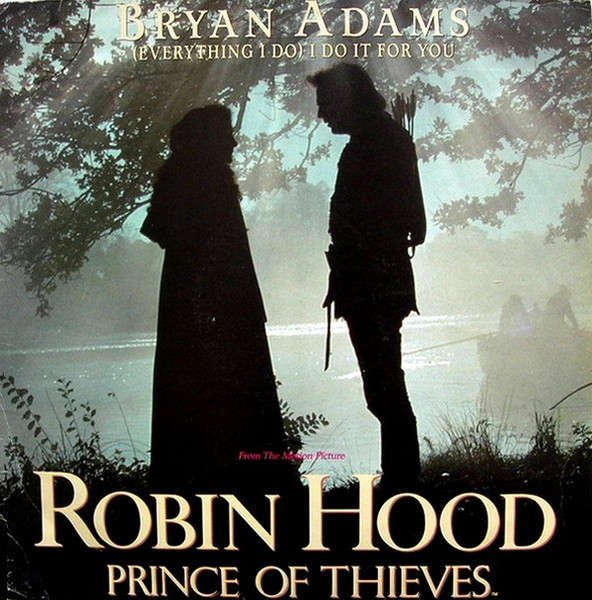
Where to go with this recap’s Very Worst Chart-Topper award, then. Do we give it to Color Me Badd and their lame attempts to woo us with ‘I Wanna Sex You Up’? Or do we give it to ‘The Stonk’ – a ‘comedy’ record so aggressively unfunny that it was almost sad…? Do we give it to either of the gruesome twosome who clogged the top of the charts up for over half a year between them…? To be honest, yes, let’s. I just can’t get past the elephant in the room – a record that stayed at #1 so long it started to stink like a beached whale-carcass, ticking every bad power-balled cliché on the list. Bryan Adams wins.
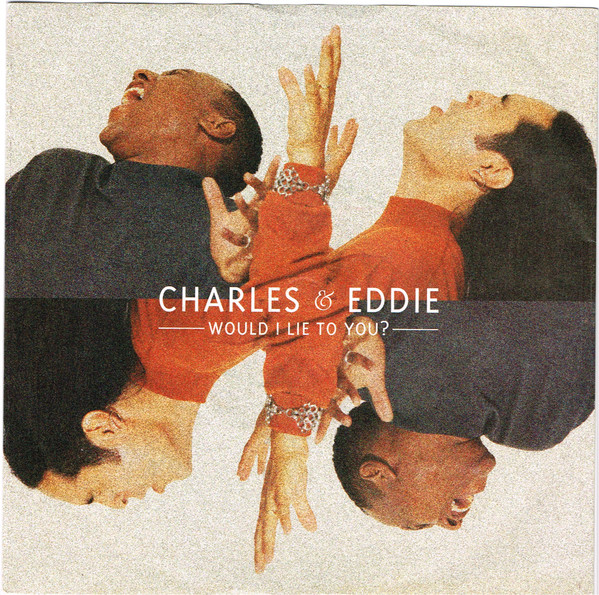
Finally, of course, the 23rdVery Best Chart-Topper award. I’ve been pleasantly surprised by the general quality of our recent number ones, but I’m struggling to pick an all-time classic. I’m tempted to give it to 2 Unlimited, for their very-1993 techno banger. It’s big, it’s dumb, it’s a whole lot of fun. But I couldn’t live with myself if I did, not really. Instead, I’m awarding it to Charles & Eddie, for the least nineties-sounding song of the entire thirty. It’s a slice of timeless soul, the quality of which surprised me when I listened to it for the first time in years. Check it out again below, if you haven’t. Unlike the two chaps in question, I wouldn’t lie to you…
Let’s recap the recaps:
The ‘Meh’ Award for Forgettability
‘Hold My Hand’, by Don Cornell.
‘It’s Almost Tomorrow’, by The Dream Weavers.
‘On the Street Where You Live’, by Vic Damone.
‘Why’, by Anthony Newley.
‘The Next Time’ / ‘Bachelor Boy’, by Cliff Richard & The Shadows.
‘Juliet’, by The Four Pennies.
‘The Carnival Is Over’, by The Seekers.
‘Silence Is Golden’, by The Tremeloes.
‘I Pretend’, by Des O’Connor.
‘Woodstock’, by Matthews’ Southern Comfort.
‘How Can I Be Sure’, by David Cassidy.
‘Annie’s Song’, by John Denver.
‘I Only Have Eyes For You’, by Art Garfunkel.
‘I Don’t Want to Talk About It’ / ‘The First Cut Is the Deepest’, by Rod Stewart.
‘Three Times a Lady’, by The Commodores.
‘What’s Another Year’, by Johnny Logan.
‘A Little Peace’, by Nicole.
‘Every Breath You Take’, by The Police.
‘I Got You Babe’, by UB40 with Chrissie Hynde.
‘Who’s That Girl’, by Madonna.
‘A Groovy Kind of Love’, by Phil Collins.
‘Do They Know It’s Christmas?’, by Band Aid II.
‘Please Don’t Go’ / ‘Game Boy’, by KWS.
The WTAF Award for being interesting if nothing else
‘I See the Moon’, by The Stargazers.
‘Lay Down Your Arms’, by Anne Shelton.
‘Hoots Mon’, by Lord Rockingham’s XI.
‘You’re Driving Me Crazy’, by The Temperance Seven.
‘Nut Rocker’, by B. Bumble & The Stingers.
‘You’ll Never Walk Alone’, by Gerry & The Pacemakers.
‘Little Red Rooster’, by The Rolling Stones.
‘Puppet on a String’, by Sandie Shaw.
‘Fire’, by The Crazy World of Arthur Brown.
‘In the Year 2525 (Exordium and Terminus)’, by Zager & Evans.
‘Amazing Grace’, The Pipes & Drums & Military Band of the Royal Scots Dragoon Guard.
‘Kung Fu Fighting’, by Carl Douglas.
‘If’, by Telly Savalas.
‘Wuthering Heights’, by Kate Bush.
‘Hit Me With Your Rhythm Stick’, by Ian Dury & The Blockheads.
‘Shaddap You Face’, by Joe Dolce Music Theatre.
‘It’s My Party’, by Dave Stewart & Barbara Gaskin.
‘Save Your Love’ by Renée & Renato.
‘Rock Me Amadeus’, by Falco.
‘Pump Up the Volume’ / ‘Anitina (The First Time I See She Dance)’, by M/A/R/R/S.
‘Doctorin’ the Tardis’, by The Timelords.
‘Sadeness Part 1’, by Enigma.
‘Ebeneezer Goode’, by The Shamen.
The Very Worst Chart-Toppers
‘Cara Mia’, by David Whitfield with Mantovani & His Orchestra.
‘The Man From Laramie’, by Jimmy Young.
‘Roulette’, by Russ Conway.
‘Wooden Heart’, by Elvis Presley.
‘Lovesick Blues’, by Frank Ifield.
‘Diane’, by The Bachelors.
‘The Minute You’re Gone’, by Cliff Richard.
‘Release Me’, by Engelbert Humperdinck.
‘Lily the Pink’, by The Scaffold.
‘All Kinds of Everything’, by Dana.
‘The Twelfth of Never’, by Donny Osmond.
‘The Streak’, by Ray Stevens.
‘No Charge’, by J. J. Barrie
‘Don’t Give Up On Us’, by David Soul
‘One Day at a Time’, by Lena Martell.
‘There’s No One Quite Like Grandma’, by St. Winifred’s School Choir.
‘I’ve Never Been to Me’, by Charlene.
‘Hello’, by Lionel Richie.
‘I Want to Know What Love Is’, by Foreigner.
‘Star Trekkin’’, by The Firm.
‘Nothing’s Gonna Change My Love for You’, by Glenn Medeiros.
‘Let’s Party’, by Jive Bunny & The Mastermixers.
‘(Everything I Do) I Do It for You’, by Bryan Adams.
The Very Best Chart-Toppers
‘Such a Night’, by Johnnie Ray.
‘Cherry Pink and Apple Blossom White’, by Perez ‘Prez’ Prado & His Orchestra.
‘Great Balls of Fire’, by Jerry Lee Lewis.
‘Cathy’s Clown’, by The Everly Brothers.
‘Telstar’, by The Tornadoes.
‘She Loves You’ by The Beatles.
‘(I Can’t Get No) Satisfaction’, by The Rolling Stones.
‘A Whiter Shade of Pale’, by Procol Harum.
‘I Heard It Through the Grapevine’, by Marvin Gaye.
‘Baby Jump’, by Mungo Jerry.
‘Metal Guru’, by T. Rex.
‘Tiger Feet’, by Mud.
‘Space Oddity’, by David Bowie.
‘I Feel Love’, by Donna Summer.
‘Heart of Glass’, by Blondie.
‘The Winner Takes It All’, by ABBA.
‘My Camera Never Lies’, by Bucks Fizz.
‘Relax’ by Frankie Goes to Hollywood.
‘You Spin Me Round (Like a Record)’, by Dead or Alive
Enter Sweden’s 3rd biggest-selling pop act… (Answers for 2nd place on a postcard… I’ll reveal it at the end of the post!)
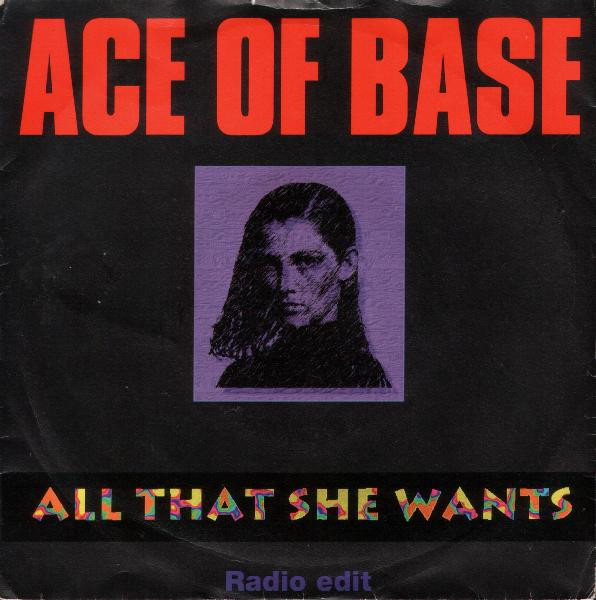
All That She Wants, by Ace of Base (their 1st and only #1)
3 weeks, from 16th May – 6th June 1993
And in the grand Swedish tradition, it’s a male-female combo – two men, two women (though as far I can tell no marriages) – Ace of Base. With what I’ve always thought to be a deeply strange pop song.
There’s the sparse, ghostly intro, for example. And all the empty spaces in the song, where it’s just nothing more than a drum machine and a lumbering synth riff, and the low-key ending. It’s not your normal pop smash, even if it has more than a hint of dub-reggae – soon to be one of the dominant chart sounds – in the steady, hypnotic beat. And that’s before we dissect the lyrics…
All that she wants, Is another baby, She’s gone tomorrow boy… They tell the tale of a femme fatale, who prowls an unnamed beach looking for men… She’s the hunter, You’re the fox… And in that respect it’s great. Girl power! Fifteen years ago Brotherhood of Man told the story of a holiday resort lothario in ‘Figaro’, but Ace of Base flip it on its head. If it were sung by men it might be a bit cliched, but no. Go girls!
The problem I have with the lyrics is the fact that, as a kid, I took them literally. All that she wants, Is another baby… I thought she was wandering the beach looking for a man to get her pregnant. Which is weird, and I apologise; but having done some research I find I’m not alone. “As far as I can remember, ‘All That She Wants’ by Ace of Base is the only hit single ever to talk about a lady who uses men for stud service so that she can become an unwed mother,” said LA Weekly at the time. I like to think Ace of Base knew what they were doing, keeping the lyrics intentionally vague and menacing. Either way, I feel seen.
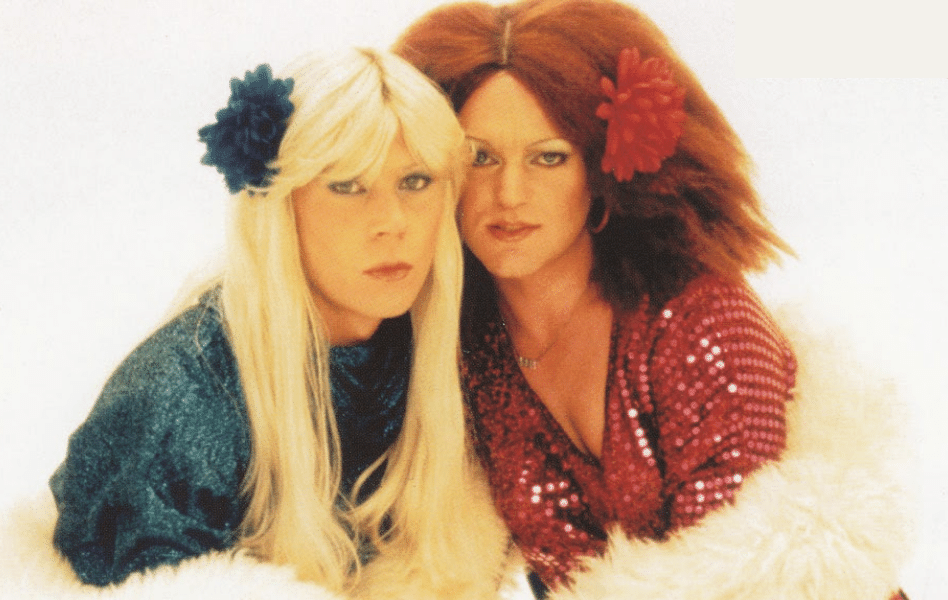
‘All That She Wants’ is definitely a grower. Even now, on my fourth or fifth listen, I’m remembering why it is such a good pop tune. I’m not sure what the hooks are – or perhaps it’s because there are so many it’s hard to pinpoint them – but it worms its way in and stays there. Just like Sweden’s biggest pop group, the one it’s impossible not to compare Ace of Base to… It’s not out of the question to imagine that, had ABBA been around in 1993, they might have been making records like this. And, like Agnetha and Frida, the girls here have similarly accented, idiosyncratic, but still very alluring, English.
This was only Ace of Base’s second chart hit, and what a hit. A number one across Europe, presumably unavoidable at beach bars from Faro to Faliraki in the summer of ’93, and a #2 in the US. It set them up for a run of Top 10s through the 1990s, including US #1 ‘The Sign’ and a cover of ‘Don’t Turn Around’, which Aswad had taken to the top in 1988. But permit me to give a shout out to my favourite Ace of Base tune, ‘Always Have, Always Will’, which takes everything you love about ABBA, Motown, sixties girl groups, and serves it up in pop perfection. Its #12 peak be damned!
This would be their only visit to the top of the charts, but they remain Sweden’s 3rd most successful act. ABBA are obviously the 1st, but what of the runners-up…? Well, it’s Roxette (another male-female act!), who never made it higher than #3 in the UK. Personally I’d have named garage rock loons The Hives as my second favourite Swedish act, but they’ve never come close to troubling the top of the charts.











 The UK Number Ones Blog