760. ‘Discothèque’, by U2

We come to the last of five one-week number ones, the end of a run of interesting short-stays at the top of the charts. And is this the most interesting?

Discothèque, by U2 (their 3rd of seven #1s)

1 week, from 9th – 16th February 1997

U2 do dance. Or at least, U2 incorporate dance beats, loops and lots of effects into a rock song. Sadly, the title is misleading – there’s no disco to be found here. Bono doing his best Gloria Gaynor is sadly still a pipe-dream, though at various points he does attempt a falsetto to rival the Bee Gees.

No, the ‘dance’ element is firmly nineties-dance – house beats with a techno-ish edge. But underpinning it all is a pretty cool guitar riff, which is fed through different layers of feedback as the song winds on. It is at times crunchy, chiming and, in its best incarnation, gloriously scuzzy. It means that for all Bono’s theatrics, ‘Discothèque’ is actually the Edge’s show, especially when you see his handlebar moustache in the video…

But more on that in a sec. As soon as this single was played on the radio, rock snobs may well have clutched their pearls in horror at what U2 had become. Dance beats! In a rock song! And remixes… by DJs! Pass the smelling salts… But the Prodigy and the Chemical Brothers, even Babylon Zoo, have been pushing this sound for months already, to great success. If anything the critics could have accused U2 of bandwagon jumping. But who cares if it’s not that original – it’s a fun tune. A banger that is sadly forgotten among some of U2’s bigger, more po-faced, hits.

Plus, anyone complaining about this hadn’t been listening to U2 for the better part of a decade. Large swathes of ‘Achtung Baby’ and ‘Zooropa’ had incorporated non-rock influences. Their last #1, ‘The Fly’ was well over five years earlier, but you can hear the roots of ‘Discotheque’ in it, and for most of the 1990s they had been flirting with some avant-garde stuff. So, no, this cannot claim to be the quirkiest of our recent chart-toppers – that accolade remains with White Town. Finally, what confirms this as a good song is that the band look like they’re having great fun in the video, prancing around inside a disco ball, and dressing up as The Village People.

In my posts on U2’s previous number ones, ‘The Fly’ and ‘Desire’, I may have referred to them not being my favourite band, and Bono not being my favourite frontman. But actually, their first three chart-toppers are all very good, and very different. I might even name ‘Discothèque’ as my favourite of all their #1s, if I didn’t know one of the harder-rocking ones to come. It’s definitely better than their next chart-topper, which is U2 by numbers. In fact, this, and the ‘Pop’ album, were probably the last really experimental thing that the band did. For their next LP, in 2000, they went back to the stadium rock anthems that their fanbase loves, but that always leave me a little cold.

756. ‘Professional Widow (It’s Got to Be Big)’, by Tori Amos

1997, then. The late ’90s! And we get off to a banging start…

Professional Widow (It’s Got to Be Big), by Tori Amos (her 1st and only #1)

1 week, from 12th – 19th January 1997

‘Professional Widow’ was a track from singer-songwriter Tori Amos’s third studio album, ‘Boys for Pele’, which had made #2 exactly a year before this. It had been released as the album’s third single, making #20. It’s a woozy, rude, barroom stomper of a song, driven by a harpsichord, and Amos’s Kate Bush like vocals. It’s ear-catching, but it does nothing to prepare you for the remix that would eventually top the chart.

The word ‘remix’ doesn’t feel sufficient here. A remix is a song rearranged, extended, or stretched out over a new beat. This is a song completely reimagined, huge chunks chopped off it, with very little of the original remaining. One line is repeated over and over: Honey bring it close to my lips… while the other line – It’s gotta be big – must be somewhere in the original, even if I can’t quite hear it.

It’s amazing how Armand Van Helden, the DJ responsible, could hear the opening harpsichord riff and reimagine it as a modern disco bassline. Some remixes are fairly lazy, with few changes of any note; but not this. It almost samples the original, the riff and the two lines, and creates a completely different song. Van Helden is American, and the track is more house-influenced than our recent dance #1s, but there’s hints of the Prodigy and the Chemical Brothers in the big chunky beats, in the creepy background noises, and the sudden break halfway through.

The ‘Professional Widow’ of the title is apparently a snide reference to Courtney Love, something that Amos has neither confirmed nor outright denied. She had nothing to do with the remix – she was contractually obliged to approve them – but in interviews she has said she enjoys Van Helden’s version. It brought about the biggest hit of her long career, anyway – surpassing the #4 peak of the folksy ‘Cornflake Girl’ from 1994 – and is, to date, Amos’s last visit to the UK Top 10. Armand Van Helden was just getting started, and will go on to be one of the biggest dance producers of all time. He’ll be back at number one, fully credited, fairly soon.

We can’t finish without mentioning the misheard lyric – one of pop’s filthiest mondegreens – where It’s gotta be big becomes… Well, I won’t write it out. Safe to say, once you hear it you can’t unhear it. Misheard or not, it does fit in fairly well with the bawdy original.

You could say that this is a classic January #1 – a fairly random remix sneaking a week at the top in the post-Christmas lull. In fact, January 1997 is one of the best examples the phenomenon, with a run of fun and quirky one-weekers coming up that I’m looking forward to getting into.

751. ‘Breathe’, by The Prodigy

Post-recap, we delve into the next thirty. And it’s a very strong start to the next bunch: more headbanging nastiness from The Prodigy.

Breathe, by The Prodigy (their 2nd and final #1)

2 weeks, from 17th November – 1st December 1996

Is ‘Breathe’ better than ‘Firestarter’? Or is it just more of the same thing? Not that more of the same thing, when the thing in question is ‘Firestarter’, is a bad thing, but still… It’s definitely built around the same foundations: a Drum and Bass beat, a heavy riff, a distinctive sample (that sounds to me like someone throwing nunchuks around), and some pretty aggressive lyrics.

Come play my game… growls Keith Flint, like the villain in a particularly twisted fairy-tale. Inhale, Inhale, You’re the victim! responds rapper Maxim, who also gets the song’s best line: Psychosomatic! Addict! Insane! As with ‘Firestarter’, the lyrics are kept to a minimum, but it seems to be a panic attack set to some Big Beats. The video, featuring lots of creepy-crawlies, darkened rooms, and crazed gurning through holes in walls, certainly emphasises this.

I’d say that if it does pale in comparison with the Prodigy’s previous single, it’s because it lacks the shock factor. Would ‘Breathe’ have been the one that got the tabloids in a tizz, and be better remembered today, if it had come first? Or is it a shadow number-one, that wouldn’t have made it without the controversial predecessor? It’s certainly even heavier than ‘Firestarter’, and less commercial sounding, meaning that it really stands out as one of the angriest, most brutal chart-toppers the UK has ever had.

Again, the song was built around a couple of eclectic samples: a drum fill from Thin Lizzy, and ‘whiplash swords’ (AKA the nunchuks) from the Wu-Tang Clan. It was the 2nd single from the massive ‘Fat of the Land’ album, but it gets overshadowed by the songs released either side of it. Following this came the still-controversial ‘Smack My Bitch Up’, which some say glorified drug use and domestic violence.

But if ‘Breathe’ is overshadowed, then it’s to the song’s benefit. It remains fairly fresh, and still packs a big old punch through your headphones. And whether or not it is better or worse than ‘Firestarter’ is beside the point, really. I’m just glad the Prodigy have been around to add some nasty, punk energy to the top of the charts for 1996.

After this the band took a break for several years, before releasing their fourth album in 2004. They have been putting out new music fairly regularly ever since, though the only consistent member has been founder Keith Howlett, and they scored their most recent Top 10 hit in 2009. Keith Flint, who had struggled with depression and addiction over the years, was tragically found to have hanged himself in 2019.

739. ‘Ooh Aah… Just a Little Bit’, by Gina G

One day I’ll do a feature on the #1 singles with the best intros – the likes of ‘Satisfaction’, and ‘I Heard It Through the Grapevine’. It’ll be a great blog post, attracting widespread acclaim… Except for one problem. I’ll feel duty bound to include ‘Ooh Aah… Just a Little Bit’.

Ooh Aah… Just a Little Bit, by Gina G (her 1st and only #1)

1 week, from 19th – 26th May 1996

You see, few intros hold more nostalgic power for me. Within two of these tinny notes – this synthesised siren demanding you report immediately to the dancefloor – I am ten years old again, at a primary school disco, among the flashing lights, and the dry ice that always smelled a bit like pee, high on Fanta and prawn cocktail Skips.

Yes, this is cheesy crap. But it is also magnificent. It is the final part of a holy trinity of Eurovision anthems – this, ‘Waterloo’, and ‘Making Your Mind Up’ – and the fact that it only finished in 8th place is truly shocking. It’s very camp – as any song with ‘Ooh Aah…’ in the title must be – and yet flirts with almost being cool. Lines like Every night makes me hate the days… and the way that the drum machine and the synths reach near-techno levels, for example.

You could be smart, and claim that this is ‘post-rave’ or something, but actually trying to give this record a clever label would be doing it a disservice. Something this gloriously tacky doesn’t need clever labels. In a nutshell, ‘Ooh Aah… Just a Little Bit’ sounds like Stock, Aitken and Waterman back in their chart-topping heyday, but only if the lads had just popped some Ecstasy and downed five bottles of Hooch.

Although she represented the UK at the Eurovision Song Contest in 1996, Gina Gardiner was Australian, from Brisbane. She had genuine dance music credentials, having been a DJ since the early ‘90s, and a member of the group Bass Culture. Post-Eurovision, ‘Ooh Aah…’ was a hit around Europe, and even made #12 in the US. It led to two further #6 hits for Gina, who released her last single in 2011, and hasn’t been active since. She apparently has her own record label, and lives in LA with her husband. I hope she’s happy, and would like her to know that her biggest hit still elicits an almost Pavlovian response from this man in his late-thirties…

Interestingly, Gina G’s is the first female voice to feature on a UK number one since Janice Robinson belted out her vocals on Livin’ Joy’s ‘Dreamer’, and the first woman to be credited on a UK chart-topper since Cher, Chrissie Hynde and Neneh Cherry well over a year ago. 1995 was very male heavy – and the worst year for number ones in quite a while. The remainder of 1996 promises more female voices, and thankfully much more enjoyable #1s.

738. ‘Fastlove’, by George Michael

George Michael bows out from chart-topping duty, after eleven #1s – both solo and with Wham! – in just under twelve years. And dare we say he bows out with his best…?

Fastlove, by George Michael (his 7th and final solo #1)

3 weeks, from 28th April – 19th May 1996

I doubt many other people would name ‘Fastlove’ as Michael’s best chart-topper, but it’s my favourite. As worthy, and lyrically beautiful, as ‘Jesus to a Child’ was; I’m glad that he wraps up with this banger. Gotta get up to get down… And if his number one from earlier in the year was an ode to a lost love, then this is an ode to getting over a lost love. An ode to anonymous and fleeting satisfaction, as Cher once memorably put it.

I ain’t mister right, But if you’re looking for fast love… he purrs, over a funky bassline and some contemporary disco beats. All that bullshit conversation, Baby can’t you read the signs… I also love the line about all his friends having babies, while he’s just wanting to have fun, which is something every gay man in their thirties can relate to. In the background we can hear ‘interpolated’ – as we must always refer to sampling from hereon in – the hook from 1982 hit ‘Forget Me Nots’ by Patrice Rushen (which Will Smith will soon ‘interpolate’ even more blatantly).

I called this a ‘banger’, but it’s actually quite smooth and slinky. The melody and the groove wrap themselves around you like a particularly sexy snake, and don’t let go. There are still some of the over-indulgences that, for me, always mark George Michael’s work down a notch: the muzaky saxophones, and the fact that it goes on for over five minutes. A three-minute quicky would have been more appropriate here, especially given the subject matter. But the funky break in the middle is a thing of beauty.

Like all great pop songs, though, there is more going on under the surface. The lyrics aren’t just celebratory, they reveal a pain behind all the sex. George needs affirmation, needs someone to ease his mind. In the absence of security, I made my way into the night… Which sounds quite dark, until a few lines later he proposes a quick shag in his BMW. But there’s enough here to suggest that his need for ‘fastlove’ isn’t an entirely healthy thing, and may be linked to the loss in ‘Jesus to a Child’. The most telling line is surely I miss my baby… It’s admirable that he made a very catchy pop song out of such personal issues.

Post-‘Fastlove’, George Michael would remain a fairly regular presence in the UK charts, including four more #2s. One of which is the truly glorious, and definitely worthy of the term ‘banger’, ‘Outside’ – a brilliant middle-finger to all the fuss over his sexuality. He died in 2016, aged just fifty-three, and took his place in the highest-echelons of dead pop superstars. I have my opinions on his current standing among the greats, but it seems churlish to drone on about them here.

And, of course, he isn’t actually done with chart-topping, as the streaming era has given ‘Last Christmas’ – for years the highest-selling #2 hit of all time – a new lease of life. But that’s something that we’ll get to, again, and again, and again, in due course…

736. ‘Firestarter’, by The Prodigy

Right in the middle of the Britpop years, we finally get a proper punk number one!

Firestarter, by The Prodigy (their 1st of two #1s)

3 weeks, from 24th March – 14th April 1996

Obviously ‘Firestarter’ is not musically ‘punk’ – more techno-metal – but everything else is pretty on point. The aggression, the repetitive, nuclear siren riff, the nastiness of the lyrics: I’m the bitch you hated, Filth infatuated, Yeah…

Within the song’s opening ten seconds, it is already one of the grittiest sounding number one singles we’ve heard. Everything about it seems designed to put you on edge, to make your hairs stand on end – the harsh drums and bass, the abrasive riff, the metal on metal grinding rhythm. It’s not often a song this raw, this unapologetically hardcore, crosses over into huge mainstream success.

I was ten when this came out, but I remember it feeling and sounding dangerous. I’m the Firestarter, Twisted Firestarter… I’m pretty sure it made the evening news, amid fears around the arson-promoting lyrics and Keith Flint’s performance in the video, in which he flings himself about an abandoned tunnel, covered in piercings, with his memorable reverse-Mohican hairdo. Watching it now, it’s amazing to think that many stations refused to play it before the watershed – there’s no violence, no swearing, nothing sexual; just Flint’s unhinged performance. But, to be fair, it is terrifying, especially when he pauses to stare, dead-eyed into the camera (and perhaps quite poignant, now, knowing that he had his demons).

The Prodigy were already a hugely successful dance act, and had been scoring Top 10 hits since the early nineties. So the lead single from their third album was bound to be big. But ‘Firestarter’ was almost a reinvention – a heavier, rockier sound, presumably brought about by the fact that guitars were ‘in’ in 1996. Which brings us back to the troubles we’ve had in defining ‘Britpop’ recently: Prodigy weren’t Britpop – they were a dance act that pre-dated the genre – but it’s hard to argue ‘Firestarter’ and the subsequent ‘The Fat of the Land’ album weren’t huge Britpop moments.

We do have to acknowledge that much of this song is a patchwork of samples: from the Breeders, and a Chicago house group called ‘Ten City’. Even the ‘Hey! Hey! Hey!’ refrain is from Art of Noise. But if ever there were an argument against sampling being lazy, it is in a banger like this, the fact that the band heard something in those three wildly disparate songs and creating something fearlessly new.

And yet, I will say that, as great and thrilling as ‘Firestarter’ is, it’s neither The Prodigy’s best single, nor their most controversial. Their best will also make #1 before the end of 1996, while their most controversial was the 3rd release from ‘The Fat of the Land’, the ever-charming ‘Smack My Bitch Up’.

728. ‘Fairground’, by Simply Red

By late-1995, a decade into their chart careers, were Mick Hucknall and Simply Red overdue a massive, chart-topping hit, or would it be better for all if this had never happened…?

Fairground, by Simply Red (their 1st and only #1)

4 weeks, from 24th September – 22nd October 1995

I can’t say I’m a huge fan of, or much of an expert in, Simply Red’s music. It’s always seemed a little too glossy, a little too smooth… Blue-eyed soul in its slickest form. But the verses here are not what you might expect, from Simply Red or indeed from any number one single. There’s a hypnotic samba beat, trippy flutes, and Hucknall trilling about pleasure at the fairground, almost freestyling. It’s odd, slightly haunting; but captivatingly so.

And then comes the chorus, the most famous chorus of the band’s long career, and it’s such a sledgehammer that it obliterates the rest of the song. The subtle verses are overwhelmed by Mick Hucknall belting out the And I love the thought of coming home to you…! line. An ear-catching piece of music for sure, and in the moment you can hear why this record went on to become their biggest hit. Certain songs have moments where you can pinpoint exactly why they become huge smashes, and this is one.

 It was the lead-single from Simply Red’s fifth album, and was so highly anticipated that it crashed straight in at #1, with weekly sales beaten only by 1995 juggernauts Blur, Take That, and, of course, Robson & Jerome. What’s interesting is that the distinctive samba drumbeat that forms the backbone to ‘Fairground’ had featured in the UK Top 5 less than two years before, it being a sample of the largely instrumental ‘Give It Up’, by The Good Men.

 Another reason I’ve long been suspicious of Simply Red’s music, aside from the glossiness, and the reliance on overwrought covers of soul classics, is Mick Hucknall himself. Pop music’s most famous ginge (until you-know-who came along) was someone that I, as a fellow ginger, felt a little embarrassed by. Growing up, it was either him, or Chris Evans, and neither did much for our reputation. Take the ‘Fairground’ video as an example: the shades, the awkward dancing… And yet it did him no harm. He claims to have slept with a thousand women, including Catherine Zeta-Jones, and Helena Christensen. Maybe I should be embracing him, then, as there are shockingly few ginger sex symbols…? My conflict is encapsulated in the fact that his band name may be a reference to his hair colour (cool! represent!), or to the fact that he’s a Manchester Utd fan (aw, man…)

I mentioned the video to ‘Fairground’ a moment ago, and watching it back just now I was hit by a huge wave of nostalgia. Hucknall larking around Blackpool Pleasure Beach… For a moment I was in my family living room, post-dinner, curtains drawn, on our old brown sofa watching Top of the Pops. A memory I didn’t even know I had before writing this post. I expect even more Proustian reactions to coming number ones, as we march on through my childhood.

727. ‘Boombastic’, by Shaggy

In our last post, Michael Jackson was putting his syrupy, slightly sticky moves on us with ‘You Are Not Alone’. It didn’t work for me, personally. What I wanted was, it turns out, a boombastic, romantic, fantastic lover…

Boombastic, by Shaggy (his 2nd of four #1s)

1 week, from 17th – 24th September 1995

And for that we need… Mr Lover-Lover himself. Like his first number one ‘Oh Carolina’, this is rough and ready dancehall, a simple, grinding beat over which Shaggy explains exactly why he is such a superb lover. I have no idea what makes that two-note, clanking metal riff which, alongside a plonking piano, makes the skeleton of this song, but I love it.

Thanks to that riff, this is a fabulously filthy and fun record. You can almost feel the sweat dripping down the walls of whatever basement club it’s being played in. And yet, compared to The Outhere Brothers moronically offensive output, ‘Boombastic’ is all perfectly PG. Some talk of tickling foot-bottoms and sexual physique is as steamy as it gets, while lines like You are the bun and me are the cheese… are actually quite sweet. Meanwhile, for years, I thought Shaggy was being self-deprecating in calling himself ‘semi-fantastic’. Though of course, he’s actually rapping in Jamaican patois: She call me Mr Boombastic, Say me fantastic…

That patois is one of the main attractions here. The way Shaggy rolls every line around in his throat, from gruff growls to choirboy high notes, like a cat toying with its prey, is wonderful. As with ‘Oh Carolina’, there are times when I genuinely have no clue what he’s on about, but it doesn’t matter. The grinding beat means you get the gist.

I’ll show my age and call this Shaggy’s signature song. Of course, he has a much bigger, globe-conquering, hit to come; but ‘Boombastic’ seemed to be everywhere at the time. It managed to appeal to nine-year-old me as well as a much more sophisticated audience, because it’s got just enough of a novelty element to it. Who wouldn’t, at any age, want to call themselves ‘Mr Boombastic’? I had no idea what ‘Boombastic’ meant – I still don’t and, if we’re being honest, does anyone? – but it matters not.

What I didn’t realise was that ‘Boombastic’ was yet another song boosted to #1 by a Levi’s Jeans commercial. I make that five Levi’s-adjacent chart-toppers, off the top of my head, making it a genre in its own right. Also helping was the fact that Shaggy had had a big hit earlier in the year with a cover of Mungo Jerry’s ‘In the Summertime’. It couldn’t be further from the supposedly era-defining Britpop sound, but I am always here for some Shaggy – one of the oddest, and yet fun-est, pop stars of the age.

723. ‘Boom Boom Boom’, by The Outhere Brothers

In my last post, I asked who were the worse duo: the Outhere Brothers, or Robson & Jerome? Well here they stand, in direct comparison…

Boom Boom Boom, by The Outhere Brothers (their 2nd and final #1)

4 weeks, from 2nd – 30th July 1995

It’s more obnoxious rap-cum-dance from the Outheres, though I have to admit that this is significantly better than ‘Don’t Stop (Wiggle Wiggle)’. It has a less irritating beat, and something resembling a verse-chorus structure. It hangs together like an actual song, rather than a bunch of samples around which filthy lyrics are shouted.

That’s not to say the lyrics aren’t dirty here; they just don’t reach the same levels of obnoxious vulgarity as their earlier #1. There’s an excellent use of the term ‘nani’, (as in put your nani on my tongue…), as well as various mentions of the brothers’ pet obsession: the booty. And I will confess I smiled at the line: Slip my Peter, Into your folder… I’m no prude, and if rudeness can be both silly and inventive, then I’m all for it.

The vast majority of the song though, is a sledgehammer Eurodance beat, and the call-and-response hook of Boom, boom, boom, Now let me hear you say Way-Oh! That’s what I remember from the school playgrounds of the time, and presumably the reason why this was such a hit. There’s nary a millennial alive who can’t complete the second half of the title line, though back in 1995 innocent little me had no idea that there was an explicit original.

Like ‘Don’t Stop’, it looks like ‘Boom Boom Boom’ had a wide variety of mixes and edits: some radio-friendly, some not. I don’t know if these were a factor in making this record a hit, or whether the British public were just mad for the Outhere Brothers in the summer of ’95. It still does feel very incongruous that slap bang in the middle of the year of Britpop, we had a month of this after seven weeks of Robson & Jerome’s golden-oldies.

This, thankfully, is the last we’ll hear from The Outhere Brothers. They would manage a couple of further Top 10 hits, before fading away. I call this the ‘significantly better’ of their two chart-toppers, but that still doesn’t mean it’s particularly good. The Brothers’ charms remain difficult to place. At least they didn’t outstay their welcome – a quick-fire double and now we can forget they ever existed. Unlike the year’s other duo…

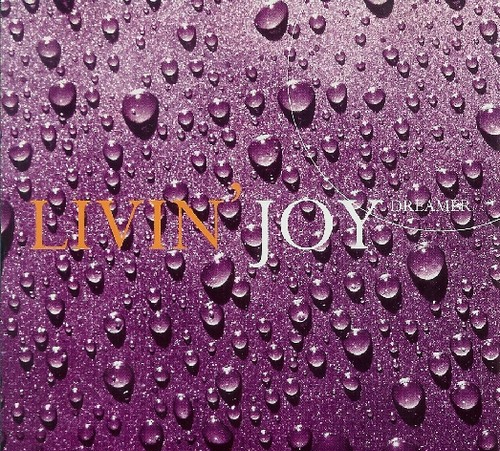
721. ‘Dreamer’, by Livin’ Joy

A very happy new year to all who follow this blog! So, where were we…? In the real world it’s 2024, while back here it’s the spring of 1995…

Dreamer, by Livin’ Joy (their 1st and only #1)

1 week, from 7th – 14th May 1995

We left things a few weeks ago having just welcomed Oasis to the top of the charts with ‘Some Might Say’, officially kicking off the Britpop age. Our next number one is the direct flip-side to that wall of guitar; the other, equally valid, sound of the nineties.

That is, the sound of a hitherto unknown Europop outfit appearing out of nowhere with a proper old-school dance banger. Having it large, mate! Nice one! Big fish, little fish, cardboard box… etc. etc. I may struggle to convince as a dance music fan, but I really do like songs like this. Songs with conviction. Dance music with the power of rock and roll. Hands to the sky, don’t ask why.

Livin’ Joy were a pair of Italian brothers, who took care of the production, and American singer Janice Robinson, who fronted the whole thing. As with all the best dance tracks – ‘Rhythm Is a Dancer’, ‘Let Me be Your Fantasy’ and the like – the vocals are made to be belted out between mouthfuls of dry ice. Probably the closest comparison to be drawn, though, is with Black Box’s ‘Ride on Time’ – not just because they were also Italian, but because Robinson is one of the few dance divas who can compete with Loleatta Holloway in the belting stakes.

And also because ‘Dreamer’ has quite a few retro house touches, especially as we end with the title line on a tight loop, as if the record has stuck, leaving us dancing to it for eternity. I drew a comparison to rock and roll a moment ago, and in all honesty dance music in the 1990s is what rock was in the 1950s… If you wanted to rock around the clock in 1995, you would do so to songs like ‘Dreamer’, with upbeat lyrics like Love, life, and laughter, Is all that I believe… None of that silly introspective nonsense. There’s also a good example of the ‘dance music as church’ phenomenon, in lines like My saviour is pure now, Because my lonely heart would bleed… They don’t mean much, if they mean anything at all, but they sound good in the moment. Euphoric, even.

I say that Livin’ Joy were ‘hitherto unknown’ before this, but in truth ‘Dreamer’ had made #18 – a not inconsiderable hit – just the year before. Its popularity kept growing, causing it to re-enter the lower reaches of the charts a couple of times, before a full re-release sent it walloping straight in at number one.

The band were good for another couple of Top 10 hits, but they did so without Janice Robinson, who left in 1996 to try a solo career. She has toured with Tina Turner and Lionel Richie, and written songs for a variety of different pop singers. Livin’ Joy meanwhile continued on with a different singer in Tameka Star. Wikipedia lists them as still active, but they haven’t released any new music since 1999.