Random Runners-Up: ‘Children’, by Robert Miles

Day 3 of our Random Runners-up weekend, and it’s time for a ’90s dance classic.

‘Children’, by Robert Miles

#2 for 2 weeks, from 10th – 24th March 1996 (behind ‘How Deep Is Your Love’)

In terms of number one singles, we’re only two and a half years ahead of Robert Miles’ ‘Children’. But to ears attuned to the sounds of 1998, this already sounds quite old-school. It is pure mid-nineties trance, house, Eurodisco… whatever. You know I’m terrible at labelling dance tracks. I usually have my own two labels for dance music: ‘good’, and ‘not so good’. But this record confounds such reduction.

‘Children’ has all the touches you’d expect from a mid-nineties dance record: a techno beat, synthesised strings, electronic squiggly bits… So far, so basic. But ‘Children’ also has one of the most recognisable riffs in modern popular music. A piano line so instant, so memorable, so strangely affecting, that it feels like it must have existed for all eternity. I can’t help feeling that it’s a waste for it to have been used on an otherwise fairly middling song like this.

I’ve mentioned this phenomena before, but dance music fans have a tendency to treat dance music like a religion, and the club as church. (I blame the ecstasy…) ‘Children’ is one of the few songs that helps someone like me to understand this point of view. Even as a dance music outsider, and as someone who doesn’t particularly love this song, I could see myself raising my hands to the sky if this came on. Having it large. Nice one! Chooooon…!

Robert Miles was an Italian DJ and composer, who had recorded ‘Children’ in 1994 after seeing pictures of child victims of the war in Yugoslavia. He also wanted to record a slower, more sedate form of dance music to play at the end of a night, to calm clubbers down and send them home less likely to crash their cars. (This was a real problem in Italy at the time, known as ‘Saturday night slaughter’, which to me sounds like a great lost glam rock track…) This more sedate sub-genre became known as ‘Dream House’.

‘Children’ was a huge hit across Europe, selling over five millions copies, and even making the Billboard 100. In the UK it spent a fortnight behind Take That’s farewell cover of ‘How Deep Is Your Love’, but in the long run was the year’s 8th biggest selling hit. Robert Miles managed three further Top 20 hits before setting up his own record label in the early 2000s. He died in 2017, aged just forty-seven.

Join us again tomorrow, when we’ll be heading back to the future. 1955 awaits…

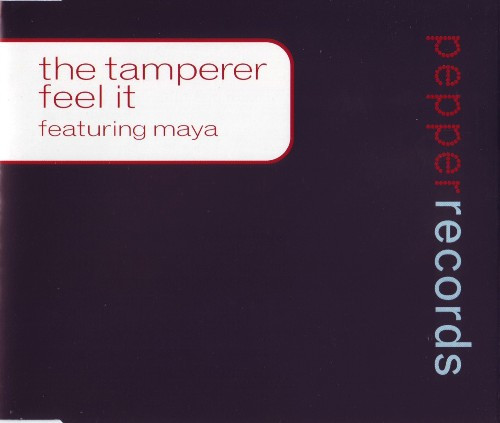
791. ‘Feel It’, by The Tamperer ft. Maya

It’s the end of May 1998, and I make our next chart-topper already the fourth this year to involve a reimagining of an older hit. This will be anathema to some – sampling, interpolating, remixing, call it what you will – but for me an inspired sample can be, well, inspired…

Feel It, by The Tamperer ft. Maya (their 1st and only #1)

1 week, from 24th – 31st May 1998

This takes the beat and the bells from The Jacksons’ 1981 disco stomper ‘Can You Feel It’, makes them even more stomping, and uses it as backing to a story of a spurned lover and her desire for house flattening revenge. It’s fair to say that What’s she gonna look like with a chimney on her…? is one of the year’s, if not the decade’s, great hooks. In fact, even just the way that vocalist Maya screams the ‘What!’ is a massive hook in itself.

The Jacksons are not the only sample here, as the two verses come interpolated from the wonderfully titled ‘Wanna Drop a House (On that Bitch)’, by Urban Discharge, released in 1995. What I like most about the lyrics is that they are thoroughly toxic, with the cheated woman forgiving her boyfriend and aiming her ire at the mistress. Well I’m not blaming you, But she’s still hanging round, And she’s so crazy you know man I just don’t trust her…

Nothing about this song, from the opening klaxon onwards, is subtle. The samples are in your face, the lyrics are preposterous, and the bit where everything slows down for no apparent reason is bizarre. But it’s a huge slice of dumb fun. Subtlety be damned. And yes there’s very little originality here, but I will point out that the one original moment is the ‘chimney’ line, and that’s the best bit. (One school of thought I found online is that ‘chimney’ is slang for a black eye… So she’s just going to punch the girl, not blow her house up.)

The Tamperer ft. Maya were an Italian production duo, plus US-born singer Maya Days. (Despite the ‘featuring’ credit, they never released a single which didn’t feature Maya.) This was their first release, and was a hit around Europe that summer. They followed it up with two further Top 10s, both involving bold samples. The brilliantly titled ‘If You Buy This Record (Your Life Will Be Better)’ used ‘Material Girl’, while ‘Hammer to the Heart’ borrowed ABBA’s ‘Gimme Gimme Gimme’ several years before Madonna did so to much fanfare.

In fact, their chart career ended after those three hits, and aside from a 2009 remix of ‘Feel It’ neither the Tamperer nor Maya have been seen since. And going by the comments underneath the YouTube video below, this is one of the ‘90s more forgotten number ones, with a handful of people around the world waking up each morning asking what that song about the chimney was called. I’d say we’ve had a mini-run of ‘forgotten’ #1s, from Aqua’s best song, to All Saints’ overshadowed covers, to Boyzone’s better-forgotten snoozefest. Up next though, a nineties pop ‘classic’ that, for better or worse, remains very much with us…

(The official video…)

(A better edit of the record…)

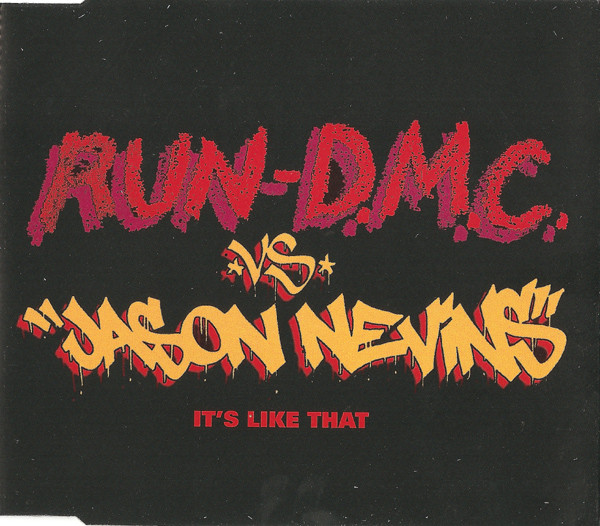
787. ‘It’s Like That’, by Run-D.M.C. vs Jason Nevins

Check this out… Just a couple of weeks after Norman Cook worked his magic on Cornershop’s ‘Brimful of Asha’, American house DJ Jason Nevins has his wicked way with a hip hop golden oldie…

It’s Like That, by Run-D.M.C. vs Jason Nevins (their 1st and only #1s)

6 weeks, from 15th March – 26th April 1998

I remember this being huge, an omnipresent hit that spring. And six weeks at number one is a very impressive run for the late-nineties (only one song will beat that total in 1998). But listening now, I’m a bit stumped trying to work out why it was quite so popular… It’s a bit repetitive, a sledgehammer beat that goes on, and on, with a less stardust sprinkled by Nevins compared to Fatboy Slim. Some of the transitions are predictable, and the original Run-D.M.C. vocals feel off in the mix.

Not that it’s bad, or that I don’t enjoy it on a certain level, or that it doesn’t unleash a heady wave of nostalgia listening to it again in 2024. I just mean that I can’t really locate the reason that it became the year’s 3rd best-selling single and – even more impressively – the only record to ever hold a Spice Girls’ song off number one in the UK (this was released in the same week as ‘Stop’, which it beat to the top by well over 100,000 copies).

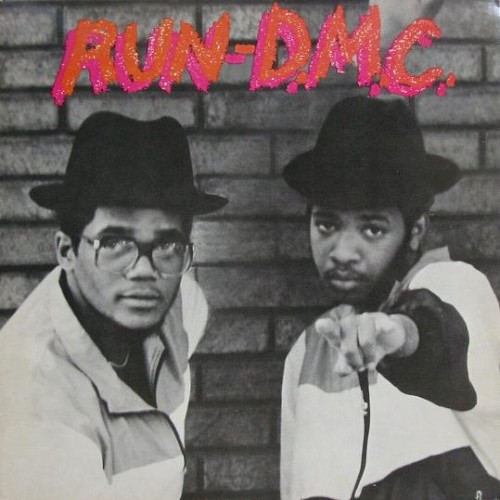
The original ‘It’s Like That’ had featured on Run-D.M.C.’s debut album in 1984, and was released as the LP’s first single. It’s a call-to-arms – a spikier, more cynical ‘What’s Going On’ for a new decade: Unemployment at record highs, People coming, People going, People born to die… Don’t ask me because I don’t know why, It’s like that, And that’s the way it is… What’s interesting about the original is that the 1998 hit is there, fully formed. If anything, the beat is even heavier. Nevins does little more than tart it up with a standard dance rhythm and some up-to-date flourishes (which admittedly is also what Norman Cook did on ‘Brimful…’, I just like that song better).

The one notable thing that Nevins does add is the sped-up Run DMC and Jam Master Jay! break, along with a bit off beatboxing. That’s the part I most remember, perhaps the hook that sold this as a hit. But in actual fact it last barely ten seconds, before that relentless beat comes slamming back in. (I always assumed that ‘Jam Master Jay’ was Jason Nevins, but he was actually the DJ in Run-D.M.C, who was sadly shot dead in 2002.)

Not surprisingly, this would be both Run-D.M.C.’s and Jason Nevin’s biggest ever hit. Nevins has only returned to the Top 10 one further time, although he’s gone on to work with stars like Nelly and Ariana Grande. For Run-D.M.C., this was their second Top 10, a decade on from ‘Walk This Way’ – in which they and Aerosmith fused rap with rock, much like Nevins was fusing rap and dance on this record.

Is it too early to call this the Age of the Remix? It is true that we’ve had two in quick succession, and that remixed hits will be more noticeable at the top of the charts as the century turns. I think it’s the fact that this is the first ‘versus’ record to make #1, as opposed to a plain old ‘featuring’ or an understated ‘&’. It feels so very turn of the twenty-first century (though a quick scan has shown me that there will actually only be a couple of other ‘someone versus someone else’ number ones between now and 2005.)

786. ‘Frozen’, by Madonna

Of all Madonna’s thirteen number ones, ‘Frozen’ – her first in almost eight years – has to be the strangest…

Frozen, by Madonna (her 8th of thirteen #1s)

1 week, from 1st – 8th March 1998

It’s her longest for a start, and probably the least accessible. There’s no instant hook, as with ‘Into the Groove’, and no controversial gimmicks, as with ‘Like a Prayer’. Instead there’s a shimmering, undulating electronic beat, beefed up at intervals by strange, reverberating sound effects and drum fills. And there are the strings that add an air of grandiosity to the song, especially when they come to the fore midway through, like an ‘Arabian Nights’ film score. A Rolling Stone reviewer at the time described it as “arctic melancholy”, and I think that’s perfect.

Interestingly for Madonna, the lyrics are the least noticeable thing about ‘Frozen’. They seem to be about a lover who is closed off: You only see what your eyes want to see, How can life be what you want it to be, You’re frozen, When your heart’s not open… Or perhaps it’s more religious, with Madonna, who had begun taking an interest in Eastern spiritualism, singing as a sort of high priestess. The video would bear this interpretation out, Madge floating above a desert, all in black, as a sort of nun-slash-witch, before turning into a flock of crows, and then a large dog.

In fact, despite me claiming that this isn’t one of her gimmicky chart-toppers, the first thing that springs to mind when I think of ‘Frozen’ is Madonna – famously blonde for most of the past fifteen years – now with long jet-black hair. Always one for the visuals… The second thing I remember about this record is hearing it almost as often as ‘My Heart Will Go On’ at the pool bar in Lanzarote during my spring holiday that year.

And the fact that it was on such heavy rotation at the time perhaps proves that this isn’t as inaccessible as I suggested. In truth, there are just as many hooks here as in Madonna’s poppier numbers, they’re just buried in the trip-hop beats, and stretched out over six minutes. Of 1998’s seven number ones so far, three have now run on beyond five minutes – ‘Never Ever’, ‘All Around the World’, and this – while Celine Dion wasn’t far behind (and that one certainly feels longer than five minutes…)

Although this was her first number one since ‘Vogue’, Madonna hadn’t ever been away from the top of the charts. In fact, she’d casually racked up a further seventeen (!) Top 10 hits between ‘Vogue’ and now. At the same time, ‘Frozen’ was the lead single from her first studio album in four years, following a few years of compilations and soundtracks.

Undoubtedly then, we can class this is one of Madge’s famous re-inventions. She wasn’t just following current trends with William Orbit on production duty, she was setting them. Fifteen years is a lifetime for a female pop star, and this was a statement release, one that announced the Queen of Pop wasn’t going anywhere. ‘Frozen’ was an interesting choice for the lead-single though, especially considering that follow-up ‘Ray of Light’ is the much better remembered hit, but it makes for an interesting detour in Madonna’s chart history. This is her second and final ‘90s #1, making it by far her least successful chart-topping decade. However, she has five more ‘00s #1s to come, all perhaps owing a debt to how successfully she updated her sound here.

785. ‘Brimful of Asha’, by Cornershop

Up next, a quirky little number one. An indie-pop tune about classic Indian movies, by a band who had never previously been higher than #60 in the charts…

Brimful of Asha, by Cornershop (their 1st and only #1)

1 week, from 22nd February – 1st March 1998

‘Brimful of Asha’ had originally been released in 1997, in a more pedestrian, lo-fi version. It’s nice – a different angle on British rock in the late-Britpop years – but it needed a sprinkling of stardust to turn it into a hit. Enter Norman Cook, AKA Fatboy Slim. This is already Cook’s third chart-topping persona, following a spot as a member of the Housemartins in 1986, and with Beats International in 1990.

Compared to some of the other big dance acts of the time – think Prodigy or the Chemical Brothers – Cook’s work as Fatboy Slim has a much poppier, more accessible style. The production on this record – the chunky drum fills, the loops – is very late nineties. But it probably sounds ‘very late nineties’ because Fatboy Slim was one of the defining sounds of that era. ‘Brimful of Asha’ was the launchpad for him to enjoy several years of hits.

And while it does sound rooted in the late-90s, ‘Brimful of Asha’ also has nods back to the sixties in the guitar line, and the fact that Cook added a sample from ‘Mary, Mary’, by the Monkees. The ‘Asha’ in the title refers to Asha Bosle, a famous soundtrack singer and one of the most influential names in Bollywood. And of course there’s the famous hook: Everybody needs a bosom for a pillow, Everybody needs a bosom… It all comes together to create an intoxicatingly catchy song.

Cornershop were from Wolverhampton, and had been ploughing an alt-indie furrow since 1991. Their references to Indian cinema came from founders and brothers Tjinder and Avtar Singh (though Avtar had left in 1995), and the band’s name is a tongue-in-cheek reference to the stereotypical line of work that Indian immigrants tended to take up in the UK. It’s actually quite a big cultural moment, this: British Indians topping the charts with a song celebrating their ancestral country. It’s also a surprisingly early nostalgic tribute to vinyl records (Brimful of Asha on the ’45…) just after the format had been largely killed off, and before hipsters rediscovered it.

Sadly, Cornershop would struggle for hits when Norman Cook wasn’t involved. The follow-up, ‘Sleep on the Left Side’, made #23, and their last Top 100 appearance came in 2004. They remain active, though, both recording and touring. Norman Cook, meanwhile, went from strength to strength after this. In the months following ‘Brimful of Asha’s success, he had his first hit as Fatboy Slim with ‘The Rockafeller Skank’, setting him up for several years of solo success. I have a feeling that his poppy, Big Beat style might have been looked down upon in more fashionable dance circles, but he was always undeniably catchy. And he’ll be back along with his own solo #1 very soon!

The 1997 original:

The Norman Cook Remix:

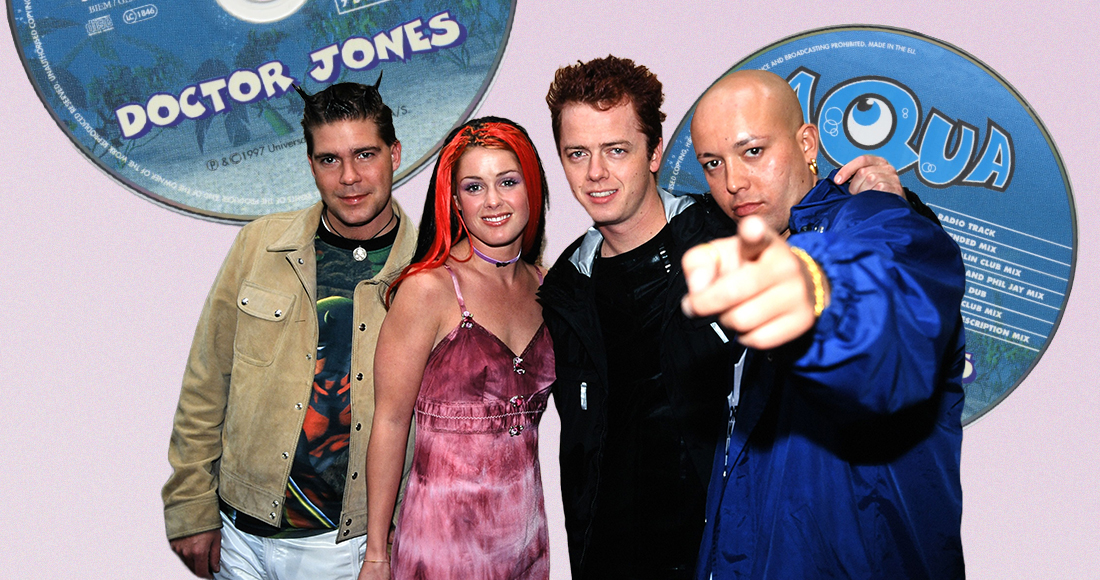
783. ‘Doctor Jones’, by Aqua

Aqua, looking for all the world like they’d be one-hit wonders, surprise us all by returning with not just a second hit, but a second number one.

Doctor Jones, by Aqua (their 2nd of three #1s)

2 weeks, from 1st – 15th February 1998

Perhaps the trick was that they stuck to a clear ‘if it ain’t broke’ formula. Female and male vocals, Eurodance production, about five different ultra-catchy hooks… The demand was obviously there post-‘Barbie Girl’. The tempo is increased from their earlier hit, giving this a proper Hi-NRG bounce to it. And like its predecessor, this single is also based around a pop culture icon.

The ‘Doctor Jones’ of the title is Indiana Jones, as made clear by the video in which Lene (formerly Barbie) and the other two members of Aqua plough through the jungle in search of René (formerly Ken). Doctor Jones, Doctor Jones wake up now… prattles the chorus, and he does wake up just in time to save his bandmates from being boiled alive. As with the ‘Barbie Girl’ video it’s good camp fun.

This whole endeavour, is of course, complete cheese, and if your tolerance for cheesy Eurotrash is low then this record certainly won’t be for you. I’m fairly immune to it, but the ayypee-aieeooaayyoo-ayypeeay-eh (I believe that is the official transliteration…) line in the chorus is annoying even to me. And sadly, René’s role is much less than it was in ‘Barbie Girl’, with his gravelly voice being used mainly to echo Lene’s lead.

It’s not as good as their biggest hit, or as memorable, but it does successfully manage the difficult balancing act of replicating what made the former such a big smash, recycling it cleverly, but without simply churning out ‘Barbie Girl Part II’. That’s quite a hard trick to pull off, especially when their first hit had had such massive success but had been filed away quite firmly in the ‘novelty’ drawer.

I’m starting to sound like quite the Aqua apologist. But it wasn’t just me, honest! 1998 was their year! Not only did they manage this second number one, they will soon manage a third. A third that will prove them capable of writing a proper pop song, and not just novelty dance numbers.

776. ‘Barbie Girl’, by Aqua

One of the reasons that ‘Spice Up Your Life’, the Spice Girls hot new single, didn’t stay at number one for very long is perhaps because Spice mania was cooling off. But another is that one of the year’s (nay, the decade’s) biggest hits was waiting in the wings…

Barbie Girl, by Aqua (their 1st of three #1s)

4 weeks, from 27th October – 23rd November 1997

Hiya Barbie… Hi Ken… Before we get to the song’s subject, and the lyrics, we should note that otherwise this is fairly standard, late-nineties Eurodance beat and production. Synth strings and an airy keyboard line (I think the technical term is ‘Balearic’). Fill it with generic lyrics about reaching for the sky and living it large, and you’d have a standard dance hit, on a par with Whigfield’s ‘Saturday Night’, say. But the melody and the production are not why this was such a big hit.

‘Barbie Girl’ was so huge because of its subject matter, and how it somehow manages to be utterly dumb and yet quite clever; an annoying novelty and yet a total earworm. Take two of the song’s biggest hooks: Come on Barbie, Let’s go party… Ah, ah, ah, yeah… and Life in plastic, It’s fantastic… The first is stupidly simple, and yet it’s been in your head for the best part of three decades. The second is actually quite brilliant. The whole song succeeds because it constantly straddles this line between greatness and nonsense.

You could make too much of the song’s social commentary. It’s got some fun lines, and some borderline innuendo; but it’s hardly a feminist manifesto. The song’s best section is the second verse, because the way the beat rests before swishing into it is great, and because it contains the most ‘challenging’ lyrics. I can act like a star, I can beg on my knees… Barbie chirrups, before Ken ignores her with a Come jump in, Bimbo friend, Let us do it again… (Personally, René Dif’s gravelly, sleazy ‘Ken’ is the reason this song works. I think if it were all on Lene Nystrøm’s high-pitched ‘Barbie’ it would really start to grate.)

I think this also might be an example of the ABBA-factor, which I’ve mentioned before with non-English speaking acts. Because English wasn’t Aqua’s first language, the lyrics are perhaps simpler than someone with a native-level ability would have come up with. But this also means that the lyrics stick very easily. Aqua were Danish, and this was the third single from their debut album. They had been around since 1989, though the closest they’d come to success was as Joyspeed, with this truly spectacular happy-hardcore version of ‘Itsy Bitsy Spider’.

Mattel, the creators of Barbie, were not amused by this global smash, claiming that it besmirched the doll’s image and turned her into a ‘sex object’. They embarked on a five-year lawsuit, while Aqua’s label filed a countersuit for defamation. Both were dismissed, the judge wrapping up with the brilliant line: “Both parties are advised to chill.” By 2009, Mattel’s stance had softened, and they were using the track in adverts. By 2023, they had licensed the song for use in the ‘Barbie’ movie, as well as a remake by Nicki Minaj and Ice Spice. In fact, watching the video to ‘Barbie Girl’ now, it’s interesting to see just how similar it is to the world created for the movie.

You’d have gotten very long odds on Aqua having any follow-up hits, as this has ‘one-hit wonder’ written all over it. Well, not only did they not disappear, they have two further number ones to come…

767. ‘You’re Not Alone’, by Olive

We’ve not been short of dance hits in recent months, although their frequency hasn’t been as rapid fire as it was back in the early-to-mid nineties. And the dance hits of 1996-97 have tended to be of the chunky, Big-Beat variety. But this next number one is very different from the likes of the Prodigy, and the Chemical Brothers

You’re Not Alone, by Olive (their 1st and only #1)

2 weeks, from 11th – 25th May 1997

It’s a step back towards a lighter, House sound, with a female singer leading the cavalry. But it’s also a step forward, because it’s taking those sounds and adding a few more modern touches. Personally, I often dread writing entries on dance chart-toppers – not because I inherently dislike dance music; more because it’s out of my comfort zone. I’ve just about got my head around big beat and trance, and now I’m being told that ‘You’re Not Alone’ is at turns breakbeat, ambient, and trip-hop.

Basically, I am trying to write and learn as I go. Apologies if any dance music experts stumble across this blog, and it causes them to snap their glo-sticks in anger. Anyway, ‘ambient’ I get – it’s a very atmospheric track: melancholy, haunting even. And trip-hop I get too, thanks to the drum beat. ‘Breakbeat’ I’m happy to go along with, because it sounds fun.

And I do like this record. My favourite part is the trippy keyboard riff, which sounds so much like a passage from a classical composition that I was convinced it must be. It takes great skill to write a chord sequence that sounds so timeless. I remember this record from the time, watching it on TOTP, thinking it sounded very grown-up, not quite getting it. I still don’t quite get it, thirty years on, because this isn’t really in my wheelhouse. But it’s well-made, and diverting enough, to make it a worthy chart-topper. One that enhances further the quality of 1997, so far.

What I will say is that, for all the atmospherics, the track does hold back a little. I’m waiting for the drop, for a full-on, banging, trance finish that never comes. It remains slinky and strange until the end. But, as I’ve just proven, I know nothing about dance music. If I had my way behind a set of decks everything would end up sounding like 2 Unlimited (and, let’s be honest, that would actually be amazing).

Olive were a London-based three piece, formed in 1994. ‘You’re Not Alone’ had been a minor hit the year before, and this chart-topping version was a remix (though you’d be hard-pressed to notice much difference between the two versions.) I believe the video below to be the one that made #1. It was their only Top 10 hit – the follow-up made #14 – and they split in 2003.

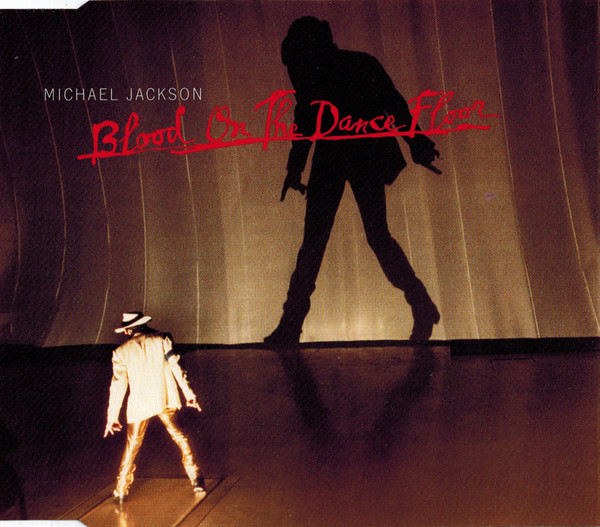
765. ‘Blood on the Dance Floor’, by Michael Jackson

And so Michael Jackson ends a twenty-year run of chart-toppers, with another of 1997’s curios…

Blood on the Dance Floor, by Michael Jackson (his 7th and final solo #1)

1 week, from 27th April – 4th May 1997

Throughout his career, it hasn’t been the MJ classics that have made #1. The Jacksons’ only made it there with ‘Show You the Way to Go’. Solo-wise, ‘One Day in Your Life’, ‘I Just Can’t Stop Loving You’, and ‘You Are Not Alone’ all made it, while ‘Bad’, ‘Beat It’, and ‘Smooth Criminal’ fell by the wayside. Only ‘Billie Jean’, and maybe ‘Black or White’, came close to popular ubiquity.

So what of his final #1? Well, at least it’s not a syrupy ballad, or one of his God-complex blockbusters. Actually, it’s much more reminiscent of his heyday. It isn’t up there quality-wise, but there are flashes. The bridge and chorus, the growl in his voice, and the dangerous woman in the lyrics, all feel very ‘Bad’-era. We can add Suzie (Suzie’s got your number, Suzie ain’t your friend…) to Billie Jean and Dirty Diana in Jackson’s list of ladies best avoided. Interestingly, some sources claimed that ‘Suzie’ was a metaphor for AIDS – giving a horrific double meaning to the line Look who took you under with seven inches in… – but Jackson denied it.

Elsewhere, the New Jack Swing production sounds quite dated, and away from the chorus he barely sings. The verses are a series of vocal tics strung together; sounding more like dolphins communicating, and just as indecipherable. When you learn that it was written originally back in 1991, during sessions for the ‘Dangerous’ album, the sound makes sense. The song was dusted off and tarted up ahead of Jackson’s remix album ‘HIStory in the Mix’.

In some ways, this is an underwhelming way for MJ to bow out. But then, several of his six other solo #1s have been underwhelming. And actually, compared to some of his nineties hits, this is a decent, if dated, dance tune with a fairly killer, funky beat. It was his 36th UK Top 10 hit, since his solo debut in 1972, and he still had a few more to come.

In fact, since his death he has featured on big hits with Akon, Justin Timberlake, and Drake, and so you wouldn’t count against him adding to his total in the years to come. Quite why records featuring Michael Jackson are still allowed to flourish while those featuring the man who preceded ‘Blood on the Dance Floor’ at number one – R. Kelly – have been buried in quicklime is a discussion for another day… Is it as simple as one having a court conviction? Or does musical snobbery come into play…? And I’ll end with an equally pressing question: am I the only person who just now realised that ‘dance floor’ is not one word…?

763. ‘Block Rockin’ Beats’, by The Chemical Brothers

Like their Big-Beat chums the Prodigy, the Chemical Brothers enjoyed two chart-toppers across 1996-97. When it came to the Prodigy’s ‘Breathe’, I wondered if it could be mentioned in the same breath as the pop culture moment that was ‘Firestarter’. I won’t be asking a similar question this time around…

Block Rockin’ Beats, by The Chemical Brothers (their 2nd and final #1)

1 week, from 30th March – 6th April 1997

For ‘Block Rockin’ Beats’ is not up to the standard of the wonderfully trippy ‘Setting Sun’. Not that it isn’t ear-catching, or that there’s nothing interesting in this melange of sounds. Or that underpinning the entire five minutes of noise there isn’t a pretty cool bassline. All this is true. But at times this song has the feel of a dance record from a decade before, when samples were thrown together with novelty, rather than musical, value in mind.

‘Block Rockin’ Beats’ contains what sounds like sirens, snatches of different hip-hop songs (including the constantly repeated Back with another one of those block rockin’ beats…!) and what I imagine is a donkey being assaulted with a red-hot poker. I’m not writing it off, because I do enjoy dance music when it’s this chaotic and aggressive, but it also feels like a Big Beat song written to order. ‘Setting Sun’ had the advantage of Noel Gallagher on vocals, and a thick dollop of inspiration from the Beatles, which this record lacks.

Looking further into the chart history of ‘Block Rockin’ Beats’, and other one-week #1s of the time, is interesting. It’s maybe time to introduce the term ‘non number one’. Not that I want to deny the Chemical Brothers their second chart-topper. They’ve added to the rich and interesting tapestry of 1997’s #1s, making it an enjoyable year so far. But after entering at the top, it dropped to #8 the following week, and ranked at #88 on the best-selling songs of the year list. Similarly, Blur’s ‘Beetlebum’ had fallen #1 to #7, while U2’s ‘Discotheque’ fell #1 to #6, both after just one-week stays on top.

I was asked recently by a commenter why this was, and I answered that it was to do with songs in the mid-late 1990s being promoted heavily, sometimes for weeks, before being released. So the majority of their sales were concentrated in the first week they were available. But it also ties into the fact that this period also saw some of the highest singles sales of all time. I don’t know if it was to do with disposable income, or the ubiquity of CD players, or even the quality of the music, but demand was there and record labels needed something to fill it. If anyone has noticed that it is taking us ages to get through entire years now (there will be as many #1s between January and May ’97 as there were in the entirety of 1992) then there’s your answer.

None of this is to say that the Chemical Brothers weren’t a genuinely popular act. They had no further #1s, but would go on scoring Top 20 hits for another decade after this. Including what is probably their signature song, ahead of either of their chart-toppers, 1999’s ‘Hey Boy Hey Girl’, which made #3.