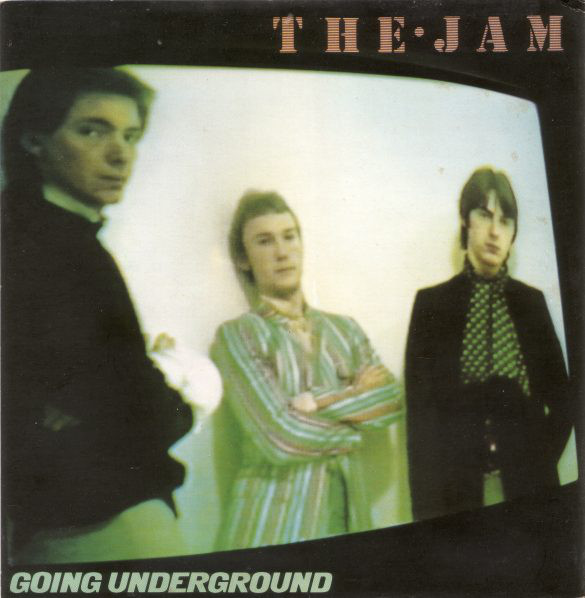
465. ‘Start!’, by The Jam

The Jam make a quick return to top spot, with a very famous bass-line. One that you may have heard before…
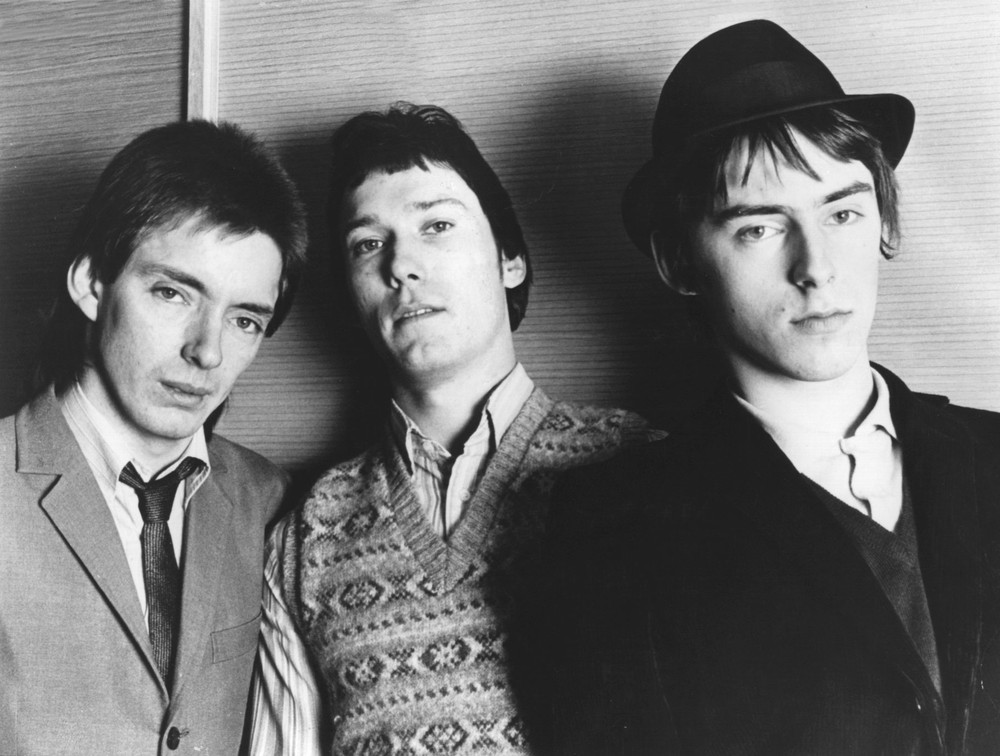
Start!, by The Jam (their 2nd of four #1s)

1 week, 31st August – 7th September 1980

‘Start!’ is notoriously indebted to The Beatles’ ‘Taxman’ – there’s no avoiding the fact that the bass riff is pretty much a note for note copy – but while the former has a hash-haze to it, the latter is a squeaky-tight, short and sharp blast of punk-funk. That’s right. I’m inventing new genres as I go along…

It’s a song about a one-night stand… It’s not important for me to know your name… Or some kind of fleeting encounter… If we communicate for two minutes only it will be e-nough… At first glance it’s less of a war cry, compared to the band’s first chart-topper, but it’s actually just as cynical. Knowing that someone in this life, Loves with a passion called hate…

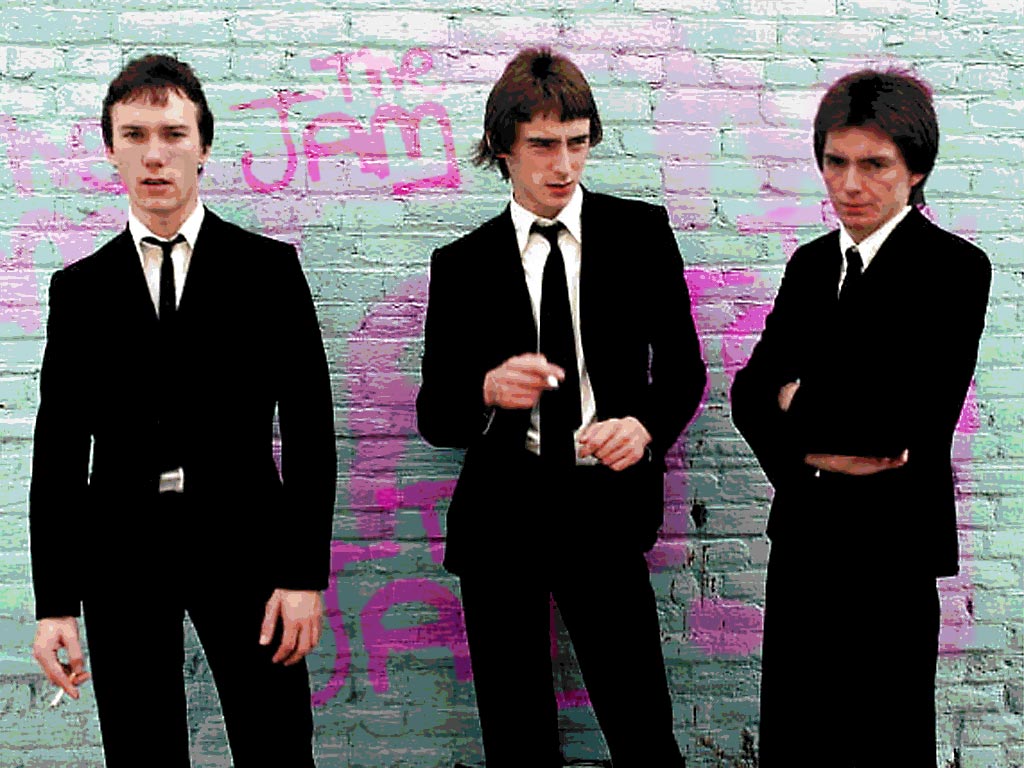
I’m really not sure if Paul Weller is grateful for their two-minute connection, or if he’s glad about never, ever seeing this person again. What I am sure about is that this is a great pop song: minimalist, with razor-sharp guitars and cool drum-fills. It’s as natty as The Jam’s mod-suits and shades combo in the video.

Speaking of the video, the single release of ‘Start!’ shaves fifteen seconds off the album version, trimming the gritty solo and losing the horns that play out over the closing refrain. For me the horns add to the funk here, placing the record firmly in the early-eighties, so if you were choosing between the versions I’d go album every time.

Without wanting to disrespect what I think is a great record, I think a sharp-blasting, one-week #1 like this needs only a sharp blast of a blog post on it. ‘Start!’ probably gets lost among The Jam’s better-known hits, ‘Going Underground’ before it and ‘That’s Entertainment’ after (which charted at #21 by selling only imported copies – a sign of the band’s popularity in 1980). It was also the only one of their four chart-toppers not to enter at the top. But it’s good one, and if this post has just turned you onto the song’s quality, then that will be a start!

464. ‘Ashes to Ashes’, by David Bowie

Hot on ABBA’s heels, here’s another triumphant return to the top of the charts for a seventies icon.

Ashes to Ashes, by David Bowie (his 2nd of five #1s)

2 weeks, 17th – 31st August 1980

Unlike ABBA, however, this is only David Bowie’s second visit to the #1 spot, and his first with a new song (his earlier chart-topper being a re-release of his debut hit ‘Space Oddity’). It seems that Bowie could score his very biggest hits only if he was singing about Major Tom.

Do you remember a guy that’s been, In such an early song…? The fourth wall is broken in the first lines, while a woozy, harsh riff plays out on an instrument I am completely unable to name. It’s very new, quite avant-garde, the most eighties moment yet in this countdown. There’s also a reggae-ish feel to it, in the beat, and in the singer’s delivery.

It’s a bit of a hotch-potch, really. As with a lot of Bowie’s work, I wish I liked it more than I do. The verses are where my attention wanders the most. The lyrics and the beat trip over one another, and you’re left a bit lost. For the most part, though, I come down on the side of not caring if music is a bit beyond me, as long as it’s catchy. Luckily, this record has a killer chorus.

Ashes to ashes, Fun to funky, We know Major Tom’s a junkie… Is David Bowie Major Tom, and this record a look back at his struggles with drugs in the late seventies? Is he the Starman turned addict? Is Major Tom actually heroin…? The repeated closing lines… My mama said, To get things done, You better not mess with Major Tom… would perhaps bear this out.

The sinister music video – the most expensive ever made at this point in time – does little to clarify: it features Bowie in a clown suit, being followed by a bulldozer, releasing doves and rocking in a padded cell. (But I did find a great story from the making this video… On location, an elderly dog-walker refused to get out of one shot, and when the director asked if he knew who this man – pointing at the David Bowie – was, the old bloke replied: ‘Yeah, it’s some cunt in a clown suit.’ Bowie wore the insult with pride, apparently, for years after.)

I had a friend growing up who was obsessed with David Bowie, and with this song in particular. He was a bit of a pretentious arse, and perhaps I’ve always unfairly associated ‘Ashes to Ashes’ with him. Except… listening to it properly now, over and over, I’m not sure I wasn’t right all along. It is arty, and clever, and perhaps pretentious. Though both feature Major Tom, the shift from ‘Space Oddity’ to this is huge: perhaps the biggest change in sound between chart-toppers by any act so far. Which is fine. Good, even. Some people have to push the envelope, and Bowie did it better than anybody else, but sometimes it’s beyond me.

That doesn’t mean I don’t love a lot of his music. It’s just frustrating that the Bowie I enjoy most never made the top of the charts. Of his five #1s, four are from the eighties, while the seventies’ #1 was actually from the sixties. Hey ho. It’s becoming apparent that very few acts are best represented by their chart-toppers. At least he won’t have as long to wait for his next one…

463. ‘The Winner Takes It All’, by ABBA

In which ABBA return, triumphant, to the top of the charts, with their best song. Shortest post ever…

The Winner Takes It All, by ABBA (their 8th of nine #1s)

2 weeks, from 3rd – 17th August 1980

OK, fine. I should write a bit more. For a song to be ABBA’s best, it has to be a pretty good song. But why is ‘The Winner Takes It All’ so good? I’m no musicologist – if indeed that’s an actual job – and so cannot talk about chord progressions, keys, and melodic shifts (though I’m sure this record is brimming with them). I’m not sure I can look at this record objectively at all. I grew up with this song. I can’t remember a time when I didn’t know this song.

It’s a song full of moments. From the opening piano line – confident, stately – which announces that yes, this is ABBA and yes, something great is coming. The moment right at the start of the second verse, when the beat kicks in. The But tell me does she kiss… start to the third verse. The spoken but you see… The fade-out, when the vocals shift to the background and the trademark piano takes over again. It’s long for a pop song, but it’s exactly as long as it needs to be. Everything that’s there – pianos, guitars, strings, synths, backing vocals – is essential. There’s nothing extravagant about it (which isn’t something you can always say about ABBA songs).

A song about love as a game, with lovers holding cards, and the Gods throwing dice. It could come across as a bit silly. A bit flowery. But it doesn’t, because Agnetha sells it. She sells it, and then some, from the opening I don’t wanna talk… line through to the closing The winner takes it all… that she belts out in a manner unlike any ABBA single before. This is pop as a stage show, as opera. It’s melodramatic, and unrepentantly sad. There’s no sign of her moving on, of a brighter tomorrow. She’s having a good old wallow. She may even be enjoying this wallow, in a self-indulgent way. Why should she complain? Yet she still does. She doesn’t want to talk… but then she sings a full-blown song about it.

It’s been well-documented that, by this stage in ABBA’s career, the personal relationships between the members of the band had collapsed. It feels lazy to suggest that that’s what makes this song so powerful. But just imagine: Bjorn writes a song – while drunk apparently – about his recent divorce. Then hands it to his ex-wife to sing! She’s the ‘bad guy’ that she’s singing about! (Although Bjorn has denied that it’s specifically about their own divorce.) Still, that’s not your usual husband-wife, singer-songwriter dynamic. You can really hear the pain in her voice, in the lines before the final, earth-shattering chorus: And I understand, You’ve come to shake my hand…

I know people who don’t like ABBA. They’re a dying breed, thankfully, as the band has long since shaken off the cheesy, gay-bar reputation they had when I was growing up. But they still walk among us, the weirdos. The lady next to you on the bus, the guy that just served you in Starbucks… might not like ABBA. It’s best not to think about it. I can’t understand how you could listen to ‘The Winner Takes It All’ and not like it, not get it, not see it for the five minutes of genius that it is. Anyway. ABBA are back at the top of the charts, after what feels like ages. But, alas, they have just one more #1 to come…

462. ‘Use It Up and Wear It Out’, by Odyssey

One thing that’s surprised me about the charts in the first six months of the ‘80s: nobody seems to have told the record-buying public that disco is dead. They clearly missed the ‘disco sucks’ memo…

Use It Up and Wear It Out, by Odyssey (their 1st and only #1) 

2 weeks, 20th July – 3rd August 1980

Here come Odyssey then, with another body-shaking anthem (it does actually include the line shake your body down to the ground) that demands a dancefloor to be filled. This is one of those songs that come along every so often in this countdown, where I go ‘Oh, so it’s this song…’ A song you’ve been hearing in the background for your entire life without ever wondering what it is or who it’s by.

But on further inspection, this is a song I should have been paying attention to. It’s a great slice of disco-funk, with some calypso thrown in for good measure. Like the other disco-influenced #1s of 1980, there’s a lot more going on than just ‘disco’: see either of Blondie’s hits, Fern Kinney, the Detroit Spinners, or our previous chart-topper ‘Xanadu’.

Here’s a question: can a song be simultaneously cheesy and cool? If it can, then this might be the very song. In the ‘cheesy’ corner: the slide whistles and the 1… 2… 3… Shake your body down… chorus. In the ‘cool’ corner: the funky bass and the dod-d-d-dododo scatting at the end. It’s not a particularly verse-bridge-chorus kind of song, meaning that it can be chopped up and remixed in various different ways – as all the best disco records can.

Gonna use it up, Gonna wear it out, Ain’t nothin’ left in this whole world I care about… Actually, the lyrics here are a bit depressive, a bit cynical, for a disco record. The singer is dancing because that’s all there’s left to do. She’s going to dance herself to death, perhaps (or at least into a sweaty, dripping mess.) Add it to your ‘end of the world’ playlist now!

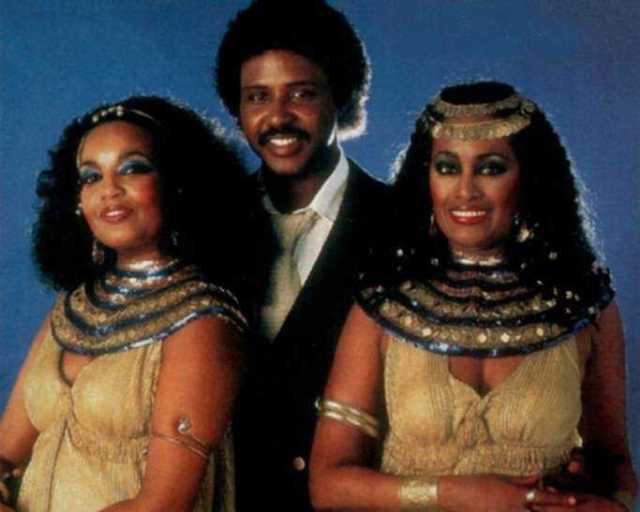
Odyssey were a New York based band, who have had a revolving cast of members, but who were a trio at the time of their sole #1 hit. They are still performing to this day. ‘Use It Up and Wear It Out’ was their second of five Top 10 hits in the UK between 1977 and 1982, a much better return than they ever managed in their native US. Disco really was dead over there…

461. ‘Xanadu’, by Olivia Newton-John & Electric Light Orchestra

Finally. One of the seventies’ best groups top the charts, a few months too late. ELO and ONJ are taking us off to a mythical land…

Xanadu, by Olivia Newton-John (her 3rd and final #1) & Electric Light Orchestra (their 1st and only #1) 

2 weeks, 6th – 20th July 1980

To be honest, this has never been my favourite Electric Light Orchestra song – is it anyone’s? – but it’s still a good slice of Jeff Lynne glam-pop. The wall-of-sound production and the beefy drums take us back to the height of glam, while the tempo and the strings are very disco. It’s a throwback, already, given the spiky, new-wave chart-toppers that we’ve already heard this year.

It’s also nice to hear Olivia Newton-John warbling away on another #1, after her two ‘Grease’ mega-hits in 1978. It’s a song that requires her to sing in a pretty high pitch, but she carries it off. Her Xanad-ooh-ooh… in the chorus, twinned with the piano riff, is an effective hook, while the Now we are here… backing vocals are pure ELO.

Amazingly, this is already the second #1 single to reference ‘Xanadu’ in the title, the lost city in northern China, seat of the Mongol Khans, ‘found’ by Marco Polo… It has now been named twice as many times as any other place. A place… as Olivia tells it, Where nobody dared to go, The love that we came to know, They called it Xanadu…

All very mystical. Except, in the movie that this record soundtracks, ‘Xanadu’ is a nightclub. A roller-disco. (I, to be fair, knew several nightclubs in my youth best described as ‘places nobody should dare to go’, not without a fair amount of alcohol inside them…) I have never seen the movie: it was awarded a Golden Raspberry but has since been reclaimed as a camp classic. Both ELO and ONJ scored further hits from the soundtrack, including the brilliant ‘All Over the World’.

The one thing I can’t get behind with this record is the ending. The soaring, distorted high-note. It reminds me – and this might just be because both involve Olivia Newton-John – of the stupid ending in ‘Grease’, with the flying car. A simple fade-out would have done much more nicely. But what do I know? Jeff Lynne apparently rates this as his best song.

I started this post with the word ‘finally’, and it really did take a while for Electric Light Orchestra to score a UK #1. ‘Xanadu’ was their 14th Top 10 hit, in a run stretching back to 1972. They would only have one further Top 10, before the hits dried up. (To do them justice, I’ll have to do a ‘Best of the Rest’ at some point.) Olivia Newton-John faces a similar chart trajectory – a few more hits before a mid-eighties drought. Meanwhile, Xanadu itself is still waiting for someone to score another #1 with its name, to complete the hat-trick.

460. ‘Crying’, by Don McLean

Hot on the heels of ‘Suicide Is Painless’, we are crying, crying, crying… A depressing double-whammy at the top of the charts…

Crying, by Don McLean (his 2nd and final #1) 

3 weeks, 15th June – 6th July 1980

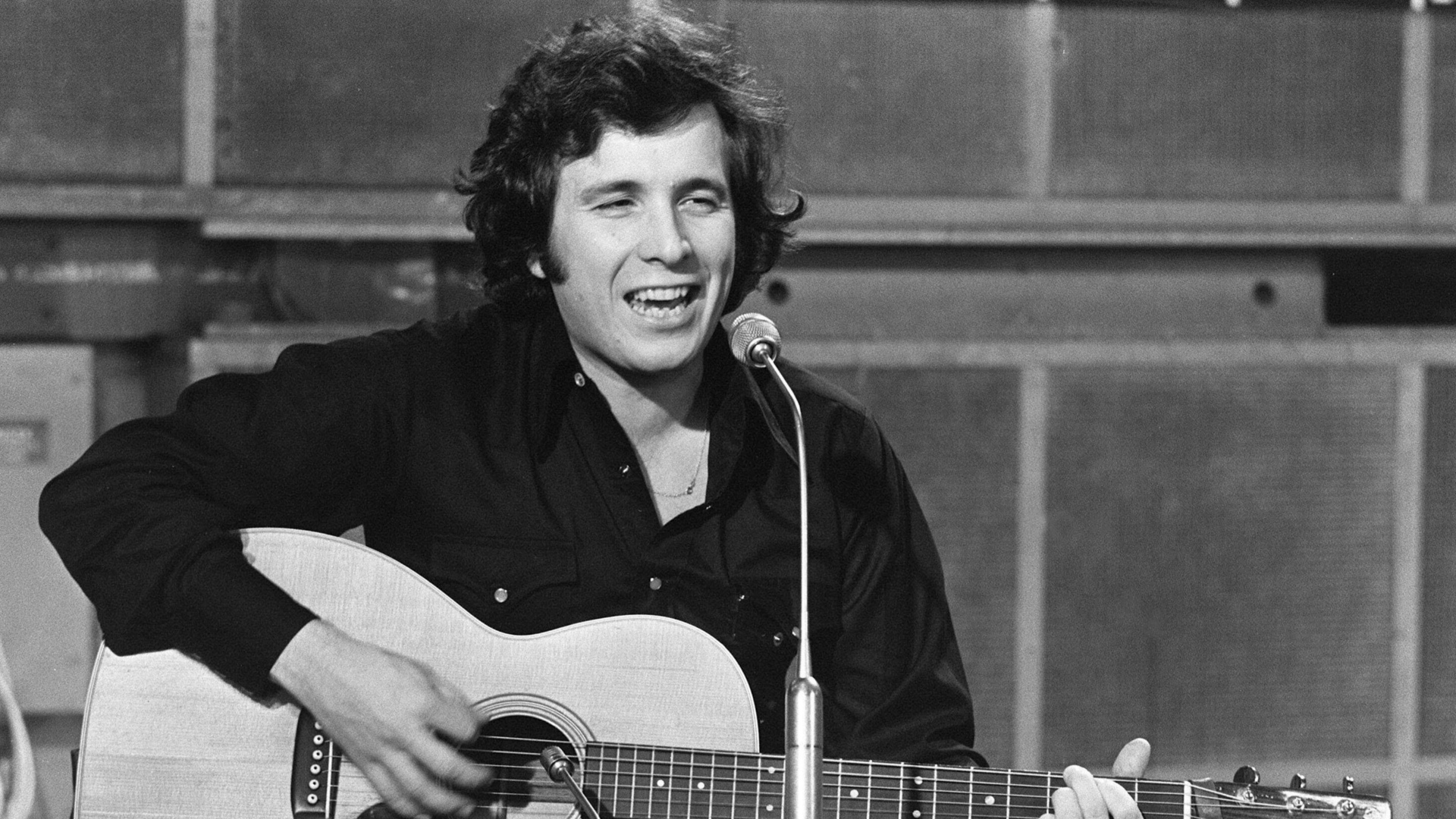
‘Crying’ was, of course, originally recorded by Roy Orbison. As I do every time I approach a cover of a famous hit, I try to blank out any knowledge of the original. Which is always hard, but especially so when said original was by The Big ‘O’. Don McLean takes what was already a ballad, and slows it down further. We are moving at treacle pace here.

I was alright, For a while, I could smile, For a while… It’s a classic Orbison theme: hiding your heartbreak behind your dark glasses. But when I saw you last night, You held my hand so tight… And it’s effective, as we’ve all been there – watching as a former crush moves on. And though you wished me well, You couldn’t tell, That I’d been crying… 

My biggest problem with this take – and let’s just have it out and admit that this isn’t a patch on the original – is that all the melodrama has been stripped out. Roy had a latin beat, strings and a marimba… You could samba as you cried. Don goes for a much more straight-forward, country version, and suddenly the lyrics sound trite and basic. The music plods as you wait for it to reach the climax.

Another sizeable problem is that for all Don McLean’s skills as a singer, he isn’t Roy Orbison. The climax here is the word ‘crying’ repeated over and over. Orbison rattles the roof with it, as he does on all his big heartbreak bangers: ‘Running Scared’, ‘It’s Over’ and the like. McLean can’t, and his voice ends up sounding reedy. That’s not to say he can’t put emotion into his songs. I find his previous #1, ‘Vincent’, heartfelt and heartbreakingly sad. Here, though, he over reaches, and his Cry-y-y-ying sounds… like Miss Piggy?

It’s still a pleasant melody, and I am enjoying it to some extent, but it’s a bit of a wet-blanket of a song. And yet another country chart-topper that I can’t quite get behind. At least, quickly scanning down my list, it looks like the last one for a while… This was also Don McLean’s last hit in the UK (he had barely charted since ‘Vincent’ either) until a re-release of ‘American Pie’ in the early ‘90s. He remains active, though, and released his 22nd studio album just last year.

458. ‘What’s Another Year’, by Johnny Logan

Eurovision klaxon! It’s been a few years since we’ve had to sound it, but 1980 was one of those years when the winning record also went all the way on the pop charts…

What’s Another Year, by Johnny Logan (his 1st and only #1)

2 weeks, 11th – 25th May 1980

Some Eurovision singles have been classic – ‘Waterloo’, ‘Congratulations’ – other have been less classic – ‘All Kinds of Everything’, ‘Save Your Kisses…’. Into which camp, then, does ‘What’s Another Year’ slide into…? Well…

I won’t keep you on tenterhooks. It’s the latter camp. From the opening seconds, when a gratuitous, easy-listening saxophone riff rises up, you know where this record is heading. We’re back in David Soul territory: a handsome lad – think a slightly more rugged Donny Osmond – crooning his heart out. I’ve been crying, Such a long time, With such a lot of pain, In every tear… What’s another year? The tweens and the grannies must have lapped it up.

In my post on the previous #1, ‘Geno’, I repeated my belief that pop music, at the very least, shouldn’t be boring. ‘What’s Another Year’ is a well-produced, and well-sung, song… but it’s dull. And that sax… It comes back for a pure elevator-slash-lounge-bar solo, that is a horrible premonition of what’s to come in the middle of this decade. To be fair, the song isn’t actually about a lost love, but about the death of the writers’ mother, which does make it a bit more heartfelt in my eyes.

(I love the weeping eye in the corner of this sleeve, just in case you were in any doubt what type of song this was…)

Of course, this record won Logan, and Ireland, the Eurovision Song Contest. Johnny clearly felt that the continent hadn’t suffered enough, as he re-recorded his biggest hit several times, including in Spanish and German. (I think the version I listened to for this post was the original.) And he wasn’t done there… This man is Mr. Eurovision. He won it again in 1987, with ‘Hold Me Close’ (that made #2 in the UK, and is even slicker and limper than this one…) Then he went and wrote the 1992 winner, ‘Why Me?’ for Linda Martin, on top of having written the 1984 runner-up, ‘Terminal 3’, for the same woman. (Of all four songs, ‘Terminal 3’ is by far the best: a Bonnie Tyler-esque barnstormer.)

Ireland may have won Eurovision more times than any other country, but goodness they’ve done so with some utter tripe. Anyway, Johnny Logan struggled to score any non-Eurovision hits in the UK, but he’s had better luck in his homeland, releasing his latest album in 2017, and scoring Top 10 hits as late as 2013. And I might as well break it to you now… we will also be sounding the Eurovision klaxon in 1981. But, boy oh boy, that record will be everything that this one is not!

457. ‘Geno’, by Dexys Midnight Runners

Our next number one starts off with some live chanting, and a short, sharp horn riff, giving the impression that we’re heading off in the same 2-tone, ska direction that The Specials took us… Until it switches tack and suddenly we’ve got a brassy, soulful saxophone line leading the way.

Geno, by Dexys Midnight Runners (their 1st of two #1s)

2 weeks, 27th April – 11th May 1980

And that’s not the only abrupt shift over the course of ‘Geno’ – it’s a song that’s chopped up into lots of little bits. Lots of catchy little chunks. There are the woozy verses… Back in sixty-eight in a sweaty club… with lyrics that need serious Googling thanks to lead-singer Kevin Rowland’s unique delivery… Before Jimmy’s Machine and the Rocksteady Rub…

It’s a potted history of the band, or of Rowland’s formative years, bunking school and sneaking in to clubs to see soul legend Geno Washington step on stage, swinging his towel high… Then the tempo swings again, and there’s an insistent post-punk drive to the middle-eight. Academic inspiration, You gave me none… And then there’s the live chanting, which is actually sampled from a Van Morrison live album.

When writing these posts, I usually jot down my impressions on a song without looking at any other sources. You know, if you read that such-and-such a song is included in the Rolling Stone magazine’s Top 500 of all time, then it might influence your judgement… But with this record, I’m a bit stumped. The components are catchy, the oh-oh-oh Geno hook is great, but I’m struggling to place it.

It’s another insistent record, yet another chart-topper from ’79-’80 that is brimming with confidence and with ideas. Listening to this era’s chart-toppers is like going to an art school’s open day and being performed at by some very confident young wannabes. It’s all very impressive; but it can get a bit much.

So, do I like this song? Should I be enjoying this? The consensus seems to be that this is a classic… but that’s probably just because the Runners’ next chart-topper is so overplayed and people want to look cool. I think the big negative here is that the song’s topic is quite niche – a description of a gig – and the vocals so unintelligible. Still, it’s not boring, and that is always something.

This was just the second single that Dexys Midnight Runners’ had ever released, after their formation in Birmingham in 1978. Their name is the shortened version of Dexedrine, an amphetamine popular in clubs at the time, and which is referenced in this song: This man was my bomber, My dexys, My high… Oh Geno! It’s also the reason why there’s no apostrophe in the band’s name, which goes against all my English teaching instincts… They will be back, in good time, with one of the decade’s signature hits. One that may be overplayed, but that I will have no problem justifying as a classic!

455. ‘Working My Way Back to You / Forgive Me, Girl’, by The Detroit Spinners

As vital as The Jam’s polemic first #1 was, you wouldn’t want every chart-topper to be that angry… Luckily for us, here come the (Detroit) Spinners with a relentlessly positive classic.

Working My Way Back to You / Forgive Me, Girl, by The Detroit Spinners (their 1st and only #1)

2 weeks, 6th – 20th April 1980

They are far from the first well-established band to try a disco-ified take on the old vocal-group sound. In fact, they’re pretty late to the party. This record could have been a hit from any point since 1975. And you can approach this in one of two ways… Way A) rolling your eyes at the cheese, and at the drunken memories of every wedding disco you’ve ever attended, or Way B) joining in with the undeniable fun.

I’ll keep working my way back to you babe… The singer’s made a mistake, told some lies, thought he could have his cake and eat it, but now he’s feeling remorse… With a burning love inside… And I love his very deep voiced counterpart: Been prayin’ every day… It has a bit of a karaoke-backing track feel, but that’s part of the charm. It gives you no choice but join in.

When you do, you realise how much of a dick the singer has been. He played around, he loved to make her cry… That matters not. He is coming back, and we are left in no doubt as to his success. ‘Working My Way Back to You’ was (yet another) UK #1 that began life as a song by The Four Seasons, in 1966. Theirs is a very ‘sixties’ version, as good if not better than this cover.

Here, the Spinners had it spliced with a few bars from ‘Forgive Me Girl’, a composition by producer Michael Zager (nothing to do with Zager & Evans, unfortunately), giving us our 2nd recent chart-topping medley after Boney M’s last-but-one Christmas number one. You wouldn’t realise that these were two songs mixed together – ‘Forgive Me Girl’ works perfectly as the bridge – and I’m left relieved that this isn’t another double-‘A’ side (as they take twice as long to write about!)

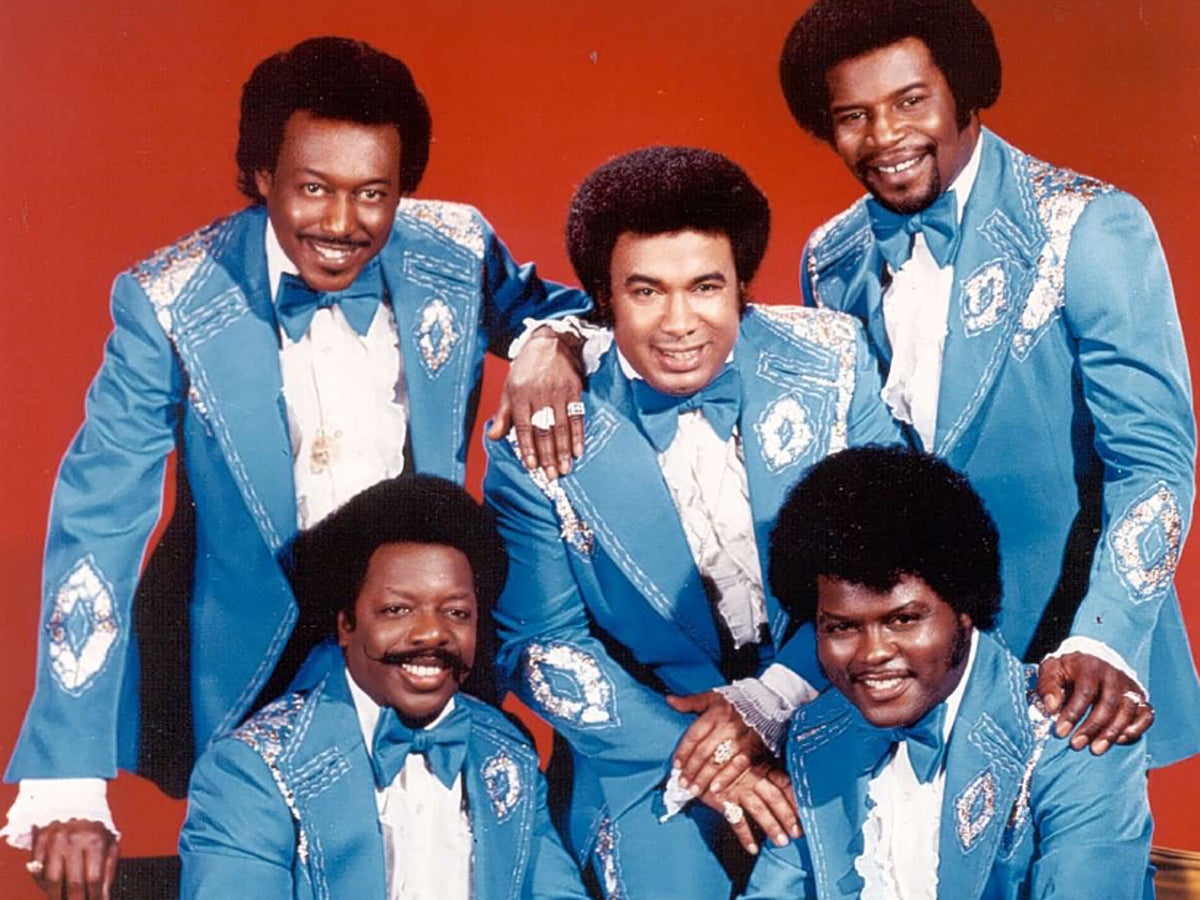
The Spinners had been around since 1954, and had been charting in the US since the early sixties. Which means that by the time their one and only British chart-topper came around, all four members were in their early-forties. One of the original ‘man-bands’, then! They join the aforementioned Four Seasons, and The Tymes, and even The Tams, in scoring #1s beyond their eras thanks to the popularity of soul and, of course, disco. They are still an active group, too, with one founding member, Henry Fambrough, still present.

Why, though, were the plain old Spinners marketed as The Detroit Spinners, and sometimes the Motown Spinners, in the UK? Well, all thanks to a British folk group who had already laid claim to the name. A couple of decades later the Americans would repay the compliment by forcing Suede to become the considerably less cool London Suede for their US releases…

454. ‘Going Underground’ / ‘The Dreams of Children’, by The Jam

Well, isn’t this quite the shot of adrenaline! The line between new-wave and punk becomes very blurred as The Jam score their first number one single…

Going Underground / The Dreams of Children, by The Jam (their 1st of four #1s) 

3 weeks, 16th March – 6th April 1980

The guitars are tight, and fast. Lead-singer Paul Weller spits the opening lines out with venom: Some people might say my life is in a rut! But I’m quite happy with what I’ve got! It’s a record that grabs you by the lapels of your smart, modish suit and doesn’t let you go. These angry young men are not happy with modern life, with their leaders’ lies and atomic crimes, and are off underground.

The lyrics are not always easy to make out – delivered as if Weller just has to get them off his chest before their three minutes are up – but one line stands out: The public wants what the public gets, But I don’t get what this society wants… I’m going underground…! And then there’s the ‘braying sheep’ on his TV screen. They’re words that ring just as true today – you could probably apply them to any point since WWII, to be fair – but after an economically difficult seventies, and less than a year into Thatcher’s government, dissent is growing…

‘Going Underground’ really does sound very raw, and very punk. It could be a hit from 1977, and is much more primitive when compared to new-wave’s two other big guitar bands, Blondie and The Police. This is perhaps The Jam’s last moment as an ‘underground’, if you will, band. This hits number one, and their sound expands and progresses. Only in the break, before the final chorus, does it sound a little more of its time, drippy and echoey, but only for a second before the guitars chop right back in.

‘Going Underground’ was actually only listed as the double-‘A’ due to a printing error. ‘The Dreams of Children’ was intended to be the lead, and it does sound much more of the moment. It starts with a cool false-beginning, guitars and vocals played in reverse, and has a great, chiming riff. But, I’d say it lacks the urgency of the flip-side. I hope that whoever buggered things up at the printing plant wasn’t punished too harshly…

If you were hoping for a more positive take on modern life here… well, nope. Paul Weller is having sweet dreams – the innocent dreams of a child – but wakes sweating and paranoid to this modern nightmare… I was alone and no-one was there… Before long, the song has turned into a sort of horror movie theme, voiced by a sinister dream-catcher.

Something’s gonna crack on your dreams tonight, You will crack on your dreams tonight… he sings, as the twiddly backwards effects return and things get genuinely creepy. Sorry kids, your dreams are just that: dreams. Real-life will grind you down. I mean, it’s not your run-of-the-mill #1 single material, but everything can’t be all sweetness and light. Neither of these songs sounds like a chart-topper, but it’s great that they got there.

And they got there in some style. This was the first record to enter at #1 since Slade did it with ‘Merry Xmas Everybody’ over six years ago. Elvis, Cliff, The Beatles and, er, Gary Glitter were the only other acts to have achieved this feat before 1980. It pretty much announces The Jam as one of, if not the, biggest band in the country (or at least the band with the most devoted fanbase, who ran out to buy the song as soon as it was released…)

However, can I just add before I go that it is a shame that The Jam’s previous single – their first Top 10 hit – wasn’t the big #1 debut. As great as this record I’ve reviewed today is, ‘The Eton Rifles’ stands as a brilliant commentary on the British class system: angry, and funny, and another one that still rings true today. We just don’t learn, do we?