874. ‘Lady (Hear Me Tonight)’, by Modjo

After a record-breaking twelve single-week number ones in a row, when neither Kylie, Eminem, Robbie Williams, nor Madonna herself, could hold on for more than seven days, we have a multi-week chart-topper.
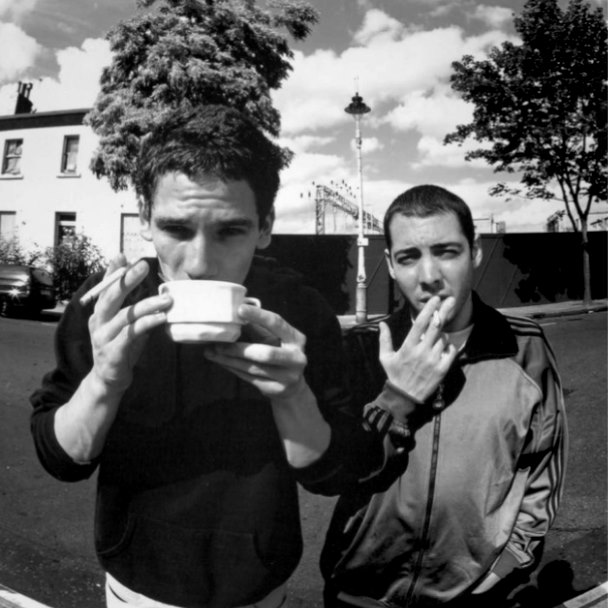
Lady (Hear Me Tonight), by Modjo (their 1st and only #1)

2 weeks, from 10th – 24th September 2000

And of course the act to finally hold firm at the top are one that nobody had ever heard of before, that didn’t have pent-up demand and huge first day sales which quickly petered out. Modjo were a French house duo and, with no previous hits become, I think, at least the sixth Random Dance act of the year to make #1.

And it also makes sense that this song was the one to spend more than a week on top – actually increasing in sales in its second week, which was practically unheard of in 2000 – because it is a mash up of all the era’s hot sounds. There’s a Chic sample, fitting in perfectly with the nu-disco hits that we’ve heard recently, but presented through a chilled Balearic filter, more suited for the poolside bar than the club. The BPMs are low, but the blissed out vibes are high…

We’ve had plenty of hard-hitting Italian, German and Dutch dance tracks over the years, but very few from France. In fact, Modjo’s success made them only the fourth French act ever to have a UK number one, after Serge Gainsbourg, Charles Aznavour, and Mr. Oizo. And not that I want to fall into the trap of national stereotyping, but there’s something very effortlessly cool about this song. A certain… Well, if only there was a French term for a quality that can’t be described or named easily.
Maybe it’s because only the five minute long album version is available on Spotify, but I’m beginning to think that effortless cool can only get you so far. Eventually things become repetitive, which is my eternal problem with dance music. I will give a shout out, though, to the jazz hands flourish that comes along every so often, a camp little nod to the Moulin Rouge among all the modernity, which also feels very French. And to the lyrics, which in the best Europop tradition feel quite ‘second language learner’: Lady, Hear me tonight, ‘Cause this feeling, Is just so right… But they work, and are very easy to remember.

The Year 2000 is really trying its best to make me re-evaluate my feelings on dance music. On the one hand each recent dance #1 has been interesting, fun and, most importantly, not Westlife. But at the same time, the best I can say for the majority of them is that they are diverting. Most of them don’t land hard enough between my ears for me to truly love them (I’d say ‘Groovejet’ is the one dance song from this year that I really, really like). Oh, and speaking of Westlife…

870. ‘I Turn to You’, by Melanie C

When Mel C scored her first number one, the hip-hop leaning ‘Never Be the Same Again’ featuring Lisa Lopes, I mentioned the impressive scope of her first few solo singles. Pop rock, alt-rock, rap… And now she achieves her second chart-topper, with some pretty hardcore trance.

I Turn to You, by Melanie C (her 2nd and final solo #1)

1 week, from 13th – 20th August 2000

I used to look at the number ones of 2000 with scorn: there are so many of them, such a high turnover that the idea of being ‘top of the pops’ seemed cheapened. But actually now, in the midst of listening to all of them, it’s turning out quite fun. Variety is, after all, the spice of life (no pun intended).

The same could be said about Mel C’s discography. The album version of ‘I Turn to You’ was a slower, longer, more atmospheric piece of music. And as it was chosen to be the LP’s fourth single, it needed something new to appeal to fans. That something was an absolutely banging remix. As regular readers know, I’m neither a dance music expert nor an aficionado. What stands out here is the beefy bass, and the buzzy synth riff. It reminds me of the dance hits of the early nineties, before Balearic beats and garage slowed things down.

There’s a subtle piano in the chorus that complements her vocals, and the exotic strings in the second verse keep things interesting just when the beat might have become tiring. Overall, though, this song works because it’s exciting. It has a power that makes you pay attention. The remix was the work of Hex Hector, an American producer who won a Grammy for this record in 2001.

Most importantly of all, Mel C’s vocal chords get a proper workout here, unlike on ‘Never Be the Same Again’. I turn to you, Like a flower leaning towards the sun… It’s left ambiguous whether Mel is singing about turning to a lover to help her through dark days, or a higher power. But in dance music, it never hurts to keep things vaguely spiritual.

She never managed any further solo #1s (though the Spice Girls have one more to come), but Melanie C has released eight solo albums to date, while also moving into musical theatre. In terms of #1s she is the second most successful solo Spice (behind Geri), and in terms of Top 10 hits she’s third (behind Geri and Emma Bunton). If we can crown a ‘most interesting solo Spice’ however, then Mel C’s got that award in the bag.

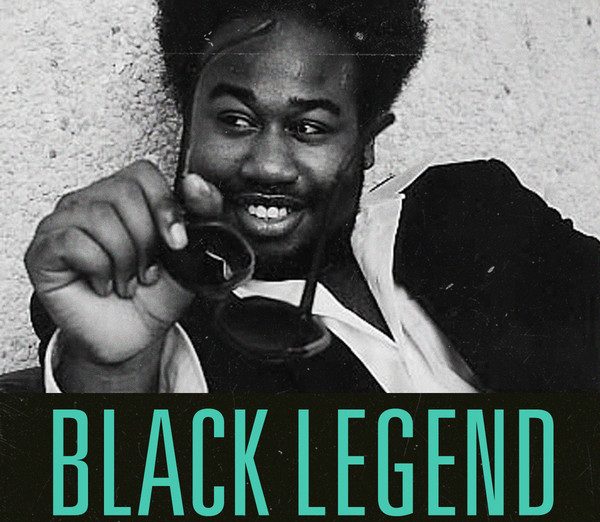
862. ‘You See the Trouble With Me’, by Black Legend

Our slow meander around the year 2000’s many, many chart-toppers continues, and we find another interesting stop along the road: the lost Barry White number one.

You See the Trouble With Me, by Black Legend (their 1st and only #1)

1 week, from 18th – 25th June 2000

First, we do have to state that it is not Barry White’s voice on this record, though vocalist Elroy ‘Spoonface’ Powell does a mighty fine impersonation. He even manages to make this sound like a live sample, introducing it with a spoken In 1975, we brought you an album, With a song… backed with lots of crowd noise.

Is it too early to suggest a mini disco revival, after Geri, Madison Avenue, and now this? (I’m also sneaking a peek at the record which replaced Black Legend at the top.) Though what dominates this record is not so much disco strings, but a naggingly insistent, thoroughly modern, house beat. On the radio edit the producers toy with us for the opening two minutes, teasing snatches of ‘You See the Trouble With Me’ (a #2 hit in 1976) that cut in and out, before finally letting ‘Barry White’ loose. For a bit. When the house beat kicks back in for the third or fourth time, it officially becomes annoying.

Barry White had refused the use of his original vocals for this remix, as he felt it ‘was cheap and had no soul’. I can understand his point, as the song uses the sample as bait, almost, to lure you to the dancefloor. The choppy nature of this song, the insistence on falling back on that irritating beat, means that there’s no release, no climax. You’re left with blue (disco) balls…

Black Legend were a very short-lived Italian production duo, with the aforementioned Powell on singing duties. They were together for three singles, and their only other appearance on the UK singles chart is with the #37 peaking ‘Somebody’. They fall agonisingly short of verified one-hit wonder status.

While I don’t much care for this remix, I am being won over by the year 2000’s fast turnover, which allowed curios like this to make number one, records that may not have made the top at any other period in chart history. Speaking of which, Black Legend are the first chart-toppers in a run of twelve one-weekers, from mid-June to mid-September 2000: a record-breaking stretch. Let the frantic fun begin!

861. ‘It Feels So Good’, by Sonique

In a year packed with dance hits, here’s one of the best…

It Feels So Good, by Sonique (her 1st and only #1)

3 weeks, from 28th May – 18th June 2000

The strings; the husky, ominous vocals; the garage beat. It’s of its time, but also one of those hits that transcends its moment. Maybe it’s a sign of how pop music has lost its forward movement in the early years of this century, but ‘It Feels So Good’ sounds like it could be a hit from 2025. Plus, lines like You give me such a vibe, It’s totally bona fide… feel very much like how the young folk speak these days.

In my mind, I always imagined the chorus was autotuned, especially the It’s you I’m always thinking of… line. But listening now, I don’t think it is. It’s just very distinctively sung, in a very high key, oddly far back in Sonique’s throat. Hey, every hit needs a hook, even one that makes it sound like you’ve got a bad cold.

As with many dance tracks, my attention starts to wander in the second verse, which is more of the same. But I do like the lasering synths that become more prominent as the song progresses. Having said that it sounds very much of the year 2000, it turns out that ‘It Feels So Good’ was almost two years old by the time it made #1, having reached #24 on its original release in December 1998. Interestingly, given that the US is usually quite resistant to European EDM, it was the song’s success stateside (where it eventually made #8) that prompted the re-release.

Sonia Marina Clarke, AKA Sonique, had been active in the music biz since the early eighties, when she had formed a reggae band, and had released her debut solo single in 1985. She had also worked with S’Express, though joined after ‘Theme from S’Express’ had topped the charts. She had two other Top 10s – ‘Sky’ and ‘I Put a Spell on You’ – which tread much the same territory as this single without being as good. She still records, and DJs, and played Glastonbury just last year.

‘It Feels So Good’ is also noteworthy due to being the joint longest-running number one of 2000, with a grand total of three weeks at the top. I feel I should also note how darn basic the title is. ‘It Feels So Good’ rivals ‘I Love You’ (#1 for Cliff and the Shadows in 1961, chart fans) for simplicity. Just drop the ‘It’, I think, and things become much cooler. But what do I know? It’s not as if proper sentence structure hampered this record’s success…

859. ‘Don’t Call Me Baby’, by Madison Avenue

Though it may have been a chaotic year of one-week wonders, of number ones with the lifespan of butterflies, there’s something joyous about the chart-toppers of the year 2000.

Don’t Call Me Baby, by Madison Avenue (their 1st and only #1)

1 week, from 14th – 21st May 2000

This is the fifteenth number one of the year (we’re only in May, and there have been years in which the entire twelve months saw fewer than fifteen #1s). Of that fifteen, I’d count eleven as being in some way upbeat, uptempo, uplifting… It’s as if the record buying public had bounded into the new millennium full of optimism, ready to fill their CD players with fun records. Such as this slice of disco-funk.

Other than the chorus, the one thing that stands out about ‘Don’t Call Me Baby’ is the catchy bass riff that propels the song along. And it’s surprising how much of the record is left ‘blank’, with just that bass riff and the disco beat to fill the spaces between the verses and chorus. I suspected that it might have been a sample, so timeless does it sound, and so it is: from a 1980 Italian hit called ‘Ma Quale Idea’, by Pino D’Angiò, which in turn had been based on disco classic ‘Ain’t No Stoppin’ Us Now’, by McFadden & Whitehead.

The lyrics tell a story of female empowerment via the dancefloor: Behind my smile is my IQ, I must admit this does not sit with the likes of you… You’re really sweet, You’re really nice, But didn’t mama ever tell you not to play with fire…? I like the modern sass and the bite of the lyrics against the retro beat. Don’t underestimate me boy, I’ll make you sorry you were born… In fact, this brings us to another emerging theme of the year: Girl Power actually kicking in, half a decade late. I’ve already mentioned that the 21st century would see female pop stars dominate, but I hadn’t quite noticed how spunky many of the songs would be. This, straight after ‘Oops!… I Did It Again’, and ‘Bag It Up’, for example. (We’ll ignore ‘Born to Make You Happy’…)

Madison Avenue were an Australian duo, producer Andy Van Dorsselaer and singer Cheyne Coates. This record’s success made them the first Australian group to top the British charts since Men at Work back in 1983. ‘Don’t Call Me Baby’ had actually made #30 the year before, but hung around in clubs and the lower reaches of the charts, prompting this successful re-release.

They may not quite qualify as one-hit wonders, having one further Top 10 (the similarly fun ‘Who the Hell Are You’), and one more Top 40, hit. But I’d say Madison Avenue definitely qualify as the latest member of our rapidly growing ‘random dance’ sub-folder, with more to come very soon.

856. ‘Toca’s Miracle’, by Fragma

In my last post, I argued for garage as the sound of the new millennium. And it’s a compelling argument. But it wilts in the face of competition from the true, the one, the only sound of the year 2000… Random dance.

Toca’s Miracle, by Fragma (their 1st and only #1)

2 weeks, from 16th – 30th April 2000

Why is it so hard for dance acts to have longevity? Is it because their tracks are often based on samples, and have often been through multiple remixes, before they eventually make it big, making it hard to recapture whatever made it a hit in the first place when recording the follow-up? Or is it because it’s difficult for some faceless bloke behind a mixing desk to build up much of a fanbase?

Another question: who, or what, is a Toca? While my queries about dance music might need a more expert opinion, I can answer this second one. In Spanish, ‘Tocar’ means to touch. (It can also mean ‘a hole dug by a mouse’ in Portuguese, but I’m assuming that wasn’t the inspiration for this hit.) A British DJ by the name of DJ Vimto (juicy!) mashed 1998 hit ‘Toca Me’ (#11 in the UK) by German trance trio Fragma, with British singer Coco Star’s 1997 #39 hit ‘I Need a Miracle’. The illegally recorded results were picked up by DJs, and played in clubs to an enthusiastic reception. Luckily for Mr Vimto, Fragma and Coco Star liked what they heard, and were on board for a more legitimate recording.

I can pinpoint the exact moment that made ‘Toca’s Miracle’ such a big hit. The line in the chorus – It’s more than physical what I need to feel from you… They’re the usual semi-nonsense dance lyrics, but something in Star’s floaty melisma grabs the ear. It’s a hook that’s remained with us for the past twenty-five years, instantly identifiable even if I have very little love for the actual song. The rest of the record is fairly predictable, though admittedly I’m no connoisseur of ambient trance. It is a very well regarded track, however, and is seen as a game changer for Eurodance, setting the tone for the rest of the 2000s, through acts like Cascada, and Ultrabeat, and Basshunter.

The other thing I remember about this is the video, in which Coco Star plays in a game of women’s futsal. The scenes set in the changing rooms were very popular with the boys at school, though looking back it’s all quite PG, proof more of the untamed horniness of fourteen-year-old boys than of the video’s raunchiness. Interestingly, the only video now available on YouTube is of a 2008 remix, which might have something to do with Coco Star taking Fragma to court claiming that she had never received any royalties. The track was removed from streaming services too, until 2022 when the court case was thrown out.

Fragma managed a couple more Top 10 hits before disappearing from the charts. Coco Star has managed no hits other than this, and the song it samples. My question about dance acts not having longevity remains hanging… Perhaps the most interesting thing about this entire saga however is the fact that Coco’s ‘I Need a Miracle’ was written by Rob Davis, lead guitarist of glam rock legends Mud. Not a chart-topping connection many would have predicted, right? Amazingly, Davis will be go on to be involved in two further ginormous chart-toppers during the early years of the 21st century…

As mentioned, the video is not on YouTube due to copyright reasons. Even the video below may not be the actual chart-topping 2000 mix.

This is the original video, with a 2008 remix playing over it… (can only be watched on YouTube).