747. ‘Setting Sun’, by The Chemical Brothers

There’s no doubt that ‘Firestarter’ was the big, banging dance-rock crossover hit of 1996; but that song’s infamy probably means that it has unfairly overshadowed the year’s other big, banging dance-rock crossover hit…
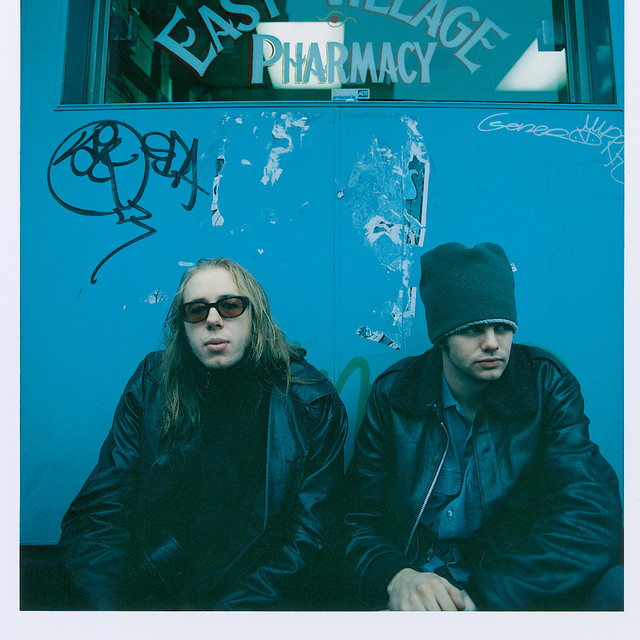
Setting Sun, by The Chemical Brothers (their 1st of two #1s)

1 week, from 6th – 13th October 1996

Because ‘Setting Sun’ hits even harder than ‘Firestarter’, and it hasn’t been tamed by years of ubiquity. I hadn’t heard it properly for ages, and was genuinely taken aback by how nasty it sounds. Take the relentlessly monotonous, boldly uncommercial, one-minute long intro for a start. These are big beats with a capital ‘B’.

The shrieking klaxons and the gut-dropping bass hold the track together, and are very nineties. But in the droning sitar, and the vocals played in reverse, there’s also more than a nod to the original tape-looping, Eastern-looking, psychedelic game-changer: the Beatles’ ‘Tomorrow Never Knows’. At one point lawyers looked like getting involved, before a musicologist was brought in to prove that the song was merely inspired by, and didn’t sample, The Beatles. The fact that it was used as a template for a dance track thirty years later surely just proves how incredibly ahead of its time ‘Tomorrow Never Knows’ was.

And what could be more Beatlesy, back in 1996, than to have Noel Gallagher on vocals? Uncredited, and filtered through layers of feedback, but still recognisable from the off, he even manages to rip-off his own lyrics from ‘Half the World Away’… You said your body was young but your mind was very old… And I have to say that this is probably the best #1 single that he features on, as much as I do enjoy many of Oasis’s chart-toppers.

Other brilliant moments include the intense break half-way through, which sounds like a helicopter landing on your head. (I was going to call it the ‘middle-eight’ but I don’t think traditional terms like that apply to boundary pushers like this.) And then there’s the completely unhinged outro, in which the song disintegrates before our ears. The video I’ve attached below is the radio edit, but it’s worth hearing the full five and a half minute version, to drag out the exquisite nastiness…

Another thing that’s interesting about this record is that, unlike The Prodigy when they unleashed ‘Firestarter’, The Chemical Brothers had only a couple of minor hits to their name before ‘Setting Sun’. According to most sources, airplay was limited too. So it seems to have been a genuine underground, word of mouth smash (with Noel G for added clout) that set the duo up to become one of the biggest dance acts of the late-90s and early-00s.

The Chemical Brothers (yet again, like the Walkers, the Righteouses and the Outheres, they are not actually brothers!) had met at the University of Manchester in 1989, and had bonded over their love of rave culture. There can be few chart-topping DJs with a degree in late-Medieval history, but the Chem’s Ed Simons is one. They have one further chart-topper to come, but it will have to go some to match the power of this.
746. ‘Breakfast at Tiffany’s’, by Deep Blue Something

I’ve made a big deal about British rock (‘indie’, ‘Britpop’, call it what you will) not getting its fair share of airtime at the top of the singles chart in the ‘90s. I even did a special post on it. But here’s an even rarer sighting of the US equivalent…

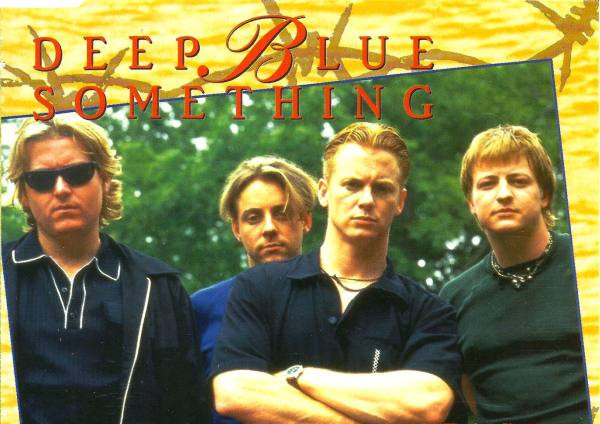
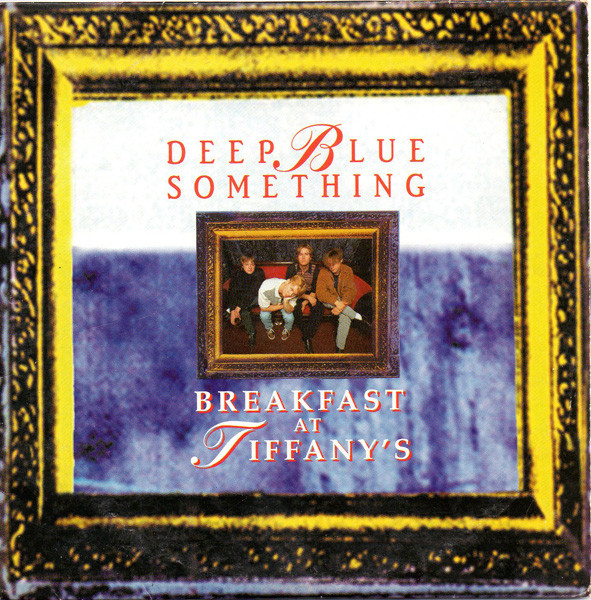
Breakfast at Tiffany’s, by Deep Blue Something (their 1st and only #1)

1 week, from 29th September – 6th October 1996

When I think of US alternative rock, post-grunge, in the mid-1990s, I think of REM, the Chili Peppers, Hootie & the Blowfish, and… I’m struggling, to be honest. Britain was bursting at the seams with their own alt-rock, and not many American acts broke through. Here then is US indie, alt-, college (again, call it what you will) rock’s one week in the sun. I might even go as far as suggesting that this is the first such #1 since The Highwaymen in 1961, though that might be pushing things slightly.

It’s a catchy record, with jangly verses which contrast against the power chords in the chorus. It’s a very different sound to Oasis, or Blur – there’s an earnestness to US rock that its British equivalent often deliberately avoids – but I’m sure the prevalence of Britpop benefitted this in making it to #1. And, though I was still young at the time, I can remember it being everywhere on the radio…

The most interesting thing about this record is the lyrics. Even the title intrigues… ‘Breakfast at Tiffany’s’? I make it only the second number one single to share its name with a book, after ‘Wuthering Heights’, but I’ll happily be proven wrong if I’ve forgotten one! It’s about a dying relationship, that the singer tries to save by thinking of one thing the pair have in common. And I said, What about, ‘Breakfast at Tiffany’s? She said I, Think I, Remember the film… I think we’re meant to assume that this is enough for them to give it another go. I always thought that the next line was And as I recall, I read the book and I liked it… with the film and the book versions of ‘Breakfast at Tiffany’s’ being pretty different and a sign of the couple’s ill-suitedness… Except it turns out that the real line is as I recall I think we both kinda liked it… Call me a cynic, but my subconscious didn’t want them to stay together.

I see a lot of hate for this song online, hate that was also around at the time. And I can kind of see it, the fact that it’s cookie-cutter mid-nineties soft rock. The lyrics could also be seen as contrived, though I think they’re endearingly clumsy. It’s certainly not worthy of #6 on the ‘50 Most Awesomely Bad Songs Ever’ list, as VH1 and ‘Blender’ named it!

Deep Blue Something were from Denton, Texas and, despite forming in 1991 this was their first hit. Their only hit in much of the world, apart from in the UK. We felt sorry for them, and allowed their follow-up ‘Josey’ to make #27, sparing them a one-hit wonder tag. They split in 2001, but reformed in 2014. The members juggle being in Deep Blue Something with other day jobs in the music industry. Apart from, that is, guitarist Clay Bergus, who is a manager of Eddie V’s Prime Seafood restaurant in Fort Worth. Which is great.

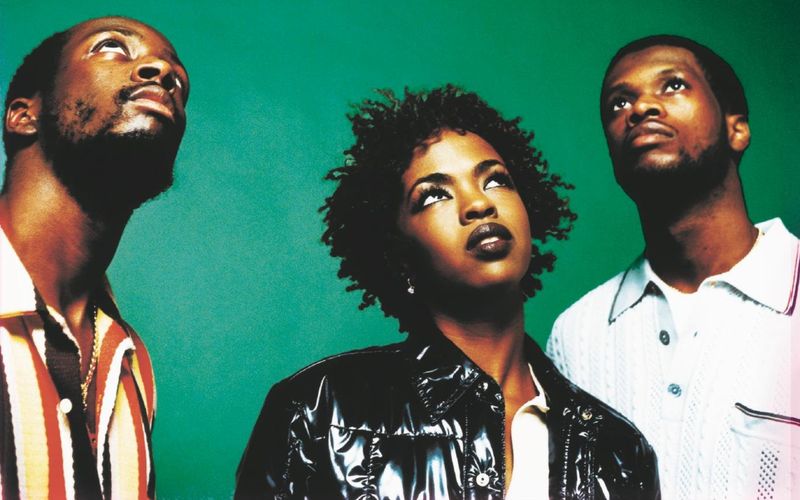
745. ‘Ready or Not’, by The Fugees

I first proposed the existence of ‘shadow #1s’ way back at the start of this blog when covering Frankie Laine’s ‘Hey Joe’, which had made top spot shortly after his mega-hit ‘I Believe’ (the song that still holds the record for weeks at number one). ‘Hey Joe’ was a zany, whip-crackin’ country ditty, a world away from the spiritual ‘I Believe’, and I suggested that the reflected glow of the earlier hit had paved the way for the follow-up.

Ready or Not, by The Fugees (their 2nd and final #1)

2 weeks, from 15th – 29th September 1996

It’s a phenomenon we’ve seen repeated a few times. ‘Baby Jump’ by Mungo Jerry springs to mind as one of the most obvious. ‘Shadow #1s’ don’t even have to follow a chart-topper, as both Alvin Stardust and a-Ha achieved their only number ones after their much more famous number twos… All of which is my long-winded way of introducing ‘Ready or Not’, one of the ultimate shadow #1s…

I tried to claim that The Fugees earlier cover of ‘Killing Me Softly’ was hip-hop’s big arrival as a chart force. But actually, this is the moment. This is no funky cover of a seventies classic; this is uncompromising rap. (Though it is built around a very distinctive, very haunting sample from Enya, so I suppose it does have some mum-friendly credentials.) Like Peter Andre’s ‘Flava’, which was a particularly modern sounding pop song, this is modern rap – East Coast rap, apparently, though I’m not qualified to clarify what that actually means – and could have been a credible chart-topper anytime between 1996 and now.

It still makes use of Lauryn Hill’s amazing voice, in the chorus, but while she sang angelically on ‘Killing Me Softly’, her voice now drips with deadpan attitude. Ready or not, Here I come, You can’t hide… Around this, each of the three MCs take turns telling us how the Fugees are poised for world domination. I like Hill’s alliterative voodoo line, as well as: While you’re imitating Al Capone, I’ll be Nina Simone, And defecating on your microphone… But perhaps the most important verse is Pras Michel’s, which focuses on the group’s immigrant background: I refugee from Guantanamo Bay, Dance around the border like Cassius Clay… (the band name is, after all, short for ‘Refugees’).

Although uncompromising, this isn’t gangsta rap. Hill’s verse even calls out stereotypical rappers: Frontin’ n*ggas give me heebeejeebees… Enya threatened to sue the trio for sampling ‘Boadicea’ before she realised that the lyrics went deeper than just guns and pimping. (Although, while there’s no swearing, there is the above-mentioned debut appearance of the n-word in a UK #1.) Meanwhile, though it isn’t strictly a sample, the chorus is heavily based around the Delfonic’s ‘Ready or Not Here I Come (Can’t Hide from Love)’, a minor hit in 1969.

In calling this a ‘shadow #1’, I don’t mean to suggest that this doesn’t have musical merit. The verses are impressive both lyrically and in the way they are delivered, while the use of ‘Boadicea’ is one of the all-time great samples (so effective that this won’t be its only appearance in a number one single…) There was also the small matter of a multi-million dollar video featuring submarines, sharks and helicopters to promote it. But no, all that aside, this is an impressive and important song, and I say that as someone with a fairly low tolerance for rap.

The Fugees weren’t together for long after their chart-topping summer of ‘96, with the members moving on to solo projects by the following year. All three will have their own hits, but only Wyclef Jean will feature on another #1. Lauryn Hill has had the most interesting post-Fugees career, involving both charity work and other philanthropic endeavours, jail time for tax fraud, as well as the small matter of eight Grammy awards and the title of ‘Greatest Female Rapper’. The group have reunited twice over the years.

744. ‘Flava’, by Peter Andre

Straight after the ‘90s most famous five-piece, the decade’s most famous six-pack arrives on the scene…

Flava, by Peter Andre (his 1st of three #1s)

1 week, from 8th – 15th September 1996

To be fair to this record, we have to try forget what Peter Andre is now – the butt of a million jokes, basically – and cast our minds back over a quarter of a century (gulp!) to when he was hot property. And if we are being fair, this record is a perfectly serviceable slice of mid-nineties dance/pop/R&B. Listening to it, you’d assume that Andre was American, especially when singing lines like Can’t bring myself to sleep, So I get the keys to my Jeep…

Except Mark Morrison recently proved that Brits (or British-Australians in Andre’s case) could do these sort of new-jack swing, R&B jams as well as, if not better than, the Americans. Not that ‘Flava’ is in the same street as ‘Return of the Mack’, but they do share the same postcode. And interestingly, Andre also sings in the chorus that the Mack’s back with the flava of the year… (Since writing my post on Mark Morrison, I’ve learned that ‘Mack’ is US slang for ‘a confident, successful man who has many sexual partners’, according to the OED, possibly stemming from the blaxploitation movie of the same name.)

The weakest link here is Peter Andre himself, and his reedy voice which never quite convinces that he is someone who parties all night, or who gets drunk as hell blazin’ up with the smoke, as the uncredited Cee raps in his verse. But this leads us on to what the legacy of ‘Flava’, an otherwise average, throwaway tune, is… The fact that it is a completely and utterly modern pop song.

There’s that beat that Max Martin would be rinsing the life out of by 1999, there’s a synth riff that I’m pretty sure was used by both the Backstreet Boys and 5ive (if not several others), and there’s a rent-a-rapper brought in for the middle eight. This is how pop music will sound for the next twenty-odd years, and here it first appears on top of the charts. With Peter Andre, musical trailblazer…

Or maybe it’s because I can remember 1996, and so my subconscious is forcing me to hear it as modern. It’s either that, or accept that I’m old… Anyway. I made a big play of Peter Andre’s six-pack in the intro, but in the ‘Flava’ video he keeps it fairly well hidden behind an array of baggy shirts. This was probably a reaction to the ‘Mysterious Girl’ video, which had made #2 earlier in the year and in the video for which he spent most of his time topless, under a waterfall. He clearly wanted to be known for his art, dammit, not his body! I won’t link to ‘Mysterious Girl’ – his one true classic – as that makes #1 eventually, under circumstances that will lead to Peter becoming the boob he is nowadays

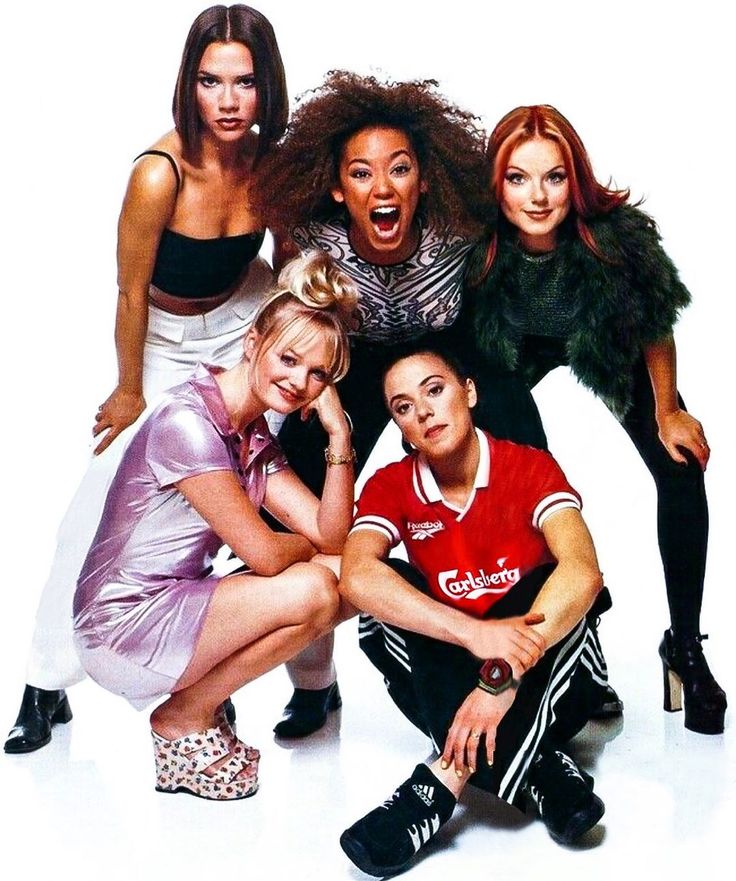
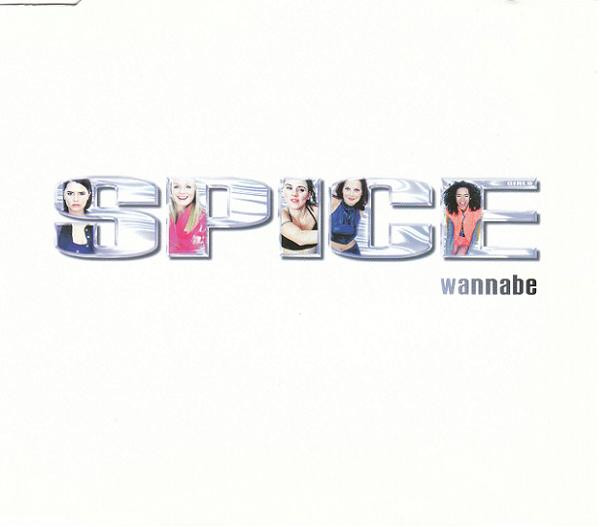
743. ‘Wannabe’, by The Spice Girls

Ah, now this feels like a significant moment…

Wannabe, by The Spice Girls (their 1st of nine #1s)

7 weeks, from 21st July – 8th September 1996

And not just because it introduces us to a genuine musical phenomenon, who by certain metrics are the most successful chart act ever; but because the Spice Girls were my first modern pop obsession, the first act that I loved in real time.

Listening to ‘Wannabe’ now, I can confirm that I still know all the words, and that I can still picture the one-shot video frame by frame. I’m still pretty sure I know what zigazigah means… But can I now admit that this record isn’t… very… good?

Of course I can. Even aged eleven, I didn’t have that much time for ‘Wannabe’. Far greater pop songs were to be found on the Spice Girls’ debut album, including some of their upcoming #1s. The verses are slightly risqué nursery rhymes – If you want my future, Forget my past, If you wanna get with me, Better make it fast… – while the chorus is an aggressively nonsensical chant: I’ll tell what I want what I really, really want… So tell me what you want etc. etc. etc. It’s breakneck, the sudden changes in direction are dizzying, and it leaves you with a bit of a headache.

One thing remains iconic: the ‘rap’, in which all the Spices are introduced to us. Like the chorus it makes little to no sense, but it does include an all-time classic line: Easy V doesn’t come for free, She’s a real laydee… (at which point in the video, the soon to be Mrs Beckham is grinding on a priest’s lap). Otherwise, this song is best viewed as a statement of intent, a big slap around the face with a leopard-print handbag. Or perhaps it’s actually the Spice Girls’ manifesto, with all those lines about putting friendship first, and everything being on a girl’s terms. (This is before they were lumped with the slogan ‘Girl Power’.)

The Spice Girls probably wouldn’t have been as huge if they hadn’t released ‘Wannabe’ as their debut single (and it surely had to be released first, or not at all). It’s a marmite track, something the girls and their management acknowledged at the time, but they went with it and were rewarded for their decision, and then some. Number one in thirty-seven countries, and voted as the most recognisable pop song of the past sixty years…

‘Wannabe’ itself probably wouldn’t have been as big as it was without the chaotic video, in which the girls rampage through a posh soiree at the St. Pancras Hotel in London. Again, it’s the perfect introduction to the group, their friendship, their vibe. And it’s interesting how young the target audience clearly is: you have five youthful, attractive females, and yet there’s nothing very sexual going on, aside from a bit of zigazigah-ing. It feels more like a madcap kids’ TV show.

In fact, the helter-skelter, cut and paste feel of the song, and the zany anarchy of the video, is pushing me to call this… not ‘pop punk’, as that’s already taken… maybe ‘punk pop’? Cheap, cheerful, and far more to do with attitude than any sort of musical quality. It works for now, anyway. We’ll have plenty of time to further assess the Spice Girls over the coming months. I might even bring up my homemade Baby Spice badge, and the saucy graffiti I drew all over the CD sleeve of their album, at some point too…

742. ‘Forever Love’, by Gary Barlow

Have I ever heard this song before…? The much-anticipated solo debut from Take That’s leading man? I was about to start my final year of primary school, fairly well up on the pop hits of the day, and yet…

Forever Love, by Gary Barlow (his 1st of three solo #1s)

1 week, from 14th – 21st July 1996

There’s a chance I may never have heard ‘Forever Love’ before; but there’s also a chance I’ve heard it a hundred times and simply forgotten. It is… Dull. Bland. Pedestrian. Lacking any sort of hook, or memorable lines. Love it has, So many beautiful faces, Sharing lives, And sharing days… See what I mean. Meh.

My last two posts have been lengthy, so this one can be short and sweet. Dull love song has week at number one. Hardly the first time, and at least it was just one week. Except, ‘Forever Love’ should be so much bigger, so much more of an event. Gary Barlow was the biggest pop star in the land, striking out alone. The next George Michael, maybe?

I think he was probably trying too hard. This record is clearly well produced, something that took a lot of time and careful thought. But it’s too fussy, too needlessly ornate. The album-version intro is so long, and overwrought, that you’re bored before Gary has even opened his mouth. At the three minute mark you check how long is left, and sigh when you see there are two more to go… I’ve never written a classic pop song, but I bet nobody that’s managed it ever sat down at their piano and said ‘today is the day I write something timeless!’ You feel that Barlow probably set himself that goal, though.

The obvious comparison to make is with his former bandmate, the one who had jumped ship first and was also about to release his debut single, a cover of ‘Freedom’ by George Michael (clearly both men had the same ambition). Initially it was Gary who had the bigger hits, but it was Robbie Williams who understood better what a pop star is about, what the public wants: some catchy tunes and some showmanship. Most of them don’t care about the ‘craft’. (Also, Robbie very sensibly got someone in to help him write said tunes…)

And so Robbie will very soon eclipse his estranged bandmate. Gary has one further solo number one to come – another that, at first glance, I don’t think I’ve heard for the best part of three decades – before a decade in the wilderness beckons.

741. ‘Killing Me Softly’, by The Fugees

I was ready to lead this post with a ‘hip-hop goes mainstream’ headline, twinning it with the success of ‘Gangsta’s Paradise’ a few months before…

Killing Me Softly, by The Fugees (their 1st of two #1s)

4 weeks, from 2nd – 30th June 1996/ 1 week, from 7th – 14th July 1996 (5 weeks total)

But listening to the Fugees’ cover of ‘Killing Me Softly’ now – even though it holds the title of the UK’s ‘best-selling hip-hop single of all time (by a group)’ – there isn’t all that much hip, or hop.

The intro is a beautifully sung a cappella version of the chorus – the whole song is similarly well sung by Lauryn Hill – and even though a simple hip-hop beat comes in soon after, and Hill’s bandmates Wyclef Jean and Pras Michel throw in some adlibs, this is not a gangsta rap revolution. Your mum could have quite happily heard this on the car radio without reaching for the dial in horror.

Which is presumably why this song went on to be the highest seller of 1996, to this day remaining in the all-time Top 50. It is also a cover of a much loved classic, Roberta Flack’s version having made #6 (and #1 on the Billboard chart) in 1973. Flack’s wasn’t the original though (something I just found out today) as Lori Liebermann had recorded a version the year before, with her two song-writing partners Charles Fox and Norman Gimbel. There have been lawsuits and recriminations over which of them dreamed up the song’s concept, and the lyrics, but it’s generally agreed that the subject of the song – the man killing the singer softly with his words – is Don McLean.

A record as great as this will have moments in particular that stand out, and I love the twangy sitars that chop up the verses, and the way Hill pronounces ‘boy’ as ‘bwoi’. But the beauty here is mainly in the song’s simplicity, in the way that they allow the raw and very personal lyrics to stand out, much as they do in the earlier versions. The way that the woman listening to the unnamed singer has an almost sexual reaction to hearing his music: I prayed that he would finish, But he just kept right on…

This may be hip-hop lite, but at the same time it is undeniable that this was the moment when the genre was going mainstream in Britain. More and more rap #1s are coming up, including one much less radio-friendly one from the Fugees themselves. Perhaps that’s the way it had to be – hip-hop in through the back door, covering easy-listening classics, persuading suburban mums to buy the album… I can imagine many shocked faces in the summer of 1996 when people realised that this pop classic was a bit of an outlier in the Fugees’ canon.

The Fugees were a trio from New Jersey (Jean and Michel were of Haitian origin) who had been together since 1990, and recording since 1993. Their first album hadn’t much troubled the charts, and so this record was their breakthrough smash. Interestingly, the strange Billboard rules of the time meant that neither this nor any of their subsequent hits actually charted in the US, as they were only released to airplay. In any case, it still made #1 in twenty-one countries around the world.

I won’t delve into the Fugees’ subsequent careers, and varying levels of fame and infamy, just yet, as they have that aforementioned second #1 to come very soon. But I will linger here a moment more, as this really is one of the great ‘90s chart-toppers. The fact that I cannot listen to either of the earlier versions without wanting to add the ad-libs from this one is testament to that. ‘Killing Me Softly’ did a dance with ‘Three Lions’ at #1, meaning that it is one of only two singles to knock the same song off top spot twice. Not ‘one time’, but ‘two times’… See what I did there?

739. ‘Ooh Aah… Just a Little Bit’, by Gina G

One day I’ll do a feature on the #1 singles with the best intros – the likes of ‘Satisfaction’, and ‘I Heard It Through the Grapevine’. It’ll be a great blog post, attracting widespread acclaim… Except for one problem. I’ll feel duty bound to include ‘Ooh Aah… Just a Little Bit’.

Ooh Aah… Just a Little Bit, by Gina G (her 1st and only #1)

1 week, from 19th – 26th May 1996

You see, few intros hold more nostalgic power for me. Within two of these tinny notes – this synthesised siren demanding you report immediately to the dancefloor – I am ten years old again, at a primary school disco, among the flashing lights, and the dry ice that always smelled a bit like pee, high on Fanta and prawn cocktail Skips.

Yes, this is cheesy crap. But it is also magnificent. It is the final part of a holy trinity of Eurovision anthems – this, ‘Waterloo’, and ‘Making Your Mind Up’ – and the fact that it only finished in 8th place is truly shocking. It’s very camp – as any song with ‘Ooh Aah…’ in the title must be – and yet flirts with almost being cool. Lines like Every night makes me hate the days… and the way that the drum machine and the synths reach near-techno levels, for example.

You could be smart, and claim that this is ‘post-rave’ or something, but actually trying to give this record a clever label would be doing it a disservice. Something this gloriously tacky doesn’t need clever labels. In a nutshell, ‘Ooh Aah… Just a Little Bit’ sounds like Stock, Aitken and Waterman back in their chart-topping heyday, but only if the lads had just popped some Ecstasy and downed five bottles of Hooch.

Although she represented the UK at the Eurovision Song Contest in 1996, Gina Gardiner was Australian, from Brisbane. She had genuine dance music credentials, having been a DJ since the early ‘90s, and a member of the group Bass Culture. Post-Eurovision, ‘Ooh Aah…’ was a hit around Europe, and even made #12 in the US. It led to two further #6 hits for Gina, who released her last single in 2011, and hasn’t been active since. She apparently has her own record label, and lives in LA with her husband. I hope she’s happy, and would like her to know that her biggest hit still elicits an almost Pavlovian response from this man in his late-thirties…

Interestingly, Gina G’s is the first female voice to feature on a UK number one since Janice Robinson belted out her vocals on Livin’ Joy’s ‘Dreamer’, and the first woman to be credited on a UK chart-topper since Cher, Chrissie Hynde and Neneh Cherry well over a year ago. 1995 was very male heavy – and the worst year for number ones in quite a while. The remainder of 1996 promises more female voices, and thankfully much more enjoyable #1s.

738. ‘Fastlove’, by George Michael

George Michael bows out from chart-topping duty, after eleven #1s – both solo and with Wham! – in just under twelve years. And dare we say he bows out with his best…?

Fastlove, by George Michael (his 7th and final solo #1)

3 weeks, from 28th April – 19th May 1996

I doubt many other people would name ‘Fastlove’ as Michael’s best chart-topper, but it’s my favourite. As worthy, and lyrically beautiful, as ‘Jesus to a Child’ was; I’m glad that he wraps up with this banger. Gotta get up to get down… And if his number one from earlier in the year was an ode to a lost love, then this is an ode to getting over a lost love. An ode to anonymous and fleeting satisfaction, as Cher once memorably put it.

I ain’t mister right, But if you’re looking for fast love… he purrs, over a funky bassline and some contemporary disco beats. All that bullshit conversation, Baby can’t you read the signs… I also love the line about all his friends having babies, while he’s just wanting to have fun, which is something every gay man in their thirties can relate to. In the background we can hear ‘interpolated’ – as we must always refer to sampling from hereon in – the hook from 1982 hit ‘Forget Me Nots’ by Patrice Rushen (which Will Smith will soon ‘interpolate’ even more blatantly).

I called this a ‘banger’, but it’s actually quite smooth and slinky. The melody and the groove wrap themselves around you like a particularly sexy snake, and don’t let go. There are still some of the over-indulgences that, for me, always mark George Michael’s work down a notch: the muzaky saxophones, and the fact that it goes on for over five minutes. A three-minute quicky would have been more appropriate here, especially given the subject matter. But the funky break in the middle is a thing of beauty.

Like all great pop songs, though, there is more going on under the surface. The lyrics aren’t just celebratory, they reveal a pain behind all the sex. George needs affirmation, needs someone to ease his mind. In the absence of security, I made my way into the night… Which sounds quite dark, until a few lines later he proposes a quick shag in his BMW. But there’s enough here to suggest that his need for ‘fastlove’ isn’t an entirely healthy thing, and may be linked to the loss in ‘Jesus to a Child’. The most telling line is surely I miss my baby… It’s admirable that he made a very catchy pop song out of such personal issues.

Post-‘Fastlove’, George Michael would remain a fairly regular presence in the UK charts, including four more #2s. One of which is the truly glorious, and definitely worthy of the term ‘banger’, ‘Outside’ – a brilliant middle-finger to all the fuss over his sexuality. He died in 2016, aged just fifty-three, and took his place in the highest-echelons of dead pop superstars. I have my opinions on his current standing among the greats, but it seems churlish to drone on about them here.

And, of course, he isn’t actually done with chart-topping, as the streaming era has given ‘Last Christmas’ – for years the highest-selling #2 hit of all time – a new lease of life. But that’s something that we’ll get to, again, and again, and again, in due course…

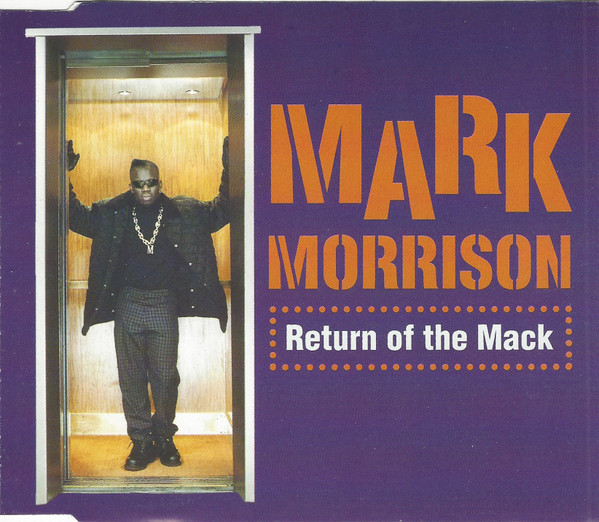
737. ‘Return of the Mack’, by Mark Morrison

I did say, a post or two ago, that we were hitting a golden vein of chart-toppers. In fact, Take That’s feeble swansong aside, 1996 has already been a vast improvement on the year before, and we’re only in April…

Return of the Mack, by Mark Morrison (his 1st and only #1)

2 weeks, from 14th – 28th April 1996

‘Return of the Mack’ is completely different from our last number one – the Prodigy’s searing ‘Firestarter’ – but it’s every bit as catchy. It’s slick, very mid-nineties R&B; but I don’t mean slick in a boring way. More in a supremely confident, honeyed, knows exactly what it’s doing sort of way.

You could easily believe that this was being sung by a US soul superstar, a Boyz II Men-Bobby Brown hybrid of some sort, apart from one detail: it’s actually quite fun, and doesn’t take itself too seriously. A lot of US R&B at this time was spotlessly honed to the point of being completely transparent and unmemorable. We had a taster of it when Michael Jackson’s ‘You Are Not Alone’ was at #1, but thankfully this sound never dominated the British charts like it did the Billboard.

I assume that the ‘Mack’ in the chorus is supposed to be Mark Morrison himself, and this self-referencing adds another layer of braggadocio to what is already a swaggering tune. He’s back, feeling better than ever, and ready to lord it over his ex… So I’m back up in the game, Running things to keep my swing, Letting all the people know, That I’m back to run the show… It’s not harsh to suggest that Morrison has a unique singing voice – high-pitched and nasal – and the way he enunciates certain words, like ‘swing’, adds another hook to the record.

We’re getting deep into the pop stars of my childhood now, and two things I remember about Mark Morrison were his very cool slanted mohawk hairdo, and the fact that ‘Return of the Mack’ was about his release from jail. Except, my mind is playing tricks on me… Morrison did do jailtime, for the always inadvisable crime of trying to take a gun onto an aeroplane, but not until a year after ‘Return of the Mack’ made number one.

Although he was released from his three month stretch just as the song started to climb the US charts, eventually settling at an impressive #2, so I wasn’t completely wrong. The fact that this up-tempo R&B did so well in the land of down-tempo R&B suggests that even Americans might have been growing weary of all the syrupy ballads. It was the first of an impressive five Top 10 UK hits from the one album (though, in the States, Morrison remains a one-hit wonder).

Gun-toting on aircraft wasn’t Morrison’s only brush with the law, and he’s also been in trouble for affray, assault, driving without a licence, suspected kidnapping, and for paying a lookalike to do his community service. An eventful life, then, though he has remained active in the music industry throughout. More recently, he seems to have been rediscovered by modern rap and R&B stars, being sampled by Chris Brown and working with Post Malone.