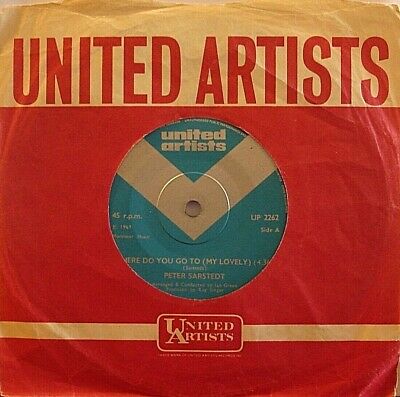
267. ‘Where Do You Go To (My Lovely)’, by Peter Sarstedt

I complained about our last #1 – Amen Corner’s ‘(If Paradise Is) Half As Nice’ – having nothing for the listener to get their teeth into. It just floated along, pleasantly enough… This next #1 though, has enough meat in it for several courses.

xxl

Where Do You Go To (My Lovely), by Peter Sarstedt (his 1st and only #1)

4 weeks, from 26th February – 26th March 1969

It’s a ballad, in the very traditional sense. An epic song – nearly five minutes in length – that tells a story. I love a song that tells a story. A story that’s introduced by some accordions, as you picture the singer strolling alongside the Seine in winter, hands thrust deep in his pockets, a cigarette dangling from the side of his mouth. Mais oui.

He’s rueful, thinking about a girl, as Frenchmen are wont to do. Where do you go to, My lovely, When you’re alone in your bed… Tell me the thoughts that surround you, I want to look inside your head… (Yes I do…) I love those little run-ons at the end of each verse. They add to the idea that this song is being made up on the spot, that it exists only in the singer’s head, as he walks the river banks.

He paints quite the picture of this girl. Beautiful, glamorous, diamonds and pearls in her hair, famous friends and a fancy apartment off the Boulevard St. Michel… She went to the Sorbonne, of course, and talks like Marlene Dietrich. She has Picassos, and a racehorse from the Aga Khan, and sips only the finest brandy… I’m paraphrasing, obviously. All this unfolds over several verses, accompanied only by an acoustic guitar. This song really is all about the lyrics, and the voice that delivers them: full of regret but still defiant.

It’s funny too. The verse about her carefully designed topless swimsuit, for example that gives her: an even suntan, On your back, And on your legs… And then suddenly it’s menacing, when he mocks her fake laugh: a-ha-ha-ha! There’s anger too: They don’t realise where you came from, And I wonder if they really care, Or give a damn… (Note the mild swear word! The worst one so far? Two hundred and sixty seven chart-toppers in.)
peter-sarstedt-where-do-you-go-to

Who is she, then? Who is this deceptive femme fatale? Don’t keep us in suspense any longer, Peter! We know we’re getting to the denouement when the violins come in. Turns out, the singer knew the girl as a child in Naples, when they were both begging in rags. Her name’s Marie-Clair… So look into my face, Marie-Clair, And remember just who you are, Then go and forget me forever, But I know you still bear the scar, Deep inside… (Yes, I do…) As with all the best stories, it leaves things open to interpretation. Were they childhood friends? Young lovers? Brother and sister? Did she betray him to escape their life of poverty…?

The final line, I think, gives it away. I know the thoughts that surround you, ‘Cause I can look inside your head… They are twins! And she did do something terrible to him! Maybe… The same accordions from the intro play us out, as we contemplate this bombshell. Apparently, the title character might have been inspired by the fashion magazine ‘Marie Claire’, or by the actress Sophia Lauren (who was from Naples), or by Sarstedt’s girlfriend… ‘Where Do You Go To (My Lovely)’ both won an Ivor Novello award, and was one of John Peel’s least favourite songs. I can see why you might either love or hate this record. It’s smug, and pretentious, and wordy. Myself, I’m leaning more to the ‘love’ side.

Peter Sarstedt was, disappointingly, not French. He just wrote a very French-sounding chart topper. Don’t worry, though – there will be a genuine French #1 before the year’s out. He was British, though born and raised in India, and was the younger brother of Eden Kane, whom we met back in 1961, when he hit top spot with ‘Well I Ask You’. Which, I think, makes them the first siblings to hit #1, following on from father and daughter Frank and Nancy. The follow-up to ‘Where Do You Go…’ made #10, and that that was that for Sarstedt’s chart career. Knowing he was on to a good thing, he wrote two further instalments of the Marie-Clair story – ‘The Last of the Breed’ and ‘Farewell Marie-Clair’ before he died in 2017.
266. ‘(If Paradise Is) Half As Nice’, by Amen Corner

A nice song, to keep 1969 ticking along, nicely. If paradise were half as nice as this song, then paradise would be a perfectly pleasant place to be…

235285

(If Paradise Is) Half As Nice, by Amen Corner (their 1st and only #1)

2 weeks, from 12th – 26th February 1969

Tell the truth, I’m finding it hard to get very excited about this record. I like it, it’s fine, it’s nice… I suppose life would be fairly exhausting if you got excited about every song you heard. Sometimes it’s OK just to think something’s… OK. If paradise is half as nice as, Heaven that you take me to, Who needs paradise, I’d rather have you… It’s cute – a song about being the simple act of falling head over heels in love.

I’ve heard this song before, of course – it’s a bit of a ‘Sixties Best Of’ staple (the copyrights must be cheap?) and a mish-mash of the usual late sixties sounds. There are horns, it’s a bit trippy, and the lead singer has a very soulful voice. That’s my favourite thing about this song, Andy Fairweather Low’s husky voice, and his oh-woah-woah-woahs and oh yes I’d rather have yous in the chorus.

It’s a chilled-out #1, one that floats along and then out on a fluffy cloud. And, if in doubt, always stick in a la-la-la refrain – nobody minds a gentle dose of lalalas. Like a surprising number of previous chart-toppers have been, ‘(If Paradise Is) Half As Nice’ was originally written and recorded in Italian. Not that it sounds particularly Italian compared to, say, Elvis’s pair of operatic hits ‘It’s Now or Never’ and ‘Surrender’, but still.

AMEN_CORNER_(IF+PARADISE+IS)+HALF+AS+NICE+-+4+PRONG-555632

Amen Corner were a Welsh band, named after a soul club-night in a Cardiff ballroom. ‘If Paradise…’ was their 3rd of four Top 10 hits before they split up at the very end of the decade. (That’s something worth noting – how many of the 1960s’ chart-topping acts didn’t make it into the seventies.) Amen Corner recorded the definitive version – in the UK at least – of ‘Bend Me, Shape Me’, which surprises me, as it has a very different vibe to their sole #1.

Amen Corner, then. A short post for a perfectly acceptable song. I like it, but can’t help feeling that it doesn’t give the listener much to get their teeth into. A background number one – helping us float that bit further along on our journey through the years…

Follow every #1 so far here:

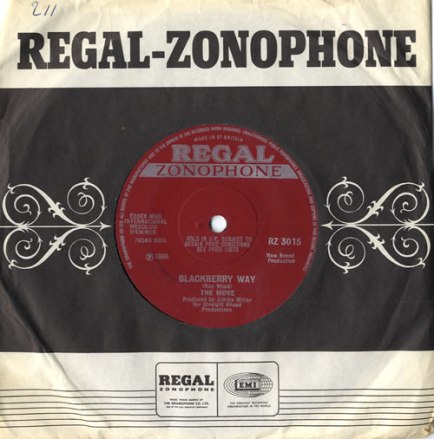
265. ‘Blackberry Way’, by The Move

This next #1 single is one that opens with a bang, right in the middle of the story. ‘In media res’, if you want to be fancy about it. Blackberry way, Absolutely pouring down with rain, It’s a terrible day…

690428-the-move

Blackberry Way, by The Move (their 1st and only #1)

1 week, from 5th – 12th February 1969

I like the absolutely pouring down with rain line – it sounds very British. As the picture is filled in, you really can picture a dull suburban street – probably lined with bungalows – in the rain, as girl ends it with boy. So now I’m standing on the corner, Lost in the things that I said…

It’s a dramatic record. Make that melodramatic. The strings moan like the soundtrack to a haunted house. The drums are thick and portentous. As the singer makes his way from Blackberry Way, through the park and past the boating lake, where the boats float: just like myself they are neglected… Before each chorus, he asks himself: What am I supposed to do now? He gets on the train, with one final look over his shoulder, to see if she’s followed him… We can assume that she hasn’t.

This is kind of fun; if a little OTT. Even though it’s about heartbreak ,the scale of the song, and the lyrics about the mundane things he sees on his walk in the rain, keep it slightly tongue-in-cheek. Only occasionally does it get ahead of itself – what exactly does the line: See the battlefields of careless sins, Cast the to the wind… mean? I like the fact that it’s quite a psychedelic sounding song, but one describing a fairly everyday scene. No flower-power here. And I like the contradiction in the chorus: Goodbye Blackberry Way, I can’t see you, I don’t need you… Sure to want me back another day… Ain’t that just how a break-up goes…?

THE_MOVE_BLACKBERRY+WAY+-+SOLID-296795

The Move were a Birmingham band, that had already enjoyed four Top 5 hits before they scored their sole chart-topper. I always liked ‘Fire Brigade’ as a kid – it must have been on a sixties-hits tape we had lying around – and ‘Flowers in the Rain’ was famously the first ever song played on Radio 1. They were quite a sonically experimental band, mixing Spector-ish production with innovative sounds and effects. You can hear the instruments on ‘Blackberry Way’, straining to make themselves the most important part of the song over the vocals. It’s a record that bursts from the speakers…

Central to The Move was songwriter and singer Roy Wood, who we will meet again in the coming decade – a man who played a big role in shaping the sound of the seventies when The Move morphed into Electric Light Orchestra. Wood didn’t hang around long with ELO, though, leaving to form glam-rockers Wizzard. Luckily for all of us, we’ll meet both of his bands-to-be later in this countdown. Not many artists can claim to have been involved in three hugely successful, chart-topping acts… Kudos to Wood!

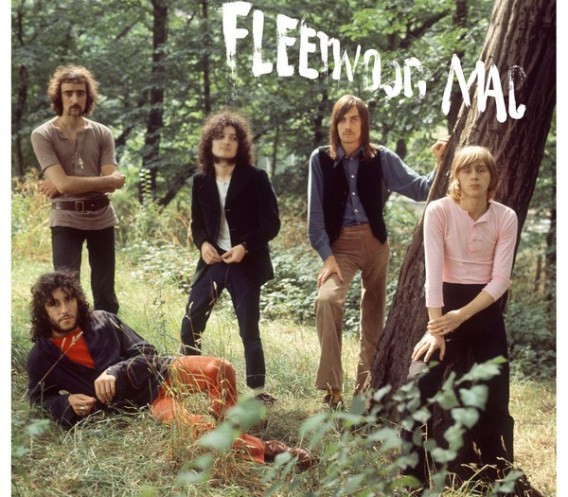
264. ‘Albatross’, by Fleetwood Mac

One question springs immediately to mind upon listening to our next #1: This is Fleetwood Mac? The Fleetwood Mac? The ‘Don’t Stop’, ‘Go Your Own Way’, ‘Little Lies’… Fleetwood Mac? Well yes, yes, and yes.

R-14619902-1578317634-8874.jpeg

Albatross, by Fleetwood Mac (their 1st and only #1)

1 week, from 29th January – 5th February 1969

And that’s not the only strange thing about this record. In fact, pretty much everything about this record is strange. It is one of the least ‘number one’ sounding number one records ever. It’s a musical interlude, the background soundtrack to an advert for roast lamb, the music played in a wellness spa… It’s ‘Chillout – Vol I’, three decades early.

That’s not to say it’s bad. I like it. It’s not the sort of thing I usually like; but I do. It’s a song called ‘Albatross’, which sounds exactly like an albatross soaring over the ocean. The insistent, see-saw bass is the bird’s wings, the guitar its call, and the cymbals the waves crashing below… As an instrumental it works. It doesn’t need lyrics. Lyrics might, and I’m going to contradict everything I’ve ever written about instrumental records here… Lyrics might have ruined it.

Placing this in context, in the late sixties, it is definitely the sort of record that you’d slip on before lighting up your bong and settling down to stare at a magic-eye picture. So, in some ways it’s a random January chart-topper; in other ways it makes complete sense for it to have hit #1 when it did.

$_12

What makes less sense is that this record will be Fleetwood Mac’s sole UK #1 single. One of the biggest bands of the seventies and eighties scored their one week at the top in 1969. In truth, they enjoyed far more singles chart success in the States than in their homeland. 1969 was actually their best year in the UK – one number one and a couple of number twos. Their huge hits from ‘Rumours’: ‘Dreams’, ‘Don’t Stop’ and ‘Go Your Own Way’ were huge hits only in America. Over the Atlantic none of them broke the Top 20.

Having said that, this Fleetwood Mac are a very different Fleetwood Mac to the one that everyone thinks of. Christine McVie would join in the early seventies, Stevie Nicks and Lindsay Buckingham in the middle of that decade. Only Mick Fleetwood and John McVie were around for ‘Albatross’, when they were a much blues-ier band.

In my mind, Fleetwood Mac will be forever linked with The Moody Blues, for the simple reason that my parents would play them – a lot – during long car journeys, and my heart would always sink when the tape came out. The Beatles, The Stones, The Eagles or ABBA? No problem. Simon and Garfunkel? Tolerable. The Moody Blues or Fleetwood Mac? Time to get my Walkman out. I’ve grown to like the Mac in old age more than I have The Moody Blues. But still, when I hear the synth intro to ‘Little Lies’ I instinctively shudder. Perhaps if the ‘Greatest Hits’ my parents owned had included their sixties hits, and their one and only chart-topper, I might have been won over much earlier…

263. ‘Ob-La-Di Ob-La-Da’, by The Marmalade

Our first #1 of 1969, which hit the top just as the New Year’s bells rang out. Throughout January it was locked in a bit of a jig with our last chart-topper, ‘Lily the Pink’. Both records replaced one another at the summit. And when you listen to this disc, that makes sense…

c27629b64f9be56ecf844e470e622c78

Ob-La-Di Ob-La-Da, by The Marmalade (their 1st and only #1)

1 week, from 1st – 8th January / 2 weeks, from 15th – 29th January 1969 (3 weeks total)

For ‘Ob-La-Di, Ob-La-Da’ is cut from the same silly, music-hall cloth as Lily and her medicinal compounds. This is another strange tale – the tale of Desmond, Molly and their market stall. Desmond says to Molly girl I like your face, And Molly says this as she takes him by the hand…

You probably know what comes next, because this is a song by a very famous band, from a very famous album. Ob-la-di, Ob-la-da, Life goes on, Wo-oah… La-la how the life goes on… Yep, it’s the fifth cover of a Beatles’ song to make #1 in the UK, following on from ‘Bad to Me’, ‘A World Without Love’, ‘Michelle’, and hitting the top only a couple of months after the last one, ‘With a Little Help From My Friends’. Add these to the Beatles’ fifteen #1s, and that’s a cool twenty chart-toppers for Misters Lennon and McCartney. (Listen to the original here – John apparently hated it.)

Out of the previous covers, I’d say that this has most in common with The Overlanders’ ‘Michelle’. It’s a perfectly functional copy of the original, one that adds nothing new into the mix. It still bounces along on the same ska-ish beat, Desmond still buys Molly a diamond ring, Molly still does her pretty face and sings with her band in the evening – they still have the drag verse at the end – but it’s basically karaoke.

marmalade-ob-la-di-ob-la-da-beatles-song-n-mint-cbs-7-inch-45-rpm

In fact, the bits I like about the original ‘Ob-La-Di…’ are the cut from this. They don’t shout ‘Bra!’ in the chorus, instead changing it to ‘woah’. There’s no ‘ha ha ha ha’ between the bridge and the third verse, no plinky-plonky piano. Plus, at the end they change So if you want some fun… to So if you want some jam… Because, I’m guessing, they were called The Marmalade. So actually, they’ve taken an average song, and made it worse. Oh well.

And it’s sung in a very strange, slightly Indian, slightly Scouse, slightly Fagin from ‘Oliver!’ accent. The Marmalade were from Glasgow, but that ain’t no Glaswegian… It’s tough, I know, to assess a song like this on its own merits, having been familiar with The Beatles’ version since I was about eight. It’s fine, but coming so soon after Cocker’s outrageous interpretation of ‘With a Little Help…’ it falls pretty flat. The Marmalade would, to be fair, have several other, self-written Top 10 hits through to the early seventies. They were no one-hit wonders.

P.S. Before we finish, it’s worth noting the reggae-ish undertones in this disc. Last year we had the first ska-tinted number one from The Equals, while the ‘Desmond’ in this song was apparently inspired by Desmond Dekker, one of the first reggae stars to make it big in the UK. The ‘Bra!’ in the original was apparently meant to be more like ‘Brah!’ – ‘brother’ or ‘friend’ in West Indian patois. Nowadays Paul McCartney would probably get savaged for such cultural appropriation… What it all means is that reggae has arrived at the top of the charts, just in time to add yet another layer to an amazingly diverse musical decade.

P.P.S. This is the 19th disc to have two (or more) separate runs at the top since the charts began sixteen years ago. Amazingly, it will be the last disc to have a return to number one (without being re-released) until 1993!

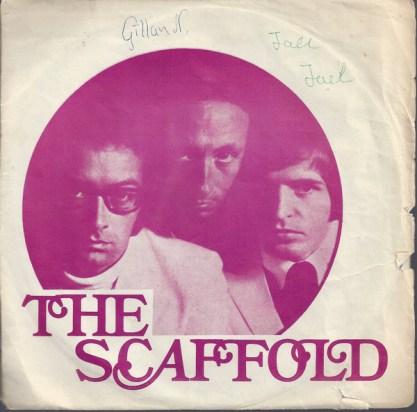
262. ‘Lily the Pink’, by The Scaffold

The final number one single of 1968! Over the course of the twenty-one records that have topped the charts this year, we’ve met a wide range of characters: Bonnie & Clyde, Quinn the Eskimo, Cinderella Rockefella, Lady Madonna… Now please welcome, last but by no means least, Lily the Pink!

Scaffold-1010482

Lily the Pink, by The Scaffold (their 1st and only #1)

3 weeks, from 11th December 1968 – 1st January 1969 / 1 week, from 8th – 15th January 1969 (4 weeks total)

We’ll drink a drink a drink, To Lily the Pink, The saviour of, The human race… The pace is frenetic, the song charges along on an oompah-band beat. For she invented, Medicinal compound, Most efficacious, In every case… And it’s not just Lily the Pink that we meet either, but the cast of poor souls that her medicinal compound has helped.

There’s Mr Frears, with his sticky-out ears… The notably bony Brother Tony… Old Ebeneezer, who thought he was Julius Caesar… Jennifer Eccles, with her terrible freckles… You get the idea. It’s a novelty song. Perfect for a Christmas party, last-orders down the pub sing-along when everybody’s a bit pissed. Pure music-hall.

It reminds me of two, very different songs. First, there’s ‘Oom-pah-pah’, from the musical ‘Oliver!’ Another rowdy bar-room tune, in which the drinkers raise their glasses to the life-giving properties of the mythical ‘oom-pah-pah’. It’s a classic. Secondly, this also reminds me, with its boing-boing rhythm, of another (in)famous Christmas #1… ‘Mr Blobby’. (Which very much isn’t a classic.)

‘Lily the Pink’ falls somewhere in between these two songs. It’s fun, for a verse or two, and then it gets pretty old pretty quick. There’s an unfortunate stuttering verse – Johnny Hammer, Had a terrible s-s-s-s-stammer… – and it’s very hammy by the end, when the medicinal compound proves too strong even for Lily the Pink, and she snuffs it. It’s definitely a song that would improve the more you drink…

R-8669325-1546580204-5379.jpeg

Speaking of which, it is based on a much older, American drinking song – ‘The Ballad of Lydia Pinkham’ – which in turn was inspired by an actual drug – Lydia E. Pinkham’s Vegetable Compound, from the 1870s, which relieved menstrual cramps. The fact that it was 40 proof alcohol meant that plenty of people not suffering from period-pains drank it anyway… And apparently the original verses were saucier even than The Scaffold’s end-of-the-pier version.

Just as interesting as the song’s origins are the musicians involved in its recording. The Scaffold were a comedy trio from Liverpool – one of whom was Peter McCartney (brother of Paul.) Musicians they were not, and so to help them on ‘Lily the Pink’ you can hear Graham Nash of The Hollies (the line about ‘Jennifer Eccles’ is a reference to a Hollies’ hit), Tim Rice and an unknown singer by the name of Reginald Dwight, who may or may not have gone on to bigger things under a different name.

What’s that? You thought that 1968 was going to finish off with some bland, run-of-the-mill pop song? Well you haven’t been paying attention, have you? This year has brought us the most eclectic bunch of #1s so far. We’ve veered from silly novelties, to bizarro fantasy epics, from spaghetti western soundtracks to the birth of shock-rock. All with healthy doses of jazz, crooning, rock ‘n’ roll, and Cliff, in between. Next up, we tick on over into the final year of the swinging sixties, and hope that it can be half as interesting as the year just gone…

Enjoy all the number ones from 1968, and earlier, here:

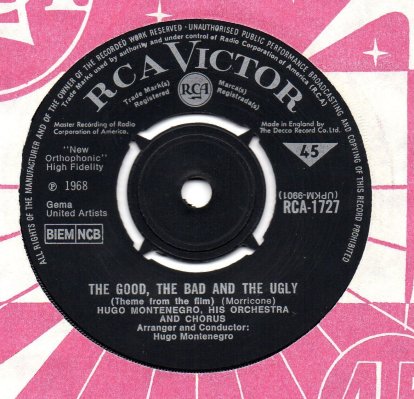
261. ‘The Good, The Bad and The Ugly’, by Hugo Montenegro, His Orchestra & Chorus

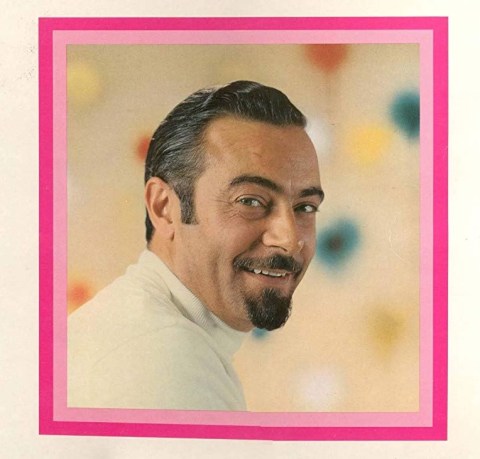
And so we reach one of the 20th century’s best-known pieces of music. People might not be aware that they know the theme from ‘The Good, The Bad and The Ugly’, but if you can mimic the woo-wee-oo-wee-oo well enough, then they should be able to come back with a passable waa-waa-waa…

MV5BMTA4OTVhZTItYzIxZS00YTU4LTkwZWEtYTE0MjhjNTIxNzE5XkEyXkFqcGdeQXVyMjUyNDk2ODc@._V1_SX1054_CR0,0,1054,999_AL_

The Good, The Bad and The Ugly, by Hugo Montenegro, His Orchestra & Chorus (his 1st and only #1)

4 weeks, from 13th November – 11th December 1968

It’s so famous that it sounds kind of clichéd now. It’s been used in so many spaghetti-western spoofs – a gun slinger in a poncho with an orange setting sun in the background, close-up on his narrowed eyes as he spits his tobacco on the ground (the famous refrain is supposed to sound like a coyote howling.) You’re almost surprised to remember that it was an actual real piece of music, soundtrack to real movie all of its very own.

Back in the fifties and early-sixties, when it seemed as if every second chart-topper was an instrumental, I regularly complained that lyric-less songs can sometimes meander and get lost. Not always, but for every ‘Apache’ or ‘Nut Rocker’ there was a ‘Side Saddle’. Instrumentals need a bit of atmosphere about them to cover up for the fact that you can’t sing along. The instruments need to become the voice. Which is what happens with this record. This instrumental passes the test. You definitely can sing along to it.

Speaking of ‘Apache’, this theme owes a bit of a debt to The Shadows when the twangy, Hank Marvin-ish guitars come in. It also reminds me of ‘Running Bear’ (1960 was a big year for the cowboys and injuns themed #1s) with its rep rop ooh wah too chants, which came from band leader Hugo Montenegro himself, and which sound a lot like someone counting in a strange, forgotten tongue.

81x60PFau0L._SL1169_

It’s a fun mish-mash of sixties styles – a bit latin, a bit rock ‘n’ roll and a bit psychedelic. It sounds old-fashioned at the same time as sounding like nothing that’s reached the top of the charts before. It was, of course, from the movie of the same name, starring Clint Eastwood but this isn’t the version used in the film. The original was written and recorded by Ennio Morricone – listen to it here – and it sounds a bit bleaker, a bit more like a movie soundtrack should. This version is softer, warmer – more of a pop song. Why it hit #1 a full two years after the movie’s release…? I’m not sure.

I’m glad it did make a belated chart-topper, though. It’s given us yet another strange side-road to wander down on our journey through 1968. We’re almost there, though – almost made it through this most eclectic of years… Hugo Montenegro wouldn’t enjoy chart success on the scale of ‘The Good, The Bad and The Ugly’ again, though he tried his hand at covers of several of the songs we’ve heard elsewhere on this countdown: ‘Cherry Pink and Apple Blossom White’, ‘Stranger in Paradise’, ‘Good Vibrations’… He died very young, in his mid-fifties, in 1981.

We may have left the golden age of the instrumental behind us – the days of Winifred Atwell, Eddie Calvert and, of course, The Shadows – long ago. But there are a few more still to come. Looking at the modern day, I can’t remember the last big instrumental hit. Maybe a nineties dance track…? Though they usual had at least one vocal refrain. I can’t help feel that it’s something we’ve lost – our love for the instrumental single – because when a good one comes along it’s usually quite the experience…

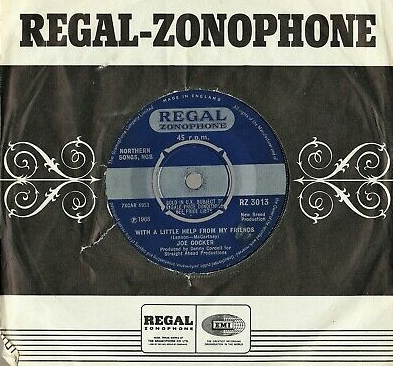
260. ‘With a Little Help From My Friends’, by Joe Cocker

I recently did a series of posts on cover versions of #1 songs – previous chart-toppers that had been reimagined in different ways by different artists. ‘Different’ being the important word – a good cover version should bring something new to the table. What’s the point in releasing a karaoke version of the original? And while we have had plenty of cover versions hit number one already, this one takes the concept to another level.

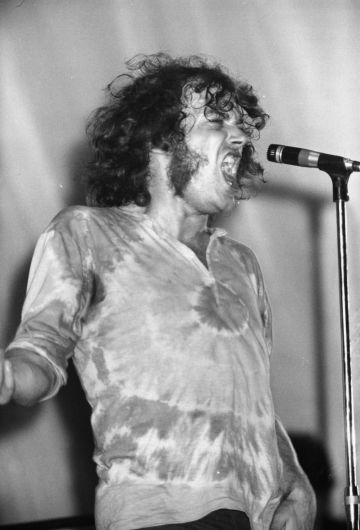
Joe Cocker

With a Little Help From My Friends, by Joe Cocker (his 1st and only #1)

1 week, from 6th – 13th November 1968

The Beatles’ version of ‘With a Little Help From My Friends’ had been released the year before, on the ‘Sgt. Pepper’s Lonely Hearts Club’ LP. Joe Cocker, a British blues-rocker who had been around for a few years without enjoying much chart success, took it and made it his own. It’s slower, heavier, longer, downer and dirtier… Re-acquaint yourself with the original here, then settle in for the Cocker treatment.

It begins with a distant organ, as if you were standing outside a church before evensong. It’s an ominous build-up… You’re ready for something to happen. Then wham. Guitar! Proper hard-rock guitar. Hendrix and Clapton kind of guitar. The type of guitar that’s been nowhere near the top of the charts before. It’s bombastic, and outrageous. It makes you want to make devil-horns and punch the air.

The lyrics are the ones you know. What would you do, If I sang out of tune, Would you stand up and walk out on me…? But it sure isn’t Ringo singing it. Cocker’s voice is husky, and soulful. He delivers the lines late, squeezes the words in before the next one comes along. The backing singers, so important in any version of this song, sound like a gospel choir: How do I feel at the end of the day…? Are you sad because you’re on your own?

The best bit is the bridge – the Do you need anybody… bit. The guitars go super heavy and crunchy, like a motorbike revving up. The second time around, especially, when Cocker howls and the backing singers soar and we launch into the final minute of a mini rock-opera. I know we’ve had a lot of soul number ones in recent years – The Small Faces, Chris Farlowe, Long John Baldry and more – but this takes it to the next level.

s-l400

It kind of sounds a bit like a jamming session, or at least a live version, and that really adds something to the song. They captured lightning here. They would never have been able to re-record this exactly the same – it’s too raw, too intense. It lacks the polish of a regular #1 single, but you’re oh so glad that it somehow managed to have its week in the top spot

As I mentioned, it’s another long number one. You wait years for a #1 single that lasts longer than five minutes, then three come along at once. And that’s not all that links this to the previous two #1s. We’ve now had a number one recorded by The Beatles (‘Hey Jude’) replaced by one that was produced by a Beatle (‘Those Were the Days’) replaced in turn by a number one written by The Beatles. In case you’ve lost count, this is the fourth Beatles cover to reach the top in the past five years. They may have been reaching the end of their career as a band, but their grip on the charts wasn’t weakening.

We end in a frenzy of organs and guitars, as Cocker ad-libs over the fade-out. Phew. It’s not a subtle re-interpretation, I will admit, but for me it works. I knew this record by reputation, but it’s been great to give it an in-depth listen. ‘With a Little Help From My Friends’ is a song that will pop up another two times in this countdown, and I don’t think it’s giving too much away to say that neither of the upcoming covers are fit to lick this one’s boots…

Joe Cocker will only have one more Top 10 hit, until the early-eighties when he will record ‘Up Where We Belong’ with Jennifer Warnes for the soundtrack to ‘An Officer and a Gentleman.’ From Sheffield, but sadly no relation to Jarvis Cocker, he was still scoring Top 20 albums in the ‘00s and the 2010s. He died in 2014.

Remembering Frankie Lymon

Fifty-two years ago today, one of our youngest chart-topping artists passed away. Franklin Joseph ‘Frankie’ Lymon, the voice of The Teenagers.

Frankie_Lymon_and_the_Teenagers

(The Teenagers, with Frankie Lymon in the centre.)

He barely was – a teenager that is – when their debut hit ‘Why Do Fools Fall in Love’ made #1. Lymon was thirteen when it was recorded, and he sounds his age as you listen to it now, sixty-four years later. His unbroken voice flits like a sparrow around a doo-wop song about heartache, like a choir boy gone rogue. Listen to it below, and read my original post on it here.

(Performing the song on national TV, and bantering with Frankie Laine – a man not short of #1 singles by 1956.)\

Note how early ‘Why Do Fools…’ hit #1. Mid-1956. Only the 2nd ever rock ‘n’ roll chart-topper, after ‘Rock Around the Clock’ (not counting Kay Starr’s in-name-only ‘Rock and Roll Waltz’.) The Teenagers were knocked from the top by Doris Day, after they themselves had deposed Pat Boone. That’s where we were, when five kids from Harlem shook things up. In nearly every one of their songs – which do all sound a bit similar – a saxophone solo comes charging along, sounding as if it is hell-bent on blowing codgers like Boone away for good.

Their only other UK chart hit was the brilliantly titled ‘I’m Not a Juvenile Delinquent’, which made #12 and sounds like the theme song to a misguided government campaign aimed at errant youths. The Teenagers still tour today, Herman Santiago being the only surviving member. But this is not their story. This is Frankie Lymon’s, and he had already left the band by 1957.

tumblr_pufcrtFBxE1ty03mxo1_500

(Lymon with Little Richard)

His first solo release, a cover of the thirties hit ‘Goody Goody’, was fine, but didn’t catch on. And by then, aged fifteen, Lymon was already addicted to heroin. He hadn’t had much of a childhood, he would relate in an ‘Ebony’ magazine interview in 1967, growing up in Harlem around prostitutes and pimps, smoking weed and ‘knowing’ women, all before he even joined The Teenagers. Watching him perform, you can definitely see the street-kid swagger behind the suits and the polished smiles.

(I think this is a genuinely live performance and, if so, then wow! I’m out of breath just from listening.)

The hits dried up as the fifties drew to a close, and the drugs started to take their toll. There was a steady stream of women – fake marriages, then scam marriages in Mexico, making the title of his biggest hit sound ever more prescient. His managers and label offered no help, and there clearly wasn’t much of a support network around him. Eventually he got caught up in drug charges and, rather than go to jail, he was drafted into the army.

In the forces he went clean, and sober, and every-so-often AWOL to perform tiny, low-key gigs, by this point near forgotten amongst the British Invasion acts that were dominating the Billboard Hot 100 at the time. He left the army, recorded a few demos, and by 1968 was preparing a comeback with Roulette Records.

Unfortunately, and in a tragic Hollywood ending, the day before his first recording session with his new label, Lymon was found dead on his grandmother’s bathroom floor, a needle in his arm. He was twenty-five.

frankielymon-1_v1000

You could say this about any child star that goes off the rails, but there’s it’s almost painful to watch Frankie Lymon performing with The Teenagers, the proto-boyband that brought some New York swagger to the staid singles chart of the mid-fifties, and to think what was to come.

Frankie Lymon, September 30th 1942 – February 27th 1968

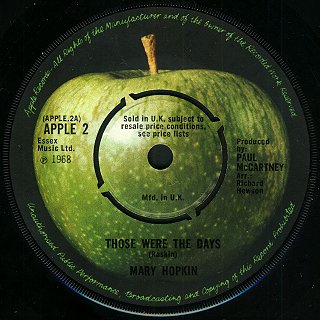
259. ‘Those Were the Days’, by Mary Hopkin

From the longest number one yet… To the second longest. Five minutes plus! Picture yourself in a tavern in Leningrad, back when it still was Leningrad. Big furry hats, sturdy men, even sturdier women…

stream_img

Those Were the Days, by Mary Hopkin (her 1st and only #1)

6 weeks, from 25th September – 6th November 1968

It reminds me of Petula Clark’s ‘This Is My Song’, an old-fashioned ballad with a sweeping intro. Instruments that I couldn’t begin to name jingle-jangle before the violins come in… Once upon a time there was a tavern, Where we used to raise a glass or two… It’s a song of longing and regret. The singer is reminiscing about happier times, dancing and singing down the pub. Those were the days, my friend, We thought they’d never end… If ‘bittersweet’ was a sound, then that sound would sound a lot like ‘Those Were the Days.’

I wasn’t just making up all that stuff about Leningrad – this really is based on an old Russian folk-tune. A Georgian folk-tune, actually, which had been around since the turn of the century. And you really can picture some Cossacks high-kicking in time to the steady beat, especially when we get to the dadadadas. That’s another thing that this record has in common with its predecessor ‘Hey Jude’: a chanted refrain. Except this one doesn’t drag on for four and a half minutes…

By the third verse, time has moved on. The singer stands outside the same tavern: In the glass I saw strange reflections, Was that lonely woman really me…? In the fourth verse she timidly enters the bar… Oh my friend we’re older but no wiser, For in our hearts the dreams are still the same… Do they get back together? Have one last fling for old time’s sake? Or do they just leave it at a smile? I guess we’ll never know…

unnamed

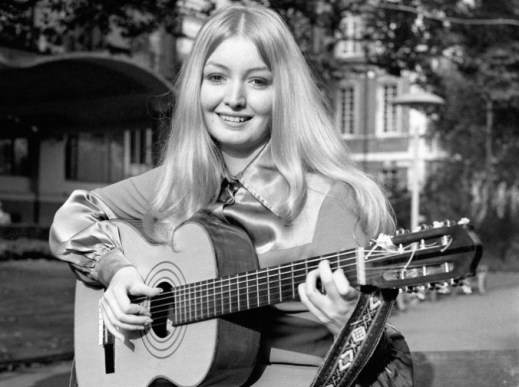
As a melody, it’s pretty irresistible, coming as it does from a time before ‘pop music’ existed. It sounds nostalgic, like you’ve heard it before, somewhere, sometime… It feels as if it should be from a musical. It was also produced by one Paul McCartney, who may have popped up once or twice already on this countdown. He’d known the tune for years, and finally chanced upon Mary Hopkin as a singer. She was barely eighteen, and looks every bit the sixties flower-power girl. Long hair, bare feet, that kind of thing. ‘Those Were the Days’ was her first, and by far her biggest hit. She would go on to have four more Top 10 singles in the next couple of years, and still records to this day.

In one way, this song stands out as odd. It’s sentimental, old-fashioned, a bit cheesy… But in another way it is very late sixties: there are folk-rock touches (the ‘B’-side was even a cover of The Byrds’ ‘Turn! Turn! Turn!’) and some very Beatlesy flourishes (the horns that come in midway through, for example). Plus, this is 1968, and anything goes at the top of the charts this year. There have been some weird chart-toppers, and some weird ones are still to come…