617. ‘One Moment in Time’, by Whitney Houston

It’s well known that songwriters aim to write songs for the radio, for TV shows, for streaming playlists… Do some, I wonder upon hearing this next #1, write songs that they hope will be sung by school choirs from here to eternity…?

One Moment in Time, by Whitney Houston (her 3rd of four #1s)

2 weeks, from 9th – 23rd October 1988

Probably not, for where are the royalties in that? But ‘One Moment in Time’ does sound like the love-child of a hymn and a school song. It’s got a heart-tugging, traditional-sounding chorus, and lots of inspiring lyrics: I’m only one, Though not alone, My finest day, Is yet unknown… It was written for the 1988 Seoul Olympics, which makes sense, as it is all about seizing the day, racing with destiny, and similar inspirational twaddle.

The school choir comparisons fizzle out pretty quickly, though. For all their merits, not many school choirs sound like this. Whitney Houston could, fair play to her, sing. And this is the first of her chart-toppers, after the sultry ‘Saving All My Love for You’, and the poppy ‘I Wanna Dance with Somebody’, where she’s been allowed to let loose. And boy, does she let loose

There’s not a school choir on earth that could keep up with her past the three minute mark, when the tempo changes: You’re a winner, For a lifetime… Whitney tells us, before embarking on what has to be one of the most technically impressive displays of singing we’ve heard in a #1 so far. Trumpets come in too, as if heralding the arrival of royalty. It’s a moment.

It’s also way too much. By the end, when Whitney holds the I will be free line…, it produces a sensation not so different from being walloped around the head with a bag of sand. It’s not often that you finish listening to a song and come away feeling like you’ve just done a couple of rounds in a boxing ring, but you do here (apt in a song written for a sporting event, I suppose). The legendary songwriter Albert Hammond wrote it with Elvis in mind, apparently. I can see it, but I also think Elvis would have given a more nuanced performance.

At the same time, perhaps there’s no room for nuance in a song written for the Olympics, required to appeal to people from all around the globe, and to recreate the moment a sprinter crosses the finish-line in first place. In the right time and place, this could really work. Unfortunately, I’m writing this on a cold Thursday evening, after a long day at work, and the last thing I need is someone howling in my ear about all of my dreams being a heartbeat away…

There are ballads, there are power-ballads, there are eighties power-ballads, then there’s this. I can’t think of many more bombastic chart-toppers, or of one belted out with as much gusto. And there possibly won’t be again, until Whitney’s final #1 some four years from now…
616. ‘Desire’, by U2

Go on, who had this down as the song that finally gave U2 their first #1…?

Desire, by U2 (their 1st of seven #1s)

1 week, from 2nd – 9th October 1988

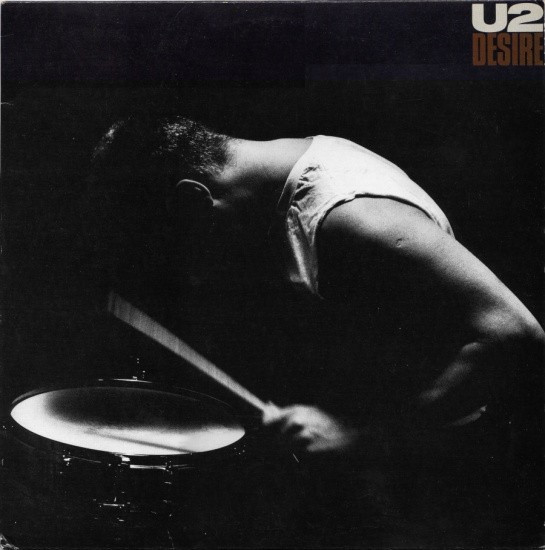
For as good as this record is, and it’s a great little rocker, it’s not the first U2 song that springs to mind for most people. There haven’t been many bluesy chart-toppers, and the ones that have appeared came in the mid-sixties for the likes of the Stones and the Animals. But this one bangs straight in with a Bo Diddley beat, and a tale of an irresistible woman – She’s the candle, In my room… Or is it about drugs – I’m the needle, Needle and spoon…? Either way, it’s about something you just can’t say no to.

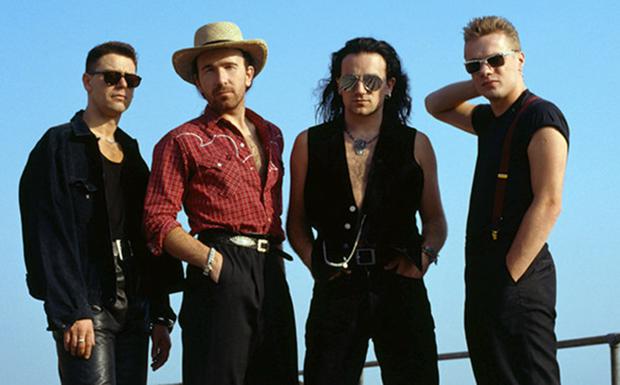
For a band not afraid of grandiosity this is a simple song; and all the better for it. They were influenced in recording it by The Stooges, and released what had been the demo version after deciding that the finished take was too polished. It’s short, sharp, and possibly one of Bono’s best vocal performances. Say what you want about Bono (and I just might, over the course of U2’s seven #1s) he’s a great rock star, when he remembers that he is a rock star, and not Jesus. Here he stutters, he growls and he soars, and sounds genuinely like a man crazed with desire.

Then there’s the harmonica which, after ‘He Ain’t Heavy…’ makes it two #1s in a row that have been heavy on the tin sandwich. And whisper it, but is 1988 turning out to be a good year for rock music…? I wasn’t expecting it in the era of SAW and house music, but chart-toppers for Fairground Attraction and Billy Bragg, Beatles covers, glam rock samples, a re-release for the Hollies, now this… It feels like it’s come out of nowhere, but it’s certainly welcome!

‘Desire’ was the lead single from ‘Rattle & Hum’, the follow-up to U2’s worldwide breakthrough album ‘The Joshua Tree’. They were probably the biggest rock band on the planet in 1988, and so whatever they released first from their new album may well have rocketed to the top. I’m glad it was this, though. A lot of U2’s music suffers, in my eyes, from the same problem ‘He Ain’t Heavy…’ suffered: grandiosity, and not a little pomposity. Not this one (and to be fair, not too many of their UK #1s – they usually like to announce a new album with a rocking single).

And so, U2 are up and running as a chart-topping force. Off the top of my head, they’re the 4th most successful rock act in terms of #1s, behind only the Beatles, the Stones and Oasis. But sadly, after me making such a big deal of it, this is where 1988 stops rocking… A block-busting ballad looms over the horizon.

Number 1s Blog 5th Anniversary Special – Readers’ Favourite #1s – ‘Atomic’

I hope you’ve enjoyed our week of guest writers. I’ll try not to wait another five years before inviting everyone back! Last up, we’re scooting forward to the early 1980s, and a new-wave classic. Of the four featured #1s this week, this is probably my personal favourite. But this isn’t about me! Vic, AKA the Hinoeuma, has been a long time follower and commentor of this blog, and she’s wrapping up our 5th Anniversary in style…

Discogs Blondie Atomic Image One
Image Credit: Discogs

‘Atomic’, by Blondie – #1 for 2 weeks in 1980

Stewart at UK#1s Blog asked his followers which UK #1 song was their favorite. There were so many to choose from but, I am a kid/young teen of the late 70s, early 80s and this was a no-brainer for me. This is, hands down, my favorite Blondie song. Just as a side note, my second choice was Cathy’s Clown by The Everly Brothers.

Released on February 23, 1980, Atomic was the ninth track on side two of the album Eat to the Beat, Blondie’s fourth album, produced by Mike Chapman. Written by Debbie Harry and Jimmy Destri, it was the third single released and the band’s third #1 in the UK Singles Chart. A rock, disco and new wave fusion, Atomic is described as “a cool, electronic enhanced dance number (PDF). Debbie Harry’s laidback vocals blend into the musical woodwork.”

Atomic‘, which featured King Crimson‘s Robert Fripp on guitar and Ellie Greenwich on backing vocals, was lyrically meaningless and was described in Record Mirror as ‘vapid and irritating…the best thing about this single is the live [cover] version of David Bowie‘s ‘Heroes‘ on the B-side (12″ UK single).’ “Jimmy Destri wrote this song…” Debbie claimed. “He was trying to do something like ‘Heart of Glass‘ and, then, somehow or another, we gave it the spaghetti western treatment. Before that, it was just lying there like a lox. The lyrics, well, a lot of the time, I would write while the band were just playing the song and trying to figure it out. I would just be kind of scatting along with them and I would start going ‘Oooooooh, your hair is beautiful‘.”

1000 UK #1 Hits
Jon Kutner & Spencer Leigh
May 26, 2010
Page 452

Atomic didn’t do as well in the US. It only made it to #39 on Billboard’s Hot 100, debuting on May 17, 1980 and peaking on July 5, 1980. It may be ‘lyrically meaningless’ but, it is certainly not vapid and irritating. It has a great beat and an energy that is hard to deny. Debbie’s vocals do, indeed, blend well with the ‘musical wood work.’ The single Call Me from American Gigolo had an instrumental version on the B-side and Debbie did some vocal blending with that, too.

The late Gia Carangi was dancing in the video.

Number 1s Blog 5th Anniversary Special – Readers’ Favourite #1s – ‘Hey Jude’

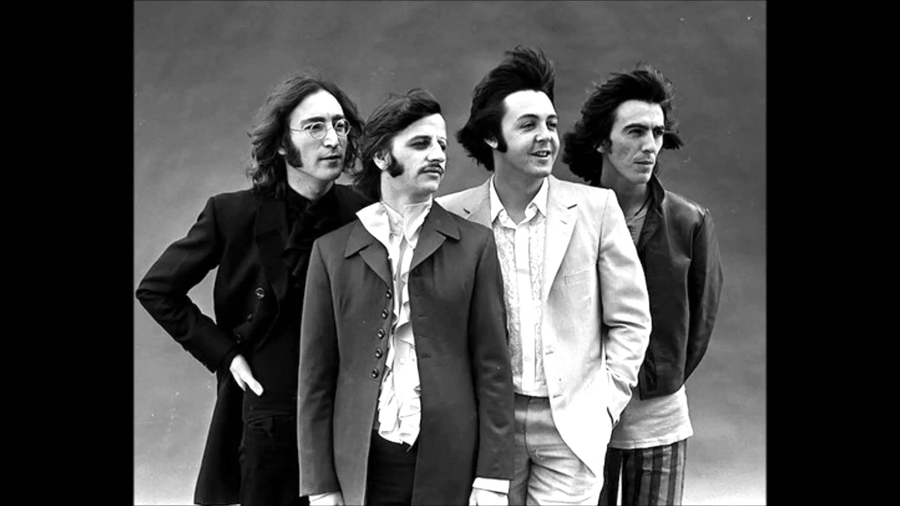
Of the four ‘favourite’ records that I’m featuring this week, three are from the 1960s. The odd-one-out is tomorrow’s choice from 1980, but more on that in twenty-four hours… Whether this says something about the tastes, or the ages, of our guest writers, or whether it says something about the enduring quality of the Swinging Sixties, I’ll leave you to decide… Anyway, there’s nothing uncertain about the quality of today’s featured song, or the band that took it to #1. They had to feature, right? John Swindell AKA popchartfreak has chosen The Beatles’ 1968 epic, ‘Hey Jude’…

‘Hey Jude’, by The Beatles – #1 for 2 weeks in 1968

This record was ground-zero for me in my personal discovery of the UK singles chart rundown on a Sunday, Pick Of The Pops with DJ Alan Freeman, still iconic in his exciting presenting style. “Right? Right!”. Dad came back from work at RAF Swinderby in Lincolnshire, England with the news ‘Hey Jude’ had gone to number one. The longest-single to ever chart, by the biggest pop stars in the world that I’d grown-up with, and seen the films, and played the singles dad bought, were on Top Of The Pops with a great video. And it was exciting discovering the reverse chart-rundown on the radio. I was already a massive pop music fan, but this pushed me further into obsession, so many records I loved!

Until more recently ‘Hey Jude’ was far and away The Beatles most-popular record, in all it’s 7-minute singalong, slow-fade glory, and it was Paul at his ballad best. These days ‘Let It Be’ and ‘Here Comes The Sun’ tend to get the kudos over ‘Hey Jude’, but for me it’s still Jude. Written for young Julian Lennon after his parents split, it’s still got that hopeful sadness to it, being supportive to a child in distress and telling them everything will be alright – but slightly tweaked to make it more universal for everyone. Given the backdrop of assassinations, war, intolerance, racism and much more in 1968, it was a boost we needed. I was 10, but I was aware of all these things on the news.

Does it need to be 7 minutes and 11 seconds long? Yes, it does, it’s part of the build from slow sedate intro to manic screaming as the mood changes from sorrow to a crowd-thrilling climax, it’s still an emotional journey and a gradual build-up. Value for money? One of their biggest-sellers, it had a fabulous free John gem ‘Revolution’ on the B-side, and the only reason it didn’t stay on top for even longer was Paul had signed up folk singer Mary Hopkin to the Fabs new Apple record label and got to her to cover a Russian Folk song, ‘Those Were The Days’, which me and the record-buyers were even more enthusiastic about. In 1976 when all the Beatles singles were reissued with new record sleeves (rubbish ones) ‘Hey Jude’ peaked again at 12, higher than the rest of their back catalogue bar ‘Yesterday’ – which had never been a single before.

I took my mum to see Paul & Linda McCartney and their band in 1989 at Wembley Arena. It was thrilling hearing so many classics, but the peak moment was when Paul started ‘Hey Jude’ and I got goose-bumps. Sadly, as the audience was on its feet, a woman just in front of us took the opportunity to pass-out (overcome by the emotion of the moment) so the furore as staff dashed over to help put a dampener on the moment. Plus side, I can say ‘Hey Jude’ was still having a massive emotional impact on people over 20 years later. It’s still rated by some young music fans who have no memory of the 20th century, so I think that’s a pretty good reason to single it out even if I ignore what it means to me personally!

Number 1s Blog 5th Anniversary Special – Readers’ Favourite #1s – ‘Everlasting Love’

In the five years that I’ve been writing these blog posts, I’ve covered thirty-five years of the singles chart, and 615 #1 singles. Which means that we are pretty much exactly halfway between 1952 and 2023! We’re not quite halfway through all the chart-toppers, however, as turnover between #1s really sped up in the late ’90s and early ’00s. Around 800 songs stand between us and February 2023.

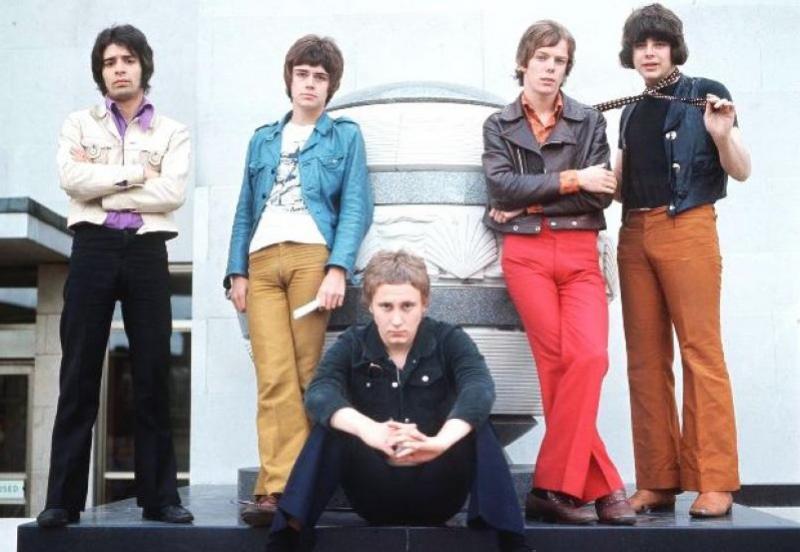
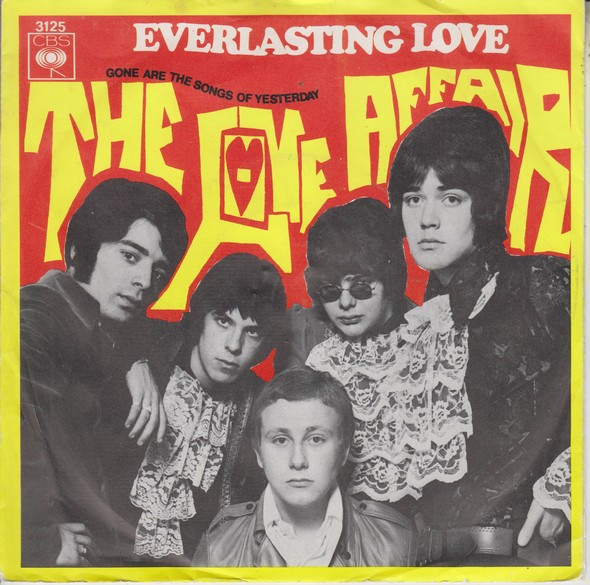
Anyway, on to today’s guest writer: Max from PowerPop blog. His blog is a treasure trove of pop culture – music, films, TV shows and more, from the ’60s, 70’s and beyond. I’ve discovered so many cool songs from following his blog, and would recommend that you do so too… If you aren’t already! He’s has chosen Love Affair’s 1968 smash, ‘Everlasting Love’. Take it away, Max…

‘Everlasting Love’, by Love Affair – #1 for 2 weeks in 1968

First, it’s an honor to guest host on this wonderful blog! I have discovered many #1 songs that I never knew existed. It’s been a lot of fun going through history with UK #1s blog. I like learning about songs I like and dislike… The more trivial knowledge I can stuff in my brain the better. I like to give its creator a lot of good-natured fun over my dislike of (I even hate typing the name!) Madonna. I always look forward to commenting here.

I was looking through this blog in 2020 and I noticed this song and it hit me hard. It starts in with a cannon shot from the drums and that bass. I’ve been a bass player for a long time and I would love to get that sound now. I was struck on how modern the sound was, along with how Steve Ellis looked like he came from now not 1968. He didn’t look like he was old enough to drive… much less 18 years old. 

This version was much better than the Carl Carlton version I knew. I’m American and knew nothing about Steve Ellis and Love Affair. This version is not as slick, and it punches you in the face in the intro. The video intrigued me as well. The video is very 1960s with what is going on. The lingering flower power along with some 1920s thrown in. It has a nice vibe to it… the Charlie Chaplin girl and the other girl who are dancing around posters of Jimi Hendrix and LBJ… pure sixties. It makes you feel like you are there.

When you look back to 1968 and the music at that time… it was everywhere on the map. You had rootsy music, as in The Band. The Beatles and Stones also shed their psychedelic stuff for more pure music without the studio tricks. Other bands still explored psychedelic, folk, country rock, hard rock, and pop. The sixties had some of the best pop songs of any decade. This is one of those great pop songs.

Only Steve Ellis played on this recording. Studio musicians did the rest. Love Affair went onto achieve five more UK Top 20 hits on which the entire band did get to perform. ‘Everlasting Love’ peaked at #1 in the UK in 1968. It was written by Buzz Cason and Mac Gayden. It was originally recorded by Ray Knight and peaked at #40 in the UK, and at #13 in the Billboard 100 in 1967. Steve Ellis: “The general opinion seemed to be that I should do it with an orchestra and then give it a Phil Spector-type production. Obviously, I felt odd without the band being in the studio but it was for the good of all involved. Two takes and it was done. The band were not too concerned about this approach to things.”

Number 1s Blog 5th Anniversary Special – Readers’ Favourite #1s – ‘Silence Is Golden’

This week marks FIVE YEARS since I launched this blog with a post on Al Martino’s ‘Here in My Heart’, the first number one single on the first NME chart, published on November 14th, 1952. Over the course of this half-decade, I’ve picked up some dedicated readers and commenters, to whom I’m very grateful for making this whole thing worthwhile. So, to celebrate the milestone, I’m going to hand the blog over to four of my long-time followers. They’ve all chosen their own favourite UK number one single (from between 1952 and 1988 because, well, we don’t want spoilers!)

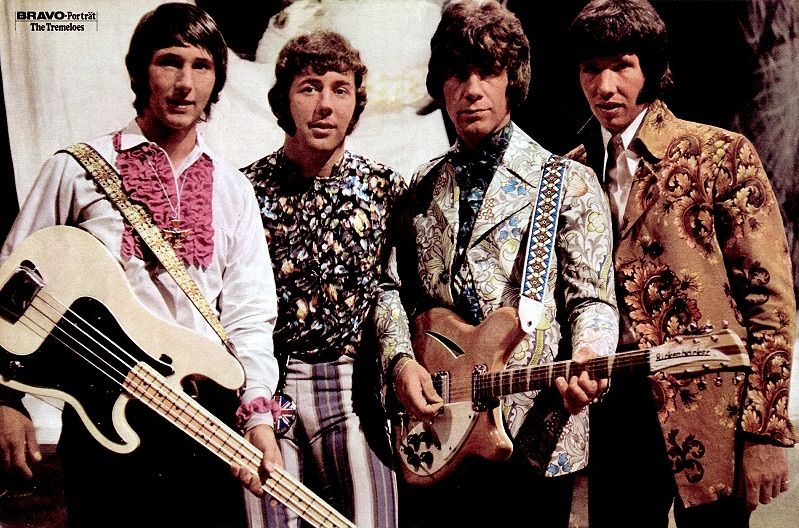
Up first is John Van der Kiste, and his choice of The Tremeloes ‘Silence Is Golden’. John is a writer and historian, whose recent projects include a book on Manfred Mann in the 1970s, and ‘Eagles on Track: Every Album, Every Song’. His work can be found on Amazon.

‘Silence Is Golden’, by The Tremeloes – #1 for 3 weeks in 1967

When Brian Poole and the Tremeloes parted company in 1966, music pundits thought the former would remain a major star while his band would disappear without trace. They were wrong. After struggling with their first two singles, ‘Blessed’ (a Paul Simon song) and ‘Good Day Sunshine’ (Beatles), the band scored with Cat Stevens’ ‘Here Comes My Baby’, a No. 4 in 1967. Stevens disliked their version, complaining that they had turned his heartfelt love-gone-wrong song into a party romp.

For their fourth single, again they decided to take a sad song and make it better (see what I did there). ‘Silence is Golden’, originally the B-side of The Four Seasons’ ‘Rag Doll’ in 1964, was recommended as a potential hit to them by Mick Clarke, who briefly joined as their bassist before being (amicably) replaced by Len Hawkes. Taking a slow, slightly bitter number marked a change in style for them. In three verses and a chorus, the observer tells of his pain at seeing a girl (whom he presumably fancies) being deceived by a guy who obviously doesn’t deserve her. He’s dying to warn her, held back only by the fear that she will tell him he’s lying, so he’d better shut up. A miserable little triangle.

Even so, it flew out of the shops on both sides of the Atlantic. Most of the Trems’ songs featured Hawkes or drummer Dave Munden on lead vocal, but this time they gave the job to lead guitarist Rick West. It shows off the band’s harmonies to perfection. For the most part it follows the arrangement of the original closely with a change in key after the second chorus, the only change coming with a couple of repeats of the final line in a different melody instead of fading out.

1967 may have been the year of Sergeant Pepper, San Francisco and Monterey, but as far as the British charts went, it was big ballad time, with Frank and Nancy Sinatra, Engelbert Humperdinck, Long John Baldry, Tom Jones and The Dave Clark Five all getting sentimental and reaching No. 1 or else getting close. ‘Silence is Golden’ still remains a much-loved staple on 1960s oldies playlists, though some people have never forgiven it for denying The Kinks’ sublime ‘Waterloo Sunset’ the summit after three chart-toppers in three previous years.

(The Trems performing ‘Silence Is Golden’ live in 1967)

The Trems had their chance of repeating history not once but twice, but threw it away. In 1968 they were offered but rejected ‘(If Paradise Is) Half as Nice’, and Amen Corner reaped the benefit. Later they recorded Jeff Christie’s ‘Yellow River’ and scheduled it as a single, though after a change of heart they turned it down, whereupon their producer Mike Smith helped Christie form his own self-named band (with drummer Mike Blakley, whose brother Alan was a Tremeloe) – and take it all the way there in 1970. Also it’s interesting that, of their remaining singles, the most successful were back to the up-tempo party style, with other ballads faring poorly.

Their run of hits continued until 1971 and then faded away (apart from a minor chart entry in 1983 with their version of F.R. David’s ‘Words’), but they have continued to earn a living on the live circuit. Their line-up became something of a revolving door, with West leaving in 1972 after a battle with labyrinthitis, later rejoining on condition that he wouldn’t sing on stage but concentrate on guitar instead. Clarke, who had his moment at the top in 1974 with ‘Sugar Baby Love’ with The Rubettes, has recently been part of the line-up from time to time. The original foursome have all had health issues, with Blakley passing away in 1996 and Munden in 2020, though The Tremeloes have endured in one form or another. Hawkes is still a regular member, while his sons Chesney (as in ‘The One and Only’, No. 1 in 1991) and Jodie often join the line-up on guitar and drums respectively. No mean feat, for a band originally formed in 1958. 

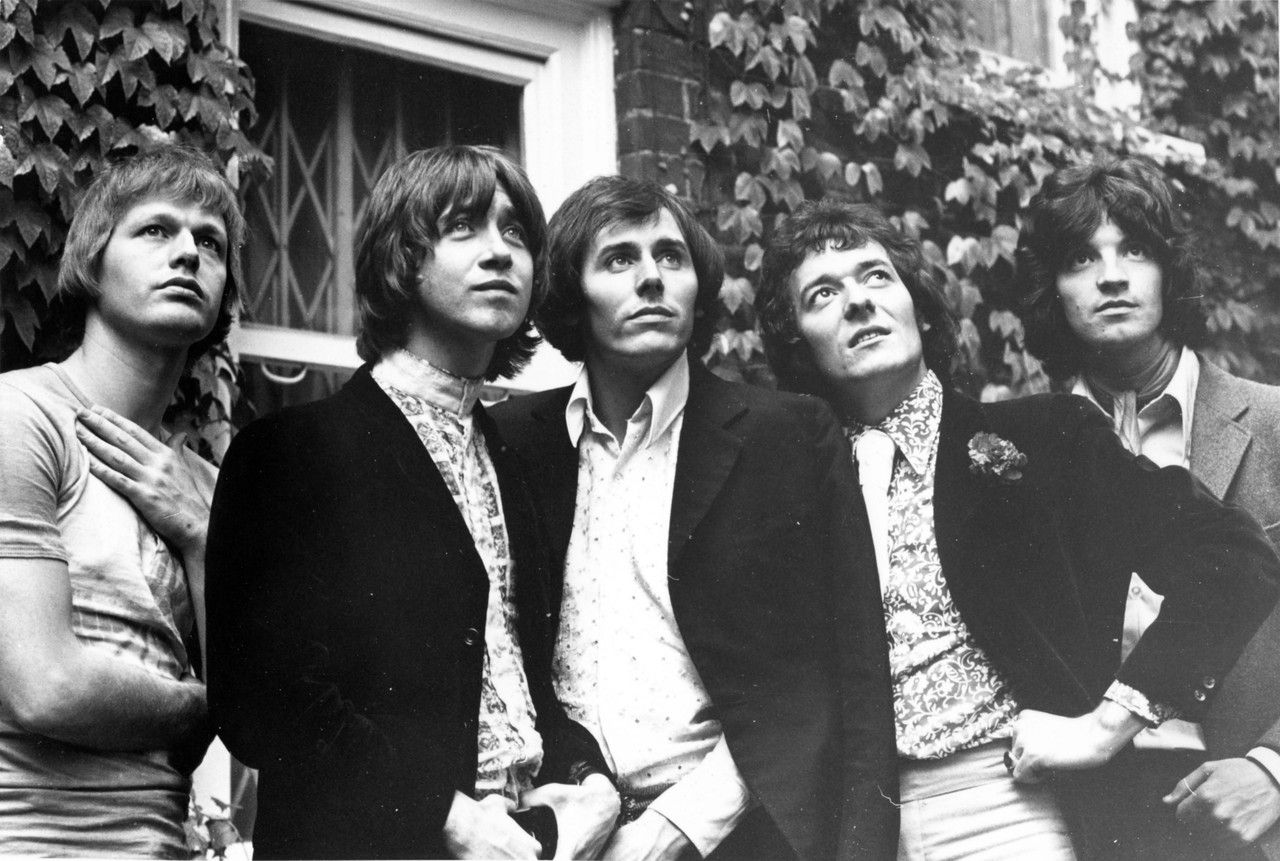
615. ‘He Ain’t Heavy, He’s My Brother’, by The Hollies

A big feature of the late eighties and early nineties, aside from all the dancing, the sampling and the acid house, was classic re-releases…

He Ain’t Heavy, He’s My Brother, by The Hollies (their 2nd and final #1)

2 weeks, from 18th September – 2nd October 1988

One such re-release means that The Hollies score their second #1 single, a full twenty-three years after their first. And like the two most recent belated chart-toppers – ‘Stand By Me’ and ‘Reet Petite’ – this is a classic in every sense. It’s pop as classical music: stately, grandiose, full of portent and power… The road is long, With many a winding turn…

In fact, I’d file this up there with ‘Hey Jude’, and ‘Bridge Over Troubled Water’, as pop music working as a hymn for the secular. And not just because the band do their best impression of a gospel choir towards the end, but also because the title line is from a Christian tale about a sister carrying her brother on her back, uncomplaining. Interestingly, ‘Stand by Me’ also features lines from the bible (while ‘Reet Petite’ does not, unless I missed that particular week of Sunday School…)

The climax is the middle eight, the If I’m laden… At all… part, that positively soars. In fact, it perhaps soars too much, for my tastes. For a band that spent most of the sixties releasing perfectly crafted, snappy pop tunes – from ‘Just One Look’, to their previous #1 ‘I’m Alive’, to ‘Bus Stop’ and on – this is quite the departure. I have to admit that I prefer their pop stuff to this, as impressive as it is, in the same way that ‘Hey Jude’ and ‘Bridge Over Troubled Water’ are not my all-time favourites either.

This song originally came not long after Graham Nash had left the band, to form Crosby, Stills & Nash, leaving the band more reliant on outside songwriters. ‘He Ain’t Heavy…’ had been written for US singer Kelly Gordon, a few months before The Hollies made #3 with it in 1969. (Fun fact: not only is it a belated 2nd #1 for The Hollies, it’s a 2nd #1 for Elton John, who played piano on the track as a pre-fame session musician!) And, for a song with such religious connotations and gospel leanings, it took a much more prosaic reason to finally get it to #1: an advert for Miller-Lite.

In 1969, this hit set the band up to keep going well into the 1970s, something that very few of the big ‘60s acts managed. Their ‘final’ big hit was ‘The Air that I Breathe’ in 1974 (a song I do kind of wish had had the big re-release treatment, instead of this…) And unless I’m missing something obvious, this song’s second round of success meant that The Hollies achieved the longest gap between chart-topping singles, a record they kept for quite a while. On a personal note, and quite fittingly, this was #1 on the day that my own brother was born (but I will refrain from commenting on his heaviness…)

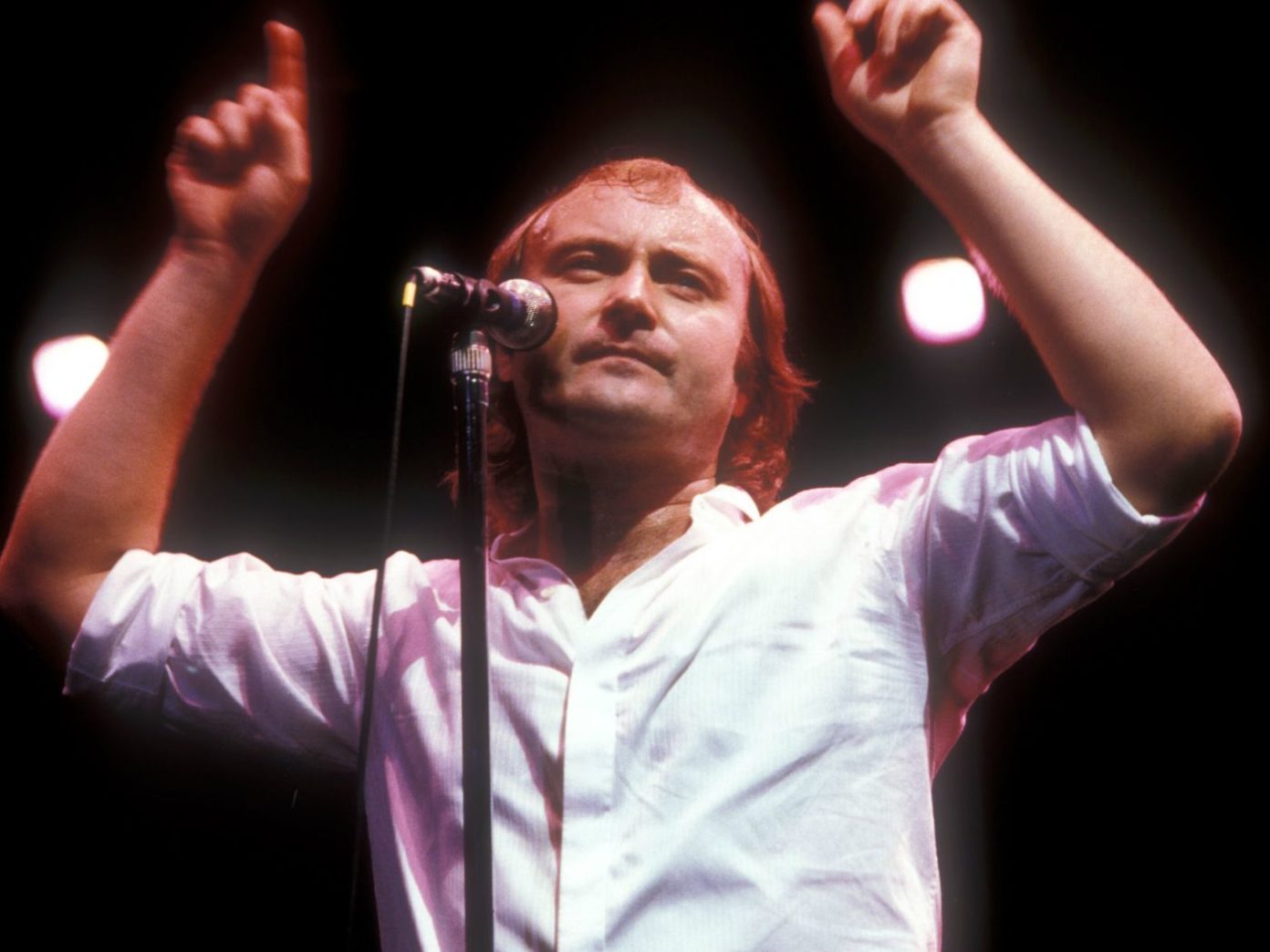
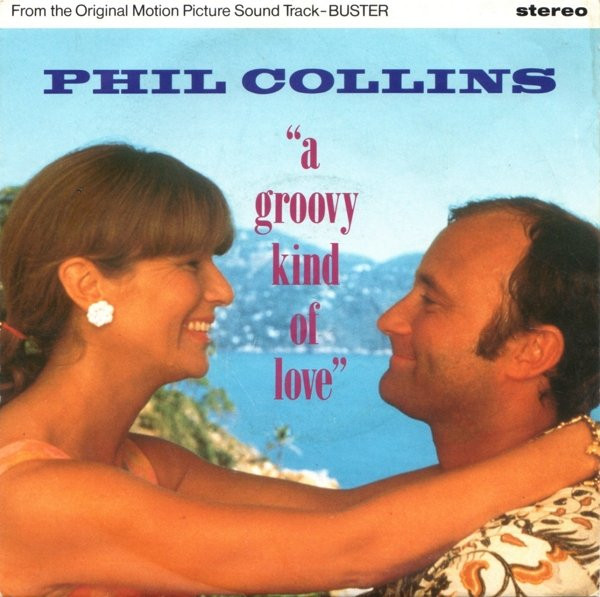
614. ‘A Groovy Kind of Love’, by Phil Collins

Just when I’d made such a big point about us being past the gloopiest years of the decade…

A Groovy Kind of Love, by Phil Collins (his 3rd and final #1)

2 weeks, from 4th – 18th September 1988

It’s Phil, a keyboard, some subtle background strings and percussion, all drenched in glossy, echoey reverb. Only three and a half years have passed since his last #1 – ‘Easy Lover’ – but already Phil Collins feels old-fashioned and left behind by this dancey, sample-heavy era. This feels very 1985… And the use of ‘groovy’ in the title is worth suing for false advertising!

Not that it’s terrible. There’s always space in the musical landscape for a smoochy ballad. It’s just fairly dull, and the lyrics are delivered so slowly that their clunky rhymes stand out even more: When I kiss your lips, Oooh I start to shiver, Can’t control the quiver, -ing inside… When you think of Collins’s hits that didn’t make the top – ‘In the Air Tonight’ and ‘Against All Odds’ both peaked at #2 – you might wonder why this unremarkable one made it.

But then Phil Collins isn’t the only artist to be unfairly represented by his chart-toppers. Sometimes there’s a lull at the top, and something understated and gentle can take over for a couple of weeks. It was also on the soundtrack to the movie ‘Buster’, which I’m guessing helped as well.

For something more interesting we must delve into the history of ‘A Groovy Kind of Love’, which I had never realised dated back two decades, to a #2 hit in 1966 for The Mindbenders. (The use of a term like ‘groovy’ makes much more sense in the mid-sixties…) It was their first release after Wayne Fontana had left the band, and I prefer that version, also a ballad, purely because it sounds like it’s from the 1960s (snappy and guitar-led) and not the 1980s, and I’m biased. Sorry! Meanwhile, the melody is based on a piece by 18th century Italian composer Muzio Clementi, instantly propelling this innocuous ballad into the top two or three oldest #1s, ever. Who knew?

Phil Collins won’t be topping the charts again, but his career will keep ticking away throughout the ‘90s and 00’s, despite him becoming a bye-word for ‘uncool’. It probably didn’t help that he always looked, to me at least, like one of my dad’s old school friends. However, he regained some respect from the hip-hop community, of all places, and still tours despite various health problems. Nowadays his influence is much more recognised, and rightly so. For what it’s worth, he’s the world’s 2nd richest drummer, behind Ringo Starr.

613. ‘The Only Way Is Up’, by Yazz & The Plastic Population

There are some songs that get to #1 because they’re great. And there are some songs that get to #1 perhaps in part thanks to the terrible-ness of the #1 that went before…

The Only Way Is Up, by Yazz & The Plastic Population (their 1st and only #1)

5 weeks, from 31st July – 4th September 1988

‘The Only Way Is Up’ is undoubtedly a great pop song, but it sounds even greater when played straight after Glenn Medeiros’s limp ‘Nothing’s Gonna Change My Love for You’. Did the record buying public hear Medeiros at number one throughout July, decide that they couldn’t have that as 1988’s Song of the Summer, and so sent this banger to #1 for the whole of August…?

Probably not. Most people just buy songs because they like them. But from the opening horn blast, sounding like an express train about to flatten any drippy teenagers left in its wake, this tune means business. I love the squelchy synths, and I love the way Yazz channels Donna Summer herself in the opening note.

But the best bit is the Hold on… build up to the chorus – perfect for belting out on a crowded dancefloor, before punching the air on the title line. Things are certainly getting dancier as we move away from the gloopy mid-80s and towards the nineties… (And yes, I realise that we literally just covered one of the gloopiest hit singles of all time.) Dance is a difficult genre to define – what’s dance, what’s just pop? – but I’d make this the 6th such #1 in just under a year.

Hits like this, and the recent ‘Theme from S-Express’, are bigger budget takes on the SAW Euro-disco sound, with the anarchic feel of acid house. Basically it’s an amalgam of all that was good and fun in pop music at this time. Some of the production does sound dated, yes – the scratching at the end, and the barking dog synths – but with a song as exuberant as this who cares!

I was pretty certain that this would be a cover of a Motown/soul/disco song, much in the mould of ‘Don’t Leave Me This Way’, and I was correct in my convictions. ‘The Only Way Is Up’ was originally recorded in 1980 by soul singer Otis Clay. His version is fine – very different, lots of horns equally uplifting – but it wasn’t a hit until Yazz got her hands on it.

It’s hard to distinguish who The Plastic Population were… It looks like maybe they were Yazz’s backing singers? After this hit they were never credited again. Yazz scored two further Top 10s, and continued releasing low-charting singles throughout the 1990s. She’s since moved into Christian and gospel music. Meanwhile, I just discovered that a version of ‘The Only Way Is Up’ is the theme tune to ‘The Only Way Is Essex’… Have to admit, if I were scoring these chart-toppers, that fact would cost this one half a point…

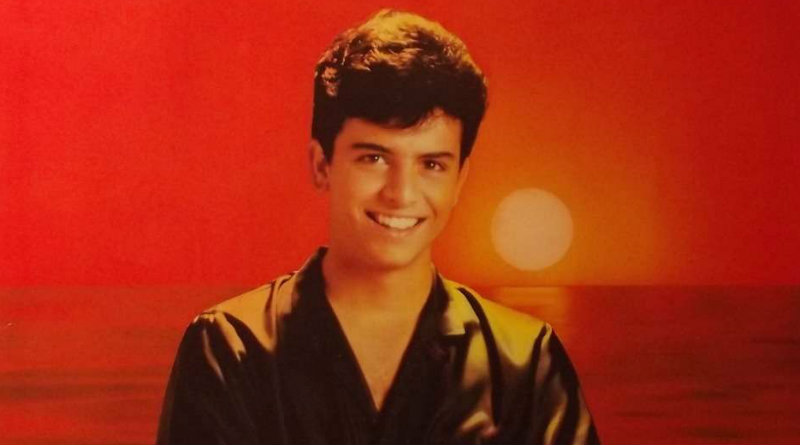
612. ‘Nothing’s Gonna Change My Love for You’, by Glenn Medeiros

You might remember that I like to take notes on each #1 I’m going to write about, usually after finishing the previous post. My first note on this, 1988’s big summer smoocher, reads: ‘Straight in with the sax!’

Nothing’s Gonna Change My Love for You, by Glenn Medeiros (his 1st and only #1)

4 weeks, from 3rd – 31st July 1988

The use of saxophones in number one singles is a contentious issue for me, and one of the big black marks on the right-hand side of my ‘1980s Pros & Cons’ sheet. Used properly and sparingly, for maximum effect, they can be glorious. But for every ‘China in Your Hand’ or ‘Baby Jane’, there’s a ‘What’s Another Year’. However, all these songs, for better or worse, kept the sax for the solo. ‘Nothing’s Gonna Change My Love for You’ does a ‘Careless Whisper’, and whips its instrument out from the start. So to speak…

It instantly sets the tone, and instantly consigns this song to sub-Disney theme gloop. There’s no recovering from ploughing straight in with such a cheesy, sleazy sax. Not that Glenn Medeiros tries particularly hard to recover any credibility. He’s quite happy to wallow in his saccharine mess… Hold me now, Touch me now, I don’t want to live without you…

The verses are really lame. The key change is a proper teeth-grinder. The video is all soft-focus sunset strolls along the beach, and smouldering stares down the camera lens, as anyone over the age of fourteen swallows back their vomit. And yet… Nothing’s gonna change my love for you, You oughta know by now how much I love you…The chorus is the moment it all hangs together, for a couple of seconds. It’s pure cheese, but the drums pound and the sax soars, and it is kind of glorious. Then it collapses back in on its gloopy self. Meh. (At least the Brian May impression from whoever was on lead guitar for the solo redeems things slightly once more…)

It’s fitting that this chart topper followed directly on from Bros – two sides of the teenybopper coin. For every fun and funky dance pop hit, teenage girls were just as likely to send shit like this to number one. The fact that Glenn Medeiros was just eighteen himself, with floppy black hair and puppy dog eyes, probably helped shift a few copies too. He’s Hawaiian, and this was his first big hit. The closest he came to repeating this record’s success was a few years later, with ‘She Ain’t Worth It’ – a duet with Bobby Brown that made #12 (and hit #1 in the US). He’s since gone on to a career as a teacher and headmaster of schools in his home state.

‘Nothing’s Gonna Change My Love for You’, meanwhile, had originally been recorded by soul crooner George Benson. His version is a bit more grown up, but every bit as slick and icky. Westlife have also covered it (of course they have…) Meanwhile, I can confirm that it is a hugely well-known English song in the Far East and South-East Asia – up there with the Carpenters and Celine Dion – where tolerance for this kind of cheese is much higher. Why not enjoy it in Cantonese here, before you go?