An under-represented genre at the top of the British charts, in the late 1980s, was the neo-soul of Seal, Sade, and Terence Trent D-Arby… Even Prince went without a UK #1 for a long time. Perhaps Lisa Stansfield’s first chart-topper is as close as we’re going to get…
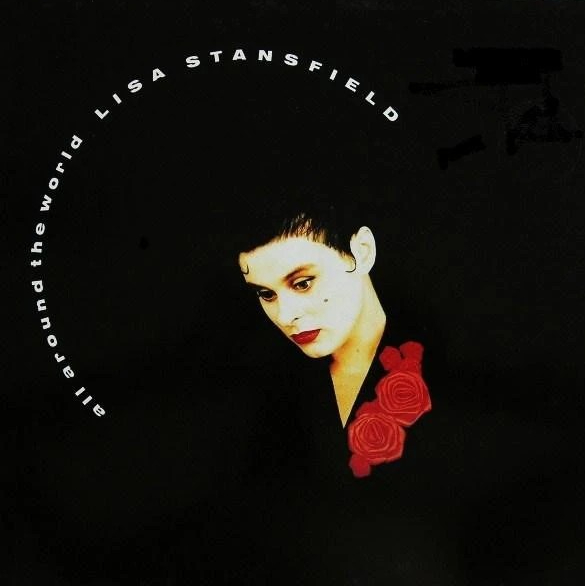
All Around the World, by Lisa Stansfield (her 1st of two #1s)
2 weeks, from 5th – 19th November 1989
If you’re being harsh you might call this sort of smooth and glossy R&B ‘dinner-party soul’ – soft background music you’d hear while munching asparagus tips in an Islington townhouse. And it would be especially harsh on this record, as it’s a lot more lively than some of its contemporaries. I don’t know where my baby is… Lisa Stansfield purrs in the spoken intro… But I’ll find him… She is famously northern, from Manchester, but she does a passable American accent (which was probably wise, as it might not have made #3 in the US if she’d sounded like someone from ‘Coronation Street’).
The verses are a little too tidy, a little too glossy. Bland, even. This is what the late ‘80s would have sounded like without Stock Aitken Waterman to liven them up (I’ve resigned myself to missing SAW when their hits dry up…) But the chorus picks things up, and it comes with a great hook: Been around the world and aye-aye-aye, I can’t find my baby…
There’s drama too, in the strings and the middle-eight: I did too much lyin’, Wasted too much time… and through the length of the record Stansfield shows off the full-range of her vocal talents. She trills, growls, and hits some impressive high-notes. If you didn’t know what she looked like, you might imagine a black soul diva rather than a skinny Manc lass. By the end, as she starts harmonising with herself, it’s a little OTT; but you can forgive the exuberance.
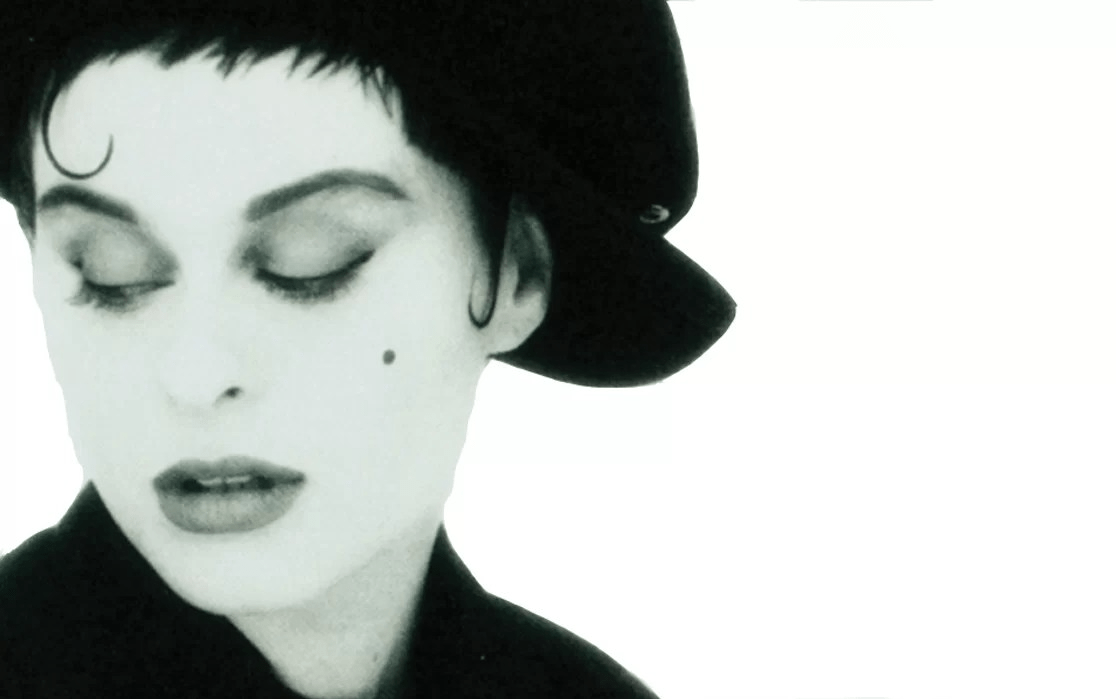
Lisa Stansfield had been releasing music since 1981 – both solo and as part of the band Blue Zone – but to little fanfare until she teamed up with production duo Coldcut. Earlier in ’89 they had released the house classic ‘People Hold On’, establishing her as a vocalist. ‘All Around the World’ was her second solo hit, helped by her distinctive look in the video, the short hair with Betty Boop kiss-curls.
Stansfield would continue scoring Top 10 hits throughout the nineties, including one further chart-topper to come. Meanwhile, we find ourselves with just three #1s left in this decade! Time flies… And if ‘All Around the World’ gives us a perfect mash-up of late-80s/early-90s sounds, our next chart-topper is an ear-popping vision of the decade to come.
He’s back! The biggest chart star of 1989, the hottest medley-maker of the decade, the most successful rabbit in pop history, returns!
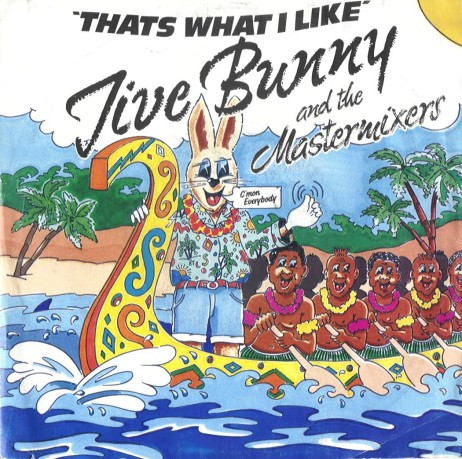
That’s What I Like, by Jive Bunny & The Mastermixers (their 2nd of three #1s)
3 weeks, from 15th October – 5th November 1989
C’mon everybody… Jason Derulo, DJ Khaled, Pitbull: all the biggest morons have their own call-signs by which to announce themselves at the start of a new record, and Jive Bunny is no exception… C-C-C’mon everybody! After that, we’re off on another double-speed tour around some golden oldies: ‘Let’s Dance’, ‘Great Balls of Fire’, ‘Runaround Sue’ and more… Bill Haley, Eddie Cochran and Little Richard have the honour of appearing on their second straight Mastermixers’ release. (I’ve just realised something truly upsetting – these are as close as Little Richard ever came to a #1 single…) Though, as in the first Jive Bunny record, a lot of the vocals are clearly performed by impersonators. The theme to ‘Hawaii 5-0’ does the job of ‘In the Mood’ here, and bookends the entire party.
As before, the whole thing is completely incongruous, and wholly ridiculous. And yet, I still can’t hate it. In fact, it gives you a new-found respect for what are already classic songs, that they can be dropped from a great height into this hot mess and still shine through. In the Mastermixers’ defence, the transitions between the songs are slightly smoother here than in ‘Swing the Mood’. They were clearly honing their craft.
And let’s be clear: the fact that this topped the charts just six weeks after their first #1 confirms that Jive Bunny fever was clearly sweeping the country in the autumn of 1989. They were just giving the public what they so craved – what they liked, as it were. (The title comes from the Big Bopper’s lascivious Oooh baby that’s what I like… in ‘Chantilly Lace’.)
As with ‘Swing the Mood’, ‘That’s What I Like’ was a huge hit throughout Europe (though returns were slowly diminishing, and the UK was the only territory in which it made #1). Even the US wasn’t immune to the rabbit’s charms, with this making #69 on the back of a very impressive #11 peak for ‘Swing…’ Twas, for a short time, Jive Bunny’s world, and we were just living in it.
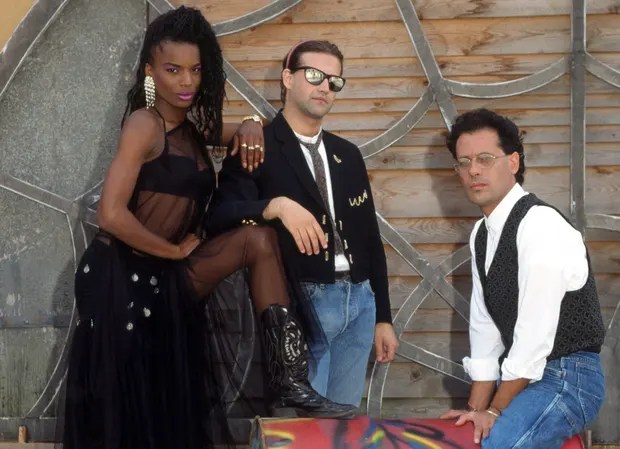
Ride on Time, by Black Box (their 1st and only #1)
6 weeks, from 3rd September – 15th October 1989
I’m a child of the nineties, the decade in which the music we recognise today as ‘dance’ really came into being. There have been dance #1s popping up regularly throughout the second half of the 1980s but, as good as many of them have been (‘Theme from S-Express’ says ‘hello’), they have sounded quite dated – often chaotic mish-mashes of samples and sound effects.
‘Ride on Time’, however, is much less cluttered – just a beat, a few synth hooks, a classic piano riff – but all the more weighty for it. One of the song’s creators mentioned wanting to create a dance track with the power of a rock song. And then there are the vocals. Though I think describing them as just ‘vocals’ isn’t quite doing them justice. They are colossal, momentous… add whatever synonym for ‘very big’ you want. There aren’t many lines, and half of them are just woah-wa-wa-wa-oh, but not for nothing is this record classed under the sub-heading ‘diva house’. The singer does a great job. I hesitate in naming this ‘singer’, as there was a lot of controversy over who they actually were. The record originally used the vocals of a 1980 hit by Loleatta Holloway, called ‘Love Sensation’, which Black Box didn’t have the rights to. They then re-recorded the track with Heather Small, soon to become a star in her own right with M People.
To confuse matters further, the woman in the video and the record sleeve below is model Katrin Quinol, who had been brought in to mime on TV performances and the like. I’m not 100% sure which version I’ve been listening to – a search for ‘Ride on Time Heather Small’ on YouTube throws up nothing – but since Black Box finally bought the rights to ‘Love Sensation’ in 2018 I assume it’s Loleatta Holloway’s big lungs that are blasting my cobwebs away. Sadly she died in 2011, though she did eventually receive enough royalties from the song to, as she put it, buy herself a fur coat.
Every time an electronic dance number one comes along, I feel contractually obliged to mention that it isn’t my favourite genre. I’m guitars and drums all day long. But good dance, just like good rap and good reggae, can transcend my fussy tastes. Good is good, and ‘Ride on Time’ is pretty darn good. (I said a lot of the same stuff about Soul II Soul’s ‘Back to Life’ and, although the two songs have very different vibes, they are two sides of the same futuristic dance coin.) I’d go as far as to say that, in the right nightclub, in the right mood, ‘Ride on Time’ could be euphoric. And it also feels like a direct riposte to the cheap ‘n’ cheesy tat that it replaced at #1…
And as I said above, ‘Ride on Time’ feels much more streamlined and precise after previous years’ big dance hits. But that’s not the only reason, I don’t think, for it being a huge, game-changing hit. It also, cleverly, harks back to disco, with its big-voiced diva on lead vocals, giving a timeless sheen to its very modern sound. And also, we have to nod our heads to acts like Pet Shop Boys, and even Stock Aitken Waterman, for making pop music much more dance-oriented over the past couple of years. In the ‘60s and ‘70s ‘pop’ usually equalled ‘rock’ (think Merseybeat, and glam), while in the 80s ‘pop’ has shifted in a dancier direction. The 90s will see pop shift back to guitars, and then towards an R&B/hip-hop future.
Black Box were an Italian act, kicking off a trend for European DJs and dance acts scoring big hits across the Channel, often in the autumn after Brits had spent the summer on Mediterranean beaches. The Euro-house influences are clear, and very different from the American house we’ve met up to now. Clearer, classier… dare we give into stereotypes and say ‘chic’? My favourite aspect of the song is that the lyrics are clearly Because you’re right on time… But the Italian DJs’ English wasn’t great, and they misheard it as ‘Ride’. Which I think is cute (and much more memorable than the correct phrase).
And yet, for all my talk of game-changing modernity, the charts will do what they always do and completely disprove all my blethering with the next number one. Yes, that damn rabbit is back, next.
Welcome to the second half of 1989, the final few months of the decade. We have twenty-three weeks’ worth of chart-toppers left to go. Nine of those will be taken up by a cartoon rabbit, peddling medleys of golden-oldies…
Swing the Mood, by Jive Bunny & The Mastermixers (their 1st of three #1s)
5 weeks, from 30th July – 3rd September 1989
First thing to establish is that, yes, this did indeed happen. I know April Fool’s is just around the corner but no – it’s real. I’m too young to remember it and I can’t recall the last time I heard Jive Bunny mentioned, in any context, so I imagine that those responsible for buying these records, and contributing to his short period of chart domination, regret it wholeheartedly.
‘Swing the Mood’ is a journey through rock ‘n’ roll history, bookended rather incongruously by Glenn Miller’s ‘In the Mood’, which predates rock ‘n’ roll by a good decade. Still, it’s catchy, a great hook, and has even already featured in a #1 single … Yes, in the fade-out to ‘All You Need Is Love’. Then we’re off, off on a breakneck journey past Bill Haley & The Comets, Elvis, Chubby Checker, Little Richard, The Everly Brothers, and Eddie Cochran.
Three former #1s appear – ‘Jailhouse Rock’, ‘Rock Around the Clock’ and ‘All Shook Up’ – which is not something happens very often (in fact, the only #1 I can think of that features an earlier chart-topper is, again, ‘All You Need Is Love’, which had a snippet from ‘She Loves You’). The whole shebang was the brainchild of a father and son duo from Rotherham, John and Andrew Pickles, though the original ‘Swing the Mood’ had been created by a Doncaster DJ named Les Hemstock. Either way, it’s a South Yorkshire creation, though I could find no information on who wore the (genuinely quite terrifying) rabbit head for promotional activity.
Listening to the various versions of ‘Swing the Mood’ available to us on Spotify and YouTube, it becomes clear that not every song in the medley features the original vocals. Danny and the Juniors sound legit; but that sure ain’t Elvis. This was a problem that plagued Jive Bunny from the start: even as the record was climbing the charts they had to put out a re-recorded version with impersonators singing the bits they didn’t have the rights for.
I mean, I guess it’s fun. I can’t hate it, because I like all the songs featured in it, and the good thing about medleys is that they jump around so fast that you could never call them boring. (Though, for a much better medley of rock ‘n roll tunes, check out Status Quo’s ‘Anniversary Waltz 1 and 2’, which perhaps rode the Jive Bunny wave to reach #2 a year later.) Some of ‘Swing the Mood’s transitions are very clunky, though; and what they do to The Everly Brothers as they segue into ‘Wake Up Little Susie’ is borderline sacrilege. Calling themselves ‘The Mastermixers’ seems a bit of a stretch…
At the same time, medleys had been a big thing throughout the 1980s, and we were probably overdue one at the top of the charts. ‘Stars on 45’, ‘Hooked on Classics’ and the like, had all been big hits. Once the floodgates opened – and boy did they open, with ‘Swing the Mood’ becoming the second highest-selling hit of the year – the #1 hits kept coming. There’ll be more from Jive Bunny very soon…
We’re fresh from a recap – a recap that I dubbed the ‘Stock Aitken Waterman Recap’ due to their domination of the past few months’ chart-toppers – and as we crack on with the next thirty those synthesised drumbeats can only mean one thing…
You’ll Never Stop Me Loving You, by Sonia (her 1st and only #1)
2 weeks, from 16th – 30th July 1989
Yes, they’re not done yet! The production team get their sixth (!) #1 of the year, while it’s only July. And while the Euro-disco beat and the tinny synths are by this point very familiar, I do sense that this is a step up from their previous #1s with Kylie and Jason, which were starting to feel phoned-in.
It’s got a cooler, dancier production to it, not the relentless, in-your-face cheese of ‘I Should Be So Lucky’ (though the verses do bear a resemblance), or ‘Never Gonna Give You Up’. Swap Sonia’s girl-next-door charms for a proper dance diva and this mightn’t have sounded out of place at the Hacienda. Listen to the eight minute extended mix, where there are long stretches in which the beat is left to do its thing and it starts to sound dangerously like a proper dance record.
‘You’ll Never Stop Me Loving You’ also has a great hook in the chorus: It doesn’t really matter what you put me through, You’ll never stop, Me from loving you… with a brilliant key-change tease on the ‘never stop’. It reminds me of the records SAW did with Donna Summer; though Sonia’s voice, as fine as it is, can’t quite compete with the Queen of Disco.
The only thing I can’t quite get behind is the caterwauling ‘solo’, in which the vocals are looped into something of a grating mess. Still, if the sign of a good pop song is that you’re singing along before the first play has finished then this is officially a good pop song (because I was). It was Sonia Evans’ debut single, reaching #1 when she was just eighteen. Between 1989 and 1993 she’d have eleven Top 30 hits, and even represent the UK at Eurovision, though none of her subsequent singles rose higher than #10.
And just like that, we reach the end of SAW’s golden age. They’re still on production duties for two upcoming #1s, but ‘You’ll Never Stop Me Loving You’ was the last chart-topper that they would write. They may well be a bye-word for late-eighties cheese but, while I have found some of their stuff slightly repetitive, their short burst of complete chart domination has been impressive. And when you see the act that’s about to dominate the second half of 1989, Stock Aitken and Waterman might not be such a terrible thing after all…
This one, our 21st, takes us from late 1987 through to mid-1989: the final fully-eighties recap. And although the highway we’re taking continues on towards electronic dance domination, there have been lots of interesting little side-streets and alleyways to get lost down…
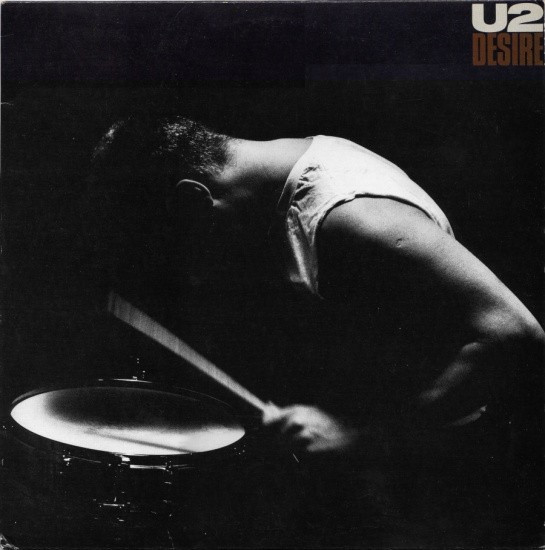
For a start, 1988 saw a bit of a guitar revival, with glossy soft-rock chart-toppers from Belinda Carlisle and Robin Beck, U2 getting a bluesy first #1, Simple Minds going epic, as well as Billy Bragg and Fairground Attraction holding up the indie side of things. I wasn’t expecting that, to be honest, as we delved into the late 1980s, and it was very welcome.
There was also Enya’s ‘Orinoco Flow’, one of the stranger chart-toppers of recent years, announcing new-age as a bone fide chart force (the genre will have a bit of a heyday over the next few years), as well as the now-obligatory charity singles from Wet Wet Wet and the Hillsborough Collective. Plus it wouldn’t be the late-80s without a golden-oldie making top spot on re-release, as the Hollies did with ‘He Ain’t Heavy…’
Meanwhile, Madonna returned with her first single in almost two years. In one fell swoop, ‘Like a Prayer’ managed to announce her as the biggest act on the planet (sorry MJ), invent the modern female pop star, and piss off the Catholic church. Not bad going, even if the song still doesn’t quite make it into my own personal Madonna Top 5.
But despite all these little distractions it is, as I said in the intro, dance music which has formed the backbone of what we’ve been listening to. And it’s evolving, seeping into all corners of the pop world: from the manic energy of ‘Theme from S-Express’, the bizarre ‘Doctorin’ the Tardis’, the funky ‘The Only Way Is Up’, and the chilled-out ‘Back to Life’, via acts like Pet Shop Boys, and even Bros. And we can’t move on without mentioning…
Stock Aitken Waterman, of course. If ‘Back to Life’ is a cool Ibiza beach bar then SAW’s take on dance is pure Skegness. They’ve appeared in earlier recaps, but now the songwriting and production trio have begun to dominate British pop to the extent that three of the last four #1s I’ve featured were SAW numbers, and that we could really dub this ‘The SAW recap’. Kylie Minogue and Jason Donovan have been their main vehicles, culminating in their classic smoocher ‘Especially for You’, which was based on their wedding storyline from ‘Neighbours’. I have to admit I’ve enjoyed ‘I Should Be So Lucky’, and ‘Too Many Broken Hearts’, though the formula felt like it was wearing thin by the time we came to ‘Hand on Your Heart’ and ‘Sealed With a Kiss’.
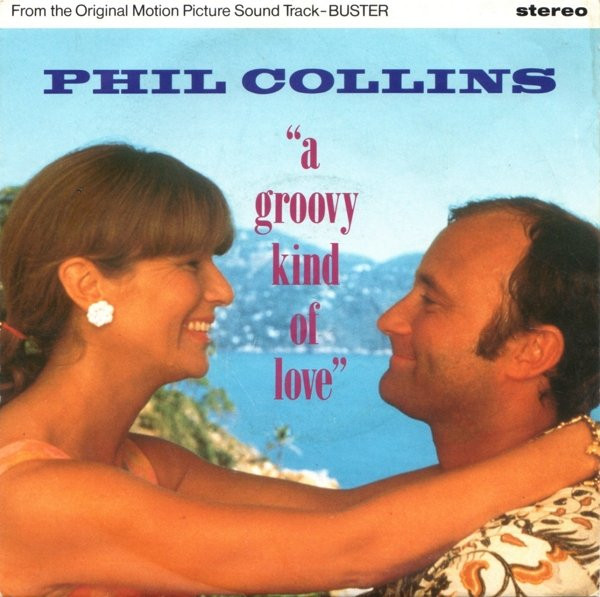
Anyway, the main point of these recaps is to dish out some gongs, so let’s snap to it. First up: The ‘Meh’ Award for those chart-toppers you’d already forgotten existed. For the other three awards I’ve got a pretty clear picture, but this one has me a bit stumped. I could throw in the lazy Kylie and Jason songs I just mentioned, but there’s just enough residual pop charm left in them. I could throw in Simple Minds’ ‘Belfast Child’, but that’s too ambitious to be truly boring. So I’m left with Aswad’s cod-reggae ‘Don’t Turn Around’, and Phil Collins’s ‘Groovy Kind of Love’, and I’m in the bizarre situation of re-listening to them to check which is more boring… (bear with…) And it’s decided! I’m going with Phil: one of the slowest number ones of all time.
The WTAF Award feels more clear-cut. Enya was a surprise, but was too chilled-out to be truly ‘odd’. Whitney’s bombastic ‘One Moment in Time’ certainly raised an eyebrow, along with all the hairs on your head, as well as setting off next door’s car alarm; but at the end of the day it’s just a power ballad. No, I’m going for The Timelords’ Dr Who-glam rock-cum-Gary Glitter mash-up, ‘Doctorin’ the Tardis’ – a song so cynically aiming for chart domination that it spawned a ‘How To’ guidebook.
To the Very Worst Chart-Topper, and a toss-up. Cliff gave us Christmas goosebumps – and not in a good way – with ‘Mistletoe and Wine’. Except, I have one eye on his Crimes Against Christmas to come (plus, he’s already won one ‘Very Worst’ award back in the ‘60s, which I now regret, but hey ho…) All of which leaves the coast clear for Glenn Medeiros’s simpering ‘Nothing’s Gonna Change My Love for You’. Which, to be honest, isn’t truly awful. But then I don’t think any of the past thirty #1s have been truly awful. It’s just wrong place, wrong time for poor Glenn.
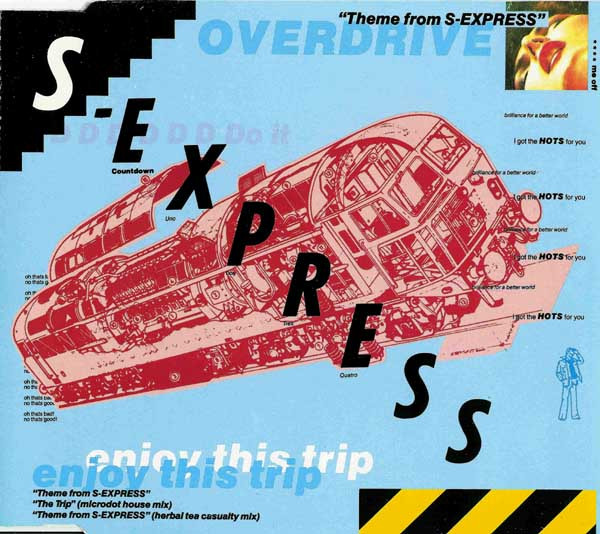
And finally, The Very Best Chart-Topper for the period dated December ’87 to July ’89. I like ‘The Only Way Is Up’; but not that much. I love Pet Shop Boy’s take on ‘Always on My Mind’; but they won this award last time (and, as great as they were, I can’t have anyone winning it twice in a row). Then there’s the Madonna-shaped elephant in the room: ‘Like a Prayer’ felt seismic, thrilling, fairly shocking, but perhaps on reflection it’s been eulogised too much over the years. She’d had better songs before it, and she’s got better to come. No, the winner this time is a song very much of its time… S’Express and their manic, pounding, sample-crazy floor-filler ‘Theme from S-Express’. Very much the sound of the late-eighties, and our 22nd ‘Very Best Chart-Topper’.
To recap the recaps, then:
The ‘Meh’ Award for Forgettability
‘Hold My Hand’, by Don Cornell.
‘It’s Almost Tomorrow’, by The Dream Weavers.
‘On the Street Where You Live’, by Vic Damone.
‘Why’, by Anthony Newley.
‘The Next Time’ / ‘Bachelor Boy’, by Cliff Richard & The Shadows.
‘Juliet’, by The Four Pennies.
‘The Carnival Is Over’, by The Seekers.
‘Silence Is Golden’, by The Tremeloes.
‘I Pretend’, by Des O’Connor.
‘Woodstock’, by Matthews’ Southern Comfort.
‘How Can I Be Sure’, by David Cassidy.
‘Annie’s Song’, by John Denver.
‘I Only Have Eyes For You’, by Art Garfunkel.
‘I Don’t Want to Talk About It’ / ‘The First Cut Is the Deepest’, by Rod Stewart.
‘Three Times a Lady’, by The Commodores.
‘What’s Another Year’, by Johnny Logan.
‘A Little Peace’, by Nicole.
‘Every Breath You Take’, by The Police.
‘I Got You Babe’, by UB40 with Chrissie Hynde.
‘Who’s That Girl’, by Madonna.
‘A Groovy Kind of Love’, by Phil Collins.
The WTAF Award for being interesting if nothing else
‘I See the Moon’, by The Stargazers.
‘Lay Down Your Arms’, by Anne Shelton.
‘Hoots Mon’, by Lord Rockingham’s XI.
‘You’re Driving Me Crazy’, by The Temperance Seven.
‘Nut Rocker’, by B. Bumble & The Stingers.
‘You’ll Never Walk Alone’, by Gerry & The Pacemakers.
‘Little Red Rooster’, by The Rolling Stones.
‘Puppet on a String’, by Sandie Shaw.
‘Fire’, by The Crazy World of Arthur Brown.
‘In the Year 2525 (Exordium and Terminus)’, by Zager & Evans.
‘Amazing Grace’, The Pipes & Drums & Military Band of the Royal Scots Dragoon Guard.
‘Kung Fu Fighting’, by Carl Douglas.
‘If’, by Telly Savalas.
‘Wuthering Heights’, by Kate Bush.
‘Hit Me With Your Rhythm Stick’, by Ian Dury & The Blockheads.
‘Shaddap You Face’, by Joe Dolce Music Theatre.
‘It’s My Party’, by Dave Stewart & Barbara Gaskin.
‘Save Your Love’ by Renée & Renato.
‘Rock Me Amadeus’, by Falco.
‘Pump Up the Volume’ / ‘Anitina (The First Time I See She Dance)’, by M/A/R/R/S
‘Doctorin’ the Tardis’, by The Timelords
The Very Worst Chart-Toppers
‘Cara Mia’, by David Whitfield with Mantovani & His Orchestra.
‘The Man From Laramie’, by Jimmy Young.
‘Roulette’, by Russ Conway.
‘Wooden Heart’, by Elvis Presley.
‘Lovesick Blues’, by Frank Ifield.
‘Diane’, by The Bachelors.
‘The Minute You’re Gone’, by Cliff Richard.
‘Release Me’, by Engelbert Humperdinck.
‘Lily the Pink’, by The Scaffold.
‘All Kinds of Everything’, by Dana.
‘The Twelfth of Never’, by Donny Osmond.
‘The Streak’, by Ray Stevens.
‘No Charge’, by J. J. Barrie
‘Don’t Give Up On Us’, by David Soul
‘One Day at a Time’, by Lena Martell.
‘There’s No One Quite Like Grandma’, by St. Winifred’s School Choir.
‘I’ve Never Been to Me’, by Charlene.
‘Hello’, by Lionel Richie.
‘I Want to Know What Love Is’, by Foreigner.
‘Star Trekkin’’, by The Firm
‘Nothing’s Gonna Change My Love for You’, by Glenn Medeiros
The Very Best Chart-Toppers
‘Such a Night’, by Johnnie Ray.
‘Cherry Pink and Apple Blossom White’, by Perez ‘Prez’ Prado & His Orchestra.
‘Great Balls of Fire’, by Jerry Lee Lewis.
‘Cathy’s Clown’, by The Everly Brothers.
‘Telstar’, by The Tornadoes.
‘She Loves You’ by The Beatles.
‘(I Can’t Get No) Satisfaction’, by The Rolling Stones.
‘A Whiter Shade of Pale’, by Procol Harum.
‘I Heard It Through the Grapevine’, by Marvin Gaye.
‘Baby Jump’, by Mungo Jerry.
‘Metal Guru’, by T. Rex.
‘Tiger Feet’, by Mud.
‘Space Oddity’, by David Bowie.
‘I Feel Love’, by Donna Summer.
‘Heart of Glass’, by Blondie.
‘The Winner Takes It All’, by ABBA.
‘My Camera Never Lies’, by Bucks Fizz.
‘Relax’ by Frankie Goes to Hollywood.
‘You Spin Me Round (Like a Record)’, by Dead or Alive
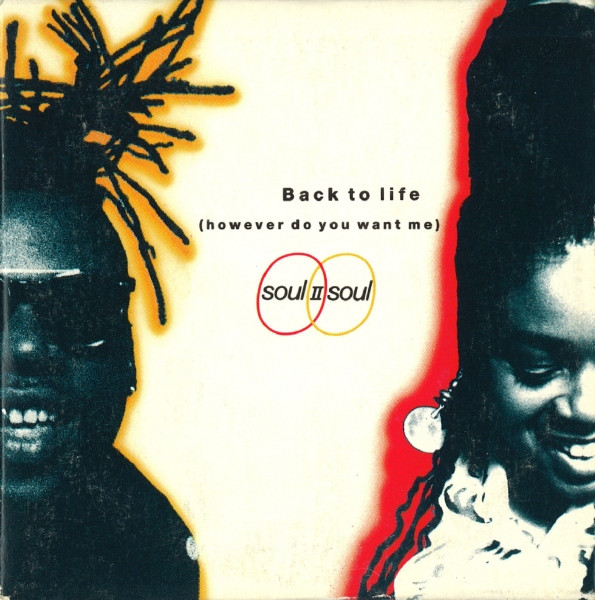
Back to Life (However Do You Want Me), by Soul II Soul (their 1st and only #1)
4 weeks, from 18th June – 16th July 1989
Until now, though. For ‘Back to Life’ is a cool record. A mix of hip-hop beats and soulful vocals. It’s a little bit of dance, a little bit of house. Wikipedia lists it as ‘proto-jungle’, which sounds slightly terrifying but very fun. Yet for all these influences, it’s not a cluttered track. The production is sparse – just a beat and some strings for the most part – and ‘sparse’ is not something I’ve not been able to say about the sample-heavy dance hits we’ve met in recent years.
It started out life as an a cappella track, which makes sense, as Caron Wheeler’s vocal turn is the stand out star of this record. It’s her that makes me want to announce this as the start of the nineties, six months early, as the next decade will be dotted throughout with dance tracks ft. female divas. Elsewhere, the beat and the production is unfussed, and unhurried, almost unbothered whether you like it or not, whether you think it’s upbeat enough to dance to. It’s very contemporary, a world away from SAW’s cheap and cheerful approach, until a scrrraaatch on the DJ’s decks places it firmly in 1989.
Proto-jungle is not my kind of thing (I prefer my jungle fully formed…), but a good record is a good record, and this is a good record, if you know what I mean. It’s moving things along, like a mini ‘Rock Around the Clock’ or ‘I Feel Love’, and for that I respect it. It’s the future, and we’ll be hearing a lot more like it soon…
Soul II Soul were a musical collective of some nine members, founded by DJ Jazzie B, who ran a club night in Brixton that played music with British, African, Caribbean and American influences. They had even hosted a hot new LA rap group called NWA in 1988. ‘Back to Life’ was just their fourth single, and their second Top 10 hit. ‘Keep On Movin’’ had been their breakthrough, but for me that one’s lacking ‘Back to Life’s hook. Impressively, ‘Back to Life’ also made the Top 10 in the US, where it had homegrown hip-hop/R&B to compete with.
As I mentioned above, the difference between this and the earlier dance #1s, like ‘Pump Up the Volume’ or ‘Theme from S-Express’, is that it’s not at all heavy on the samples. There’s just one: the drums from funk band Graham Central Station’s ‘The Jam’. Or two, if you count Caron Wheeler’s a cappella original. This was Wheeler’s last single with Soul II Soul – she would leave to pursue a solo career before returning in 1996.
So, we start a new chart-topping chapter here. And appropriately enough, before we delve further towards the nineties, we have a recap…
From an extremely harrowing chart-topper, to one as lightweight, as ephemeral, as they come…
Sealed With a Kiss, by Jason Donovan (his 3rd of four #1s)
2 weeks, from 4th – 18th June 1989
I am glad that I don’t have to ponder life, death and injustice as I listen to Jason Donovan’s take on ‘Sealed With a Kiss’. I don’t have to think much at all, for this is basically karaoke. Perfectly good karaoke, I mean that as no slight on the singing abilities of Mr Donovan, but it’s karaoke nonetheless. The production (Stock Aitken Waterman yet again, as was almost mandatory in 1989) is exactly what you would hear in a Japanese karaoke booth: a cheap replication of the early-sixties original.
It is an odd choice of cover for the hottest young pop star in the country. The melancholy chords, the tempo, and the tone of the song feel very out of step for the Hi-NRG late eighties. I suppose, though, it’s a current teen idol singing a former teen idol’s hit from nearly thirty years before (the song tells the story of two lovebirds separated for an agonisingly long summer) thereby appealing to both kids and their parents. Yet part of me wishes SAW had tarted the song up in their usual tinny Eurodisco dressing – that might have been quite fun. As it is, the song washes past almost unnoticed.
‘Sealed With a Kiss’ had been a #3 hit in 1962 for Brian Hyland, his biggest British record, as well as making #7 on re-release in the seventies. (Hyland’s breakthrough hit, ‘Itsy Bitsy Teenie Weenie Yellow Polka Dot Bikini’ will also soon be reappearing at the top of the charts, in truly traumatic fashion… I can’t wait!) This cover gave Donovan his 3rd #1 in under six months, which is some going. For me, though, it’s a step down from the classic (yes, classic) ‘Especially for You’ and the perfectly fine ‘Too Many Broken Hearts’.
It was also the 3rd SAW #1 in a row, and I’m not sure how many (if any) other producers have done that. Plus, it’s the second consecutive cover of a golden-oldie to make #1. And, even more interestingly for chart nerds like myself, it was the second chart-topper in a row to enter in top spot. That had only happened once before, in 1973. Pre-1990, entering at the top pretty much announced you as the biggest act in the country (or a charity single). As we move into the 1990s, songs are going to enter at the top of the charts more often, and the turnover of #1s is going to increase. The ‘90s are going to take a while to get through, that’s for sure…
Of all the charity chart-toppers we’ve met in recent years – and we’ve met a fair few since Band Aid kicked it all off at Xmas 1984 – I’m most uncomfortable approaching this next one with anything like my usual light-hearted tone…
Ferry ‘Cross the Mersey, by The Christians (their only #1), Holly Johnson (his only solo #1), Paul McCartney (his 3rd and final solo #1), Gerry Marsden (his only solo #1) & Stock Aitken Waterman
3 weeks, from 14th May – 4th June 1989
We’ve had records raising money for famine in Africa, children’s charities, and a ferry disaster. We’ve already had one charity single for a disaster in a football stadium, when I was able to comment blithely on the fact that the Nolans and Lemmy from Motorhead were singing along together happily. But this one somehow hits deeper.
Three weeks before this record was released, Liverpool and Nottingham Forest were due to contest an FA Cup semi-final at Hillsborough stadium, in Sheffield. One of the stadium concourses, next to a stand housing the Liverpool supporters, had become dangerously overcrowded. To alleviate crowds outside the ground, with kick-off fast approaching, an exit gate was opened, which meant that people could enter the stand more quickly. This created an even bigger crush inside the stadium, from which there was no escape. The match was abandoned after five minutes, but by the end of the day ninety-four Liverpool supporters had been crushed to death. That number would rise in the coming months and years to ninety-seven. A further three hundred were hospitalised.
So far, so tragic. Of course what makes it worse, and what makes Hillsborough resonate to this day, was that South Yorkshire Police blamed the disaster on drunken hooligans rather than police mismanagement and incompetence, aided by sensationalism from various newspapers. Subsequent reports and inquests over the years uncovered that the crush wasn’t down to hooliganism, and that the police, the ambulance services and the stadium design were the main factors. It took almost thirty years for criminal charges to be brought against those responsible.
I’m not sure why this tragedy hits deeper, and I’m not sure if this is the place to ponder that question. Perhaps it’s because I’m a football fan, have been to many football stadiums, though usually in a seat (following the Hillsborough disaster, football stadiums used in the upper tiers of British football were required to transition from standing to seating). Then there’s the fact that it took so long for justice to be served. And the fact that crushes like this still happen at football matches (see last year’s Champions League final) and elsewhere (in Seoul, last Halloween). They tend to happen at what should be fun occasions – sporting events, concerts, nights out – and the people who die what must be excruciating deaths are never the ones to blame.
Musically this song is as you’d expect of a hastily-assembled charity single in 1989. It’s an interesting chart moment: a group of the biggest Liverpudlian pop stars claiming their only ‘solo’ #1s (Holly Johnson of Frankie Goes to Hollywood and Gerry & The Pacemakers’ Gerry Marsden) as well as the biggest songwriting team of the day (Stock Aitken Waterman) getting a rare credit. Oh, and an ex-Beatle scoring his last (officially credited) #1. Unlike previous charity singles the video doesn’t feature the stars – instead it features old footage of Liverpool, of the football team, of Hillsborough flooded with flowers in the aftermath of the disaster, with the name of each victim running by at the bottom of the screen.
‘Ferry Cross the Mersey’ had originally been a #8 hit for The Pacemakers in early 1965, their final Top 10 record after a burst of success at the start of the Merseybeat boom. It’s a nice enough song, though you’d assume that had ‘You’ll Never Walk Alone’ not been used by The Crowd then it would have been the chosen song, given its association with Liverpool FC. Anyway, here ends this sombre interlude, both in terms of the charts and this blog. Jason Donovan will be keeping things light and fluffy next, so until then…
It’s only May, but here we are with the 3rd Stock Aitken Waterman #1 of the year (and there are still four more to come…)
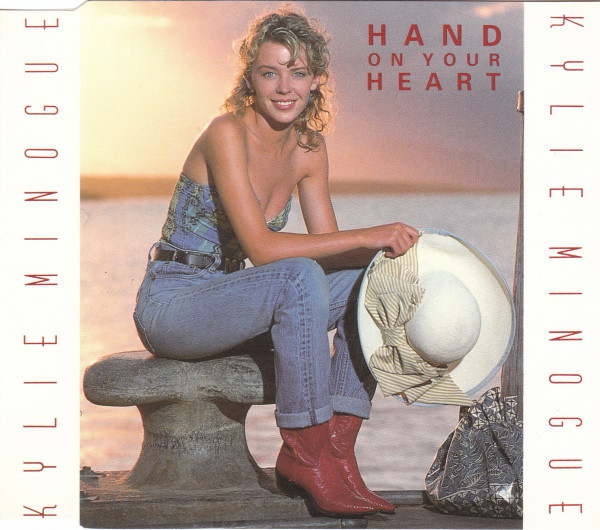
Hand on Your Heart, by Kylie Minogue (her 3rd of seven #1s)
1 week, from 7th – 14th May 1989
And yes it’s SAW by numbers – it feels like they were getting lazier, or at least more complacent, by the hit – and for sure there are much better Kylie songs from the time that never made number one (‘Step Back in Time’ and ‘Better the Devil You Know’ spring instantly to mind) but, like Jason Donovan’s recent ‘Too Many Broken Hearts’, it’s hard to get very exercised by this, one way or the other.
It’s a pop song: relatively catchy and completely of its time. Not since the Merseybeat days of 1964, glam in ’73, or the height of disco in 1979, has one sound so dominated the British charts. I still think Kylie sounds a little strained: something about the pitch she’s singing in, and the speed of her delivery. By the time of her ‘comeback’ her voice had matured a lot, either through age or singing lessons.
There are flashes, though. The song takes the form of a stern lecture to her lover, demanding him to swear that they are through, and Kylie is at her best when she’s channelling her inner disco diva with the sultry Look me in the eye and tell me we are really through… and the snappy Why did we ever start? For the rest of the song, though, you can’t escape the feeling that both she and the production team are going through the motions. (Though it’s worth noting that at the same time as this was making #1, SAW were also releasing some of their best work with Donna Summer, and we can quietly imagine a parallel universe where ‘This Time I Know It’s for Real’ was the big chart-topping smash ahead of ‘Hand on Your Heart’.)
And… I’m not sure I can think of much more to say here. Apparently this was one of the first singles to sell well as a cassette, and would have had two weeks at #1 if there hadn’t been a problem with its pricing… But even I’m struggling to find that particularly interesting. Both the Kylie and the SAW bubbles will burst as the 1980s become the 1990s, but not quite yet. They’ll both be featuring again in this blog before long… In fact, Stock Aitken and Waterman will also helm the next #1, in very tragic circumstances.











 The UK Number Ones Blog