The second number one of 1996, and one of the year’s most interesting hits, is yet another Levi’s assisted chart-topper.
Spaceman, by Babylon Zoo (their 1st and only #1)
5 weeks, from 21st January – 24th February 1996
I had no idea before starting this blog the extent of the jeans brand’s grip on the British charts. I make this, I think, the seventh Levi’s-assisted #1 in under ten years, but I admit I’ve lost count. (If we treated Levi’s as an act in themselves, they’d be up there with the Stones and ABBA in the overall list.) And almost all of them have been good #1s – re-released oldies from the Clash and the Steve Miller Band, as well as quirky, newer hits from Stiltskin and Shaggy. And let’s remember that, kicking off this whole era of Levi’s domination, they helped ‘Stand By Me’ to a belated but very deserving number one position
‘Spaceman’ is not at that level, but it is a remarkable chart-topper. People harshly suggested that it made #1 solely because the advert featured just the opening fifteen seconds, which make the song sound like a high-speed techno number. Space man, I always wanted you to go, Into space, Man… trills a high-pitched alien vocal, as we prepare our glowsticks.
Except, most of the song is a much heavier, rockier beast. It lurches from Britpop verses to industrial grunge in the chorus, before ending on a trip-hop, dance beat once again. It’s ear-catching, attention grabbing… And I’m going to stick my neck out and say it’s good. Lyrically it also treads novel ground. The singer, to summarise, is sick of life on earth. The sickening taste, Homophobic jokes, Images of fascist votes, Beam me up because I can’t breathe… are not your average #1 single’s lyrics. I can’t get off the carousel, I can’t get off this world…
Of course, that bit didn’t feature in the commercial. But it’s unfair to suggest that people were duped into buying this record. And the fact that it remained on top for five weeks, with plenty of airplay one presumes, clearly shows the song’s popularity. It became the fastest-selling debut single ever, going on to sell well over a million copies. It may be OTT and hyperactive, lurching from one sound to another, but I like its gothic silliness. There’s also a case for it being the first glam rock number one in quite a few years…
It was also my 10th birthday number one, so I feel a personal connection to it too. Babylon Zoo were a band from Wolverhampton, who had never charted before ‘Spaceman’ went, well, intergalactic. They’re cast as one-hit wonders, even though two further songs from their debut went Top 40. They struggled to sell albums, though, and suffered some terrible reviews for their live shows. They disbanded in 1999.
1996 kicks off in the most understated way imaginable – with a slow, slinky, seven-minute bossa nova from George Michael.
Jesus to a Child, by George Michael (his 6th of seven solo #1s)
1 week, from 14th – 21st January 1996
I listen to it, properly, for the first time ever I think, and try to pinpoint the musical reason for this making number one. It’s not catchy – there’s no identifiable chorus – it meanders, weaves its smooth spell, then eventually departs. My thoughts are cast back a decade, to Michael’s similarly understated ‘A Different Corner’. He has a knack for taking unlikely songs to the top. But ‘Jesus to a Child’ makes ‘A Different Corner’ sound like the most instant, bubble-gum pop.
The reasons for it making #1 may have been largely to do with the power of the name. It was his first release for three years, since the ‘Five Live E.P.’, or for four if we only count original material. It was the lead single from ‘Older’ – his first studio album in nearly six years – though he had been performing the song live for over a year. You have to admire the sheer disregard for commercial success he showed in picking this as the first single.
The reasons for George Michael wanting to release this are now well-known, and very sad. ‘Jesus to a Child’ was written as a tribute to his late boyfriend, Anselmo Feleppa, who had died in 1993 after an AIDS-related brain haemorrhage. Michael had been unable to write anything for eighteen months after Feleppa’s death, until he wrote this elegy in under an hour. He set it to a bossa nova beat as a tribute to his lover’s Brazilian heritage.
The lyrics are beautiful: Sadness, In my eyes, No one guessed, Or no one tried, You smiled at me, Like Jesus to a child… and it sounds churlish to call this song ‘boring’. I imagine writing it was powerfully cathartic, and so perhaps we should view it as a poem, or a reading at a funeral. One that just happened to become a chart-topping hit, thanks to the enormous star power of its singer.
What is worth noting that is that even though the song is so clearly about a lost lover – The lover I still miss, Is Jesus to a child… – Michael couldn’t mention anything explicitly. There was rumour, and innuendo, like Freddie Mercury before him; but it would be another two years before he would come out (or be brutally outed, let’s be honest). 1996 is within my living memory, but the idea that a pop star nowadays wouldn’t reveal that a song was about their gay lover seems thankfully unlikely.
In my previous posts on George Michael, I’ve admitted that I don’t quite get the adoration for his music. A lot of it is good; but a lot of it is a bit too glossy, a bit too smooth, for me. Like this, even though many sources class it among his very best work. If this had been his last UK #1, I’d had to have written it of as a bit of a flat ending. Luckily, he has one more chart topper to come very soon, his 7th, and it’s probably my favourite of the lot. What’s not in doubt about George is that he seems to have been an incredibly warm and generous person – it was revealed after his death that all the royalties from this single had been donated to the charity ChildLine, a fact kept secret at his insistence.
Often when I’ve done a ‘Should Have Been a #1…’ post, it’s because the song featured was particularly unlucky when being deprived of top spot. ‘God Save the Queen’ may have been the victim of a political manoeuvre, ‘Happy Xmas (War Is Over)’ the victim of the festive holidays, and ‘Groove Is in the Heart’ runner up in the closest sales race ever…
But ‘Common People’ was beaten fair and square, by the more popular, better-selling record: Robson & Jerome’s double-‘A’ of ‘Unchained Melody’ and ‘White Cliffs of Dover’. Still, I do think that this was the biggest chart travesty ever… A travesty of public taste. But this post isn’t just a lamentation on Pulp’s poor fortune; it’s a tribute to all the Britpop records that never made number one. (Robson & Jerome did the double a few months later, also keeping Oasis’s ‘Wonderwall’ in second place behind their cover of ‘I Believe’.)
If our journey through 1995 has taught us anything, it’s that Britpop was badly served at the top of the singles chart. Few big musical movements are less well-represented at the top – maybe punk, and heavy metal. Oasis and Blur have had a #1 each, and they’ll have more going forward. In the weeks and months to come we’ll meet the Prodigy, the Verve, and the Manic Street Preachers (none of whom can truly be defined as ‘Britpop’) as well as a remixed Cornershop, and a dubious one from the Lightning Seeds. Maybe that’s the problem: what was Britpop? Blur were around way before the term was coined. Pulp had been going since the early eighties. Maybe true ‘Britpop’ is literally just Oasis…
Anyway, Pulp may precede and post-date Britpop, but ‘Common People’ is the ultimate Britpop anthem. It’s confident, cocky, clever, and very British. It condenses centuries of class history into four minutes, plus you can dance to it. It bestrides British pop culture to this day, cropping up most recently in a funny reference in ‘Saltburn’. It came from the ‘Different Class’ album – by my money the best Britpop LP – which also featured another #2: ‘Sorted for E’s & Whizz’ / ‘Mis-Shapes’… (kept off top by Simply Red).
‘Sorted…’ had some rock ‘n’ roll controversy about it, getting the Daily Mirror’s knickers in a twist about its ‘pro-drugs message’. (Even the most perfunctory listen to the song reveals a distinctly non-positive drugs message…) ‘Mis-Shapes’ meanwhile is an outsiders anthem – You could end up with a smack in the mouth, Just for standing out, now, really… – the antithesis to some of the more laddish elements of Britpop.
Away from Pulp, the second biggest Britpop #2 (from a band that didn’t otherwise make #1) is the evergreen, ever-perky ‘Alright’, by Supergrass – kept off top by the dreaded Outhere Brothers. An ode to being young – the band were still teenagers when it was recorded – it’s impossible not to feel cheered when you hear it, with lyrics like: We wake up, We go out, Smoke a fag, Put it out, See our friends, See the sights, Feel alright… (I’m a big Supergrass fan, and can confirm that ‘Alright’, as fun as it is, isn’t even close to being their best song. Do a deep dive!) They made #2 again in 1997, with the thumping ‘Richard III’.
Another close call came in January 1996, when the Bluetones took the jangly, Stone Roses leaning ‘Slight Return’ to #2. And the oft-maligned Kula Shaker were the other Britpop runners-up, their lightly psychedelic rockers ending up in 2nd place twice: ‘Hey Dude’, and a cover of sixties classic ‘Hush’.
And I’ll end with the band many claim kicked off the entire Britpop genre: Suede. They never managed even a #2; but here’s their biggest hit, from their biggest album – 1996’s #3 smash ‘Trash’.
‘Trash’ is another song – like ‘Alright’ and ‘Common People’ – that celebrates people’s weirdness, their exuberance, their individuality. Britpop, for all it’s Blur Vs Oasis boorishness, was often more concerned with everyone getting along, and having a good time. The perfect musical movement, perhaps, as we charged towards the end of the 20th Century, and the dark unknown of the Y2K. I was just a little too late to enjoy it fully (I turned twelve in early 1998, as the genre began to dissipate) but the shadows of it reached deep into the music of my teens, the Stereophonics and the Coldplays and the Travises, and on into the indie-rock revival of 2003-2007.
But at the same time, perhaps it’s difficult to define what Britpop is, and why so many of its biggest names pre-dated and then outlasted it, because it was the first big musical movement to rely heavily on sounds that had gone before. Britpop was essentially a ‘Best Of’ British rock, taking everything from the Beatles to the Stone Roses, and all that came inbetween – the Kinks, the Small Faces, Slade, the Jam – distilling it into great pop songs. It was the last big evolution of rock music in the 20th century, the century that birthed rock and roll, but perhaps it was so backward-facing, so reverential to what had gone before, that it was also the last evolution of rock music, full stop. Like a Greatest Hits tour before the end of the rock ‘n’ roll century. Post-Britpop, guitar-led music never again dominated the pop charts. In 2024, the dominant British stars are rappers, DJs, female pop singers, and scruffy singer-songwriters types. And while I’m not such a rock snob that I can’t enjoy other types of music – hopefully I’ve made that clear plenty of times on the blog – I also can’t help looking back nostalgically to a time when guitar bands were the sound of the pop charts (though not the sound of the number one spot…)
You can approach this next number one very cynically, if that’s your thing, as there’s lots to be cynical about…
Earth Song, by Michael Jackson (his 6th of seven #1s)
6 weeks, from 3rd December 1995 – 14th January 1996
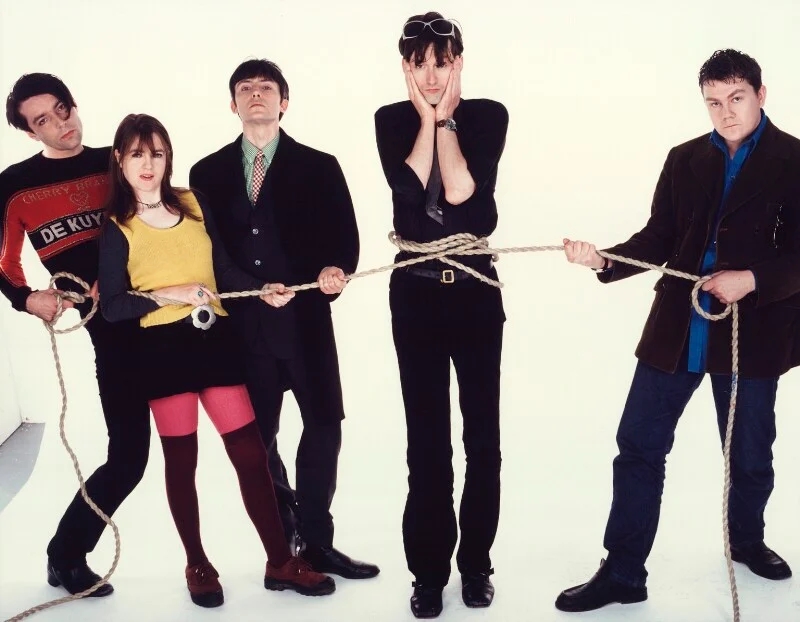
For his sixth solo UK chart-topper, the King of Pop, long-since divorced from reality, fully realises his Messianic potential. What about elephants? he demands of us, towards the end of this colossal track. Have we lost their trust? Pulp’s Jarvis Cocker certainly let us know what he thought, famously mooning Jackson’s performance of the song at the Brit Awards.
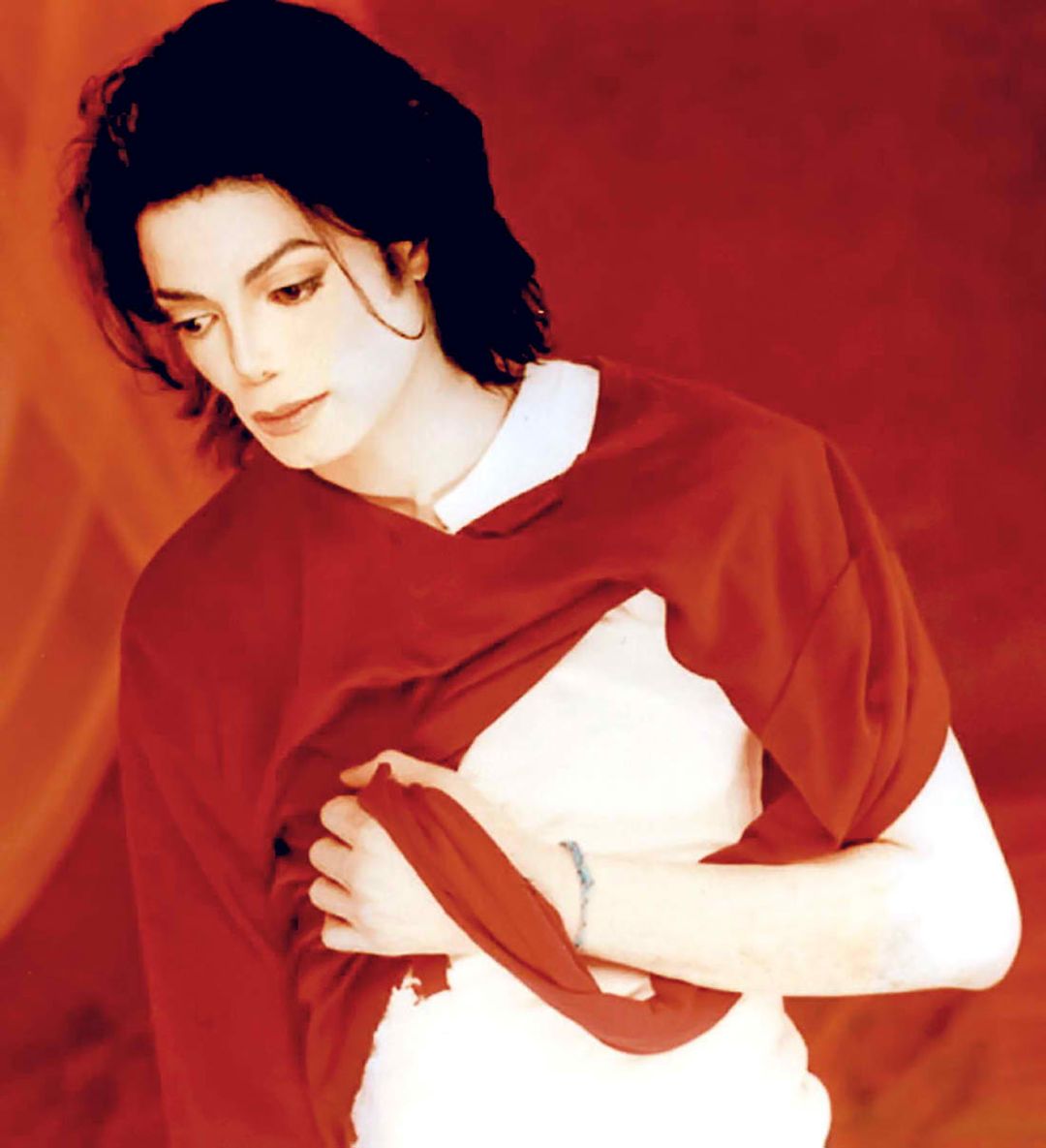
But, once your eyes have completed their rolling, and you stop to listen to ‘Earth Song’, then you can’t help but be impressed. You might not want to hear it every day, but the very fact that he conceived of, wrote, and recorded this track, and then managed to sell the message in a way that only Michael Jackson could – largely through the conviction in his whoops and hollers – is darned impressive. Like ‘You Are Not Alone’, this is a lullaby underneath all the dressing (Jackson intended it to be simple, so that it could be understood right across the world). But what dressing… When the drums and funky bass kick in it’s a bit of a moment, as is the gigantic key change. The last three minutes is basically MJ berating us about the state of the planet, accompanied by a wind machine and a gospel choir.
And, let’s be honest, much of what he’s singing about is true. It was true in 1995, and it’s true thirty years on. What about children dying?…Can’t you hear them cry?… Where did we go wrong?… Someone tell me why… It’s preachy, sure, but he ain’t wrong. Of course, though, sending this song to number one is a lot easier than actually changing our ways, and if Jackson truly thought this would make any difference to the fate of the human race then he was Wacko indeed.
The video too is every bit as OTT as you might expect. I can remember watching it on ‘Top of the Pops’ at the time, aged almost ten, and being captivated. Watching back now, it’s painted in very broad strokes, but it’s vivid, and memorable. Dead elephants, felled trees, someone clubbing a seal… Then through his sheer bloody star power, clinging to some tree stumps, Jackson undoes all the damage, and we live happily ever after.
At the end of the day, most people are more Jarvis Cocker than they are Michael Jackson. And most of the time, that is a good thing. ‘Earth Song’ is preposterous, and overblown, and now interestingly forgotten among his illustrious back catalogue. But it also delivers an uncomfortable truth, however clumsily the message is conveyed.
This was the 1995 Christmas #1, famously holding off The Beatles’ much feted ‘comeback’ single ‘Free As a Bird’ (they’ll manage their 18th chart-topper, eventually). It also wraps up a very odd, very underwhelming year, in which the charts have felt at odds with what people were actually listening to. One interesting thing, though, to chart geeks like me, is that 1995 was the year where singles suddenly started entering at #1. What was once a freak event, marking an act out as the very biggest in the land, was happening much more often. From ‘Back for Good’ to ‘Earth Song’, all but two #1s were held-back, heavily promoted songs that entered at the top. This will continue as the nineties progress, with the turnover of number ones increasing all the time as well.
Oh yes, time for more golden-oldies karaoke, from your granny’s favourites.
I Believe / Up on the Roof, by Robson & Jerome (their 2nd of three #1s)
4 weeks, from 5th November – 3rd December 1995
This time, they resurrect one of the very biggest number one singles. The biggest ever, if ‘weeks at number one’ is the metric we’re using. Frankie Laine’s original racked up eighteen weeks at the top way back in 1953. It was just the 9th #1, and it’s pretty amazing to think that its record still stands over seventy years on.
And for such a massive single, I feel it’s been a little forgotten (1953 was a long time ago, to be fair) and so it’s good in a way that it had another moment in the sun. And R&J’s take on it is… okay. Better than either of the tunes on their first single. It’s still cheap, still karaoke; but it doesn’t cloy as much, and builds to a fairly soaring climax. Maybe that’s testament to the quality of the song…
Plus, it’s short – barely two minutes, like Laine’s version – and ‘shortness’ is ideal when these two take to the mic. Sadly, any mild positivity I can muster here is wiped out by the flip side of this disc: a version of The Drifters’ ‘Up on the Roof’ which takes the duo to new levels of tackiness. It is truly dreadful – synthy horns and horrible Disney princess tinkly bits. That this is a timeless classic’s only appearance at #1 (anywhere, as far as I can tell!) is genuinely criminal.
Equally criminal to some is the fact that this record held Oasis’s ‘Wonderwall’ at #2. However, thanks to Oasis not lacking for #1 singles, and thanks to ‘Wonderwall’s annoying ubiquity, I don’t class that an upset as heinous as this pair’s first single holding off ‘Common People’.
One thing I do notice, listening to these two songs, is that Robson & Jerome’s singing voices sound different. Better, more polished, than on ‘Unchained Melody’, or on ‘White Cliffs of Dover’. Whether this was the result of singing lessons, or something more sinister, I don’t know. Des Dyer, formerly of ‘70s band Jigsaw, made allegations that it was him singing on the records. He was paid off, and told to shut up. Much later, Mike Stock admitted that the duo’s vocal’s were ‘patched up’ by sessions singers.
Whether or not they were singing on these songs, it didn’t do them much harm. While not quite as successful as their debut, this record still made a month at #1 and reached almost a million sales. An album inevitably followed, on which they murdered The Beatles, The Monkees, The Walker Brothers, and Elvis, as well as ‘Amazing Grace’ and ‘Danny Boy’. At least they didn’t cling on at the top to become one of the worst Christmas Number Ones. For the King of Pop had other ideas…
Although 1995 is turning out to be a fairly – let’s be blunt – crap year for number one singles, it’s also turning out to be a year of firsts at the top of the charts.
Gangsta’s Paradise, by Coolio ft. LV (their 1st and only #1s)
2 weeks, from 22nd October – 5th November 1995
We’ve had our first Britpop #1s, as well as our first ‘Explicit Warning’ chart-toppers. You could also argue that Robson & Jerome, with Simon Cowell as mastermind, heralded the start of the ‘TV personality as pop star’ age, which will dominate the next twenty years of British pop music. And as we draw towards the year’s end, here comes our first proper rap #1.
We’ve had plenty of hip-hop at #1 before this: Vanilla Ice, Partners in Kryme, Jazzy Jeff & The Fresh Prince… Throw in the Simpsons, and John Barnes, and it’s clear that rap has struggled to be seen as much more than a novelty. Until now, for this is uncompromising hip-hop: undiluted, comfortable in its own skin, not softening its edges in looking for widespread appeal.
Coolio weaves a tale of life on the streets, a life of drugs and violence that often leads to death: You better watch how you talkin’, And where you walkin’, Or you and your homies might be lined in chalk… In it, the singer both recognises his situation: Why are we, So blind to see, That the ones we hurt, Are you and me…? and sees no way out: They say I gotta learn, But nobody’s here to teach me, If they can’t understand it, How can they reach me?
Heavy stuff, but it’s lifted to classic status by one of the all-time great samples. Stevie Wonder’s ‘Pastime Paradise’ provides a compelling, propulsive melody around which Coolio tells the story. LV, who sings the chorus, changes ‘Pastime’ to ‘Gangsta’, while a gospel choir provides the finishing touch.
The record’s authenticity must have struck a chord, as it became the UK’s highest-selling hip-hop record in fairly short order (today it sits well inside the Top 50 highest-selling singles in British chart history). It featured on the soundtrack to the Michelle Pfeiffer film ‘Dangerous Minds’ – Pfeiffer also appears in the video – which may have helped in its success. But probably not to the extent that the song wouldn’t have been a hit without it.
I’ve called this the first ‘proper’, ‘modern’ rap #1, but I’ve been reluctant to call it the first ‘gangsta’ rap number one. Mainly because the word is literally there, in the song’s title, and it feels slightly lazy. Plus, while the song’s themes may be pretty gangsta, the lyrics are all quite PG. They weren’t originally, however – Coolio had written a much more explicit version, but Stevie Wonder refused to sanction the sample until he cleaned it up.
Swears or no swears, this is a brilliant song, one of the best that 1995, if not the entire decade, has to offer. I also realised, while writing this post, how many of the lyrics I could remember. I certainly wasn’t rapping along at the time, so they must have entered my brain through cultural osmosis over the years – always a sign of a song’s classic status. Coolio went on to have three more Top 10 hits, including ‘C U When U Get There’, which has an equally famous ‘sample’. And of course, just as importantly for people of my vintage, he recorded the ‘Keenan & Kel’ theme song. He died following an overdose two years ago, aged just fifty-nine.
By late-1995, a decade into their chart careers, were Mick Hucknall and Simply Red overdue a massive, chart-topping hit, or would it be better for all if this had never happened…?
Fairground, by Simply Red (their 1st and only #1)
4 weeks, from 24th September – 22nd October 1995
I can’t say I’m a huge fan of, or much of an expert in, Simply Red’s music. It’s always seemed a little too glossy, a little too smooth… Blue-eyed soul in its slickest form. But the verses here are not what you might expect, from Simply Red or indeed from any number one single. There’s a hypnotic samba beat, trippy flutes, and Hucknall trilling about pleasure at the fairground, almost freestyling. It’s odd, slightly haunting; but captivatingly so.
And then comes the chorus, the most famous chorus of the band’s long career, and it’s such a sledgehammer that it obliterates the rest of the song. The subtle verses are overwhelmed by Mick Hucknall belting out the And I love the thought of coming home to you…! line. An ear-catching piece of music for sure, and in the moment you can hear why this record went on to become their biggest hit. Certain songs have moments where you can pinpoint exactly why they become huge smashes, and this is one.
It was the lead-single from Simply Red’s fifth album, and was so highly anticipated that it crashed straight in at #1, with weekly sales beaten only by 1995 juggernauts Blur, Take That, and, of course, Robson & Jerome. What’s interesting is that the distinctive samba drumbeat that forms the backbone to ‘Fairground’ had featured in the UK Top 5 less than two years before, it being a sample of the largely instrumental ‘Give It Up’, by The Good Men.
Another reason I’ve long been suspicious of Simply Red’s music, aside from the glossiness, and the reliance on overwrought covers of soul classics, is Mick Hucknall himself. Pop music’s most famous ginge (until you-know-who came along) was someone that I, as a fellow ginger, felt a little embarrassed by. Growing up, it was either him, or Chris Evans, and neither did much for our reputation. Take the ‘Fairground’ video as an example: the shades, the awkward dancing… And yet it did him no harm. He claims to have slept with a thousand women, including Catherine Zeta-Jones, and Helena Christensen. Maybe I should be embracing him, then, as there are shockingly few ginger sex symbols…? My conflict is encapsulated in the fact that his band name may be a reference to his hair colour (cool! represent!), or to the fact that he’s a Manchester Utd fan (aw, man…)
I mentioned the video to ‘Fairground’ a moment ago, and watching it back just now I was hit by a huge wave of nostalgia. Hucknall larking around Blackpool Pleasure Beach… For a moment I was in my family living room, post-dinner, curtains drawn, on our old brown sofa watching Top of the Pops. A memory I didn’t even know I had before writing this post. I expect even more Proustian reactions to coming number ones, as we march on through my childhood.
In our last post, Michael Jackson was putting his syrupy, slightly sticky moves on us with ‘You Are Not Alone’. It didn’t work for me, personally. What I wanted was, it turns out, a boombastic, romantic, fantastic lover…
Boombastic, by Shaggy (his 2nd of four #1s)
1 week, from 17th – 24th September 1995
And for that we need… Mr Lover-Lover himself. Like his first number one ‘Oh Carolina’, this is rough and ready dancehall, a simple, grinding beat over which Shaggy explains exactly why he is such a superb lover. I have no idea what makes that two-note, clanking metal riff which, alongside a plonking piano, makes the skeleton of this song, but I love it.
Thanks to that riff, this is a fabulously filthy and fun record. You can almost feel the sweat dripping down the walls of whatever basement club it’s being played in. And yet, compared to The Outhere Brothers moronically offensive output, ‘Boombastic’ is all perfectly PG. Some talk of tickling foot-bottoms and sexual physique is as steamy as it gets, while lines like You are the bun and me are the cheese… are actually quite sweet. Meanwhile, for years, I thought Shaggy was being self-deprecating in calling himself ‘semi-fantastic’. Though of course, he’s actually rapping in Jamaican patois: She call me Mr Boombastic, Say me fantastic…
That patois is one of the main attractions here. The way Shaggy rolls every line around in his throat, from gruff growls to choirboy high notes, like a cat toying with its prey, is wonderful. As with ‘Oh Carolina’, there are times when I genuinely have no clue what he’s on about, but it doesn’t matter. The grinding beat means you get the gist.
I’ll show my age and call this Shaggy’s signature song. Of course, he has a much bigger, globe-conquering, hit to come; but ‘Boombastic’ seemed to be everywhere at the time. It managed to appeal to nine-year-old me as well as a much more sophisticated audience, because it’s got just enough of a novelty element to it. Who wouldn’t, at any age, want to call themselves ‘Mr Boombastic’? I had no idea what ‘Boombastic’ meant – I still don’t and, if we’re being honest, does anyone? – but it matters not.
What I didn’t realise was that ‘Boombastic’ was yet another song boosted to #1 by a Levi’s Jeans commercial. I make that five Levi’s-adjacent chart-toppers, off the top of my head, making it a genre in its own right. Also helping was the fact that Shaggy had had a big hit earlier in the year with a cover of Mungo Jerry’s ‘In the Summertime’. It couldn’t be further from the supposedly era-defining Britpop sound, but I am always here for some Shaggy – one of the oddest, and yet fun-est, pop stars of the age.
And so we arrive at yet another staging-post on the long, but thinly spread, chart-topping career of Michael Jackson. One number one with his brothers, and seven solo, stretched out over two decades. Interestingly, and perhaps aptly, he only ever made #1 in odd numbered years…
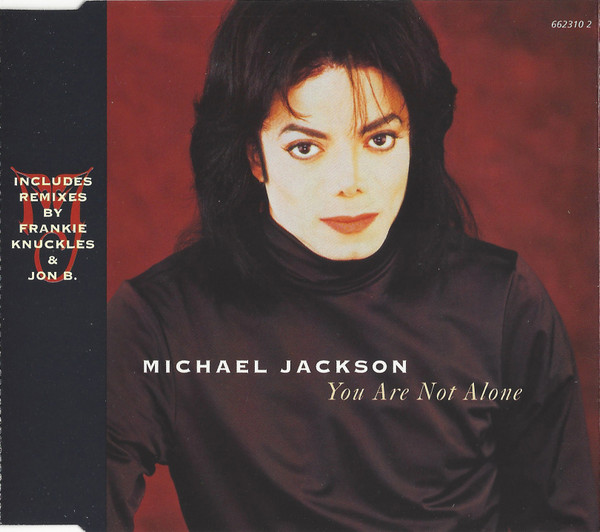
You Are Not Alone, by Michael Jackson (his 5th of seven #1s)
2 weeks, from 3rd – 17th September 1995
’77, ’81, ’83, ’87, ’91 and now 1995. And this is just what we’ve been missing on our 1995 bingo card. After all the dance, the Britpop and the power balladry, what we really needed was some slow and syrupy, mid-nineties R&B. This sound was (thankfully) much more prevalent on the Billboard charts, possibly the sound of US pop at the time, and few acts would have had the star power to drag this sludge to the top spot in the UK.
Trust MJ, though. It was the second single from the ‘HIStory’ album, following ‘Scream’, the duet with sister Janet, more famous for its record-breakingly expensive video. And there is a sweet simplicity to this song. The chorus plays almost like a lullaby: You are not alone, I am here with you, Though you’re far away, I am here to stay… Like a lullaby in that it’s pretty, and in that it may send you to sleep.
Jackson puts in a pretty strong vocal performance as well, limiting the ticks and the gulps that have marked most of his music since ‘Bad’ (there’s not a single ‘eeeh hee’ either). He gives the lungs a workout towards the end, post key-change, reminding us that underneath it all he was always a fine singer.
And yet… Watch the video, and it’s easy to become distracted from the actual song. He is now fully white, and very plastic-looking. We’re almost treated to a full-frontal from the King of Pop, as he smooches with then wife Lisa Marie Presley, wrapped only in a towel. It’s all pretty icky. Of course, knowing what we know now means that any Jacko love song comes with its own in-built ick-factor. (‘You Are Not Alone’ was also written by R Kelly, just in case we needed any extra ickiness.)
So, in summary, this is a sweet enough, well-performed ballad, your enjoyment of which depends on how much you can block out thoughts of what we know now, and of a near-naked MJ canoodling with Elvis’s daughter. 1995 will actually turn out to be Jackson’s most successful year, in terms of chart-toppers. He still has a massive Christmas #1 to come, in which he puts his clothes back on and returns to his usual preposterous, overblown nonsense.
When old fogies stop to reminisce about the 1990s, about the music that soundtracked final few years of the 20th Century, we might think of the Spice Girls, Take That, or Pulp. Maybe even The Prodigy, or The Chemical Brothers. But if you had to bet on it, you’d bet that we think of this one moment: the chart dated 20th-26th August 1995.
Country House, by Blur (their 1st of two #1s)
2 weeks, from 20th August – 3rd September 1995
Oasis Vs Blur. North Vs South. Working-class Mancs vs posh(er) Essex lads. Cliches, cliches, all the way. Legend has it that Liam Gallagher taunted Damon Albarn about Oasis having a number one single, spurring Blur’s management to cheekily change their next release date to clash with Oasis’s ‘Roll With It’, making for great publicity, and the highest sales week for a decade (setting the way for single sales to hit an all-time high in the coming years).
But the story here is the song, primarily, and I should block out all the hype and noise and focus on the tune. As with ‘Some Might Say’, ‘Country House’ may have been Blur’s first #1, but it’s not one of their very best singles. From their earlier hits, ‘Girls & Boys’ is better musically, while ‘Parklife’ has left a much larger cultural legacy. Still, it’s a fun, multi-coloured romp, right from the helter skelter intro through to the brass section in the fade-out. And it tells a story not much heard in chart-topping singles: that of a country squire living a life of rural asceticism. He’s got a fog in chest, So he needs a lot of rest… He doesn’t drink, smoke, laugh, Takes herbal baths… In the country…
There’s a lot going on, musically, and a lot of knowing references to British bands past. Oasis get a lot of stick for being musical magpies, but I hear plenty of Kinks and Small Faces, as well as Madness, and the ghosts of British music hall, here. (Chas & Dave, too, according to Noel Gallagher, but he meant it as an insult…) The video also has Brit-references galore: Page 3 girls, Benny Hill themed hi-jinks, a nod to ‘Bohemian Rhapsody’, Matt Lucas, Jo Guest and Keith Allen (featuring in his second chart-topping video). And for the ultimate Britpop seal of approval, it was directed by Damien Hirst.
The story, like I said, should be the song. And yet, would ‘Country House’ have made #1 were it not for all the hullaballoo? Maybe, as it was the lead single off a hotly-anticipated new album. But maybe not, as Blur had only three previous Top 10 hits to their name, and just one Top 5. So perhaps we can’t fully separate this song from all the nonsense. What’s certain is that the right song won. ‘Roll With It’ is probably Oasis’s laziest single. I do like it, but you can see why it’s been called ‘Status-Slade’ (though that’s not the insult some might think…) Also, in terms of the ‘Battle of Britpop’, Blur were the originals – their 1992 hit ‘Popscene’ is claimed by many as the very first Britpop single.
In my post on ‘Some Might Say’, I mentioned that my love for Oasis has dimmed over the years. With Blur, the opposite has happened. Nobody I knew at school would have admitted to liking them over Oasis – they were too clever, too arty… Everyone liked ‘Song 2’, but then that’s their dumbest song by far. As a sensible adult, though, I can admit that Blur were the more expansive songwriters. More fun, too – just look at them in the video, pratting about in bubble-baths, then try to imagine Liam doing the same…
Still, this is the first of only two times that we I’ll be writing about Blur (Albarn does also have a Gorillaz #1 to his name). Oasis may have lost this chart battle, but they definitely won the war…






 The UK Number Ones Blog