Straight on the back of Robbie Williams first solo #1, we have our first Solo Spice…
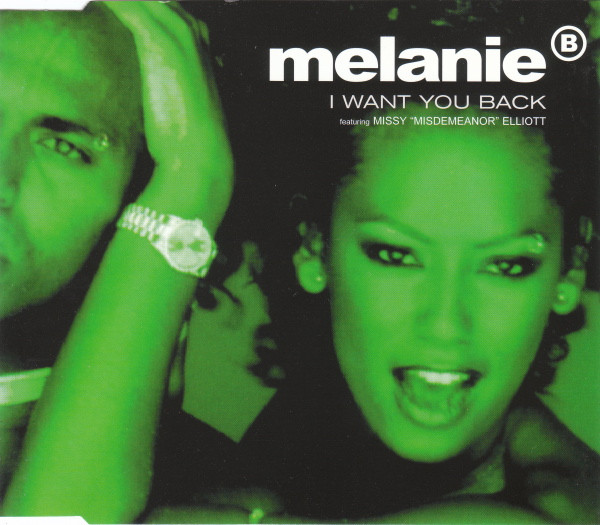
I Want You Back, by Melanie B ft. Missy Elliott (their 1st and only #1s)
1 week, from 20th – 27th September 1998
I’m not sure Mel B would have been many peoples’ choice for the Spice Girls most likely breakout star and, in truth, though she struck early she wasn’t the most successful of the five. But this is in fact the perfect solo Spice Girl number one: cool, edgy, and unlike anything the group had released in their two album career…
I’m the M to the E, L, B… Melanie Brown announces. As iconic raps go, it is not on the same level as her Now here’s the story from A to Z… moment in ‘Wannabe’, but it does the job. She tells the story of how she may think her ex is a bit of a dick, how he’s driven her to drink and distraction, but how she still wants him back…
The sharp strings and the ominous guitars over a hip-hop beat do sound pretty cutting edge for 1998, and a huge step away from what we’ve heard so far from the Spice Girls. But what roots this record in the late nineties is the very dated rap lingo. I admire the use of the term ‘wack’ in the chorus, but can’t help grimacing at lines like I know I talk mad junk, But I know what I want… And even though you’re a mack true dat, I want you back…
Still, bringing true street cred we have Missy ‘Misdemeanour’ Elliott on board, for her only credited appearance on a UK #1 single. (She will also feature, uncredited, on ‘Lady Marmalade’ in a few years time.) She does little more than spell out her name and then go ‘uh uh uh’, but hey. I think this might be the very first example of a pop star A ft. a rapper B record to make number one, with many to follow in the coming decades. To reduce Missy Elliott, a hip-hop pioneer, to the status of rent-a-rapper feels wrong though, and I do wish she’d been given more to do.
According to Mel B, this was Missy Elliott’s song, and she the one who invited the Spice Girl to duet on it. Incongruously, it also featured on the soundtrack to the Frankie Lymon biopic ‘Why Do Fools Fall in Love’. Elliott was far from a household name in Britain at this point, and wouldn’t make the Top 10 under her own steam until 2001’s ‘Get Ur Freak On’.
Mel B meanwhile peaked early in her solo career, and while she would go on to score two more Top 10 hits she will not be returning to the number one position without the help of her bandmates. ‘I Want You Back’ may not be the best remembered of the Spice Girls’ solo efforts, but I’d go as far as to say that it is not the wackest piece of music any of them have put their name to.
Into the eight hundreds, and we do so with a bold statement of a number one…
Millennium, by Robbie Williams (his 1st of seven solo #1s)
1 week, from 13th – 20th September 1998
The biggest British pop star at the turn of the century, the black sheep of the ‘90s biggest boyband, finally scores a solo number one. It’s a cocky, swaggering track, making nice use of a sample from Nancy Sinatra’s ‘You Only Live Twice’. (Though in actual fact it is a rerecording in a slightly higher key, which was cheaper than paying for the original.) Anyway, it slams the door open, sweeps into the room chorus first, declaring ‘I’m here!’
After that comes a state of the nation address, over a hip-hop beat. Live for liposuction, Detox for your rent, Overdose at Christmas, And give it up for Lent… We’re all in the gutter, but some of us are gazing at the stars, that sort of thing. It’s very zeitgeist grabbing, very of-the-moment, less than a year and a half before Y2K, all delivered with a sense of theatre by Robbie Williams. We’re praying it’s not too late… he sings in the chorus… Millennium…
Even if you’re stuck behind a dead end desk job in Slough, the appeal of an idea that we’ve got stars directing our dishevelled fates is clear. My favourite bit though is the nonchalantly loutish Come and have a go if you think you are hard enough… chant. It is this that sums up the post-Britpop nineties, the lads and the ladettes, the alcopops, all that. It’s clever, and catchy, somehow deep without really trying.
Some pop stars don’t seem to care about their chart fortunes, about whether or not a song will be a hit, but I don’t think Robbie Williams is one of them. At this point in his career at least, he seemed to relish being famous, being on stage, on TV, on the radio. And he released songs that were big and catchy, that appealed to the widest possible audience, like this one. He certainly had charisma, the X-factor that the best pop stars need. But he also had a clever team around him, and a songwriting partner in Guy Chambers who guided him through this imperious phase from 1998 to the early years of the 2000s.
‘Millennium’ was the lead single from Williams’ second album, ‘I’ve Been Expecting You’, but to pinpoint the moment he became Britain’s biggest pop star we need to rewind a few months to when ‘Angels’ was dominating the charts and the airwaves, to the extent that it began to feel like the country’s unofficial national anthem. Despite peaking at #4 it remains his biggest selling single. Following that his now signature tune ‘Let Me Entertain You’ made #3, and the rest is history.
It had been a long time coming, though. Williams had left Take That over three years before, and spent a year fighting a clause in his contract preventing him from launching a solo career while his former band were still recording. Fittingly, his first release was a cover of George Michael’s ‘Freedom’, which made #2 in July 1996, around the same time his bandmate Gary Barlow was releasing the dull ‘Forever Love’. Compare and contrast Barlow’s two forgettable number ones with this one, and it’s not hard to see why Williams went on to be the far bigger solo star.
It’s also hard to overstate how big Robbie Williams was becoming when this record went to the top. I wouldn’t count myself a huge fan, and I’ve never bought any of his music, but it turns out I knew all the words to ‘Millennium’ through sheer osmosis. He will have a nice and steady drip-feed of #1s for the next few years, so I’ll have plenty of time to test my knowledge of his other lyrics as we go on.
I hope you’ve enjoyed our latest Random Runners-Up series. We’ve been back to the ’60s, to the ’70s, the ’90s, even the ’50s. For the final runner-up of the weekend, it’s the turn of the 1980s…
I’m always wary of the term ‘feel good’, as most things specifically designed to make the average person feel good just end up as annoying. But I challenge anyone to hear the intro to ‘Let’s Hear It for the Boy’ and not feel their heart soar, just a teeny a bit.
It is so 1984. The purest, extra-virgin mid-eighties pressing, mixing together drum machine, squelchy bass, and a synthesised piano line. And when Deniece Williams comes in, you can hear the smile on her face as she sings. My baby he don’t talk sweet, He ain’t got much to say… It’s a riff on the old idea that a guy don’t gotta have money, looks, or charisma, as long as he gives good loving… What he does he does so well, Makes me want to yell…
It would be easy to read a smutty subtext into lines like he’s my lovin’ one-man show… or let’s give the boy a hand… but I’m above that. Plus the rest of the song is so bright and breezy, so gosh-darned wholesome, that it would feel forced. Adding to the eighties-ness of this tune is the fact that it’s from one of the decade’s best-loved films, ‘Footloose’, and was kept off top spot by one of the era’s best-remembered pop hits, Wham’s ‘Wake Me Up Before You Go-Go’ (what a joyous guilty pleasure of a top two!)
Deniece Williams had been to the top of the UK charts once, seven years earlier, when the rather more understated ‘Free’ spent a fortnight at #1. This was her fourth and final appearance in the Top 10, but she remains active in her seventies, and in 2021 became one of the first inductees to the Women Songwriters Hall of Fame.
Of course, a song as fun and frothy as this, and with a title like ‘Let’s Hear It for the Boy’, was always going to become something of a gay anthem. I probably first heard it in what may well be the best episode of ‘Will and Grace’, featuring a ‘sneaky hetero’ Matt Damon.
Up next we return to 1998, and the first solo chart-topper for one of Britain’s biggest ever pop stars…
For the fourth part of this Random Runners-Up series, we’re going back almost as far as it’s possible to go. In chart terms, at least. To the mists of November 1955… It’s over five years since I wrote my posts on the fifties number ones, discovering that for every hot slice of rock ‘n’ roll there were three rather stodgier slices of big-lunged balladry. But if you’re a more recent visitor to these pages, I would recommend a journey back to the dawn of the charts as an interesting counterpoint to the #1s we’re covering now.
‘Love Is a Many Splendored Thing’, by the Four Aces
Anyway, on to the #2 at hand. And interestingly, this very record was held from top spot by ‘Rock Around the Clock’, the first rock and/or roll number one. Which goes to prove that there was no instant rock revolution; more a smattering of guitar-led hits that slowly started to break up the heavy crooning. In fairness, ‘Love Is a Many Splendored Thing’ has quite a springy bass line, but aside from that it’s a big, beefy pre-rock ballad. A dramatic intro, strings, vocal harmonies, and a lead singer who croons like his life depends on it.
I am familiar with this song, as a version of it famously plays during the opening scene of ‘Grease’, while Sandy and Danny frolic on a beach. I’d bet most people are familiar with the title line at least, from a variety of pop culture references. Away from the soaring chorus, things are slightly less memorable, and we have some classic 1950s metaphors for love: It’s the April rose, That only grows, In the early spring…
It sounds very dated, not to mention that the recording needs a remastering or two. But it’s hard to dislike a song that is belted out with such conviction. My memories of writing about the ‘50s number ones are lots of songs like this, about flowers, sunshine and morning dew, sung with operatic conviction. None of which would work for a modern audience. When did we all become so cynical…? (And thank God we did…)
The Four Aces were a four-piece from Pennsylvania, who enjoyed decent chart success on either side of the Atlantic until, like so many pre-rock acts, 1957 or so. ‘Love Is a Many Splendored Thing’ meanwhile was the theme to a movie of the same name, and won the Oscar for Best Original Song in 1956. It was recorded by a plethora of famous names following this success, as was the style of the time, including Eddie Fisher, Doris Day, Nat King Cole, Bing Crosby, Andy Williams, Sinatra, and Connie Francis (in Italian), among others.
Our final #2 is up tomorrow! It’s the turn of the eighties, and another soundtrack classic…
In terms of number one singles, we’re only two and a half years ahead of Robert Miles’ ‘Children’. But to ears attuned to the sounds of 1998, this already sounds quite old-school. It is pure mid-nineties trance, house, Eurodisco… whatever. You know I’m terrible at labelling dance tracks. I usually have my own two labels for dance music: ‘good’, and ‘not so good’. But this record confounds such reduction.
‘Children’ has all the touches you’d expect from a mid-nineties dance record: a techno beat, synthesised strings, electronic squiggly bits… So far, so basic. But ‘Children’ also has one of the most recognisable riffs in modern popular music. A piano line so instant, so memorable, so strangely affecting, that it feels like it must have existed for all eternity. I can’t help feeling that it’s a waste for it to have been used on an otherwise fairly middling song like this.
I’ve mentioned this phenomena before, but dance music fans have a tendency to treat dance music like a religion, and the club as church. (I blame the ecstasy…) ‘Children’ is one of the few songs that helps someone like me to understand this point of view. Even as a dance music outsider, and as someone who doesn’t particularly love this song, I could see myself raising my hands to the sky if this came on. Having it large. Nice one! Chooooon…!
Robert Miles was an Italian DJ and composer, who had recorded ‘Children’ in 1994 after seeing pictures of child victims of the war in Yugoslavia. He also wanted to record a slower, more sedate form of dance music to play at the end of a night, to calm clubbers down and send them home less likely to crash their cars. (This was a real problem in Italy at the time, known as ‘Saturday night slaughter’, which to me sounds like a great lost glam rock track…) This more sedate sub-genre became known as ‘Dream House’.
‘Children’ was a huge hit across Europe, selling over five millions copies, and even making the Billboard 100. In the UK it spent a fortnight behind Take That’s farewell cover of ‘How Deep Is Your Love’, but in the long run was the year’s 8th biggest selling hit. Robert Miles managed three further Top 20 hits before setting up his own record label in the early 2000s. He died in 2017, aged just forty-seven.
Join us again tomorrow, when we’ll be heading back to the future. 1955 awaits…
Like Fleetwood Mac yesterday, The Hollies had more succesful eras than the one we’re covering today. Between 1963 and 1970 they racked up a very impressive sixteen Top 10 hits, including the chart-topping ‘I’m Alive’. Also like Fleetwood Mac, by the time their biggest seventies hit came along, two founding members – Graham Nash and Eric Haydock – had left for pastures new.
‘The Air That I Breathe’ is a big, beast of a song. The sort of song that you know is going to be huge from its opening, extended guitar chord. It crams a lot into its four and half minute runtime, including that soaring chorus, and a couple of chiming guitar solos. But for me the best bit is the first bridge, as Alan Clarke floats in the Makin’ love with you, Has left me peaceful, Warm and tired… line without taking a breath. Plus, any pop song which has the confidence to make you wait almost two minutes for the first chorus gets a nod of approval from me.
‘The Air That I Breathe’ has a bit of history to it, before and after this version. It was originally written and recorded by Albert Hammond in 1972, then covered by Phil Everly before becoming a worldwide smash thanks to The Hollies. Twenty years later, and Radiohead fairly obviously cribbed the verse melody for their breakthrough hit ‘Creep’. Hammond and co-writer Mike Hazlewood sued, but accepted only a small amount of co-writing royalties as Radiohead were ‘honest’ about their recycling. Radiohead themselves took Lana Del Rey to court when she released ‘Get Free’ in 2017, again borrowing what is clearly a very potent melody.
A famous sixties act scoring a hit in the seventies is a big thing, as it sometimes feels like there was a clear line in the sand drawn after the Beatles split. The Stones managed it, obviously, and The Who, but most others struggled. ‘The Air That I Breathe’ was The Hollies’ swansong, their last visit to the Top 10. Or should I say it was their ‘first’ swansong, as of course ‘He Ain’t Heavy, He’s My Brother’ found a new lease of life thanks to Miller Lite, and belatedly made #1 in 1988. As much as I do admire ‘He Ain’t Heavy…’, I do rather wish it had been ‘The Air That I Breathe’ that was given a second run at the charts. I’m not sure it’s my favourite Hollies’ song, as some of their sixties beat hits hit just the right spot for me, but its certainly their most epic.
Random runners-up is back! Following on from my latest recap, let’s take a break from analysing all those chart-toppers, and lavish some attention on those records that fell at the final hurdle: #2.
These records are genuinely chosen at random (thank you random.org), and this time the generator has kindly thrown up a chart-topper from each of the five decades we’ve covered so far. We’ll be going back as far as 1955, and as close to this blog’s ‘present day’ as 1996. But first up, it’s the sixties.
The generator has also thrown up three acts who we’ve already met in pole position. Fleetwood Mac had scored their only UK number one in January 1969, with the atmospheric instrumental ‘Albatross’.
‘Man of the World’, by Fleetwood Mac
#2 for 1 week, from 28th May – 4th June 1969 (behind ‘Get Back’)
They followed that up with a couple of #2s, the first of which was ‘Man of the World’. It starts off as a simple acoustic number, with some echoey guitar flourishes, and some nice echoes back to ‘Albatross’ in the cymbal crashes and the rhythmic bass. Peter Green, then the band’s main singer and songwriter, mournfully drawls: I could tell you about my life, They say I’m a man of the world… There’s no one I’d rather be… Before howling: But I just wish I’d never been born…
Legend has it that it was these lyrics that first alerted his bandmates to the fact that Green might not have been mentally okay. Just a year later he left the band. It’s a well-worn topic, how fame and fortune don’t always lead to health and happiness, but seldom has it been spelled out as beautifully as on ‘Man of the World’. After a wonderful bluesy middle-eight about how a ‘good woman’ might help, it ends with a murmured AndI wish I was in love…
When I was very young, I had a ‘Best of the Sixties’ cassette compilation. It was cheap, so it didn’t have the huge hits on it; but it had this. And so I knew ‘Man of the World’ long before I’d ever heard ‘Don’t Stop’, or ‘Little Lies’. Which is perhaps fitting, because it is this original incarnation of Fleetwood Mac that had the most UK singles chart success: a chart-topper, and two number twos. They would have to wait almost two decades for their next biggest hit: a #4 for ‘Everywhere’ in 1987.
By then, of course, and for most of their huge seventies successes, Mick Fleetwood and John McVie – whose surnames were combined to create the band’s name – were the two remaining original members. Peter Green meanwhile, struggled with his mental health throughout the seventies and eighties, but was sporadically involved in the music business, and with the other members of Fleetwood Mac. He joined the band for its induction into the Rock and Roll Hall of Fame in 1998, and died in 2020.
And so to recap, for the twenty-sixth time (you can explore all the previous recaps by clicking on the handily titled ‘Recaps’ folder in my Categories section).
Instead of the usual thirty chart-toppers, this time I held off until we had gone through fifty, because of the rapid late-nineties turnover at the top of the charts. This latest period covers almost two years, from November 1996 to September 1998, and of the fifty number ones an amazing twenty-eight managed just a single week at the top. Plus, forty-five of them entered at number one, a feat that was almost unheard of until the mid-nineties, but is now the norm.
As in every recap, I like to pick out the themes that have been running through our latest chart-toppers. And for this recap the theme is POP! With one obvious name to start with: The Spice Girls. They’ve racked up five number ones in the past couple of years, including two festive chart-toppers. However, their most recent #1 – ‘Viva Forever’ – saw them cut down to a four-piece after Geri’s departure. And in the next recap, despite them still having two number ones to come, we’ll be talking more about the girls’ solo ventures.
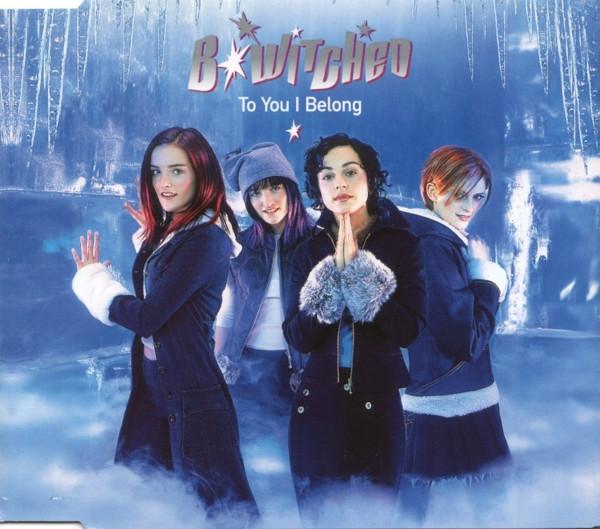
But they’ve opened the floodgates for a poptastic turn of the century, and in recent weeks we’ve seen the charts flooded with a some cheap imitations of Girl Power (B*Witched and Billie). 1998 even saw the Spiceys usurped as Britain’s biggest girl group, as All Saints took over with two sexy, sassy number ones, and a couple of interesting covers. The boys haven’t been left out either: Boyzone have taken Take That’s crown as the biggest boyband in the land, scoring three largely insipid #1s, while Peter Andre and Another Level tried their best to sound sexy. By far the best pure-pop record of the last couple of years, though, was Hanson’s way too catchy ‘MMMBop’.
So, pop music is back in. Britpop is… out? We’ve mentioned before that, despite Britpop being the musical movement that the 1990s are remembered for, it was never very well represented on top of the singles charts. Yet there have still been moments as the scene started to go through its death throes: Oasis doubled-down, pretending nothing was wrong, with two preposterously overblown singles from ‘Be Here Now’ (played together ‘D’You Know What I Mean?’ and ‘All Around the World’ would take up almost twenty minutes of your time). Blur meanwhile kicked off the comedown with ‘Beetlebum’, the Verve went even more melancholy on ‘The Drugs Don’t Work’, and the Manics just did their own thing, as they usually do, singing about shooting fascists. And we should also mention ‘3 Lions ‘98’, the World Cup reworking of the 1996 original cementing that tune’s place as ultimately the biggest Britpop song of all.
In the second-half of 1997, single sales reached their all-time peak, meaning that we have also met some of the biggest-selling hits ever in this past bunch. ‘I’ll Be Missing You’, ‘Barbie Girl’ and ‘Perfect Day’ are in the Top 50, while reigning supreme over everything is Elton John’s Diana tribute. That record, and the cover of ‘Knockin’ on Heaven’s Door’ marking the Dunblane school shooting, means that two tragic events in modern British history have made an impression on the hit parade.
Finally, one more theme that we should mention is how we’ve quietly entered the age of the remix. Armand van Helden had his way with Tori Amos’ ‘Professional Widow’, Norman Cook with Cornershop’s ‘Brimful of Asha’, and it was Jason Nevins VS Run–D.M.C. on ‘It’s Like That’.
Other subplots to mention before we get on with dishing out awards… We bade farewell to MJ, and welcomed Madonna back for her first #1 in almost eight years. Hip-hop continued to tighten its grip, with chart-toppers from LL Cool J, Puff Daddy, Will Smith and, as above, Run-D.M.C. And that perennial nineties genre, the soundtrack hit, maintained its relevance with #1s from ‘Space Jam’, ‘Men in Black’, ‘Titanic’, ‘Godzilla’, ‘Sliding Doors’ and, um, ‘Beavis and Butt-Head Do America’.
To the awards then. As is traditional, we start with The ‘Meh’ Award for Forgettability. Three tunes left my pulse truly flatlining, and they were: Peter Andre’s ‘I Feel You’, Usher’s ‘You Make Me Wanna…’, and Boyzone’s ‘All That I Need’. And of those three, I genuinely cannot remember a note of ‘I Feel You’. This may be because I wrote my post on it in way back in March, but sod it. Peter Andre ‘wins’.
The WTAF Award for being interesting if nothing else appears much harder this time around. There have been plenty of bad records, but not many ‘so bad they’re good’ records. ‘Barbie Girl’…? Genuinely decent. The Teletubbies…? Genuinely awful, and a contender for the very worst. So I’m going to take a different approach. Musically it’s enjoyable, perhaps one of their better singles; but the fact that it runs for a record-breaking ten minutes, seven of which are nanananas, means that Oasis take this one with ‘All Around the World’.
On to TheVery Worst Award. I had five contenders, but I’ve already talked myself out of three of them. Puff Daddy’s tribute to the Notorious BIG is crass, but I have residual affection for that from when I was the perfect age to fall for its mawkish rhymes. Speaking of mawkish, if I chose Elton’s Diana tribute then it would feel deliberately edgy of me (plus, ‘Something About the Way You Look Tonight’ is a decent enough song). ‘Teletubbies Say ‘Eh-Oh’’ is garbage but, really, what’s the point in getting angry about nonsense like that?
No, the two left standing are Celine Dion’s iceberg shaped blockbuster ‘My Heart Will Go On’, and B*Witched’s Paddy’s Day anthem ‘C’est la Vie’. Both are records I would happily ban on pain of death, but if I had to choose one to be used on me as a method of torture it would be Celine Dion. Which means B*Witched take the crown. What are they like?
TheVery Best Award is tough, tough, tough this time. As I write this I still haven’t made my mind up. For the first time we’re contending not only with songs I love, but songs I grew up with in real time. The feelings are real, people. I have a shortlist of eight… Okay, more of a longlist. I’ll list them, with one pro and one con for each…
‘Breathe’, by The Prodigy (pro – better than ‘Firestarter’/con – very similar to ‘Setting Sun’, our last Very Best winner).
‘Your Woman’ by White Town (pro – one of the quirkiest ever #1s/con – too quirky…?)
Blur’s ‘Beetlebum’ (pro – I love Blur!/con – am I being objective?)
‘I Wanna Be the Only One’, by Eternal ft. BeBe Winans (pro – the key changes/con – is it actually a hymn…?)
‘The Drugs Don’t Work’, by the Verve (pro – majestic melancholy/con – or is it too depressing?)
All Saint’s ‘Never Ever’ (pro – iconic spoken word intro/con – they have even better songs to come).
Aqua’s ‘Turn Back Time’ (pro – classy pop/con – does it just benefit from comparison with their earlier #1s…?)
‘Feel It’, by The Tamperer ft. Maya (pro – a banger/ con – a bit basic).
Thanks for bearing with me. Based on these pros and cons, I am ruthlessly eliminating six records. The two remaining contenders are: ‘Your Woman’ and ‘Beetlebum’, back to back number ones in January 1997, and both at the time on my beloved four-cassette doorstopper ‘Now 36’ album. I’ve never been more tempted to announce a tie, but no. Rules are rules. Both are great, but only one uses a trumpet sample from the 1930s. There’s no such thing as too quirky: ‘Your Woman’ wins.
To recap the recaps, then:
The ‘Meh’ Award for Forgettability
‘Hold My Hand’, by Don Cornell.
‘It’s Almost Tomorrow’, by The Dream Weavers.
‘On the Street Where You Live’, by Vic Damone.
‘Why’, by Anthony Newley.
‘The Next Time’ / ‘Bachelor Boy’, by Cliff Richard & The Shadows.
‘Juliet’, by The Four Pennies.
‘The Carnival Is Over’, by The Seekers.
‘Silence Is Golden’, by The Tremeloes.
‘I Pretend’, by Des O’Connor.
‘Woodstock’, by Matthews’ Southern Comfort.
‘How Can I Be Sure’, by David Cassidy.
‘Annie’s Song’, by John Denver.
‘I Only Have Eyes For You’, by Art Garfunkel.
‘I Don’t Want to Talk About It’ / ‘The First Cut Is the Deepest’, by Rod Stewart.
‘Three Times a Lady’, by The Commodores.
‘What’s Another Year’, by Johnny Logan.
‘A Little Peace’, by Nicole.
‘Every Breath You Take’, by The Police.
‘I Got You Babe’, by UB40 with Chrissie Hynde.
‘Who’s That Girl’, by Madonna.
‘A Groovy Kind of Love’, by Phil Collins.
‘Do They Know It’s Christmas?’, by Band Aid II.
‘Please Don’t Go’ / ‘Game Boy’, by KWS.
‘Dreams’, by Gabrielle.
‘Forever Love’, by Gary Barlow.
‘I Feel You’, by Peter Andre.
The WTAF Award for being interesting if nothing else
‘I See the Moon’, by The Stargazers.
‘Lay Down Your Arms’, by Anne Shelton.
‘Hoots Mon’, by Lord Rockingham’s XI.
‘You’re Driving Me Crazy’, by The Temperance Seven.
‘Nut Rocker’, by B. Bumble & The Stingers.
‘You’ll Never Walk Alone’, by Gerry & The Pacemakers.
‘Little Red Rooster’, by The Rolling Stones.
‘Puppet on a String’, by Sandie Shaw.
‘Fire’, by The Crazy World of Arthur Brown.
‘In the Year 2525 (Exordium and Terminus)’, by Zager & Evans.
‘Amazing Grace’, The Pipes & Drums & Military Band of the Royal Scots Dragoon Guard.
‘Kung Fu Fighting’, by Carl Douglas.
‘If’, by Telly Savalas.
‘Wuthering Heights’, by Kate Bush.
‘Hit Me With Your Rhythm Stick’, by Ian Dury & The Blockheads.
‘Shaddap You Face’, by Joe Dolce Music Theatre.
‘It’s My Party’, by Dave Stewart & Barbara Gaskin.
‘Save Your Love’ by Renée & Renato.
‘Rock Me Amadeus’, by Falco.
‘Pump Up the Volume’ / ‘Anitina (The First Time I See She Dance)’, by M/A/R/R/S.
‘Doctorin’ the Tardis’, by The Timelords.
‘Sadeness Part 1’, by Enigma.
‘Ebeneezer Goode’, by The Shamen.
‘I Would Do Anything for Love (But I Won’t Do That)’, by Meat Loaf.
‘Spaceman’, by Babylon Zoo.
‘All Around the World’, by Oasis.
The Very Worst Chart-Toppers
‘Cara Mia’, by David Whitfield with Mantovani & His Orchestra.
‘The Man From Laramie’, by Jimmy Young.
‘Roulette’, by Russ Conway.
‘Wooden Heart’, by Elvis Presley.
‘Lovesick Blues’, by Frank Ifield.
‘Diane’, by The Bachelors.
‘The Minute You’re Gone’, by Cliff Richard.
‘Release Me’, by Engelbert Humperdinck.
‘Lily the Pink’, by The Scaffold.
‘All Kinds of Everything’, by Dana.
‘The Twelfth of Never’, by Donny Osmond.
‘The Streak’, by Ray Stevens.
‘No Charge’, by J. J. Barrie
‘Don’t Give Up On Us’, by David Soul
‘One Day at a Time’, by Lena Martell.
‘There’s No One Quite Like Grandma’, by St. Winifred’s School Choir.
‘I’ve Never Been to Me’, by Charlene.
‘Hello’, by Lionel Richie.
‘I Want to Know What Love Is’, by Foreigner.
‘Star Trekkin’’, by The Firm.
‘Nothing’s Gonna Change My Love for You’, by Glenn Medeiros.
‘Let’s Party’, by Jive Bunny & The Mastermixers.
‘(Everything I Do) I Do It for You’, by Bryan Adams.
‘Don’t Stop (Wiggle Wiggle)’, by The Outhere Brothers.
‘Unchained Melody’ / ‘White Cliffs of Dover’, by Robson & Jerome.
‘C’est la Vie’, by B*Witched
The Very Best Chart-Toppers
‘Such a Night’, by Johnnie Ray.
‘Cherry Pink and Apple Blossom White’, by Perez ‘Prez’ Prado & His Orchestra.
‘Great Balls of Fire’, by Jerry Lee Lewis.
‘Cathy’s Clown’, by The Everly Brothers.
‘Telstar’, by The Tornadoes.
‘She Loves You’ by The Beatles.
‘(I Can’t Get No) Satisfaction’, by The Rolling Stones.
‘A Whiter Shade of Pale’, by Procol Harum.
‘I Heard It Through the Grapevine’, by Marvin Gaye.
‘Baby Jump’, by Mungo Jerry.
‘Metal Guru’, by T. Rex.
‘Tiger Feet’, by Mud.
‘Space Oddity’, by David Bowie.
‘I Feel Love’, by Donna Summer.
‘Heart of Glass’, by Blondie.
‘The Winner Takes It All’, by ABBA.
‘My Camera Never Lies’, by Bucks Fizz.
‘Relax’ by Frankie Goes to Hollywood.
‘You Spin Me Round (Like a Record)’, by Dead or Alive
‘Stand by Me’, by Ben E. King (Honorary Award)
‘It’s a Sin’, by Pet Shop Boys.
‘Theme from S-Express’, by S’Express.
‘Nothing Compares 2 U’, by Sinéad O’Connor.
‘Would I Lie to You?’, by Charles & Eddie.
‘Stay Another Day’, by East 17.
‘Setting Sun’, by The Chemical Brothers.
‘Your Woman’, by White Town
Our next run of fifty chart-toppers will take us, just, into the new millennium. Before that, we’ll take a break and have a week of records that never quite made it to the top. Random Runners-Up is back!
Suddenly it’s eight hundred not out. We continue to cut a swathe through the chart decades, almost tipping over into a new century. But there’s still plenty of life left in the 1990s, as All Saints return to form…
Bootie Call, by All Saints (their 3rd of five #1s)
1 week, from 6th – 13th September 1998
I tried to make the best of their double-bill cover record, featuring interesting takes on ‘Under the Bridge’ and ‘Lady Marmalade‘. And while it wasn’t the horror show some might have claimed, it still wasn’t that good. So here’s their third number one of the year, making them 1998’s joint most successful girl group (the other one isn’t the Spice Girls). And it’s a fun record.
It’s also a strange record, despite the subject matter being very All Saints. Casual sex is the order of the day, and it’s worth stopping to note that while this song isn’t at all explicit, it’s only really been since the mid-nineties that chart-toppers have started to be this up-front about sex. Never stop giving good love, ‘Cause that’s what I call you for… the girls purr… You can bring it on with the rough stuff, I don’t want to be tamed… All Saints are, of course, in charge of the whole situation, reminding their guys: It’s just a bootie call… (Why, incidentally, not ‘booty’? Is ‘bootie’ a British spelling I don’t know about?)
The strangeness comes from the production, and the sound effects that hang all over this song like weird Christmas decorations. There’s what sounds like someone snoring, a man going ‘uh’ over, over and over (once you’ve noticed him in the mix he takes over completely), plus lots of vaguely sexual breathing and spluttering. The second verse is very rough around the edges, with the girls taking turns over their lines as if ad-libbing around a looped piano riff. It could be cool; but it could also sound half-arsed. It’s certainly not polished or softened, like so many of the recent tween pop #1s, so that’s something to be thankful for. The girls don’t forget that there might be children listening though, adding a line I assume to be about safe sex: Jimmy’s got to ride in your pocket, or lock him in your wallet…
‘Bootie Call’ isn’t as good as ‘Never Ever’, or either of the band’s two remaining chart-toppers. It’s a little gimmicky, and gets a little repetitive. But even as their fourth best number one, it’s pretty enjoyable. Plus it cements their place as the biggest British girl group of the day, as the Spice Girls continue to disintegrate.
Next up we have a much delayed recap, but before that we should cast our eyes back towards each of the ‘hundredth’ number ones. What’s interesting is that almost all of them represent a facet of British chart-topping tastes. All Saints are a good way to mark the girl-powered sass-pop of the late nineties, as were Chaka Demus & Pliers (700) a good way to mark the mid-nineties reggae revival. What’s interesting is that there are barely four and half years between 800 and 700, as the turnover of number ones increases, but more than six between 700 and 600, in which T’Pau represented for all the eighties power-ballads.
500 was Nicole’s ‘A Little Peace’ (Eurovision), while 400 was ‘Don’t Cry for Me Argentina’ (showtunes). Tony Orlando and Dawn’s ‘Knock Three Times’ represents nothing more than the British public’s ongoing love of middling cheese. 200 was ‘Help’ by the biggest band of all time, while 100 was Anthony Newley’s ‘Do You Mind’, highlighting the lull that came between rock ‘n’ roll and Merseybeat. And of course, Al Martino kicked the whole shebang off in 1952, repping for all the pre-rock crooners. It’s been a lot of fun so far – thanks to everyone who has come along for the ride – and rest assured I have no intention of stopping until we make it all the way to the present day.
I have a recap coming up in a couple of posts, in which I’ll name the best/worst/weirdest/dullest of the most recent number one singles. But if I ever decide to dish out awards for ‘Best Song Title’, then we’ll have an easy all-time winner…
If You Tolerate This Your Children Will Be Next, by Manic Street Preachers (their 1st of two #1s)
1 week, from 30th August – 6th September 1998
I make the nine-word ‘If You Tolerate This Your Children Will Be Next’, to be the second longest chart-topping title not to feature brackets (and obviously not counting double-‘A’s). Bonus points for naming the eleven-word winner of that award… Anyway, so far so interesting. But is the song any good…?
Well, the dreamy reverb on the guitars is cool, and the song has a big, beefy wall-of-sound feel to it. It’s confident, and orchestral, and as the lead single from their fifth album it declares the Manics to be perhaps the biggest band in post-Britpop Britain. It’s also fairly mid-tempo, a bit Radio 2, when compared to some of their earlier, spikier hits.
Of course, with a title like that, the lyrics were surely going to be the most interesting aspect of this song. And on one level they don’t let us down. So if I can shoot rabbits, Then I can shoot fascists… is a line unlike most others in the preceding seven hundred and ninety-eight #1s. Inspiration for the song came from a Spanish Civil War-era poster, showing a child killed by Franco’s forces with the title-line printed below. The singer is singing from a modern viewpoint though, and feels gutless when he thinks about the generations before him who fought fascism.
The lyrics are also what leave me a little cold, when faced with writing a post on this record. I’d like to celebrate the Manics making number one – a rock song making number one in the very poppy charts of late ’98 – but they have better songs in their canon. And it’s not that I’m put off by the preachy-ness of it (the hint is in the band’s name, after all), but ‘A Design for Life’ did the socialist-statement-with-strings-and-a-massive-chorus much better than this two years earlier (and only made #2). ‘If You Tolerate This Your Children Will Be Next’ is a little too on the nose, a little too much edge without substance. And, removed from the song’s actual lyrics, it can be co-opted by any crackpot conspiracy theorists, as happened in 2009 when the BNP used the song on their website.
I go through phases with the Manics where I listen to them a lot; and then at other times I seem to forget they exist. They always remained somewhat outside the world of Britpop, pre-dating the movement by several years, and by managing hits well into the 2000s, long after most of the other big nineties rock acts had imploded. I do like them, though. And just to prove that I don’t mind political statements in songs, as long as the song itself is strong enough to carry said statement, I will be giving their second number one a glowing write-up.
***I should also mention that I’ve written a post for Kinks Week at Powerpop Blog, which was published earlier today. Please do check it out, along with the rest of Max’s always entertaining and informative posts on music and pop culture!***