Today’s Top 10 – January 31st, 1986

This is the 4th ‘Today’s Top 10’ that I’ve done, and I’m being fairly self-indulgent with this one. Rather than picking a date that I think was significant musically, I’m picking a date that is significant personally. For today is my 39th birthday, and this was the British Top 10 as I arrived on this planet.

In events of more global importance, this was also the Top 10 on the week of the Challenger Space Shuttle disaster. My mother insists that watching coverage of the explosion on the news is what sent her into labour. But considering that happened on the 28th of January, and she isn’t featured in the Guinness World Records for the longest period of labour, I think she’s misremembering.

So, anyway, here’s the Top 10 as it stood this week in 1986. Is it any good…?

10. ‘System Addict’, by Five Star (up 3 / 4 weeks on chart)

First up, with their first visit to the Top 10, it’s Britain’s answer to the Jacksons. Well, Five Star were all siblings, at least. ‘System Addict’ sets a tone here, being so fabulously eighties, from the funky bassline, to the synthy parps, and the electronic drums. And I’m feeling very old, watching the video, seeing what passed for hi-tech in January 1986. But the lyrics… System addict, You got the hardware habit, Never can give it up… do feel fairly prophetic given what we’ve become in the thirty-nine years since.

9. ‘Saturday Love’, by Cherrelle with Alexander O’Neal (down 3 / 6 weeks on chart)

Descending from its #6 peak, a slice of smooth, sexy soul-funk. I think I must have been born at the very moment the ’80s peaked, as this manages to outdo even Five Star for period touches. ‘Saturday Love’ has lived on beyond this moment, however, having been sampled over a hundred times, by artists as diverse as 50 Cent and Charlie XCX. The video above is not the original, featuring scenes from the 1991 movie ‘Strictly Business’.

8. ‘Suspicious Minds’, by Fine Young Cannibals (up 2 / 4 weeks on chart)

A fixture on the charts in the second half of the 1980s, Fine Young Cannibals were enjoying their second Top 10 hit from their first album. I admire the confidence it takes to cover an Elvis classic on your debut LP. Peaking this week, their cover of ‘Suspicious Minds’ is fun, with a racing disco beat and falsetto backing vocals from Jimmy Somerville, who would go on to have the year’s biggest hit.

7. ‘West End Girls’, by Pet Shop Boys (down 4 / 12 weeks on chart)

A former number one on its way down the chart, ‘West End Girls’ was Pet Shop Boys’ breakthrough hit and has gone on to become one of the decade’s best-loved songs. As much as I love a lot of PSB’s stuff, I’ve never managed to connect with this one… My loss. Read my original post here.

6. ‘When the Going Gets Tough, the Tough Get Going’, by Billy Ocean (up 22 / 2 weeks on chart)

A soon-to-be number one charging its way up the charts. We recently suffered through Boyzone’s chart-topping cover, and so it’s nice to hear this much more palatable original. Again, the synths and sax make this sooooo eighties, but it maintains a cheesy charm. Read my original post here.

5. ‘Broken Wings’, Mr. Mister (down 1 / 8 weeks on chart)

I have been accused of unfairly maligning the 1980s more than any other decade. And perhaps sometimes that’s been true. When the eighties were good, they were great. Songs to rank alongside pop’s very best. However, when the eighties were bad, we got songs as dull, as self-important, and as constipated, as Mr. Mister’s ‘Broken Wings’. Utterly joyless.

4. ‘Borderline’, by Madonna (up 11 / 2 weeks on chart)

An almost constant fixture in the Top 10 between 1984 and 1987, Madonna was on her way to #2 here with a re-release of a track from her debut album. ‘Borderline’ had failed to make the Top 50 when first released two years earlier, but that was when Madonna was an upstart from New York rather than the biggest star on the planet. I like ‘Borderline’, but it’s fairly throwaway compared to some of her more impactful early tracks. Still, it’s got a nice catchy synth hook, and a nice re-imagining of disco horns for the electronic age.

3. ‘Walk of Life’, by Dire Straits (down 1 / 4 weeks on chart)

Dropping from its peak of #2, making it Dire Straits’ joint most succesful single, a welcome slice of rockabilly. They didn’t have that many big chart hits, but every one of Dire Straits’ Top 10s brings something different to the party. Following up the era-defining classic ‘Money for Nothing’ – a song that took a swipe at the musical trends of the decade while becoming one of its biggest hits – ‘Walk of Life’ is a much simpler affair, about a busker in a subway, with plenty of charm.

2. ‘Only Love’, by Nana Mouskouri (up 6 / 4 weeks on chart)

Moving up to the runners-up slot, it’s Greek chanteuse Nana Mouskouri with her only British hit. Mouskouri is a seriously impressive individual, having recorded music in thirteen langauges, including Japanese, Mandarin, and Welsh. She represented Luxembourg at Eurovision in 1963, worked for UNICEF, and was elected to the European Parliament in 1994. ‘Only Love’ was recorded as the theme to the TV series ‘Mistral’s Daughter’. It’s a nice enough ballad, fairly syrupy, but I’m grateful for the record below preventing this from being my birthday number one.

1. ‘The Sun Always Shines on TV’, by A-ha (non-mover / 6 weeks)

Despite 90% of the population assuming that A-ha’s sole number single would have been ‘Take On Me’, it is actually this. Is ‘The Sun Always Shines on TV’ a better song than its predecessor, or am I just biased, determined to have been born under a classic number one? There could certainly be worse songs to have as your birth number one, while this record proves once and for all that I was born at the height of what we now think of musically as “the ’80s”. But this is good eighties – compared to the likes of Mr. Mister – with its operatic vocals, its synthy tricks and its scattergun percussion. If only the entire decade had been like this… (read my original post here).

Oh, and good news for those who think ‘Take on Me’ unfairly missed out on number one! We’ll be featuring it soon as we journey through the chart toppers of 2000, in a version that, ahem, really holds its own with the original……….

847. ‘Rise’, by Gabrielle

If there was an award for the artist that has flirted most with the number one spot on the UK charts without ever getting a date – the ‘nearly number one’ award – then Bob Dylan would be hot favourite to win. ‘Mr. Tambourine Man’ and ‘The Mighty Quinn’ were written by him, he sang a couple of lines on ‘We Are the World’, while ‘Knockin’ on Heaven’s Door’ made it in a cover version. All we need now is for someone to sample Dylan on a chart-topping single…

Rise, by Gabrielle (her 2nd and final #1)

2 weeks, from 30th January – 13th February 2000

Well wouldn’t you know… Here is the Bob Dylan-sampling number one. He liked this record so much that he allowed Gabrielle to use the sample – the guitar chords and his vocal harmonies from ‘Knockin’ on Heaven’s Door’ – free of charge. This sample adds a certain excitement to ‘Rise’, but I’m not quite sure what about the song convinced the often cantankerous Dylan to donate his work for gratis.

It’s a delicate, pretty ballad, nicely sung and sparingly arranged, with the gentlest of garage beats. In the ultra-processed, ultra-poppy early days of the 21st century it is a pleasant change of pace at the top of the charts. But ‘Rise’ never quite, ahem, rises above that word: ‘pleasant’. It’s nice enough to hear when it comes on Smooth FM (it has probably been on their playlists for twenty-five years straight), but I’d never rush to search it out.

I’m pretty sure I wrote much the same about Gabrielle’s first #1, ‘Dreams’ (in fact, I gave that a ‘Meh’ Award). There is something safe and very mum-leaning about her two biggest hits. I’ll argue that ‘When a Woman’ (the retro-pop follow-up to ‘Rise’), ‘Out of Reach’ (the ‘Bridget Jones’ soundtrack hit from 2001), or 1996’s big, brassy ‘Give Me a Little More Time’ – would have been worthier number ones.

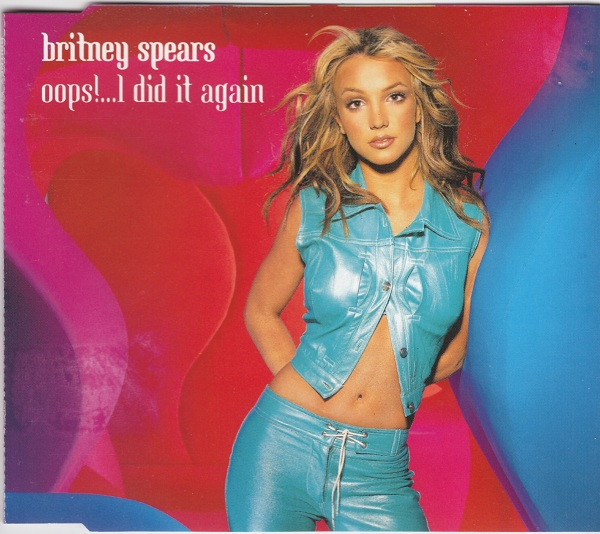
As much as neither particularly excites me, it is worth noting the near seven-year gap between Gabrielle’s two number one singles. So much musical water has gone under the bridge since 1993 (for a snapshot: ‘Dreams’ knocked UB40 off the top, while ‘Rise’ displaces Britney Spears) that it is impressive how she managed to come back with such a big hit. She would go on scoring Top 20 hits until 2004, and released her most recent album just last year.

So, two number ones for Gabrielle, the most famous eye-patch wearing pop star since Johnny Kidd. And only ten letters between both titles, ‘Dreams’ and ‘Rise’. Has any singer managed to get more success out of even shorter song names? Nichest of niche pop knowledge, but let me know in the comments if you can think of one!

846. ‘Born to Make You Happy’, by Britney Spears

I did warn you that despite kicking things off with the snarling ‘The Masses Against the Classes’, the year 2000 would not be ushering in any kind of rock renaissance. Here then, restoring order, is Britney.

Born to Make You Happy, by Britney Spears (her 2nd of six #1s)

1 week, from 23rd – 30th January 2000

I love Britney Spears. I feel I have to preface every post I write about her with this statement, in case anyone is expecting me to give her a critical mauling (I can’t). But if there was ever a Britney #1 I was lukewarm on, it would be this one. Or so I thought.

But actually, this is a decent pop song. It’s nowhere near as cutesy or saccharine as I’d mis-remembered. It’s got a cool, electro-pop edge, a moody piano riff, and delicate guitars embellishing the end of each line. It has probably been lost among the sugar-rush of her other, early hits (and it’s nowhere near as good as ‘…Baby One More Time’, or her next chart-topper) but it’s the most mature-sounding of the four singles from her debut album. Plus, it might be one of her best vocal performances (in an admittedly narrow field…)

It’s let down a little by its overwrought lyrics, though. I’ll do anything, I’ll give you my world, I’d wait forever, Just to be your girl… You can’t really appreciate them, I suspect, unless you were a sixteen-year-old listening to this song in real time. They certainly appeal to a teenage sentiment, but a song with the hook I don’t know how to live without your love, I was born to make you happy… did little to endear Britney to those of a more feminist leaning.

But then again, if you’re going to try to enjoy teen-pop, then you have to embrace it all, even the ridiculously emo side of it. A quarter of a century on, ‘Born to Make You Happy’ sounds like a relic. No young female star in 2025 would dream of claiming that she was born to make any man happy. Which is a good thing, and yet…

For some reason, at school we changed the lyrics of this song to I was born to wear a nappy… I have completely forgotten the reason for this, if there ever was one, but felt it needed mentioning here. As I wrote above, this was the 4th single from her debut album, and was only released in Europe. But like the Manics the week before, it took advantage of low January sales to score Britney her second #1, and to keep things ticking over nicely until her next big, brand new single.

845. ‘The Masses Against the Classes’, by Manic Street Preachers

The new millennium. The 21st century. The two thousands. The noughties. Here we go. Off with a bang.

The Masses Against the Classes, by Manic Street Preachers (their 2nd and final #1)

1 week, from 16th – 23rd January 2000

Could it be any more Manic to combine rushing punk rock, some of the most instant chord progressions of this entire year’s run of #1s, and extracts from Noam Chomsky and Albert Camus? All in a song named after a quote by Victorian-era Prime Minister William Gladstone.

Whatever you make of the their politics (the sleeve art for this was literally the Cuban flag), you can hopefully admire the way the Manics unashamedly used it in creating some of the day’s best rock music. Their first chart-topper ‘If You Tolerate This…’ referenced the Spanish Civil War, but the band had also received criticism from some of their die-hard fans for allegedly selling out with a softer, more pop-leaning sound.

Which means that ‘The Masses Against the Classes’ works as a socialist anthem, but also as a middle finger to those that accused them of discarding their punk roots. Hello it’s us again… sneers James Dean Bradfield, after a distorted rip-off of the Beatles’ ‘Twist and Shout’… We’re still so in love with you… Success is an ugly word, Especially in your tiny world… It all culminates, as the guitars splinter and distort, with that Camus quote: A slave begins by demanding justice, And ends by wanting to wear a crown… Which, if you think about it, is the best description of toxic fandom going.

For such an influential genre, punk rock has been very poorly served at the top of the charts. Which makes sense, for what could be less punk than having commercial success? I have at various points argued for ‘School’s Out’, ‘Pretty Fly (For a White Guy)’, and even Mr. Blobby, being the most punk number ones. Add to that stellar list, then, ‘The Masses Against the Classes’. Punk aside, it’s just nice to hear some freaking guitars back at the top of the charts!

Not this record’s success indicates in any way that the year 2000 is going to see a rock resurgence after the pop-heavy late-nineties. Sorry, things are going to stay just as poppy over the course of this year’s forty-two chart-toppers (a record turnover of #1s). The Manic Street Preachers were one of the few guitar acts that could break through to the top at this time, and they did so by releasing in dead mid-January, and by publicly deleting the single from production on the Monday it was released (which is also very punk, to be fair).

All this also means that it stands out as a bit of an oddity in the Manics’ back-catalogue. One of their two #1s, that very few casual listeners could sing the chorus to. There are far better known songs by the band that didn’t make it so high in the charts, but then isn’t that the way with so many acts? They would go on scoring Top 20 hits until the early 2010s, and are releasing their 15th studio album later this month. I feel a Manic Street Preachers’ ‘Best of the Rest’ is a post I’ll be doing soon enough…

The only video made was this live version, recorded in Cardiff on the Millennium’s Eve…

The studio version…

844. ‘I Have a Dream’ / ‘Seasons in the Sun’, by Westlife

I’m sure many readers think I’ve been a little soft on Westlife in my posts on their first three chart-toppers. ‘Swear It Again’ was fairly bland, but I enjoyed ‘If I Let You Go’ more than I was expecting to, and ‘Flying Without Wings’ has an overblown charm to it. But no more. The Westlife love-in stops here!

I Have a Dream / Seasons in the Sun, by Westlife (their 4th of fourteen #1s)

4 weeks, from 19th December 1999 – 16th January 2000

Just five seconds into ‘I Have a Dream’ and I’m feeling nauseous. The sleigh bells, the tinkles, the choking clouds of saccharine. It is so cynically programmed for the festive season that I’m imagining a big red button on a mixing desk, sealed in a glass box, with a sign that reads ‘Smash for Boybands in Desperate Need of Christmas Number One’. I’d make my usual comparison to karaoke backing tracks, if that wasn’t a horrible insult to the people who make karaoke backing tracks.

It doesn’t help that it’s an ABBA cover. Even though ‘I Have a Dream’ has never been one of my favourite ABBA songs, this feels like an act of sacrilege. But then it’s not so much a ‘cover’, more a pillaging mission that would make even the blood-thirstiest Vikings blush, leaving behind a smouldering ruin where once stood a much-loved ballad.

With grim inevitability a choir appears, for the second chart-topper running, as we lurch towards what the producers must have hoped would be a soaring climax. The best bit of the entire business are the closing two seconds; not just because the song is ending, but because one of the boys finishes on an oh-woah-owah that I think was meant to sound profound, but that sounds to me like the noise a murderer would make as they drop their bloody knife, realising exactly what a terrible crime they have just committed.

‘I Have a Dream’ finishes, yet we barely have time to rinse the sick from our mouths. There’s another massacring of a seventies hit to contend with. ‘Seasons in the Sun’ was a fairly shite record to begin with, so this cover doesn’t offend the ears quite as badly. Still, it tries its best. To kick off, we get a blast of the ol’ Oirish pipes, in the finest B*Witched tradition, to remind us exactly which nation to blame for this offence.

The rest of the song plods by fairly slowly, and the Westlife boys sound largely bored. The production is just as cheap and tacky. I’ve tried, in the comments, to defend late-nineties pop music from accusations that it was too ‘push-button’, but I can offer no defence here. All the worst pre-programmed touches and flourishes of the era are on display here. We end the decade on the lowest of low notes…

Again, I wonder if Westlife actually counted many teenage girls among their fans, as this seventies double-header seems unerringly aimed at the mum market. And the tactic, of course, worked. As terrible as this record is, it was an inevitable Christmas number one, and the only Westlife single to spend more than two weeks at the top. It was also the last number one of the decade, of the century, and of the millennium. It meant that Westlife joined the Spice Girls and B*Witched in reaching #1 with their first four releases. It also meant that they scored four number ones in a calendar year, a feat managed just twice before, by Elvis in 1961 and ‘62.

So, here end the 1990s. I wouldn’t call it the best chart decade (the 1960s will never be topped), but was it the most interesting? It was a decade of extremes: the longest continuous run at #1, the best-selling #1 of all time (and some of the lowest selling #1s too), as well as the two longest-playing #1s. We’ve had classics that have come to define modern British pop culture, and some of the most notorious novelties. We’ve had Take That, Oasis, and the Spice Girls. We’ve had our first ‘fuck’ on top of the charts. I will be doing a deeper dive into the decade very soon, when we do our ‘Nineties Top 10’.

But I’ll leave things here, on an important question. There’s no doubt that the ‘90s have ended at a tragically low ebb. But what record is worse? This, or ‘The Millennium Prayer’? It is probably a question best answered when I hand out the next ‘Worst Number One’ Award, but for me there’s only one winner…

843. ‘The Millennium Prayer’, by Cliff Richard

And so, after forty and a half years, Britain’s most decorated chart artist bows out from chart-topping duty, with his sixty-fourth Top 10 hit, and fourteenth number one.

The Millennium Prayer, by Cliff Richard (his 14th and final #1)

3 weeks, from 28th November – 19th December 1999

In some ways it’s tragic that Cliff ends in this way, as he has been responsible for some great hits, and was arguably the nation’s first real homegrown rock star. But in other ways, it’s entirely fitting and predictable for Cliff, an artist who had long since given up caring about such concepts as relevance, and quality control, to leave us with ‘The Millennium Prayer’.

It’s a simple enough idea: the Lord’s Prayer set to the tune of ‘Auld Lang Syne’. A prayer for the new millennium, twinned with a world-famous new year’s melody. ‘Auld Lang Syne’ is a lovely tune, heartwarming and yet melancholy, and so on one level there is something bearable about this record. The production is fairly minimal, though very dated by 1999’s standards, with a marching drumbeat and a trumpet solo in the middle. There is, naturally, a gospel choir brought in towards the end.

What makes it less bearable are Cliff’s ad-libs, decorated with assorted vocal gymnastics that are, I suppose, impressive for a man approaching sixty. What makes this near-nauseating is the video, a live performance in which Cliff goes into full Messiah-mode, prancing around, arms stretched, surrounded by a children’s choir.

I’m a fairly irreligious person, and I’m being careful not to let my opinions on organised religion cloud my judgement of this song’s merits. But I’m hopeful that even the most committed Christians, who may agree with the song’s sentiments (and lovely sentiments they are, too), can recognise that this record is garbage. It makes Cliff’s two previous festive chart-toppers, ‘Mistletoe and Wine’ and ‘Saviour’s Day’, sound like masterpieces of subtlety and restraint.

In fact, can I just take a moment to rant against the concept of Christian rock in general? Christianity has centuries’ worth of hymns, psalms, carols… Plus, the entire gospel canon. Gospel music, sung by a choir, can be wonderfully moving, even for a heathen like me. But there’s something fundamentally wrong with Christian contemporary rock music, such a disconnect between the rock ‘n’ roll beat, the guitars, the long hair – the entire raison d’etre of rock and roll – and the churchy message. I have a sneaking suspicion that God, whoever they may be, really, really hates Christian rock. (Although having said all that, ‘The Millennium Prayer’ is almost entirely saved in my estimations by the fact that Jesus himself received a writing credit!)

My mum was one of the hundreds of thousands who bought ‘The Millennium Prayer’, making it both the year’s third highest seller, and the third biggest hit of Cliff’s entire career. I remember it sitting in our CD tower at home for years, but I never remember her playing it. I suspect this was the case for most of the copies sold. Christians around the country mobilised en masse to buy the record, probably multiple times, especially after it had been refused airplay by most (sensibly-minded) radio stations. Nowadays it’s a festive tradition for the charts to be stuffed with protest songs around Christmas: songs bought, downloaded, or streamed as a statement, not because anyone particularly likes the music. Was ‘The Millennium Prayer’ the first modern protest number one?

I billed this as Cliff’s farewell, and while he has no further number ones to come (he currently sits in joint-third position in the ‘most number ones’ table, behind only Elvis and The Beatles), he is still very much active and recording well into his eighties. The 2000s brought him four more Top 10s, while his most recent album, ‘Cliff with Strings’, made #5 just over a year ago. Despite his many musical mis-steps, the man is a living legend. (While anyone who claims that ‘We Don’t Talk Anymore’ isn’t his best number one is just plain wrong.)

Of course, Cliff was aiming for his third Christmas #1, and presumably the final #1 of the century, with this modern day hymn. He didn’t quite make it though, as he was held off by a record that we may discover to be every bit as irredeemable as ‘The Millennium Prayer’…

And B-sides… ‘Some Might Say’, by Oasis

Launching our second new feature of the year, we’re going to celebrate the flip-sides to some famous chart-toppers. In my posts on every UK #1 between 1952 and 1999, I’ve stuck fairly rigidly to reviewing just one side of each chart-topping disc. On occasion I may have mentioned them in passing, and I’ve always given them a spin if they’re listed as a double-‘A’; but by and large I’ve avoided the B-sides.

To be honest, I was born at the tail end of the B-side era, so sometimes overlook their importance. By the mid-to-late-nineties, when I started buying music, the bonus tracks on a CD or cassette single were often just remixes of the A-side, or maybe a live version of an earlier hit. And the download/streaming era has killed off the concept for good. But cast an eye back further, to the days when an act’s singles were the main event, rather than a plug for their current LP, and the ‘other’ side of a hit single was a source of countless hidden gems.

And besides (see what I did there), many’s the big chart-topping hit that was originally intended as back-up to a song that, for whatever reason, didn’t catch the imagination. ‘Rock Around the Clock’, ‘Maggie May’, ‘I Feel Love’… The list is long, and often surprising. So, let’s kick things off with one of the last bands to recognise the power of a good B-side…

‘Some Might Say’ made number one in April 1995, Oasis’s first chart-topping single. You can read all about that song here. It was only their sixth release, but already the Gallaghers and co. had built a reputation for spoiling their fans with cult classics hidden behind the actual hits. ‘Half the World Away’ on ‘Whatever’, ‘Listen Up’ and ‘Fade Away’ on ‘Cigarettes & Alcohol’. But on ‘Some Might Say’, the lead single from their soon to be multi-multi-platinum second album ‘(What’s the Story) Morning Glory?’, Oasis included not one, not two, but three great B-sides. Starting with…

‘Talk Tonight’ is a classic of the Noel-with-an-acoustic guitar genre, a common theme for their B-sides. It was written about a woman in San Francisco, to whom he escaped after a concert went wrong (another common Oasis theme). Oasis at their best produced songs about very specific moments – visiting a park with a woman you barely know – that feel very universal. Everyone has some absent friend with whom they would like to talk tonight.

‘Acquiesce’ meanwhile is Oasis with a capital OASIS. One of very few tracks on which the brothers share vocal duties: Liam at his sneery best on the verses, Noel stretching his vocal chords on the chorus. Plus, the lyrics speak to their brotherly bond: Because we need each other, We believe in one another… (Noel has claimed that the only reason he sang the chorus was because Liam couldn’t reach the high notes). The moment when the pair collide at the start of the second verse is possibly the best five seconds in Oasis’s entire back-catalogue.

For a famous rock band, the moments in which Oasis let loose and just fucking ROCKED are actually quite few and far between. ‘Headshrinker’ may well be the heaviest song they ever recorded, with ten-tonne weighted chords, and lyrics like Lost in the fog, I’ve been treated like a dog, And I’m outta here… about an unhinged lady-love. Their biggest hits may have long since been lost to bland ubiquity, but gems like this remind us that on their day Oasis could be pretty punk.

Noel Gallagher has long since bemoaned the fact that he used up so many great songs as B-sides, especially after years of fame (and booze and drugs) had blunted his songwriting edge. Stick any of these three featured songs onto ‘Standing on the Shoulders of Giants’ and they would instantly be the best tracks on the album. But then again, chucking classics like these away on the one CD single encapsulates the carefree, live-in-the-moment ethos of early Oasis, and of Britpop before it soured, and was a huge part of their appeal.

I hope you enjoyed this first installment in what I hope to make a semi-regular feature. If you have any suggestions for B-sides (to UK #1 singles) that I can feature, please let me know in the comments!

842. ‘King of My Castle’, by Wamdue Project

Suddenly we’re at the pre-penultimate number one of the 1990s. The third last chart-topper of the decade, and the last good one…

King of My Castle, by Wamdue Project (their 1st and only #1)

1 week, from 21st – 28th November 1999

There’s something deeply cool about this record, something that I recognised aged thirteen but that put me off it. It sounded scary, somehow, a song that people much older than me danced to, in dark, misty nightclubs, grinding against one another as the bass pulsed through them…

Now that I’m a grown man, and have been to plenty of nightclubs, in time getting over my fear of grinding up against strangers, I can appreciate this alluring one-hit-wonder. The throbbing, disco beat. The purred uh-humms. The very of-its-time Balearic riff, but one that sounds as if it’s being played from speakers dropped in the deep end of a swimming pool. The kitschy little flute motif.

I’d say, though, that the biggest selling point of this record are the lyrics. The fact a woman sings Must be the reason why I’m king of my castle… The fact I always thought she was free in her ‘trestle’ (it’s ‘trapped soul’)… The wonderful insouciance of the line: Must be a reason why I’m making examples of you…It’s to do with Freud’s theory of the unconscious – as all the best dance hits are – while the video featured scenes from anime ‘Ghost in the Shell’, in which cyborgs are controlled by a hacker. That video featured too many hand drawn boobs for daytime screening, so a more generic second was made.

Wamdue Project were the brainchild of producer Chris Brann, with vocals from deep-house singer Gaelle Adisson. ‘King of My Castle’ had originally been released and recorded in an eight-minute downtempo version in 1997. This remix was helmed by Italian DJ producer Roy Malone, and it became a hit all around Europe. One-off dance tracks feel like a summer phenomenon, therefore it feels a little odd for a dance track to take off so well in late-November. But if ever there was is such a thing as a moody, winter dance smash then this is it.

I’m at the natural end of this post, but would like to linger a little longer in Wamdue World, knowing the horrors that are about to come. (The 20th century does not end on a high note, musically speaking.) This is the sort of dance music I can really get behind, one with a genuinely weird edge, one that I can see working as a grungy rock song. One with easily misheard lyrics based on Freud, and his ego. Wamdue Project are not quite one-hit wonders – I lied earlier – as follow up ‘You’re the Reason’ scraped to #39 the following April, but they remained such a mystery that Chris Brann was nominated for Best British Newcomer at the 2000 Brit Awards, before being hastily withdrawn when the judges discovered he was American.

The ‘Ghost in the Shell’ video:

The ‘official’ video:

841. ‘She’s the One’ / ‘It’s Only Us’, by Robbie Williams

‘She’s the One’ is not Robbie Williams’ best known number one. Nor does it get the airplay of a ‘Rock DJ’, a ‘Feel’, or an ‘Angels’. But if you’ll let me, I’d like to suggest that it’s one of his very best.

She’s the One / It’s Only Us, by Robbie Williams (his 2nd of seven solo #1s)

1 week, from 14th – 21st November 1999

At least, I always thought so. Until today, when everything I believed was rocked to its core… ‘She’s the One’ is a cover. World Party, a project fronted by former Waterboys member Karl Wallinger, recorded and released the original in 1997, and it was an Ivor Novello-winning, film soundtrack appearing, performed-on-Jools-Holland sort of hit. I’m ashamed of myself for not discovering this much earlier…

Robbie Williams delivers a facsimile of this song – same instrumentation, same harmonies, same vocal range – and delivers it very well. It is a lovely song; a very late-Britpop, arms around your mates in the pub sort of tune. It could easily have been recorded by Oasis, which of course means it has lots of nice Beatlesy touches to it, in the drum-fills and the backing vocals. But I feel slightly cheated now, after all these years of enjoying this so-called Robbie Williams hit.

What the original doesn’t have is a Brit Award winning video set in the world of competitive figure skating, with Robbie playing a has-been skater given one last chance at glory. Plus, it means Barry Davies, the greatest football commentator of my lifetime, can claim a number one single. (My dream aged thirteen, when this song came out, was to be Barry Davies.)

There was some drama, and some fairly ungentlemanly behaviour from Williams, when he started claiming that ‘She’s the One’ was the best song he had ever written. Some of Wallinger’s band played on the cover, unknown to Wallinger himself, and he suffered a brain aneurysm around the time it was hitting #1. Still, he did well off the royalties, and in interviews has claimed that this record saved him from penury. Williams has also, more recently, finally admitted that he didn’t write the song.

What of the double-‘A’ side, ‘It’s Only Us’? The fact I don’t think I’d ever heard this suggests it was more of a jumped-up ‘B’-side than a true double-‘A’. It was written for the soundtrack to FIFA 2000 and, again, it’s very Britpop indebted, this time more Supergrass than Oasis. It rollocks along nicely with lyrics that namecheck Williams’ hometown of Stoke-on-Trent, as well as ‘Rock Me Amadeus’, and with a fun end-of-the-pier organ solo. It’s also one of those songs where Robbie makes a drugs reference – We’re just after cheaper thrills, Since the price went up on pills… – of the sort that always feels a little try-hard for a former boyband member, like a teenager trying to shock his parents. We get it, Robbie. We get it.

It’s worth noting that this was the fourth single from ‘I’ve Been Expecting You’, the album that had given us ‘Millennium’ well over a year earlier. Taking the fourth single from an already huge-selling album to number one requires some serious star power, something that Robbie had in abundance in the late ‘90s. In fact, this moment saw the breakout star from the decade’s biggest boyband knocking his female counterpart, Geri Halliwell, off top-spot. The following year the pair would even date for a couple of months. Geri and Robbie, top of the pops and pretending to be a couple for the tabloids… Pop culture doesn’t get any more turn-of-the-21st-century that that.

840. ‘Lift Me Up’, by Geri Halliwell

The artist formerly known as Ginger returns, with further camp silliness…

Lift Me Up, by Geri Halliwell (her 2nd of four solo #1s)

1 week, from 7th – 14th November 1999

Maybe you think I’m overstating just how camp solo Geri could be. If so, then I would nod you in the direction of the birdsong and Disney princess tinkles that open ‘Lift Me Up’. You half expect her to burst into a chorus of ‘Bibbity Bobbity Boo’. But no, we soon settle into a perky pop-ballad, with a suitably uplifting chorus. Lift me up, When the lights are fading… I will be your angel for life…

It’s hard to overstate just how of its time, just how drenched in little late-nineties flourishes this song is. The drumbeat, the guitar-lite backing, the warm synthy organ line, and the key change. We are truly entering the age of the key change, when pop music was so cheesy, so unashamedly bubblegum, so – yes – camp, that a pop song with any modicum of ambition needed one.

I might suggest, however, that a slower number such as this shows off Geri’s vocal limitations. The lower-key verses certainly back this idea up. I will say, though, that she acquits herself well in the choruses, sensibly aided by some backing singers, which she commits to without letting things get too cloying. And I notice a theme between this – a song in which the singer is asking a lover, or friend, to help keep her upbeat and positive – and the previous #1, Five’s ‘Keep on Movin’.

The video is also… I’ll try and not use the c-word… Pretty theatrical. Geri is driving alone along a dusty road when she comes across some aliens whose spaceship has broken down. She befriends them and they have a jolly day together, trying on her underwear and watching the ‘Mi Chico Latino’ music video… Actually, no. If there were a better word then I’d use it, but I don’t think there is. It’s just plain camp.

‘Lift Me Up’ was Geri’s third single and her second chart-topper, making her the most successful solo Spice (a title that she has never relinquished and that will, we can assume, now be hers for eternity). But it was released on the same day as Emma Bunton’s ‘What I Am’, a collaboration with electronic duo Tin Tin Out – a far cooler piece of music. A publicity battle ensued, which Geri was critical of at the time. In the end she won, fairly comfortably, by 140,000 copies to Emma’s 110,000. Baby would have to wait a couple more years to finally get a solo #1.