Almost two years earlier, the Spice Girls had scored their eighth and, we assumed, final chart-topper – their third Christmas number one in a row. It was called ‘Goodbye’, for heaven’s sake. But no, we have to reckon with this strange footnote to their discography…
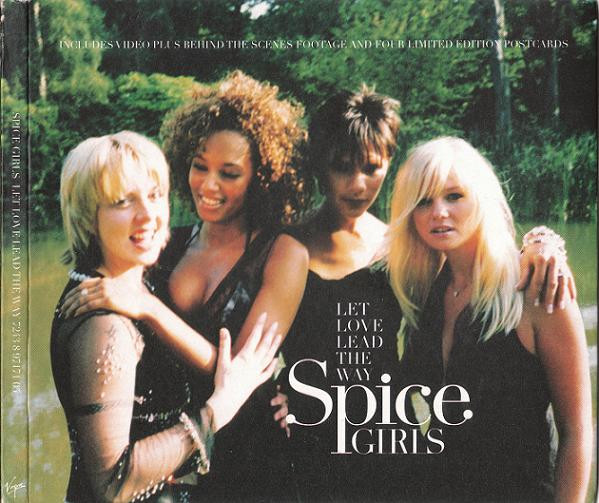
Holler / Let Love Lead the Way, by The Spice Girls (their 9th and final #1)
1 week, from 29th October – 5th November 2000
‘Holler’ is a huge departure from the original Spice Girls’ sound, if they ever had a ‘sound’. It’s a clear attempt to sound street, to be Destiny’s Child, or TLC – the opening riff is literally ‘No Scrubs’ – to be a bit garage, a bit R&B, and resolutely not a pop group.
They are going to take a boy to their ‘fantasy room’, treat him right all through the night… Things will presumably involve a bit of zig-a-zig-ah. And it feels right to cast our minds back to their debut hit here, and all the jokes about what that phrase might have meant. It was silly innuendo, because the Spice Girls weren’t really about sex; they were about fun, and female friendship. Girl Power, as they put it. So to see hear them singing about making a guy holler feels almost like a betrayal of what made them so special in the first place.
Plus, the song itself is a big pile of average. There’s the most generic, and uncredited, guest rapper; and a genuinely tortured attempt to rhyme ‘holler’ with ‘follow’ (folla? foller?) We don’t need the Spice Girls to sound like Destiny’s Child or TLC, because we already have Destiny’s Child and TLC, and they are great. We want the Spice Girls to sound like the Spice Girls.
But at least I was vaguely familiar with ‘Holler’. I have genuinely never heard the song on the flip-side of this double-A, ‘Let Love Lead the Way’. (Four years earlier, in the midst of my Spice Girls obsession, I couldn’t have imagined not hearing one of their singles.) And if you thought ‘Holler’ was average…
It’s a ballad, a sort of sisterly message to a young girl. Why is there joy, Why is there pain? Why is there sunshine and the rain? But compare it to some of their earlier ballads, ‘2 Become 1’, or ‘Viva Forever’, and it pales in comparison. It’s not truly terrible, it just sounds like it belongs on the soundtrack of a straight-to-VHS Disney animation.
You have to wonder how much the girls’ hearts were in this third album. Geri of course was long gone, but all four remaining members had also launched solo careers. Mels B and C had made #1, and Emma’s solo moment in the sun wasn’t far away. Victoria had come as close as it’s possible to come a few weeks earlier. ‘Forever’ wasn’t a flop – it made #2 behind Westlife – but it sold a fraction of the Girls’ two earlier, multi-million selling LPs. No further singles were released from it.
Strange footnote it may be, but ‘Holler’ and ‘Let Love Lead the Way’ give the Spice Girls’ a ninth number one, drawing them level with ABBA. In chart geek terms it is also significant, for this was the year 2000’s thirty fifth number one. The following week’s chart-topper would confirm this year as having the most number one singles ever…
Tomorrow marks that one day of the year in which Europe (plus some countries technically in Asia, and Australia for some reason) comes together to celebrate the joys of music. Or at least to celebrate the joys of cheesy riffs, simplistic lyrics, unhinged dance routines, and a whole load of camp. Yes, it’s the…
Held every year since 1956 (2020 excepted, thanks to COVID), Eurovision was invented through collaboration between seven nations’ broadcasting corporations, as a means of testing out the capacities of live broadcasting. The first contest featured just those seven – France, Switzerland, Italy, Belgium, West Germany, Luxembourg and the Netherlands – and was won by the Swiss. The UK made their first appearance the following year, when a public vote was brought in to help decide the winning song. Ever since then there have been plenty of complaints about political voting (usually from us Brits, when nobody gives us any points) with neighbouring countries, and nations with a shared ethnicity, trading points based perhaps more on kinship rather than on musical quality.
A maximum of forty-four countries can enter – qualifiers were introduced in the 1990s – and as of 2024, twenty-seven different nations have won the contest. Sweden and Ireland have the most wins with seven, and Britain holds the record for finishing second. Norway, meanwhile, holds the record for finishing last, and has ended with the dreaded nul points four times.
Eurovision is famous for launching the careers of ABBA, who won with ‘Waterloo’ in 1974, but it has also played a part in helping Celine Dion, Julio Iglesias, and Olivia Newton-John become world famous. Other legends to take part include Sandie Shaw, Cliff, Lulu, Bonnie Tyler, Engelbert Humperdinck, Nana Mouskouri and, um, Flo Rida. And of course we’ve already met plenty of Eurovision number ones during our chart-topping journey… Who could forget Dana, Brotherhood of Man, Bucks Fizz, Nicole, Johnny Logan, or Gina G…?
Part of the reason why I chose to do this post now is that in the 21st century there have been no further Eurovision chart-toppers. Plenty of songs have gone close, but none have made it to the top. And so, having covered all the Eurovision #1s in the regular blog, it’s time to check out the Best of the Rest. I’m only counting songs that made the UK Top 10, and have whittled a thirty-odd longlist down to ten.
‘Volare’, by Domenico Modugno (3rd place for Italy in 1958)
Probably rivalling ‘Waterloo’ as Eurovision’s most famous song, this was the first big Eurovision hit, making #10 in the UK and top spot in the States (it remains the only Eurovision chart-topper on the Billboard 100). Dean Martin’s version is now perhaps more popular, of the hundreds that have since been recorded, but this was the original. Ubiquity has not, and seemingly cannot, dull the laidback coolness of this classic.
‘Boom Bang-a-Bang’, by Lulu (joint 1st place for the UK in 1969)
Och, if it isn’t lovely wee Lulu. Nonsense song titles have long been a Eurovision cliché, and you have to think ‘Boom Bang-a-Bang’ helped in that. (We’ve since had winners titled ‘Ding-a-Dong’, ‘A-Ba-Ni-Bi’ and ‘Diggi-Loo Diggi-Ley’.) If it were just the verses, this wouldn’t have stood a chance of making the list, as they make Sandie Shaw’s ‘Puppet on a String’ sound subtle. But it is in that nonsense chorus that the song soars. Watch the performance above, and marvel at Lulu – the consumate performer that she is – selling the living daylights out of this tosh. She dragged it to a joint first place finish (the only time there’s ever been a tie) and to #2 in the charts. The contest was held in Madrid that year, and in true Brits-abroad fashion Lulu finishes her performance with a big ‘Olé!’ Who says we don’t try to learn the local languages…?
‘Jack in the Box’, by Clodagh Rodgers (4th place for the UK in 1971)
Lyrically this is ‘Puppet on a String’ Pt II – I’m just your Jack-in-the-Box, You know whenever love knocks, I’m gonna bounce up and down on my spring – and musically it’s not a million miles from ‘Boom Bang-a-Bang’. It didn’t do as well as either of those earlier entries (4th place in the contest, #4 in the charts) but I’d argue it’s a better song than both. Especially when, in the best music hall fashion, things slow down for a big, showstopping final chorus. Clodagh Rodgers, from Northern Ireland, received death threats from the IRA for representing the UK. (Interestingly, the year before Ireland had won through London-born Dana.) This was Rodgers’ third and final UK Top 10 hit. She sadly died just a few weeks ago, in April 2025, aged seventy-eight.
‘Beg, Steal or Borrow’, by The New Seekers (2nd place for the UK in 1972)
Going by my choices, the late-sixties to early-seventies was the golden age of British entries at Eurovision. A world away from the British acts that were setting the standard and pushing the envelope in those days when pop music was developing at a heady pace; it was a world of bubblegum, easy-listening, and schlager. Which was a wise choice, and why so many of those entries placed very high, such as this runner-up performance from 1972. (Pink Floyd probably wouldn’t have done well at Eurovision…) But representing the UK were acts that, while not the avant-garde, were still very famous names: Cliff, Lulu, Sandie Shaw, Clodagh Rodgers, and the New Seekers above. Going to Eurovision was seen as a big thing, a beneficial thing, whereas in the 21st century it is the reserve of the has-been, or of the unknown act looking for any sort of break they can get. Anyway, ‘Beg, Steal or Borrow’ is perfectly decent pop – better than the New Seekers’ saccharine Coca-Cola anthem, but not as good as their sadly forgotten second chart-topper.
‘Go’, by Gigliola Cinquetti (2nd place for Italy in 1974)
A case of right song, wrong time, as Gigliola Cinquetti’s gloriously sultry ballad came up against ABBA’s ‘Waterloo’. Still, it made the Top 10 in the UK (re-recorded in English, which means that I’m not technically choosing the Eurovision version, but hey ho…) The original has exactly the same melody and instrumentation, but is entitled ‘Sí’, which means ‘Yes’. Cinquetti had actually won the contest a decade before, aged sixteen, with a song entitled ‘Non ho l’etá’ (‘I’m Not Old Enough’), meaning she came close to becoming the first act to win Eurovision twice. In Italy, the song’s title caused drama as the contest coincided with a referendum on making divorce illegal (it having just been legalised a few years earlier) and authorities believed that a song featuring the word ‘yes’ sixteen times might subliminally influence the vote… Even the contest itself wasn’t broadcast in Italy until a month afterwards. In the end the divorce laws stayed, and Cinquetti also went on to host the contest in the 1990s.
‘Love Shine a Light’, by Katrina & the Waves (1st place for the UK in 1997)
It would be remiss of me not to include the song that last won the contest for Britain, almost thirty (30!) years ago now. ‘Love Shine a Light’ manages – just about – to straddle the line between genuinely inspiring and sentimental schmaltz (a battle that Eurovision songwriters have been waging ever since 1956). It provided an unexpected career coda for Katrina & the Waves, who had struggled for a follow up hit ever since their 1985 breakthrough ‘Walking on Sunshine’. ‘Love Shine a Light’ peaked at #3, beating even ‘Walking on Sunshine’, but the band split the following year.
You may have noticed a twenty-three year gap between our last two entries, after a run of sixties and seventies hits. There weren’t that many Top 10 hits from Eurovision in the eighties (apart from those that went all the way to #1), and I doubt many people could name any of the winners between Bucks Fizz and Katrina & the Waves.
‘Flying the Flag’ by Scooch (22nd place for the UK in 2007)
Making Steps look like the Velvet Underground, it’s Scooch! There are compelling arguments for this being Britain’s worst ever Eurovision entry, and I get it, I do… But I will never not enjoy this psychopathically tacky number. It’s too much, really, to even have been considered as a parody of a Eurovision entry; and yet we actually sent this to Helsinki in 2007. Where it finished joint second-last, with a grand total of nineteen points. The flying theme is taken to the extreme, with plenty of European capitals name-checked, and an impressive attempt to sexualise a pre-flight safety demonstration. One of the band’s job is solely to make saucy spoken asides ‘in character’ as a gay flight attendant, culminating in him making the lascivious offer to the captain: Would you like something to suck on for landing, Sir…? Whether it went over the heads (pun intended) of the audience I do not know, I’m just forever grateful that it happened. It seems to have been viewed more fondly in its home country, as the British public sent it flying all the way to #5 in the charts.
‘Calm After the Storm’, by the Common Linnets (2nd place for the Netherlands in 2014)
A much more sedate number now, from a Dutch country rock duo. This doesn’t tick any of the typical Eurovision boxes, and yet it’s a lovely, atmospheric ballad. The band had only formed the year before entering the contest, and ‘Calm After the Storm’ was their first release. Interestingly, this was only the 4th non-winning, non-British entry to enter the Top 10 (after ‘Volare’, and ‘Go’, and another Dutch entry from 1975), reaching #9.
‘Space Man’, by Sam Ryder (2nd place for the UK in 2022)
After years in the Eurovision doldrums, of Jemini (nul points), Scooch, Engelbert Humperdinck, and Blue, Britain finally finished strongly in 2022. (We probably would have won, had Ukraine not had the goodwill of the continent behind them.) For years people had claimed that it was all political: that Britain placed low because of Iraq, Brexit, and because we make such obnoxious tourists. But as it turns out, all we needed do was to enter a half decent song! ‘Space Man’ is a strong pop-rock single, that felt like we were finally taking the contest seriously again. I find Sam Ryder to be fairly irritating (I’ve seen him described as a golden retriever in human form, and am still unsure as to why that is a compliment) but I seem to be in the minority. ‘Space Man’ came agonisingly close to being the first Eurovision chart-topper in twenty-five years, only to be be beaten at the last by Harry Styles. Sadly, in the two contests since ‘Space Man’, the United Kingdom has reverted back to type and placed fairly low. Hopes are mixed, then, for Remember Monday this year.
‘Cha Cha Cha’, by Käärijä (2nd place for Finland in 2023)
The first and so far only song sung in Finnish to make the UK Top 10, we end our run down with ‘Cha Cha Cha’. And this, really, is what Eurovision is all about: it’s loud, brash, chaotic, camp. Terrible, and yet brilliant. A metal-dance-pop fusion, featuring a dance routine in which Käärijä rides his backing dancers while they do the human centipede. The song is apparently about getting drunk, specifically on pina coladas. But you don’t really need to understand the lyrics. The charm of this song, and of Eurovision in general, is getting behind songs you don’t understand, by artists you’ve never heard of, and celebrating being part of the smallest but most culturally diverse continent on the planet.
The nu-disco movement, which has popped up time and again in the year 2000, reaches its peak. Because if Steps are referencing a trend, then you know it’s nearly over…
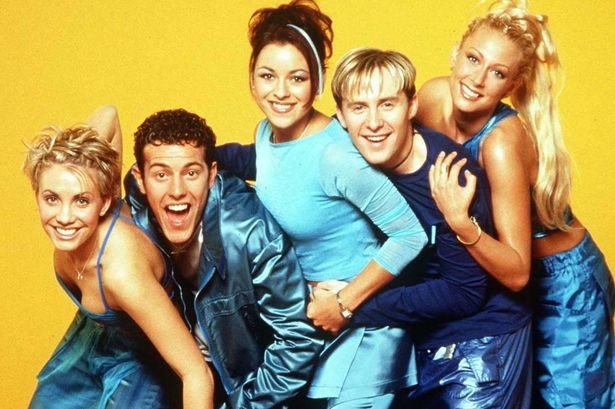
Stomp, by Steps (their 2nd and final #1)
1 week, from 22nd – 29th October 2000
Actually, no. I love Steps, and will hear no word against them. I am definitely going to do a ‘Best of the Rest’ post, as they were so poorly served by their two number ones. We had the okay cover of ‘Tragedy’, paired with the okay ballad ‘Heartbeat’, and now this. Everybody clap your hands… (clap clap)…Get on up and dance, We’re gonna stomp all night now…
I mean, it’s fine. I like the rampant tempo of it, that forces you to do the full repertoire of classic disco hand gesture moves to it. I like it the pew pew effects, and the strings. Hand claps, and thank God for the weekend… In fact, it throws almost every cliché into the mix, including yet another of the year’s Chic samples (for which Nile & Co. didn’t initially receive a credit). So much disco, in fact that it promptly kills off the current revival. I’d be surprised if we hear much more at number one any time soon.
But ‘Stomp’ also can’t escape its sheer basic-ness. I know, I know, Steps were one of the most basic groups going. Which is true, to an extent. But most of their classic (yes, classic) songs are rooted in those late nineties pop sounds – a reason why they are fairly beloved by those who grew up with them – and so to hear them go disco feels like a lazy choice.
I also can’t help turning my nose up at this, knowing the Steps songs which failed to make #1. Twelve other Top 10 hits, five of which stalled at #2. ‘One for Sorrow’, ‘Last Thing on My Mind’, ‘Deeper Shade of Blue’… Meanwhile ‘Stomp’ sits at #11 in the Steps all-time sales table, and at #10 on their Spotify most played tracks. It also fluked its week at number one, with the lowest first-week sales of any of the year’s forty-two chart-toppers.
Steps split-up on Boxing Day 2001, but reformed with actually quite surprising success in the 2010s, remaining together (plus Michelle Visage, for some reason) to this day. They may have been ‘ABBA on speed’, in the words of Pete Waterman, but they bunged out some very decent pop records, and were in their own way a soundtrack to the turn of the millennium.
A rock band! With guitars! On top of the singles charts in the Year 2000!
Beautiful Day, by U2 (their 4th of seven #1s)
1 week, from 15th – 22nd October 2000
The extended nature of our journey through this year has distorted things slightly, as we’ve had both Oasis and the Manics on top of the charts in recent months, not to mention the Corrs, but still. Rock music has become a highly endangered beast around here.
For someone who wouldn’t count himself as much of a U2 fan, their first three #1s all had merit. The raw, bluesy hum of ‘Desire’, the industrial prog of ‘The Fly’, and ‘Discotheque’s, well, disco beats were all enjoyable curios, oddities almost, which is a strange position for the biggest band in the world to be in. But here, at last, is U2: Biggest Band in the World ™.
And my heart sinks, because songs like this are why I don’t count myself as a big U2 fan. At least, not of 21st century U2. For this soaring, uncomplicated (undeniably catchy) rock music is not just setting U2’s manifesto for the new millennium, but that of rock music in general. From here we can draw a line to Coldplay, to Snow Patrol, to Imagine fucking Dragons… To U2 themselves foisting an entire album on unsuspecting iPod buyers. To stadium gigs at 300 quid a pop (or more, thanks to dynamic pricing). To streaming algorithms. To the death of indie clubs and small venues, and nightlife in general…
Okay, okay. I don’t lay all of this at the feet of U2’s ‘Beautiful Day’, but I’d say it represents a shift. They’re not the first band to soften the edges – in fact, the production here isn’t a million miles away from All Saints with William Orbit – but this does feel like a huge grasp for ubiquity. It’s a beautiful day…! Don’t let it get away… Of course, radio ate it up, and of course it featured as background to sports montages, adverts, and political campaigns, for years. (In fact, a big part of the reason I dislike this song is that it reminds me of when ITV had the rights to the Premier League highlights. This, versus the Match of the Day theme? No contest.)
The middle eight introduces a bit of edge, as Bono casts an omnipotent eye around the world and sees the oil fields at first light and the tuna fleets cleaning the sea out… But this feels more like an in-joke, to see if anyone will actually notice, than a statement. The rest of the song, unless my sarcasm detector is on the fritz, is pure motivational schmaltz. Pure corporate rock, the sort that the world’s worst CEO listens to in his Mercedes, on his way to making five hundred people redundant.
For anyone who thinks that I’m being harsh, or that I’m letting an anti-U2 bias cloud my judgement of one of their biggest hits, I will state that I really rate the two singles that followed ‘Beautiful Day’: ‘Stuck in a Moment You Can’t Get Out Of’ and ‘Elevation’. But neither of them made #1, and so we are left discussing this record. I’ll leave the final words to a quote I heard once (I wish I could remember where from): If it is a beautiful day, then I don’t need Bono telling me about it…
All Saints return for their second number one of the year, although ‘Pure Shores’ feels like a lifetime ago given how many chart-toppers we’ve ploughed through since then…
Black Coffee, by All Saints (their 5th and final #1)
1 week, from 8th – 15th October 2000
And this second single from their second album is cut from much the same cloth as their previous #1. It’s got the same lush, dream pop soundscape, with woozy synths and whale noises – it too was produced by William Orbit – and is a further departure from the sassy, R&B pop of their 1998 hits. But I think I actually prefer this to the hugely loved and well-respected ‘Pure Shores’.
I’d say that it’s got the best chorus of their five chart-toppers, and the contrast between the ambient yearning there and the fast moving verses is very appealing. It’s a love song, going by most of the lyrics… I wouldn’t wanna change, Anything at all… But the song’s wistful atmosphere (and the video) hints at a break-up… I wouldn’t wanna take, Everything out on you… (Although I know I do…)
Any song that chucks its title down the sink in the middle of the second verse is automatically very cool, but I would suggest that what elevates this record to true greatness is the coda, in which the first verse is remixed into something more industrial, and darker. It’s a fantastically edgy way for Britain’s coolest girl group to bow out from chart-topping duty.
Sadly, though, ‘Black Coffee’ was a big part of All Saints calling it quits in early 2001. It was the only All Saints original not to be written by Shaznay Lewis, and the Appleton sisters saw this as a reason for them to finally be given lead vocals over Lewis. Tensions built up during recording and live performances, until an argument over who got to wear a jacket for a photoshoot proved the final straw. And to be honest, that was a huge part of All Saints appeal: the fact that running behind all those great songs was the nagging suspicion that they really fucking hated each other.
They had one more single to come, the #7 ‘All Hooked Up’, which contains the classic chorus line: I know that you want a piece of my ass… But that was pretty much it (until the inevitable comeback five years later). On any given day my choice of best All Saints single might rotate between ‘Never Ever’, ‘Pure Shores’ and this, but today I’m leaning towards ‘Black Coffee’. Add in ‘Bootie Call’ and the better-than-they-should-have-been covers of ‘Lady Marmalade’ and ‘Under the Bridge’, then you have one of the great chart-topping runs.
In which Westlife, the regional champions of power balladry, come up against the reigning world champion. A contest for the ages…
Against All Odds, by Mariah Carey (her 2nd of three #1s) ft. Westlife (their 6th of fourteen #1s)
2 weeks, from 24th September – 8th October 2000
And at first, Westlife give a good account of themselves. They’re clearly pumped up for this duet, with lead singer Shane coming out all guns blazing for the opening verse. When Mariah takes over, meanwhile, she’s struggling to get out of second gear. She’s either warming up slowly, or can’t be arsed, and doing that husky, breathy voice that she does when she can’t, or won’t, reach the high notes.
Second verse comes along, and Mark takes over for Westlife, again singing as if his life depended on it, while his bandmates gamely back him up. It’s actually looking like Westlife might be about to take the title from Mariah, in one of the biggest upsets in power-ballad history. Until Mariah wakes up for chorus number two, and puts the lads right back in their place with some eyewatering over-singing, reaching notes that even Brian McFadden’s dog couldn’t hope to match. By the end, Westlife are essentially backing singers, and order has been restored.
Sadly my imagined scenario is not quite the truth, however, as this record was made by tacking Westlife’s vocals onto an already recorded solo version by Mariah. Which means the video, with Mariah and her adoring backing band in a recording studio, must be fake. I’m imagining an unfortunate lackey suggesting to Mariah that she might want to re-record her vocals, a lackey who never worked in music again and who still suffers PTSD from la Carey’s death-ray stare.
Musically this duet makes sense. But commercially, I’m not so sure. Westlife were at the peak of their powers, and whatever they released as the lead single from their second album was going to be massive. Mariah, though, despite her huge success in America, had never hit the same heights in the UK: fifteen US #1s to two UK #1s by 2000 bears this out. Plus, this was the very end of her imperious phase, with the infamous ‘Glitter’ less than a year away. Maybe she needed this duet more than Westlife…?
Interestingly, this record didn’t chart in the States. But in Britain, of course, things were different. It was big enough to spend two weeks at number one – no mean feat in 2000. It also adds to our growing list of classic #2s belatedly making #1, Phil Collins’ original having made runners-up spot in 1984. And it’s not the last time a version of ‘Against All Odds’ will feature at the top the charts, either. Take that as fair warning…
After a record-breaking twelve single-week number ones in a row, when neither Kylie, Eminem, Robbie Williams, nor Madonna herself, could hold on for more than seven days, we have a multi-week chart-topper.
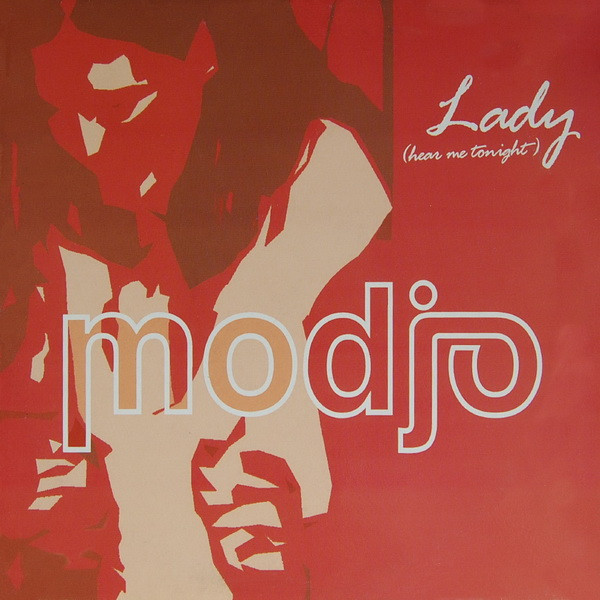
Lady (Hear Me Tonight), by Modjo (their 1st and only #1)
2 weeks, from 10th – 24th September 2000
And of course the act to finally hold firm at the top are one that nobody had ever heard of before, that didn’t have pent-up demand and huge first day sales which quickly petered out. Modjo were a French house duo and, with no previous hits become, I think, at least the sixth Random Dance act of the year to make #1.
And it also makes sense that this song was the one to spend more than a week on top – actually increasing in sales in its second week, which was practically unheard of in 2000 – because it is a mash up of all the era’s hot sounds. There’s a Chic sample, fitting in perfectly with the nu-disco hits that we’ve heard recently, but presented through a chilled Balearic filter, more suited for the poolside bar than the club. The BPMs are low, but the blissed out vibes are high…
We’ve had plenty of hard-hitting Italian, German and Dutch dance tracks over the years, but very few from France. In fact, Modjo’s success made them only the fourth French act ever to have a UK number one, after Serge Gainsbourg, Charles Aznavour, and Mr. Oizo. And not that I want to fall into the trap of national stereotyping, but there’s something very effortlessly cool about this song. A certain… Well, if only there was a French term for a quality that can’t be described or named easily.
Maybe it’s because only the five minute long album version is available on Spotify, but I’m beginning to think that effortless cool can only get you so far. Eventually things become repetitive, which is my eternal problem with dance music. I will give a shout out, though, to the jazz hands flourish that comes along every so often, a camp little nod to the Moulin Rouge among all the modernity, which also feels very French. And to the lyrics, which in the best Europop tradition feel quite ‘second language learner’: Lady, Hear me tonight, ‘Cause this feeling, Is just so right… But they work, and are very easy to remember.
The Year 2000 is really trying its best to make me re-evaluate my feelings on dance music. On the one hand each recent dance #1 has been interesting, fun and, most importantly, not Westlife. But at the same time, the best I can say for the majority of them is that they are diverting. Most of them don’t land hard enough between my ears for me to truly love them (I’d say ‘Groovejet’ is the one dance song from this year that I really, really like). Oh, and speaking of Westlife…
I’m revamping the ‘Random Runners-Up’ feature. From this post on, you’ll be getting three tunes for the price of one. All of them sitting at number two on a specific date. All of them still – hand on heart – chosen completely at random. Starting with…
A good old-fashioned novelty. With emphasis on the ‘old-fashioned’ bit, because we had definitely dropped the ‘Simple’ by the time I was playing Simon Says in the late eighties. Let’s not get all self-righteous, though, as this is fun slice of late-sixties pop: a nicely judged blend of bubblegum and garage rock. Not something I’d add to a playlist, but an undeniably catchy way to spend two minutes.
It’s also sent me down the rabbit hole of discovering who Simon was, and apparently it goes back to Simon de Montford, Earl of Leicester in the 13th century, or perhaps even Cicero in ancient Rome, which sounds sort of like ‘Simon’. The ‘simple’ came, perhaps, from an 18th century London begging ‘simpleton’ named Simon Edy. It’s a shame this never got to number one, really, as that’s a fairly unique backstory. As for the 1910 Fruitgum Company, they were one-hit wonders in the UK, but remained popular for a while longer in their native US. They reformed in 1999, and Wikipedia lists over thirty past and present members of the band.
‘Back Off Boogaloo’, by Ringo Starr #2 for 2 weeks in 1972, behind ‘Amazing Grace’
Ringo is, of course, the only Beatle not to manage a solo UK #1. The Victoria Beckham of his day, as it were. But oh, if only. If only this glam rock stomper had managed to outsell the bagpipes and drums of the Royal Scots Dragoon Guards. I’m not exaggerating, but this would probably have been my favourite ex-Beatle number one. Yes, ahead of ‘My Sweet Lord’. Yes, ahead of ‘Imagine’.
The lore surrounding this song is legendary. George Harrison co-wrote it, and played slide guitar on it. The bizarre video, in which Ringo is followed around by a Frankenstein’s monster, was filmed in John Lennon’s garden. The ‘boogaloo’ is Marc Bolan, who Starr was making a movie about (‘Born to Boogie’) at the same time. The line give me something tasty was inspired by none other than Jimmy Hill, he of the legendary chin, who often used ‘tasty’ to describe a piece of footballing skill. My favourite fact, though, is that Starr offered the song to Cilla Black, who turned it down. I would give good, good money to hear Cilla’s interpretation… One thing that Ringo has denied is that the nasty ‘boogaloo’ is Paul McCartney, with whom he was wasn’t on the best of terms at the time.
‘Opposites Attract’, by Paula Abdul & The Wild Pair #2 for 1 week in 1990, behind ‘Vogue’
Number two on this day thirty-five years ago, a perfect example of early-nineties synth-funk, with a healthy splash of new jack swing. Paula Abdul never came close to replicating her US success in Britain (this was her fourth of six Billboard #1s in a row). But we chose the best song to become her biggest hit, as this is gloriously catchy.
The video is a treat too, and pretty impressive from a technical point of view, as Paula dances, frolics, and at one point strangles, a cartoon cat (MC Skat Kat). The raps and male vocals are provided by the Wild Pair, regular backing vocalists for Abdul. And it would be remiss not to include a link to Peter Griffin’s famous interpretation of the song too.
I’ve mentioned this before, but it’s definitely becoming a bit of a chart theme over the past year or so: classic #2s making #1 in inferior cover versions. We’ve had 911’s ‘A Little Bit More’, Westlife’s ‘I Have a Dream’, and Madonna’s infamous ‘American Pie’. But is this next chart-topping cover the most egregious…?
Take on Me, by A1 (their 1st of two #1s)
1 week, from 3rd – 10th September 2000
Or is it a harmless tribute, bringing a much-loved classic to the ears of a new generation…? (Though there were only fifteen years between this and the original ‘Take on Me’, so I’m not sure enough time could have passed for it to have been forgotten.) The first thing that stands out are the reedy vocals, which simply cannot compete with Morten Harket, the ‘80s most crystalline voice. The producers try to paper over the cracks, by distorting, or by beefing them up with reverb and echo, and in the chorus Ben Adams makes a decent enough attempt at the high note (though the sceptic in me wonders if he didn’t have some electronic assistance…)
The original riff is of course, forever and always, a classic. So if you were to stumble across this version without ever having heard the original, then you might be impressed. But on top of the riff there are lots of pointless effects and window dressing. In fact, ‘pointless’ is the perfect word here. Why did A1 need to do this?
They had already enjoyed four Top 10 hits from their debut album, and the single following this – if I’m not mistaken – is something of a noughties pop classic. So, was it more of a statement? We’re back, with our second album, and a cover that’s bound to get us attention? I mean it worked, after all. Here they are, with their first #1. And they weren’t done meddling with the pop canon, as the B-Side was a Beatles medley.
A1 had been formed by Tim Byrne, the mastermind behind Steps, and Paul Marazzi, who had failed the audition to be in Steps. In my mind, they were very much a second division boyband, more Another Level than Take That, but they stayed together for three albums and eight Top 10 singles in total. The A-ha connection goes beyond this record, too, as they had a Norwegian member, Christian Ingebrigsten, and were almost as successful in Norway as they were in the UK.
Maybe it’s just my age, and the fact that I was in prime ‘coming of age’ territory during the summer of 2000, but it feels like every chart-topper at the moment has a line, or a moment, that resonates to this day.
Music, by Madonna (her 10th of thirteen #1s)
1 week, from 27th August – 3rd September 2000
We’ve had Craig David’s seven days of wooing. Robbie’s ‘Rock DJ’. Will the real Slim Shady please stand up and If it ain’t love, Then why does it feel so good… To the list we can add Madonna’s command: Hey Mr DJ, Put a record on, I wanna dance with my baby…
When I claimed that her version of ‘American Pie’ wasn’t as bad as people said, but that it was also a bit too safe, I was looking ahead to this record. Imagine if she had bent and twisted that hallowed classic of rock ‘n’ roll using the grinding, whirring, blurping production that she employs on ‘Music’. It may have turned out terrible, but it would have been every bit as fun and provocative as her other most controversial moments.
As it is, we are left with ‘Music’, and for a woman in her forties, almost two decades into her chart career, it is a remarkably modern record. The video and the lyrics may reference disco balls and boogying, but musically this is forward-facing electro-funk. Again, Madonna shows herself to be bang on-trend, as this sounds both like Daft Punk circa 1997, and Hot Chip circa 2006. It also leaves room for a bit of cheese amongst the cool, in the heavily distorted Do you like to boogie-woogie refrain.
Lyrically this is standard sort of ‘music brings the world together’ stuff. Although she does try to reach for a higher plane of thought with the line: Music, Mix the bourgeoisie, And the rebel… Apparently Madonna was inspired to write this at a Sting concert, noting the euphoric reaction of the crowd when he started to play the old Police hits. The video isn’t one of her most thought-provoking either, featuring Sacha Baron-Cohen in character as Ali G (how very Y2K) driving her around in a pimped-out limo.
No, here Madonna isn’t trying to outrage or annoy, she just wants us up on our feet. And I, for one, will always head to the dancefloor when this one comes on. This record took her into double-figures in the total number ones count, the first woman in British chart history to manage it. She joined Elvis, The Beatles, and Cliff Richard in managing ten or more chart-toppers. Meanwhile ‘Music’ itself made history by becoming the first song ever to be played on an iPod.
I may have overstated it in the intro, or allowed nostalgia’s rose-tinted specs to influence my take. Perhaps the chart-topping lyrics of the day were no more memorable than any other era’s. Perhaps I was just of an age to remember them. But I do think the #1s of the summer of 2000 were an integral part of turn-of-the-century popular culture, one of those periods when the charts reflected more than just musical taste. And that’s something, in this fragmented, online age, that I don’t think we’ll ever see again.







 The UK Number Ones Blog