As the nineties progressed I – far from your usual raver – found myself enjoying dance music more and more. Prodigy and the Chemical Brothers incorporated rock into it, trance brought a banging immediacy to it, while I’m always susceptible to a bit of Euro-dance cheese.
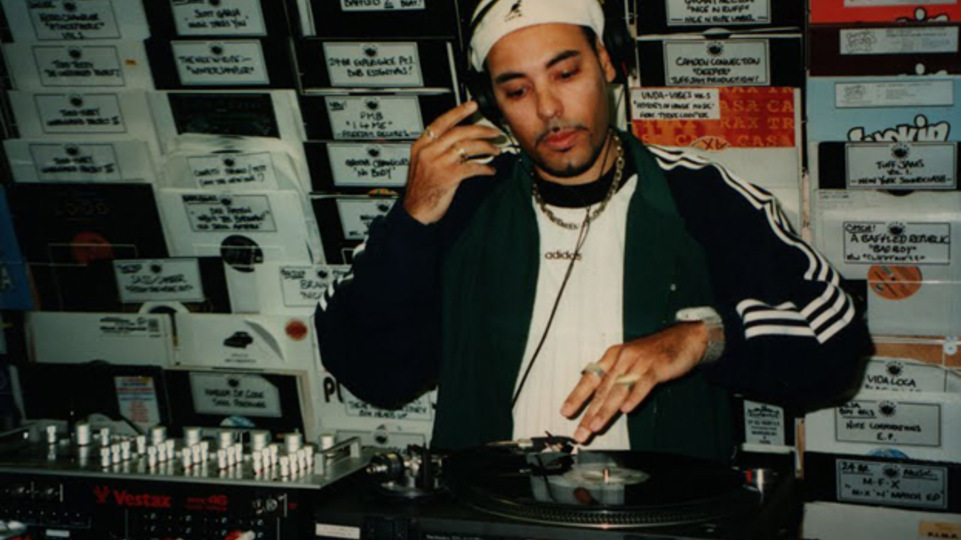
Another Chance, by Roger Sanchez (his 1st and only #1)
1 week, from 8th – 15th July 2001
But if 2001’s dance #1s are anything to go by, house is making a comeback. And I always feel that house music sounds good for setting a tone, giving a bar a vibe, soundtracking a sunset cocktail… But that it lacks the oomph to stand out. And I feel it here, once again, as I let ‘Another Chance’ wash over me. Perfectly pleasant, fairly up-tempo, full of lush, dreamy touches; but nothing to grab a hold of.
The vocals are deep in the mix, and filtered through several layers of echoing reverb. Does the song title feature? I had genuinely no idea. Turns out it does, because this is built around a sample of Toto’s 1982 hit ‘I Won’t Hold You Back’, featuring the line If I had another chance tonight… which I didn’t recognise because eighties soft rock leaves me as cold as house music.
Of course we’re not meant to be singing along to a song like this, so the lyrics don’t really matter. It begs the question though, who feels compelled to buy records like this? What do you get out of listening to this on your home stereo rather than a nightclub’s speakers? It does have a nice couple of drops, and I like the wistful piano line that briefly takes over, but other than that…
And yet if writing this blog has taught me anything, it’s that I don’t always understand the motivations of the British record buying public. And this record is far, far from their worst offence. It’s just not my thing. Roger Sanchez did well off it anyway, scoring by far his biggest hit. He has produced and remixed for a star-studded array including Diana Ross, Kylie, Madonna and No Doubt (his remix of ‘Hella Good’ won a Grammy). He remains a DJ, and has maintained an Ibiza residency every summer since 2000.
Every time I come across a #1 that I haven’t heard before I assume it will be the last such occasion. And I genuinely thought that I would have remembered something – a chorus, a line – from every 21st century chart-topper. But no, Hear’Say’s second number one has me stumped.
The Way to Your Love, by Hear’Say (their 2nd and final #1)
1 week, from 1st – 8th July 2001
Though it makes sense that this was such a flash in the pan, and has been completely forgotten. The knock-off Max Martin production (Britney wouldn’t even have had this as an album track), the predictable chord progressions, lyrics like your heart is my home… It’s just so damn basic. If this is the best the year’s big new pop group can do for their second single then you start to fear for their longevity…
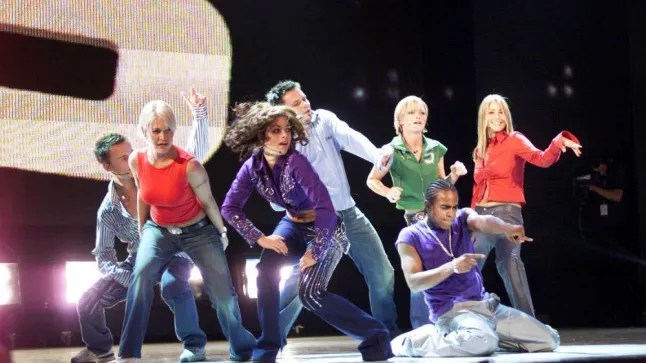
The two boys in the band, Noel and Danny, take more of a lead role here. And while I don’t want to be mean, I always thought they looked like two of the least likely pop group members ever. The three girls? Fine. I can see them as a sort of Atomic Kitten level girl group. But those two boys look more suited to refitting your kitchen. They can sing though – they all can sing, having gone through multiple audition rounds on ‘Popstars’ – and don’t let the side down.
Midway through, the song improves slightly, and morphs into a peppy Disney theme. A straight to VHS Disney movie, maybe. It’s still undeniably lame. And although this made number one, it did so on fairly low sales and went on to be the second lowest selling chart-topper of the year, ahead only of J-Lo’s January #1 ‘Love Don’t Cost a Thing’. Most tellingly, it sold but a tenth of ‘Pure and Simple’s total.
Hear’Say would release only one more single (the #4 hit ‘Everybody’) before the ‘Popstars’ winning line-up was ripped in two by Kym Marsh’s departure in January 2002, citing a rift in the group. She was quickly replaced, by backing dancer Johnny Shentall, for one final single. By then, public opinion against the group had turned, and they were being booed off stage and harassed at motorway service stations. They called it quits in October 2002, just twenty months after launching.
Of the five, Kym Marsh and Myleene Klass launched solo music careers (Marsh making #2 in 2003 with ‘Cry’ and Klass releasing two classical crossover albums) before moving into TV, acting and presenting. Suzanne Shaw went into stage and screen acting, as did Noel Sullivan, who I’m pretty sure I saw playing Danny in ‘Grease’ in the West End. Danny Foster is a wedding/pub singer. And to be honest, that all counts as a fairly successful end for a bunch of reality TV show contestants. Far sadder post-fame tales have been told…
I’ve been threatening this post for quite a while, and I’m sure many readers didn’t take those threats seriously. To them, all I can say is sorry. Never again will you underestimate this blogger’s love for some cheesy pop. Time to begin, so count me in…
Steps were a near-permanent fixture on the singles chart between 1997 and 2001, managing two number ones. Sadly, both of their chart-toppers were fairly average (‘Tragedy’/’Heartbeat’ and ‘Stomp’) while many of their near misses – they had five singles that peaked at #2 – are classics of their time and genre. The turn of the 21st century was a time when disposable, teeny-pop acts were ten-a-penny. But Steps still managed to carve their own niche. They weren’t cool, they weren’t sexy, they weren’t particularly down with the kids. They were camp, and catchy. Who were Steps’ fans? Was their continued success all the fault of gay men? (Probably, yes.)
You may be relieved to hear that I won’t do my usual Top 10 today. I’ll restrict it to a Top 5. But, what a five! Five bubblegum classics of the fin de siecle, and I will entertain no arguments to the contrary…
‘Last Thing on My Mind’ – #6 in 1998
I don’t think many people expected Steps to have any sort of career beyond their debut hit: the ultra-cheesy, line-dancing meets techno ‘5, 6, 7, 8’. But lo and behold, they returned with a proper pop song, combining an ABBA-esque piano line with a cheap and frothy chorus. And the revelation that at least two of the five, Faye and Clare, could actually sing! ‘Last Thing on My Mind’ had originally been recorded by Bananarama in 1992, but had stalled at #72. That version is even more indebted to ABBA, while the song’s author Pete Waterman has claimed it was inspired by Mozart. A bold claim, but I’ll buy it.
‘Better Best Forgotten’ – reached #2 in 1999
One of five Steps singles that fell a place short of top spot, ‘Better Best Forgotten’ is another ABBA(ish) melody with lots of late-nineties dressing. Please bear in mind that by constantly bringing up ABBA I am not being so bold as to claim Steps were in any way comparable to said Swedish Gods and Goddesses, but that the influences were clear… Meanwhile I can’t explain it, but the key change just before the chorus here is hands down the gayest moment in popular music.
‘A Deeper Shade of Blue’ – reached #4 in 2000
The 4th single from their second album was a slightly cooler affair, with an Italo-house beat and some dance diva vocals from Claire. It was another track originally recorded by someone else – in this case Tina Cousins – but Steps stepped in and made it their own. Musical vultures! It is more mature, and more sophisticated, than much of Steps’ earlier work.
‘One for Sorrow’ – reached #2 in 1998
There is a beauty about early Steps videos, which rival the cheapest of stock karaoke videos. Here they cycle, have a kickabout, and generally frolic in long grass and sunflowers somewhere in Italy. And the song is a melancholy dance classic, with the melody deeply in debt to… well, you know who it’s in debt to. Another thing to note is Steps’ consistent dedication to wordplay: One for sorrow, Ain’t it too too bad… (See also the deeper shade of blue/darker shade of me from the previous entry.)
‘Love’s Got a Hold of My Heart’ – reached #2 in 1999
For me, this is peak Steps. All boxes ticked. A candyfloss chorus. A Eurotrash beat. Cheesy dance routine on a pier (all while dressed in canary yellow). Claire absolutely belting it out (the way she lets rip on the resigned to my fate… line is a chef’s kiss moment). It lacks the usual hint of melancholy – making it one of their least ABBA-aping singles – and it sounds excactly like you’d expect Steps to sound, had you only ever seen a picture of them.
If you made it this far through the post, I salute you. Thanks for humouring me. I realise that Steps are written off by many as cheap tat, indicative of a time when pop was at its most disposable. And maybe it’s nostalgia for my youth (though I’d never have admitted to liking Steps at the time!), but I do think the five songs included here deserve their place in the pantheon of pop. Maybe not on the same floor, or even the same wing, but definitely in the same building as the likes of Kylie, or Madonna, or even, yes, ABBA.
Steps split on Boxing Day 2001, but reformed a decade later and have been touring and recording ever since, releasing some pretty decent dance-pop tracks. For reasons that I don’t quite understand, they seem to have acquired Michelle Visage as a part-time sixth member. There’s clearly a lot of people who still hold some affection for Steps. Including me. And I make no apologies for it!
First thing to note here is that, despite changing my recaps from every thirty to every fifty, we have still covered barely a year’s worth of number ones. March 2000 to June 2001. We have been through the longest stretch of one-weekers in chart history (twelve), with another run of ten for good measure. In total, an amazing thirty-eight of the past fifty #1s stayed on top for just one week. (And, fittingly, one of those was called ‘7 Days’.)
What treats has this hectic turnover brought us, though? What have been the main themes of the past fifty? Well, I’ll start by saying that while I hated the fast turnover at the time, I’ve enjoyed covering it in blog terms. There was a lot of variety – some good, some bad, some so-so – and variety is, as they say, the spice of life. And I’d say that the two main themes have been 2-step garage, and nu-disco.
Garage has been the most pervasive, probably, with that 2-step beat appearing on fairly hardcore rap numbers by Oxide & Neutrino and DJ Pied Piper, as well as poppier offerings from Craig David, and even Bob the Builder’s Christmas #1. While many of my favourite recent #1s have owed a debt to disco: Madison Avenue, Spiller, even S Club 7. While Steps, God love ‘em, scored their second chart-topper with a full-on disco extravaganza. In fact, I think Barry White and Chic have appeared on at least four recent #1s between them, all sadly uncredited.
In pop terms, we’ve slowly been moving away from that Max Martin, uber-pop sound that typified the turn of the millennium to the lighter, more R&B inflected stylings of Destiny’s Child and Jennifer Lopez. Still, there has been plenty of the former too: Britney, and LeAnn Rimes, and some decent British attempts to keep up from Billie Piper and A1.
There’s been some very modern hip-hop, not least the introduction of the biggest rap artist of all time. ‘The Real Slim Shady’ felt like a game changing arrival, with precision delivery, cutting insults, and the most swears ever heard in a number one to date. Then came ‘Stan’, and proof that Marshall Mathers wasn’t just here to piss your parents off.
What of rock music? Well, it still has a pulse, just about. If you consider Limp Bizkit – our first and only nu-metal #1 – worthy of following in the tradition of earlier rock chart-toppers. Or U2, who made a grab for stadium-filling ubiquity with ‘Beautiful Day’, selling a lot of records but leaving me cold. Apart from that, the next most rocking chart-toppers were probably from the Corrs and Emma Bunton, and (as good as those two records are) if they’re representing the rock faction then the genre is probably on life-support…
In other news, we’ve bid farewell to the Spice Girls, both as a group (with the dull ‘Holler’) and as a solo concern. Their recent solo #1s have been eclectic, from Geri’s camp fluff to Mel C’s trance banger. We’ve also welcomed back the icon that is Ms Kylie Minogue for her huge second act, and while ‘Spinning Around’ isn’t a favourite of mine it is always good to have her in the conversation. There’s also been a second (or is it third?) act for Shaggy, with the highest-selling single out of the past fifty, and the last appearance of Queen on this countdown. Though the less said about that the better… And, of course, there’s been a lot of Westlife. Four out of the past fifty to be exact. And I will hold my hands up and admit to enjoying at least one of them.
Before we get to the awards, we have to mention possibly the most significant of all the recent chart-toppers: the first reality TV #1, from Hear’Say. ‘Pure and Simple’ was an okay pop song, but what it represents is actually quite terrifying. The first tremor from a fifty-plus chart-topper mega-quake…
To the latest awards, then. The 28th edition. And it’s the Meh Award that we grapple with first. What has been the least memorable of the past fifty? My shortlist includes a couple of low-key house #1s from Chicane and Rui Da Silva, as well as whichever of the four Westlife hits took my fancy. But instead I’m going to betray ten-year-old me and give it to the Spice Girls, for the double-dullness that was ‘Holler’ / ‘Let Love Lead the Way’. From the zany fun of ‘Wannabe’ to carbon-copy R&B. How the mighty fell.
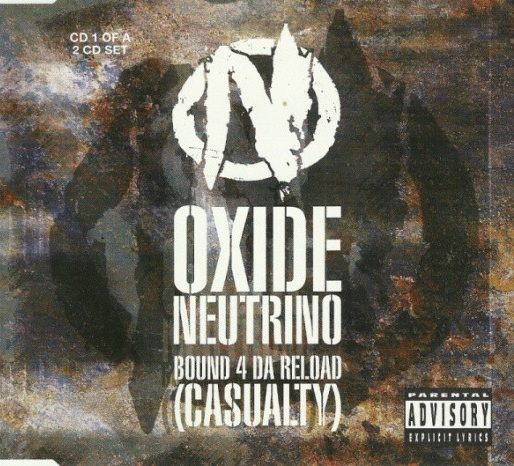
There are a decent bunch of candidates for this WTAF Award too. The ‘Casualty’ and Guy Ritchie sampling ‘Bound 4 da Reload’. Or the fake Barry White on ‘You See the Trouble With Me’? Or the incongruity of Five and Queen sharing a stage (with the background stylings of Freddie Mercury slowly rotating in his grave)? Or should I give it to the nu-metal #1? I’m probably going to reveal my struggle with garage as a genre over the next couple of awards, but I’m giving this one to Oxide & Neutrino.
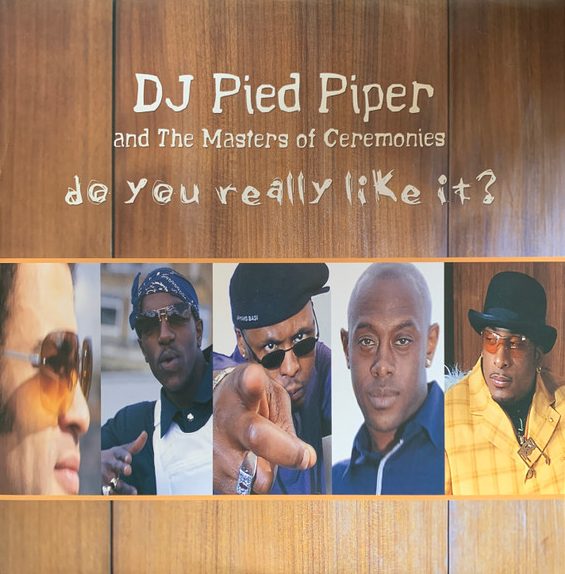
Which means that The28thVery Worst Chart-Topper must be the truly execrable ‘Do You Really Like It?’ (no we really do-on’t) by DJ Pied Piper and his Masters of Ceremonies. Worse even than A1’s borderline criminal cover of ‘Take on Me’. I did briefly consider giving this to ‘Beautiful Day’, just to really put the cat among the pigeons, but that would have just been petty. Plus I’m fairly sure Bono doesn’t actually read this blog.
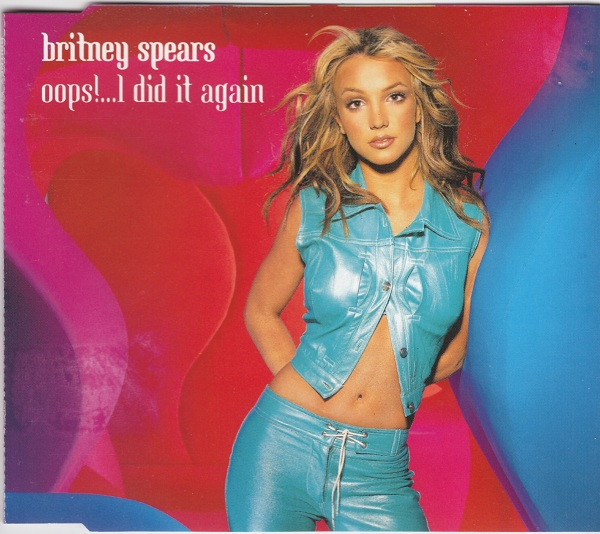
We end, as per tradition, with The Very Best Chart-Topper Award. I have a shortlist of five. That’s probably more of a longlist, to be fair, but they are… ‘Oops!… I Did It Again’, by Britney. ‘Groovejet’, by Spiller and the delectable Sophie E-B. All Saint’s ‘Black Coffee’, which I’ve always rated higher than the better-remembered ‘Pure Shores’. ‘Stan’, by Eminem. And the irresistible ‘Don’t Stop Movin’’.
‘Oops!…’ for the nostalgia factor. ‘Spiller’ because no other #1 sums up the turn of the millennium better. ‘Black Coffee’ because All Saints are just generally underrated. And ‘Don’t Stop Movin’’ because it’s great pop. So, by that barometer, I should give it to S Club, as the most lacking in ulterior motive. But over them all looms ‘Stan’. Not a particularly enjoyable number one. Not one I long to hear very often. By an artist that I have my moral struggles with. But it’s a towering work of art, not something you can say about many pop songs; and art should sometimes by unpleasant and confronting. So I think I’m going to go with my head here, and name ‘Stan’ as the latest Very Best number one.
To recap the recaps:
The ‘Meh’ Award for Forgettability
‘Hold My Hand’, by Don Cornell.
‘It’s Almost Tomorrow’, by The Dream Weavers.
‘On the Street Where You Live’, by Vic Damone.
‘Why’, by Anthony Newley.
‘The Next Time’ / ‘Bachelor Boy’, by Cliff Richard & The Shadows.
‘Juliet’, by The Four Pennies.
‘The Carnival Is Over’, by The Seekers.
‘Silence Is Golden’, by The Tremeloes.
‘I Pretend’, by Des O’Connor.
‘Woodstock’, by Matthews’ Southern Comfort.
‘How Can I Be Sure’, by David Cassidy.
‘Annie’s Song’, by John Denver.
‘I Only Have Eyes For You’, by Art Garfunkel.
‘I Don’t Want to Talk About It’ / ‘The First Cut Is the Deepest’, by Rod Stewart.
We are officially 900 number ones not out! Thanks to everyone who has ever read, commented, liked and followed. I’m not sure that I ever imagined when I started writing these posts back in November 2017 (!) that I’d ever get this far. But, to paraphrase an old football cliché, I’ve just been taking it one number one at a time…
Lady Marmalade, by Christina Aguilera (her 2nd of four #1s), Lil Kim, Mýa & Pink (her 1st of three #1s)
1 week, from 24th June – 1st July 2001
Our 900th is not the most original of chart-toppers, a cover of ‘Lady Marmalade’ coming barely three years on from the last chart-topping cover of ‘Lady Marmalade’. Have two other versions of the same song ever made #1 so close together? Anyway, while All Saints’ take played fast and loose with the LaBelle original, this all-star re-imagining is much more faithful.
One big difference, though, is that Lady Marmalade no longer plies her trade down in old New Orleans. She’s been transferred to the Moulin Rouge in Paris, just in time for the big glossy Baz Luhrmann movie musical of the same name. Different brothel, same story. Kitchy kitchy kitchy yaya dada. Mocha chocolatey yaya… Voulez-vous coucher avec moi ce soir?
It would be easy to look down on this OTT, fairly superfluous take on a seventies classic, in which four bad-ass chicks from the Moulin Rouge try to out-diva one another. And I won’t claim that it is better than LaBelle’s. But I enjoyed it back in 2001, and I still do enjoy it now. It strips all subtlety from what was already a fairly unsubtle song, adds a grinding industrial synth riff, and some well-placed cowbells. Mýa warms things up with the first verse, Pink (feeling quite out of place here, and in her suspenders in the video) ups the ante with the second. Clearly things were being set up for Christina, by far the biggest name of the four at the time, to blow everything out of the water for the finish.
Except, for my money, the show is stolen by Lil Kim’s rapped verse, the song’s one big change from the original, in which she delivers the immortal line: We independent women, Some mistake us for whores, I say why spend mine, When I can spend yours…? It’s a very modern female rap, a full decade ahead of Nicki Minaj and Cardi B, that even Xtina’s explosive belting can’t overshadow. But boy, does she try. And it works, doesn’t grate, because, again, this ain’t the time for subtlety.
This record is a lot like the movie it came from, and like a lot Baz Luhrmann’s filmography: good fun, as long as you don’t stop and think about it too much. My biggest issue with it is why Missy (Misdemeanour here) Elliott, who acts as the MC for the outro, doesn’t get a credit, and therefore her second number one single?
It’s been customary, every hundred number ones, for me to look back at the marker posts that have gone before. But there’s a recap up next, and I’d like to save any retrospection for then. What is worth noting is how short the gaps between each hundred are getting. There were over seven years between the first chart-topper and the hundredth (November 1952 to April 1960), but less than three between numbers 800 and 900 (September 1998 to June 2001).
Shaggy’s three chart-toppers so far have been largely upbeat, get your ass to the dancefloor type reggae-pop songs. Here then is his final UK chart-topper, and it’s much more of a slow jam…
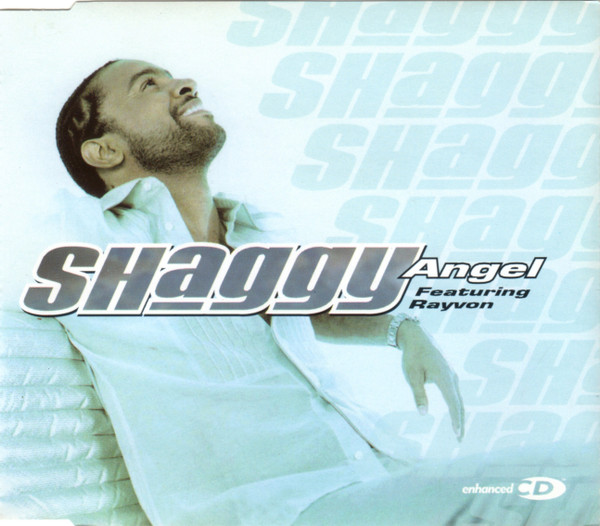
Angel, by Shaggy (his 4th and final #1) ft. Rayvon
3 weeks, from 3rd – 24th June 2001
‘Angel’ weaves the bass line from a seventies classic (and nineties #1) – ‘The Joker’ – together with the melody from a sixties original (and big eighties hit) – ‘Angel of the Morning’. And it would be a stretch to suggest that it improves on either. It’s cloying, it’s simplistic. It’s not quite a novelty, but it’s not far off.
Shorty you’re my angel, You’re my darling angel, Closer than my peeps you are to me… It sounds touching, if a little clumsy. Like a love letter written by a thirteen-year-old to his girlfriend. Which I’m assuming was also largely the market age for this ditty.
But listen closer, and this isn’t quite as sweet as the chorus suggests. Life is one big party when you’re still young, But who’s gonna have your back when it’s all done…? It’s all good when you’re little, You have pure fun, Can’t be a fool son, What about the long run? It turns out that Shaggy was dismissive and unfaithful towards his ‘angel’ for years, but as he got older and the fun times ended he realised he needed a steady girl… Now he wants to show the nation his appreciation.
Still, let’s hope that she had a bit of fun while she waited for her man to come to his senses. This is the flip-side of the same alpha bullshit we had on ‘It Wasn’t Me’, which I didn’t mind when it was played for laughs, but when it aims for sincerity it falls short. Plus it doesn’t help that Shaggy’s voice starts to grate the further he gets from his reggae roots. What was a playful patois on ‘Oh Carolina’ and ‘Boombastic’ now sounds a bit forced on a more straightforward pop song.
Luckily he has Rayvon on duty for the chorus, and he has a nice, slightly tender, voice for it. He had previously starred on Shaggy’s 1995 Top 10 cover of Mungo Jerry’s ‘In the Summertime’. And again, we should take a moment to appreciate the impressive spread of Shaggy’s chart-toppers. There were over eight years between ‘Oh Carolina’ and this, and there aren’t many other chart veterans from February 1993 who were still hitting it in the summer of 2001.
His hit making days were almost up, however. He managed three further Top 10s, including a comedy #2 alongside Ali G, ‘Me Julie’. He has released eleven albums since 2001, including one with none other than Sting in 2018. Shaggy continues to be very active then, as does Rayvon, who remains a dancehall/reggae voice for hire.
Our next number one poses us a couple of questions… Do you really like it? Is it, is it wicked? And if these questions refer back to said next number one then my answers are no, and NO.
Do You Really Like It?, by DJ Pied Piper & the Masters of Ceremonies (their 1st and only #1)
1 week, from 27th May – 3rd June 2001
It’s hard to underestimate how much, back in 2001, this song’s hook became engrained in the popular conscience. We’re lovin’ it, lovin’ it, lovin’ it… We’re lovin’ it like that… It’s also hard to underestimate how annoying it became. Or maybe it isn’t hard. Maybe all it will take is one listen for the uninitiated to realise how terrible this record is.
At least the Do you really like it? and the Lovin’ it, Lovin’ it sections are memorable. They’ve been living rent free in my mind since I was fifteen. They’re only ten percent of this song, though. And I never realised, or had blanked out, how bad the rest of this record is: repetitive, nonsensical, unlistenable, with ugly, lurching changes in direction and tempo that make it difficult to even call it a song.
I thought that Oxide and Neutrino’s ‘Bound 4 da Reload’ was a low-point for 2-step garage, but I think that ‘Do You Really Like It?’ is even worse. At least the former had a kind of novelty value in the ‘Casualty’ theme sample, and the sweary spoken word bit from ‘Lock, Stock and Two Smoking Barrels’. Not a song I’d ever want to hear again, but sort of amusing at the same time. This though… Yeesh.
Though it is interesting how that 2-step beat has become a sort of early 2000’s shorthand, used by everyone from Craig David, to Bob the Builder, to this. And how garage can be incredibly hardcore, like I suppose this is, and also very poppy. DJ Pied Piper was the main driver behind this song, and was joined by four Masters of Ceremonies: MC DT, Melody, Sharky P and the Unknown MC. Maybe that explains its messiness, with all five members given their slot in which to impress. Sadly none of them do.
They got back together for one further single, ‘We R Here’, later in the year, but that failed to chart completely. And so DJ Pied Piper and the Masters of Ceremonies go down as gold star one-hit wonders. We will, however, have to grapple with further garage records in the near future. We can say with some confidence that none of them will be as bad as this.
Earlier this week the sad news of Connie Francis’ death was announced, aged eighty-seven, closing the door on yet another chapter from the earliest chart years. There can’t be many, if any, older chart-toppers than Francis still around… And there were precious few women, either, who were scoring rock ‘n’ roll hits and competing with the big male stars of the late fifties.
Francis scored two huge, six-weeks-apiece #1s in 1958, the sassy ‘Who’s Sorry Now’ and the whipcracking ‘Stupid Cupid’ (twinned with ‘Carolina Moon’). I also covered her 1960 hits ‘Mama’ and ‘Robot Man’ as a Random Runner-Up. Follow those links to hear those tunes, and to read my original posts. But since writing those posts – and this has been one of the best things about doing this blog, discovering artists’ non-chart topping back catalogues – I’ve fallen in love with many of Connie’s other hits. So let’s share some here, in her memory.
‘Lipstick on Your Collar’ – #3 in 1959
I love the camp melodrama of this bop, about a cheating boy given away by lipstick smudges. How does Connie know the lipstick isn’t hers? Well, eagle-eyed, she notices his is red, while hers is baby pink. Coleen Rooney eat your heart out. Turns out that floozy Mary Jane had been smooching her man right outside the juke joint. But, as with so many of her early records, Connie does not wallow in heartbreak. In fact, she seems almost thrilled to have rumbled him…
‘Plenty Good Lovin” – #18 in 1959
A similarly uptempo, more swinging, hit from the same year. And this one is positively raunchy by 1959 standards. In fact, I’m not sure Connie isn’t simulating orgasm during the break in the middle… She sings the praises of a man who doesn’t have a nice car, can’t play guitar, is neither intelligent nor particularly good-looking, but who’s got somethin’ that’s better by far… I mean, gurrrrlllll… Plenty of things that he don’t know, But this boy shines when the lights are low…
‘Everybody’s Somebody’s Fool’ – #3 in 1960
Her first US #1, and in fact the first Billboard Hot 100 number one by a female singer (the chart having launched well over a year earlier). Which just goes to prove how impressive Francis’s hit making was, stacked against the likes of Elvis, Pat Boone, Ricky Nelson and co. I love the honky-tonk feel to this, with the rolling organ and the rickety, country beat, and her voice drenched in echo.
‘Where the Boys Are’ – #5 in 1961
Francis made her acting debut in 1961, in the movie ‘Where the Boys Are’. And the title track gave her another big hit, proving that she could sing something a little more traditional to go along with all the rock ‘n’ roll. In 1978, as she was attempting a career comeback, Connie recorded a disco version. If that doesn’t grab you, how about a Japanese version? Today’s female stars could only dream of such versatility.
‘Vacation’ – #10 in 1962
Despite not having an original bone in its body, and already sounding dated in 1962, I love this throwaway tune. ‘Vacation’ was Francis’s last Top 10 hit in both the US and the UK, as the Merseybeat acts prepared to render so many stars obsolete. But it’s hard not to get carried along with this record’s exuberance. Maybe because I’m an English teacher in my day job, I’m instinctively drawn to songs that spell words out in the lyrics. Similarly, it’s probably why I’m drawn to songs about the summer holidays. So this one works for me on many levels.
‘Pretty Little Baby’
It would be wrong to finish without mentioning her final ‘hit’. ‘Pretty Little Baby’ was a B-side back in 1962, but in recent months you’ll surely have heard it if you’ve spent any amount of time scrolling on Instagram or TikTok. In one of her final interviews, Francis claimed to have forgotten of the song’s existence, but that she was touched by its resurgence, and how even kindergartners now know her music. Back to teaching for a moment, I can attest to this as I have a student who has been singing this to himself for several months now… Musically this is cute, and I love whatever early electronic device the solo was recorded on.
From the mid-sixties onwards the hits dried up, and Connie Francis’s personal life took several dark turns. The Guardian published a good article on her many highs and lows yesterday, and she became an advocate for mental health following various traumatic experiences. Having read that, it feels impressive that she lived such a long life and fulfilled life. She returned to music, and only officially retired a few years ago.
Connie Francis, December 12th 1937 – July 16th 2025
Providing the meat in an S Club sandwich, Geri Halliwell returns for her fourth and final solo chart-topper. It is also, sadly, our very last Solo Spice number one.
It’s Raining Men, by Geri Halliwell (her 4th and final solo #1)
2 weeks, from 6th – 20th May
But… Is this a case of saving the worst for last? I’ve found something to enjoy in all seven of the Spice Girl’s previous solo #1s, which have spanned a variety of genres, from hip-hop to trance. But I find Geri covering ‘It’s Raining Men’ to be a step too far.
It’s not just that it’s yet another inferior cover of an eighties classic, after similar recent efforts from Westlife, A1, and Boyzone. It’s also not just that it’s another classic #2 being belatedly taken to the top, after 911, Madonna, and Westlife (again). These things don’t help, but this cover feels even more tired than many of those earlier refits.
I think it’s more of what I complained about in Geri’s previous #1, ‘Bag It Up’, in which she was so blatantly chasing the pink pound that it was becoming a bit embarrassing. And what could be more gay-baiting than covering ‘It’s Raining Men’? Like I wrote in that post, she already had gay icon status. She was a Spice Girl, for God’s sake! She didn’t need to try so hard.
Anyway. She decided (or was asked) to cover this camp classic. Very well. But it’s so half-arsed. It’s missing the original’s sassy ad-libs (how low, girl? and the like). It’s missing the thunderclaps. And she gives the song’s best line – I’m gonna go out, I’m gonna let myself get, Absolutely soaking wet – neither the gravitas nor the commitment it deserves. I don’t believe for one second that Geri is excited about this extreme weather event. Whereas, in the original, I fully believe that the Weather Girls were two thirsty bitches ready to rip off their roofs and stay in bed. The lowest point comes when Ginger finally does try her own smutty ad-lib, and it’s genuinely cringey. Go get yourself wet girl, I know you want to… No, Geri. We don’t.
Other than that, it’s a fine record… Joking aside, it was the lead from her second solo album, as well as being from the soundtrack to the second ‘Bridget Jones’ film (from memory, it soundtracks Hugh Grant and Colin Firth beating each other up in a fountain). It was probably always destined to be a huge hit, and was the only one of her four #1s to spend more than a week at the top. But it was the beginning of the end, as none of the album’s subsequent singles got higher than #7.
I feel I’ve been a bit harsh of ol’ Gezza here. She remains my favourite Spice Girl. She remains an icon. And in fact, her best record was yet to come. She had one final LP, 2005’s ‘Passion’, from which the lead single was ‘Ride It’: her truest, campest classic. She always had it in her, she just didn’t have to try so hard…
If anyone’s interested, my solo Spice Girls singles ranking goes (from worst to best): ‘It’s Raining Men’ > ‘Never Be the Same Again’ > ‘Lift Me Up’ > ‘Bag It Up’ > ‘I Want You Back’ > ‘What Took You So Long?’ > ‘Mi Chico Latino’ > ‘I Turn to You’.
The ‘Fame’ referencing video, over which a lot of fuss was made at the time about Geri’s eye-catching, yoga-based weight loss.Just the song below:
So far, S Club 7 have teased us with their two number one singles: a cheesy TV show theme, and a festive ballad. Okay records, but no real proof of why they were the turn of the century’s finest tween-pop bubblegummers.
Don’t Stop Movin’, by S Club 7 (their 3rd of four #1s)
1 week, from 29th April – 6th May / 1 week, from 20th – 27th May 2001 (2 weeks total)
Until now. Because here is their undisputed (by me) best song: an unapologetic disco-pop banger. Uncontrollably catchy, unarguably wholesome, utterly lacking in edge. But who needs edge? Not S Club. Not anyone, really, when they have such a complete and utter floor filler. I can genuinely not imagine a party where ‘Don’t Stop Movin’’ would not get people dancing (and if there is then I don’t want invited).
Musically, this smooshes the past twenty-five years of pop music into a blender and comes up with a balance that works. The strings are disco, the beat is a ‘Billie Jean’ rip off (not a sample, as some claim), and the chorus is pure nineties bubblegum. For 2001, you could claim that it sounds old-fashioned. I’d rather go with ‘timeless’. There’s even a vocoder, for the fabulously naff Don’t stop movin’ to the S Club beat… coda, giving things that Daft Punk chic.
Bradley McIntosh is on lead vocals here, for the verses. (I have seen Bradley perform this live, and to this date he remains the only chart-topping artist whom I have touched/got an autograph off). Then regular lead Jo takes over for the bridge, which is the part of the song that seals its classic status. And which, listening to it now, owes a big debt to Madonna’s ‘Vogue’. Right here on the dance floor is where you got to let it go… Her vocals ahead of the final chorus are actually fairly spectacular.
I often claim that British pop songs lagged behind their US cousins at this time, which they did. But ‘Don’t Stop Movin’’, while completely British in its production and tone, can compete in terms of quality with almost anything that Britney was putting out at this time. And if I had to choose between this and the overly earnest Destiny’s Child record it knocked off top spot then there’s no contest.
There will be those that argue for ‘Reach’ as S Club 7’s best song, and it is a debate that causes deep divisions. ‘Reach’ is a great pop song, if a little too goody two shoes for my liking. But the real reason why ‘Don’t Stop Movin’’ is S Club’s greatest song, and not ‘Reach’, is that while both could happily be played at a primary school disco, only one could be played in a respectable nightclub. This one.










 The UK Number Ones Blog