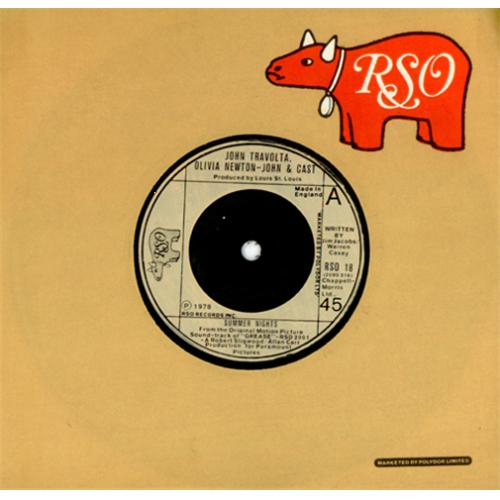
424. ‘You’re the One That I Want’, by John Travolta & Olivia Newton-John

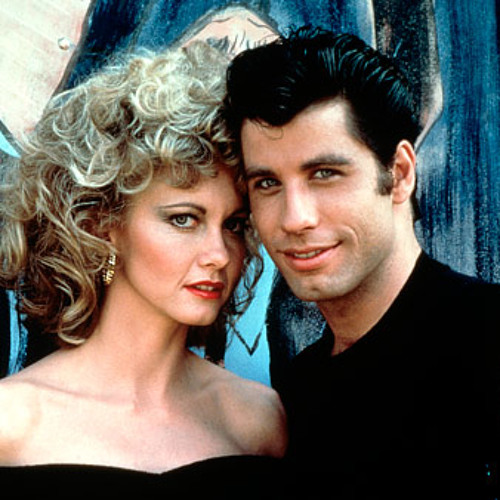
Picture the scene… It’s the last day of high school. A carnival has pitched up on the football pitch, as carnivals do. Rydell High bad-boy Danny Zuko, having ditched his leathers for a Letterman, turns to see his good girl gone bad… “Sandy!?” he exclaims.

For there she stands, head to shoulders in tight, tight black. Hair permed, ciggie dangling from her mouth. Sandra Dee is dead. The Pink Ladies gasp, the T-Birds wolf-whistle… “Tell me about it… Stud!”

You’re the One That I Want, by John Travolta (his 1st of two #1s) & Olivia Newton-John (her 1st of three #1s)

9 weeks, from 11th June – 13th August 1978

This record hit #1 a full seven and a bit years before I was born, but very few of the #1s we have met, or will meet, hit the ‘childhood memories’ button quite like this. ‘Grease’ was my favourite movie as a kid (I would sometimes pull a sickie from school just because I fancied watching it), and I still love it as an adult. I can quote from it like no other movie. “A hickey from Kenickie is like a Hallmark card…”, “They’re amoebas on fleas on rats…” “Maraschino… Like the cherry…”

What’s instantly clear is that this record, unlike some earlier soundtrack chart-toppers, works just fine out of context. The lyrics are stock-standard pop, the music a disco-ish reimagining of fifties rock ‘n’ roll: I got chills, squeals John Travolta in the iconic opening line, They’re multiplyin’!

You better shape up, Cos I need a man, Who can keep me satisfied… I guess you could read this as a feminist statement: little, shy, pushed around Sandy is finally in charge. Except she’s had to change her clothes, her hairdo, and her moral standards to get there. To my heart I must be true… she sings. Really, Sandy? Meanwhile, Danny slings the straight-laced Letterman jumper off before the first chorus hits.

Actually, I love the ending to ‘Grease’. I love that Sandy goes sexy. Good guys (and girls) do finish last! I also love the way John Travolta dances as if he’s been whacked over the head, almost slithering after Olivia Newton-John onto the fairground ride. This is the second #1 of the year to have featured in one of his movies, although he didn’t have any singing duties on ‘Night Fever’. One thing this record is missing, sadly, is his ‘Waaaaah!’ after the Feel your way… line. It’s the little things…

‘You’re the One That I Want’ is not my favourite song from ‘Grease’ – it’s not got the bite of ‘There Are Worse Things I Can Do’, the chorus of ‘Hopelessly Devoted to You’, or the laughs of ‘Beauty School Drop-out’, but I can understand why it was the giant hit, the (almost) closing number released as the movie topped the box-office charts. I can also understand why some people think ‘Grease’ is a terrible film (objectively, it may well be). But to ten-year-old me, fake coughing on the sofa, wishing I were Kenickie (or Rizzo), it will always remain a stone-cold classic.

As with Boney M last time, and Wings not so long before, this is one of the best-selling singles of all time in Britain. The 5th best, to be precise. John Travolta has one of the best singles chart records of all time: he’s featured four times, and two of those songs are million sellers. The second of which, from the very same movie, will be coming along in a tick…

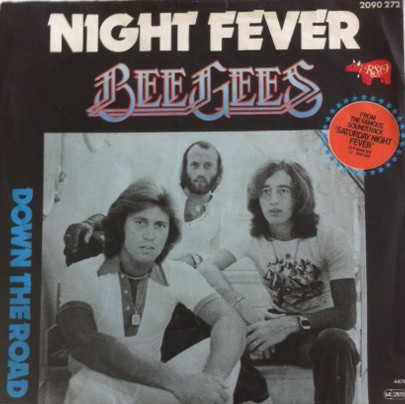
422. ‘Night Fever’, by The Bee Gees

Some songs from the mid-to-late seventies have a whiff of disco about them: subtle grooves, funky guitars, a nod to the disco-ball… While some songs of the time are drowning in the stuff, as the genre comes close to imploding in a cloud of glitter. Can you guess which camp this next #1 falls into?

Night Fever, by The Bee Gees (their 3rd of five #1s)

2 weeks, from 23rd April – 7th May 1978

The Bee Gees are back, and they’ve gone for a pure and utter disco approach. The guitars go chucka-chucka, the strings swirl, things go ‘ting’… And then there’s the falsettos. Night fever, night fe-ver… By now these voices have gone beyond parody, but here in the moment it really hits you. We know how to show it… (Not that this was a comeback single for the band – they’d been ‘disco’ since ‘Jive Talkin’ came out in 1975.)

Nothing about this song, though, hints at the band who scored their first couple of #1s in the late sixties. In a blind listening test, I doubt anybody would think this was the band that recorded ‘Massachusetts’. And here’s the thing… I thought I’d be finding this song really annoying. This, along with ‘Stayin’ Alive’, ‘Tragedy’ et al are engraved in popular culture: well-loved, but cliched, and very high-pitched. Songs I know but rarely choose to listen to. Yet this is fun – a catchy slice of peak-era disco.

The high-point – in more ways than one! – comes with the bridge. Here I am, Prayin’ for this moment to last… Everything soars: voices, strings and synths… Borne on the wind, Making it mine… It’s a great pop moment, and really conjures up a mood of walking along the street, thinking of the clubs, the cocktails, and the dancing that lies ahead. The only problem is that the vocals go so high that it’s bloody hard to sing along!

‘Night Fever’ was of course from the soundtrack to ‘Saturday Night Fever’ (a film I’ve never actually seen), along with ‘Stayin’ Alive’, ‘How Deep Is Your Love’, and ‘More Than a Woman’ – disco giants the lot of them. The soundtrack was ginormous in the US, with three Bee Gees songs in the Top 10 as ‘Night Fever’ spent eight weeks at the top. It wasn’t quite as big in the UK – we opted to go wild for singles from another movie soundtrack (more on that very soon) – though the soundtrack topped the album chart for months on end.

This record hits #1 just under a decade after the Bee Gees previous chart-topper, ‘I’ve Gotta Get a Message to You’. It’s a long gap, but not the longest so far. That honour goes to Frank Sinatra, and the twelve years between ‘Three Coins in the Fountain’ and ‘Strangers in the Night’. What is impressive is that the Brothers Gibb will take not one, but two, decade-long hiatuses from the number one spot. Few acts have ever matched their longevity…

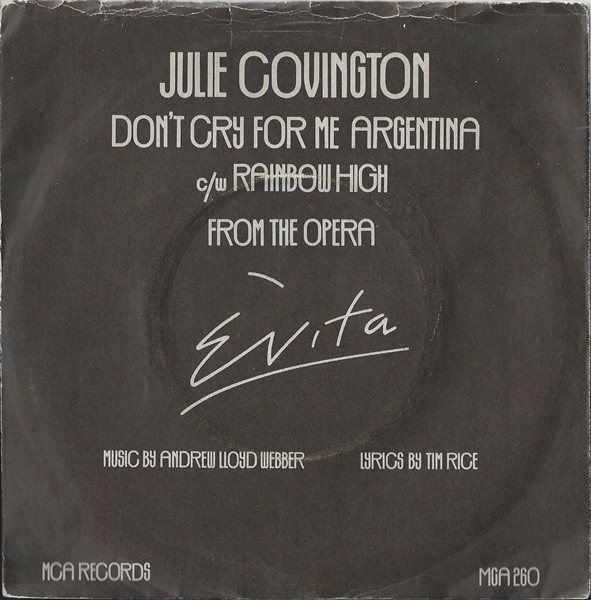
400. ‘Don’t Cry for Me Argentina’, by Julie Covington

Time for a proper show tune! The first, unless I am mistaken, since Shirley Bassey way back in 1961?

Don’t Cry For Me Argentina, by Julie Covington (her 1st and only #1)

1 week, from 6th – 13th February 1977

It’s a long one, too. Five and a half minutes, with nearly a whole minute of portentous introing before Julie Covington actually sings. It won’t be easy, You’ll think it strange… Gosh she sings it proper. When I try to explain how I feel… Musical theatre really stands out against pop songs, belted out as they are with cut-glass diction, aiming for the back row.

We’re approaching two and a half minutes, and still no appearance of the chorus. I have never seen ‘Evita’, neither on stage nor on screen, but I can sing this chorus. (I’ll show my age by saying I’m more familiar with Madonna’s version, which made #3 in 1996.) Come on Julie, love… Don’t cry for me Argentina, The truth is I never left you… It’s a love song, with all the usual trimmings, but about a country!

Show tunes also sound a bit strange divorced from their play, plonked into the singles chart. Who is she, and why is she singing about Argentina? Amazingly, this record was released well before ‘Evita’ debuted on the West End. Nobody had seen the show… and yet there was enough interest in this record to get it to the top of the charts!

To be honest, that first chorus was a bit underwhelming. I’m waiting for her to go around again, to really belt it out for the finale. While we wait – cause this is a record that isn’t afraid to take its time – a little bit of history. ‘Evita’, the musical by Andrew Lloyd-Webber, tells the story of Eva Perón, First Lady of Argentina between 1946 and ’52 and, since her death, official ‘Spiritual Leader of the Argentine Nation’ (with a fair few allegations of fascism thrown in from those who were against her).

Finally, a full four minutes in, and were back at the chorus. I’m ready for Ms. Covington’s big finale. But it never materialises… The orchestra does the soaring, we could be back in the charts of 1954, and I’m left a little bored. What a strange #1 hit… Bring back Dame Shirley. She’d have belted the life out of this.

Julie Covington never actually played Eva Perón on stage – she turned the role down – and when the show finally opened Elaine Paige took the part. Covington was a fixture on the West End stage throughout the seventies and eighties, but doesn’t seem to have done much in recent decades. Andrew Lloyd-Webber’s show tunes will be back, though – off the top of my head I can think of at least two more chart-toppers penned by him.

As this is the 400th (!) number one, I had planned to take stock, to see where we stood in the musical landscape. Except, this is a completely random one-week wonder that has no bearing on the real sound of the mid-seventies. In an ideal world, we could tell the story of British popular music tastes through every hundredth chart-topper. Number 100 would have been Elvis… (It wasn’t, it was Anthony Newley’s clipped and clicky ‘Do You Mind’), 200 would have been The Beatles… (It was! ‘Help’.) 300 would have been something glam… (Instead it was Tony Orlando’s sex-pest anthem ‘Knock Three Times’.) And 400 would have been a disco classic… Instead we aren’t crying for Argentina. Funny old things aren’t they, music charts…?

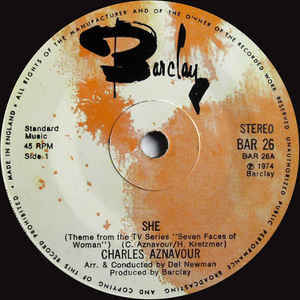
352. ‘She’, by Charles Aznavour

Un chanson, en anglais…

She, by Charles Aznavour (his 1st and only #1)

4 weeks, from 23rd June – 21st July 1974

It’s a simple ballad – a piano, a voice, not much else to start with – about an unnamed woman. She. A bit of a femme fatale, it sounds like. She may be the beauty or the beast, May be the famine or the feast… Not the most flattering lyrics for a love song, you might argue.

The words are crammed into each line, running on slightly, spilling over onto the next, in that way that French chansons do, a la Jacques Brel and Edith Piaf. She who always seems so happy in a crowd, Whose eyes can be so private and so proud… Meanwhile, when the drums come in, it starts to sound like a late Beatles ballad, a ‘Something’, or a ‘Long and Winding Road’.

Charles Aznavour was French-Armenian, and he sings this in heavily-accented English. I’m not sure it would work so well were it sung in straight-forward British or American tones. The Frenchness of it adds glamour, mystery, and romance – all the things that we pasty, repressed Anglo-Saxons associate, rightly or wrongly, with the other side of the channel. I knew this song through Elvis Costello’s late-nineties version and, looking back, it’s not as good simply because he isn’t French.

Not only was Aznavour French, he was also pretty old – he’d just turned fifty when ‘She’ hit the top of the charts, making him… I think… the second oldest male chart-topper, so far, behind Louis Armstrong. He sounds older, even, when he sings, and again this adds to the mystique, to the idea that his life has been plagued-slash-brightened by this alluring lady. It was recorded as the theme to a TV series: ‘Seven Faces of a Woman’ (which can’t have been very memorable, as it doesn’t have a Wiki page) and soared to the top of the charts as a result. Amazingly, this was Aznavour’s second and final chart hit in the UK. Mais, en France…

I would need another article to do his biography justice. A seventy year career taking in 1,200 songs… France’s Sinatra… ‘Entertainer of the Century’ ahead of Elvis… Seller of 200 million records… Performing until a few weeks before his death aged ninety-four! And that’s before you get to the non-musical portion of his life: he sheltered Jews during WWII, he was a National Hero of Armenia, as well as Armenian ambassador to Switzerland, an opposer of far-right politicians, a supporter of LGBT rights before that was the done thing… He sounds like quite the guy. And it just goes to show how insular our Anglo-centric world can be, given that I knew nothing of his life before writing this post!

Follow along with my playlist:

338. ‘Eye Level’, by The Simon Park Orchestra

And now, in a change to the scheduled programming, something slightly different. Don’t adjust your sets.

Eye Level, by The Simon Park Orchestra (their 1st and only #1)

4 weeks, from 23rd September – 21st October 1973

Well, it wouldn’t be the early 1970s if there wasn’t a random instrumental just around the corner, waiting to spend a month on top of the charts… From the Royal Scots Dragoon Guard, to Lieutenant Pigeon, to this. I mean, it’s pleasant enough. It’s very grand, almost Baroque… When it gets into its full sway I feel like I’ve just been announced at the court of Louis XIV.

There must be a story behind this getting to #1 – it’s not your everyday kind of chart-topper. In fact, the game is given away by the song’s sub-title: ‘Original Theme From ‘Van Der Valk’’. ‘Van Der Valk’ being a popular detective drama set in the Netherlands, which ran for five series over twenty years. In fact, it just got remade for ITV this spring! How have I never heard of this show until today? (Apparently there was *outrage* among fans of the original when the 2020 remake changed the theme tune…)

I quite like this, to be honest. It’s very lush, dense, and proper. It makes you stand up straight while you listen to it. It doesn’t sound much like the theme to a detective show should, but hey ho. My biggest disappointment is that it ends with a whimper, when it feels like it should have built to something much bigger, and more elegant.

Simon Park and his orchestra seem to have appeared from nowhere after being chosen to perform ‘Eye Level’. It had been released the year before to little fanfare, before a re-release following the TV programme’s success sent it flying to the top. It is an official million-selling single, and there aren’t too many of those around. Credit where it’s due. The orchestra went on to release a few more singles, and soundtracked a few more movies and shows.

One of those little diversions, then, that come along every so often on our journey through the charts. Nice enough; if a little out of place. Moving on…

Follow along, TV theme tunes and all, with my playlist…

282. ‘Wand’rin’ Star’, by Lee Marvin

The seventies’ second number one… is not what I was expecting. Not by a long stretch.

5b18b0aba7b32184792db93d93f58a7a

Wand’rin’ Star, by Lee Marvin (his 1st and only #1)

3 weeks, from 1st – 22nd March 1970

For a start, it’s got one of the longest intros to a number one single, surely, ever. A gentle, countryish rhythm, some horse hooves clip-clopping, and lots of humming. For a full minute and fifteen seconds. They hum through an entire chorus and verse! Apparently the radio-edit was shorter, but it seems that the single version was the full four and a half minutes, with the added humming. I can’t find a shorter version anywhere.

Finally the vocals come in. And my, what a voice. Chiselled straight from granite, like a statue come to life. A series of deep vibrations, rather than actual words. I… Was born… Under a wand’rin’… Star… The singer is a traveller, one born to roam. Wheels are made for rollin’, Mules are made to pack, I’ve never seen a sight that didn’t look better lookin’ back… Harmonicas trill in the background, while the slight rhythm carries, and on. The wagon keeps headin’ west…

‘Wand’rin’ Star’ is a showtune, that much is clear from the first listen (it’s the backing singers that give it away) and Lee Marvin an Oscar-winning actor. He sung (whispered, grunted, grumbled… I can think of so many better verbs for his performance than plain old ‘sung’) this in the character of Ben Rumson, a gold prospector, in the movie version of ‘Paint Your Wagon’.

To be fair to Marvin, he perks up a little in the verses. I especially like the third, in which he appeals to anti-social people everywhere: Do I know where hell is? Hell is in ‘Hello’… Heaven is ‘Goodbye’ forever, It’s time for me to go… He’s happiest alone, heading somewhere new. Home is a place best dreamt of. There’s something quite romantic in the song’s cynicism.

In the following chorus, he lets the final ‘star’ flop out of his mouth, as if he’d like to go back to sleep, and you presume that’s that. But no, the song keeps plodding along, Marvin keeps chewing his tabaccy. It’s almost a lullaby – parents of the time could have used this record, and Marvin’s spectacularly sonorous voice, to get their babies to sleep.

Lee+Marvin+Wandrin+Star+-+Solid-585856

‘Wand’rin’ Star’ could have been a hit in the early-fifties, for someone like Frankie Laine. That’s the kind of territory we’ve temporarily slipped back into. The musical version of ‘Paint Your Wagon’ did debut in 1951, in fact, though the movie version had been released just the year before this single hit #1. It is apparently a ‘not very good film’, though one I’ve never seen, which didn’t make a lot of money. The soundtrack, though, made up for it. If you’ve ever wondered what Clint Eastwood would sound like singing a song called ‘I Talk to the Trees’ then check it out (he’s got a surprisingly light voice!)

Lee Marvin stuck to the acting after this, never releasing another single. Which means we’ve had two one-hit wonders in a row! He passed away in 1987, with full military honours thanks to his service in WWII. To be fair: an Oscar, a #1 single, several military medals… a life well-lived. ‘Wand’rin’ Star’ has an equally interesting postscript, including a cover version by Julian Clary (if you don’t know who he is then please, please follow this link) and being played at Joe Strummer’s funeral.

261. ‘The Good, The Bad and The Ugly’, by Hugo Montenegro, His Orchestra & Chorus

And so we reach one of the 20th century’s best-known pieces of music. People might not be aware that they know the theme from ‘The Good, The Bad and The Ugly’, but if you can mimic the woo-wee-oo-wee-oo well enough, then they should be able to come back with a passable waa-waa-waa…

MV5BMTA4OTVhZTItYzIxZS00YTU4LTkwZWEtYTE0MjhjNTIxNzE5XkEyXkFqcGdeQXVyMjUyNDk2ODc@._V1_SX1054_CR0,0,1054,999_AL_

The Good, The Bad and The Ugly, by Hugo Montenegro, His Orchestra & Chorus (his 1st and only #1)

4 weeks, from 13th November – 11th December 1968

It’s so famous that it sounds kind of clichéd now. It’s been used in so many spaghetti-western spoofs – a gun slinger in a poncho with an orange setting sun in the background, close-up on his narrowed eyes as he spits his tobacco on the ground (the famous refrain is supposed to sound like a coyote howling.) You’re almost surprised to remember that it was an actual real piece of music, soundtrack to real movie all of its very own.

Back in the fifties and early-sixties, when it seemed as if every second chart-topper was an instrumental, I regularly complained that lyric-less songs can sometimes meander and get lost. Not always, but for every ‘Apache’ or ‘Nut Rocker’ there was a ‘Side Saddle’. Instrumentals need a bit of atmosphere about them to cover up for the fact that you can’t sing along. The instruments need to become the voice. Which is what happens with this record. This instrumental passes the test. You definitely can sing along to it.

Speaking of ‘Apache’, this theme owes a bit of a debt to The Shadows when the twangy, Hank Marvin-ish guitars come in. It also reminds me of ‘Running Bear’ (1960 was a big year for the cowboys and injuns themed #1s) with its rep rop ooh wah too chants, which came from band leader Hugo Montenegro himself, and which sound a lot like someone counting in a strange, forgotten tongue.

81x60PFau0L._SL1169_

It’s a fun mish-mash of sixties styles – a bit latin, a bit rock ‘n’ roll and a bit psychedelic. It sounds old-fashioned at the same time as sounding like nothing that’s reached the top of the charts before. It was, of course, from the movie of the same name, starring Clint Eastwood but this isn’t the version used in the film. The original was written and recorded by Ennio Morricone – listen to it here – and it sounds a bit bleaker, a bit more like a movie soundtrack should. This version is softer, warmer – more of a pop song. Why it hit #1 a full two years after the movie’s release…? I’m not sure.

I’m glad it did make a belated chart-topper, though. It’s given us yet another strange side-road to wander down on our journey through 1968. We’re almost there, though – almost made it through this most eclectic of years… Hugo Montenegro wouldn’t enjoy chart success on the scale of ‘The Good, The Bad and The Ugly’ again, though he tried his hand at covers of several of the songs we’ve heard elsewhere on this countdown: ‘Cherry Pink and Apple Blossom White’, ‘Stranger in Paradise’, ‘Good Vibrations’… He died very young, in his mid-fifties, in 1981.

We may have left the golden age of the instrumental behind us – the days of Winifred Atwell, Eddie Calvert and, of course, The Shadows – long ago. But there are a few more still to come. Looking at the modern day, I can’t remember the last big instrumental hit. Maybe a nineties dance track…? Though they usual had at least one vocal refrain. I can’t help feel that it’s something we’ve lost – our love for the instrumental single – because when a good one comes along it’s usually quite the experience…

249. ‘What a Wonderful World’ / ‘Cabaret’, by Louis Armstrong

*Insert now standard comment about 1968 being an eclectic year* The eclecticism continues with the oldest chart-topper yet, a jazz trumpeter who was a veteran even before the charts, before rock ‘n’ roll, before popular music as we know it. Ladies and Gentlemen, Mr. Louis Armstrong.

Louis Armstrong1968

What a Wonderful World / Cabaret, by Louis Armstrong (his 1st and only #1)

4 weeks, from 24th April – 22nd May 1968

‘What a Wonderful World’ is the sort of song for which the word ‘timeless’ was invented. It hit #1 in 1968, but it could have similarly done so in 1948, or ’88, or in 2168. It will hit the top spot again, in a different version, in 2007. It’s a song that you all know, one that doesn’t need me to dissect and examine it…

But still, that’s kind of why I’m doing this. It drifts in on a lullaby’s melody, before Louis begins to sing, listing all the things that he sees – trees of green, red roses too – which remind him of just how wonderful the world is. The colours of the rainbow, So pretty in the sky… There’s a tremble in his voice at the end of every line, either from age or from emotion, that is beautiful.

You could be cynical, and remind yourself of all the things he must not be seeing – the litter on the street, the homeless person sleeping on the bench – but no. What would that achieve? Despite its simplicity and childlike optimism, this is a song whose opening chords cannot fail to make you go all warm inside. It is pop music as hymn, the closest comparison in terms of previous number ones would be Frankie Laine’s ‘I Believe’. It’s an old man looking back on life with the weight of experience… I especially love the I hear babies crying, I watch them grow, They’ll learn much more, Than I’ll ever know… line. The fact that Armstrong died just three years after recording this record, and was already in declining health, makes it even more touching.

He ends with an Oh yes…, which lingers as you consider that the babies of 1968 are now well into middle age, while the babies of 2020 are being born into a world that may not exist for much longer… But hey-ho. Before we depress ourselves completely, let’s flip the disc and enjoy the other side of this double-‘A’.

Louis-Armstrong-What-A-Wonderful-World-7-HMV

For all the loveliness of ‘What a Wonderful World’, it is nothing like the music that Satchmo had spent the previous forty years recording. His cover of ‘Cabaret’, though, is a lot more jazzy. His voice, the exact same voice which was a second ago trembling with emotion, now flirts and tempts: Come taste the wine, Come hear that band, Yes it’s time for celebratin’, Right this way your table’s waitin’…

It is, of course, the theme from the musical of the same name, the one made much more famous by Liza Minelli. Life is a cabaret, Old chum… So come to the cabaret… (Though it omits the verses about Elsie the whore/corpse…) It makes for the perfect double-‘A’ disc, the yin to ‘Wonderful World’s yang. And Armstrong’s famous trumpet gets an outing here, as it simply had to at some point on his sole chart-topper.

It’s always good to have some jazz at #1, and I make this the 3rd jazz-based chart-topper of the year, after ‘The Ballad of Bonnie and Clyde’ and ‘Cinderella Rockefella’. Though, honestly, it feels a bit wrong to mention those discs in the same breath as this. Not that it’s Louis Armstrong’s most influential moment or anything, but still… Perhaps I’m biased. The first CD I ever bought, aged seven or so, was a discount box-set of Satchmo’s Greatest Hits, from the thirties through to the fifties. Completely true – I’m not making that up to sound precocious (while The Spice Girls would soon come along to ruin my taste in music). I even went through a wanting-to-be-a-saxophonist phase, though my parents – probably quite sensibly – never shelled out and bought me one.

Neither ‘What a Wonderful World’ or ‘Cabaret’ featured on those CDs, because come the sixties Armstrong had changed record labels and become a pop star, scoring #1s on either side of the Atlantic. His bio is too long and storied to go into in any sort of detail. A jazz icon, he was one of the first black artists to enter the white public’s consciousness. He released his first single in 1923 (!), was born in 1901 – as close as we’ll come to a chart-topper being born in the nineteenth century – and was the oldest ever chart-topper, at sixty-seven, until Tom Jones popped up again and spoiled it a few years ago. The term ‘legend’ is overused, but we’ll make an exception here, for the one and only Louis Armstrong. Take it away, Satch…

All the #1 singles so far in one place:

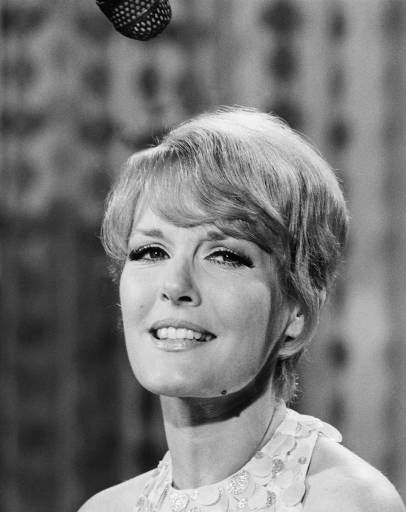
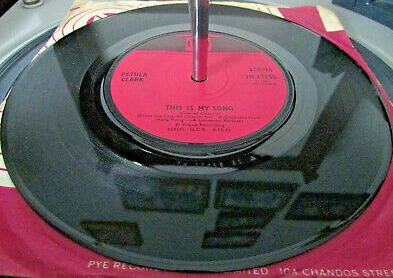
229. ‘This Is My Song’, by Petula Clark

This next #1 has an intro that really sets a scene. A laundry-strung alley in old Napoli. Candles. Red-chequered tablecloth. The strings flutter. The guitar is lightly-plucked. When the moon hits your eye like a big pizza-pie…

83692aecd543105978cc66e31f402c81

This Is My Song, by Petula Clark (her 2nd and final #1)

2 weeks, from 16th February – 2nd March 1967

Nope. Wrong song. This one goes: Why is my heart so light, Why are the stars so bright…? Questions, questions. I’m sure you’ve already guessed why. Why is the sky so blue, Since the hour I met you…? Petula’s in love. And so she runs through various clichés: Flowers are smiling, stars are shining… We know we’re getting a big ol’ chorus, but she builds up to it very slowly, keeping us waiting… I know why the world is smiling… It hears the same old story, Through all eternity…

Finally it comes. Love… This is my song… It’s a chorus made for movie-soundtracks. It’s outrageously cheesy, but undeniable. Don’t try to argue with it. Just let yourself get swept along by it. The world, Cannot be wrong, If in this world, There is you… It’s timeless stuff. By the solo, with its Bierfest horn section, I’m sold. I love it. Here is a song, My serenade to you…

Of the last six chart-toppers, half could be described as sentimental schmaltz. ‘Distant Drums’, ‘The Green, Green Grass of Home’, and now this. But ‘This Is My Song’ is different. I’m not sure how, but it is. Somewhere in there, buried deep in the swaying, woozy rhythm, the spirit of the sixties remains. Somehow, it manages to be quite sexy, in amongst all the cheese…

Petula-Clark-This-Is-My-Song

I may be biased. Petula Clark was one of my first true loves, ever since ‘I Couldn’t Live Without Your Love’ – to which ‘This Is My Song’ was the follow-up – featured on a ‘60s Hits cassette on heavy-rotation in my parents’ car. Not that I listen to her very often now, but… This is a woman who was a child star – a ‘singing sweetheart’ and mascot to WWII troops, whose hit first records were released in the 1940s, who first charted alongside the likes of Vera Lynn and Doris Day, whose two #1s – ‘Sailor’ and this – bookend the swinging sixties, who caused scandal in the USA by (gasp!) touching Harry Belafonte on the arm, who is as comfortable singing in French, German or Italian as she is in English, and who still performs to this day, aged eighty-six! (She’s currently playing in ‘Mary Poppins’ in the West End.) She is, to apply an over-used but in this case completely appropriate term, a legend.

Meanwhile, the story of this record is almost as interesting. It is not, though it sounds it, based on an old Neapolitan folk tune. It had been written just the year before, for the soundtrack of the film ‘A Countess From Hong Kong’, by one Charlie Chaplin. Yep, that Charlie Chaplin. The film was set in the thirties, and so Chaplin wanted a song that would invoke the sound of that time. I’d say he managed it. To give it that period finish, he also wanted Al Jolson to record it. Except – small problem – Jolson had died in1950. So, he asked Petula Clark to record it instead. Clark, apparently, hated the lyrics…

Anyway, I enjoyed that. And if you didn’t enjoy this one, if you thought it was just a bit too much, too overblown and old-fashioned, just you wait till you hear what’s up next…

200. ‘Help!’, by The Beatles

And it’s two hundred not out! Two hundred UK #1 singles covered; plenty more where they came from… And this isn’t a bad little record with which to celebrate our mini-milestone!

0003568_beatles-art-beatles-help-canvas-art_510.jpeg

Help!, by The Beatles (their 8th of seventeen #1s)

3 weeks, from 5th – 26th August 1965

Help! I need somebody! Help! Not just anybody! Help! You know I need someone! He-e-elp… It looks ridiculous written out like that, doesn’t it? If you told somebody that you were going to write a pop song with those as the introductory lines they would probably laugh at you. Then look nervously away… But, The Beatles were the some of the best producers of pop that the world has ever seen, and this may well be their best pop moment.

Or, you know, it might be ‘She Loves You’, or ‘Please Please Me’, or ‘I Saw Her Standing There’, or ten other of their songs… Let me rephrase. This may or may not be their best pure pop moment, but it is their last. ‘Help!’ is a bit of a step back, after the stoned haziness of ‘I Feel Fine’ and ‘Ticket to Ride’. This is the same Beatles that gave us ‘A Hard Day’s Night’ and ‘Can’t Buy Me Love’ – all floppy-haired enthusiasm and cheeky winks.

Except… listen to the lyrics. It’s an upbeat, summery pop song (from the soundtrack to their latest movie), but by God the words are bleak. When I was younger, So much younger than today, I never needed anybody’s help in any way… But now these days are gone, I’m not so self-assured… and Every now and then I feel so insecure, I know that I just need you like, I’ve never done before… do not your average pop song make. In the film, the cry for ‘help’ is from Ringo, who finds himself about to become the sacrificial victim of an Oriental cult (as you do…) In real life, the cry for help was John’s. His life, as the leader of the most popular band in the world, was getting to him.

I’ve never suffered from depression. But I know people who have, and the line: Help me if you can, I’m feeling down, And I do appreciate you being round… seems to be just about the most perfect description of the disease. The knowledge that nobody can really help you feel better; but that just knowing people are still around brings you some comfort. That’s it. Summed up in two perfect lines.

the-beatles-help(uk-original.-company-sleeve)

Musically this is a short and simple song. But many of the best pop songs are. With The Beatles it’s often the small things that make their hits stand out over and above their contemporaries. The opening chord on ‘A Hard Day’s Night’, for example. On ‘Help!’, it’s the way that the backing singers’ lines (the countermelody, if you will) weave, and twist, and sometimes even precede the lead vocal. The Now I find… and the My independence… lines are the best examples. It’s the little touches like this that made the Fab Four peerless.

So, that’s it for the ‘pop’ Beatles. In 1966 they’ll stop performing live, smoke even more weed, start getting lost in India… all for another day. For now, press play on the link below and enjoy them as the mop-top Fabs for one last time. Plus, what with this being chart-topper #200, this seems like a good place to stop for a brief moment of reflection.

Chart-topper #1 – Al Martino’s pre-rock epic ‘Here in My Heart’ kicked it all off. It’s from another era – another planet – entirely. By the time we got to chart-topper #100 – Anthony Newley’s twee little ‘Do You Mind’ – we had traversed the rock ‘n’ roll era and were about to get stuck in the early-sixties slump of Elvis soundtrack songs and ‘death-discs’. And now here we are with #200. ‘Help!’ Perhaps the very final Beat-pop number-one. Experimental times lie ahead… I published chart-topper #1 at the end of January last year, to precisely zero interest, and so I’d like to say thank you to everyone who has since decided to join up for the journey. Your views, likes and comments sustain me! #100 was posted at the very start of November last year, and now here’s #200 at the end of August. A rate of a hundred every nine months. So… We should reach #300 by May 2020 (T.Rex, btw!) And which means we should reach the current UK number one (#1357) in about a decade… Hang on in there!

Remind yourself of all 200 of the first chart-toppers, here: