798. ‘No Matter What’, by Boyzone

Straight after ‘Viva Forever’, here’s another high quality ballad…

No Matter What, by Boyzone (their 4th of six #1s)

3 weeks, from 9th – 30th August 1998

Yes, the words ‘high quality’ and ‘Boyzone’ in very close proximity there, but I’ll stand by it. This is, by a clear distance, the best of the Irish boyband’s six number ones.

Like the Spice Girls before it, the melody and the chord progressions here are simple, but effective. There’s something instantly touching, even if this isn’t your kind of music. (It absolutely reeks of musical theatre, with an ‘Act I finale’ energy to it. More on that to follow…) Helping immensely in this song’s likeability is that Stephen Gately gets to sing the first verse. Nice voice, nice boy, sorely missed…

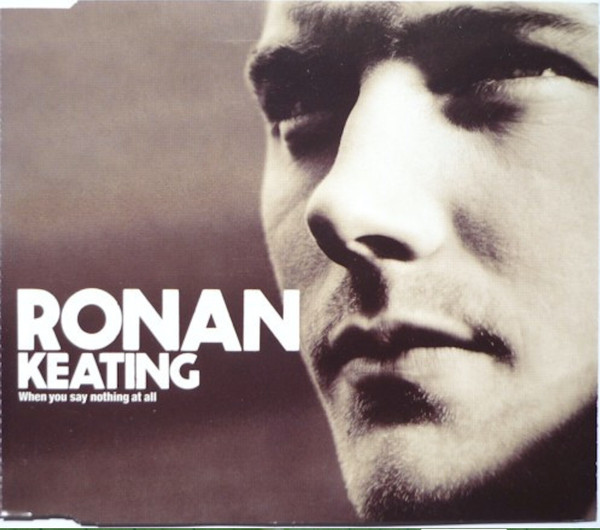
If only he’d been allowed to carry the whole thing. Alas, Ronan Keating comes clattering in for the second verse, with all the subtlety of a drunken ox. But even he can’t ruin it. There’s a depth to this, a timelessness that’s been missing from Boyzone’s previous number ones. There’s another acoustic guitar solo, and a soaring finish, and the job’s a good ‘un. The fact that this stands out so far against the band’s earlier singles is perhaps explained by the songwriters: Andrew Lloyd Webber, and Jim Steinman.

‘No Matter What’ was the first act closer in ‘Whistle Down the Wind’, Webber’s 1996 musical based on the book and film of the same name. (I must admit, I knew this was from a musical, but thought it was much older.) It becomes the fourth chart-topper that Webber has been involved in, after ‘Don’t Cry for Me Argentina’, ‘Any Dream Will Do’, and, yes, ‘Itsy Bitsy Teeny Weeny Yellow Polka Dot Bikini’. It’s also Steinman’s fourth, after ‘Total Eclipse of the Heart’, ‘I’d Do Anything for Love’, and ‘Never Forget’ (meaning that he’s produced hits for the nineties’ two biggest boybands).

It’s a needless comparison, but since this directly followed ‘Viva Forever’ I feel compelled to say that this isn’t as a good a record. And it’s not just because of groanin’ Ronan… The production is a bit cheap, with a squelchy bass and a karaoke-level percussion. And I don’t know who thought the strange chicka-cha-ah-has in the intro were a good idea, but they weren’t. Plus, the lyrics are well-intentioned but interesting: No matter what they tell us, No matter what they teach us, What we believe is true… (Sounds like the motto of your average Twitter user…)

Still, it is a good pop ballad. And for a boyband single to get three weeks at number one means that it must have had broad crossover appeal. It even managed to graze the charts in the US, something that no Boyzone single did before, or after. They have two final number ones coming up – one of which is not, I repeat not, a ballad – but I highly doubt either will match this.

796. ‘Deeper Underground’, by Jamiroquai

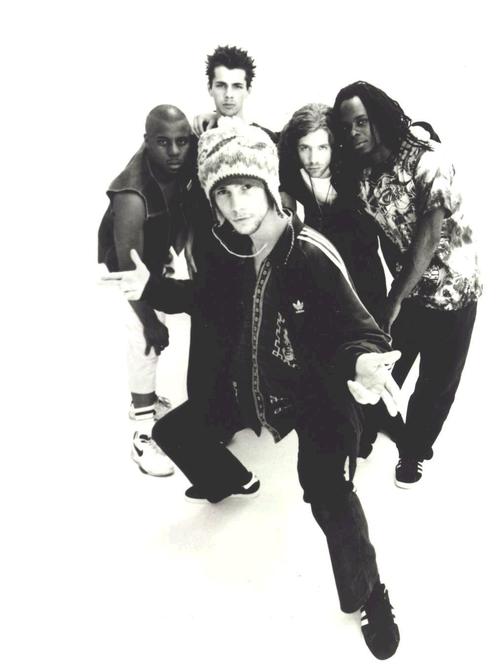
And so Jamiroquai, a nineties chart mainstay, score their only number one single. Should we class them alongside Dusty, Quo, and a-Ha, as one of the great one and only #1 acts? Or is one chart-topper par for their course…?

Deeper Underground, by Jamiroquai (their 1st and only #1)

1 week, from 19th – 26th July 1998

‘Deeper Underground’ isn’t the first record you’d think of as Jamiroquai’s only #1, and it’s not a record I’ve heard much over the years. So two things strike me as I listen to it now. First, that it’s obviously from a movie soundtrack, as no normal pop single has this much time to open, with strings and ominous chords, never mind a monster’s roar. It was from the big 1998 summer blockbuster ‘Godzilla’, which was fairly successful at the box office but was panned by critics.

The second thing I notice is how heavy this record is. By the time I was a teenager, Jamiroquai were a byword for naffness, mainly brought about by lead singer Jay Kay’s collection of silly hats. Many of their other big hits veered towards a disco cheeriness, but ‘Deeper Underground’ has an edge to it, underpinned by a scuzzy funk riff. They had been acid funk pioneers in the early nineties, and this is definitely not their most commercial moment. When the lyrics finally arrive, Jay Kay almost freestyles over the aggressive beat.

As a soundtrack hit, the lyrics have to relate to the movie they feature in. But Jamiroquai manage to twist lyrics about going deeper underground to escape a massive, city-smashing monster, into what seems like a song about paranoia: Something’s come to rock me, And I can’t keep my head, I get nervous in the New York City streets, Where my legacy treads… The video takes a more literal approach to the subject matter, with Jay Kay dancing his way around death as Godzilla, and any number of crashing taxis and helicopters, destroy a cinema, all with very dated CGI.

I had thought that this record sampled Led Zeppelin, and although the riff is cool it’s not quite at Led Zep standards. This is because I was confusing it with the other big hit from the ‘Godzilla’ soundtrack, Puff Daddy and Jimmy Page’s ‘Come With Me’, which is based around ‘Kashmir’. That one made #2 around the same time (and is Page’s only Top 10 hit in the UK, either with or without Led Zeppelin).

As ‘Deeper Underground’ descends into even nastier, funkier territory, the synths grow harsher and harsher until it sounds a bit like I imagine electro-shock therapy would. It’s cool. I like it. I’m glad that this is Jamiroquai’s only #1, over the much more mum-friendly ‘Canned Heat’ or ‘Cosmic Dancer’. Though their greatest moment remains ‘Virtual Insanity’, which was one of my favourite tracks on ‘Now 37’ back, as they say, in the day.

In my intro I called Jamiroquai a ‘nineties mainstay’, but that wouldn’t seem to do them justice. I’ve just discovered that they were the 3rd best-selling UK act of the decade, behind Oasis and The Spice Girls. Which is very impressive for a band that many write off as one guy and some hats (though as much as I’ve enjoyed writing this review I was probably hasty in naming them alongside Dusty and Status Quo…) ‘Deeper Underground’ remains forgotten amongst their back-catalogue it seems, as it is nowhere to be seen on their Spotify popular tracks. On the same platform’s ‘This Is Jamiroquai’ playlist, it is buried away as track twenty-eight.

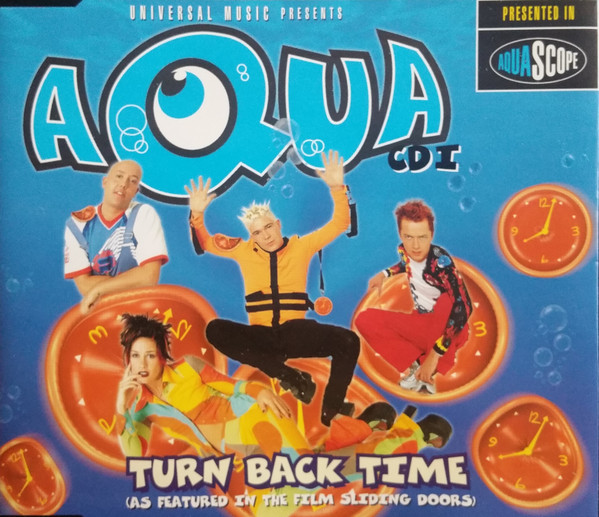
790. ‘Turn Back Time’, by Aqua

1997’s novelty act of choice surprise us yet again by returning for a 3rd number single. Not only that, the surprise is increased by the fact that this is a ‘proper’ song!

Turn Back Time, by Aqua (their 3rd and final #1)

1 week, from 10th – 17th May 1998

No Barbie and Ken here, no ayypeeay-eh-oh. This is classy pop. The chord progressions in the verses have a sweeping drama to them, with the feel of a Bond theme in places. Give me time to reason, Give me time to think it through… It’s sung from the point of view of someone who has cheated, and who is owning their mistake. Give me strength, To face this test of mine… Lene’s voice, so chirpy and borderline annoying on their earlier hits, is rich here, and full of emotion. I often struggle to believe ballad singers, but she sounds genuinely guilty, and repentant.

Away from the vocals, the production is smooth nineties soul-funk. And (of course) that late-nineties preset drum beat is there, buried beneath some cool horns that make me think of Ace of Base. Maybe it’s a Scandi-pop thing and – while it does mean I’m going to lean into some national stereotyping – there is something in the clean, coolness of this that feels very Scandinavian.

Seriously, this is an excellent pop song. If it were by Madonna, and not the goons that brought us ‘Barbie Girl’, then this would not be half as forgotten as it currently is. The only thing I regret is that René’s gravelly tones don’t get a look in. I’m not sure how they could have made that work – maybe a bit of baritone harmonising – but it’s sad that he has been sidelined after two star turns. The only questionable part of this record is the jarring break in the middle, when the smoothness is broken by urgent horns and a grinding industrial beat. It’s certainly a choice – presumably meant to show the mental turmoil of the singer – and it just about works.

‘Turn Back Time’ featured on the soundtrack to the Gwyneth Paltrow film ‘Sliding Doors’, which I’ve not seen but which has one of the most famous premises in movie history. The video features plenty of scenes from the film, and also has the band re-enacting the plot, with Lene constantly missing trains and lift doors on the London Underground. Meanwhile their black leather jackets are very late-nineties chic.

Aqua were worth one more Top 10 hit from their breakthrough album, then one more when they released their second LP in 2000 (the showtune-tastic ‘Cartoon Heroes’). They split for most of the ‘00s, but reformed in 2008 and remain together to this day. They belatedly returned to the Top 10 last year, when their signature hit was reimagined by Nicki Minaj and Ice Spice ahead of the ‘Barbie’ movie.

784. ‘My Heart Will Go On’, by Celine Dion

In which we don our lifejackets, fight our way out on deck, and try to find a lost child with whom to bribe our way onto a boat. Anything to avoid a collision with this hulking leviathan of a song…

My Heart Will Go On, by Celine Dion (her 2nd and final #1)

1 week, from 15th – 22nd February 1998 / 1 week, from 8th – 15th March 1998 (2 weeks total)

‘My Heart Will Go On’ is one of those songs that has become such a cliché, such a meme, such a cornerstone of popular culture, that it is very hard to judge as a mere five-minute piece of popular balladry. But if you can separate it from what it’s become, and manage to hear it as people in 1997 did… Then you are still confronted with a truly horrifying song.

I always thought the opening notes were played on pan-pipes, but it’s actually a tin whistle. This vaguely Celtic, new-agey motif features throughout the three hours plus of the movie ‘Titanic’, a sort of Pavlovian signal that Something Romantic is happening. It existed as part of the soundtrack to the film before composer James Horner suggested using it in a song. James Cameron, the director, wasn’t sold. If only he’d stuck to his guns… Sadly, he gave in, and this monster was born.

My first impression upon sitting down and listening to this song properly for the first time in a quarter of a century is that it sounds dated for the late-nineties. Every power-ballad cliché is ticked: big drums, squealing guitars, echoey effects, and gloopy percussion. Add in the new-age feel, and it sounds like we’ve slipped back a decade. Then there’s the ‘Whitney’ moment – the pause, and the beat, before the key-change and the final sledgehammer chorus.

As Houston does in ‘I Will Always Love You’, Celine Dion bludgeons all emotion out of the song’s climax in a storm of howling bombast. Though that sounds like I’m suggesting that there’s emotion in the verses preceding the final chorus. There isn’t. It’s all just too huge, too overwhelming, to have any impact. It mirrors the way I feel about the movie, too. I’ve enjoyed it as a piece of entertainment, but the ‘sad’ scenes now come across almost as tongue-in-cheek. Again, this is possibly because we’ve seen way too many parodies of frozen Jack, and Rose clinging to the door; but it could also be because the film was complete fluff in the first place.

For all this talk of entertainment, though, one of this song’s biggest failings is its dullness. I first mentioned this phenomenon when we covered the ‘90s other big soundtrack hits: Houston’s, and Bryan Adams. Once upon a time power ballads were ridiculous pieces of theatre. Think ‘Total Eclipse of the Heart’, or ‘China in Your Hand’. Dion’s previous chart-topper ‘Think Twice’ was a much more recent example of a power ballad whose earnestness was delivered with a wink and a lot of scenery chewing. There’s no wink here, though, no sense of an in-joke. Just a dull plod punctuated by lots of serious fist clenching.

But you don’t need me to tell you that ‘My Heart Will Go On’, for all its God-awfulness, was fairly successful. A number one in more than twenty-five countries around the world, and currently the second-best selling single ever by a female artist (behind you-know-who). Celine Dion apparently disliked it at first – I mean, she would say that now – but it hasn’t stopped her milking it for all its worth. China in particular has a passion for the song, with state television inviting Dion to belt out her biggest hit several times over the years. For me, though, ‘My Heart Will Go On’ will always remind me of a family holiday in Lanzarote. It was the first time I had ever been on a plane, travelling for four hours across Europe just to hear this dirge being played every fifteen minutes at the pool bar…

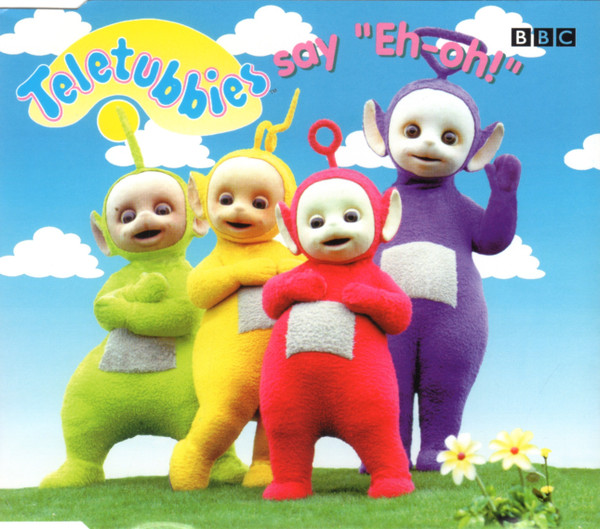
778. ‘Teletubbies Say ‘Eh-Oh!”, by The Teletubbies

From one of the classiest, most understated ‘novelty-in-inverted-commas’ #1s off all time… To the other end of the spectrum…

Teletubbies Say ‘Eh-Oh!’, by The Teletubbies (their 1st and only #1)

2 weeks, from 7th – 21st December 1997

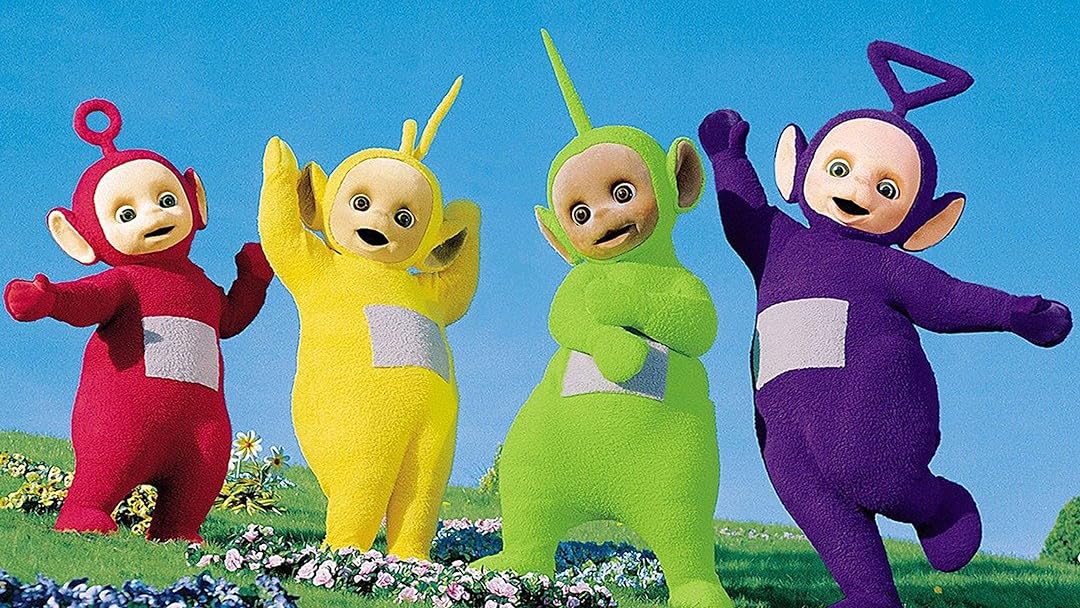
It’s a remix of the theme song to the biggest children’s TV show of the age: the Teletubbies. First aired in March 1997, by August it was reaching an audience of two million. I was one of them, I must admit, though I was a good decade older than the intended audience. I don’t know, there was just something grotesquely fascinating about the four… creatures (what the hell are they?) the grassy dome they lived in, the flowers that talked, the pink pancakes they ate… So huge was the programme that a spin-off single was inevitable, just in time for the Christmas number one race. They didn’t quite make it, but two weeks at number one plus over a million copies sold is pretty impressive.

Sadly, but not surprisingly, as a pop single this is utter garbage. It just about works as a theme-tune (though in these days of streaming you’d happily ‘Skip Intro’) but removed from the context of the show it sounds absolutely bonkers. And not good bonkers. There’s the babyish voices, the rather camp narrator, interludes in which some sheep sing ‘Baa Baa Black Sheep’ and a matronly old lady sings ‘Mary, Mary Quite Contrary’, and a prolonged bout of diarrhoea (which turns out to be the tubby custard machine, when you watch the video…) All set to a rinky-dink synthesised banjo riff.

At the same time, there’s not much point in getting annoyed about this. It is what it is. Crap, but also something of a time capsule, a glimpse back into those carefree, late-twentieth century days. You could raise an eyebrow at the ridiculous quantities of this record that were sold – well over half a million copies during its two weeks at the top – but then single sales were at their highest ever levels in late-1997, something we can perhaps explore in our next post.

The obvious comparison to make here is to cast your minds back four years, to Mr. Blobby’s similarly bizarre festive release. But Blobby’s song has an anarchic quality to it, a level of chaos and a tongue-in-cheek quality that ‘Teletubbies Say “Eh-Oh!”’ lacks. The only way you could find another level on which to enjoy this song is if you were seriously high.

Finally, I have to raise a hand and admit that I am, in my small way, to blame for this record doing so well. Or at least my younger brother is, as he bought me a cassingle copy for Christmas that year. I wonder how many other copies were bought as a joke, rather than for any love of the song. Teletubbies was only on our screens for four years (in its original run) but its cultural impact was massive. In fact, if you have a spare minute, why not remind yourself of the ‘Tinky Winky Controversy’, and feel a sense of relief that something so narrow-mindedly crazy couldn’t happen in today’s level-headed world…

772. ‘Men in Black’, by Will Smith

The first half of 1997 was an interesting musical smorgasbord, with a quick turnover of number ones meaning we flitted gayly from genre to genre. During the second half of the year things will get slightly more predictable at the top of the charts, and records will start staying at #1 for slightly longer…

Men in Black, by Will Smith (his 1st and only solo #1)

4 weeks, from 10th August – 7th September 1997

Beginning with the year’s second big soundtrack hit. ‘Men in Black’ was the summer’s big popcorn movie, featuring Will Smith, Tommy Lee Jones and some aliens, which I thought I remembered fondly until I realised I was thinking of ‘Independence Day’, from the year before. I probably did see ‘Men in Black’ at the time, but it hasn’t remained with me.

The lyrics are geared towards the movie plot, which means unique lines like: Walk in shadow, Move in silence, Guard against extra-terrestrial violence… It reminds me of Partners in Kryme – one of the first hip-hop chart toppers – and their rhymes about which Teenage Ninja Turtle liked pizza (Michelangelo, of course). You could class this, and Puff Daddy’s ‘I’ll Be Missing You’ as a step back for hip-hop, after more innovative and respectable #1s by the Fugees and Coolio. But at the same time, this was a huge-selling, month-long number one, and another sign that rap had gone mainstream. (It was also, I believe, the first time that one hip-hop track had knocked another off top spot).

It’s based around ‘Forget Me Nots’, a minor hit in 1982 for Patrice Rushen. If it sounds familiar, then that’s because George Michael had sampled it a year earlier on ‘Fastlove’. The chorus was edited and sung by Coko, of the R&B group SWV, who really should have gotten a co-credit, so much does she bring to the show.

“Will Smith don’t have to cuss to sell records, but I do”, Eminem would famously rap a few years after this. It’s easy to be snobbish about Smith’s family-friendly approach to hip-hop (an NME review at the time labelled him the ‘Cliff Richard of rap’) but really, this is well-made, catchy pop. I don’t love it now, twenty-seven years on, but it was everywhere that summer, and was the #1 when I started high school. Plus the Bouncin’ with me, Slide with me… break is still great fun. File it under ‘fondly remembered’.

‘Men in Black’ was Will Smith’s debut solo single, featuring on his first solo album ‘Big Willie Style’ (tee-hee) and marked a return to music after he’d begun focusing on acting in the early-nineties. He has of course already featured at number one, as the Fresh Prince with Jazzy Jeff in 1993; while this song set him up for a good few years of chart success. He would have eight further Top 5 hits between now and 2005, including three #2s. Respect from the hip-hop community never quite arrived, but he had a great ear for a sample, and made some of the records that define the late-nineties for many people of my generation. He hasn’t released much new music since the mid-2000s, but remains one of Hollywood’s big hitters…

764. ‘I Believe I Can Fly’, by R. Kelly

Aside from Britpop, the rapid-fire turnover of number ones, and the dominance of the Spice Girls, there’s one not so expected theme for 1997… Problematic performers.

I Believe I Can Fly, by R. Kelly (his 1st of three #1s)

3 weeks, from 6th – 27th April 1997

Starting with the disgraced, and currently incarcerated, R. Kelly. I’m not going to come over all hand-wringy about it, mind you. We managed with Gary Glitter and his gang, and when Rolf Harris sang about ‘Two Little Boys’. And unlike them, ‘I Believe I Can Fly’ doesn’t have any lyrics that sound dubious in hindsight (we’ll save that for Kelly’s next #1, ‘Ignition’).

Though some double-entendres might have given us something entertaining to write about at least, because this is a fairly dull, very worthy, song for most of its verses and bridges. It was written for the movie ‘Space Jam’, a half cartoon/half live-action film in which Michael Jordan plays basketball with Bugs Bunny (that sounds crazy when you actually type it out, but as a kid I went with it…) So there are lots of lines about never giving up, achieving miracles… If I can see it, Then I can do it… If I just believe it, There’s nothing to it…

I will say that the chorus, however, has whatever choruses need to be great. Something in the chord progressions; the simple, but not clunky, rhymes; that pause in the beat on the word ‘believe’… I’m not sure exactly what it is, but it makes for a chorus that leaves the rest of mush behind, and burrows its way into the public conscience.

By the end, things have gone full-on gospel, with some soaring strings, and Kelly bringing it home with lots of whoops, hollers and melisma. Impressive, but not worth the four minutes of sludge we had to wade through to get there. And also quite a hard turn from his usual output, which had been much more upbeat, R&B for his two prior Top 10 hits, ‘She’s Got that Vibe’ and ‘Bump and Grind’ (dubious lyrics klaxon!). Plus, if schmaltzy and over-emoted nineties ballads are your thing, I’d say R. Kelly surpassed this two years later, with ‘If I Could Turn Back the Hands of Time’.

As with Glitter, I half-expected not to find Kelly on Spotify. They did, after all, make a big fuss about deleting his music in 2018, before reinstating it but refusing to feature it in any playlists. Which is a classic case of having your cake and eating it. I’m no fan of cancel culture, but if you are going to cancel someone then do it properly! Not this ‘loudly virtue signal but quietly still take the money’ nonsense. One person who did #cancelrkelly was Lady Gaga, who recorded the banging ‘Do What U Want’ with him in 2013 – long after the first allegations against him had come to light – then quickly replaced it with an (inferior) version featuring Christina Aguilera after a backlash… (I love Gaga, but I’m still sore about that one…)

Anyway, R. Kelly still has two more number ones to come, so we have plenty of time to cover his catalogue of crimes and get ourselves worked up about cancel culture if we so wish. In the meantime, let’s move on from all this, and pretend we’ve never had a problem with sex offenders having chart-topping singles, because up next it’s… Oh…

729. ‘Gangsta’s Paradise’, by Coolio ft. LV

Although 1995 is turning out to be a fairly – let’s be blunt – crap year for number one singles, it’s also turning out to be a year of firsts at the top of the charts.

Gangsta’s Paradise, by Coolio ft. LV (their 1st and only #1s)

2 weeks, from 22nd October – 5th November 1995

We’ve had our first Britpop #1s, as well as our first ‘Explicit Warning’ chart-toppers. You could also argue that Robson & Jerome, with Simon Cowell as mastermind, heralded the start of the ‘TV personality as pop star’ age, which will dominate the next twenty years of British pop music. And as we draw towards the year’s end, here comes our first proper rap #1.

We’ve had plenty of hip-hop at #1 before this: Vanilla Ice, Partners in Kryme, Jazzy Jeff & The Fresh Prince… Throw in the Simpsons, and John Barnes, and it’s clear that rap has struggled to be seen as much more than a novelty. Until now, for this is uncompromising hip-hop: undiluted, comfortable in its own skin, not softening its edges in looking for widespread appeal.

Coolio weaves a tale of life on the streets, a life of drugs and violence that often leads to death: You better watch how you talkin’, And where you walkin’, Or you and your homies might be lined in chalk… In it, the singer both recognises his situation: Why are we, So blind to see, That the ones we hurt, Are you and me…? and sees no way out: They say I gotta learn, But nobody’s here to teach me, If they can’t understand it, How can they reach me?

Heavy stuff, but it’s lifted to classic status by one of the all-time great samples. Stevie Wonder’s ‘Pastime Paradise’ provides a compelling, propulsive melody around which Coolio tells the story. LV, who sings the chorus, changes ‘Pastime’ to ‘Gangsta’, while a gospel choir provides the finishing touch.

The record’s authenticity must have struck a chord, as it became the UK’s highest-selling hip-hop record in fairly short order (today it sits well inside the Top 50 highest-selling singles in British chart history). It featured on the soundtrack to the Michelle Pfeiffer film ‘Dangerous Minds’ – Pfeiffer also appears in the video – which may have helped in its success. But probably not to the extent that the song wouldn’t have been a hit without it.

I’ve called this the first ‘proper’, ‘modern’ rap #1, but I’ve been reluctant to call it the first ‘gangsta’ rap number one. Mainly because the word is literally there, in the song’s title, and it feels slightly lazy. Plus, while the song’s themes may be pretty gangsta, the lyrics are all quite PG. They weren’t originally, however – Coolio had written a much more explicit version, but Stevie Wonder refused to sanction the sample until he cleaned it up.

Swears or no swears, this is a brilliant song, one of the best that 1995, if not the entire decade, has to offer. I also realised, while writing this post, how many of the lyrics I could remember. I certainly wasn’t rapping along at the time, so they must have entered my brain through cultural osmosis over the years – always a sign of a song’s classic status. Coolio went on to have three more Top 10 hits, including ‘C U When U Get There’, which has an equally famous ‘sample’. And of course, just as importantly for people of my vintage, he recorded the ‘Keenan & Kel’ theme song. He died following an overdose two years ago, aged just fifty-nine.

709. ‘Love Is All Around’, by Wet Wet Wet

The charts of the first half of the 1990s have had many stories to tell: interesting one-hit wonders, new sounds coming, old sounds going, acts appearing and becoming huge… And yet from a certain angle it can look like the period was dominated by just three songs, all from film soundtracks, which together spent forty-one weeks atop the charts. (Set back to back that would stretch for over nine months, a period in which you could conceive, gestate, and birth a human child…)

Love Is All Around, by Wet Wet Wet (their 3rd and final #1)

15 weeks, from 29th May – 11th Sept 1994

We’ve already endured Bryan Adams and Whitney, and now here is the third and final chart-hogging behemoth. And thankfully it’s the best of the three, by far. It’s not an overwrought power-ballad, for a start. More a low-power ballad, with some jaunty flourishes among the cheesy sentiments and Marti Pellow’s over-singing.

I like the woozy fills before the chorus, and the way the band manage to update a song from the sixties with just enough nineties rock touches: a string section, some power chords, and a soaring guitar for the fade-out. ‘Love Is All Around’ was originally recorded by the Troggs, making #5 in 1967. This gave Reg Presley a writing credit on a second #1, after the band’s 1966 #1 ‘With a Girl Like You’. (Rather brilliantly, he spent the unexpected royalties on crop circle research…)

The fact that it’s a more upbeat number than its ginormous predecessors is also reflected in the movie it came from. ‘Four Weddings and a Funeral’ was a rom-com, compared to the epic ‘Robin Hood – Prince of Thieves’ and the slushy ‘Bodyguard’. For the soundtrack, Wet Wet Wet were asked to choose between covering this, Barry Manilow’s ‘Can’t Smile Without You’ and Gloria Gaynor’s ‘I Will Survive’ (which would have been interesting…) ‘Love Is All Around’ was, I’d imagine, an easy choice for the pop-rocking Wets.

As much as this record is a relief after the other two long-runners, I shouldn’t overstate its quality. It’s fine. It’s serviceable. It’s a decently done cover. Nothing more. The original has a low-key charm to it that this version cannot reproduce with its lush production, and the fact that Marti Pellow doesn’t do ‘low-key’. And of course, we can’t ignore that it far outstayed its welcome on top of the charts. You often hear talk about ‘The Song of the Summer’. Never has it been quite as literal as this, with the record on top from late-May to early-September.

By the end of its run, some radio stations were refusing to play it. The band were well aware of the record becoming a millstone around their necks, and deleted it from production. ‘We did everyone’s head in’, Pellow succinctly summed up. This meant that it fell one week short of matching Adams’ record for consecutive weeks at #1. ‘Love Is All Around’, however, did outsell both Adams and Houston in the long run, and currently sits at almost two million copies (number eleven in the all-time sales table).

This song’s success didn’t completely sour Wet Wet Wet’s reputations in the UK. They wouldn’t again make number one, but they scored five further Top 10s before splitting in 1997 after a dispute over royalties. They reformed a decade later, and continue touring and recording with two of the four original members.

690. ‘(I Can’t Help) Falling in Love With You’, by UB40

More reggae at the top of the charts, after Shaggy and Ace of Base over recent weeks. And it’s Britain’s best-sellers in the genre who are bringing it there…

(I Can’t Help) Falling in Love With You, by UB40 (their 3rd and final #1)

2 weeks, from 6th – 20th June 1993

As with their last #1, a cover of ‘I Got You Babe’ with Chrissie Hynde, this is a dub take on a golden oldie (though note the slight title change from the Elvis original, a chart-topper in 1962). And I can see what they were going for – a softened version of their reggae sound, with clear nineties dance influences in the swaying beat – but I can’t take to it. ‘Plodding’ and ‘slow’ were the two notes I took on first listen. I also gave their version of ‘I Got You Babe’ a ‘Meh’ award, so I’ve got form.

Ali Campbell’s voice is an acquired taste most of the time, and especially so here. I don’t know if he’s trying to imbue his lines with emotion, but it mainly sounds as if he’s straining to get them out. Obviously it doesn’t help that the listener automatically compares his efforts to Elvis’s from thirty years earlier… And yet, the quality of the song shines through – there’s a reason why it’s become a standard – and I do like the addition of the short, sharp horn fills towards the end.

Like ‘Oh Carolina’ before it, ‘(I Can’t Help) Falling in Love With You’ featured on the soundtrack to the Sharon Stone movie ‘Sliver’. There are very few film soundtracks to have included multiple #1s, and it’s amazing that a movie as poorly regarded and forgotten as this ‘Sliver’ managed it. Still it gave UB40 their 3rd and final chart-topper, and became their biggest hit in the US, staying at #1 for seven weeks.

And we should note the impressive longevity of the band, given that those three number ones were spread out over a decade (while the Campbell brothers have one more shot at top spot, in a featuring role, to come). But I think it’s fair to say, and this is coming from someone who wouldn’t count himself as a fan, that UB40 are not best represented by their three #1s. Two of them are fairly pedestrian covers, while ‘Red Red Wine’ – which was also a cover, of course – has bit more charm to it, though still plays it fairly safe.

They had a few more years of chart hits in them, including two further Top 10s, but its perhaps right to mark this as UB40’s swansong. They remain a going concern, with four of the original eight members still in the band. Ali Campbell, however, left in 2008, after disagreements with the band’s management.