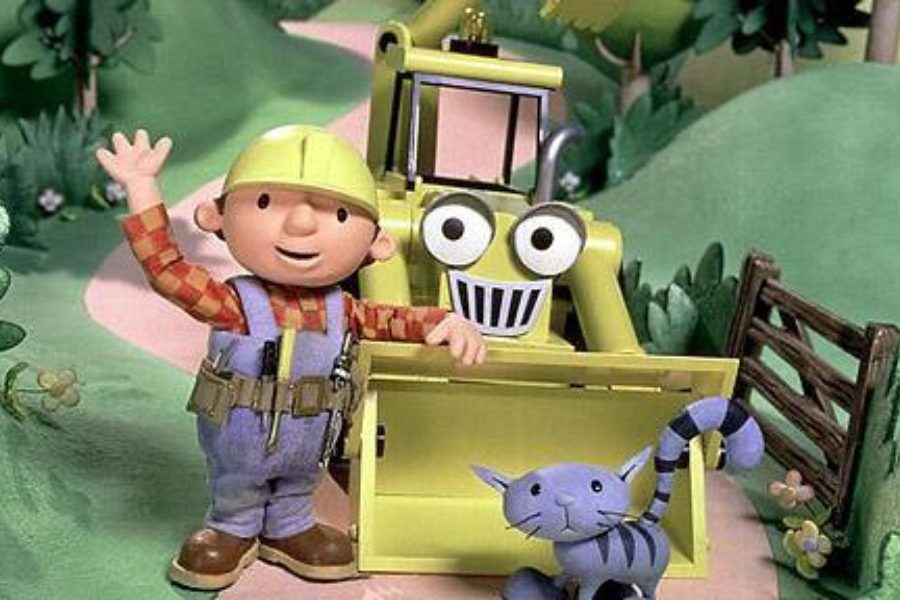
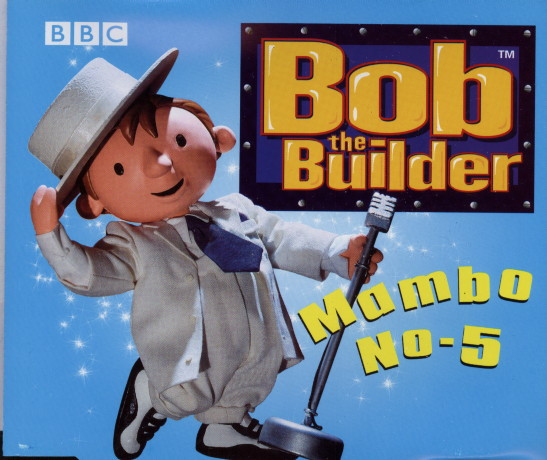
908. ‘Mambo No. 5’, by Bob the Builder

Bob the Builder manages what all the other Christmas novelties never could. Benny Hill, Little Jimmy Osmond, Renée and Renato, Mr. Blobby… Few of them managed another hit, let along another chart-topper!

Mambo No. 5, by Bob the Builder (his 2nd and final #1)

1 week, from 9th – 16th September 2001

Gone is Lou Bega’s list of women that he’s shagged, replaced with more child-friendly construction items and a lengthy to do list. A little bit of timber and a saw, A little bit of fixing that’s for sure… A little bit of tiling on the roof, A little bit of making waterproof… Bob’s a little bit of a taskmaster, that’s for sure, but his gang seem to be up to the job.

It’s largely more of the same as ‘Can We Fix It?’, just to a different tune. It sounds so much like Bega’s version that I wonder if they aren’t singing over the same backing track. But like the first hit, there’s an enjoyable amount of energy and love put into it. It’s a novelty, but it doesn’t overly grate, and the lyrics are genuinely tight and cleverly put together.

We’ve just had two versions of ‘Lady Marmalade’ at number one with just three years in between, and here are two versions of ‘Mambo No. 5’ in top spot exactly two years apart. Not counting the 1950s habit of releasing different versions of a song at the same time (as with ‘Answer Me’, ‘Singing the Blues’ and ‘Cherry Pink & Apple Blossom White’) this must be a record for shortest time between two chart-topping versions of the same song. Though is it the same song? Same title and tune, yes, but completely different lyrics. After ‘3 Lions ‘98’ this is only the second song to make #1 twice with (significantly) different words.

Bob the Builder and his gang would have one further hit, with rave anthem ‘Big Fish Little Fish’, from their brilliantly titled second album ‘Never Mind the Breeze Blocks’, making #81 in 2008. Leaving seven years between albums was clearly a gamble that backfired… Bob the Builder remained on TV until 2008, before being relaunched in 2010. I can’t be alone in finding the CGI animation of the reboot slightly sinister compared to the original stop-motion version. The CGI Bob has never attempted a singing career, and it’s probably for the best. Good to go out on a high.

900. ‘Lady Marmalade’, by Christina Aguilera, Lil’ Kim, Mýa & Pink

We are officially 900 number ones not out! Thanks to everyone who has ever read, commented, liked and followed. I’m not sure that I ever imagined when I started writing these posts back in November 2017 (!) that I’d ever get this far. But, to paraphrase an old football cliché, I’ve just been taking it one number one at a time…

Lady Marmalade, by Christina Aguilera (her 2nd of four #1s), Lil Kim, Mýa & Pink (her 1st of three #1s)

1 week, from 24th June – 1st July 2001

Our 900th is not the most original of chart-toppers, a cover of ‘Lady Marmalade’ coming barely three years on from the last chart-topping cover of ‘Lady Marmalade’. Have two other versions of the same song ever made #1 so close together? Anyway, while All Saints’ take played fast and loose with the LaBelle original, this all-star re-imagining is much more faithful.

One big difference, though, is that Lady Marmalade no longer plies her trade down in old New Orleans. She’s been transferred to the Moulin Rouge in Paris, just in time for the big glossy Baz Luhrmann movie musical of the same name. Different brothel, same story. Kitchy kitchy kitchy yaya dada. Mocha chocolatey yaya… Voulez-vous coucher avec moi ce soir?

It would be easy to look down on this OTT, fairly superfluous take on a seventies classic, in which four bad-ass chicks from the Moulin Rouge try to out-diva one another. And I won’t claim that it is better than LaBelle’s. But I enjoyed it back in 2001, and I still do enjoy it now. It strips all subtlety from what was already a fairly unsubtle song, adds a grinding industrial synth riff, and some well-placed cowbells. Mýa warms things up with the first verse, Pink (feeling quite out of place here, and in her suspenders in the video) ups the ante with the second. Clearly things were being set up for Christina, by far the biggest name of the four at the time, to blow everything out of the water for the finish.

Except, for my money, the show is stolen by Lil Kim’s rapped verse, the song’s one big change from the original, in which she delivers the immortal line: We independent women, Some mistake us for whores, I say why spend mine, When I can spend yours…? It’s a very modern female rap, a full decade ahead of Nicki Minaj and Cardi B, that even Xtina’s explosive belting can’t overshadow. But boy, does she try. And it works, doesn’t grate, because, again, this ain’t the time for subtlety.

This record is a lot like the movie it came from, and like a lot Baz Luhrmann’s filmography: good fun, as long as you don’t stop and think about it too much. My biggest issue with it is why Missy (Misdemeanour here) Elliott, who acts as the MC for the outro, doesn’t get a credit, and therefore her second number one single?

It’s been customary, every hundred number ones, for me to look back at the marker posts that have gone before. But there’s a recap up next, and I’d like to save any retrospection for then. What is worth noting is how short the gaps between each hundred are getting. There were over seven years between the first chart-topper and the hundredth (November 1952 to April 1960), but less than three between numbers 800 and 900 (September 1998 to June 2001).

897. ‘It’s Raining Men’, by Geri Halliwell

Providing the meat in an S Club sandwich, Geri Halliwell returns for her fourth and final solo chart-topper. It is also, sadly, our very last Solo Spice number one.

It’s Raining Men, by Geri Halliwell (her 4th and final solo #1)

2 weeks, from 6th – 20th May

But… Is this a case of saving the worst for last? I’ve found something to enjoy in all seven of the Spice Girl’s previous solo #1s, which have spanned a variety of genres, from hip-hop to trance. But I find Geri covering ‘It’s Raining Men’ to be a step too far.

It’s not just that it’s yet another inferior cover of an eighties classic, after similar recent efforts from Westlife, A1, and Boyzone. It’s also not just that it’s another classic #2 being belatedly taken to the top, after 911, Madonna, and Westlife (again). These things don’t help, but this cover feels even more tired than many of those earlier refits.

I think it’s more of what I complained about in Geri’s previous #1, ‘Bag It Up’, in which she was so blatantly chasing the pink pound that it was becoming a bit embarrassing. And what could be more gay-baiting than covering ‘It’s Raining Men’? Like I wrote in that post, she already had gay icon status. She was a Spice Girl, for God’s sake! She didn’t need to try so hard.

Anyway. She decided (or was asked) to cover this camp classic. Very well. But it’s so half-arsed. It’s missing the original’s sassy ad-libs (how low, girl? and the like). It’s missing the thunderclaps. And she gives the song’s best line – I’m gonna go out, I’m gonna let myself get, Absolutely soaking wet – neither the gravitas nor the commitment it deserves. I don’t believe for one second that Geri is excited about this extreme weather event. Whereas, in the original, I fully believe that the Weather Girls were two thirsty bitches ready to rip off their roofs and stay in bed. The lowest point comes when Ginger finally does try her own smutty ad-lib, and it’s genuinely cringey. Go get yourself wet girl, I know you want to… No, Geri. We don’t.

Other than that, it’s a fine record… Joking aside, it was the lead from her second solo album, as well as being from the soundtrack to the second ‘Bridget Jones’ film (from memory, it soundtracks Hugh Grant and Colin Firth beating each other up in a fountain). It was probably always destined to be a huge hit, and was the only one of her four #1s to spend more than a week at the top. But it was the beginning of the end, as none of the album’s subsequent singles got higher than #7.

I feel I’ve been a bit harsh of ol’ Gezza here. She remains my favourite Spice Girl. She remains an icon. And in fact, her best record was yet to come. She had one final LP, 2005’s ‘Passion’, from which the lead single was ‘Ride It’: her truest, campest classic. She always had it in her, she just didn’t have to try so hard…

If anyone’s interested, my solo Spice Girls singles ranking goes (from worst to best): ‘It’s Raining Men’ > ‘Never Be the Same Again’ > ‘Lift Me Up’ > ‘Bag It Up’ > ‘I Want You Back’ > ‘What Took You So Long?’ > ‘Mi Chico Latino’ > ‘I Turn to You’.

The ‘Fame’ referencing video, over which a lot of fuss was made at the time about Geri’s eye-catching, yoga-based weight loss. Just the song below:

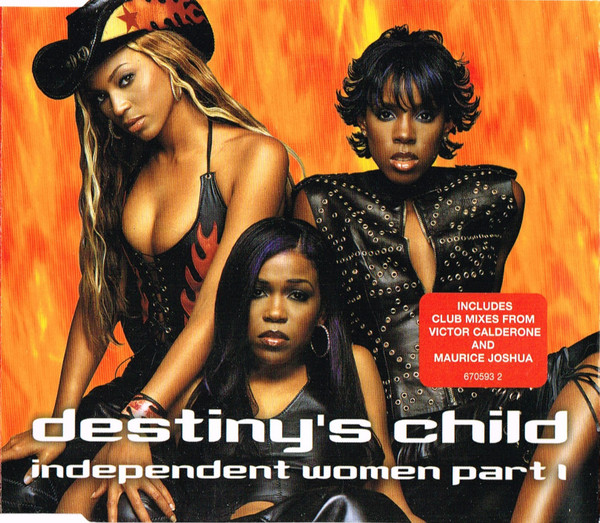
883. ‘Independent Women (Pt. 1)’, by Destiny’s Child

Question…

Independent Women (Pt. 1), by Destiny’s Child (their 1st of two #1s)

1 week, from 26th November – 3rd December 2000

Towards the end of a year jam-packed with zeitgeist grabbing choruses, where does All the women, Who independent, Throw your hands up at me… rank?

That’s before we get to the I bought it bridge, or indeed the repeatedly deadpanned question line. It’s slick turn-of-the-century R&B, minimalist in its instrumentation, with plenty of space for Beyoncé and co.’s tight harmonies, especially in the nearly a cappella break. This was the first Destiny’s Child track to feature Michelle Williams, and the only one to feature Farrah Franklin (who was only in the group for a couple of months).

‘Independent Women’ comes from the soundtrack to a movie reboot of ‘Charlie’s Angels’, and we are given no chance to forget it. From the spoken intro introducing the actresses, to the Charlie how your angels get down like that… refrain, few other movie soundtrack chart-toppers have had such strong product placement. It could have backfired, or at least left the song stranded in a very particular place in time, but it hasn’t. In fact, lines like Cameron D, Invest in me have perhaps added to its nostalgic allure.

I earlier drew comparisons between the Spice Girls’ recent ‘Holler’ and US girl-groups like Destiny’s Child, but really it’s no contest. This is so polished, so confident; another example of how American acts were setting the tempo at this time. Britain could still produce good pop (Steps!), but whenever we tried to ape this sort of hip-hop/R&B uber-pop we just couldn’t pull it off.

What I’m noticing now, after repeated listens, is the irony of a song about women’s independence promoting a film about three (admittedly kickass) women controlled by an unseen older man. Plus, as others have pointed out before me, the independence of the women in the song seems to be measured by the fact that they can buy their own clothes, shoes, cars and jewellery.

I mentioned her in passing, but we should make more of this being our introduction to Beyoncé, who will go on to be one of the new millennium’s biggest stars, with a near twenty-five year span between this and her most recent chart-topper. And while this track is well-remembered, I’d argue that the two following Destiny’s Child singles have become even more embedded in popular culture (one of which will be shortly turning up at #1).

Before we finish, I have one final question. If this is ‘Independent Women (Pt I)’, then what of part two? Well, it’s an album track, much harder-edged, nowhere near as catchy. Case closed, Charlie.

882. ‘Can’t Fight the Moonlight’, by LeAnn Rimes

Showing A1 just how it’s done, here is some authentic turn-of-the-century American jumbo-pop.

Can’t Fight the Moonlight, by LeAnn Rimes (her 1st and only #1)

1 week, from 19th – 26th November 2000

Can that become the standard term for this sort of huge chords, huge vocals, huge synths pop? Jumbo-pop. It’ll be my legacy. Though while Britney and Christina are obvious reference points for this record, LeAnn Rimes was first and foremost a country artist, and so this is jumbo-pop with a country twang. Which is cool.

But as with the Corrs’ Mutt Lange-produced ‘Breathless’, this makes me once again rue the fact that the Queen of late-nineties country pop, Shania Twain, never made top spot in the UK. Catchy as ‘Can’t Fight the Moonlight’ is, it is no ‘That Don’t Impress Me Much’. Very few pop songs are…

I will say that this song does almost lose the run of itself from the middle-eight onwards, with synths that sound like a garbage crusher gone haywire. It gets very cluttered and rushed, as if on a deadline, where a few more seconds runtime could have allowed the song to breathe a bit. But the way Rimes launches herself into the key change is impressive, and allows her to show off her vocals towards the end. It was written by Diane Warren, and produced by movie mogul Jerry Bruckheimer, which perhaps explains its ginormous sound.

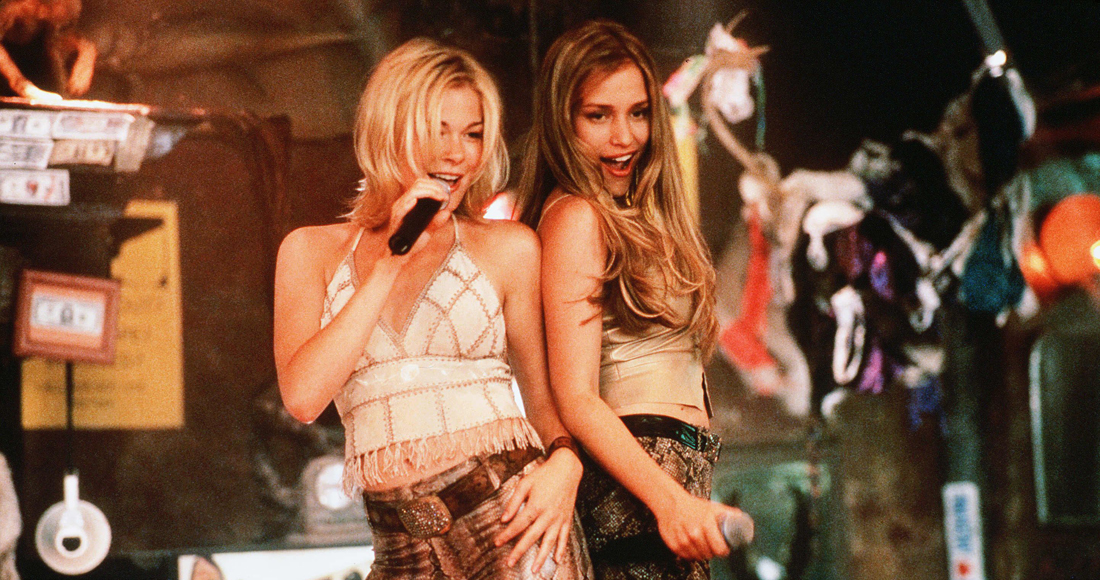
Bruckheimer was presumably involved because this comes from the soundtrack to his movie, ‘Coyote Ugly’. It’s a film that I remember being huge among my age group at the time, but that never gets mentioned anymore. (Its 23% rating on Rotten Tomatoes might explain why…) Apparently LeAnn Rimes appears in the film as herself, while she also recorded ‘Can’t Fight the Moonlight’ for actress Piper Perabo – who played the main character – and so technically duets with herself at the end of the film. Which sounds enjoyably messy.

While this may be a bit cluttered, a bit too fast, a bit chaotic, it’s still undeniably huge and catchy. There’s something admirable about the sheer joie de vivre of so many of these recent number ones, even if not many are truly great records, which makes me miss a time when pop music came with a capital ‘P’!

Although this is LeAnn Rimes biggest hit by chart position, she is probably much better remembered for her ballad ‘How Do I Live’, which was the 6th highest-selling song of 1998 despite never rising above #7. She remains active, and seems to have moved more into Christian contemporary territory in her old age.

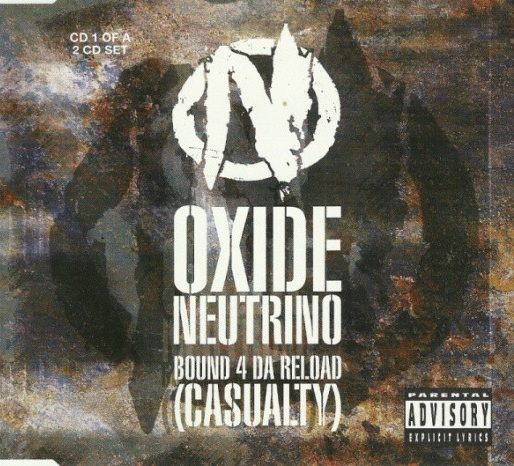
857. ‘Bound 4 da Reload (Casualty)’, by Oxide & Neutrino

The garage revolution picks up pace. All three so-called ‘garage’ chart-toppers that we’ve met so far, though, have been light and fluffy. Garage with the edges softened. Garages that you might find on a semi-detached house in a middle class suburb (Craig David did sing about a jacuzzi, after all).

Bound 4 da Reload (Casualty), by Oxide & Neutrino (their 1st and only solo #1s)

1 week, from 30th April – 7th May 2000

Here though is some proper garage. A garage covered with graffiti on an inner-city estate. Sirens. Gun shots. The theme tune from a long-running BBC hospital drama… Okay, that last bit doesn’t sound too street, but the sample from the ‘Casualty’ theme lends this record its name. It adds a dramatic energy to parts of the song, and works interestingly well when repeated on staccato synths. And it’s the only good thing about this record…

The rest of this song is abrasive nonsense. Bound for da bound bound for da reload… is the hook, repeated over and over, against a simple two-step beat. There’s some rapping, toasting, scatting, call it what you will. There’s a jarring spoken sample from the film ‘Lock, Stock and Two Smoking Barrels’ (Ah! Shit! I’ve been shot…) I was fourteen when this came out, and yet hearing it now I feel like an old fogey. It’s borderline unlistenable.

Having said that, the sweary sample above meant that ‘Bound 4 da Reload’ received little radio play, and so this probably passed me by unnoticed at the time. It does mean that it becomes one of a handful of chart-toppers so far to have featured swearing, and only the second after The Outhere Brothers to feature an F-bomb. But we’re on the precipice of swearing in number one singles becoming commonplace. Glancing down the list I can see the imminent debut of a certain bleach-blonde rapper, which will contain more swears than any previous number one combined.

Oxide and Neutrino were members of garage/hip-hop collective So Solid Crew, a group of anywhere between nineteen and thirty singers, rappers, DJs and MCs. In just over a year the group will score their one and only chart-topper, but it is Oxide & Neutrino who struck first here. Leading me to wonder, is this the only instance of someone enjoying a solo number one before their group has had one…?

Full, un-edited version:

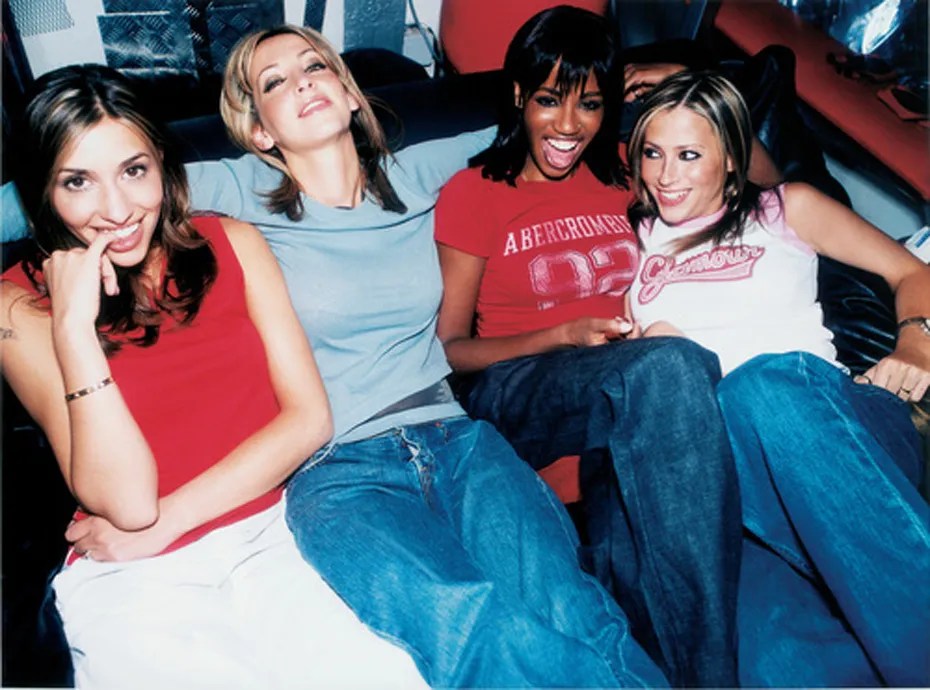
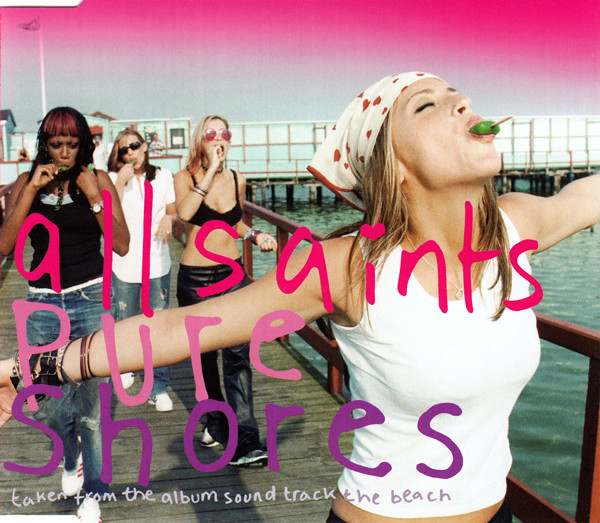
849. ‘Pure Shores’, by All Saints

The fifties had rock and roll, the sixties had beat bands and psychedelia. The seventies had glam, disco, and punk, while the eighties had new wave and new romantics. The nineties had hip-hop and Britpop, not to mention dance. The 2000s have… What do the 2000s have? In fact, what musical movements of any sort does the 21st century have…?

Pure Shores, by All Saints (their 4th of five #1s)

2 weeks, from 20th February – 5th March 2000

The new millennium provides an interesting dividing line, after which the Pop River reaches its delta, loses momentum, and splits into lots of little tributaries. It’s all to do with something called ‘the internet’, I think, taking power away from record companies and radio stations, and letting people discover all the music they could ever have dreamed of at the whir of a dial-up modem and the click of a mouse. The death of the monoculture, and all that. (Which isn’t to suggest that pop music’s journey had been relentlessly forward-moving over the first fifty years of the singles chart. Glam owed a debt to rock ‘n’ roll, Britpop owed a debt to the sixties, and so on …)

Anyway. That’s my long-winded way of getting around to saying that if the 21st century has a musical movement, I’d argue that it’s not so much a sound as a gender. Women. Female pop stars. Britney, Beyoncé, Gaga and Swift, to scratch but the tip of the iceberg. (And again, this is not to suggest that Connie Francis, Dusty Springfield, Diana Ross and Madonna were all figments of the 20th century imagination. Just indulge me…)

The dominance of the female pop star also meant – especially in the case of Britain in the 2000s – girl groups. In a few years I’ll be going wild for the cutting-edge pop of Sugababes and Girls Aloud, who even the likes of the NME will be rushing to anoint as the new avant-garde. All of which starts here, with the return of All Saints.

Phew. Having almost used up my regular wordcount with that intro, I’d better crack right into the song. ‘Pure Shores’ is described as ‘dream pop’, and it is definitely a step away from the group’s R&B-focused 1998 hits. The verses are laid-back, ambient, with a thrumming bass and lots of shimmering effects. We take detours between the verses for some whale calls and echoey backing vocals. It’s a pop song with the confidence to take its time, and to take us to some odd places. It was produced by electronic pioneer William Orbit, who is most famous perhaps for his work with Madonna around the same time, and who also worked with Blur, Prince, and U2.

But it is still a pop song, and the success of such things hinge on choruses. ‘Pure Shores’, for all its unusual soundscaping, remembers to click things into gear for a memorable I’m movin’, I’m comin’, Can you hear what I hear… Perhaps I’m of just the right age, but there are few choruses that transport me to a particular place and time like this one. It’s calling you my dear, Out of reach… The best bit of the song, though, is the hard-edged middle-eight, all industrial synths, and the following key change to take us home.

‘Pure Shores’ was written to order for the Leonardo Di Caprio movie ‘The Beach’, hence the Take me to my beach… line (the title doesn’t appear in the lyrics but certainly fits in with the film’s theme). Shaznay Lewis wrote most of the lyrics on a transatlantic flight, which is impressive, and not something many girl group members would be capable of doing, adding another layer of respectability to this tune.

Having said all that, and as good as ‘Pure Shores’ is, I think All Saints’ final chart-topper is even better. Both tracks, bookending the year 2000, set the tone for what pop music, specifically pop music fronted by women, could achieve in the years to come…

831. ‘When You Say Nothing at All’, by Ronan Keating

I did warn you… Just because Boyzone’s chart-topping days are over, we’re far from hearing the last of Groanin’ Ronan.

When You Say Nothing at All, by Ronan Keating (his 1st of three solo #1s)

2 weeks, from 1st – 15th August 1999

Barely three months on from ‘You Needed Me’, and before his band had even released their final single, Keating launched a solo career, with immediate success. Of course, he was helped in this by having his debut single included on the soundtrack to the year’s biggest romcom, ‘Notting Hill’, but still. I’ll admit, quietly and grudgingly, that I’ve always quite liked this…

It’s got a nice country lilt to it, and a decent chorus. Some of the production is very late-nineties bells and whistles, and it could have done without the overpowering backing singers. Plus the tin-whistle chorus is better not mentioned. Still, I’d tentatively state that this is better than at least four out of Boyzone’s six number ones.

The worst thing about it is… Yup, you guessed it. The singer. Ronan Keating is not a bad singer. He hits the right notes, he holds them, and you can make out what he’s saying (a quality my late gran held above all else). But his vocal affectations, his growls and lisps, his insistence on pronouncing his ‘ch’s and ‘sh’s like Sean Connery… He doesn’t speak like that. It’s put on when he sings. It’s annoying! And it was a huge risk for him to tempt every comedian in the land by releasing a record with the crucial line: You say it best, When you say nothing at all…

I’ve had various people commenting on Keating’s voice in previous posts. One has suggested that he might have had an alternate career as a grunge singer, which I can understand. Another has suggested that he is better on upbeat numbers, a theory that his performance on ‘When the Going Gets Tough’ doesn’t hold up but that we can put to the test again with his next chart-topper. Further thoughts on his vocal stylings are always welcome.

This was the fourth time in just over a decade that ‘When You Say Nothing At All’ had been a hit. Keith Whitley took it to the top of the Billboard Country Charts in 1988, while Alison Krauss & Union Station took it to the lower reaches of the Hot 100 in 1995. Both of those versions are a lot rawer, and less polished. Frances Black then took it to the Irish Top 10 in 1996, which is when Ronan first heard it. He upped the Irishness – perhaps inspired by B*Witched’s recent dedication to all things Celtic – and scored the biggest hit of all.

827. ‘Bring It All Back’, by S Club 7

Normal service is resumed, after the strangest of detours courtesy of Baz Luhrmann’s ‘Sunscreen’… Here’s some A-grade, late-nineties tween-pop.

Bring It All Back, by S Club 7 (their 1st of four #1s)

1 week, from 13th – 20th June 1999

I hear the Jacksons, I hear the Archies, I hear Disney themes… I hear a whole host of influences from classic sixties and seventies bubblegum. I’ve noticed that while listening to many of the recent pop number ones, I’ve ended up spending more time working out what they’re derivative of rather than hearing them as their own entities. And there isn’t a single note in ‘Bring It All Back’ that isn’t borrowed from somewhere else. Which means I want to sneer at it – my thirteen-year-old self certainly did – but dammit I can’t. It’s just too catchy, too packed with hooks, not to grudgingly admire.

Not that it’s at all clever, or that it isn’t cynical in the way it relentlessly hits each hook after hook, as if some modern day Pied Piper has designed a song that will lure in seven-year-olds across the land. I haven’t been able to listen to it for too long this morning without starting to feel queasy. Plus there’s no edge, no hint of an underlying melancholy, to the lyrics: Don’t stop, Never give up, Hold your head high and reach the top… It almost makes B*Witched sound punk. But still, as a pure pop song, it works.

Besides, I could never truly hate this. This is nostalgia. This is watching kids’ TV while still in my school uniform, looking forward to ‘Neighbours’ and ‘The Simpsons’, before, or perhaps after, playing football across the street, with my mum cooking dinner next door… Baz Luhrmann may have just warned us against the dangers of nostalgia, but I would pay a good sum of money just to spend five minutes back in that world.

This record is further evidence of a point I made a few posts ago, about British pop sounding, and looking, cheap and tacky next to the mega-watt US stars of the day. You can imagine Britney Spears’s team hearing five seconds of this, and dismissing it with a roll of the eyes and a “that’s cute”. And yet, ‘Miami 7’, the show for which this served as the theme song, was popular in the US. Clearly even their tweens had an appetite for British cheese.

S Club 7 were the brainchild of Simon Fuller, after he had been sacked by the Spice Girls in 1997. Presumably he wanted younger, more pliable charges (who wouldn’t rebel against him) which I guess fed through to the cuter, more upbeat music. It is said that the ‘S’ in the band name stands for ‘Simon’, which feels a bit cultish, but that’s never been confirmed. With Steps around at the same time, and with Hear’Say and Liberty X to come soon, it could be said that we are in the second golden age of mixed-gender pop groups, after the days of Bucks Fizz, Brotherhood of Man, and a certain quartet of Swedes (I hesitate to type out that band’s name, in case a casual skim-reader thinks I’m actually comparing them to S Club 7!)

I will happily admit, however, that S Club 7 have much better songs to come… At least two of which are genuine pop classics. Their sound matured, while their songwriters remained skilled at using strong reference points for their hits, be it Motown, disco, or even classical interpolations (see 2000’s ‘Natural’). Plus, I’ve met Bradley McIntosh – the only chart-topping artist I have ever touched – and he was cool.

798. ‘No Matter What’, by Boyzone

Straight after ‘Viva Forever’, here’s another high quality ballad…

No Matter What, by Boyzone (their 4th of six #1s)

3 weeks, from 9th – 30th August 1998

Yes, the words ‘high quality’ and ‘Boyzone’ in very close proximity there, but I’ll stand by it. This is, by a clear distance, the best of the Irish boyband’s six number ones.

Like the Spice Girls before it, the melody and the chord progressions here are simple, but effective. There’s something instantly touching, even if this isn’t your kind of music. (It absolutely reeks of musical theatre, with an ‘Act I finale’ energy to it. More on that to follow…) Helping immensely in this song’s likeability is that Stephen Gately gets to sing the first verse. Nice voice, nice boy, sorely missed…

If only he’d been allowed to carry the whole thing. Alas, Ronan Keating comes clattering in for the second verse, with all the subtlety of a drunken ox. But even he can’t ruin it. There’s a depth to this, a timelessness that’s been missing from Boyzone’s previous number ones. There’s another acoustic guitar solo, and a soaring finish, and the job’s a good ‘un. The fact that this stands out so far against the band’s earlier singles is perhaps explained by the songwriters: Andrew Lloyd Webber, and Jim Steinman.

‘No Matter What’ was the first act closer in ‘Whistle Down the Wind’, Webber’s 1996 musical based on the book and film of the same name. (I must admit, I knew this was from a musical, but thought it was much older.) It becomes the fourth chart-topper that Webber has been involved in, after ‘Don’t Cry for Me Argentina’, ‘Any Dream Will Do’, and, yes, ‘Itsy Bitsy Teeny Weeny Yellow Polka Dot Bikini’. It’s also Steinman’s fourth, after ‘Total Eclipse of the Heart’, ‘I’d Do Anything for Love’, and ‘Never Forget’ (meaning that he’s produced hits for the nineties’ two biggest boybands).

It’s a needless comparison, but since this directly followed ‘Viva Forever’ I feel compelled to say that this isn’t as a good a record. And it’s not just because of groanin’ Ronan… The production is a bit cheap, with a squelchy bass and a karaoke-level percussion. And I don’t know who thought the strange chicka-cha-ah-has in the intro were a good idea, but they weren’t. Plus, the lyrics are well-intentioned but interesting: No matter what they tell us, No matter what they teach us, What we believe is true… (Sounds like the motto of your average Twitter user…)

Still, it is a good pop ballad. And for a boyband single to get three weeks at number one means that it must have had broad crossover appeal. It even managed to graze the charts in the US, something that no Boyzone single did before, or after. They have two final number ones coming up – one of which is not, I repeat not, a ballad – but I highly doubt either will match this.